
+++ The new FREELANDER brand has confirmed that it will be launched in Europe. The Chinese marque was born out of a collaboration between Chery and JLR, drawing on the original Land Rover Freelander. It said it will arrive in Europe as part of its “third wave” of expansion into global markets. It will first enter Middle Eastern and North African countries, then its first right-hand-drive markets, Australia and New Zealand, and Europe will come after that.
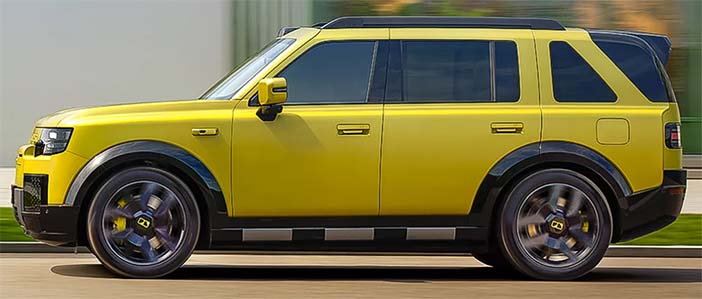
It has yet to confirm in what year it will come to Europe, nor who will be responsible for importing the cars. JLR chief PB Balaji previously said the British firm wouldn’t prevent Chery from bringing the brand here. Speaking in May, he said “it’s Chery’s car” and that JLR would “let them make up their mind”. “From our perspective, our role is ensuring that the design is in sync with what JLR stands for, and thereafter it is completely their baby”. Freelander’s first model is the 8, a large SUV with a plug-in-hybrid powertrain. A 2.0-litre petrol engine and 2 electric motors combine to send 625 hp through all 4 wheels, while a 34 kWh battery allows it to drive up to 110 km on electricity alone. This can be charged at up to 350 kW. However, Freelander CEO Wen Fei previously said that any cars exported to Europe wouldn’t be adapted versions of Chinese-market models but instead new derivatives tailored to each market. There’s no word on pricing yet, but Balaji previously suggested that they would be cheaper than JLR’s models, saying: “The price positioning of Freelander and our price positions are different”. +++
+++ If you’ve read Autointernationaal.nl regularly or followed the auto industry closely over the past 3 years, you won’t have escaped the furore surrounding JAGUAR ; both its initial demise as a legacy premium brand, and its impending reinvention as a player in the Bentley-battling luxury market. But this week, after months of spy shots, drip-fed teaser images and piecemeal prototype drives, the covers finally come off the Jaguar Type 01: a €167.470, 4-door, 4-seat electric Grand Tourer and a new dawn for the brand.
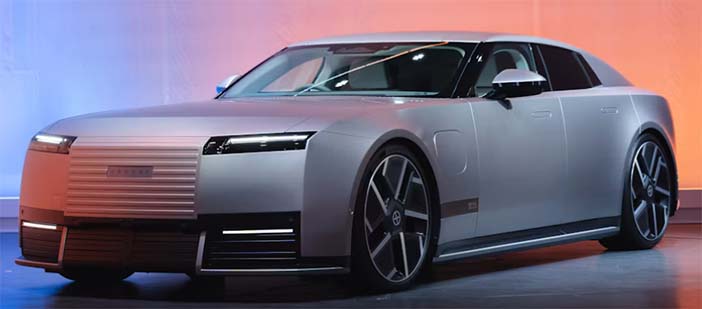
Finally, Jaguar hopes to silence its critics once and for all. The first thing we must all do, as observers and enthusiasts in the automotive space, is erase any preconceived ideas of what we think a Jaguar ought to be: what it looks or feels like, what it represents and who it needs to appeal to. The days of staid, wood and leather-lined 3-box limousines with silky-smooth straight-6 engines are behind us; the electric era requires a hard reset for brands and buyers alike. While it might not suit everyone, Jaguar’s plan is to ‘copy nothing’ and elevate the firm beyond the likes of Audi, BMW and Mercedes. This isn’t uncharted territory for JLR. The business and its dealers have been selling expensive Range Rovers since the turn of the millennium, and to great effect. They know this market. The EV angle might be a tough sell for some, but like the car itself, it’s a statement about Jag’s future and commitment to change. It’s a monumental gamble (arguably the boldest in British automotive history) but one that, on early evidence, gives the marque an identity and sense of purpose that have been missing in recent times. Whether it translates into hard sales is a question for tomorrow, but as an audacious assertion of intent, I’m struggling to think of any manufacturer that’s as outwardly confident as this new and rejuvenated Jaguar. The cat is finally out of the bag, but it will be months before we see if the company’s bold rhetoric is more than just hot air. If the forthcoming shooting brakes and SUVs can catapult Jaguar back to where it belongs, then its relaunch could go down in history as something of a marketing masterclass… +++
+++ Pininfarina is usually associated with Fiat and Ferrari cars, but most recently has turned its attention to a Honda. We have the Italian design house to thank for this new reimagining of the iconic Honda NSX, known as the JAS TENSEI .
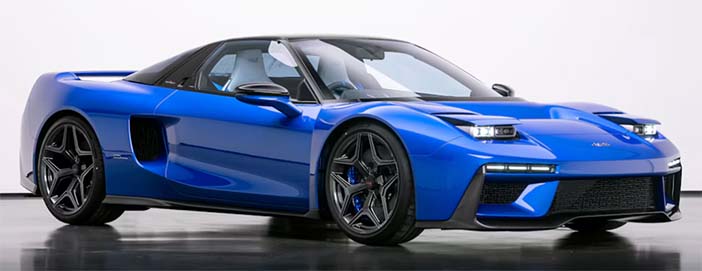
Pininfarina Worked with Italian racing team JAS Motorsport (an official partner of Honda since 1998) to create the JAS Tensei. It says the car is “inspired by the 1990-generation Honda NSX and reimagined through a contemporary vision of the grand touring concept”. The famous design firm also says the car is in-keeping with the NSX’s DNA of “high performance, perfectly balanced and safe, yet equally at home on the track”. The ‘Tensei’ name means “rebirth” or “reincarnation” in Japanese. JAS Motorsport has built and raced Hondas for decades, from Accords to Civics and even the last-generation NSX. However, powering the JAS Tensei is an engine from another partner, JUDD Power. Like the original NSX, the new car has a V6, but JUDD has taken the engine and increased the displacement from 3.0-litres to 3.5-litres. It remains naturally-aspirated but with a raised 8.500 rpm rev-limit, power has been upped to 425 hp; over 150 hp more than the original Honda NSX. There are various modifications to the engine beyond simply making it larger. Oil starvation under hard cornering should be kept at bay thanks to a new dry-sump, the block also sits lower in the chassis for better weight distribution. There’s a new exhaust and individual throttle bodies to ensure it sounds the part.
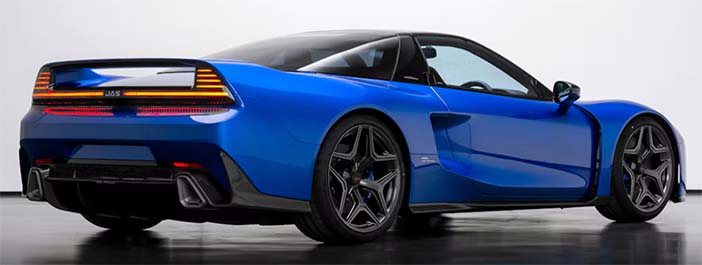
Although the original NSX was available with a manual or automatic gearbox, the JAS Tensei is strictly a 6-speed manual with fancy twin-plate carbon clutch and a mechanical limited slip differential. With the extra power, braking has been upgraded as well. JAS Motorsport fitted carbon-ceramic discs all around with 6-piston calibers up front and 4-piston calibers to the rear. They sit behind 19-inch and 20-inch rims (staggered front and rear), with track-friendly Pirelli rubber. The Honda NSX made the likes of Ferrari and Porsche nervous with its excellent handling fine-tuned by the legendary Ayrton Senna, and JAS has done its own tweaks to the Tensei’s chassis. The NSX’s aluminium body underwent carbon-kevlar reinforcement to improve torsional rigidity, but the Tensei’s exterior body panels are entirely made up of carbon fibre to bring the weight down to 1.250 kg; 120 kg less than the original. The JAS Tensei is 55 mm longer in its wheelbase and has up to 190 mm wider track. The suspension is reworked too with new double-wishbone arms, a revised multi-link set up to the rear and adjustable coilovers from the suspension experts at KW. To help avoid scraping that expensive new body, there’s even a nose-lift system. As for the looks, the JAS Tensei follows a similar pattern we’ve seen on many other restomod recreations of iconic sports cars. The overall body is very similar to the old NSX, and while there are new LED lights up front, the characterful pop-up lights are also retained. Elements like the air ducts on the side have been remodelled to maximise cooling to the engine and the rear wing and diffuser are bespoke to the JAS Tensei as well. “Together, we have developed a car that pays tribute to one of the most iconic sports cars in history, reinterpreting it through a contemporary vision that expresses passion, expertise and Italian craftsmanship at the highest level”, said Paolo Dellacha, CEO of Pininfarina. Despite the significant changes, the JAS Tensei is still a road car, though fairly critical information like pricing and availability hasn’t been announced. This isn’t the first time Pininfarina has been involved with the NSX. Honda may have designed the NSX in-house in the late eighties, but before that Pininfarina was tasked with creating a concept in 1984, called the HP-X. The HP-X was a mid-engined, rear-wheel-drive sports car that laid the foundations for the NSX. +++
+++ Production of the MCLAREN 750S V8-powered supercar will end next year, as the British firm prepares for its reinvented line-up of new models. The 750S arrived in 2023 as a heavily updated successor to the transformative 720S, the Woking firm’s longtime best-seller. It was the lightest series production McLaren yet when it was launched, weighing just 1.277 kg, while its Ricardo-built twin-turbocharged engine made 750 hp, giving it a power-to-weight ratio of 585 hp per tonne. As previously reported by Autointernationaal.nl, McLaren is set to retire the 750S, Artura and GTS in the coming years, clearing the way for a bold new line-up (including an SUV) as part of its transformation under the ownership of the Abu Dhabi government’s investment body. McLaren has now confirmed that final orders for the 750S are now being taken, with production due to end next year; a decade after the 720S arrived. Henrik Wilhelmsmeyer, McLaren’s commercial boss, said that the 750S “represents everything that defines a McLaren supercar”, claiming it would “leave behind an extraordinary legacy”. The move was expected, because earlier this year McLaren launched the 788HS, the final limited-volume derivative that will be built on the platform. McLaren’s customisation division, MSO, will produce 200 highly customised examples of that model. +++
+++ Alongside some of its more reserved designs such as the 4 Urban and ZS, MG has the ability to really stand out, and that’s precisely what its upcoming Cyber X SUV will offer when it hits the European market in 2028. Previously thought to arrive next year following the Cyber X concept’s reveal at the 2025 Shanghai Auto Show, MG has now told me to expect a 2028 launch for the new blocky electric crossover. MG’s product and planning boss David Allison said: “The Cyber X is still very much part of the future product portfolio. I think it’s unlikely at the moment that we will see it next year. So it’s more likely it’s a car for 2028”. Despite MG’s recent foray into the premium market with the Tesla-rivalling IM5 and IM6, the showroom-ready Cyber X won’t be a high-end, super-expensive alternative to the Land Rover Defender or Mercedes G-Class. Instead, the Chinese-owned British brand’s squared-off SUV will target budget-conscious buyers currently looking at the Jeep Avenger and the Renault 4 E-Tech. “You know where we price our cars”, Allison told me. Asked if that meant a starting figure of less than €35.000, he said: “Easily. But that’s for the future”. There’s no concern the Cyber X will take sales away from the S5 either, despite its similar size and prospective pricing. “Clearly, the Cyber X concept exists in a segment that we currently sell in”, said Allison. “But it’s obviously looking to take that kind of philosophy in that direction into a different area and potentially appeal to a customer that might not consider one of our products”. The Cyber X will be quite unlike anything MG has built to date, with Allison seeing it as a “spiritual successor to the Suzuki Jimny”. The production version of the Cyber X is likely to be based on parent company SAIC’s new E3 platform, which underpins the latest 4 Urban. This means it could showcase new battery and motor technology for the brand in Europe, with a choice of single and dual-motor powertrains. The platform, and indeed the 4 Urban, can cater for semi-solid-state batteries, which could allow for big advances in cold-weather efficiency, boosting range in the winter months. Peeling back the concept car’s bold looks, I expect the Cyber X to change only slightly in its transition from design study to production reality. It’ll keep its angular styling and squared-off edges, plus its almost completely flat front end and subtly flared wheelarches. We can expect more black trim to make it better suited to a primarily urban environment, although a raised ride height will give it at least a modicum of off-road capability.
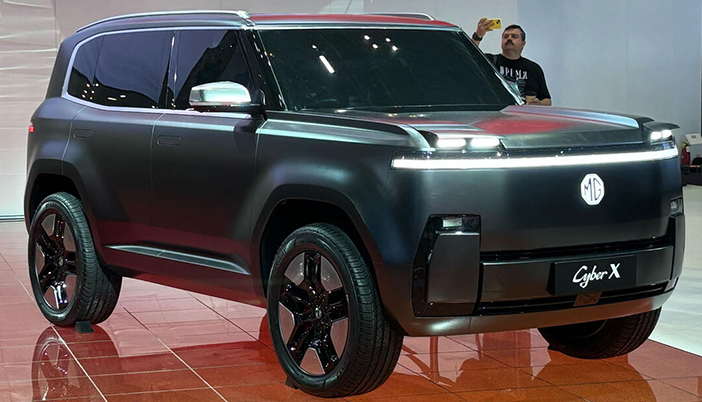
The main changes will therefore concern the intricacies of the Cyber X’s design. The cool pop-up headlamps on the show car’s bonnet will almost certainly be replaced by more conventional light clusters, while the model’s budget billing may see the full-width light bar swapped out for individual units on either side of that upright nose. If the concept is to be believed, however, we should see the daytime running lights sit separate from the main lamps, with the latter nestled neatly within the lower bumper. The show car’s illuminated MG badge won’t see the light of day, either, mostly in an attempt to keep a lid on costs. As such, expect extras such as the concept’s panoramic roof to be ditched, too, or at the very least reserved for top-spec models. The upright rear end has a whiff of Mercedes EQB about it, with a light bar sitting just above another large MG logo. The interior will likely take inspiration from the 4 Urban, meaning a minimalist design. Expect a big central screen flanked by a smaller, fully digital instrument cluster. As is the case with many China-designed EVs, the cabin will be almost entirely devoid of physical switches and buttons.
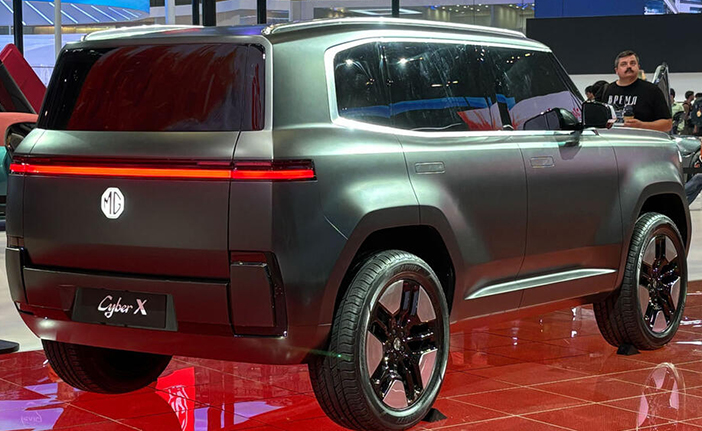
The bespoke electric-car platform should ensure generous head and legroom, plus a light and airy feel, only aided by the inevitably large glasshouse. Specifics on battery and motor tech remain under wraps, but we know the MG4 Urban is offered with a choice of 42.8 kWh and 53.9 kWh LFP batteries in its home market, plus a new 70 kWh semi-solid-state set-up. That car measures 4.395 mm long and 1.842 mm wide, with a wheelbase of 2.570 mm. Assuming the Cyber X would sit just above its curvaceous hatchback sibling, a slightly stretched wheelbase could, potentially, allow for a bigger battery, countering any drop in range due to the blockier SUV shape. Speaking of which, MG claims the 4’s largest 77 kWh battery can return up to 545 km in the Extended Range model. Still, a range of almost 500 km should be possible, even when factoring in the Cyber X’s bluff front end. MG says a 30 to 80 percent top-up is possible in 20 minutes, although it hasn’t yet confirmed a peak DC charging speed for the model fitted with the latest semi-solid-state tech. But while that range-topping battery will bring greater range and faster charging, it should also show advances in safety, with SAIC claiming that the cells have passed a series of three-direction needle-penetration tests without producing smoke. Reports suggest the chemistry housed within the new semi-solid-state battery can significantly improve cold-weather range, too; at minus seven degrees Celsius, using the car’s pre-heating function can apparently retain up to 75 percent of the vehicle’s usable range. Despite the unashamed off-road appearance, most models will likely feature a single motor on the front axle; again referencing its positioning as a primarily urban-suited family car. But there is a chance that higher-spec versions could add drive to the rear wheels for extra off-road traction and greater performance. Don’t expect the Cyber X to handle like a sports car, however; the high-riding body and tall suspension should put paid to that. +++
+++ After a somewhat protracted launch process, the edgy new OMODA 4 will finally be on show on European soil as it makes its debut at the 2026 Paris motor show. The new compact SUV is an eagerly awaited new model that will be riding high on the brand’s current sales momentum, but isn’t expected to arrive in Dutch showrooms until at least the beginning of 2027. The small SUV is set to be the entry-level model in the Omoda range, below the Omoda 5 and Omoda 9. The car was first displayed at the 2026 Beijing Auto Show, where Omoda disclosed some information about its Nissan Juke rival, including what lies beneath the bonnet. Powering the Omoda 4 will be the “full hybrid SHS-H” powertrain, which we’ve already tried in the Omoda 5 and has since been shared with the Jaecoo 7. The set-up uses a 1.5-litre turbocharged 4-cylinder engine paired with a small electric motor and 1.83 kWh battery pack. Power in the Omoda goes to the front wheels via a dedicated hybrid transmission called (DHT); something we’ve seen in a few plug-in hybrid cars from the Chery group already. The system works in a similar way to Toyota’s hybrid technology, with the petrol engine recharging that small battery. The SHS-H isn’t designed for a large amount of electric-only driving (and Omoda hasn’t provided a range estimate anyway), although in the Omoda 5 the claimed efficiency stands out. Although the first Omoda 4 will be a full hybrid, a pure-electric alternative has been confirmed, too, which I suspect will be called Omoda E4 to sit under the Omoda E5. The tie-in with the Omoda 5 shouldn’t come as much of a surprise, because the new B-segment SUV shares its T1X platform. There’s no confirmation of pricing, but the Omoda 4 will have a lower starting price than the Omoda 5, which kicks off at €29.990 in The Netherlands. However, the brand’s manager, Victor Zhang, told: “The Omoda 4 will not be so cheap, because I don’t think we just want to do the lowest-price product. This is not our philosophy”. Compared with its more premium sister brand Jaecoo, Omoda focuses on value with its philosophy of “affordable premium”. And with the Omoda 4, it appears this will be done with some eye-catching design.
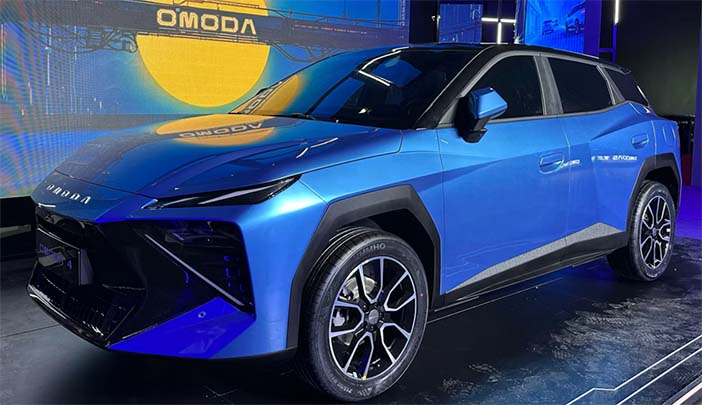
As well as a very angular and aggressive exterior design that looks to take inspiration from cars such as the Lamborghini Urus, the company also revealed its ‘Starship Cockpit’, featuring a large central touchscreen and a flip-up, fighter jet-style start button. We’ve even seen a docking station for a Nintendo Switch on the centre console. +++
+++ When I first drove the SKODA EPIQ , it was hard to imagine how it could be improved, but a new, range-topping trim might just do it. The Epiq Sportline is something I’ve been expecting to emerge eventually, and it’s now confirmed for the Paris Motor Show. A short teaser video accompanied the announcement, giving a darkened view of an Epiq Sportline and a brief glimpse of a Sportline badge.
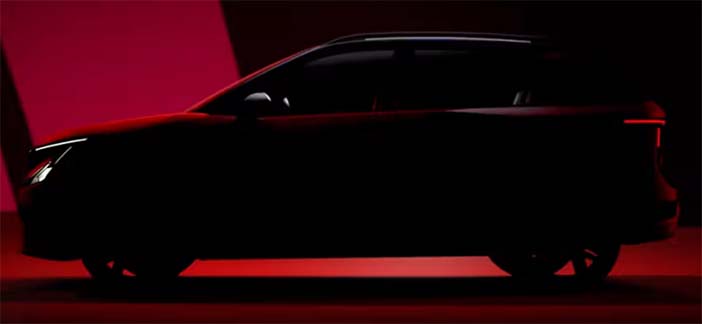
That’s all we’ve got to go on currently, but we only have to look at other Sportline-equipped Skoda models, such as the recently revealed Karoq Sportline, to get an idea of what to expect. There’ll be a healthy uplift in equipment, plus slightly sportier styling, although value for money still should be high on the agenda, though. As a reminder, the current Epiq range starts at €26,990 euro for the entry-level model and rises to €36.990 for the First Edition. Currently, all versions of the Epiq use a 37 kWh or 52 kWh battery pack. The smaller pack won’t offered with the Sportline trim. The Epiq sits beneath the Elroq in Skoda’s expanded range, and will be on display in Paris alongside the biggest member of the family, the recently revealed Peaq. All told, the brand will have 15 cars in Paris, including a Skoda 130 RS to help celebrate 125 years of Skoda Motorsport, and the Peaq ‘Red Car’ Tour de France support vehicle. Keen to point out the depth of its EV line-up, Skoda said: “With the introduction of the Epiq and Peaq, Skoda has doubled its all-electric portfolio this year. Expanding the brand’s all-electric offering at both ends of the range, the 2 models play an important role in attracting new customer groups”. +++
+++ Female passengers aren’t always offered the same level of crash protection as males, unless they’re in a VOLVO , that is. The Swedish manufacturer has just published a study based on real-world crash data that highlights how all body types are offered identical levels of crash protection in its cars, something that previous research has shown isn’t a given. Inequalities when it comes to in-car safety have been well documented over the years; for example, a 2024 study by the UK Transport Research Laboratory found that female occupants are “significantly” more likely to be injured in a car accident than their male equivalents, particularly in side-impact scenarios. This is backed up by data analysed by the University of Virginia Centre for Applied Biomechanics, which found that females are 47 percent more likely to be seriously injured in an accident and 17 percent more likely to be killed. Study lead and senior technical specialist, Lotta Jakobsson, explained that current standardised crash tests only cater for certain body types: “We have 3 sizes of adult crash test dummies today, and that’s good. But even if we double it, it will still represent a very small part of the population”. Since their introduction in the seventies, crash test dummies have been almost exclusively based on the male physique, meaning they don’t take into account the inherent structural differences between the sexes. Even today, European crash tester Euro NCAP’s only adult female dummy is, in effect, a shrunken-down version of the male equivalent, representing just 5 per cent of the female population. The first official regulatory dummy built to represent the average female, the THOR-5F, was only introduced in late 2025 and has yet to be employed in testing by Euro NCAP. But this isn’t an issue exclusive to biological sex; Jakobssen highlighted how “everyone is different from each other. It’s not just one person being the most vulnerable, because it really depends on the situation”. The part-time Chalmers University of Technology professor used the example of an older woman stating that they are typically “more at risk because they simply are more fragile”. Jakobssen described how the typical adult might be able to cope with impacting their knees on the dashboard in an accident, but someone with more restricted load-bearing properties might require a knee airbag to be kept safe. “But that’s just one case,” said Jakobssen. “The fragile old lady might not have long legs and she might not even hit her knees because she’s held back by the seatbelt”. At the other end of the scale, Jakobssen illustrated the scenario of a car running off the road and into a ditch. Here, a larger, heavier individual could be the one most at risk given the intense vertical load from the crash. This inequality is glaringly obvious in Volvo’s study which is backed up by real-world data that stretches back over five decades. However, thanks to gradual innovation over the years such as the introduction of side impact protection systems in the eighties and more recently, the multi-adaptive safety belt, Volvo says its cars now offer a near-identical safety risk for both male and female occupants. The brand says this is the first study of its kind, with other similar investigations being conducted by independent organisations on singular models, rather than entire manufacturer line-ups. It’s also important to highlight how many safety features present in current Volvo models are also available on their competitors. Yet aside from being a marketing exercise, Volvo says that publishing its findings could also raise awareness for safety inequality: “It’s like a cookbook of what you could do and how you could do it if you are interested in addressing different areas”, Jakobssen said. She told that current safety regulations focus on “addressing singular points which are super-important to get the 5 stars, but may not represent the real world”. By shining a light on the real-world infinite variability of different scenarios and body types, Volvo believes it has the potential to incite innovation from both manufacturers and lawmakers for the benefit of everyone. In its ‘Vision 2030’ mission statement, Euro NCAP has proposed introducing the THOR-5F dummy in order to help evaluate whether a car is correctly “designed for all”. Yet while Jakobssen says that any widening of safety regulations is “good”, the sheer amount of tests required to cater for absolutely everyone makes legislating for it unviable. With this in mind, she’s calling on other manufacturers to innovate, claiming: “It’s all about your own ambition. If you want to go that extra mile, then that pays up. If you address that vulnerable person, the good thing is the other one is protected too, because they are better off from the start”, Jakobssen explained. “There’s a lot of regulations for cars that help protect everyone, like you’re not allowed to have sharp edges inside the compartment in some areas where you’re likely to impact. And that benefits everybody. That doesn’t have any gender difference”. +++