+++ Over the last year, BYD has rapidly expanded its market reach across the globe. The latest market poised for BYD’s entry is the fifth most populous country in the world, Pakistan. BYD on August 17 will hold a brand conference in Pakistan and show 3 models that will be sold in the market. These 3 models are believed to include an SUV and a sedan. Most likely candidates for the 3 cars are the usual trio that BYD enters markets with namely the Atto 3, Dolphin and Seal. According to people familiar with the plans BYD aims to sell both all-electric and PHEV models in the market in the future. For its foray into the Pakistani market, BYD has partnered with Mega Conglomerate, one of Pakistan’s largest business groups. This deal goes beyond the dealership model in most markets. Sales in Pakistan are due to begin in the 4th quarter and before that the venture will set up showrooms in Karachi, Lahore and Islamabad. It has been reported that BYD also plans to set up a factory in Pakistan with production set to begin In 2026. Although BYD has confirmed plans to enter the Pakistani market they have declined to comment about the factory. It’s believed that BYD will form a partnership with Mega Motors a subsidiary of Hub Power, the country’s largest independent power producer. The plant will be built near Port Qasim in Karachi which is already home to assembly plants of Japanese and Korean car companies including Toyota, Suzuki and Kia. Port Qasim Is the country’s second largest port handling around 35% of the nation’s cargo. Sales of locally assembled vehicles in Pakistan last year were 85.087; a decrease of 63.4% year-on-year and it is believed that passenger cars only made up around half this total. Encouragingly in May data from the Pakistan Automotive Manufacturers Association (PAMA) shows that passenger car sales were 8.487 units; up from 3.934 units in May 2023. The Pakistani government has a target of 30% of new car sales to be made up of new energy vehicles by 2030. Chinese producers including Great Wall Motor, SAIC and Changan have already entered the local market. BYD has already entered more than 80 markets globally. Back in July BYD opened its first wholly-owned overseas factory in Thailand with the production of the company’s 8 millionth new energy vehicle. BYD also has a JV plant in Uzbekistan and a factory under construction in Indonesia. Furthermore, BYD has signed agreements with Hungary, Turkey and Brazil for the production of EVs. +++
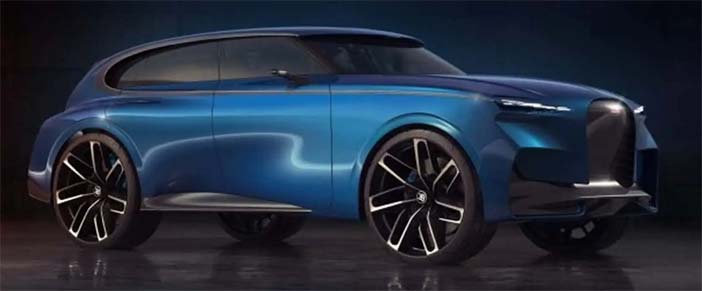
+++ Many luxury brands, such as Rolls-Royce, Bentley, Lamborghini and even Ferrari itself, have fallen for SUVs because of their high profitability. But there is one manufacturer, apart from McLaren, that still resists these ‘siren songs’ and it is none other than BUGATTI . The French firm seems to have no intention of developing an SUV, despite the fact that it would possibly become a model that would be highly prized by many billionaires. However, designer Sajdin Osmancevic has raised that possibility with a stunning digital creation, the Spartacus. The truth is that one’s jaw drops when looking at this computer-generated model. Of course, it has Bugatti corporate elements, such as the horseshoe-shaped grille and the ‘C’ that forms at the junction of the roof and the side of the body. Obviously, the look is imposing, both because of the massive alloy wheels and the very high beltline, which severely limits the glazed area. The design of the rear end will also astound you, although I miss a number of exhaust tailpipes. Let’s take a best-case scenario: Bugatti decides to give the green light to this project, which engine would you put in the SUV? I wouldn’t have the slightest doubt that it would be the new 1.800 hp plug-in hybrid system seen in the Tourbillon. In case you don’t remember, it consists of a new naturally aspirated 8.3-litre V16 engine, with 1.000 hp, plus 3 electric units, two on the front axle and the third on the rear, which provide the other 800 PS and are powered by a 25 kWh battery. With that 1.800 hp combined, the Tourbillon goes from 0-60 in just 2 seconds. On the Spartacus, this figure would be slightly higher, firstly because of its heavier weight and secondly because of its poorer aerodynamic coefficient. However, it would be the most exclusive and fastest SUV in the world, that’s for sure, leaving the Rolls-Royce Cullinan one step behind. Can you imagine this all-terrain vehicle exceeding 400 kph and paying several million euros for it (the Tourbillon costs €3.8 million)? A madness in every sense of the word, but one that can never be ruled out as a reality. After all, brands are out to make money and history or tradition takes a back seat. +++
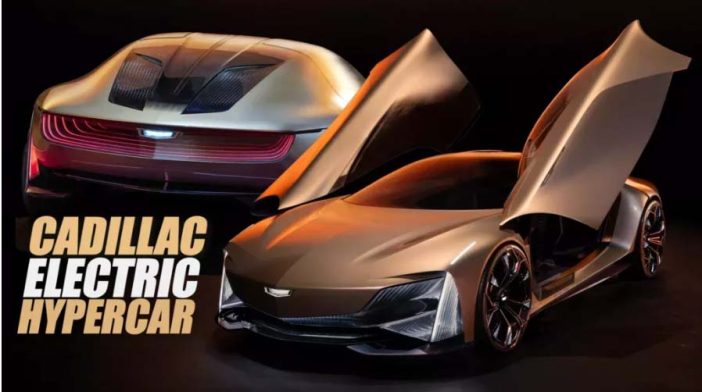
+++ CADILLAC ’s future is electric and that means the era of the supercharged 6.2-liter V8 is coming to a close. When it does, it will be a sad day for the V-Series. However, it won’t be the end of performance Cadillacs. Quite the opposite and the brand is showing the possibilities with the Opulent Velocity concept. It’s billed as the “ultimate expression of zero emissions hypercar luxury performance”. As the name suggests, the concept is a study in contrasts as it tries to balance luxury with performance. On the Opulent side, Cadillac believes the ultimate luxury is time as the clock never stops ticking. However, you can ‘get time back’ thanks to a Level 4 autonomous driving system. It’s envisioned to take the hassle out of driving, so you can sit back and relax on your commute. With a touch of the multi-function controller, the concept transitions into Velocity mode which triggers the steering wheel and pedals to present themselves. Furthermore, the heads-up display activates a “ghost car” function to present a “competitive driving course that allows drivers to improve their lap times or compete against peers on various designated tracks”. The company also envisions a whole bunch of other things but, let’s be honest, it’s mostly conceptual nonsense. That being said, Cadillac officials told us the concept previews some future ideas they’re exploring. In particular, the ‘fluted glass’ hints at a possible evolution of the brand’s vertical headlights. The model is also notable for having illuminated wheel caps, a steering wheel-mounted display, and large butterfly doors that help to improve entry and egress. One of the most interesting details was revealed in a media briefing last week, where officials told us the concept rides on a ‘future version’ of the Ultium platform. They went on to say the coupe hints at where they want to take the V-Series and Blackwing brands in the future. Surprisingly, it sounds like Cadillac could eventually offer a dedicated V-Series or Blackwing model in the future. That remains to be seen, but officials said 20 years of performance have given the brand the credibility and respect it needs to elevate things even further. This means that, in the future, it’s possible that we could see a high-performance Cadillac ‘at this level.’ Think of it as the V-Series equivalent of the Celestiq. Putting all that aside, the concept builds on the aesthetics found on the V-Series.R race car and features a functional 2+2 design. Speaking of the interior, it sports a cantilevered Y-shaped console as well as front seats that flow into the doors when shut. Designers said this gives the feeling of sitting in a luxurious cocoon. +++
+++ Statistics from the South Korean National Fire Agency showed that hybrid vehicles reported the fewest FIRE INCIDENTS over the last 5 years, as fears related to battery-electric vehicles spread across Korea following the recent EV fires that occurred earlier this month. According to the fire authority’s fire incident status by vehicle type, there were 131 fire cases among hybrid vehicles, which are powered by both an internal combustion engine and an electric motor. As the accumulated number of registered hybrid cars stood at 1.54 million by the end of last year, the likeliness of a hybrid vehicle fire was estimated at 0.002 percent. Though the number of hybrid vehicles has more than tripled since the 2019 figure of 506.000 units, reports of fire incidents did not see a dramatic increase, with only 23 hybrid vehicle fires in 2019, 21 cases in 2021 and 31 cases in 2023. EVs logged a fire incident likeliness of 0.013 percent during the same period. The number of EV fires grew in accordance with the increasing volume of EV registration. In 2019, there were 90.000 registered EVs and 7 fire reports. These figures increased to 544.000 registered EVs and 72 fire incidents in 2023. Diesel cars reported a higher number of fire incidents as they continued to deteriorate, while the number of registrations decreased as customers turned to more cost-efficient and eco-friendly options. Of the 9.96 million diesel cars registered in 2019, 1.348 fires were reported; this increased to 1.414 in 2023, among the 9.5 million registered diesel cars. The likelihood of a diesel car fire was 0.015 percent based on data from the past 5 years. For gasoline-powered vehicles, which account for the biggest portion of cars on the road here, the number of fire incidents has maintained a steady level. There were 12.31 million registered gasoline cars as of last year, with 10.950 fire incidents reported between 2019 and 2023, showing a 0.006 percent likeliness of fire incidents. +++

+++ NISSAN launched an updated Rogue (X-Trail) for the 2024 model year in the United States and it’s not off to a great start. Despite providing new technology and even a faux off-road trim, sales are dropping. The Japanese brand might be fully realizing the consequences of not offering a hybrid engine. When the updated Rogue first broke cover last year, I specifically called out the lack of a hybrid drivetrain. That’s the one Armada-sized difference between the Rogue and its direct competitors, the Toyota RAV4 and the Honda CR-V. Both Toyota and Honda are doing great with those models this year. During the first 6 months, RAV4 sales are up 33 percent. The CR-V has seen a 20 percent bump in the same time. The Rogue, on the other hand, is down 4.5 percent. That’s a huge blow to Nissan. According to one dealer, “We used to sell 30 to 40 Rogues a month, and now we are down to 15 to 20”. For the 2023 model year, the Rogue represented a third of sales for Nissan. Again, the big difference here is that the Rogue isn’t available with a hybrid drivetrain. As such, it simply can’t keep up when it comes to fuel economy. That’s not always a problem when it comes to vehicles that illicit performance or luxury as their main attribute. For an economy crossover with no real wow features, though, it’s a major issue as sales are indicating. “We’ve added features like ProPilot Assist 2.1 and Safety Shield 360 allowing Rogue to have what it takes to compete in the largest segment in the U.S. market”, says a Nissan spokesperson. The sales numbers, however, speak for themselves, no matter what the company line may be. This is an issue Nissan created on its own. Moreover, in February, it openly owned the fact that it missed the hybrid wave. Now, it’ll have to deal with the consequences of its decisions until it can get hybrid drivetrains into the US market. +++
+++ The all-new PEUGEOT 208 , due in 2026, is set to differentiate itself from many of its Stellantis small-car siblings with a radical new look and a move to the company’s new STLA Small platform. The supermini’s premium underpinnings will create clean air between it and cars such as the latest Citroen C3 and forthcoming Fiat Grande Panda, both of which sit on the more cost-focused Smart Car architecture. The 208 will be one of only a handful of models built on STLA Small, possibly including the next-generation DS 3 and Opel Corsa. In common with cars built on the bigger STLA Medium and STLA Large platforms, the 208 will initially launch as an electric car, with the possibility of petrol and hybrid powertrains later, depending on market demand. I expect the new 208 to take design inspiration from the latest 3008 and 5008. Following in the footsteps of the newly launched SUVs, expect the 208 to inherit a set of slim headlights and distinctive 3-claw daytime-running lights, plus a similarly patterned nose with body-coloured elements that emphasise the supermini’s premium positioning. The rear end will be recognisable as well, with a dark strip of plastic joining together another set of three-claw light clusters. As is now the fashion, we can expect Peugeot branding to be emblazoned on the back in bold lettering, with smaller ‘208’ badges below. Both of the maker’s most recent SUVs have seen their number plates move from the boot lid to the bumper, and there’s a good chance the forthcoming supermini will follow this trend. Gloss-black detailing will further emphasise the 208’s high-end appeal. The big news, however, comes inside, where the car will take heavy inspiration from 2023’s Peugeot Inception concept. The sleek 5-door was shown at last year’s Consumer Electronics Show, and more recently at VivaTech in Paris – where Autointernationaal.nl got a chance to catch up with Peugeot design director (and previous concept-car creator) Matthias Hossann. Core to the 208’s overhauled cabin will be a take on the concept’s Hypersquare steering wheel, which will work in conjunction with the next generation of Peugeot’s i-Cockpit instrument cluster. However, Hossann told: “I will not call it a steering wheel; it is a new device for driving. But why are we designing that? It’s the ‘by wire’ technology: you don’t have any mechanical connection. It allows us to create a new driving sensation; this is super agile and super efficient”. It’s a path the French brand has been pursuing for more than a decade with its unique i-Cockpit layout. Every new Peugeot since the original 208 from 2012 has featured this set-up, whereby the driver views the instruments over the steering wheel, rather than through it. Using a downsized wheel that sits lower gives bigger models a small-car feel, instilling what its maker hopes is a darty, fun persona. Hossann went on to tell us Peugeot is “testing this new tech in a prototype” and it’s due within a few years. “We’re developing it,” he said, “and in 2026 we will implement this. It changes everything”. The squared-off wheel will be much cleaner in its appearance than current offerings, possibly with touchpads to control key functions. The holes, inspired by those on the Inception concept, will be ergonomically sculpted for what Peugeot deems the perfect driving position. The brand had previously said Hypersquare offers an “entirely natural and universal grip of the steering control”. “The idea was to generate a much more simple user experience”, Hossann told us. “When you design a race car, you can control all your car with your fingertips, and this is the same idea”. He allayed any fears about the yoke-style steering wheel limiting the supermini’s usefulness in the urban environment it was conceived for. “It’s super easy”, he assured us. “You need a little time to adapt, but it’s quite quick. We have tested it with a panel of customers. When you come back to a traditional [steering wheel], it feels like you are sitting in a truck”. However, Peugeot won’t look to go quite as minimalist as Tesla. “This was a big discussion with the engineers”, Hossann said. “We could have decided to put the indicator on the wheel, but we decided to keep some heritage. We keep some function behind the wheel, but in terms of shape, it will be really close to this”. Nestled aft of the wheel will sit an all-new take on the brand’s digital instrument binnacle; possibly based on the Inception’s 360-degree Halo Cluster. Peugeot says this “provides information to the driver and passengers as they approach the car”, offering things such as battery status at a glance. We’ve visualised this in our exclusive image, with the addition of a subtle cowling to protect visibility in direct sunlight. Elsewhere, we envisage that the new model will use a shrunken version of the latest 3008’s cabin, with a chunky centre console, plenty of angles and sharp design features. It’s not yet clear how the aforementioned, new-look instrument cluster will affect the layout of the central screen; there is a chance Peugeot will choose to integrate it within the main dashboard alongside the Hypersquare-inspired wheel. An alternative would be a pop-up display on top of the dash. The new 208’s positioning as a more premium model should see the car justify its still-to-be-confirmed price with plusher materials and tighter tolerances. Hossann told us he thought there was “no limit” for where Peugeot can take the brand, bridging the gap between mainstream and luxury with sustainable leather alternatives, brushed metals and textiles for the doors and dash. It’s unclear at this stage which engines or electric motors may feature. However, we know parent company Stellantis favours a market-dependent multi-fuel approach, and should therefore offer the 208 with a choice of EV and hybrid powertrains. Base models are expected to use a development of the current 1.2-litre petrol unit with hybrid technology. A plug-in is unlikely, given the car’s size; superminis are generally better suited to full electric than heavy PHEV tech. Speaking of electric, while the new E-208’s battery and motor specs remain resolutely under wraps, it’s fair to assume Peugeot will look to improve on the current car’s stats, giving it greater appeal in myriad markets. That doesn’t necessarily mean fitting a bigger battery, but improved efficiency and faster charging are all but a given. Expect the maker to benchmark a 400 km range for entry-level cars, with peak charging speeds of more than 100 kW. While the new platform should see the 208 grow in size, the fact it’s been designed for both petrol and EV powertrains may limit outright practicality. Packaging should be competitive, but larger models such as the Skoda Fabia will reign supreme when it comes to boot and passenger space. With the newcomer’s reveal not expected for at least 18 months, the recently facelifted 208 and E-208 will soldier on until late 2026, possibly early 2027. A new 2008 crossover will inevitably follow, drawing heavily on the supermini’s styling and cabin as well as the new car’s updated powertrain tech. +++
+++ A mass sell-off of EVs has begun in SOUTH KOREA , following a fire involving a Mercedes-Benz EQE in Incheon that destroyed more than 140 cars and sparked proposals to restrict EVs’ access to underground parking lots. Since the fire on August 1, the market has been flooded with used EVs. K Car, Korea’s second-largest used car trading platform, reported an 184 percent increase in used EV listings in the first week of August compared to the final week of July. The Mercedes-Benz EQE series has been especially hard hit by the market’s reaction. Following the incident, over 100 EQE models have appeared on SK Encar, Korea’s top used car trading platform, pushing the total number of EQE vehicles for sale to 115 as of Friday. As a result, prices for these luxury electric vehicles have taken a nosedive. Prior to the fire, used EQE models typically sold for 60 million won to 70 million won. Now, some certified pre-owned 2023 EQE 300 models listed as low as 59 million won, a significant drop from their original selling price of 92 million. The fallout from the Incheon fire is exacerbating an already tough year for EV makers in Korea. Automakers are now rolling out aggressive promotions to counter the growing consumer reluctance to buy EVs. Hyundai has recently started offering significant discounts to entice buyers back into the EV market. These include up to 5 million won off the Kona Electric and a 10 percent discount on the popular Ioniq 5. Meanwhile, Genesis, Hyundai’s luxury brand, is offering up to 5 percent off all models, including the GV70 Electrified. Import automakers are also feeling the pressure and are slashing prices to stay competitive. BMW is offering discounts of over 12 percent on its flagship electric models, the i7 and iX, while Audi has gone even further, offering nearly 30 percent off its e-Tron GT model, including the high-performance RS version. Despite these deals, consumers aren’t rushing back to the EV market. According to car dealers in Korea, some buyers who had already placed orders for new EVs are now even cancelling them. Adding to the anxiety are talks of new regulations that could make owning an EV more cumbersome, like restricting their use in underground parking lots due to fire risks. The current crisis in Korea’s used EV market is a snapshot of broader challenges facing the industry. Last year, Korea was the only major market among the US, Europe and China to experience a decline in EV sales. According to data from the Ministry of Land, Infrastructure, and Transport and automobile market tracker Carisyou, the country sold 1.625 million EVs in 2023, down 1.1 percent from the previous year. The decline has persisted into 2024, with EV registrations from January to July falling by 13.4 percent year-on-year. +++
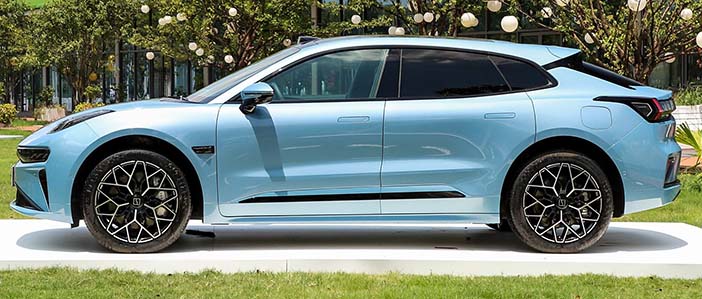
+++ ZEEKR , as well as launching the 2025 model 007 at the Evolution New Generation press conference on the evening of August 9, also launched the 2025 model year Zeekr 001. Ordinarily, this might not have been a problem, but Zeekr already launched a new version of the 001 at the end of February this year, meaning that there have been three significantly different versions of the car on sale over the course of this year. Customers who bought the new version that launched only in February are not happy that just 6 months later, another new version Is being launched. Zeekr CEO, An Conghui, has responded to criticism saying, “Maybe we didn’t do it well and didn’t communicate in advance, and Zeekr’s products will be released in advance in the future”. Changes to the 2025 model year Zeekr 001 are largely confined to intelligent driving. The car gains the Haohan Intelligent Driving 2.0 system and also the Zeekr OS AI and brings the car’s capabilities broadly in line with the 2025 year 007, which was also launched at the same event. Previously, the Zeekr 001’s intelligent driving system was based around Mobileye chips. For the 2025 model year version, the Mobileye chip remains on the 95 kWh We rear-wheel drive version but is replaced by a dual Nvidia Orin X chipset with 508 TOPS computing power on all other versions of the car. These versions also gain an ultra-long range lidar that offers 200 meters of range and a 120-degree ultra-wide horizontal field of view, the equivalent of 128 lines. The Haohan intelligent driving system uses a scene cognition large model (SCM) to improve the recognition of targets. The system now recognizes 1000 new traffic scenarios, and the accuracy of cognition has improved by more than 120%. Using an interactive planning large model (IPM) the system mimics strategies used by human drivers. For example, in heavy traffic, the system will make a slight pre-lane change maneuver to tell surrounding vehicles that it wants to change lanes and to see whether the car behind will yield or not. Furthermore, IPM can predict the behaviour of surrounding vehicles and pedestrians 1.2 seconds in advance, and the accuracy has improved by 21%. The system can now deal with 30 kinds of complex intersections, giving the car a pass rate of over 95%. Also added is a fingertip-controlled parking application that allows the user to draw a temporary parking space and drag the car icon into it. This is available not only in the car but also through the Zeekr app on a mobile phone, allowing people to park in very narrow spaces. Over the coming months, the system will be upgraded significantly, with the aim of having a door-to-door capability by the first quarter of 2025. The other major highlight of the 2025 Zeekr 001 is the Zeekr OS AI, which integrates advanced machine deep learning, natural language processing, computer vision, and other large-model technologies. This enables much better voice control of the car’s functions and also allows the car to be smarter in terms of being proactive rather than acting purely on the user’s commands. The car will now offer suggestions and tips to the driver. There have been no significant changes to the appearance of the 2025 model year Zeekr 001, although there are now 2 new colour options. Similarly, there have been no changes to the powertrain. Earlier this year, the 2024 upgrade ushered in a new full-stack 800 Volt high-voltage system platform. At that time, the car was introduced with a 100 kWh Qilin battery from CATL, which gives the car a maximum range of 750 km. The car is also offered with a 95 kWh Shenxing battery, from CATL. This is an ultra-fast charging lithium iron phosphate battery capable of 5C charging and allows the car to charge from 10 to 80% SOC in 11.5 minutes. A Zeekr company representative said that the development of the 2024 model year 001 was confirmed around the beginning of 2023, and at the time, there was no plan to adopt the intelligent driving system. This version of the car was then launched on February 27, 2024. After the car was launched, many potential purchasers praised the Haohan system in the Zeekr 007, and research appeared to show that potential buyers were being put off acquiring the 001 due to its lack of the system. Purchasers of the 2024 model year Zeekr 001 wondered whether their car could be upgraded. However, that version exclusively used Mobileye-based intelligent driving solutions in terms of the underlying chip, system layout, and wiring harness layout, and so it cannot be upgraded to the new system unless at a very high cost. What this now means in reality is that at the beginning of this year, the Zeke’s 001 on sale was largely the same car that first launched in 2021. Then from February the 2024 model year launched which along with some upgrades to the intelligent driving system, introduced the 800 Volt platform and the new Qiin and Shenxing batteries from CATL, together with more powerful motors and upgrades to the appearance of both the exterior and interior. The 2025 model, on the other hand, is largely just an upgrade in terms of intelligent driving capability and the operating system’s capabilities. +++