
+++ The AUDI A8 , once a pioneer of aluminium construction and the brand’s undisputed flagship, is officially no more. Production of the 4th generation luxury sedan has concluded at the Neckarsulm plant in Germany. The manufacturing space previously dedicated to the massive 4-door is already being repurposed to expand production capacity for the smaller A5 line-up. With no immediate successor waiting in the wings, the newly unveiled Q9 has temporarily assumed the role of Audi’s flagship model. This production shift comes at a critical time for the historic brand. As domestic brands accelerate their luxury segment ambitions, legacy automakers are being forced to completely rethink their strategy for large sedans. While a fifth-generation A8 has not been officially greenlit yet, executives are reportedly weighing a dramatic split-platform approach to keep the iconic nameplate alive across different global markets. Audi is quietly negotiating with Huawei to utilize the tech firm’s EV architecture for a China-specific A8 model. If approved by the board later this month, this battery-powered variant would be assembled at the Changchun factory operated by Audi’s FAW joint venture. This facility desperately needs the volume, as the plant is currently operating far below capacity, delivering just 12.000 combined units of the Q6L and A6L so far this year. Outsourcing a flagship vehicle to a tech firm carries a massive risk of losing face, especially when Audi is strictly guarding its European showrooms from its own China-only models. However, they are not the only legacy brand making this move. Maserati is reportedly exploring similar hardware partnerships with Huawei for its Quattroporte successor. With domestic brands launching 585-horsepower cut-price competitors, Audi may have no choice but to leverage local technology and tooling investments to remain relevant in a market where their sales have already dropped 30 percent this year. While China would receive a purely electric A8, the rest of the world might get something entirely different. For Western markets, Audi is reportedly developing a separate A8 heavily based on the Porsche-engineered MSB platform. This rear- and all-wheel-drive architecture currently underpins the Porsche Panamera and supports longitudinally mounted combustion engines alongside plug-in hybrid drivetrains. If this plan moves forward, the global A8 would essentially become a Panamera sibling, built right alongside it at Porsche’s Leipzig factory. Despite these detailed contingency plans, it remains completely unclear if either successor will actually get the final go-ahead. Buyers globally are abandoning traditional sedans in favour of large SUVs, and the broader Volkswagen Group is currently navigating a severe financial crisis. With executives actively attempting to slash the company’s overall model line-up by half, the once-legendary A8 might simply be too expensive to justify saving. +++
+++ It’s no secret that tariffs have changed the automotive industry. Plenty of automakers have rethought their plans in light of those tariffs. Now, BMW is leaning on the $1.7 billion it’s put toward EV production in South Carolina. It’s hoping that investment will put it in line for tariff relief.
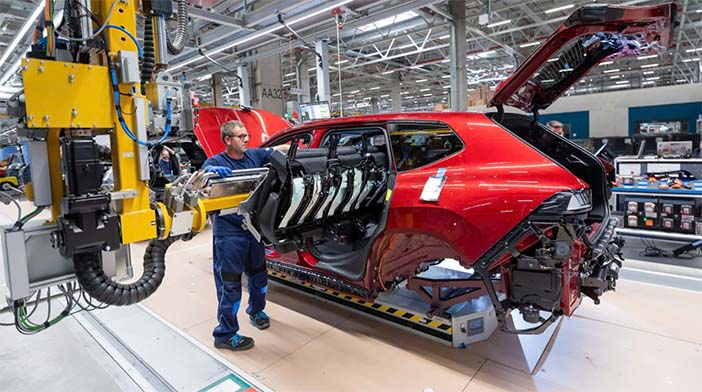
“Our business model is to export, so for sure we are in close contact with the federal government”, said Robert Engelhorn, CEO of BMW Manufacturing. “We are looking towards free trade. We are looking towards lower tariffs”. It might sound odd to have a major automobile manufacturer pressuring the government for tariff relief, but it’s becoming a popular move. In South Carolina, the powers that be seem completely happy to work alongside BMW, and the state’s governor wants to see lower tariffs for the automaker. “Over time, I’ve had conversations with the people in Washington about that very thing”, South Carolina governor Henry McMaster told. “Nothing moves real fast sometimes, but it’s all going to work out just fine, and this is more proof of it right here”. To be clear, none of this is all that crazy. In late October, news broke that the Trump administration promised Audi that it would provide some tariff relief if it started U.S. production. Toyota is now clamoring for a similar deal after paying more than $8 billion in tariffs during the last fiscal year. Automakers know that U.S. production is one key to improving their bottom line. It turns out that direct negotiations with U.S. officials are just another part of the puzzle. Spartanburg is BMW’s largest assembly plant. Each year, it makes more than 400.000 cars there, and then it exports around half to various countries. It’s America’s largest automotive exporter by value. At the same time, it imported around 215.000 cars into the U.S. last year from production facilities in Germany and other nations. Expanding its footprint in South Carolina, for now, is almost entirely tied to BMW’s EV future. Of the $1.7 billion, $700 million went toward BMW’s Woodruff battery assembly facility, which just opened. The rest will help BMW prepare for EV production at the Spartanburg plant. Interestingly, BMW announced the plan back in 2022. Clearly it’s hoping that as it follows through on that plan, the Trump administration will relieve it of some tariff duties on the cars that it’s importing. For now, there’s no telling how much, if at all, the government will help BMW’s bottom line. +++
+++ 4 years after the current wave of car brands from CHINA began to take the European market by storm, stories and rumours about long vehicle repair times continue to circulate, despite claims by the companies that they have substantially improved their aftersales support. This September, the Jaecoo 7 topped the UK sales chart when almost 11.000 examples were sold, which moved it into the number-2 spot for 2026 behind the Ford Puma. For the year to date, Chinese brands have achieved an 18% overall market share (319.000 sales), almost doubling their volume over the same period last year. However, complaints about long vehicle repair times persist. Although gripes on most Chinese car forums typically concern issues of poor car handovers and problems operating infotainment systems, there are exceptions, including one owner who, writing in September, told of having waited more than 11 weeks for a part and another owner 9 weeks. Fellow forum users insisted their experiences were unusual. Industry experts say that complaints about Chinese cars attract disproportionate attention. “Because of the narrative around Chinese cars, when somebody has a poor experience with them, it does tend to be amplified”, said Ben Townsend, head of automotive at Thatcham Research. “However, I’m not seeing any data that is telling me there is a fundamental problem with average repair times. We are seeing some instances of certain parts being delayed, so that around one in 10 or one in 20 repairs may take slightly longer because of that one delay, but I’m not seeing anything hard and fast across the market that is telling me repair times with Chinese cars is a problem”. Townsend acknowledged that the rapid growth of Chinese brands has created challenges. “Omoda and Jaecoo, for example, have come from nowhere to over 100.000 units a year in just 2 years”, he said. “Growing your supply chain at that speed is a challenge. It doesn’t help that especially in a typical front-end impact, Chinese vehicles sustain around 50% more damage than European cars, which, because of the additional number of new parts required, places a greater strain on the supply chain. “As Chinese brands mature in the marketplace, they are beginning to change the way they’re designing the cars to be much more in line with the way that a European brand would design a car, but it will take time for these vehicles to filter through to the marketplace. In the meantime, Chinese brands are doing a lot to try to keep up with parts supply and demand”. Unfortunately, keeping up with demand for replacement parts is still a work in progress for some brands. The ZF Group is a tier-one supplier producing and supplying original parts to car makers including Chinese manufacturers. In China alone it has more than 50 factories. It claims it is experiencing growing demand from independent parts distributors requesting parts faster than Chinese brands themselves can deliver them. “When you search for how many service points there are for Chinese brands, they can tell you how many sales points there are, but does each one of them offer service?” asked Yan Lockhart, key account manager at ZF Aftermarket. “Everyone needs their car to work, but as soon as the dealer doesn’t have a quick answer or a quick solution from the manufacturer, some owners and fleet managers are reaching out to independent workshops and parts distributors who can supply or fit our parts that we already make and supply to the Chinese brands. The big parts suppliers and distributors are pushing us like crazy. It’s unusual so early in the cycle of a new car brand, so by the end of next year we aim to have parts for the top 10 Chinese models. Meanwhile, we have 1500 workshops in the UK signed up to ZF ProTech delivering training to technicians on fitting our parts”. Perhaps when it comes to Chinese cars and their repair times, there’s no smoke without fire. +++
+++ The wild popularity of the JAECOO 7 is about to be bolstered by a new Luxury+ flagship for the range. Already the UK’s second-best-selling car in 2026, the 7’s appeal will probably be broadened further with this new grade, which swaps the 18.4 kWh battery of other 7 SHS-P (plug-in hybrid) models for a 26.6 kWh unit. This adds 35 km of electric-only range, for an official total of up to 130 km. Also new is the option of all-wheel drive, which increases the power output to 356 hp and the torque to 490 Nm, giving a hot hatch-like 0-100 kph time of 5.9 seconds. The AWD version does lose a bit of EV range, but it still manages up to 110 km.
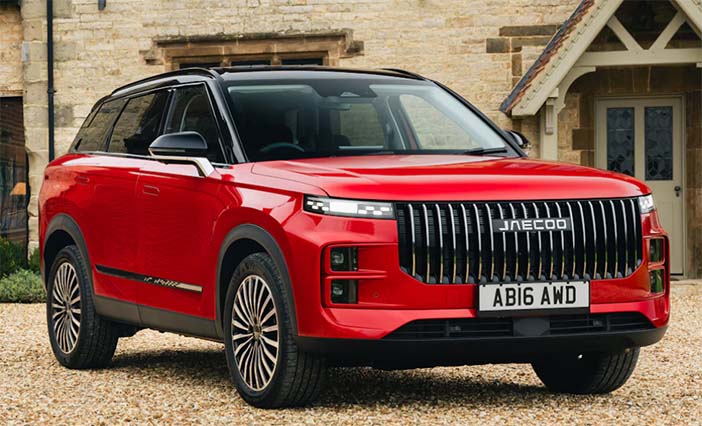
There’s 65 kW DC rapid charging available on both models, with a 30-80 percent charge taking 15 minutes in optimal conditions. The front-wheel drive Jaecoo 7 will still be quick enough for most, with 204 hp and 365 Nm of torque for a 0-100 kph time of 7.8 seconds. Whichever specification you choose on your Luxury+ model, there’ll be more equipment than in other Jaecoo 7s. The list includes 19-inch alloy wheels, heated seats and perhaps unexpectedly, redesigned rear door handles intended to “bring a more tactile, premium feel”. There’s also now a set of dedicated buttons for adjusting the door mirrors, something we’re really hoping makes its way onto the rest of the range. One element that we know will definitely be enjoyed across the Jaecoo 7 range is a “less intrusive driver assistance suite”, which Jaecoo says can be tailored to the driver’s preferences “with a single tap”. The brand adds that there will be “fewer unnecessary alerts and interventions”. That’s good news, because the Jaecoo 7 with the existing systems struggled when we assessed it in our ADAS megatest. Existing Jaecoo 7 owners can expect the rejigged systems to be rolled out free of charge in early 2027. +++
+++ KIA has confirmed plans to complete development of its first “software-defined vehicle” by the end of 2027, suggesting the all-new, sub-€20.000 EV1 will be ready sooner than initially anticipated, ahead of its Hyundai Ioniq 1 sister car. In a release issued to celebrate 40 years of Kia electric cars, the brand said it has “no intention of resting on its laurels”, with plans to “complete development of an all-new B-segment electric hatchback by the end of 2027”. While not explicitly stating the car’s name, it’s understood Kia is referring to the much-mooted EV1; a city-car-cum-supermini designed to sit beneath the EV2 crossover. Previously, Kia’s executive vice president and head of its global operations division, Ted Lee, told that Kia and Hyundai are working together on a bespoke EV architecture that will underpin the two firms’ new entry-level electric cars coming soon. It makes sense that these brands would work together on this project, and not just because they are both part of the Hyundai Motor Group. Developing a brand-new platform is not cheap, so being able to spread the cost of that and sharing various parts between their cars will help make them as affordable as possible. +++
+++ LAMBORGHINI has revealed the new 340 kph Temerario Spyder as the brand celebrates 50 years of open-top supercars and it features the firm’s first retractable hard-top roof. The Spyder will share the same 4.0-litre twin-turbo V8 hybrid drivetrain as the standard Temerario, revving as high as 10.250 rpm with launch control and producing a combined output of 920 hp. Despite inevitably being slightly heavier than the 1.7-tonne coupé (Lamborghini hasn’t said by how much), the Temerario Spyder is just 0.1 second slower to 100 kph than its fixed-roof stablemate, needing 2.7 seconds to complete the sprint, so it is still one of the quickest-accelerating ICE cars on the market. Design director Mitja Borkert said: “The most stimulating challenge was integrating a complex system such as the retractable hard top without turning it into an add-on, preserving the purity and tension of Temerario’s proportions”. To achieve this, the Temerario Spyder will feature a pair of streamlined cowls extending out from the cabin towards the tail, helping to emulate the shape of the coupé. Unusually, the roof folds vertically behind the seats, rather than horizontally into the rear deck. Lamborghini says this arrangement brings dynamic benefits because it lowers the centre of gravity when stowed. The twin-turbocharged V8 will also form an integral part of the Spyder’s design because a new engine cover showcases the powerplant as a central focal point at the rear.
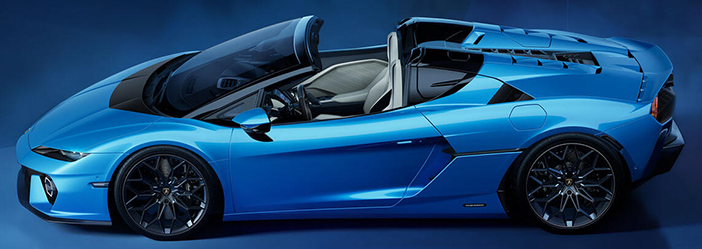
With modifications to its all-aluminium spaceframe designed to match the dynamic properties of the fixed-roof car, the Temerario Spyder is claimed to be 6% stiffer compared with the old Huracán Evo Spyder. There are also a number of practical advantages over the old V10 car, such as 46 mm more leg room and the ability to run fully electric in town, with up to 190 hp from the EV motors. The Temerario Spyder faces stiff competition in the open-top supercar segment from the Ferrari 296 GTS, a car 200kg or so lighter than even the coupé Temerario. The Lamborghini will have an 90 hp power advantage over the Ferrari, though, as well as a staggering 170 hp over the outgoing McLaren 750S Spider. +++
+++ The VOLKSWAGEN T-ROC R has returned to rival the BMW X2 M35i, packing more power thanks to the addition of hybrid power. The second generation of VW’s high-rise hot hatch is a familiar recipe, sharing the bulk of its make-up with the Golf R. But the company says there have been “quantum leaps” in the evolution of the MQB architecture that underpins it and the new T-Roc R marks “a new level of the R SUV models in every respect with its driving dynamics, driving safety and ride comfort systems”.
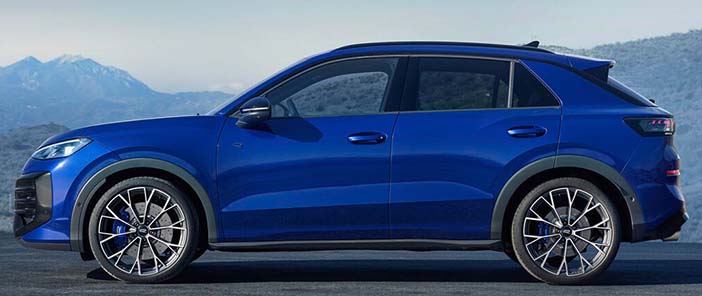
Arriving a year after the standard second generation T-Roc, this new performance version will be one of just a handful of dedicated hot crossovers on sale, alongside the closely related Cupra Formentor VZ and the most potent version of the BMW X2. It uses the same 2.0-litre turbocharged engine as the Formentor, as well as the Golf R, Audi S3 and Cupra Leon VZ, but it is the first car to add mild-hybrid assistance to the venerable EA888 lump. It has 330 hp and 420 Nm at its disposal, sent to both axles through the ubiquitous 7-speed DSG and torque splitter, and can dispatch 0-100 kph in just 5.0 seconds. With the addition of a new 48 Volt starter-generator (expected to be rolled out to other EA888 models in due course as VW makes its line-up compliant with tough new emissions regs) the new Evo 5 version of the 4-pot is said to have more torque at low engine speeds and to accelerate more smoothly, with the MHEV system mitigating turbo lag. The hot new T-Roc retains ’typical’ R features including the high-rev start-up (briefly spinning up to 3.000rpm when fired up for added theatre) and the backfire noise during deceleration. There’s no word yet on which models will get the MHEV powertrain next, but VW’s description of the T-Roc R as “currently the most powerful Volkswagen SUV” suggests a return of the short-lived Tiguan R is also on the cards, as VW marks 25 years of its R division in 2027. The new R also comes with DCC adaptive dampers, Race and Drift driving modes, a sporty design makeover and the option of an Akrapovic sports exhaust. VW will reveal pricing closer to the R’s launch in early 2027. +++