
+++ AUDI has some explaining to do when it comes to the Nuvolari’s eye-watering price tag. At $700.000, the new supercar costs roughly $300.000 more than the Lamborghini Temerario it’s based on. So, what exactly does that extra money buy? I put that question to Mark Dahncke, Director of Communications at Audi of America, and received a fairly extensive list of upgrades that set the Nuvolari apart from its Italian cousin. According to Audi, the differences go well beyond the design and the Four Rings, which are special in their own right. These aren’t ordinary badges: they’re milled from aluminum and integrated into the rear spoiler. The company points to a full carbon-fiber exterior, a material more commonly associated with full-fledged hypercars, as a major differentiator. Buyers can also opt for exposed carbon-fiber bodywork. By contrast, its counterpart from Sant’Agata Bolognese sticks to the supercar norm with an aluminum body. But here’s the kicker: the Temerario is actually still the lighter car. Lamborghini’s raging bull has a dry weight of 1.705 kg, compared with the Nuvolari’s 1.750 kg. The difference widens with the Lambo’s Alleggerita package, which sheds a further 25 kg. Then there’s the active, Formula 1-inspired aero, which generates more than 400 kg of downforce.
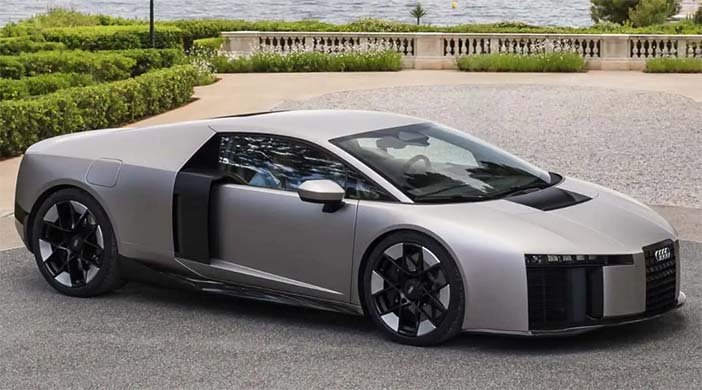
Audi told me that’s more than the Temerario is capable of, even if the latter has an optional Alleggerita pack that adds 67 percent more downforce than the base model. The Nuvolari’s aero advantage translates into “much faster lap times”, though we can’t imagine many owners taking their supercars to the track. The Nuvolari is also the more powerful of the two. Although the twin-turbo 4.0-liter V8 produces the same 800 hp and 730 Nm in both cars, the Audi’s combined output is higher once the 3 electric motors are factored in. Audi rates its R8’s spiritual successor at 1.001 hp, matching the original Bugatti Veyron. Meanwhile, Lamborghini’s Temerario makes do with “only” 920 hp. The Nuvolari also has a slight performance edge over its Lamborghini counterpart. Audi quotes a 0-100 km/h sprint of 2.6 seconds, making it a tenth of a second quicker than the Temerario’s 2.7-second run. The Audi also has a higher top speed, exceeding 350 km/h, compared with the Lamborghini’s 343 km/h. Those aren’t massive differences on paper, but they give the Nuvolari another couple of bragging rights over its Italian cousin. Although both cars come with carbon-ceramic brakes hugged by ten-piston front and four-piston rear calipers as standard, the discs are larger on the Audi. The Nuvolari gets 420 × 40 mm front and 410 × 32 mm rear discs, compared with the Temerario’s 410 × 38 mm and 390 × 32 mm setup. Audi told me the Nuvolari is its first car to feature a new Quattro predictive ride setup. This upgraded vehicle-dynamics system builds on the technology used in the Lamborghini. A central 6D movement sensor continuously monitors the car’s behaviour and anticipates grip changes, allowing the system to coordinate the three electric motors, brakes, and active aerodynamics to maintain stability. It can adjust torque distribution between the wheels and selectively apply the brakes to reduce wheel slip, while the front electric motors enable precise torque vectoring through corners. In other words, Audi has taken the Temerario’s already sophisticated vehicle-dynamics package and developed it further to help the Nuvolari stay composed under high lateral forces and on slippery surfaces. Audi has also focused on the cabin, promising high-quality materials at every touchpoint. The driver-focused interior features anodized aluminium switchgear, door handles, and air vents. It’s a taste of things to come, as the company vows to improve interiors in future production models after admitting quality had slipped. Aside from nicer materials, expect more physical buttons and smaller screens. There’s also the exclusivity factor. Production is limited to 499 units, making the Nuvolari exceptionally rare. The Temerario, on the other hand, has a long life ahead of it, given that its predecessors lasted many years. Both the Huracan and the Gallardo before it had a 10-year production run, so it’s reasonable to assume the newest model will remain on sale well into the early 2030s. Lamborghini built just over 24.000 Huracans and 14.000 Gallardos, so the Temerario is more than likely to rack up a 5-digit production run as well. That makes the Nuvolari’s limited run of 499 units look even more exclusive. While the Audi will be the more exotic supercar, its Lamborghini counterpart is expected to become a much more familiar presence over the coming years. In other words, Audi wants the Nuvolari to be considerably more than a rebodied Temerario with a different badge. The company is pitching it as a more powerful, more aerodynamic, more extensively carbon-fiber-clad machine with bespoke hardware and a fancier interior. Whether those changes justify a roughly $300.000 premium is another question entirely. After all, for $700.000, Lamborghini will happily sell you a V12-powered Revuelto. But at least Audi has now provided a detailed explanation of where it believes the extra money goes. Of course, it’s easy to imagine future Temerario derivatives gaining more power, additional aerodynamic upgrades, and other tweaks that could help it catch up with its Audi sibling. +++
+++ Following delays, BENTLEY ’s first electric vehicle is finally here, and early signs suggest it’s off to a flying start. The Torcal hasn’t even entered production, but the British luxury marque has already allocated all available 2027 production slots. Anyone placing an order now will have to wait until 2028 to get their hands on the electric SUV. Frank-Steffen Walliser, Bentley’s CEO, confirmed that production will begin in the first half of next year. Bentley isn’t disclosing how many vehicles it plans to build during the initial production run. Still, the company is clearly happy with the response: “Needless to say, we’re very pleased with the response and position we’re in”. The early success is particularly important because the Torcal represents a new entry point into Bentley ownership. It’s positioned below the larger Bentayga, giving the company a more accessible model to attract customers who might otherwise have looked elsewhere. Of course, going electric also breaks with more than a century of internal combustion engine tradition. The Torcal is based on the Volkswagen Group’s Premium Platform Electric (PPE) architecture and is closely related to the fully electric Porsche Cayenne. Interestingly, the hotter S version has been the most popular choice so far among early customers. Walliser also says the Torcal is attracting younger buyers and people who haven’t previously owned a Bentley. That’s precisely the kind of audience the company wants to reach with its new electric SUV. The CEO believes the body style is particularly well suited to an electric powertrain, offering the functionality and versatility buyers expect from a luxury SUV. He would have taken a different approach if Bentley had started its EV journey with a 2-door model such as the Continental GT. Perhaps the most interesting takeaway from the early orders is that customers aren’t holding back on personalization. Bentley has made bespoke commissions a priority under Walliser, and the Torcal is proving that expensive customization isn’t exclusive to gasoline-powered models. “We see cars spec’d north of €450.000”, the CEO told. In other words, some customers are configuring their electric SUV to cost almost twice as much as the entry-level version, considering a base Torcal starts at €252.161 in the Netherlands. That’s an encouraging sign for a company that wants to preserve its reputation for exclusivity as it transitions toward electrification. Bentley invested $463 million to upgrade its Crewe factory in England to accommodate Torcal production, with additional spending on research and development and supply-chain preparations adding considerably to the bill. The Torcal’s early reception is welcome news at a time when Bentley could sure use a boost. Global deliveries fell 17.5 percent to 5.970 units through September. Walliser believes the new EV’s lower starting price and excitement around a fresh model will help boost sales. However, he was also quick to point out that the Torcal isn’t intended to replace the gas-guzzling Bentayga. Bentley sees room for both luxury crossovers in its lineup. That makes sense, especially since the company isn’t abandoning combustion engines and plug-in hybrids across its other model lines. There’s an interesting parallel with Ferrari here. Bentley isn’t the only high-end brand to enjoy early success with its first EV. Maranello’s Luce is also sold out through 2027, with new orders not due for delivery until 2028. Of course, selling out an initial production run doesn’t guarantee long-term success. Bentley still has to convince traditional customers that an electric drivetrain belongs in a car wearing the winged B badge. For now, though, having a waiting list before production even starts is a pretty good problem to have. +++
+++ BMW is recalling 720.796 vehicles in the United States over a water pump electrical connector that can short-circuit and start a fire, even when the car is parked and switched off. NHTSA has told owners to park affected cars outside and away from structures or other vehicles until a fix exists. The campaign covers older 3 Series, 5 Series, Z4, X1, X3, X4, X5 and several 2 Series plus 4 Series body styles from the 2012 through 2018 model years. The problem sits in the water pump’s electrical connector. BMW says the seal on that connector can fail, letting water reach the terminals and short-circuit them. That short can ignite a fire while the vehicle sits parked and turned off. This isn’t a new defect. The campaign replaces an earlier recall that targeted the same connector but didn’t stop the failures. BMW opened this second campaign because vehicles already repaired can still short-circuit. Anyone who had the connector serviced under the first recall still needs the new fix once it’s ready. BMW describes additional testing that found issues such as embrittlement and cracking of the connector material. The company now says the earlier remedy didn’t resolve the underlying issue. This isn’t BMW’s first park-outside instruction this year. The automaker issued a similar warning in August tied to a separate fire recall. A starter relay defect prompted another one in September covering 3, 5 and 7 Series. There’s no repair yet. BMW says the fix is still in development, so dealers can’t schedule anything until the automaker finalizes a remedy and parts become available. Until then, NHTSA’s instruction stands: park the car outside, away from garages, carports and other vehicles. That’s the only action available to owners right now, whether or not a vehicle shows obvious symptoms. Owners will get 2 separate notices. The first, due in December 2026, confirms whether a specific vehicle is part of the recall. A second letter follows once the free dealership repair becomes available. +++
+++ We already know from the numbers that CHINA ’s domestic new car market is experiencing a slowdown. We also already know that Chinese firms have been making very little, if any, profit on each car sold due to their price war strategy and the resulting super-thin margins. By volume, China’s car industry is winning. By value, it’s a different story. According to a Bloomberg Auto Monitor newsletter, Chinese car exports are on track for around 10 million vehicles this year, yet the companies behind the boom have lost about $270 billion in market value since their peak late last year. That’s investor money, not profit or sales, but it points to a real problem: China is exporting so aggressively partly because nobody is buying at home. Bloomberg says retail sales in China fell for a 13th straight month in October, blamed on the property crisis and rolled-back subsidies. More than 100 brands are still chasing buyers, and consolidation hasn’t happened. The price war has been built on cars sold at a loss, and the result is excess capacity. “In China, they’re killing each other”, said Edmund Harriss of Guinness Global Investors. “Outside China, they’re killing the incumbents”. That pressure is now moving abroad. Europe’s listed automakers have lost about $250 billion in market value since their 2024 peak, per Bloomberg. Mercedes-Benz, Volkswagen and Porsche each reported third-quarter China sales declines of more than 30%. Volkswagen is planning about 100.000 job cuts across the group, and BMW, Renault and Jaguar Land Rover are also cutting costs. The picture is mixed for drivers. Tianlei Huang of the Peterson Institute for International Economics told Bloomberg that China is “exporting a new competitive benchmark for how quickly and cheaply vehicles can be developed and produced”, which could benefit consumers and speed up EV adoption. But it could also make weak profits permanent across the industry. Chinese EV makers are eyeing America on price, though this report doesn’t say when or whether they’ll arrive here. The takeaway: cheaper, faster-developed cars are coming, but the companies making them aren’t getting rich, and the ones competing with them are shrinking. +++
+++ The FORD BLUECRUISE feature is a suite of driver-assistance tech that should allow Level 2 autonomous highway driving on select roads. It allows drivers to take a bit of a break from driving whenever they end up on a pre-mapped highway on their journey. Ford does advertise that BlueCruise is not fully self-driving. Currently, it’s only available on the Kuga and Puma, which carry a premium price tag on dealer lots. Now it looks like someone wasn’t too happy with how his vehicle was going about BlueCruise updates, and how the feature worked in general, resulting in a lawsuit for Ford. The word “nightmare” was also used to describe the update process of BlueCruise. In a nutshell, the plaintiffs are claiming that BlueCruise doesn’t operate and update as advertised by Ford. They have tried to acquire software updates every 4 to 6 weeks.

The lawsuit further contends and says: “Where a software defect prevents a represented driver-assistance function from operating as designed, the resulting condition may constitute evidence that the affected product does not conform to Ford’s representations and may, depending upon the facts and governing law, constitute a product defect”. The picture that the lawsuit is trying to paint is a feature that doesn’t deliver on its promise and is a nightmare to update. Customers have supposedly overpaid for their Ford with Blue Cruise, and reportedly lost money trying to update their vehicles and failing. Furthermore, the lawsuit alleges that the vehicles have lost value because Blue Cruise fails to deliver. In addition to the “nightmare” updates, BlueCruise also doesn’t deliver its driver-assistance features as advertised. The plaintiffs are currently investigating complaints about BlueCruise while driving. +++
+++ GEELY ’s new Monjaro 7-seat SUV will have one of the longest electric ranges of any plug-in hybrid cars sold in Europe. The Chinese company has confirmed that its incoming Skoda Kodiaq rival will be available with a substantial 40.1 kWh battery pack that holds enough energy for up to 170 km of engine-off running. That’s further than the majority of its rivals, eclipsing the similarly sized Omoda 9 and Jaecoo 8 PHEVs, and almost matches the new XC60 from sibling brand Volvo, which claims 200 km on EV power. That largest battery will be available in the range-topping Ultra and Hyper variants, while the cheaper Pro and Max versions will use a smaller 30.7 kWh pack good for 140 km. Charging speeds top out at 90 kW in the standard car (already quick for a PHEV) while the longer-legged model boosts that to 120 kW.
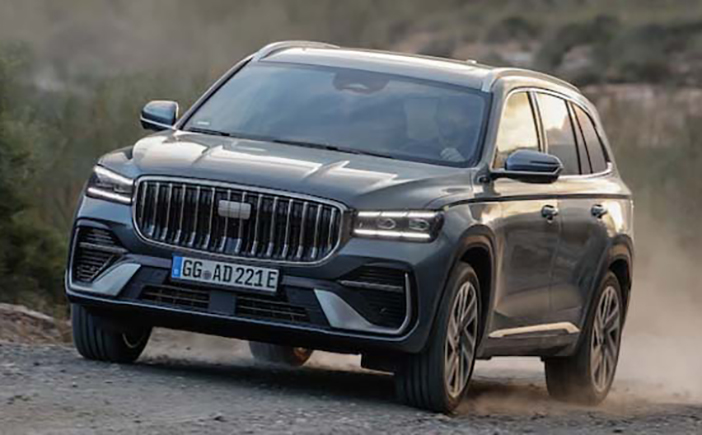
Both are expected to use a 1.5-litre naturally aspirated petrol engine (as in the smaller Starray PHEV), although Geely has yet to confirm full specifications. The 40.1 kWh cars will have 4-wheel drive and 320 hp, courtesy of an additional electric motor on the rear axle, while the 30.7 kWh cars will be front-driven, with 248 hp. The quickest will get from 0-100 kph in 5.9 seconds. Prices remain to be confirmed ahead of the Monjaro’slaunch in the coming months but are expected to start under €55.000 in the Netherlands. Already on sale in China as the Xingyue L, the Monjaro is not yet offered with PHEV power in other global markets. It will face off with a growing number of Chinese D-segment hybrid SUVs, including the biggest Omoda and Jaecoo SUVs, MG S9, BYD Seal U and Leapmotor C10. Geely said the Monjaro will be a “global advanced handling and quality benchmark among the D-SUV hybrid segment” and will serve as the flagship for its growing global line-up. +++
+++ No premium automaker has ever reached 400.000 annual unit sales in the United States. BMW has come close at nearly 390.000 cars in 2025, but that’s pretty much it. But while Munich is closer to reaching that number, MERCEDES-BENZ wants to beat its compatriot to that achievement first and reclaim the crown as America’s favorite luxury automaker. Mercedes announced its ambitious goal late last year and further reiterated it earlier this year. The German automaker is doing all it can to reach it, not just in products but also in operations. At the moment, it’s still quite far away from the target, with an estimated tally of 315.000 by the end of 2026. The projected total sounds good on paper, but the company was gunning for 325.000 retail sales at the start of the year. It’s not totally bad news, though, as fleet sales should add a couple thousand more. That still puts it behind Lexus and BMW, but that’s making Mercedes work even harder to hit its target. There is progress, as Mercedes-Benz sales in the U.S. are actually up compared to 2025 figures. First-half sales are up by 15% year on year, while 2026 third-quarter figures also rose by 3% compared to 2025. Mercedes will aim for more than 330.000 U.S. retail sales in 2027. It was said to be announced during a recent dealers’ meeting in Las Vegas. Nearly 60 percent of sales are attributed to customers choosing a Mercedes-Benz for the first time. With that, the brand aims to capture those new owners and turn them into lifelong clients. The key here will be a strong product offensive, which the brand has been busy building up in record time. Mercedes’s revitalized entry models will play an important role in all of this. The CLA is already off to a great start in Europe and seeks to replicate that success in the U.S. in both electric and hybrid guises. Meanwhile, the all-new GLB aims to do the same with a more practical body style, and the comprehensively redesigned GLA has become a more junior GLC. These models are designed to attract first-time customers, and they should be impressive from the get-go to actually keep them for longer. On top of that, Mercedes is in the process of fixing its relations with its dealers. In a previous report, Mercedes-Benz USA CEO Adam Chamberlain admitted that the company “had lost the core of some of our relationship with our dealers”, adding that “We’ve been really intentional on trying to simplify, declutter the relationship with the dealers”. There are several more incoming models that should help Mercedes-Benz in its cause. For instance, the facelifted C-Class should be gearing up for its U.S. release, while the electric version is looking like a promising model. The GLS and GLE have also benefitted from crucial updates, while the electric GLC is getting ready to hit showrooms. Indeed, there will be several 2027 and 2028 model-year releases for Mercedes, and every car has an important role in reaching the ultimate goal. That said, record sales aren’t the only thing that Mercedes would like to achieve by 2030. With tariffs eating up a big chunk of earnings, the company is pushing forward for its plans to build its best-selling GLC in the U.S, but the first American-made model will have to wait until the crossover’s next full model change. +++
+++ VOLKSWAGEN will unveil a “really spicy” new hot hatch concept based on the ID.Polo GTI later this week. The firm has previewed what appears to be a pumped-up take on its first electric GTI model, with a massive rear wing and extended wheel arches visible beneath the cloak. It will form part of ongoing celebrations for GTI’s 50th anniversary and could give clues to a hardcore Clubsport version of the ID.Polo GTI.
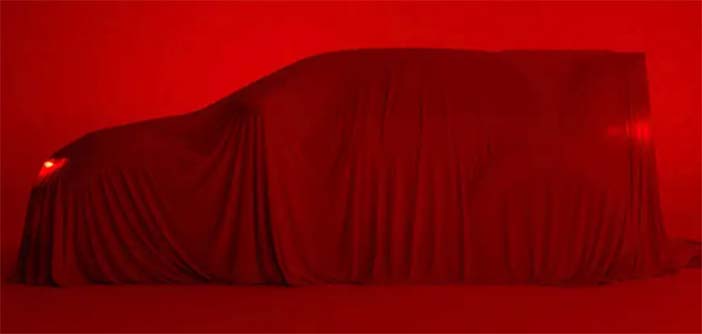
Insiders at Volkswagen revealed that development was under way on a hardcore range-topper, with its power ramped up from the standard 226 hp to nearer 300 hp, and an extensive package of chassis modifications, including the fitting of a new limited-slip differential. Volkswagen’s dynamics chief, Florian Umbach, confirmed the upgrade: “There is certainly more peak power that we can find from the motor and battery hardware that we have and more torque that the front axle could handle also. There is clear potential”, he said.
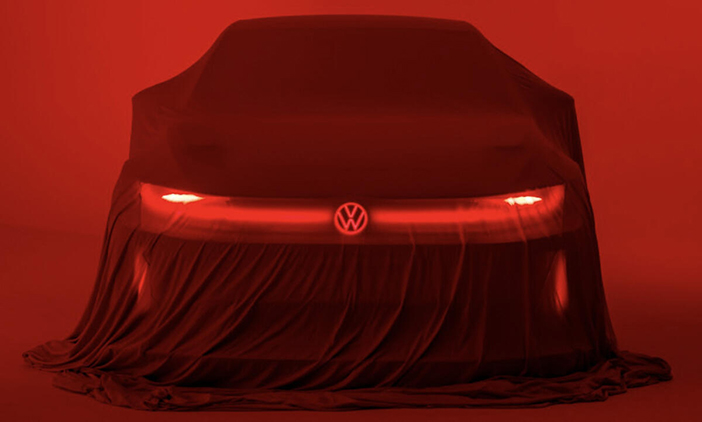
Umbach added that a paddle-operated simulated gearbox was on the cards. It’s unclear whether this concept unveiling is linked to that programme, but the aggressive styling makeover is in keeping with a similar treatment for previous Clubsport versions of the Golf GTI. +++