
+++ ALPINE is preparing to substantially upgrade its A290 hot hatch next year with a more powerful motor, a range of nearly 450 km and potentially a rapid, 4WD GTX version. The compact EV has become Alpine’s best-seller in Europe, led by France and the United Kingdom, with 5.890 examples sold in the first half of 2026; an increase of 60% compared with the same period in 2025. The main A290 news for 2026 is the launch of the new Collection trim, revealed at last month’s Paris motor show, but the Dieppe-based manufacturer is already preparing more extensive technical upgrades for the years ahead. Currently the A290 offers up to 365 km of range in 220 hp GT Performance and GTS forms, rising to 382 km in the 180 hp GT. However, those figures are set to improve next year. The current 52kWh battery will be replaced by a new 56 kWh pack that will also be used in the technically related Renault 4 and 5. This will enable all 3 versions of the A290 to achieve more than 400 km per charge, while the GT is expected to approach 450280 miles in line with the longest-range Cupra Raval. Those gains will also be helped by improvements to the ‘6AM’ electric motor, as introduced by the facelifted Renault Megane and Scenic. Renault Group engineers have worked to reduce losses within the motor in order to improve efficiency, particularly at higher speeds, such as on motorways. Competition in the electric hot hatch market is intensifying. The A290 now faces the 226 hp Raval VZ and Volkswagen ID Polo GTI, while it’s outgunned by the new 281 hp Opel Corsa GSE and Peugeot e-208 GTI, plus the 258 hp Mini John Cooper Works Electric. In response, Alpine engineers have been working on upgrades for the A290. As a result, the electric hot hatch is set to gain more power during 2027 with the arrival of a 250 hp version of the 6AM motor, paired with the new 56 kWh battery. The move is expected to significantly improve the performance of the hot hatch, which can currently crack 0-100 kph in as little as 6.4 seconds. However, Alpine has an even more radical version in the pipeline and it could become one of the quickest and most potent cars in its class, with output boosted to 300 hp by a second motor on the rear axle. Alpine has been working on this version for several months in an effort to boost not just the A290’s performance potential but also its dynamic ability. One of the main challenges associated with high-performance EVs is the amount of torque that the front axle has to handle. Alpine has therefore chosen to add a 400V e-axle at the rear; a solution that is technically possible thanks to the A290’s multi-link rear suspension. The biggest obstacle remains cost, though, because developing such a system represents a significant investment, given the relatively modest sales volumes expected for the range-topping variant. However, the A290 will benefit from the development of a new dual-motor version of its Renault 4 cousin, which has now been approved for launch in 2028 following the unveiling of a concept last year. The 2 models will share the same technology, which is being developed by French supplier Valeo. The system is derived from the 48V rear electric motor used by the 4WD versions of the Dacia Duster, Bigster and Striker, but it will be substantially more powerful and equipped with a 400V inverter for use in fully electric vehicles. +++
+++ Germany’s armed forces have drawn a line at the gate. Some cars made in CHINA from BYD, Nio and Geely now get stopped before they reach sensitive Bundeswehr sites, over what their cameras and sensors might record. The defense ministry says the restriction applies to connected vehicles broadly. It isn’t aimed at a named list of brands or countries. Soldiers driving an affected car must park outside and walk in. People familiar with a non-public counterintelligence assessment said Germany barred certain vehicles from bases because their signals could potentially collect and pass on data. Lists circulating inside the Bundeswehr name specific Chinese models barred from facilities classified as security areas. Defense ministry spokesperson Mitko Müller told a government press conference on November 11 that local security officers set the actual access rules, site by site. A connected car might be kept out of one restricted zone while still parking in a lot farther from sensitive buildings. That local discretion means there’s no single published list of banned models. Officials haven’t confirmed whether brands beyond BYD, Nio and Geely are involved. Geely’s German footprint runs wider than its own badge, through Volvo, Polestar, Lynk & Co, Zeekr, Lotus and its joint ownership of Smart with Mercedes-Benz. Stuttgarter Zeitung reported that no publicly substantiated evidence shows any of these cars sent Bundeswehr data to Chinese intelligence services. The entry limits are described as precautionary. Germany isn’t alone here. Poland restricted Chinese-made vehicles at military facilities in February, covering any car able to record location, video or sound unless those functions are switched off. The push toward a permanent ban on Chinese connected vehicles has been building across several Western governments. The ministry named cameras, microphones, radar and ultrasonic sensors as the specific equipment behind the concern. All of it is designed to gather data about a car’s surroundings for parking assist or driver monitoring. Near a barracks, that same hardware could map layouts, routines and equipment. This isn’t only about EVs. The restrictions apply to any connected car carrying that sensor suite, regardless of powertrain or country of origin. That’s also why European scrutiny of BYD has widened beyond a single automaker. The vehicle restriction sits apart from a separate, already confirmed decision. The Bundeswehr will stop using Chinese-made drones for training and replace them with German or other European models. The policy covers future training and exercises. Other governments have moved on similar grounds. The pricing pressure from Chinese EVs in Europe has already reshaped the competitive conversation. In October, the US military barred privately owned BYD vehicles from entering Kadena Air Base in Okinawa, Japan, citing security risks tied to the same sensor categories. +++
+++ Jaguar Land Rover CEO PB Balaji has confirmed that the firm will begin producing the new electric DEFENDER SPORT next year. It is the first official confirmation of timelines for the firm’s new entry-level SUV. Speaking to journalists on the firm’s second quarter earnings call, Balaji didn’t name the new model explicitly, but confirmed that “the Range Rover GT and the Defender electric start off in Halewood next year”, referring to the Merseyside plant which currently builds the Evoque and Discovery Sport. The new downsized Defender will share the flexible EMA platform that underpins the new GT, and will likewise offer the choice of pure-electric and hybrid powertrains. Balaji confirmed that hybrid development was “fully underway” but only the EV is set to be ready for launch by the end of 2027. The Discovery Sport retires in the coming weeks to make way for the GT to begin production in Halewood early next year, and Balaji confirmed the Evoque will also be phased out later next year, to be replaced by the little Defender. While it is widely referred to as the Defender Sport (in keeping with Land Rover’s tradition of using the suffix for smaller versions of full-sized models), JLR has not yet revealed the new SUV’s name. Another option on the table is Defender 80, which would clearly position it below the 90, 110 and 130 versions of its namesake. Mark Cameron, managing director for the Defender and Discovery brands, previously told that work on the new Defender variant was “well advanced”, and promised it will be “class-leading in the attributes that make it a Defender”. Notably, the new model will be the first entirely new product since Defender was turned from a model line into a brand (along with Range Rover and Discovery) under JLR’s ‘House of Brands’ approach. It will also be the first in an expanded range of Defender products. Cameron said the 3 years since the new plan was announced have been spent developing new products and establishing what Defender stands for. He added: “Over the past couple of years, our design and engineering teams have created that red line, the circle that every Defender had to have. That’s the DNA”. The Defender is currently offered in 90, 110 and 130 bodystyles, along with the hot Octa variant and the commercial Hardtop. Cameron said the focus was on making Defender “a luxury lifestyle brand”, adding: “We’ve got a portfolio of one model with several variants, but I’m working seven to 10 years ahead to build out this whole brand portfolio. We’ve got to make sure everything we do as Defender has the DNA of the brand: epic built-to-last, go-anywhere capability”. The Defender Sport is an entirely new product rather than an attempt to create an electric equivalent of the current Defender 90; a decision driven by the design differences required by the use of a bespoke ‘electric-first’ platform. Tipped to be just over 4.5 meter long, it sits on JLR’S EMA platform, while the more premium-focused Range Rover and Defender will use the firm’s MLA platform, and Jaguar has developed its own bespoke EV architecture, named JEA. Using a platform with underfloor batteries creates “vehicle constraints”, said Cameron. He added: “The size of the vehicle and platform will probably reduce wheel travel and articulation compared with a current Defender”. But while that means the Defender Sport won’t offer the same level of off-road ability as the current Defender line, Cameron has vowed that it will still be designed to offer substantial off-road capability. “What matters to us is that a Defender has to be class-leading in the attributes that make it a Defender”, he said. That means it will retain four-wheel drive, suggesting a dual-motor set-up. Cameron said the emphasis on efficiency for EV design (vital for maximising range from the battery or fuel economy from a hybrid) created challenges “given the silhouette of what most people would know a Defender to be: very upright, sharp window angles, a bluff rear end”. He added: “The capability we have in our vehicles carries a penalty that works against you when you think about range for an EV. My job is to make sure we retain Defender’s DNA, otherwise we become another SUV brand and there are plenty of those”.
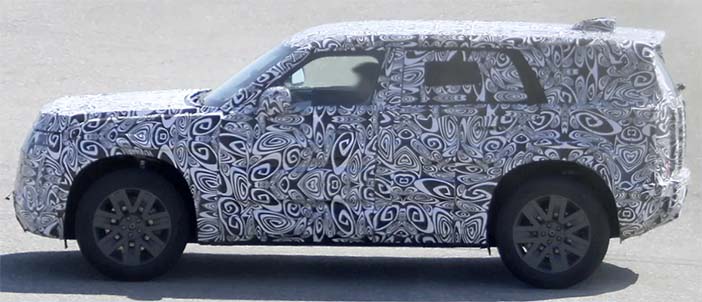
Cameron acknowledged that Defender EV test cars had already been spotted by spy photographers and said the firm was “well advanced” with development. He also noted that the firm had put a focus on “maintaining our test cycles”, rather than trying to chase a faster development cycle in order to keep up with Chinese rivals. “What has disrupted our industry hugely are shrunken test cycles due to some of the Chinese brands”, he said. “Their speed to market is just incredible. But we have always maintained that we need to have at least 2 winter test cycles and 2 hot weather test cycles for a Defender. We’re looking at ways to shrink our product development time, but we don’t want to compromise on quality and longevity and all the things you have to deliver as a luxury brand”. Cameron also indicated that JLR has put a focus on where it can best add value, saying: “As a business we’re looking at where do we partner, and where do we build in-house, You’ve got to work out your core competencies. If you look at the EV world, the actual battery pack and the electric drive units have, to some extent, become commodities. But do they give us the torque characteristics and off-road drivability that Defender has to have? Those are big decisions: the quickest way to market is to buy all that in, but that’s not necessarily the right answer for Defender”. Cameron wouldn’t be drawn on specific product plans beyond the brand’s first EV, but when asked how big a potential Defender line-up could become, he said: “Huge”. That is likely to include multiple powertrain options given what Cameron called “the complexity of EV adoption”, which results in the level of customer demand lagging behind the expectation of legislators. That’s a challenge given Defender’s global footprint: a majority of its UK sales are currently diesel, while its biggest market is now the US, where electrification is firmly on the back burner. The importance of the US market is likely to have steered the addition of hybrid power to EMA. “Our strategy is to offer as much choice for as long as we can”, said Cameron. “Clearly with the Defender, because of the capabilities, toughness, the weight and the geometry of it, as long as we can keep selling petrol and diesel with hybridisation and other forms of interim technology, we’ll continue to do so”. The Defender is currently offered with a plug-in hybrid powertrain, but that is built around a 4-cylinder engine and has a limited electric range, because the D7 platform wasn’t designed for the technology. Cameron hinted that would change in time, saying: “We’re going to be relying on future generations and different architectures to expand those sorts of technologies”. Notably, Cameron said Defender’s growing international focus could Influence its line-up: “Beyond the UK there are vehicle types that are absolutely suitable for Defender in certain geographies. The US is now our biggest market, and there are product categories popular there we can absolutely bring Defender into”. That suggests a revival of previous plans to develop a Defender pick-up given the size of that market in the US, although Cameron wouldn’t expand on specifics. But he noted that growth could also come at the other end of the range, because “in Europe they need small cars for tight streets”. He added: “The red line we’ve got to draw is that any future versions of Defender still have to have the same characteristics that every Defender needs. There’s no reason you can’t go smaller, bigger, longer, higher and still cover those bases. The biggest challenge is that we don’t want to be all things to all people, so we’ve got to work out where to focus and it’s not about volume for us. It’s about building a good, profitable, margin-led business and satisfying customer needs in segments and markets that don’t exist today. If you look at JLR as a business, we’ve always been at our best when we create segments. Range Rover is a great example. The Evoque was a great example. Defender today is a good example: it reimagined the rugged SUV segment. So we’re going to look carefully at those white spaces in the market where we can credibly have a Defender product. But we won’t copy something just to chase volume, because that’s not what our business plan is”. +++
+++ JAGUAR LAND ROVER ’s push into the US market, set to be supercharged by a Stellantis partnership building the Defender Stateside, looks set to unleash significant growth for the British luxury car maker. “If we execute our plans well, the US business can be as big as JLR is today”, CEO PB Balaji told on a call to discuss the company’s most recent financial results. “That is the holy grail that we need to get to, and we are quite excited and absolutely confident we will get there”. In the 2025 financial year, North America accounted for around 100.000 units, a quarter of JLR’s total volume. Merely doubling sales would give JLR a huge profitability shot, given Balaji’s strategy to lower the company’s breakeven point to 300.000 cars a year. JLR and Stellantis announced a memorandum of understanding in May, to explore a North American collaboration. Land Rover’s US dealers have long coveted a Defender pick-up, a dream that could become reality by tapping into a Stellantis body-on-frame vehicle architecture. “There’s definitely a portfolio that’s relevant to the US”, the boss told us. “Hence we are in conversation with Stellantis on the Defender brand: are there interesting opportunities we can work with them on? Both companies are working feverishly on this topic; we hope to come back with a clearer announcement in the coming months”. Manufacturing is the obvious win-win opportunity, with JLR able to boost its American volume without incurring import duties, and circumnavigating the glass ceiling of the 100.000 annual units across all British auto exporters. “We’ll still have 10 to 15 percent excess capacity in the United States, even with everything Stellantis plans to build”, a Stellantis executive recently told. “And the value to JLR of American assembly is very clear”. The talks are homing in on Land Rover tapping into Stellantis architectures, rather than JLR trying to implant a platform. “We have enough volume that sharing components doesn’t help us much on cost. JLR would benefit from it, but we would benefit from the reduced excess capacity”, said our source. JLR pivoted to the US market in early 2025, following the collapse in Chinese sales for western car brands. “China was considerably down for us in the most recent quarter”, JLR chief finance officer Richard Molyneux told. “The US as a market will remain attractive for quite some time to come, given the sheer amount of wealth creation”, said CEO Balaji. “Our luxury brands offer an extremely differentiated proposition for customers. But in terms of penetration, they do have some distance to cover, so as we start investing into the US, there is significant growth opportunity. But it is going to be a tough fight, as in any market”. Balaji also confirmed JLR was in the thick of 5 new model launches, out to 2027. JLR is meeting 4.500 advance orders for the Range Rover Electric and its zero emission Sport sibling, while Jaguar Type 01 deliveries are set for summer 2027. Also ramping up next year are 2 electric cars out of Liverpool’s Halewood plant, the swoopy Range Rover GT and the mid-size electric Defender. JLR grew revenues by 3 percent over the July-September 2026 period, to 7 billion euro. Profit before tax and exceptional items (a 620 million hit, largely for redundancies to chase the lower breakeven point) was a slight 7 million. But it showed the firm was bouncing back from September 2025’s cyber attack: the comparable figure for last year was a 570 million loss. +++
+++ PORSCHE is working on a new mid-size petrol-powered SUV to fill the void left by its decision to replace the previous Macan with a purely electric model. The SUV will be fast-tracked on a 36-month development programme that will put it on the road by 2028. When it does arrive, it’ll come with an urgent mandate to help mitigate Porsche’s financial meltdown, in large part caused by the slow take-up of its electric cars, brutal US tariffs and a dramatic drop in sales in China. Porsche’s chairman and CEO Michael Leiters has acknowledged the importance of the new model, saying: “Combustion engines and plug-in hybrids remain an important part of our future product strategy; they continue to play a highly relevant role for many Porsche customers”. However, the new SUV won’t be called Macan: that badge will remain only on the battery-powered model still on sale. Instead, Porsche will create a new name to help distinguish the new car from its electric sibling in markets that will offer both. This also suggests that it could extend its reach further than the previous petrol Macan, with new powertrain options and more high-performance variants. As with the first Macan, Porsche will look to Audi for its technical starting point by sharing the PPC architecture used by the Q5, A5 and A6. This will define some of the new Porsche SUV’s fundamental layout, such as a longitudinally mounted engine, but much of the suspension and chassis hardware will be developed by the company in-house. Michael Steiner, board member for research and development, recently told: “We’ll take care to share parts, but with a clear difference. It’s not merely a derivative of the Macan Electric. We will share systems, modules, technologies. There are lots of things that should be common. We will share parts where you don’t see them. Within the group, but also within Porsche”. This shared platform will define the car’s general proportions as well, but Porsche will give its SUV a wider stance than the Q5, exaggerated by a lower roofline and wide arches. The PPC architecture can support various suspension types, including traditional steel coil spring and adaptive air set-ups. However, this car’s position in the range should see advanced systems such as Porsche’s Active Ride remain off the table. To remain Euro 7 compliant, we expect every model to be hybridised to some extent, offering either a 48V mild-hybrid system or a more substantial plug-in hybrid set-up. Porsche never offered a plug-in hybrid variant of the petrol Macan, but with hybrids representing a large portion of the company’s global sales, it’ll be essential for this new model. That means it could employ the same set-up already found in various Audi models. This combines a single electric motor and 25.9 kWh battery pack, linked to a 2.0-litre 4-cylinder petrol turbo-engine. In the Q5 e-Hybrid, Audi claims an electric range of around 100 km and a combined power figure of 299 hp. Given that performance is so high on the agenda for Porsche, we expect both the EV range and power figures to be even greater in its new SUV. Audi has already done much of the hard work on a high-performance plug-in hybrid variant, too, with the RS Q5 nearing series production. This features a far more powerful twin-turbocharged 2.9-litre V6 engine with a potent electric motor and a similarly sized battery pack to lesser models. In the Audi, these create a peak combined power output of 630 hp. Porsche has already been spotted testing early mules of its new SUV with Q5 bodywork, but their true identity is easily identifiable. Key changes include headlights that are pushed forward and familiar Porsche positioning for the air intakes to feed the air-hungry powertrains. However, one particularly odd-looking prototype has revealed something even more intriguing. In place of the snarling V6 engine noise we might expect from a new Macan-sized model, this mule had the unmistakable baritone rumble of a V8. Even more interestingly, there’s only one fuel filler cap on the car, suggesting that this could be a near pure-combustion V8 flagship with, at most, a 48V mild-hybrid system. This would be the first time that Porsche has offered a Macan-sized model with more than 6 cylinders. It’s possible, then, that it could be an ultra-high-performance V8 model (probably with a Turbo badge) that would take the SUV to a new level, in terms of both ability and price. Looking at the Porsche portfolio, the only potential engine option is the brand’s 4.0-litre hot-V unit, which is already available in the Cayenne and Panamera. While the engine is Euro 7 compliant, I suspect that this variant would be tough to legislate in Europe, and therefore it could end up being a dedicated model for the USA, China and the Middle East. Peak power could extend over and above 600 hp in theory, but Porsche will be wary of getting too close to its Cayenne flagship. The finished road cars will also feature the next stage in Porsche’s styling evolution. Under the stewardship of new design chief Tobias Sühlmann, I expect to see a notable change compared with the current range, although it will still be recognisably Porsche. Sühlmann has already given us a sense of the design intricacies of his new models, telling: “We are Porsche. We cannot run after every trend, only to try to be part of the trend. We are impartial. We are long lasting”. However, the complexities of offering 2 similar models with different powertrain options presents a quandary many other brands have had to navigate. This is whether to align the 2 models visually, or offer different propositions. Sühlmann continued: “First of all, it should look like a Porsche. That for me is the overall target. There are also technical needs in an EV car when it comes down to the front of a car, and there are technical needs on a combustion charge when you look to the front. I want to see first a Porsche, rather than ‘oh this is EV and this is combustion’ ”. Much of the new SUV’s design language will be previewed by the Mission S Concept unveiled in October in New York. This will introduce a new design language that leverages functionality and performance above all else. Sühlmann told me: “What I’m pushing at the moment is to really sit down with the engineers to say ‘I want to understand why this feature is there, why do we need this? If we don’t, take it out’ ”. Design signatures taken from the Mission S, such as the pointed headlights and heavily sculpted flanks, will identify this as a Porsche. But the aggressive openings and oblong exhaust pipes will leave bystanders in no doubt about this car’s combustion powertrain. At the rear, Porsche might have started the lightbar trend, but it is now moving away from this visual feature in favour of two small horizontal lighting elements. The roofline will be coupé-like to a point, but still upright enough to fit adults comfortably in the second row. However, no matter what packaging tricks Porsche pulls out, the car is unlikely to be as spacious or as flexible as its all-electric models. This will be because of the wide transmission tunnel that will limit space in the middle rear seat. Although the powertrain ideology is traditional, the cabin technology will be bang up to date, because this upcoming car will share the majority of its interior electronic architecture with the brand’s BEV models. You can expect a combination of hi-tech curved digital displays and physical controls, plus plenty of high-end finishes and features. Although Porsche is working to reduce complexity and the number of variants on its models, it will offer a wide range of options to encourage buyers to personalise their cars. Different wheels, high-end interior finishes and the Paint-to-Sample programme will all be available. Porsche confirmed to investors at its recent capital markets day that it is to pursue a mixed-powertrain strategy, targeting a ratio of 2:1 for ICE models vs BEVs. The new mid-size SUV will join the existing Cayenne and Cayenne Coupé, as well as the forthcoming flagship SUV codenamed K1 due in 2029, as the brand’s ICE options. On the electric side are the existing Macan and Cayenne EVs. Porsche also specified a plan for its sports cars. Despite the 718 previously being on thin ice, CEO Michael Leiters confirmed the electric car will reach production in 2027, first as an open-top Boxster and later as a coupé. Above this will sit the 911, which will gain more derivatives and variants. Topping the range will be a mid-engined supercar, previewed by the Mission S Concept, due later in the 2030s. What’s less clear, however, is Porsche’s saloon strategy. Plans to produce a next-generation Taycan and an electric Panamera appear to have been frozen and with the brand scrapping its SSP Sport development programme, there’s no longer an in-house architecture for the cars to utilise. Instead, if either is given the green light, it would need to run on the Volkswagen Group’s SSP platform that won’t be in mass production until at least 2029. But the plan would be to bring them to market as quickly as possible, with board member for research and development Michael Steiner explaining: “While the new Macan development will be slightly shorter than 36 months, we’re aiming to get our development times even shorter, to 30 months”. The combustion-powered Panamera will be given another minor update in the short term and I wouldn’t be surprised to see another update for the Taycan as well. +++
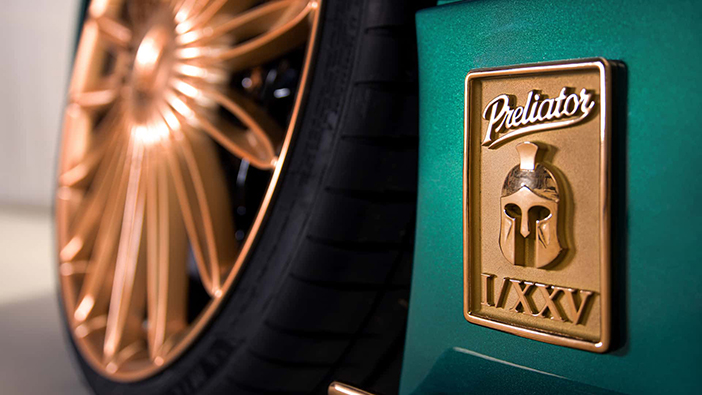
+++ SPYKER is building a 6-speed manual hypercar with 800 horsepower, and Victor Muller wants it parked next to Pagani and Bugatti. The Dutch marque’s C8 Preliator XXV Coupe is a 25-car run. The first checks have already cleared. Deliveries start in the second quarter of 2027, with all 25 cars finished by the end of that year. Muller secured the rights to the Spyker name in October 2025 after the brand’s second bankruptcy in 2021. He says the funding and engineering are done. “We will position ourselves at the very top of the market, where Pagani, Koenigsegg, Bugatti and Gordon Murray Automotive are the established brands”, Muller told. The C8 Preliator XXV Coupe runs a twin-turbocharged 4.0-liter V8 making 800 horsepower and 1.000 Nm torque, sent to the rear wheels through a 6-speed manual. No dual-clutch, no automatic option. Most of Spyker’s stated rivals have moved to paddle shifters. This is a deliberate throwback.
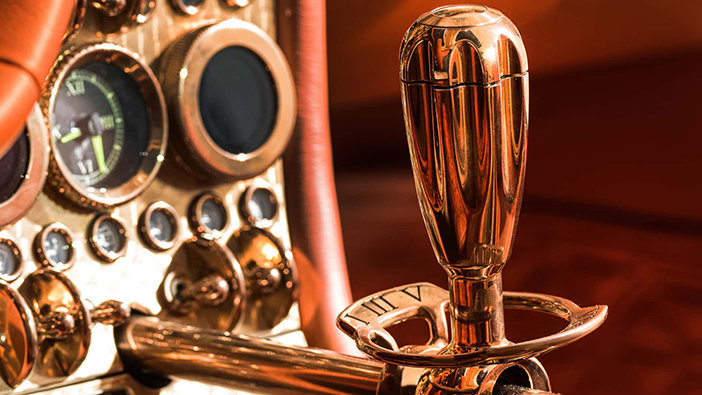
Spyker builds the car’s body from hand-formed aluminum panels, a slower and costlier method than stamping sheet metal by machine. Each example takes roughly 2.100 hours to build. That figure explains why the run tops out at 25 cars rather than hundreds. Muller pitches the car on something other than raw output. He said: “There is a clearly defined group of buyers who are drawn to Spyker’s distinctive aviation-inspired design, our craftsmanship and our Dutch identity”. The brand’s griffin badge and cockpit-style cabins have carried that aviation theme since its earlier models.
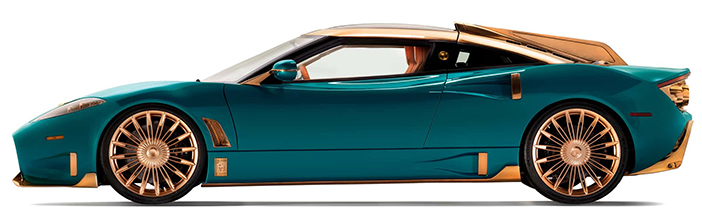
Spyker isn’t alone chasing this tier with low-volume engineering. Peregryn is already shifting Ultima-based GT-R and GT-S production to the United States, while the revived Bristol Fighter is returning as a tiny continuation run from existing chassis with a specialist British manufacturing partner. Muller’s plan reaches past this one coupe. He has said Spyker intends to build 50 cars a year globally once the brand is running at full pace, with the Preliator XXV accounting for half that number through 2027. “Spyker will build 50 cars for the entire global market in a good year”, Muller said. He has also said the company already has enough buyers lined up to sustain that pace, though Spyker hasn’t published order numbers or a waiting list count.
The twin bankruptcies, in 2014 and again in 2021, left the brand’s survival an open question for years before Muller regained the name. That track record means this comeback plan gets a closer look than a start-up arriving with fresh cash. Muller has tied the company’s future to more than this single model. “Success for Spyker means building a long-term, sustainable business, fed by new designs and new models for years to come”, he said. Whether 25 buyers actually sign for the Preliator XXV by the end of 2027 will be the first real test of that plan. +++
+++ In 1983, in a converted tractor factory on the outskirts of Shanghai, a handful of VOLKSWAGEN employees began assembling a car most of Europe had already forgotten. The Santana was a rebadged second-generation Passat 4-door; modified, toughened and initially assembled from kits shipped from Germany. It was slow, square and utterly unremarkable. China bought nearly 4 million of them. That car built an empire. For the next 3 decades, Volkswagen was shorthand for German engineering in a country learning to drive. Santanas filled the taxi ranks. Jettas filled the driving schools. Customers queued for the Lavida. Now the relationship that helped make Volkswagen one of the world’s most successful car makers is undergoing an extraordinary reversal. Having lost its dominance to Chinese rivals, Volkswagen has been forced to rethink how it develops cars, from their mechanical platforms and electronic systems to component costs, supplier relationships and the time required to bring them to market. What began as an attempt to recover lost ground in China is increasingly influencing its global operations. Volkswagen brand CEO Thomas Schäfer has confirmed that technology from a new generation of electric car platforms developed in China is destined for future European models, among them a platform that could underpin some three quarters of volume models from Volkswagen, Cupra and Skoda. The implications go well beyond cheaper components or more sophisticated software. They suggest a new direction for VW’s engineering expertise. If Wolfsburg remains the mothership, its Chinese operations are increasingly becoming the agile speedboat: able to respond more quickly to changing customer demands, exploit new technology sooner and bring models into production in considerably less time than traditional methods allow. And the lessons learned aboard the speedboat are beginning to influence decisions on the mothership. At its peak in 2019, VW Group sold 4.23 million cars in China, commanding close to one fifth of the passenger car market. The formula was simple, enormously profitable and apparently unassailable: engineer in Germany, adapt for Chinese tastes and build at scale through joint ventures with FAW and SAIC. China didn’t just make VW rich. Its success there helped finance investment throughout the group’s worldwide operations. China shifted towards electrification at a pace few established car makers had anticipated, taking lessons from Tesla along the way. But the challenge wasn’t simply replacing internal combustion engines with electric motors and batteries. Chinese car buyers had begun to think about cars differently. Increasingly, they expected sophisticated infotainment, advanced driver assistance and software that could be regularly updated. The car had become a smartphone on wheels. Ralf Brandstätter, VW Group’s China chief, offered a blunt assessment of the problem. “Tradition alone no longer sells cars. The Chinese customer buys technology”. The consequences for VW were brutal. Both BYD and Geely have gone past Volkswagen, whole sales had slumped by more than 1.6 million units by the end of 2025. Poor sales of its electric models in particular illustrated how much the Chinese market had changed. After just 2 years on sale in 2023, the poorly-performing ID.3 had seen its prices cut to the equivalent of around €15.000; less than half the price of the European models, as its relatively modest DC charging performance became a growing disadvantage. Volkswagen had developed the ID.3 around European requirements and attempted to adapt it to a Chinese market where charging technology, software and customer expectations were advancing faster than its engineering processes could respond. The experience forced VW to confront a difficult question: What if the technologies and development methods being pioneered by Chinese car makers weren’t simply necessary to compete in China? What if they offered a better way of developing cars for the rest of the world? Volkswagen’s response has been to give its Chinese engineering operations greater independence, placing more responsibility for product development, purchasing and software with local teams. At the centre is VW Group China Technology Company (VCTC) in Hefei. Instead of relying on decisions made thousands of miles away in Germany, Chinese teams have greater freedom to develop cars around local requirements, select components and work directly with suppliers. Volkswagen says the approach can shorten development times by up to 30%, while development costs on selected projects can be reduced by as much as 50%. Brandstätter has acknowledged that VW’s traditional models have become increasingly disconnected from a market rapidly embracing electrification. Moving greater research and development authority to China is, in his words, “a directional decision”. For decades, VW’s Chinese operations depended on technology developed primarily in Germany. Now China is becoming a source of new models, electronic systems and engineering expertise in its own right. Central to the transformation is a platform called China Electronic Architecture (CEA), developed by VCTC, Cariad China and Chinese electric car start-up Xpeng. The system provides the electronic foundation for VW’s next generation of Chinese models, bringing together computing power, software, infotainment and driver-assistance functions through a simplified network of central computers. Its zonal design replaces numerous individual electronic controllers with fewer, more powerful computing systems. VW says it reduces the number of electronic control units by approximately 30%, simplifying wiring, cutting complexity and lowering costs. Alongside it, Cariad China has established Carizon, a joint venture with Chinese technology company Horizon Robotics, to develop advanced driver-assistance and automated-driving systems. Carizon combines VW’s software engineering expertise with Horizon’s artificial intelligence and computing technology. Its locally developed systems are designed to cope with the complexities of Chinese traffic, including urban driving, and are being introduced across VW’s new Chinese model families. The distinction is important: Xpeng is helping VW develop the electronic architecture, while Carizon is developing intelligent driving functions that can operate within it. Crucially, CEA can be used across different mechanical platforms and powertrains, including electric, hybrid and combustion-engined models. But CEA is only part of the picture: Volkswagen’s new Chinese engineering programme also includes the Compact Main Platform (CMP), developed for more affordable mainstream models, and China Scalable Platform (CSP), intended for larger, more sophisticated electric and extended-range cars. Together, they form the basis of VW’s attempt to develop cars more quickly and at costs closer to those achieved by Chinese competitors. CMP has already reached production and CSP is scheduled to enter production in 2027. And CSP, in particular, provides an important insight into what could happen next in Europe. Schäfer’s explanation of CSP’s development reveals how Volkswagen’s Chinese engineering operations are beginning to influence the rest of the company. CSP and a platform called Scalable Systems Platform (SSP), which will underpin future European and US models, began development at approximately the same time. Yet CSP is scheduled to enter production in China in 2027, while SSP is not due before the end of the decade. The difference isn’t simply that Chinese engineers work faster. CSP has been developed around a narrower range of requirements. SSP must accommodate a much broader selection of models, including those with greater towing capacity, different four-wheel-drive configurations and higher top speeds. CSP, by contrast, has been developed around the requirements of the Chinese market, where towing is uncommon and the drivetrain configurations demanded by buyers are much simpler. This reduced complexity has helped VW bring the Chinese platform to production sooner. It has also allowed engineers to exploit local component suppliers more extensively. “CSP has also used a lot of optimisation with the local ecosystem, the use of local components, e-drives and so on”, Schäfer said. The result is a platform developed around Chinese production costs and component availability, rather than a specification intended to satisfy numerous international markets. But Schäfer confirmed that the engineering work won’t necessarily remain confined to China. “The platforms are still synergetic, so you can still use it, but you’d have to upgrade it”, he said. “So we will use certain modules, components and so on from the CSP, and they’re jointly developed anyway”. Volkswagen isn’t proposing to replace SSP wholesale with a Chinese platform. Instead, it intends to draw on components and engineering work already completed for CSP, adapting them where necessary for European requirements. The head of the VW brand also made clear that the advantages extend beyond the hardware: “Our cost advantage lies in using the experience and speed and the cost levels that we could achieve here for Europe”, he said. Nor would that necessarily mean importing Chinese-made components. Schäfer pointed to Chinese suppliers establishing production operations in Europe, including Hungary and Slovakia. “We might not import them, we might localise them”, he said. “We see a lot of Chinese suppliers are putting roots down in Europe”. The result? In the future European-market VW models could incorporate technology developed in China and components supplied by Chinese companies operating in Europe, while retaining mechanical platforms engineered for European requirements. Volkswagen is examining whether selected models developed specifically for China could be introduced into Europe. Autointernationaal.nl can confirm that the company is considering China-developed models for the upper end of its European range, rather than replacing established volume sellers with imported alternatives. That raises the possibility of a new flagship SUV following the departure of the Touareg. Production of the current Touareg has already ended, leaving a gap above the seven-seat Tayron. Although VW previously announced an electric successor, no replacement has been confirmed for production. One potential solution is a European version of a Chinese model called the ID Era 9X. At 5.210 mm in length, the 6-seat SUV is considerably larger than the Touareg and uses a range-extender electric drivetrain combining electric motors with a 1.5-litre petrol engine that acts as a generator to charge its battery. A model derived from it could provide VW with an alternative to both a conventional plug-in hybrid and a large battery-electric SUV, particularly for buyers seeking long-distance capability. Another possibility is a future SUV developed from CSP, which has been engineered to accommodate both battery-electric and range extender drivetrains. Neither has been confirmed for Europe. But the signs are there: a Chinese-developed flagship could allow VW to remain in the large SUV segment without committing to the full expense of an entirely new European development programme. More consequential still is the possible adoption of CEA in European-developed cars. Volkswagen is examining whether the electronic architecture could underpin as much as 75% of its next-generation European volume models across VW, Skoda and Cupra. Schäfer confirmed that the company is investigating whether CEA represents the most cost-effective solution. Asked whether it would ultimately be adopted, he replied: “I believe it will be, but we’re not finished yet”. A decision would have substantial implications for VW’s future European cars, potentially combining locally developed mechanical platforms with electronic systems originating in China. It would also raise questions about the group’s investment in a separate electronic architecture being developed with Rivian. The Rivian and Volkswagen Technology joint venture is developing software and electronic systems for future Western-market models, backed by VW’s commitment of up to $5.8 billion. Adopting CEA across a substantial proportion of European volume models could reduce the number of cars available to absorb the costs of the Rivian-developed system. Equally, maintaining separate architectures risks duplicating expenditure. The eventual decision will depend on development costs, technical capabilities and the expense of adapting each system to different markets. But the fact that Volkswagen is considering Chinese-developed electronics for such a substantial proportion of its European models demonstrates how far the relationship has changed. None of this guarantees VW will recover its former position in China. Its new range models must demonstrate that improved technology, lower costs and faster development can translate into stronger sales and sustainable profitability. Nor will every innovation developed in China prove suitable for Europe. Different regulations, production costs and customer requirements mean that some systems will require substantial modification, while others may remain specific to the Chinese market. But the changes already under way are significant. Volkswagen also acknowledges that the methods used to develop these new systems and platforms may be as valuable as the technology itself: shorter development cycles, closer supplier relationships, reduced component complexity and faster decision-making offer benefits extending well beyond any individual model. Brandstätter has cautioned against expecting an immediate recovery. VW has reduced its 2030 China sales ambition to around 3.2 million cars, with a margin target of between 4 and 6 percent. “It’s like a marathon”, he said. “Maybe the first 5 kilometres are done, but three-quarters are still ahead of us”. For more than 4 decades, VW’s success in China was built on taking German engineering to the world’s largest car market. Now, having lost its dominance there, it is looking to China for the technology, components and development methods that could help determine its future elsewhere. The company that once helped put China on wheels is increasingly looking to China to show it how to build its next generation of cars. +++