
+++ APPLE is cancelling a decade-long effort to build an electric car, according to people with knowledge of the matter, abandoning one of the most ambitious projects in the history of the company. Apple made the disclosure internally, surprising the nearly 2000 employees working on the project, said the people, who asked not to be identified because the announcement wasn’t public. The decision was shared by chief operating officer Jeff Williams and Kevin Lynch, a vice president in charge of the effort, according to the people. The 2 executives told staffers that the project will begin winding down and that many employees on the car team (known as the Special Projects Group, or SPG) will be shifted to the artificial intelligence division under executive John Giannandrea. Those employees will focus on generative AI projects, an increasingly key priority for the company. The Apple car team also has several hundred hardware engineers and vehicle designers. It’s possible they will be able to apply for jobs on other Apple teams. There will be layoffs, but it’s unclear how many. Apple, based in Cupertino, California, declined to comment. The move came as a relief to investors, who sent Apple shares climbing after an earlier decline. The stock was up about 0.7 percent in late trade after Bloomberg reported the news. Elon Musk, head of Tesla, also celebrated the move. He sent a post on X with a saluting emoji and a cigarette. The decision to ultimately wind down the project is a bombshell for the company, ending a multibillion-dollar effort called Project Titan that would have vaulted Apple into a whole new industry. The tech giant started working on a car around 2014, setting its sights on a fully autonomous electric vehicle with a limousine-like interior and voice-guided navigation. But the project struggled nearly from the start, with Apple changing the team’s leadership and strategy several times. Lynch and Williams took charge of the undertaking a few years ago following the departure of Doug Field, now a senior executive at Ford. Apple also was facing a cooling market for EVs. Sales growth lost steam in recent months after high prices and a lack of charging infrastructure discouraged mainstream buyers from shifting to all-electric vehicles. General Motors and Ford are pivoting to producing more hybrid vehicles after confronting lacklustre EV demand and manufacturing bottlenecks, and automakers across the industry are slashing battery-electric car prices, production targets and profit forecasts. Even Tesla, the pioneer of the EV revolution in the US, has warned its rate of expansion will be “notably lower” this year. Domestic EV sales growth will decelerate to 11 percent next year from an estimated 47 percent growth rate this year, according to a forecast by UBS. The decision to ultimately wind down the project is a bombshell for the company, ending a multibillion-dollar effort called Project Titan that would have vaulted Apple into a whole new industry. Apple’s most senior executives finalised the decision in recent weeks, according to the people. It comes just a month after Bloomberg News reported that the project reached a make-or-break point. The most recent approach discussed internally was delaying a car release until 2028 and reducing self-driving specifications from Level 4 to Level 2+ technology. Apple once envisioned creating a car without a steering wheel and pedals, but it scrapped that notion earlier. The company also spent time working on a remote command centre that could take over for a driver. Most recently, Apple had imagined the car being priced at around $100.000. But executives were concerned about the vehicle being able to provide the profit margins that Apple typically enjoys on its products. The company’s board was also concerned about continuing to spend hundreds of millions of dollars a year on a project that may never see the light of day. Apple continues to invest heavily in other areas. The company spent $113 billion on total research and development over the past 5 years, with an average annual growth rate of about 16 percent. The company also recently launched the Vision Pro headset (its first new product category in almost a decade) and has built up that business. The company has scrapped projects before, including a plan to make a TV set that was abandoned around 2015. But few endeavours have lasted this long, involved so many employees or wracked up billions of dollars in expenses. So far, Apple’s biggest push into the auto industry was its CarPlay software, which lets drivers access iPhone features like maps and Siri. It’s being redesigned to integrate more deeply with vehicle controls and entertainment systems. By not competing with automakers, Apple could give a boost to that software, helping spread it to more models. And, in the end, focusing on AI may be a better bet, Bloomberg Intelligence analysts Anurag Rana and Andrew Girard said in a note. “Apple’s decision to abandon electric cars and shift resources toward generative AI is a good strategic move, we believe, given the long-term profitability potential of AI revenue streams versus cars”. +++
+++ ASTON MARTIN has definitively killed off any bid to revive the Lagonda badge, with boss Lawrence Stroll declaring that the proposed luxury sub-brand “is not connected in any way” to plans for future electric cars or plug-in hybrids. The demise of Lagonda has been mooted since 2021 but now any lingering doubts have been extinguished. The British manufacturer has issued a number of Lagonda concepts during the past decade and launched the low volume Lagonda Taraf saloon in 2015. Each time it declared that the name was ready to make a return on cars with a greater emphasis on luxury and less focus on sporting dynamics. However, speaking during Aston’s 2023 earnings call, the firm’s executive chairman Lawrence Stroll clarified that the Lagonda projects, conceived before he assumed control of the firm, have been knifed completely. “They were under the previous management”, Stroll said, “and that plan is completely dead. It’s not connected, in any way, to our electrified vehicle plan”. Stroll believes Aston’s existing positioning is luxurious enough to fulfil customer needs. “There’s enough luxury in our sports cars”, he said, “so we’re not considering a ‘less-performance, higher-luxury’ car. We have the right level of luxury in our products”. Aston Martin is planning to introduce 4 electric vehicles but has knocked back the timeline on them to 2026, allowing space for a couple of plug-in hybrid models to be introduced in the meantime. When asked to give the reasoning behind the EV delay, Stroll said, “It’s market-demand driven. As most OEMs are experiencing, consumer demand for EVs at the Aston Martin price point is not where we thought it was going to be 2 years ago. We’re simply pushing it back. All the technology is in place, the platform is in place. The only thing not in place is the customer demand at this early stage. We’re being prudent in making this decision”. +++
+++ The AUDI TT retired after three generations in 2023; it was sent off with a Final Edition model. While we won’t see a 4th generation TT in the near future, the German brand is reportedly looking at ways to fill the model’s gap in the coming years with an electric sports car. Daniel Schuster, a spokesperson for Audi’s technical development department, told that the company is debating what the TT’s successor will look like. “We are taking a blank sheet of paper to see what is the right ‘icon.’ It’s not just about looking at what we have now and saying, ‘it’d be cool to make it electric’. It’s really about what would be a great addition to the range”, he explained. Audi is taking this project seriously, it wants to keep past and current TT owners in the fold, and it has plenty of time to decide what the TT’s successor will look like; the car is tentatively scheduled to arrive “within 5 or 10 years”. It won’t be called TT; a decision which seemingly suggests the model will break with its predecessors in several ways. Regardless of what it’s called or what it looks like, Audi is preparing an “emotional” car developed with driving enjoyment and performance in mind. This extends to the sound that the electric drivetrain will make. While silence is a major selling point for electric cars, part of the thrill of driving a sports car is the sound; the TT’s replacement has to make some kind of noise. Mimicking the distinctive exhaust note of the turbocharged 5-cylinder engine that powered the range-topping TT RS has been ruled out, according to the same report. “Honestly, we had some prototypes where we reproduced the 5-cylinder sound and it didn’t fit at all”, revealed Rolf Michl, Audi Sport’s managing director. It will be interesting to see how Audi differentiates the noise that its future electric sports cars make. Beyond the TT’s replacement, the brand is also allegedly working on an electric successor for the RS6 Avant. “You will be surprised”, concluded Michl. “For us, the RS DNA has to be reflected. It is not better or worse. It is just different”, he concluded. +++
+++ Consumer Reports recently released its list of recommended vehicles for 2024, with electrified vehicles taking 7 out of the top 10 spots. The publication also ranked automotive brands using those scores and several other factors. To be eligible for a ranking, CR has to have tested at least 2 models from the automaker, with Lucid, Polestar and Ram being left off the scoreboard. Many brands made significant moves this year, but not all were positive. Tesla dropped a spot, while Cadillac climbed 11 places to 14th and Ford moved up 6 positions to 17th. The 10 BEST BRANDS for 2024 are: BMW: 82 points, Subaru: 80, Porsche: 80, Honda: 78, Lexus: 78, Mini: 78, Kia: 77, Mazda: 77, Toyota: 77 and Hyundai: 76. BMW’s top score made it the overall winner for the second year in a row, the first since 2017. Subaru is also a consecutive high performer, making second 2 years in a row. The publication tested 34 brands for 2024 and noted that it recommended all models from 7 automakers: Acura, BMW, Honda, Kia, Mazda, Mini and Porsche. +++
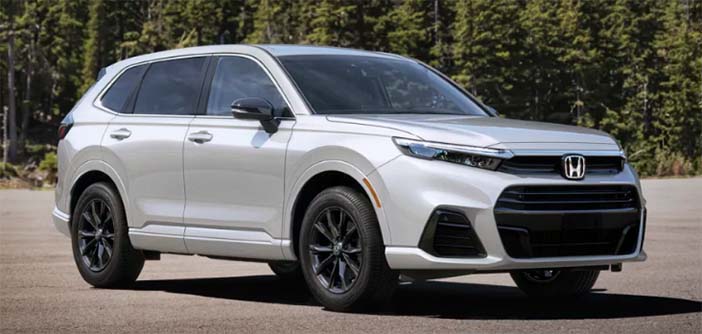
+++ HONDA is returning to the hydrogen-car sector with a fuel-cell-powered evolution of the CR-V. While some companies build hydrogen-electric models to learn about the technology, the Japanese automaker stresses that the CR-V e:FCEV is a regular-production model with a usable amount of driving range running on hydrogen, electricity, or both, and all of the creature comforts that buyers expect to find in a car in 2024. Design details such as a powertrain-specific front end with a smaller grille and a larger lower air intake help set the e:FCEV apart from the standard CR-V. It’s a similar story inside, where the basic layout is carried over from the 6th generation model released for the 2023 model year. There’s room for 5 passengers, which is impressive considering the hydrogen-electric drivetrain takes up considerably more space than a 4-cylinder engine and a fuel tank, a 10.2-inch digital instrument cluster, and a nine-inch touchscreen for the infotainment system, which is compatible with wireless Apple CarPlay and wireless Android Auto. Heated and power-adjustable front seats come standard. Honda developed the powertrain jointly with General Motors. The system consists of two hydrogen storage tanks (one under the rear seats and the other under the trunk floor), a fuel cell and an electric motor, both located under the hood, and a 17.7 kWh battery pack integrated into the floor. Honda has dabbled in hydrogen technology for over 20 years, and it leveraged this expertise when developing the new system that powers the e:FCEV. It notes that the drivetrain is more durable, more efficient, and less costly to build than its predecessor. The system sends 174 hp and 300 Nm of torque to the front wheels; all-wheel drive isn’t available. Honda notes that filling up the tanks with a total of 2 kilos of hydrogen returns a maximum driving range of 450 km. In this configuration, gaseous hydrogen enters the fuel cell, where it reacts with oxygen to create the electricity that drives the wheels. Alternatively, users can plug in the e:FCEV like an electric car to recharge the battery pack and drive for up to almost 50 km on electricity alone. Honda argues this setup gives motorists the best of both worlds: They can use the CR-V e:FCEV as an electric car to commute, and they can switch to hydrogen power for longer trips. Building a CR-V that runs on hydrogen required re-engineering the suspension system and the chassis. Engineers increased rear lateral rigidity by 10%, increased rear torsional rigidity by 9%, and fitted the model with specific springs, dampers, and stabilizer bars on both ends. Made in Marysville, Ohio, the CR-V e:FCEV will be available later in 2024. There’s a catch: You won’t be able to buy one, as it will only be distributed through lease plans. There’s another catch: The model will initially only be offered in California. Honda hasn’t revealed when (let alone if) drivers in other states will be able to lease one, but it clarified that it plans to invest a substantial amount of resources into hydrogen technology in the coming years. It notably sees applications in the commercial trucking, construction, and space exploration sectors. +++
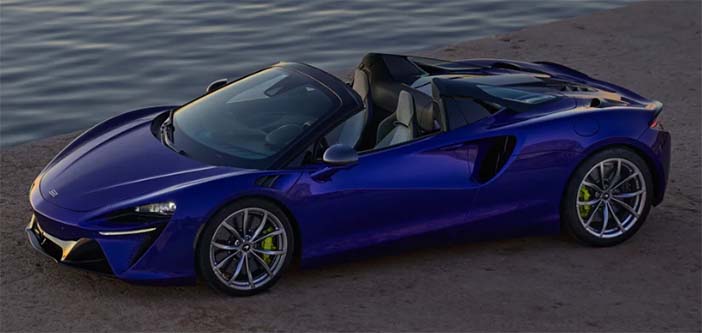
+++ Hitting the 1-year mark for a new MCLAREN hardtop model means it’s time for a convertible version. The timeline got fudged with the Artura, the hardtop delayed a tad while McLaren worked out some technical issues. But here we are, the Artura Spider not only packing a clear view to the sky, but 19 more horses from its 3.0-liter V6 and a brace of additional performance tweaks. The mid-mounted engine has been tuned from 577 hp to 596 hp, torque unmoved at 600 Nm. Working with the electric motor in the transaxle, combined output is now 690 hp and 720 Nm. New engine mapping boosts torque delivery, and the retuned gearbox improves shift speeds. McLaren said the 8-speed dual-clutch transmission now keeps the hydraulic fluid pressurized to near the “kiss point” that activates a gear change. Called “pre-fill” in company parlance, swapping cogs takes 25% less time than before. Using launch control, the Artura blitzes from 0 to 100 km/h in a claimed 3 seconds, and on to an electronically limited 330 km/h top speed. A new feature called Spinning Wheel Pull-Away (which sounds like a Saturday afternoon kung-fu movie move) is the opposite of launch control, allowing the driver to work up a rooster tail of smoke when pulling off the line or out of a car meet. 8 motors stow or restore the top panel in 11 seconds, at up to 50 km/h. The standard panel comes in carbon fiber, while an electrochromic unit can cycle through 5 stops from opaque to transparent. Curved polycarbonate panels in the buttresses improve 3-quarter visibility and help direct air into the revised vent arrangement on the engine cover. Elsewhere, new mounts provide better restraint for the powertrain, revalved rear dampers provide better responsiveness, and recalibrated ABS provides shorter threshold stopping distances. More valving work done to the stock exhaust, and new conical, upward-facing pipes, are said to create cleaner, richer sound. Standard equipment grows with the inclusion of lane-departure warning and road-sign recognition, the Bowers and Wilkins audio gains new rear speakers and, just for the Spider, a center speaker between the seats. The lithium-ion battery is more efficient with its 7.4 kWh usable capacity, enough to increase pure-electric range in European testing to 35 km. And at the corners, there’s a new silver 15-spoke wheel as standard fit, plus an optional gold finish for the wheel range. All of the changes made under the skin are new to the 2025 Artura Coupe as well. Even better for Coupe owners making do with lesser output, a visit to the McLaren dealer gets a free engine upgrade to add the 19 horses. Order books are open, and deliveries commence later this year, the Spider starting at €289.500 in the Netherlands. +++
+++ The news is full of doom and gloom about EVs, but the truth is that they sold more units last year than any other before, and other electrified models like PHEVs are becoming more desirable in many ways than their gas-only counterparts. Consumer Reports recently completed its Annual 10 Top Picks list for 2024, and it is drastically different than previous lists, adding several EVs and PHEVs for the new model year. 7 of the 10 top vehicles this year are electrified, with 2 Subarus and 1 Mazda the only petrol models on the list. The most RECOMMENDED MODELS for 2024 are: Subaru Crosstrek, Toyota Prius, Subaru Forester, Mazda 3, Toyota Camry Hybrid, Tesla Model Y, Toyota Highlander Hybrid, BMW X5 and Toyota RAV4 Plug-in Hybrid. Consumer reports said that the electrified versions of these vehicles often surpass the performance of their petrol counterparts. The Forester and Camry Hybrid were the only 2 to make the list 2 years in a row. Additionally, while the average transaction price for new cars reached more than $48.000 at the end of last year, the publication notes that 6 of the 10 vehicles on this list start at under $30.000. Plug-in hybrids are a solid stepping stone between conventional gas vehicles and EVs, and CR noted that PHEV sales grew by 60 percent last year, more than EVs or regular hybrids. They are more expensive than gas or hybrid vehicles, however CR found that some, such as the BMW 330e xDrive PHEV, are much cheaper to own and operate, compensating for some of the extra cost up front. +++
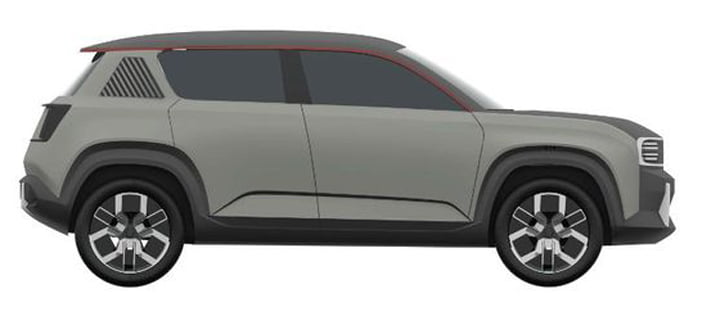
+++ Already previewed by the RENAULT 4EVER Trophy concept (pictured), the jacked-up Renault 4 model will use the same underpinnings as the newly launched Renault 5: the Ampère Small platform. And most versions of the 4 are expected to have just a single front-mounted motor. But while the supermini seems destined to remain front-wheel drive, the architecture beneath it features a multi-link rear axle that will allow space for an additional electric drive unit, and Renault sources have hinted that the 4, which will be positioned above the 5 on price, will make use of this. Vittorio d’Arienzo, the chief of the AmpR Small platform division, said that the design was actually necessary to accommodate the larger of the 5’s battery packs, which would have fouled against a cheaper torsion-beam layout. But he admitted: “The platform is ready for 4-wheeldrive, and yes, we would consider it in the future”. And Frédéric Morelle, the engineering lead on the 5 project, told: “The 4 will use the same platform as the 5, but the 4 needs a multi-link rear axle to achieve a specific USP”. This feature could just be extra wheel travel and better rough-road ability, but is much more likely to be 4-wheeldrive. A 4×4 version of the 4 could tap into the original car’s motorsport exploits, since a four-wheel-drive version, called the 4 Sinpar, was entered on a number of Dakar rally raids. It would also give it distinct positioning apart from the 5, and build on the rugged image of the 4Ever Trophy concept car that was revealed at 2022’s Paris Motor Show. The all-wheeldrive technology will give Renault a model with few obvious rivals, since all baby electric SUVs launched to date have been 2-wheel drive. +++
+++ If you’ve been to an auto show in the last couple of years, you’ve probably seen that SUBARU ’s booth looks like an indoor forest. The AWD brand has always attracted outdoorsy types, and Subaru has capitalized on that with sub-model names like Wilderness and Outback, the latter of which became its own model name. Some sleuthing has revealed that the company has recently trademarked no less than 12 names that conjure up notions of trekking into nature. The names were discovered at the US Patent and Trademark Office for filings by Subaru that fall under ““automobiles and structural parts and fittings therefor”. The names are: Trailhead, Outsider, Hightrail, Getaway, Highroad, Everpass, Everguide and Accomplice. Some of those sound pretty snazzy. When deciding which car to take, everyone wants the Highroad. Trailhead makes us want to put on our hiking boots and head for the nearest National Park. Uncharted is even better: strap that kayak to the roof and throw an REI tent into the trunk, we’re going off-grid! Others don’t work so well. When applied to a car Getaway sounds like it could be used in a crime, which sort of goes hand in red hand with Accomplice. As far as we know a Viewfinder is part of a camera, and no one wants to be an Outsider. These names don’t necessarily mean that Subaru wants to slap these on the backs of cars. They could be for accessories or option packages. Or, the company might just want to squat on them in case they have a use for them down the road (or to prevent others from using them). Whatever they get used for, it’s clear Subaru is thinking about ways to appeal to adventure-seekers. Just be sure not to break your Trailwind. +++
+++ 3 electric vehicles will compete next month for the title of 2024 WORLD CAR OF THE YEAR , it was announced Monday. The finalists are the Kia EV9, the Volvo EX30 and the BYD Seal. The latter 2 are built in China. The 3 top finalists in 5 other categories were also named at the Geneva Motor Show in Switzerland. The winners in all 6 categories will be revealed live during an awards ceremony at the New York International Auto Show on March 27. This year marks the 20th year of the World Car Awards and the partnership with the New York show. Besides car of the year, the other finalists are: Electric vehicle: BMW i5, Kia EV9, Volvo EX30; Luxury car: BMW 5 Series/i5, Mercedes Benz E-Class, Mercedes Benz EQE SUV; Performance car: BMW M2, BMW XM, Hyundai Ionia 5 N; Urban car: BYD Dolphin, Lexus LBX, Volvo EX30; World Car Design: Ford Bronco, Ferrari Purosangue, Toyota Prius. The selection process for World Cars involves 100-plus automotive journalists from 29 countries who vote, as they review and test-drive the eligible vehicles for the 2024 awards. +++
+++ Consumer Reports rates everything from refrigerators to baby goods and products in between. New cars are a significant part of its business, and the publication recently released its list of recommended cars for 2024. While the top 10 is packed with electrified vehicles this year, the 3 WORST BRANDS have some work to do. Consumer Reports did its full ranking of major auto brands, and in this post I wanted to focus on the bottom dwellers. The 3 worst brands for 2024 are: Jaguar, Land Rover and Jeep. Volkswagen, Maserati, Alfa Romeo and Mercedes-Benz were also near the bottom of the list. Tesla was nowhere near the bottom-3 but fell 1 spot to 18th this year. +++