+++ The new ALFA ROMEO STELVIO is one of the most eagerly awaited models of 2025. A completely new model, rethought from top to bottom. Style, mechanics, engines: it will share nothing with the current generation, apart from its name and segment (D SUV). We know little about it and there has been no official statements about its styling, leaving it up to the coming months to begin unveiling of its design. As I anticipated some time ago, the design of the new Stelvio will change radically and at the rear will be characterised not only by the now classic coast-to-coast lighting, but will be extended with two oblique segments joining at the centre, immediately above the number plate. As for the rest, Alfa Romeo’s mouths are sealed and no other teaser is online. According to the information we have been able to gather over the last few months, the company’s mid-size SUV will feature a completely revised front end, with a diamond-shaped shield and the logo placed on top of the bonnet, as on the Junior. There will be no lack of reminders of the past, with the three typical openings of the Alfa Romeo ’trilobo’ evoked by the shield and led daytime running lights. Based on the STLA Large platform from Stellantis, the new Stelvio will be equipped with 100% electric powertrains, but not solely. As anticipated by Jean-Philippe Imparato in one of his last interviews as CEO, the midsize SUV could also be fitted with petrol units if sales of electrics fail to meet expectations. All thanks to the flexibility offered by the platform, a multi-energy one designed to accommodate different types of powertrains, as demonstrated in the new Dodge Charger, the first Stellantis model to use the STLA Large. The US muscle car will also feature a 3.0-litre straight-6 engine, but I do not know if the same will happen to the new Stelvio. The possibility of seeing a range extender version remains open, with a small petrol engine used solely to recharge the batteries. There will of course also be a new Stelvio Quadrifoglio, purely electric but capable of not making us regret (at least in performance) the current generation. In fact, it should reach 1.000 hp, surpassing the world of super SUVs and entering the world of hypercars. The magic of electric. +++
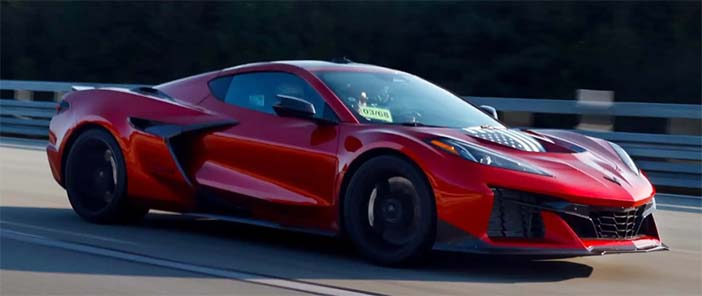
+++ The new CHEVROLET CORVETTE ZR1 is as fast as lightning. Thanks to its 5.5-litre biturbo V8 with 1.064 hp and 1.122 Nm of torque, this shouldn’t come as too much of a surprise to anyone. We are talking about the most powerful 8-cylinder engine ever produced by an American car manufacturer. Now there are new measurements that further underpin the dominance of the ZR1. Just recently, Chevrolet engineers let their new monster loose on the high-speed oval of ATP Automotive Testing in Papenburg, Germany where a top speed of 371 kph was achieved. This makes the new ZR1 the fastest Corvette ever. According to Chevrolet, the Corvette ZR1 needs 2.4 seconds to sprint from 0-100 kph. This is also a new record for the model series. As a reminder: the electrified Corvette E-Ray achieves the standard sprint in 2.6 seconds. With its acceleration time, the ZR1 is on a par with hypercars such as the Aston Martin Valkyrie, the Lamborghini Revuelto and the Lotus Evija, all of which also require 2.4 seconds. All these undoubtedly impressive figures earned the Corvette ZR1 a number of honours. It is the fastest accelerating Corvette of all time and the fastest car ever produced by General Motors. It is also the only car under $1.000.000 to reach 372 mph. Speaking of which, while we’re sure the new uber-Vette will cost less than a million dollars, I don’t yet know exactly how much Chevrolet will ultimately charge. However, it is likely to be significantly more expensive than the E-Ray and the Z06. Let’s just hope that the price tag isn’t as outlandish as the performance. +++
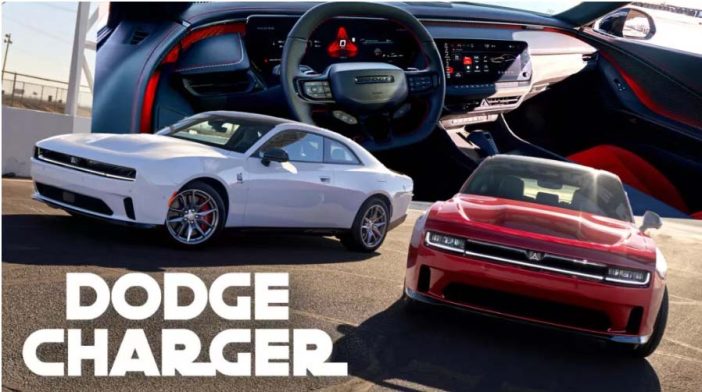
+++ Muscle car enthusiasts in Europe will soon gain access to DODGE ’s full range of new Charger models, with sales expected to begin late next year, Stellantis confirmed. While it won’t do much to quell the controversy among traditionalists over the retirement of the Challenger name, the phasing out of the Hemi V8, and the introduction of a battery-electric powertrain, it does signal Dodge’s attempt to dip its toes into export markets. I reached out to Dodge to ask whether the new Charger would be offered in markets outside North America. “The Dodge Charger will also be sold in Europe in the second half of 2025”, a Stellantis spokesperson told me. While Dodge has yet to specify which versions of the Charger will be the first to go on sale, the spokesperson confirmed that all 4 variants (including 2- and 4-door body styles, available with both internal combustion engines and EV powertrains) will eventually be offered in both regions. The first new-age Charger to launch in the United States is the electric 2-door, known as the Charger Daytona. It’s available in 2 configurations. The base model features a pair of electric motors producing 456 hp and 547 Nm of torque, powered by a 100.5 kWh battery pack. For power-hungry enthusiasts, the flagship Daytona Scat Pack offers a more robust 630 hp and 849 Nm, propelling it to 100 km/h in just 3.5 seconds. For those craving the visceral thrill of a gas-powered engine, 2 petrol versions of the Charger coupe and sedan will be available down the line, both equipped with the Hurricane 3.0-liter inline-6 engine. Offered in 2 configurations, the standard-output and high-output, the base model generates 420 hp and 637 Nm, while the more powerful version ups the ante to 550 hp and 746 Nm. Unfortunately for purists, it doesn’t look like a manual gearbox will be part of the line-up. Instead, both models are expected to feature the new 880RE 8-speed automatic transmission, based on the 4th-generation ZF unit. +++
+++ A tie-up between HONDA , Nissan and Mitsubishi has the potential to shake up not just the Japanese automotive industry but the global hierarchy of carmakers as well. However, according to Carlos Ghosn, the former Nissan-Renault boss turned international fugitive (we all remember the box incident), this isn’t a partnership; it’s a corporate slaughterhouse where Nissan’s the unlucky lamb. Meanwhile, Honda is sharpening the knives. The former boss of Nissan and Renault predicted something big was on the cards when the manufacturers announced plans to collaborate on software development and to share R&D costs for electrification in August. Ghosn described this deal as a “disguised takeover”, and while the collaboration is considered a merger, he believes that Honda will be the one calling the shots. “Nissan is in panic mode, looking for somebody to save them from this situation because they’re unable to generate the solution by themselves”, he told. “Honda is coming, obviously dominating whatever partnership is gonna come out of it. I think, without any doubt, Honda is going to be in the driver’s seat, which is very sad to see after having led Nissan for 19 years [and]brought Nissan to the forefront of the industry, to see that they’re going to be the victim of a carnage, because there is total duplication between Nissan and Honda”. If a deal is reached, a holding company would act as the parent for both brands and being listed on the Tokyo Stock Exchange. Honda would nominate most of the company’s board members, thanks to its market capitalization being almost 4 times that of Nissan, and the group could become the world’s third-largest automaker by vehicle sales, behind only Toyota and the Volkswagen Group. “There is practically no complementarity here, which means, if they want to make synergy it is going to be through maybe cost reduction, duplication of plans and technology, and we know exactly who’s going to pay the price of it. It’s going to be the minor partner, and it’s going to be Nissan”, Ghosn added. In another interview, Ghosn said that if a merger does take place, he doesn’t think it’ll be successful. Honda’s boss, Toshihiro Mibe, has insisted that the merger won’t move forward unless both brands can prove they’re capable of standing on their own two feet. Meanwhile, Carlos Ghosn has expressed “high doubts” about Nissan’s ability to turn things around, even with the restructuring plan announced in November. As part of this plan, Nissan aims to slash 9.000 jobs and reduce production capacity by 20% in an effort to become leaner and more resilient. For now, the uncertainty surrounding the Japanese automotive industry lingers, with plenty of speculation but no clear answers. Whether this merger ultimately happens remains to be seen, but one thing is certain: Carlos Ghosn isn’t done sharing his unfiltered opinions from where he’s currently laying low. +++
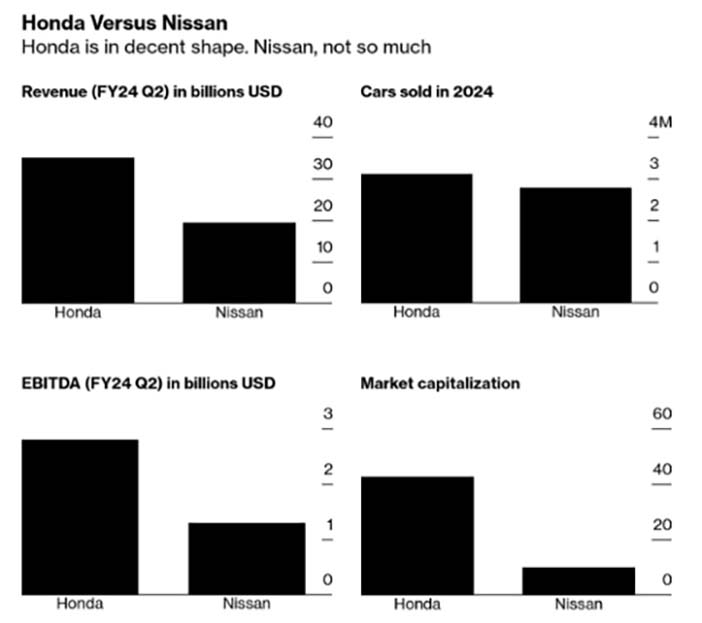
+++ Asked what makes NISSAN a strong business partner, Honda chief executive officer Toshihiro Mibe struggled to find the right words. “That’s a difficult one”, he said after announcing plans to bring the 2 automakers together. His reticence arguably speaks to lingering questions over why Honda would ever agree to a deal with Nissan, and what it could gain by folding the flailing Japanese carmaker into its business. The rapid rise of electric vehicles in China and in parts of Europe, coupled with a resurgence in the popularity of hybrids, is pushing legacy brands to band together. At the very least, by assuming Nissan’s resources such as factories, manpower and intellectual property, Honda may gain access to the heft it needs to keep its own head above water. +++
+++ SUBARU is gearing up for the launch of the all-important hybrid variant of the new generation Forester, as the company has quietly confirmed that the model will go on sale by the second part of 2025. This new version will retain the Symmetrical All-Wheel Drive system, but with enhanced efficiency and lower emissions compared to its gasoline-powered counterpart. The Forester Hybrid will feature the same self-charging hybrid setup that debuted in the new Crosstrek Hybrid in Japan in October. This series-parallel system intelligently switches between the engine and electric motor as the power source, depending on driving conditions. The setup combines a 2.5-liter horizontally opposed 4-cylinder engine, delivering 160 hp, with 2 electric motors. The first, referred to by Subaru as a traction motor, contributes an additional 120 hp to drive the wheels, while the second functions as a generator. Powering the electric drive is a modest 1.1 kWh lithium-ion battery pack. While it won’t provide much EV-only range, it should boost fuel efficiency. Subaru leveraged Toyota’s expertise in hybrid vehicles to develop the new powertrain as part of their collaboration. The automaker claims the new system offers a 20% improvement in fuel efficiency over Subaru’s existing e-Boxer hybrid setup. When it comes to visual changes, don’t hold your breath. Subaru has unveiled a hybrid-specific badge that’s expected to adorn the tailgate of the electrified Forester, but beyond that, earlier spy shots hint at a design nearly indistinguishable from the standard internal combustion engine (ICE) model. It’s classic Subaru, favouring subtlety over flashiness. +++
+++ Imagine your employer locking you inside the workplace over the weekend to ensure you meet a deadline. Sounds pretty-far fetched, right? Well, according to a new report, that’s what Vietnamese automaker VINFAST allegedly did to some of its employees. A whistleblower has come forward to shed light on these claims, as well as several other concerning workplace practices. Last week, the same whistleblower, Hazar Denli, publicly stated that he lost his job after raising concerns online about safety issues at VinFast. Denli claims these revolved around rushed component development, which he says, resulted in cars that aren’t meant to last and are so unsafe that he wouldn’t let his friends or family travel in one. Denli alleges that VinFast also locked employees in “overnight to force them to keep working”, A second individual, evidently corroborated Denli’s account. In an internal document, a Tata staff member admitted that lockdowns happened. VinFast hired Tata Technologies Limited (TTL), the UK arm of Tata Group, to do some of its product development, which explains the connection between the companies and how Denli ended up working on VinFast projects. The document, a summary of a meeting between a corporate investigator and another member of Tata staff, reportedly states: “There was one specific story he referenced at some point during Covid issues they locked down the factory; anyone in the factory was locked in and slept there. “There were only a few people subjected to that lockdown. We know the guys involved in that and know that Hazar was good mates with one of them. We know not first hand experience but know who he was getting information from”. That unnamed source also claims that “There’s lots of incidents where people were locked in the factory. There were also lots of instances where people were on their way to the airport and were told to turn around, not get on the flight and get back to the factory. That was the nature and the culture”. After resigning from the company, Denli was hired by Jaguar Land Rover, which is also owned by the Tata Group. However, he was fired after posting his concerns on Reddit, when TTL contacted JLR’s Human Resource director and demanded that he be sacked. As a result, Denli has launched employment proceedings for unfair dismissal. While these allegations remain unproven in court, they raise serious questions that warrant further investigation. For now, both VinFast and Tata Group have reportedly declined to issue detailed public statements addressing the claims. +++
+++ With the ID.3, VOLKSWAGEN has officially opened its third era, the electric era. To do so, it has focused on original models in terms of both name (ID, to be exact) and design. But to launch itself definitively into zero-emission mobility, the German manufacturer decided to draw heavily from its past. It did so first with the ID.2all, a battery-powered compact that takes up the style of the famous Polo that was recently shown in a bad-boy guise with the ID.GTI concept, and then confirmed it by stating that a new electric Golf is in the pipeline. The car will represent a further leap forward in terms of technology, as it will be built on the brand new SSP (Scalable Systems Platform). So what can we expect? Let’s start with the present. Nowadays, all of Volkswagen’s electric cars (we are talking about the brand, not the group) are based on the MEB platform: modular platform designed exclusively for zero-emission models. The MEB platform debuted in the increasingly distant 2019 and is now, although still subject to updates, about to be replaced by a new design. The Volkswagen electrics of the future will be built on the SSP platform. This includes the electric Golf, which will arrive in 2029. Let’s see what advantages they can leverage to conquer the market. The SSP platform, like the MEB, is modular and can be used for SUVs and saloons that are also very different. Announced in 2021 as the focal point of the Trinity project, the one that would bring next-generation electrics to life for the German group, it should replace in one fell swoop both the aforementioned MEB and the PPE, that Premium Platform Electric platform that is used for the Porsche Macan and the Audi A6 and Q6 e-Tron. Compared to the current platform, the SSP will be built with a limited number of components, so it will be simpler, faster and cheaper to produce, while still providing the same versatility. The inspiring concept is the high degree of standardisation. The cars that will be born on the SSP will have the same powertrain management software, the same motors, the same batteries and the same driver assistance technologies, except they will be interchangeable to fit many differently sized and performing models. Volkswagen plans to use the SSP, which due to the high degree of integration between mechanical and electronic parts is called a mechatronic platform, for at least 40 million vehicles. They will have power outputs ranging from 115 to over 1.000 hp. The SSP platform is in the design phase. A highly qualified team is working on it at the new Sandkamp campus near the Wolfsburg headquarters. Leading the project is Markus Duesmann, who is responsible for all research and development in the Volkswagen Group and was CEO of Audi. Duesmann himself said: ‘With the SSP we will not offer a one-size-fits-all solution. However, we need to achieve maximum product differentiation and a significant reduction of variables at the same time. Therefore, the SSP consists of standardised modules with dedicated variants and some predefined platform dimensions. We will reduce the complexity by about 50 percent by reducing the number of options for each component. At the same time, we can still offer great differentiation through scalability and various combinations of modules in combination with different platform sizes. We will go from the current 22 different battery systems to 8″. A new platform also means new software. With the introduction of the SSP, Volkswagen will debut a new operating system that will utilise state-of-the-art hardware components. It will be realised by the Cariad division, which will be supported in its development by the American start-up Rivian, with which Volkswagen is creating a 50-50 joint venture whose task will be to share the two manufacturers’ expertise in terms of software-defined electric cars. +++
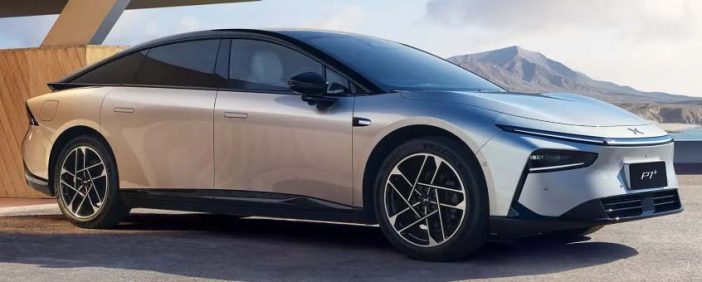
+++ The Chinese brand XPENG offers 3 vehicles in Germany: the P7 sports saloon, the G9 flagship SUV and the G6 coupé SUV. The P7 was the first model to be launched in China 4 years ago, but has only been available in the Netherlands since 2024. Nevertheless, this model is now getting a successor, called the P7+. The car made its debut at the Paris Motor Show this past October. The model will be converted to 800 volt technology, as the G9 and G6 already have. This enables faster charging at the DC charging point. In addition, silicon carbide inverters now ensure lower power consumption: just 11.6 kWh per 100 kilometres. However, this is unlikely to be a WLTP value, as the tiny Fiat 500e already requires 13.0 kWh/100 kilometres, making it the most economical electric car on the market. It is possible that the figure represents consumption without charging losses. The car also has a slightly different look. At the front, the continuous light line and the headlights below it have been retained, but the latter have been given a horizontal eyelid line. There are also changes to the rear end of the side windows. The modified body shape shows that this is not just a facelift: After all, the rear lights have also been changed, and significantly so: The interior is also new; there is a new, white steering wheel and new air vents under the touchscreen. There is also a fairly large display for the rear passengers. There is a clear upward shift in the dimensions: The P7+ is almost 17 cm longer (at 5.056 mm), 4 cm wider (1.937) and 6 centimetres higher (1.512 mm) than the P7. The wheelbase, on the other hand, remains almost identical at 3.000 mm. Xpeng has not yet revealed the size of the boot, but promises “an extraordinary amount of storage space – especially with the rear seats folded down”. As far as the drive system is concerned, the Xpeng P7 is available in Germany as a rear-wheel drive model with 276 hp and as an all-wheel drive model with an additional 197 hp asynchronous motor at the front, resulting in 473 hp. Both have an NMC battery with 82.7 kWh net for a WLTP range of up to 575 km. Charging takes place at up to 175 kW; the charging time is specified as 29 min (10-80%). The P7+ is available in China with 2 different batteries, but apparently only as a rear-wheel drive model with a choice of 180 or 230 kW. The batteries both work with LFP technology and store 61 and 76 kWh respectively. There is no information on charging. The 2 batteries in the G9 can be charged from 10-80 % in 20 minutes. We will have to wait and see whether the P7+ is similarly fast. The press release deals almost exclusively with the artificial intelligence of the new car. Xpeng even talks about the world’s first “AI-defined vehicle”, which is not only used for semi-autonomous driving, but also for the chassis, drivetrain and cockpit. The car learns from the behaviour and preferences of individual users. In terms of sensors, the P7+ features the Xpeng AI Hawkeye Vision Solution, consisting of 2 optical cameras at the front and rear as well as millimetre-wave radar and ultrasonic sensors. Xpeng has dispensed with LiDAR systems. Equipped in this way, the car is already highly autonomous in China. The motorway assistant Highway NGP is also due to come to us in 2025. It remains to be seen when the car itself will be launched here and how much it will cost. The P7 is available from €51.188 in the Netherlands. While the Xpeng G6 and G9 already had an 800 volt architecture, the P7 still lagged behind in terms of charging speed with its 400 volt system. Xpeng apparently wants to rectify this with the P7+. This should put the saloon well ahead of its German competitors, the BMW i5 and Mercedes EQE. However, a 76 kWh battery and the corresponding range would be disappointing, as the EQE already uses a 96 kWh battery for a range of 690 km. +++