
+++ BMW is set to go on a massive product offensive, launching 40 models in the next 3 years. Announced by CEO Oliver Zipse during the brand’s annual results conference, the launches will be either new models or updates to current cars. At least 2 of these will be its first Neue Klasse models. The first will be the long-awaited next-generation iX3 (the production version of the Neue Klasse Vision X) which, Zipse said, will be unveiled at the Munich motor show in September. It will be quickly followed by the electric 3 Series, the i3. The news follows a tricky year for its BMW Group parent, with the only silver lining coming in the form of EV sales. The group sold 426.594 electric cars across its BMW, Mini and Rolls-Royce brands; 13.5% more than in 2023. This meant EVs made up a fifth of the group’s total sales. 2024 was an otherwise difficult year for the group in which revenue fell 8.4% to €142 billion and earnings before tax fell 35.8% to €10.9 billion. The group was hit hard in the second half of the year because of its massive brake-related recall coupled with the downturn in sales in China. While the company wouldn’t disclose an exact figure on Chinese market sales, Zipse said the “dip” in China sales was down to “persistently low consumer sentiment”. Despite that, China was BMW Group’s biggest market for EV sales, with more than 100.000 deliveries. EV sales in the US also hit an all-time annual high, with 50.000 sold. The US market was the biggest global buyer of M-badged cars too (either full-fat M cars or M Sport trims). These cars accounted for one in 10 BMW sales in the country. Overall, the group sold 2.45 million cars in 2024; down 4% on the previous year. Of those, 2.2 million (-2.3%) were BMWs, 245.000 (-17.1%) were Minis and 5.712 (-5.3%) were Rolls-Royces. One in three Rolls cars sold last year was a Spectre EV. Only a slight increase in deliveries is expected in 2025, said CFO Walter Mertl, as the group navigates tariff increases worldwide. +++
+++ CUPRA is still assessing how to turn its DarkRebel concept car into a reality, almost 2 years after the 2-seater sports car was first shown to the world. The head-turning electric two-door shooting brake would potentially use the new EV platform underpinning the next Porsche Taycan and Audi e-Tron GT, and Cupra CEO Wayne Griffiths admitted he’s still keen to see it happen. “In terms of desirability and strategic importance, it’s high on the list because iconic brands need iconic cars”, he told. “But you would only be able to do that when you can afford to do it; if we were making the money that we could afford it, it would be a priority, but until we get there, until we have a stable, profitable base, and Cupra is a bit more established, it would be quite risky. We have other brands in the Volkswagen Group that can do a good job in that sector, too”, he continued. “We would never have shown the car if we didn’t have a platform that we were going to share; it’s not something we’re going to do on our own, but I would love to do that car; it can be great for Cupra”. Griffiths said he feels that the Cupra brand is still establishing itself despite strong year-on-year growth since it launched on its own in 2018, rather than being Seat’s performance nameplate. “The brand is established when it has critical mass, we always said when we get to around 500.000 cars”. he said. “And not only in Europe, so you can stand on 2 legs, so the step into the US is going to be important”. Cupra is plotting a launch into the United States around 2030, headlined by a new flagship electric SUV. +++
+++ MERCEDES has confirmed that its entire ICE portfolio is ready for the tough Euro 7 emissions regulations due in 2027. This includes 4-cylinder, 6-cylinder, V8 and V12 engines, and is particularly impressive when you consider that the Euro 7 rules are the strictest to date. Speaking at the launch of the new CLA, Mercedes’ head of engineering Markus Schäfer said: “Our portfolio is ready for EU 7 regulations. We were very lucky that only 5 years ago, we introduced a whole new family of 4 and 6-cylinder engines, so the process of adapting them for Euro 7 is not very complicated. When we were developing these engines, we knew that in 2026 or 2027 there would be these new regulations, so we designed them with that in mind, and this is why it’s been a relatively straightforward task”. The V8 and V12 engines are less likely to be quite so easy, though, as AMG has confirmed that a heavily revised version of the iconic 4.0-litre V8 will be reintroduced in the CLE 63 coupé later this year. Details of what specific changes this will entail are still vague, but the new variant of this iconic engine will feature mild-hybridisation, plus a flat-plane crank is likely to be included to help keep a lid on emissions. How Mercedes will ensure its V12 engine complies with the regulations is less certain, but the higher prices it commands allow for more expensive solutions to help keep the unit viable. Ironically, it’s smaller and less expensive cars that are most liable to be taken off sale, as the cost of converting ICE engines to be Euro 7 compliant is too expensive to be absorbed into the purchase price. Hybridisation can help, but this is also an expensive addition to most vehicles at the lower end of the range. However, in this case Mercedes is still covered with its new generation of 4-cylinder engines, including a 1.5-litre variant that’s being launched alongside the new CLA and its MMA-underpinned siblings in future. +++
+++ SEAT won’t launch an electric car this decade, but the brand will need one if it’s to survive in the future, CEO Wayne Griffiths has confirmed. The Volkswagen Group-owned brand will make a decision on an EV timeline “at the end of the decade”, said Griffiths. However, speaking at Seat and Cupra’s 2024 results conference, Griffiths admitted that Seat “will need an EV for it to continue”, adding: “For Seat to have a certain future, we need to have an electric future”. Asked why Seat would wait until the 2030s when others are launching multiple EVs now, Griffiths said that “Seat at the moment is in a good place” financially, with 310.000 sales last year (a 7.5% rise on 2023) and a turnover of €4.8 million. Coupled with a lack of capacity at its factory in Martorell, Spain, where the upcoming Volkswagen ID.2 and Cupra Raval pair will be made, “at the moment an EV for Seat is not an immediate priority”, he said. Seat was originally planned to launch the Volkswagen ID.3-based Born as its first electric car in 2021, but that was rebadged as a Born after it was turned into a standalone brand. Griffiths also pointed to the sibling brand as a reason for not yet launching Seat EVs, given its success and profitability negates the need for Seat to hurry out an EV. Cupra, whose line-up includes the Born and Tavascan, recorded 248.100 sales in 2024. Regardless, plans are currently being worked up as to what a Seat EV could look like. When asked if the upcoming Volkswagen ID.Every1, which has a target price of around €20.000, could provide the basis for its first, Griffiths said he “would consider it in the future” but “it is not the time for a Seat EV just yet”. This tracks with comments by Volkswagen technical chief Kai Grünitz that the ID.Every1 has been developed entirely as a standalone model for Volkswagen, with no plans for related cars from sibling brands. Griffiths explained that the sticking point for any Seat EV would be profitability. “Cars would need to be profitable”, he said, and “for Seat as a company, we are looking to make money now and invest”, which would be hard with a cheap EV. However, he added that he “would not rule out” the prospect of an ID.1 twin in the future for Seat. He previously told that while the Seat group would remain centred on Cupra for the foreseeable future, as it is simply more profitable, the focus will be placed on Seat again when electrification reaches lower-priced segments and there is suitable demand for such products. +++
+++ SKODA has confirmed plans to unveil an all-new, all-electric 7-seat SUV in 2026 and provided us with a sneak peek at the zero-emissions alternative to its existing large family SUV, the Kodiaq. We’ve known a range-topping SUV like this was on its way since 2022, when the brand unveiled the Vision 7S concept that also introduced us to a lot of the design characteristics that will be shared by all of Skoda’s EVs. Together, these elements are grouped under Skoda’s Modern Solid design philosophy. We’ve already seen how this translates to production with the head-turning Elroq and the changes made to best-selling Enyaq during its recent, rather extensive facelift. Based on the shadowy teaser images shared during Skoda’s 2024 financial results presentation, the design of the new 7-seat SUV is staying true to the Vision 7S.
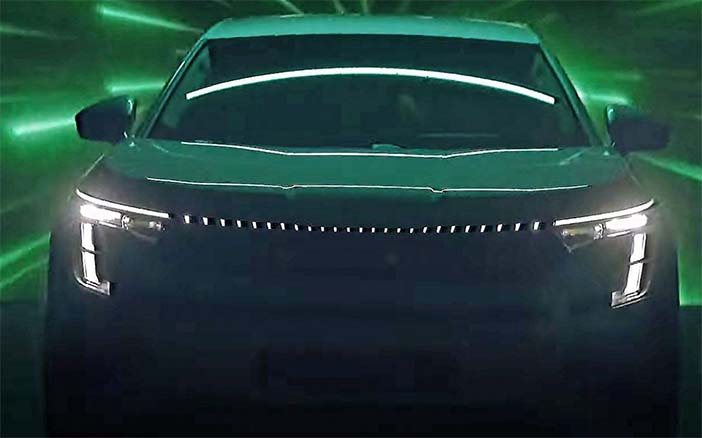
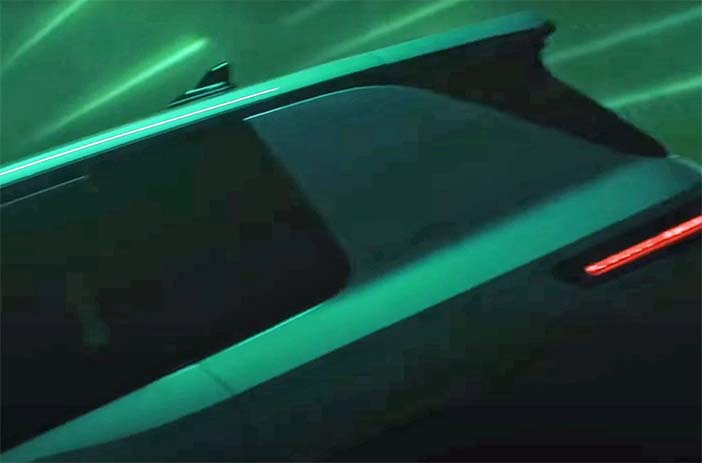
Up front is the ‘Tech Deck Face’, which is a much slimmer interpretation of the traditional Skoda grille. As with the Elroq and facelifted Enyaq, the panel will be used to house the various sensors, radars and cameras for the car’s driver-assistance systems. The sleek nose also incorporates a segmented, pixel-like daytime running light design clearly visible in the teaser images, and extends onto the front wings. Other details that appear to have been carried over from the Vision 7S are the sculpted bonnet with Skoda lettering, a twin-fin roof spoiler and razor-thin, T-shaped tail-lights that wrap around from the rear wings onto the bootlid, and are connected by a black panel that encircles the tailgate.
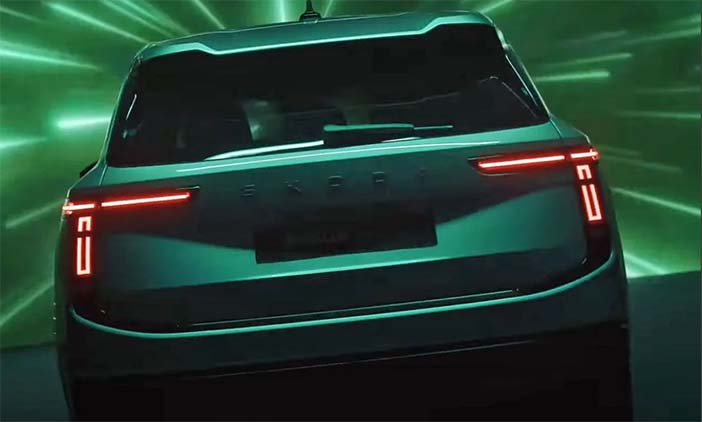
The overall shape will be close to the concept’s, too, with a very square front end and traditional SUV proportions. We’ve already spotted prototypes of the future Kia EV9 rival out and about testing, which confirm that Skoda’s 7-seat EV will have short overhangs at the rear which should help maximise interior space for passengers and their luggage. Skoda has confirmed its 7-seat electric SUV will measure around 4.9 metres long. That will make it the biggest model in the brand’s line-up by some margin (the latest Kodiaq is 4.758 mm from nose to tail) and longer than the Peugeot E-5008 (4.791 mm) it will be going up against. However, it won’t be quite as colossal as the Kia EV9 (5.015 mm) or Hyundai Ioniq 9 (5.060 mm). Unsurprisingly, the Vision 7S’s coach doors won’t make it to production, given that we can see the pop-out rear door handles on the prototypes are where they’d normally be. The concept’s unconventional ‘6-plus-1’ seating arrangement has almost certainly been replaced by a more traditional choice of 5 or 7-seat options, although we have yet to get a look inside the production car.
The cabin layout is likely to be very similar to the Enyaq and Elroq, which both feature a huge central touchscreen paired with a much smaller driver’s display. The interior of the Vision 7S focused heavily on the use of recycled and sustainable materials, so we expect it will be the same for the production version. Of course, there will be plenty of the ‘Simply Clever’ touches that sets Skoda’s models apart. One of those could be the ‘Smart Dials’ that made their debut in the latest-generation Kodiaq and Superb, with an earlier version featuring in the Vision 7S. Each dial houses a small display, and pressing them toggles between the various functions they’re responsible for, such as cabin temperature, fan speed and drive modes. We’ve found they help create a clean, modern interior design without sacrificing functionality or forcing drivers to rely solely on touchscreens. Underneath is almost certainly the same MEB bespoke electric-car platform that’s used by the Enyaq and Elroq, as well as around a dozen other EVs, including the Cupra Born and Ford Capri. Another is the nearly 5-metre-long Volkswagen ID.Buzz LWB, so we know the architecture can accommodate a vehicle this large. The 7-seat Skoda will probably get the same 86 kWh battery and 200 kW maximum charging speed as the ID.Buzz LWB, which we’d expect to provide a range of more than 580 km and allow for a 10 to 80 percent top-up in less than 30 minutes from a suitably fast ultra-rapid charger. Both figures are roughly on par with the Hyundai Ioniq 9, although the Peugeot E-5008 can boast up to 665 km of range in the right guise. A choice of single-motor, rear-drive and dual-motor, all-wheel drive powertrains are sure to be offered on the new Skoda, and we wouldn’t be surprised if there was a hot RS version, too, considering that both generations of the Skoda Kodiaq have been given the sporty treatment. Plus there is an Enyaq RS and a peppier Elroq vRS is due later this year. Of course, one key detail that remains firmly under wraps for the moment is this hugely important car’s name. Skoda has patented Eviatiq, which is at least one possibility because the brand’s naming conventions for its electric SUVs always start with E and end with Q. But the brand has plenty of time to settle on a name because as we mentioned, Skoda’s range-topping 8-seat EV will be unveiled in 2026, which also means it might not arrive in Dutch showrooms until the year after. +++
+++ TOYOTA will use “familiar” names for incoming electric models, moving away from the alphanumeric naming pattern established by the BZ4X. That RAV4-sized EV arrived in 2022 as Toyota’s first EV, with ‘bZ’ standing for ‘Beyond Zero’ (emissions), ‘4’ being the size of the car in Toyota lexicon and ‘X’ referring to it being a crossover. However, product and marketing boss Andrea Carlucci told at the brand’s annual Kenshiki day that names for upcoming electric models will come from “current cars” that are “familiar” to customers. As with the recently revealed C-HR+ (which is technically unrelated to its hybrid namesake), the brand will look to leverage the equity of existing names to boost EV sales, especially in Europe. To that end, the brand’s new entry EV in Europe, the Urban Cruiser, resurrects a name last used here for a similarly sized crossover in the late 2000s. This decision moves the Japanese brand away from its planned BZ naming strategy, which was meant to badge its EVs, following similar decisions by Honda (e:Ny) and Mercedes-Benz (EQ). Despite the move, there aren’t any plans to rename the BZ4X. Carlucci told that the name will “remain a bit isolated” in the Toyota range, as any change would “confuse” customers. The only other BZ models on sale are the Chinese-market BZ3X (a SUV) and BZ3C (a fastback). “Familiar” names will be attached to a trio of incoming Toyota EVs, arriving by the end of 2026 and sold globally. Preview silhouettes showcase those will be a pick-up truck, a fastback and an SUV; cars that European CEO Yoshihiro Nakata said will target ‘lifestyle’ customers. ‘Hilux’ is an obvious contender for the name of the pick-up, while the SUV could be the long-awaited production version of 2023’s Land Cruiser Se concept; a car that Toyota specifically pointed to as “an example of its breadth of ambition”. The Corolla name is another that could be used for an electric counterpart, suggested Carlucci, but said “that has not been decided yet”. The desire to return to word names is the result of “a clear request from Europe that was very much heard and followed by Japan”, Carlucci previously told. “We have a number of models”, he said. “If you start multiplying by technology, by segment, the nameplates tend to proliferate too much. We wanted to rationalise this”. He added that Toyota wants to “avoid this inflation of nameplates for the simplicity of the consumer”. +++
+++ Falling sales, stalling profits, a China crisis and the looming threat of North American tariffs: the VOLKSWAGEN GROUP is mired in its toughest business cycle since being rocked by the dieselgate scandal 10 years ago. Decreased volumes led to falling automotive revenue and a 15 percent lower operating profit of €19.1billion, including restructuring costs. But group CEO Oliver Blume came out fighting, saying 3 years of restructuring and the group’s new strategy (to be “the automotive tech driver”) would help it prevail in incredibly challenging market conditions. “Our industry is at a turning point,” Blume said. “The pace of change is breathtaking. New competitors are entering the market with disruptive technologies, while governments are intervening in global trade. “In this environment, we don’t just want to plan for the future, we want to actively shape it. Whoever says ‘yes’ to change, invests long-term in technologies and acts with foresight will put their stamp on the mobility of the coming decades”. Here are Volkswagen Group’s toughest challenges, and its plan to overcome them: 1) Fix the China crisis – China, the world’s biggest car market, has historically been a source of huge profits for German car makers: Volkswagen is the largest foreign brand with 24 percent of combustion-engine sales. But intense competition and a shift to electric cars and homegrown producers has hurt VW: the group has lost 1 million sales in the past 6 years. In 2024 Volkswagen deliveries again slumped by 10 percent, shedding a painful 2 percent market share and with operating profit dropping from €2.6 billion to €1.7 billion. “We’re feeling the effect of intense price competition in China”, said VW Group financial boss Arno Antlitz. Similarly concerning is that the transition to EVs is leaving Volkswagen behind: it lags in 8th place for electric sales. But it’s taking action. Having attempted to go it alone on software with its Cariad division, Volkswagen has pulled a u-turn and called in partners to help deliver cutting-edge operating systems. In China, VW has teamed up with Xpeng to develop its China Electronic Architecture (CEA). VW gave a sneak preview of its Chinese cockpit technology and while European tastes prefer a mix of physical and digital controls, Chinese buyers want the opposite. “Young consumers want to control touchscreens like an iPad”, said software spokesperson Ran Liu. That means hyper-responsive graphics, myriad controls (even down to window winding; mirroring Tesla’s playbook) grouped on the touchscreen and youthful digital features. One feature is for next-generation EVs to capture an avatar of the driver, mix it with photos of the route’s landscape and post it to social media. VW is also striving to catch up on Level 2++ assisted driving, giving cars the capability to assist in Chinese-specific driving conditions. So vehicles will be capable of cutting into unyielding single-lane urban traffic queues, handle swarms of pedestrians mingling with traffic and, on the highway, monitor fast-approaching rear traffic during evasive lane changes. Audi (with partner SAIC) will launch its first new-generation EV in late 2025, with a big Volkswagen brand multi-vehicle roll out in 2026. 2) Brace for US tariffs and a possible EU trade war – A looming threat of 25 percent tariffs hangs over US car makers moving finished cars and components around the US-Mexico-Canada (USMCA) trade zone. “We have calculated a number of scenarios, not just about North American trading arrangements. Nothing is on the table right now”, said Oliver Blume. The CEO hopes that EU-US discussions on the balance of trade and American tech companies’ revenue flow from the European market will help avert tariffs; EU car imports currently face a 2.5 percent duty entering the US. The Volkswagen brand has a US factory in Chattanooga, Tennessee, and is constructing a plant in South Carolina to revive the Scout heritage SUV brand with an electrified pick-up and SUV. But, as with all US manufacturers, its supply chain is hugely integrated across borders. And it imports the Tiguan and new Tayron from a factory in Puebla and the Audi Q5 from San José Chiapa, both in Mexico. If the Trump administration does enforce a 25 percent duty on imports from Mexico and Canada, VW has 3 unpalatable choices: pass on the cost to consumers (which will hit its dealer network and suppress demand) absorb it or split the tax with its customer base. Whichever way the outcome is a major profitability hit. 3) Revamp its European operations – Volkswagen Group global deliveries slipped 2.3 percent to 9.02 million vehicles, with deliveries in the western European market slightly down, at 3.26 million units. But this masks VW’s excessive European capacity of around 500.000 units per year. Management had pushed for 3 German factories to close but finite action is limited to ID.3 production in Dresden ceasing at the end of this year. The ‘zukunft’ (Future Volkswagen) plan negotiated with Germany’s powerful unions settles on losing 35.000 workers by attrition before 2030 and eliminating 734.000 production units. Volkswagen calculates this will save more than €15 billion a year in the medium term. The annual results included a €2.6 billion restructuring bill, with measures including €880 million on early retirement programmes and €1 billion to cover the shuttering of the Audi Q8 e-Tron factory in Brussels in February 2025. It’s notable that the plan eliminates 2 electric car lines; western European EV adoption slowed by almost 6 percent in 2024, with German zero-emission sales plunging by more than a quarter after the ending of subsidies. Group EV sales fell by 30 percent in the US and by 5 percent in Europe; a trend that posed a significant risk of Volkswagen facing fines for missing its average fleet CO2 reduction threshold in Europe. “We now have 3 years to meet the 2025 target and can compensate in 2026-27 when we can overperform with the ID.2 and ID.1 family”, said Oliver Blume. “We welcome the European Commission proposal which gives us more breathing space. Instead of paying fines, we can reinvest in the business to perform better”. A lack of affordable EVs has hampered the group’s attempt to hit the CO2 target. The Volkswagen brand will address this in 2026, when the production hatchback and crossover versions of the ID.2all concept launch, followed in 2027 by the ID.Every1 electric city car. These will be powered by lithium iron phosphate batteries from Volkswagen’s European factories in Salzgitter, Lower Saxony and Valencia, Spain. But they will face a challenge from low-cost Chinese EVs, both imported and ones assembled in Europe by BYD and Chery. 4) New strategy: be the global automotive tech driver – The battery investments are part of Volkswagen’s strategy to survive. The group is also striving to speed up new model introductions to better compete with the rapid-acting Chinese, with software and digitalisation becoming ever more critical pillars. While the Xpeng partnership’s software know-how will be made available globally, Volkswagen is two years into a software deal with US EV maker Rivian to co-develop a new operating system for the western hemisphere. The group underwent an intense benchmarking exercise, ruling out strong competitors and software that was too reliant on rival hardware to implement easily across the group. Volkswagen AG is also investing in public and home charging plus automated driving and ride hailing through ID.Buzz pilot programmes in Hamburg, Munich, Oslo and Austin, Texas. “The world of mobility is undergoing radical change and we will shape it”, vowed VW Group CEO Oliver Blume. “What gives us the strength to realize this ambition? Our unique combination of global presence and local competence. We use our global size, but at the same time we understand the specific needs of regional markets. That is our crucial competitive advantage”. +++