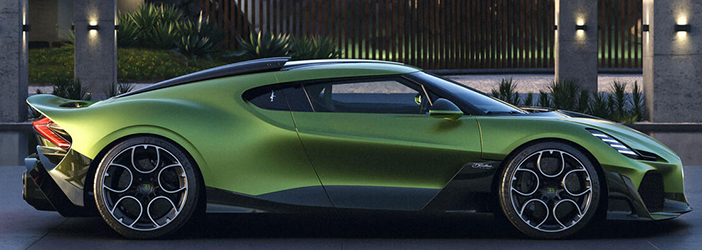
+++ BUGATTI is finally bidding goodbye to the W16 engine after 2 decades with a striking new one-off hypercar that is set to be the most expensive car the French company has yet built. Based on the Mistral speedster but with a fixed glass roof in place of that car’s open top, the Brouillard (French for ‘mist’) will be the last new standalone Bugatti model to use the firm’s W16. All future creations are set to be based on the Tourbillon, which uses a 1.800 hp plug-in hybrid powertrain centred around a Cosworth-designed V16. The Brouillard is due to be delivered in 2027 as the first in a line of “hyper-exclusive” one-offs from Bugatti’s new Solitaire coachbuilding division, which design chief Frank Heyl said will go much further than the existing Sur Mesure personalisation programme by creating “full, custom-made, geometrically unique cars”. In this respect Solitaire will be similar to Bentley’s Mulliner division, which created the Continental-based Batur and Bacalar limited editions, or the Bespoke arm of Rolls-Royce, which is responsible for the €25 million Droptail. The popularity of the existing Sur Mesure offering has proved so popular that “there is nearly no new car that isn’t individualised in some way”, according to Heyl, who added there is now “huge demand” from Bugatti’s most well-heeled customers for even greater individuality. The Brouillard shows how Solitaire (based at Bugatti’s new global design HQ in Berlin) can cater to that demand. “There’s not a single panel on the car that is the same as on the Mistral”, said Heyl, adding that the blank-sheet approach to designing Solitaire commissions will “enable us to go very specific” in meeting customer wishes. The Brouillard retains the Mistral’s 1.600 hp quad-turbo W16 and basic body-in-white, but it has been extensively redesigned according to the tastes of its unnamed owner who took inspiration from company founder and keen equestrian Ettore Bugatti’s favourite thoroughbred horse, named Brouillard.
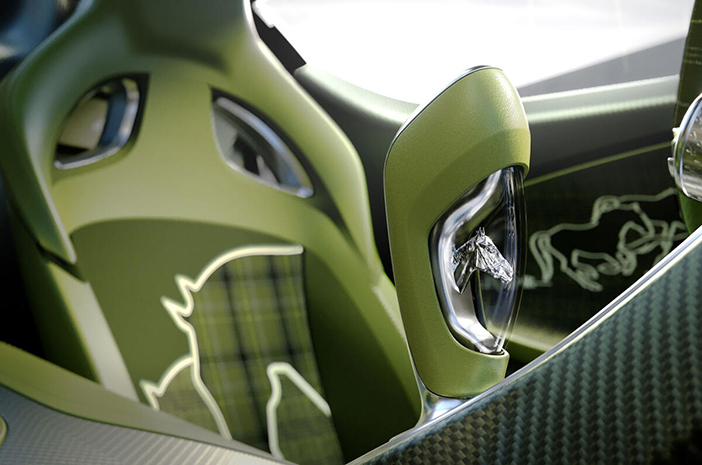
The eponymous stallion’s muscular form inspired the Brouillard’s smooth, flowing silhouette, which Heyl said has “no hard lines” and is instead defined by “soft shapes and bulging muscles”. It keeps the Mistral’s distinctive visor-style glasshouse and basic front light design but is otherwise visually distinct, with more minimalist surfacing treatment and a streamlined rear end that culminates in a new, venturi-style fixed ducktail wing. The Brouillard’s swap from open to fixed roof was also made in the name of exclusivity. Heyl said: “It’s a one-of-one, so it’s very special to make it a coupé. All 99 Mistrals were roadsters. Why not make a coupé?” There are subtle nods to the legendary Veyron hypercar (which turns 20 in 2025 and was the first car to use the W16 engine) including the chunky dual roof scoops (which Heyl said are functional), and the Brouillard’s more overt cab-forward shape.“The main gesture of the car is leaping forward and yet leaning back”, he said. “It reminds me of the novelty of the Veyron”. The Brouillard’s owner has emphasised the bespoke nature of their creation with an outlandish green-over-green colour scheme, with the exposed carbonfibre lower body sections tinted to match the satin paintwork. The interior upholstery is coloured accordingly, including the equestrian-inspired tartan. The substantial redesign showcases just how far Solitaire customers can go in making their car unique. But Heyl said it is important that whatever a customer demands, the final product must still be recognisable as a Bugatti. ”It must retain our trademark signatures that have become the DNA of the brand: the horseshoe grille, the Bugatti line on the side, the vertical centre line”, he said. However, he added: “If you do a bespoke one-of-one, you can deviate outside of the norm. It gives the designers some freedom where otherwise we would need to stick to a certain rule book. Yet we are still making it a Bugatti through reinterpreting our DNA elements”. Heyl said the Brouillard took around 18 months to complete. The Solitaire division has capacity to create a new bespoke model every 6 months, which suggests cars numner-2 and -3 are under way already. Future projects may not be publicly revealed, to protect the privacy of the high-net-worth customers, but the Brouillard will make its debut at the Pebble Beach Concours d’Elegance next week to showcase the Solitaire offering. The Brouillard will cost significantly more than the €6 million Mistral on which it is based, because it still requires the same amount of design and homologation work as a series car. Heyl said: “The investment is almost the same if we make 10, 100 or one. You still have to engineer it, you still have to tool it, you still have to test it, so the investment is significant, and if you have only one vehicle to return that investment, the price is accordingly high”. That means the Brouillard is likely to edge the €14 million La Voiture Noire as the most expensive Bugatti yet. When asked for confirmation, Heyl said: “Possibly”. +++
+++ HONDA ’s profit in the last quarter was half of what it was a year earlier, the company said Wednesday, as automakers were hit by 25% tariffs on vehicle exports to the United States. The Japanese automaker reported Wednesday that its April-June profit totalled 196.7 billion yen, about half of what it earned during the same period the previous year at 394.7 billion yen. Quarterly sales edged 1.2% lower to 5.3 trillion yen. The Tokyo-based maker of the Accord and Asimo robot revised upward its profit forecast for the full fiscal year through March 2026 to 420 billion yen, better than its earlier estimate of 250 billion yen. The improved projection still marks a 50% drop from the previous year’s results. Honda stuck to its forecast to sell 3.62 million vehicles worldwide in this fiscal year. It said its motorcycle business in Brazil and Vietnam was solid, while North American car sales also remained strong despite headwinds from the tariffs. The negative impact of the tariffs was estimated at about 450 billion yen ($3 billion), based on “a detailed review”, according to Honda. The company’s auto sales declined year-on-year in Japan, the rest of Asia and Europe. Honda’s quarterly global auto sales totalled 839,000 units, down from 869.000 the same period last year. Honda also said it posted a one-time expense related to electric vehicles, such as losses related to EVs sold in the U.S. and write-offs for line-up changes. Eiji Fujimura, Honda’s chief financial officer and director, welcomed an agreement between the U.S. and Japan to cut an initially planned 25% tariff on imported autos to 15%. That will work as “a positive” for the company’s business, customers, suppliers and shareholders, he said, even if it’s higher than the original level. Fujimura stressed that Honda has long tried to promote free trade and fair competition around the world to deliver quality products and, in his words, “contribute to the local community. Now we must face up to this new normal”. +++
+++ HYUNDAI is grappling with how to boost sluggish sales of its hydrogen fuel cell electric vehicle (FCEV), the Nexo. Although hydrogen vehicles remain one of the group’s core future mobility projects, the Nexo has failed to gain traction in the mass market since its launch in March 2018, hindered by a lack of refueling infrastructure and stringent government regulations. According to the automotive industry, Hyundai Motor Group believes that easing certain regulatory restrictions is critical to increasing demand for hydrogen vehicles. A major concern is the mandatory 15-year replacement cycle for hydrogen fuel tanks. The Nexo is equipped with 3 such tanks, each costing more than 4 million won (approximately $2.900) to replace. Drivers who wish to keep the vehicle beyond the 15-year threshold face costs of around 13 million won (roughly $9.400) in total. This issue has made the Nexo unappealing in the used car market, further dragging down new vehicle sales. Hyundai believes the replacement cycle should be extended to at least 30 years to make hydrogen vehicles more viable for consumers. The company also views self-service hydrogen refuelling as necessary to spur demand. Under current South Korean law, hydrogen can only be pumped with assistance from trained station staff. Industry officials say this regulation, combined with the shortage of refuelling stations, has contributed to the continued weakness in Nexo sales. From January through July this year, domestic Nexo sales fell 3.7% year-over-year to just 1.726 units. Between April and June, monthly sales fell below 100 units for 3 consecutive months.
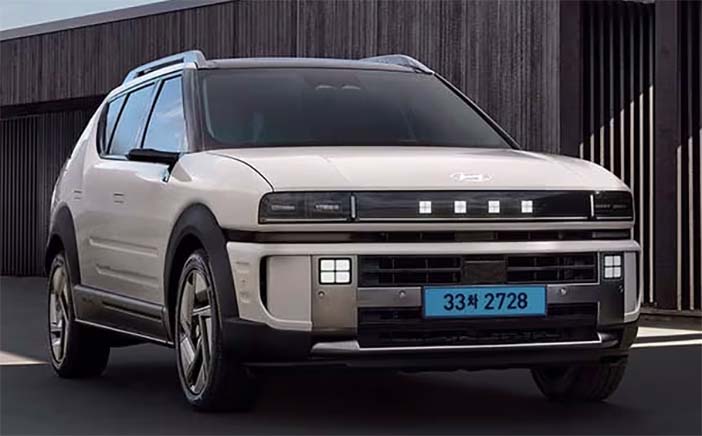
It was not until July, following the launch of the second-generation model on June 10, that monthly sales rebounded to 1.001 units. The Nexo was initially unveiled with high expectations in January 2018 at the Consumer Electronics Show (CES) in Las Vegas, with Hyundai Motor Group executive chair Chung Eui-sun appearing on stage himself. Annual sales climbed from 5.786 units in 2020 to 8.502 in 2021 and 10.164 in 2022. But volumes plummeted to 4.328 in 2023 and further to 2.751 last year. The vehicle gained national attention under the administration of Moon Jae-in, who test-drove the Nexo during a visit to Hyundai’s Namyang R&D Center in 2018 and later adopted it as an official presidential vehicle. That June, his government rolled out a hydrogen vehicle promotion policy. The Nexo was widely seen as aligned with Moon’s broader clean energy agenda, which emphasized eco-friendly and renewable energy sources, helping it receive robust policy backing. That support waned under the administration of President Yoon Suk-yeol. In 2022, his first year in office, the Ministry of Environment cut its hydrogen car and fuelling infrastructure budget in the second supplementary spending bill by 25% from 892.8 billion won to 667.8 billion won. The sharp decline in Nexo sales coincided with the onset of Yoon’s presidency. The administration of President Lee Jae-myung, however, has adopted a stance similar to Moon’s, once again promoting green energy initiatives. Hyundai Motor Group sees this as an opportunity to advocate for relaxed regulations and increased government support for hydrogen vehicles. “Even electric vehicles are seeing a slowdown in sales lately”, said an auto industry official. “For hydrogen cars, which are harder to refuel and suffer from steep depreciation in the used car market, it’s even tougher to attract buyers. To grow the hydrogen vehicle sector, we need not only aggressive pricing efforts from manufacturers but also meaningful regulatory reform from the government”. +++
+++ HYUNDAI AND KIA are zeroing in on the lucrative European electric vehicle (EV) market to offset a potential fall in eco-friendly vehicle sales in the United States ahead of the planned termination of EV subsidies. The Donald Trump administration plans to stop offering federal EV subsidies starting in October, clouding the outlook for Hyundai Motor Group’s EV sales growth as the carmaker also grapples with the aftermath of the blanket 15 percent tariff imposed by the U.S. The current situation highlights the need for the company to focus more on boosting EV sales in Europe, where demand for eco-friendly vehicles is rising rapidly. The Hyundai Motor Group is one of the few global carmakers that sells a full line-up of price-competitive EVs, from compact SUVs to sedans. According to data from market tracker SNE Research, the number of newly registered EVs across the globe soared to some 9.47 million in the first half of this year, up by 31.8 percent from a year earlier. Europe is the world’s second-largest EV market, accounting for 20.6 percent of global sales, following China, which leads with 63.2 percent. Given that the Chinese EV market is dominated by domestic players, Hyundai Motor Group is eyeing more robust growth in the European market. The carmaker plans to showcase a prototype of its new entry-level electric SUV, tentatively named the Ioniq 2, during the upcoming IAA Mobility 2025, which kicks off its 4-day run on September 9 in Munich. The move reflects the firm’s strong commitment to expanding its presence in the European market. As Europe has strong demand for compact and practical eco-friendly cars, the carmaker sees the upcoming mobility fair as an ideal venue to debut the new model. “Hit by the tariff imposition and reduced EV incentives from the U.S., Europe will become a major battlefield for global EV makers during the Trump presidency”, an auto industry official said. “The Hyundai Motor Group has a competitive edge in EVs over other global carmakers due to its broad vehicle line-up and price competitiveness, which raises hope for their deeper inroads into the market once they finish building the complete EV line-up”. In February, Kia also held its 2025 EV Day in Barcelona, Spain, unveiling the EV2 concept model. This is seen as the carmaker’s strong willingness to boost its EV presence in Europe, particularly with such a price-competitive and compact line-up. Both Hyundai Motor and Kia are also scheduled to start sales for their midsize and large EV models in Europe by the end of this year. They include Hyundai’s Ioniq 9 three-row family SUV and Kia’s flagship electric sedans, such as the EV4 and EV5. +++
+++ MAZDA said Tuesday that it swung to a net loss in the April-June period due to a hit from U.S. president Donald Trump’s steep tariffs and a stronger yen. The Japanese automaker posted a consolidated net loss of ¥42.1 billion ($286 million) for the 3-month period, its first loss in the fiscal first quarter since 2020, during the Covid-19 pandemic. In the same quarter of 2024, the company reported a profit of ¥49.8 billion. The company posted an operating loss of ¥46.1 billion in the 3 months to June, compared with a profit of ¥50.3 billion a year earlier, as the U.S. tariffs cost it ¥69.7 billion. A 15% U.S. tariff on automobiles is an “extremely heavy burden on corporate finances”, Mazda president and CEO Masahiro Moro told a news conference. The automaker’s sales decreased 8.8% to ¥1.01 trillion. For the full year ending in March 2026, Mazda expects its net profit to decline 82.5% from the previous year to ¥20 billion. The U.S. tariffs are estimated to have an annual impact of about ¥230 billion on the company’s operating profit. Mazda plans to offset more than 60% of the amount by increasing U.S. production and cutting costs. Mazda is more exposed to U.S. tariffs than Japanese rivals as it significantly relies on imports from Japan for sales in the U.S. market. The company will consider whether to raise prices in the United States when it updates its models, Moro said. +++
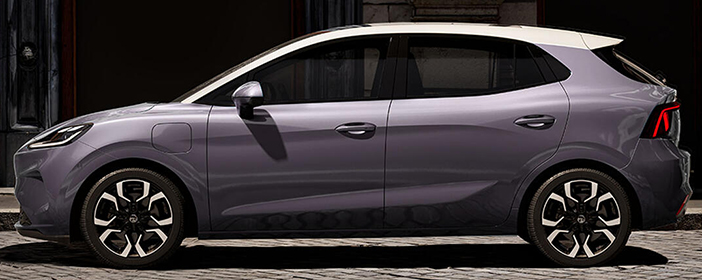
+++ During a media session following the MG 4 debut event in Beijing, executives from SAIC Motor Passenger Vehicle Company, SAIC Design, and the MG brand provided information on vehicle design, software integration, battery technology and market positioning. Pre-sales of the MG 4 began on August 1, offering four configurations. Yu Jingmin, Executive Vice President of SAIC Motor Passenger Vehicle Company, described the evolution of MG’s digital capabilities and its 5-year partnership with Oppo. He said the cooperation centres on in-vehicle device connectivity. According to Yu, the Oppo mobility system deployed in the MG 4 is among current industry offerings for innovative cockpit technology. Yu noted that traditional automakers face competition from internet-native startups with advantages in direct-to-consumer channels and software development. MG’s approach is to maintain an open ecosystem, allowing partners and competitors to access interoperable systems such as the Intelligent Car Connectivity Open Alliance (ICCOA). Shao Jingfeng, Chief Designer at SAIC Motor and General Manager of the UK Tech Centre, stated that the MG 4 includes some design elements from the Cyberster but that the overall styling has been moderated to appeal broadly. He highlighted the challenge of balancing Chinese and international consumer preferences, noting overseas buyers often prefer sharper, sportier designs, as reported by Auto-home. Shao added that while some design aspects are more restrained, key signature elements remain. He confirmed MG’s intent to maintain a consistent design language adaptable to both regional and brand requirements. Regarding the MG 4’s user demographics, where 60% of users are female, Shao observed that hatchbacks are commonly accepted by male buyers internationally and said MG aims to increase its appeal among male buyers in China through design and product variety. The hatchback format aimed to broaden appeal amng male and female users. Chen Cui, General Manager of the MG Brand Division, said the MG 4 is not modelled after any existing vehicles. While acknowledging competitors’ successes, he stated MG aims to provide differentiated technology. Notable features include an integrated thermal management system, CTB battery structure, and a planned semi-solid-state battery. Chen explained MG’s pricing reflects its position as a relatively late entrant to the EV sector and its effort to increase market share through product competitiveness rather than price alone. Li Zheng, General Manager of SAIC Qingtao, a joint venture between SAIC Motor and solid-state battery firm QingTao, explained the technical progress of the MG 4’s semi-solid-state battery, which contains approximately 5% liquid electrolyte. He described this as part of efforts to improve energy density while maintaining safety and material compatibility. Li noted that their approach depends on materials-level innovation and close cooperation between vehicle and parts development teams. He added that consumer familiarity with conventional lithium iron phosphate and ternary chemistries presents challenges when introducing new systems, requiring aligned engineering efforts. MG plans to promote a “lifestyle brand” image emphasising personalisation and customisation. Chen Cui said minor vehicle modifications are encouraged to allow owners to express individuality, supported by online platforms for sharing custom paint schemes and interior configurations. The MG brand aims to grow 4’s market share through technology and differentiation. Yu Jingmin highlighted that despite the MG4’s compact size, the vehicle emphasizes space efficiency. He stated the cabin can accommodate passengers up to 1.8 meters tall in the second row, and the trunk features a three-layer structure designed to maximize usable space. He also described exterior colour options such as “Island Blue”, “Coral Red” and “Clear Wave Green”, which are intended to correspond with various lifestyle scenarios. When asked about his reaction during the price announcement, Chen Cui said he was impressed by the collaborative development process behind the MG 4. Although recently joining the company, he expressed confidence in the MG brand’s international potential and cited the current product line-up and engineering resources as strengths relative to global competitors. +++
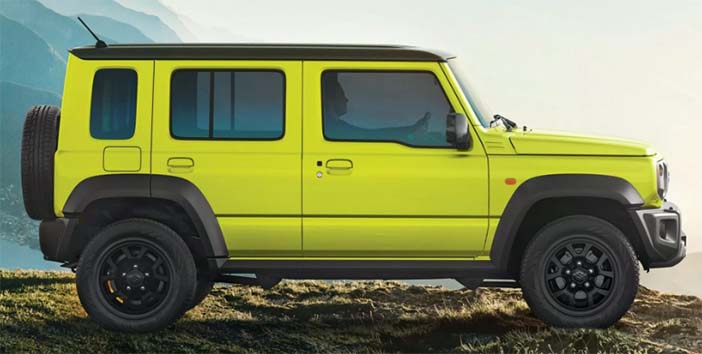
+++ SUZUKI has suspended domestic shipments of its 5-door Jimny Nomade, the latest addition to its flagship Jimny series of four-wheel-drive compact sport utility vehicles, it was learned Tuesday. The company had already stopped accepting new orders shortly after its launch due to overwhelming demand, but has not disclosed the reasons behind the latest shipment halt or when deliveries will resume. Produced in India and imported to Japan, the Nomade was initially targeted for domestic sales of 1.200 units per month. However, within just 4 days of its launch on January 30, the automaker received approximately 50.000 orders for the model. In response to the unexpected surge in demand, Suzuki had planned to increase production starting in July with the goal of resuming orders. The company has yet to say how the shipment suspension will affect these plans. +++