
+++ Recently, BYD announced that the cumulative sales of its Han and Tang series exceeded 1 million units. So far, the Han series sold 505.062 vehicles while the Tang series sold 501.662 vehicles. Currently, there are 6 models under both series: Han DM-i Champion Edition, Han DM-p Ares Edition, Han EV Qianshancui Limited Edition, Tang DM-i Champion Edition, Tang DM-p, and Tang EV. The first generation Tang DM model was born on January 2015. Then in July 2020, the Han model was launched. At that time, the Tang DM was equipped with BYD’s second-generation DM technology and launched under the “542 strategy” campaign at the Shenzhen-Hong Kong-Macau Auto Show in June 2015, with a price range of 279,800 – 518,800 yuan (39,000 – 72,200 dollar). ‘542’ refers to: 0 – 100 km/h acceleration time within 5 seconds, electric 4-wheel drive and fuel consumption under 2 liter/100 km. This marked the beginning of BYD’s new energy vehicle journey. In July 2020, the first-generation Han was officially launched with 3 pure electric versions and one hybrid version in the Chinese sedan market. One year following its launch, the 100,000th Han rolled off the production line, making it the fastest Chinese sedan to reach this milestone. Based on BYD’s Blade battery, DM-i hybrid, and DM-p hybrid technologies, the Han family has three powertrain systems: EV, DM-i, and DM-p. Earlier, as of December 2022, the Tang series had sold more than 440.000 vehicles and the Han series had sold more than 430.000 vehicles. It was the Champion Edition that propelled both series combined to reach the 1 millionth delivery milestone. In March this year, the Han EV and Tang DM-i Champion Edition models were launched. +++
+++ HYUNDAI hosted the 2023 CEO Investor Day unveiling visionary medium- to long- term business strategies and financial plans and aiming to reach 2 million in annual electric vehicle (EV) sales by 2030, according to company officials, Tuesday. The company announced that it will achieve a successful transition to electrification by efficiently leveraging its vehicle production and sales experience. The company has decided to initiate its “Hyundai Way” strategy by securing 109.4 trillion won ($85.3 billion) of investments for the next decade, including 35.8 trillion won for electrification. The company aims to sell 2 million EV vehicles by 2030 and is focusing on future businesses, such as autonomous driving, hydrogen, robotics and advanced air mobility (AAM). “The value of cultivating human-centered innovation by further developing technology inherited from the past is the distinct heritage that a company with a rich legacy can provide”, CEO Chang Jae-hoon said. “As it originated from Pony, the Ioniq 5 N (a high-performance EV scheduled for unveiling in July) will embrace and carry forward the enduring heritage of Hyundai”. Chang laid out the ‘Hyundai Way’ roadmap for success in the electrification era, emphasizing the company’s advantages as a legacy carmaker and its proactive pursuit of leadership in EVs. He explained how the company’s second-generation dedicated EV platform, under the new Integrated Modular Architecture (IMA), will replace its Electric-Global Modular Platform (E-GMP) going forward. The next-generation platform will be used on 13 new dedicated EV models from Hyundai Motor Group’s automotive brands Hyundai, Kia and Genesis through 2030. With the IMA, the company expects to standardize modules and parts between the models to further expand economies of scale and significantly reduce EV development complexity and costs. Hyundai plans to apply a range of batteries, including next-generation NCM batteries and LFP batteries, for the second-generation platform. The company is also exploring different form factors of batteries to enhance versatility. To further extend the driving range, Hyundai intends to implement cutting-edge technology that enables battery charging and discharging while driving, utilizing an independent power bank. In addition, the integration of an AI-based battery management system will ensure real-time monitoring and diagnosis of battery conditions, ensuring enhanced safety by preventing thermal runaway. These hardware improvements, the modular architectures and next-generation platforms will enable software architecture compatibility in support of Hyundai’s software-defined vehicle (SDV) strategy. The company aims to build an app ecosystem through the application of an open operating system and controller integration, including Level 3 and higher autonomous driving capabilities, high-performance semiconductors and over-the-air (OTA) update advancements. +++
+++ Hyundai and its sister company, KIA , recently unveiled plans to solidify their lead in the rapidly growing Vietnamese market through the release of new models and sales of popular vehicles. The announcement was made ahead of Hyundai Motor Group executive chairman Chung Euisun’s upcoming visit to the country, which is ranked 4th in Southeast Asia in terms of automobile production and sales. Chung will accompany president Yoon Suk Yeol on his 3-day state visit to Vietnam later this week, as a member of the business delegation. After establishing a joint venture named Hyundai Thanh Cong Manufacturing Vietnam (HTMV) with Vietnam’s Thanh Cong in 2017, Hyundai has produced the Grand i10, Avante, Tucson and Santa Fe in the Vietnamese province of Ninh Binh. In 2019, HTMV became Vietnam’s leading carmaker in terms of sales volume, selling 79.568 vehicles annually, beating Toyota, which sold 79.328 vehicles. As HTMV sold 81.368 vehicles in 2020 and 70.518 vehicles in 2021, it maintained its lead for the third straight year. Based on the success, Hyundai established another joint venture regarding sales in 2021 and built its second HTMV factory in 2022. Kia started its operation in Vietnam in 2004 in collaboration with Truong Hai Auto. The carmaker sold 28.986 vehicles in 2018 and 30.103 vehicles in 2019. In contrast to Toyota, Mazda, Mitsubishi and Ford, all of which faced declining sales in Vietnam in 2020, as a result of the Covid-19 pandemic, Kia saw a 30.2 percent year-on-year increase in its sales to 39.180 vehicles at the time. In 2022, the Korean firm sold over 60.000 vehicles in Vietnam. As of May this year, Hyundai took the top spot in sales volume in Vietnam, selling 22.903 vehicles in Vietnam, outperforming Toyota, which sold 21.547 vehicles. Kia has sold 13.951 vehicles in Vietnam during the first 5 months of this year. In order to maintain its lead, Hyundai plans to boost sales of the Accent, Creta and Santa Fe, while developing new SUVs and minivans. In addition, it will start the local production of the Ioniq 5 in July to expand its presence in the Vietnamese electric vehicle market. During the second half of this year, the HTMV factories will begin to produce the Ioniq 5, Venue and Palisade. Kia also plans to boost the sales of the Sonet, Carnival, Sportage and K3 in Vietnam. “Hyundai and Kia will continue their efforts to raise their brand awareness and boost sales in the Vietnamese automobile market, which is expected to grow continuously”, a Hyundai Motor Group official said. +++
+++ RENAULT KOREA MOTORS is facing uncertainties about its plan to manufacture 200.000 electric vehicles (EVs) in Busan annually, as battery makers here remain reluctant to increase their domestic production, according to industry officials, Monday. During Renault Group senior vice president Francois Provost’s recent closed-door meeting in Korea with prime minister Han Duck-soo, the French firm’s executive is said to have complained about difficulties securing enough EV batteries here. Renault Group executive vice president Guido Haak also asked Busan Mayor Park Heong-joon to support the company’s planned investments in the city, during their meeting in Paris last Tuesday. Their remarks came as LG Energy Solution, SK On and Samsung SDI regard Renault’s EV production capacity in Korea as insufficient for them to build new plants here. Although Chinese batteries are mentioned as alternatives, Renault is desperate to secure Korean batteries to comply with international trade regulations. The carmaker also hinted that it may nullify its plan to produce EVs in Korea, if it fails to secure enough batteries here. “Our company seeks to invest in a local EV factory with a plan to export 70 percent of the production”, Renault Korea director Park Jeong-ho said at a conference hosted by the Korea International Trade Association (KITA) last Thursday. “We need to secure batteries in Korea for export, but due to the short supply of local batteries, it is difficult for us to make investment decisions”. He also emphasized that a communication channel is needed between carmakers and battery manufacturers, in order to enable General Motors and Renault to secure enough EV batteries in Korea. However, Korean battery firms have focused more on their investments in the U.S. and European countries, to receive larger incentives. BlueOval SK, a joint venture between SK On and Ford, secured up to $9.2 billion in low-interest loans from the U.S. Department of Energy. A battery plant to be built in Georgia jointly by SK On and Hyundai will receive $700 million worth of subsidies. Samsung SDI and GM will also receive tax incentives for 15 years to support their joint battery plant in Indiana. “Because of Korea’s insufficient support for local battery plants, EVs equipped with batteries made in Korea will face difficulties securing price competitiveness in foreign markets”, an SK On official said during the KITA conference. “Subsidies and tax incentives are needed on production, facility investments and R&D”. +++
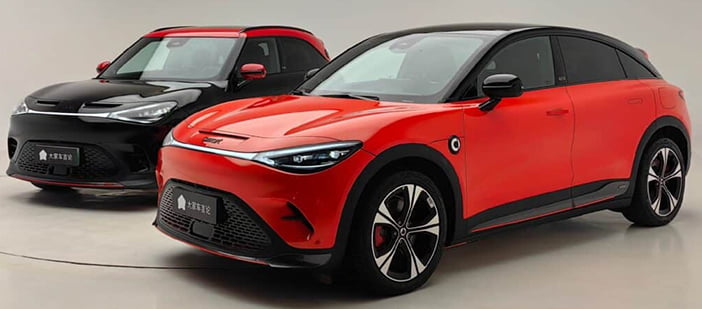
+++ On June 21, the SMART #3 hit the dealers in China and started deliveries in 41 cities nationwide. Moreover, Smart announced it completed the construction of 164 brand stores and planned to reach 200 stores by the end of the year. Smart is a former German automotive marque established in 1994 focusing on microcars. In 2019 Chinese stepped in, and things started moving fast. The new company Smart Automobile was established as a joint venture between Geely and Mercedes-Benz, and in September 2022, the first electric crossover, the #1, started deliveries. As of May, Smart sold 28.923 units of the #1 in China. The #3 is the second EV from the company and launched on June 1. Smart claims that the further delivery times would be even shortened due to ‘optimizing capacity allocation’ and Smart #1 and #3 shipping would be even faster. The #3 was launched in Pro+, Pulse AWD, Premium and Brabus Performance. Suppose you wonder how to pronounce the new Smart EV’s name; it’s: “hashtag three”. The best deal is the Pulse AWD version. It gets 422 hp and 543 Nm, and a 520 km CLTC range provided by a 66 kWh battery. The drag coefficient of the #3 is 0.27. The exclusive Brabus limited edition of the compact crossover showcases an identical dual motors setup as the Pulse model, generating a powerful 422 hp. It boasts sporty bodywork and fancy wheels. With an impressive acceleration capability, it can reach 0-100 km in 3.6 seconds. Additionally, it excels in a straight-line sprint, completing the 0-400 meter distance in 11.97 seconds. As its predecessor #1, Smart #3 is based on Geely’s SEA platform, which underpins Lotus Eletre, Zeekr X, Volvo EX30, and Polestar 4. The #3 represents the largest model ever produced by Smart. It is a 5-door, 5-seater vehicle with dimensions measuring 4.400 mm in length, 1.844 mm in height and 1.556 mm in width. The wheelbase stretches 2.785 mm. The EV offers the option of equipping either 19 or 20 inch wheels and features a front trunk, commonly called a “frunk”. Geely manufactures the #3 at their newly established Xi’an plant, which commenced production in 2021. Mercedes-Benz handled the design, while Smart took the lead in research and development and oversaw the technical aspects of construction. The Geely-Mercedes EV will compete with the Volkswagen ID.4 and a Smart spokesperson confirmed that the #3 will be launched in Europe in the first quarter of 2024. +++
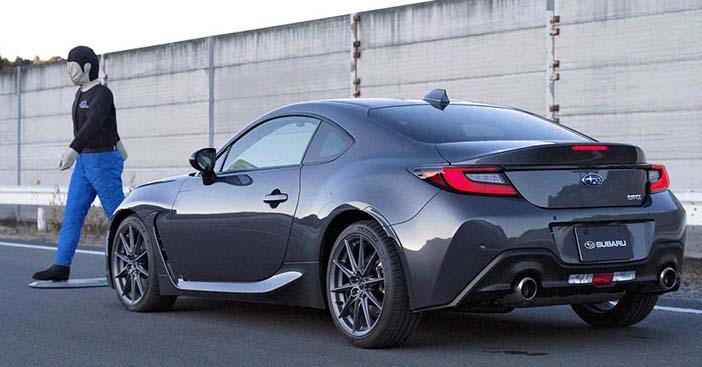
+++ SUBARU will introduce its EyeSight driver assist technology to a manual transmission automobile for the first time. Normally equipped on automatic transmission models, EyeSight will be installed on Subaru’s upgraded BRZ sports car, which is scheduled to be unveiled this autumn. EyeSight uses cameras that capture objects in three dimensions, controls the brake to avoid collisions as well as optimizes the driving speed to maintain a constant distance from the vehicle in front. As manual vehicles are more likely to stall than automatic ones, Subaru had not equipped them with EyeSight, which uses automatic braking. To introduce the technology to the manual BRZ, Subaru has adjusted the computer system that controls the brakes to work even when the engine stops. For the distance maintenance function on manual cars, it will be activated when the vehicle is in second gear or higher and its speed exceeds 30 kph. Since EyeSight was launched in 2008, more than 5.5 million vehicles have been equipped with the system. +++
+++ SUZUKI said Tuesday it has agreed with Japanese start-up SkyDrive Inc to jointly start producing flying cars around the spring of 2024 as it aims to take the lead in the growing industry. Flying cars are a type of aircraft with the ability to vertically take off and land using multiple rotors. The vehicles are typically meant for carrying a small number of people, with some models also equipped for use on land. SkyDrive will set up a fully-owned production subsidiary that will assemble vehicles utilizing the Suzuki group’s plant in Shizuoka Prefecture, central Japan. The announcement comes a day after SkyDrive, a leading flying car start-up in Japan, unveiled at the Paris Airshow a plan to change the design of its vehicle under development so it can carry 3 people instead of 2. The new design, which has an overall length of about 13 meters and a height of 3 meters, will extend the maximum flight range to about 15 kilometers from the current 10 km. SkyDrive and Suzuki announced a tie-up in the area of flying vehicles in March 2022, but the details of the collaboration have been under discussion. The automaker said in September it has acquired an undisclosed stake in the venture. SkyDrive, set up by former Toyota engineers in 2018, is aiming to utilize its flying vehicles at the 2025 World Exposition in Osaka. Flying cars are one of the fastest growing segments in mobility, with companies such as Toyota and Japan Airlines entering the market through start-ups that have development capabilities. +++
+++ Electric vehicle maker Rivian says it will follow General Motors and Ford and join TESLA ’s charging network next year. The startup pick-up, SUV and delivery Van maker says that like GM and Ford, it also will adopt Tesla’s charging connector, another step toward making it the industry standard. Existing Rivian vehicles will need an adapter to link to a Tesla charger. But Rivian says vehicles manufactured in 2025 and beyond will come standard with a Tesla charging port. It is another domino to fall as the auto industry considers switching to Tesla’s connector, which it calls the North American Charging Standard. At present, nearly all automakers other than Tesla use what is called a CCS connector developed with the Society of Automotive Engineers. Tesla’s Superchargers are coveted by other automakers because it has more direct current fast-charging plugs in the U.S. than any other network, and its stations are in prime locations along freeway travel corridors. Other automakers also are looking into the switch. Stellantis CEO Carlos Tavares said his company’s U.S. teams are studying the change and will make a decision in a few weeks. “We right now are evaluating that possibility”, Tavares said in a brief interview. “It can have good things and bad things”. He said the good things are being evaluated, and the bad things include dependence on Tesla. Currently Stellantis, formerly Fiat Chrysler, has no fully electric vehicles on sale in the U.S., but it does sell 3 plug-in gas-electric hybrids that can go short distances on battery power. The company plans to sell an electric commercial van this year, followed by an electric Ram pickup and other vehicles. Rivian is a relatively small player in the U.S. automotive market, selling just under 30.000 vehicles from 2021 through the first quarter of this year. But the Irvine, California, company is viewed as a key Tesla competitor. Like GM and Ford, Rivian owners will get access to more than 12.000 Tesla Supercharger plugs. In the U.S., Tesla has 1.797 Supercharger stations and more than 19.000 plugs. Since the stations are direct current fast-chargers, they can charge EVs relatively quickly as people travel. ChargePoint has the biggest charging network in the U.S. with more than 32.000 stations and 55.000 plugs, but most of them are Level 2 chargers that can take up to eight hours to get a battery up to a full charge. The Energy Department says there are about 54.000 public charging stations nationwide with more than 136.000 plugs. While most are slower Level 2 chargers, the network of DC fast chargers is growing. Still, industry analysts say there is growing momentum to switch to Tesla’s connector to become the standard in the U.S., although vehicles likely will need to be able to use both connectors for a while. GM and Ford say they’re not paying Tesla anything for access to the network, but owners will pay Tesla to charge just like any other charging system. Rivian said in a statement that in addition to joining Tesla’s network, it will continue to expand its own charging system, where it will incorporate Tesla’s connector. Shares of Tesla are up about 40% since Ford first announced it would join the charging network on May 25. +++