
+++ The FORD PUMA has been crowned the United Kingdom’s best-selling car of 2024, topping the charts for the second consecutive year ahead of other hot-selling rivals. According to data supplied by the Society of Motor Manufacturers and Traders, Ford’s compact SUV outsold the Kia Sportage and the Nissan Qashqai, making it the most popular new car on UK roads. Ford sold 48.340 Pumas, although Kia was close behind, shipping 47.163 Sportages. Nissan finished in third and fourth place with the Qashqai (42.418 units) and Juke (34.454 units) respectively, while the Tesla Model Y rounded out the top-5. While the Model Y didn’t quite reach the top spot, it was the UK’s most popular electric car, with the American brand selling 32.862 units; almost double the total of the second-placed Audi Q4 e-Tron. Overall, 2024 was a reasonably positive year for the UK car industry, with new car registrations almost reaching 2 million units, rising 2.6% year on year. The rest of the top-10 bestselling cars in the United Kingdom in 2024 are: 6. Volkswagen Golf (32.370 units), 7. Hyundai Tucson (32.174), 8. MG HS (30,270), 9. Volvo XC40 (30.202) and 10. Volkswagen Polo (27.674). +++
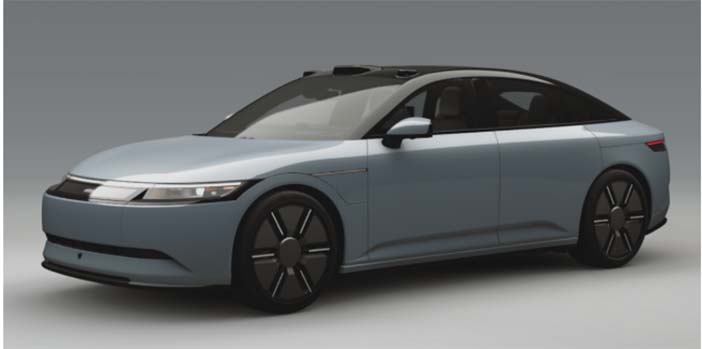
+++ The Afeela 1, the first car from the joint venture between tech giant Sony and HONDA , will launch in the United States in 2026 offering 496 hp from a twin motor powertrain and priced from $89,900 (€120.000 in Dutch pricing). The sleek electric saloon from Sony Honda Mobility (SHM) was first shown in 2023, and what was described as a near-production version is shown at the 2025 CES tech show in Las Vegas. SHM has confirmed that buyers can now reserve a machine for $200, but only if they live in California, where it will go on sale first before expanding into other US states. Sony Honda Mobility boss Yasuhide Mizuno described the car shown at CES as being in “near final” design, and also demonstrated one of the car’s advanced functions by calling it onto the stage by a voice command into his phone, although it isn’t yet clear if that will be offered for production models. When deliveries start in California in mid-2026 the Afeela 1 will be offered in 2 trim levels, and offer a claimed range of up to 480 km and, thanks to more than 40 sensors including a roof-mounted Lidar, autonomous driving functions. Under the partnership between the 2 Japanese firms, it is believed that Honda will essentially provide the technical underpinnings of the machine while Sony will be responsible for the in-vehicle technology and user interface. The car will sit on the same electric platform that will be used for the forthcoming Honda 0 Series range of EVs. The Afeela 1 will feature a 248 hp electric motor mounted on each axle, giving a combined output of 496 hp. It will also feature a 91 kWh lithium-ion battery that can be charged at speeds of up to 150 kW. Those specifications largely match those of the forthcoming Honda 0 Series saloon. SHM claims it will offer “a sense of unity with the driver” through “nimble and stable handling”. A 3D motion management system that includes robotics-based posture control technology, is claimed to be able to adjust the motors, brakes and suspension to optimise ride comfort. The machine is 4.915 mm long with a wheelbase of 3.018 mm and sits 1.460 mm high. It features a novel media bar at the front of the bonnet, which can be used as an external information display. It sits on double wishbone suspension at the front, with a multi-link set-up at the rear, and will also feature an active rear spoiler. The Afeela Intelligent Drive system will offer level 2+ autonomous driving, using data from more than 40 sensors, including camera, Lidar, radar and ultrasonic sensors. Inside, the car will feature a notable yoke-style steering wheel, a large panoramic screen and active noise cancelling. The infotainment is built around a customisable display screen, which can be run through the Afeela Personal Agent voice control system. A number of apps, including Spotify, TikTok and Zoom, will be offered in the car. SHM claims the audio system has been designed to optimise sound for each seat, including advanced noise cancelling technology. Meanwhile, around 70 percent of the interior surface area is made from plant-derived and recycled materials, while recycled materials are also used on both the chassis and steel body. The machine will arrive next year in top-spec Signature trim, which is priced at $102,900 (€137.000). Those models will initially be offered with 21 inch alloy wheels, 3 exterior and 2 interior colours, a camera-based rear-view mirror and 2 screens for the rear entertainment system. Entry-level Origin models will follow in 2027, sitting on 19 inch wheels and only offered in black with a single interior trim. It will forego the rear entertainment and feature a standard rear-view mirror. The Afeela 1 will be made in the USA, although the firm has yet to specify where. There are no details on any sales plans outside of the USA. +++
+++ HYDROGEN development today tends to focus on more prosaic transport, such as delivery vehicles, but Toyota’s projects err to the exciting. Back in the 2021 Fuji 24 Hours race, it fielded a Corolla Sport powered not by a hydrogen fuel cell but by a specially developed H2 version of the 3-cylinder GR Yaris combustion engine, and last month the car competed in the final of the Super Taikyu Series. The Corolla runs on ‘boil-off’ hydrogen from liquid hydrogen carried in its fuel tank. Burning hydrogen in a combustion engine generates no emissions of carbon monoxide (CO) or unburned hydrocarbons (HC), which are 2 of 3 emissions cleaned up in a conventional petrol car by a 3-way catalytic converter. The third comprises oxides of nitrogen (NOx), and although the racing engine still produces some of that, the quantities are far lower than those produced by a petrol engine, and they are neutralised by exhaust after-treatment. The novel approach to using boil-off gas stems from liquid hydrogen’s unavoidable Achilles heel, which is that it literally evaporates while the car is standing doing nothing. Liquid hydrogen is stored in cryogenic tanks at a chilly -253 degrees. Inevitably heat from the outside penetrates the insulated tank and the hydrogen begins to evaporate: it boils off. A couple of decades ago, when modern hydrogen fuel cell and combustion engines began serious development, the high-pressure tanks for storing gaseous hydrogen at 350-700 bar, the go-to technology today, hadn’t emerged. Most projects that focused on using liquid hydrogen and dealing with boil-off meant releasing it through a valve as pressure increased, which wasted a percentage of the fuel on a continual basis. If a car was left standing for long enough, it could run out of fuel without moving. On the plus side, liquid hydrogen is far more energy-dense than gaseous hydrogen, with the potential for greater range. What Toyota has done is turn boil-off into a positive: instead of simply venting the evaporating gas to the atmosphere, it captures it and uses it in several stages. Boil-off gas is pressurised and fed to the engine and used directly as fuel to power the car. The pump that does the work increases the pressure of the boil-off gas by between 2 and 4 times, which is enough to fuel the engine. Left-over gas is used to generate electricity in a hydrogen fuel cell stack, which is used to power a liquid hydrogen pump and other ancillaries. If there’s still a surplus after those steps, the excess is converted to water vapour using a catalyst and safely released outside the car. Toyota is looking to form technical partnerships to develop the technology further. This really cool idea (pun intended) emphasises the staggering levels of ingenuity that continue to emerge from the engineering departments of car makers worldwide. +++
+++ Back in the United States, luxury electric car maker LUCID MOTORS said it posted a 4th-quarter global sales record, delivering 3.099 vehicles; a 79 percent increase compared with a year earlier. The company also said it met its full-year 2024 production guidance of 9.000 vehicles. We’ll find out on February 25 if Lucid made any progress getting out of the red. It hemorrhaged $950 million in the third quarter. +++
+++ MAZDA is wrapping up a banner year in an overall sluggish auto market, and its US sales chief expects that momentum to extend into 2025, all without offering an electric car. Buoyed by demand for its gasoline-powered compact crossovers and mid-size SUVs, the Japanese company is on track to deliver more than 420.000 vehicles in 2024; a 16% rise, said Tom Donnelly, president of Mazda’s North American operations, breaking a record set in 1986. It aims to sell 450.000 vehicles in 2025, he said. +++
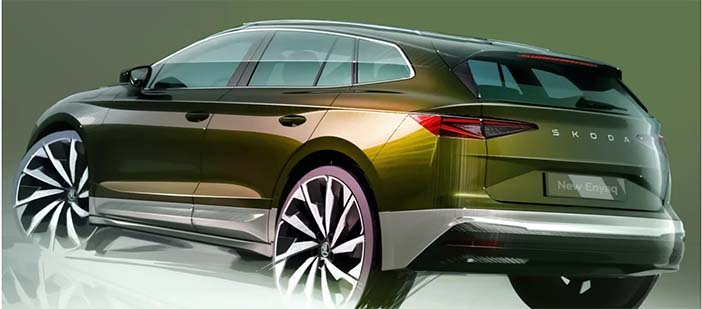
+++ It’s SKODA ’s 130th birthday this year and as part of the celebrations, the company is giving its all-electric Enyaq a facelift, adopting the brand’s latest ‘Modern Solid’ styling language and elements seen on the new Elroq in the process. Skoda has released some sketches in the build up to the new-look Enyaq’s reveal and the latest round gives us a sneak peek of the car’s heavily revised front end, which will be sported by both the standard Enyaq and the more rakish Enyaq Coupé.
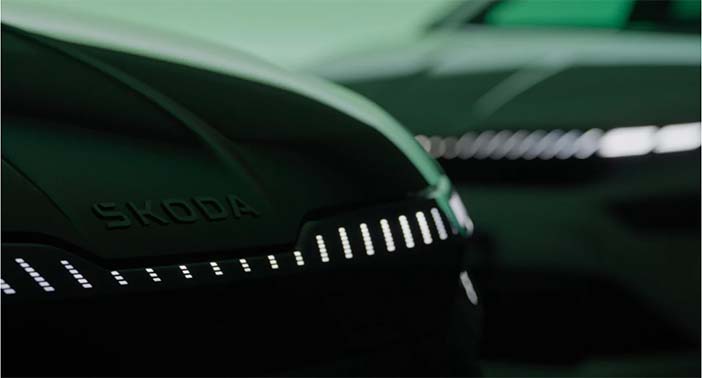
Scheduled to be unveiled on Wednesday 8 January, the refreshed Enyaq’s biggest design change will be a new, much slimmer and illuminated ‘Tech-Deck Face’ grille panel that’ll replace the current design, which is very tall and closely resembles those seen on Skoda’s combustion-engine models, such as the Superb and Kodiaq. A recent glimpse of the Enyaq’s front-end shows us the new headlight signature undisguised. The new daytime running light design will wrap around onto the front wings (also as on the Elroq) and swap the traditional Skoda emblem on the nose for simple lettering and a redesigned bumper that incorporates matrix LED headlights. Skoda’s sales and marketing boss Martin Jahn said last year: “When the Enyaq was introduced a couple years ago, the majority of our customers were still more traditional. Now we are moving into the more progressive customers that we need for this new phase, and the new design for the car”. As well as giving the Enyaq a fresh look, Skoda says the new front end has improved airflow, which in turn has increased the car’s range. The changes have also made the Enyaq Coupe the most aerodynamic model in the brand’s line-up. Elsewhere, there will be new dark chrome accents and an Olive Green paint option exclusive to the Enyaq. Plus I’ve been told to expect updates to the powertrains, interior materials and software. More than 200.000 Enyaqs have been delivered since the highly rated family SUV was launched back in 2020, making it the 4th bestselling EV in Europe. In fact, in October 2024 the Enyaq was the most popular electric car on the continent. Looking further ahead, the all-new, hugely important Epiq will arrive in 2026, the brand has confirmed. A concept model was unveiled last year, which also employed the ‘Modern Solid’ design language, and should be a very close representation of the final production version. It’s most likely to be revealed in early 2026, and is set to cost around 27.500 euro in the Netherlands. Then, by the end of 2026 or early in 2027, Skoda’s 7-seat, flagship electric SUV should have been unveiled. The design will be based on the Vision 7S concept from 2022 that introduced us to the ‘Modern Solid’ philosophy, and previewed the future Peugeot E-5008 rival. The name of this model is still under wraps, however. Finally, Skoda is still working on a pure-electric estate car, which at 4.6 metres long will serve as the zero-emissions alternative to the trusty Octavia Estate. But it will no longer be arriving in 2026 as originally planned, and is now more likely to hit the streets in 2027 or possibly 2028. +++
+++ With more than 1.2 million units sold, TESLA ’s Model Y was the world’s bestselling car in 2023, and now the US firm is looking to give its electric SUV even more appeal in 2025 with a mid-life facelift. We’ve seen leaked images of the new Tesla Model Y already and now a full unveil is imminent. Tesla gave its popular Model 3 saloon a much needed facelift in late 2023 to help it compete with a growing batch of newer rivals such as the Hyundai Ioniq 6, BMW i4 and BYD Seal. The Model 3’s revamp introduced a sleeker, more modern look and a controversial interior refresh that saw the maker swap out the indicator stalks for buttons on the steering wheel. Whatever you think of this tech, it’s all but certain to make an appearance on the updated Model Y, dubbed Juniper. It will feature a new headlight arrangement (possibly a thinner led light bar inspired by the wild Cybertruck) and a new front bumper, all with the aim of reducing the Model Y’s 0.23 drag coefficient. The body, meanwhile, is unchanged until we get to the rear, where we expect to see a restyled bumper and new light design. A pair of leaked images surfaced last year and gave us a good idea what to expect from Tesla’s BMW iX3 rival. CEO Elon Musk confirmed on social media in 2024 that “no Model Y ‘refresh’ is coming out this year”, although he went on to reiterate that small improvements are made gradually to all of the maker’s models, particularly via over-the-air (OTA) updates: “Tesla continuously improves its cars”, he said. “So even a car that is 6 months newer will be a little better”. The main point of differentiation between the Model 3 and forthcoming Model Y will be at the rear. One of the leaked pictures showed a shadowy angle of the tailgate, but it revealed that the SUV is set to get a full-width light bar with embedded Tesla lettering, and a small camera hidden within a section of gloss-black trim. The light clusters themselves should closely resemble those on the Model 3, with a sharper LED signature and hidden indicator turn signals. The overall shape is not expected to change, due to the typical and well documented restrictions placed on designers when facelifting a car. As such, the tall bootlid and steeply-raked rear screen will be carried over, along with the relatively long wheelbase and short overhangs. New aero-optimised alloy wheel designs and a bit more body-coloured trim may feature, however. Unfortunately, the single leaked interior image also shown on social media doesn’t give much away. But given how likely it is that the Model Y will lift its cabin near-wholesale from the Model 3, there are few secrets left to uncover. That means a carbon copy of the saloon’s minimalist dashboard with a large central screen and no gauge cluster. The vast majority of the car’s functions will be embedded within that main display, while the indicators, as mentioned, will be moved to the steering wheel. The Model Y’s doors will be button-operated, as before, but new seats should feature alongside more extensive, multi-colour ambient lighting. The usual Tesla-style Easter Eggs (like a whoopee cushion and built-in games) will be carried over. Rear-Wheel Drive, All-Wheel Drive and Performance models are expected to be offered, with the latter boasting more than 500 hp. There’s a chance we may see Tesla offer multiple battery sizes, but as the name suggests, the Long Range version is expected to be the car best suited to those wanting to extract maximum mileage from their electric SUV. Currently this tops out at 600 km in the Long Range RWD, although a new front end could improve this figure. Elsewhere, Tesla will look to maintain its class-leading charging speeds of up to 250 kW, made all the easier by its wide-reaching Supercharger network. This not only offers owners the ability to plug and charge (with no faffing over payment methods), but also gives them access to reduced rates. Tesla’s network is one of the most affordable rapid charging systems, with some stations are now open to owners of non-Tesla electric cars. Prices for the Model 3 actually dropped with the facelift’s arrival, which could also be the case for the Model Y. +++
+++ The Tesla Model Y may be poised to dominate global car sales in 2024, but historic nameplates like the Volkswagen Golf and TOYOTA COROLLA are still holding their own in many markets around the world. For Toyota, the focus has shifted to the next iteration, with the 13th-generation Corolla expected to debut in 2026 (possibly 2027 in Europe), bringing with it a plug-in hybrid (PHEV) powertrain option. The next-generation Corolla may feature Toyota’s signature hammerhead-style front end, complete with elongated headlights, a slimmer grille, and sporty bumper intakes for a sharper, more modern appearance. Around the rear, these renderings propose a design influenced by the Crown, showcasing full-width taillight clusters and a sculpted tailgate. Although the illustrations stick with traditional door handles, it’s possible that Toyota could go for a more aerodynamic option, taking cues from the C-HR. The interior of the Corolla will likely benefit from a revamped digital cockpit, featuring a larger infotainment display and enhanced connectivity. Toyota is also expected to pack the Corolla with its latest advanced driver assistance systems (ADAS), possibly as standard equipment. Underneath the updated styling, the new Corolla is expected to ride on an evolution of the current TNGA-C platform, shared with models like the C-HR, Corolla Cross, and Prius. The biggest change? The addition of a plug-in hybrid powertrain, which will be a first for the Corolla nameplate. Toyota’s upcoming 1.5-liter 4-cylinder petrol engine will serve as the heart of the line-up. In naturally aspirated form, it’s said to produce around 130 hp, while the turbocharged version could deliver up to 180 hp. This engine will likely feature in a new self-charging hybrid (HEV) setup. The PHEV configuration is expected to include 2 electric motors for improved performance and efficiency. One wild card for the next-generation Corolla is whether it will inherit Toyota’s rumoured 2.0-liter 4-cylinder powertrain. This engine, allegedly destined for the revived Celica, could produce up to 405 hp. If that happens, it’s not hard to imagine a GR Corolla variant with serious performance credentials, though Toyota has yet to confirm anything. The current 12th-generation Corolla has been on the market since 2018, with a mild facelift arriving in 2022. Toyota has kept details about the 13th-generation Corolla under wraps, but a 2025 debut seems likely. The upcoming reveal of the new RAV4 later this year might offer clues about Toyota’s broader design direction for its next wave of models. +++
+++ VOLKSWAGEN has retained its title as the most popular car brand in the UK for the fourth year in a row. According to data released by the SMMT (Society of Motor Manufacturers and Traders), more than 166.000 new VWs were sold in 2024; around 41.000 more cars than its closest competitor. The brand’s biggest-selling model was the long-serving Golf, which celebrated its 50th anniversary last year with 32,370 new examples leaving showrooms. It was also the 6th best-selling model overall in the UK, while its smaller stablemate, the Polo supermini, was the 10th bestselling model among Brits with 28.981 sales. Volkswagen was one of several ‘winners’ in the new-car market in 2024. Another was Jeep, which saw its sales figures nearly triple, thanks largely to the Avenger, as the pint-sized SUV became available in petrol, hybrid and electric form. Renault’s sales also climbed by 36 percent, plus there was a 32 percent rise for Volvo. BMW led the premium segment with 125.265 cars sold (a 12 percent increase), more than a quarter of which were EVs. Overall, BMW was the second most popular brand in the UK, while direct rival Audi was the third most popular, despite a nearly 11 percent reduction in sales, selling 122.431 cars in total. Some of the ‘losers’ in 2024 included DS Automobiles, which continues to struggle in the UK market, with only 1.152 cars sold all year; 52 percent less than in 2023. Fellow Stellantis group marque Maserati also saw a 47 percent decline in sales, while Fiat dropped by 14 percent, and sales for Vauxhall fell by 21 percent. In fact, last year saw MG sell more cars in the UK than Vauxhall. The Ford Puma may have been the UK’s best-selling car again last year, but on the whole the Blue Oval didn’t fare too well. Compared to 2023, sales for Ford were almost 24 percent down. One of the biggest surprises in the SMMT’s data was Polestar’s 30 percent drop in sales compared to 2023, despite the Volvo spin-off launching the much-anticipated ‘3’ and ‘4’, plus significant technological upgrades to the existing ‘2’. This was also despite electric cars being more popular than ever in 2024, with EVs accounting for 19.6 per cent of all cars sold. +++