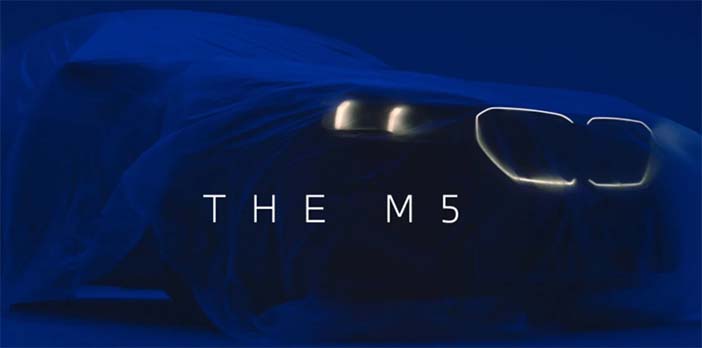
+++ There have been some marathon teases going on this year: Volkswagen having been coy about the new Golf R since January and BMW teasing the new-generation M5 since last summer in Touring form. They’re both coming to the endgame and both cars revealed a little more about themselves this week. BMW wants us to know that the M5 is almost finished with its pre-production exams and can graduate to dealer showrooms shortly. It looks like an old-school BMW up front, the 5’er aimed at a more conservative pocket of BMW’s demographic that isn’t looking for avantgarde statements. It’s a demo that also tends to get thick around the middle (because age plus human genome) so these buyers might feel more at one than ever with the new hot sedan. According to a BMW insider, the M5 will weigh 2.435 kilograms. If true, it’s a lot more than the previous M5 and also more than today’s 540i xDrive. I write “if true” because this weight is also more than BMW’s claimed weight of 2.380 kilos for the battery-electric i5 M60. The BMW XM’s hybrid setup will clock in here, a twin-turbocharged 3.0-liter inline-six and an electric motor combining to produce 725 hp and 760 Nm. These figures generously up the ante from the previous-generation M5’s 600 hp and 700 Nm. A staggered wheel and tire package has been brought in to deal with the extra support and acceleration workloads. The 275/40 front and 285/40 rear tires on the last M5’s 19-inch wheels will become 285/40 tires on 20-inch front wheels and 295/35 tires on 21-inch rear wheels. The most recent spy shots captured tighter came showing off greater definition in the M5’s bodywork and aero. Larger openings carved out of an edgy front bumper below that reasonably proportioned, and illuminated, kidney grille. Headlights in the latest style from BMW, slab-sided doors with flush handles, and down behind the wheels, gold calipers representing the carbon ceramic brake package for all M cars. And the obligatory quad exhaust looks tucked into a remarkably chunky rear diffuser. M5 production begins next month, so the main event can’t be far away, while M5 Touring production starts in November. +++
+++ Thanks to the extensive support of the government, and the acceptance of CHINA ’s drivers to essentially give up driving, an ambitious experiment to put autonomous cars on busy city streets is well underway there. In Wuhan, with a population of 11 million people and more than 4 million cars, a fleet of 500 taxis navigated by computers, often with no safety drivers in them for backup, cruises the streets. It is one of many Chinese cities that allow testing of driverless vehicles on public roads. China has taken the lead in developing leadership in this market, not only to show off its technological prowess globally, but to support its all-important local automotive industries. While the introduction of robo-taxis on American roads has been stymied by safety issues (Volkswagen and Ford both shut down their robot taxi joint venture, Argo AI, 2 years ago), Chinese drivers are more willing than Americans to trust computers to guide their cars. The story also noted that the Chinese government employs censorship to discourage discussion of crashes and other safety issues involving robot vehicles to dissuade public criticism. Earlier this month, on June 4, “Beijing authorized 9 Chinese automakers (including Nio, BYD and SAIC Motor) to begin tests of advanced assisted driving systems that go beyond Tesla’s Full Self-Driving”. Also, it said that China Society of Automotive Engineers forecast that 20% of the cars sold in China in 2030 will be completely driverless and that another 70% will have advanced assisted driving technology. China has a step up in this field because electric cars in that country comprise about 25% of the market, compared to 7% in the US, and “driverless technology works much better with battery electric cars than with gasoline-powered cars or most hybrid gasoline-electric cars”. Another issue that affects the autonomous driving scenario is data transfer: “Chinese companies set up crucial research facilities in the United States and Europe and sent the results back home”, he writes. “But any research in China is not allowed to leave the country. As a result, it’s difficult for foreign carmakers to use what they learn in China for cars they sell in other countries”. +++
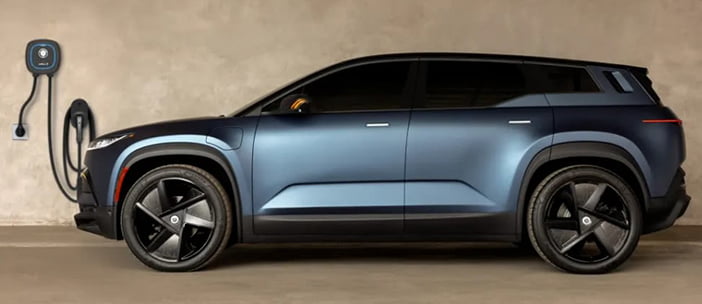
+++ FISKER filed for bankruptcy protection late on Monday as deal talks with a big automaker collapsed, exposing the startup to the fallout of a rapid cash burn to deliver its Ocean in the United States and Europe. The company filed for Chapter 11 bankruptcy in Delaware, listing estimated assets of $500 million to $1 billion and liabilities between $100 million and $500 million. Fisker’s estimated number of creditors are 200-999, according to the court filing. The termination of talks in March with a large automaker led Fisker to search for strategic options, including in- or out-of-court restructurings and capital markets transactions. While Fisker has not named the company, Nissan was in advanced talks to invest in the startup. The U.S. company, founded by automotive designer Henrik Fisker, flagged doubts about its ability to remain in business in February and had paused investments in future projects until it secured an auto partnership. Fisker also said it would cut its workforce by about 15% amid struggles to sell its Ocean. It manufactured over 10.000 vehicles in 2023 (less than a quarter of its initial forecast) and delivered only about 4.700. Last month, the U.S. auto safety regulator opened a preliminary probe into some Ocean cars made by Fisker in 2023, adding to the firm’s woes as the cars were already under investigation by the National Highway Traffic Safety Administration (NHTSA) for 3 prior incidents. Tight access to capital in a high interest rate economy, costs associated with marketing and distributing its vehicles and slower-than-expected EV demand dragged the company’s cash reserves lower. Depleting cash reserves, fundraising hurdles and challenges in ramping up production caused by global supply chain issues led to companies such as Lordstown and Electric Last Mile Solutions declaring bankruptcy. +++
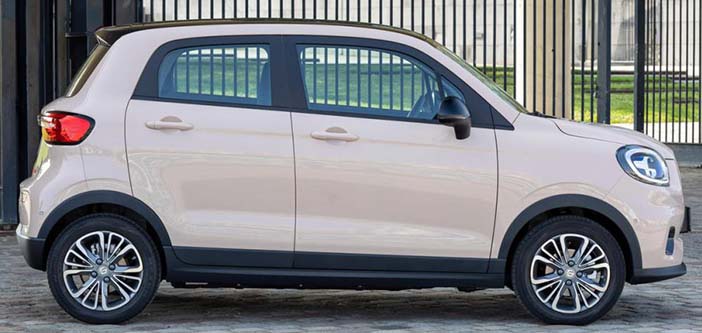
+++ LEAPMOTOR has started production of the T03 electric city car in Poland after proposed Europena tariffs came in higher than expected, executives have reportedly said. Full production will begin in September, Leapmotor told analysts at an event last week, according to investment bank Jefferies. The 3.6 meter-long 4-seater, a rival to the Dacia Spring, is 1 of 2 cars that begins Leapmotor’s entry into Europe after Stellantis paid €1.5 billion for a 21% stake in the firm and control over its exports. Dutch sales of Leapmotor cars will begin in January 2025. +++
+++ LEXUS is set to launch a new V8-engined supercar as a rival to the likes of the Aston Martin Vantage and Mercedes-AMG GT and a spiritual successor to the legendary LFA. Parent company Toyota’s hardcore GT3 GR concept car, revealed in 2022, has now evolved into a prototype that has been spotted running at Spa-Francorchamps, and its Gazoo Racing motorsport division is expected to have it ready for top-flight competition (including the Le Mans 24 Hours) in 2026. FIA homologation rules dictate that any GT3 racer shares its basic body design with a related road car, so a toned-down version of the GT3 GR is expected in showrooms within the next 2 years. Toyota has previously said that it would continue “commercialising motorsports cars rather than simply adapting production vehicles for use in motorsports”, as it did with the rally-honed GR Yaris. The road-going GT3 GR is likely to wear a Lexus badge, rather than a Toyota one, in keeping with the premium brand’s history of large-engined sports cars, including the LFA, LC 500 and RC F. The prototype’s soundtrack is unmistakably that of a highly strung V8 (which reportedly breathes through 2 turbos) and the road car, possibly called LFR, is expected to share that unit but with the addition of hybrid assistance. No specifications of the racer have yet been released, but the GT3 regulations are relatively flexible, with cars producing roughly 500-600bhp and weighing no more than 1.300 kg. Aston Martin, BMW, Ferrari, Ford, Lamborghini, Lexus, McLaren, Mercedes-AMG and Porsche all currently sell GT3 customer cars. Toyota recently announced (alongside allies Mazda and Subaru) plans to “revolutionise” the packaging of the internal combustion engine, doubling down on its belief that ICE technology will continue to play a role for cars in the future, despite the wider global shift to electric cars. Toyota has long been vocal about the potential for sports cars in particular to benefit from continued ICE development, investing heavily in sustainable fuel development and even partnering with Yamaha to create a hydrogen-compatible 5.0-litre V8 which could be deployed in the new sports car. Gazoo Racing boss Masahito Watanabe recently told that Toyota is pursuing a “multi-pathway” approach for sports cars, rather than investing in all-out electrification. “We still think the internal combustion engine has some potential, and as we do so, we will of course be trying to comply with all the applicable rules according to the regions in each country”, he said. “But we don’t want to give up. It’s not over just yet, because if you look at the internal combustion engine, there’s still hydrogen combustion that can be a part of that zero-emission line-up. So I think that’s going to continue”. Lexus has retired its RC and LC coupés in Europe and hasn’t officially commented on plans for any replacements, although the outlandish Electrified Sport concept that it revealed in 2021 emphasises its continued commitment to performance cars. That concept (which is due to reach production by the end of the decade) is electric, rather than V8-powered, but has been confirmed to share its carbonfibre monocoque underpinnings with Toyota’s GR GT3 concept and has a similar cab-rearward silhouette, which suggests the possibility for Lexus to offer 2 closely related supercars (based on the same chassis but using different powertrains) within the next 5 years. +++
+++ The new all-electric MINI Cooper made in China is set to be hit by the highest EV tariff of 38.1% under the EU’s provisional plans, a source familiar with the matter said; a potential terminal blow for the car’s sales prospects. Mass production of the €35.990 (Dutch pricing) vehicle, produced by a joint venture of BMW and China’s Great Wall Motor, began late last year, shortly after the EU launched its probe. With production still in early days, the joint venture was unable to fulfil the European Commission’s survey to the level of detail required to be classed as a company cooperating with the investigation, the source said, declining to be named because discussions are private. Companies seen as cooperating with the EU were subject to lower tariffs of 17.4%-21%, according to a document. That includes BMW Brilliance Automotive, another BMW joint venture that has produced the iX3 for export to Europe from China since 2021. BMW declined to comment. BMW CEO Oliver Zipse said earlier this week the tariffs were the “wrong way to go”, echoing concerns from other German carmakers fearful of a trade war which could end in counter-tariffs on cars exported from Germany to China. The European Commission said that joint ventures producing cars in China would be subject to duties, without specifying whether more recently formed ventures might benefit from the lower 21% rate for companies that cooperated with the investigation. A 38.1% price hike on the Mini, which was to be exported from China to Europe, could dent sales at a time when the carmaker is counting on every projected all-electric sale to help meet tightening carbon emissions targets. The deadline for imposing provisional measures is July 4, after which the investigation will continue to late October. That leaves time for Beijing and Brussels to make a deal to soften the blow. Companies can also submit comments and request hearings after the provisional duties are applied. +++
+++ TESLA has officially shifted its incorporation to Texas from Delaware, according to paperwork filed with the Texas secretary of state’s office. The move unites the company’s legal home with its physical headquarters, which have been in Austin for years. The paperwork was submitted late Thursday, following a vote by Tesla investors in favor of the departure from Delaware. Elon Musk, Tesla’s chief executive officer, initiated the move in January after a Delaware judge voided his roughly $56 billion compensation package, the largest ever given to a US corporate executive. Shareholders also reapproved the pay plan, although the vote does not guarantee he will get his stock options, given the judge’s decision. Afterward, Musk offered outlandish predictions that he can enrich shareholders all over again with the company’s robot-making effort. +++
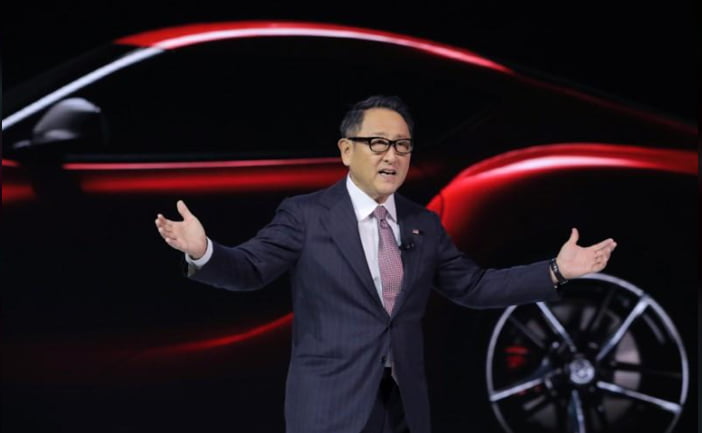
+++ TOYOTA chairman Akio Toyoda may be in no danger of not being re-elected at the automaker’s Annual General Meeting, but any further big drop in shareholder support could lead to increased action on governance reforms. This year’s AGM will follow scandals involving violations of certification tests at Toyota and its group companies including compact car maker Daihatsu and truck unit Hino Motors. Proxy advisory firms Institutional Shareholder Services (ISS) and Glass Lewis have recommended that Toyoda not be re-elected, citing concerns over governance and the board’s independence. Since then, another scandal over testing violations has also come to light. Toyoda’s approval rating fell to 85% last year from 96% in 2022 but he only needs a majority to be re-elected and scandals aside, business has been good. The grandson of the car maker’s founder, Toyoda has been on the board since 2000, making him its longest-serving director. He is expected to have support from individual investors as well as the many suppliers and Toyota group companies among its shareholders. “I don’t assume Akio Toyoda-san is not being re-appointed”, said James Hong, head of mobility research at Macquarie. “It’s just that the approval rate coming down will be a bit of a yellow flag to management”. Hong said that potential action from Toyota to counter criticism over governance could include an acceleration of its efforts to unwind cross-shareholdings, particularly shareholdings in non-automotive companies such as finance companies or telecoms firm KDDI. The outcome of the vote will be announced on Tuesday though the approval rate will not be disclosed until Wednesday. ISS has taken issue with the way the automaker has dealt with certification irregularities within the Toyota group, saying that Toyoda should be considered “ultimately accountable” for the errors. “It is important that the company establish appropriate compliance mechanisms under the board’s leadership”, it said in a report. “Now is a good time for change in the face of incidents at its group companies”. Glass Lewis, which is recommending that Toyoda not be re-elected for a second year in a row, said that he is responsible for the board’s lack of independence and also cited concerns about its strategic shareholdings and return on equity. Asked about the proxy advisers’ recommendations, Toyota said in a statement to Reuters that taking stock of its mistakes was long rooted in its corporate culture and Toyoda would take the lead in re-instilling that culture and working with group companies to ensure effective governance. Toyota’s shares have lost 10% since the latest scandal emerged early this month. That said, the stock is still up 17% for the year to date, outperforming the broader market and adding to a gain of 43% last year. The automaker retained its crown as the world’s top-selling car maker for a 4th consecutive year in 2023, helped by a weak yen and growing hybrid vehicle sales. It booked a record profit for the last business year that ended in March. “Toyoda should be highly regarded as he delivered results and led Toyota to growth”, said Koji Endo, head of equities research at SBI Securities. +++