
+++ Between spec ’d-out Durangos and loud-mouthed Hellcats, DODGE has spent years building its reputation on big, powerful muscle cars with equally hefty price tags. But in a surprising turn, chief executive officer Matt McAlear hinted at a potential shift; one that could see the brand introducing a sub-$30.000 sports car. McAlear said that while high-performance models like the new Charger Daytona remain crucial to the brand’s identity, there is an underserved market for affordable, fun-to-drive cars. “I think there’s some kind of entry-level, back to that sub-€40.000 mark”, he said. “I think there’s a market for people who just want to have that weekend car again, who would like a Viper, but don’t have that $100 or $120K. Something that doesn’t need all the safety features, doesn’t need the heated seats. Just a car”. McAlear envisions something simple: a driver-focused machine that prioritizes enjoyment over excessive luxuries. Currently, the options for affordable sports cars are limited. The Mazda MX-5 is only sold in 1.5-litre form i Europe and both the Toyota GR86 and Subaru BRZ have disappeared. There are virtually no sub-€40.000 sports cars left on the market. This leaves Dodge with an opportunity to carve out a niche, one reminiscent of the Neon, a compact car that once served as an entry point for the brand. Dodge has long been associated with raw power, largely thanks to its history of V8 muscle cars. But McAlear suggested inspiration could come from outside the traditional sports car realm, even citing vehicles like the Polaris Slingshot and side-by-sides as examples of stripped-down fun. While the conversation naturally led to speculation about a new Viper, McAlear was careful not to make direct promises. Instead, he stressed that any new product would have to be uniquely Dodge, neither a Mustang nor Corvette fighter, but something distinct. That leaves plenty of questions. Would this new car be electric, given Stellantis’ push toward EVs? Would it feature an internal combustion engine, possibly even a return to Dodge’s turbocharged 4-cylinder roots? And, most importantly, will Dodge actually build it? “Everyone has so many hobbies these days, they want to spend their money on so many different things”, McAlear said. “It’s tough to be all-in on one thing, put all my chips in one basket and say, ‘I gotta have that car.’ It’s great for those who can afford it, but not all of us can or want to do that”. +++
+++ Large ELECTRIC VEHICLES like pick-up trucks and SUVs aren’t exactly flying off showroom floors in the United States. When the CEO of one of the ‘big three’ says vehicles like his halo electric truck have some “unresolvable” problems, that’s what I call raw honesty. Ford CEO Jim Farley made an ominous statement on the company’s fourth-quarter earnings call. “For larger retail, electric utilities, the economics are unresolvable”, Farley stated. “These customers have very demanding use cases for an electric vehicle. They tow, they go off-road, they take long road trips. These vehicles have worse aerodynamics, and they’re very heavy, which means very large and expensive batteries”, He went on to say that the blue oval would focus on small to medium-sized electric vehicles that present a stronger economic case. Large electric pickup trucks and EVs are a pricey bunch. The base F-150 Lightning XLT starts at $62.995 and climbs to $83.995 for the top Platinum trim. A 2025 GMC Sierra EV starts at $89.995 and the Hummer EV’s base MSRP is $96.550. All of these vehicles use big batteries, which are expensive to manufacture and weigh anywhere from 3.000 to over 4.500 kilos, making them rather inefficient for electric vehicles. Conventional wisdom says an EV will always be more efficient than a gas-powered car of the same size, but they pale in comparison to smaller EVs. The bigger and heavier EVs require bigger batteries to achieve similar ranges as their smaller counterparts. Ford’s once-robust plan to bump its annual EV production to over two million vehicles by the year 2026 has been adjusted in response to changes in the EV market that have seen the rise slow down. One of the vehicles planned was an Expedition-like 3-row SUV, but that plan has now been shelved in response to the market. Ford now wants to build a midsize all-electric truck that would slot in below its F-150 Lightning. It would be based on the brand’s “Skunkworks” platform, which is also used for an expansive line of efficient vehicles, including hybrids and extended-range electric vehicles (EREVs). EREVs use an electric powertrain like an EV, but they are supplemented by an onboard gas-powered generator that recharges the battery during normal driving, bumping the range. The move to power larger vehicles with plug-in hybrid, extended-range electric and gas-electric hybrid powertrains seems to make more sense. According to Farley, “Retail customers have shown that they will not pay any premium for these large EVs, making them a really tough business case”. Ford will continue to pursue electric power for its larger commercial vehicles, such as work trucks and vans, which can utilize depot charging stations. +++
+++ The MAZDA 2 will be axed following its effective replacement by the 2 Hybrid, a rebadged Toyota Yaris. The petrol supermini can no longer be ordered brand new, and a spokesperson for Mazda confirmed to that just a “few hundred” examples remain in showrooms in Europe. It brings to an end a near-decade-long run for the supermini. It arrived in April 2015 and earned praise for being fun to drive, with decent turn of pace and a smart cabin. It was facelifted in 2019 and then again in 2023, each update adding extra tech. Mazda didn’t elaborate on why the 2 was cancelled, but the spokesperson told: “As we move towards increased electrification of our cars, the 2 Hybrid meets consumer demand in the B-segment and is a step in our journey to ensure all our cars have some form of electrification by 2030”. The 2’s age alone meant that it was due for replacement anyway. Big-selling (and relatively high-polluting) petrol B-segment hatchbacks in the vein of the Mazda 2 are likely to become the first casualties of the race to slash emissions and win de-facto hybrid and EV sales. +++
+++ Less than 2 months after announcing plans to merge, Honda and NISSAN have scrapped their deal, citing irreconcilable differences over governance. Honda, with a market value 5 times that of Nissan, wanted to make its rival a subsidiary rather than an equal partner. Nissan’s leadership, however, balked at losing autonomy, and the talks collapsed. The failed deal leaves Nissan in a precarious position. The automaker, once a dominant force in the global car market, is now reeling from declining sales in the U.S. and China. With a projected net loss for the fiscal year and ongoing cost-cutting measures (including thousands of job cuts), nissan is in dire need of a new strategy. Nissan has struggled to gain traction in the EV market, facing stiff competition from Tesla, BYD and legacy automakers that have been quicker to innovate. The company’s iconic Leaf, once a pioneer in electric vehicles, has fallen behind newer and more advanced rivals. Nissan’s latest electric models, such as the Ariya, have yet to achieve significant market penetration. The big question now is who, if anyone, will step in to help? One potential savior is Taiwanese electronics manufacturer Foxconn. Best known for assembling iPhones, the company has been making aggressive moves into the electric vehicle (EV) space. Foxconn chairman Young Liu recently confirmed that the company is open to collaborating with Nissan, though it has no interest in a full acquisition. Foxconn has already been in discussions with Renault, Nissan’s longtime French partner, and has even floated the idea of purchasing Renault’s stake in Nissan. Such a move could give Foxconn a stronger foothold in the auto industry while providing Nissan with much-needed financial stability and manufacturing expertise. Foxconn’s interest makes strategic sense. The company has been expanding into contract EV manufacturing, aiming to replicate its success in electronics by building vehicles for established automakers. It has even introduced a line-up of prototype electric cars under its MIH Open Platform initiative. Foxconn’s manufacturing expertise and supply chain capabilities could help Nissan streamline its production and reduce costs, making it more competitive in a rapidly evolving market. Still, challenges remain. Skeptics question whether a tech giant with little traditional automotive experience is the right partner for a company in turmoil. Additionally, Foxconn’s track record in the auto industry is still unproven. U.S.-based private equity firm KKR & Co. is also considering an investment in Nissan. While details remain scarce, sources suggest that KKR is evaluating both equity and debt investment options. The firm has a long history of successful investments in Japan, and an injection of capital from KKR could provide Nissan with the financial flexibility it needs to navigate its current crisis. KKR’s potential involvement signals growing interest from foreign investors in Japan’s auto industry. The firm has previously invested in Japanese automotive suppliers and has a track record of turning around struggling businesses. A KKR deal could offer Nissan a much-needed cash infusion while allowing it to maintain independence—something the Honda merger wouldn’t have permitted. Even with potential lifelines from Foxconn or KKR, Nissan faces an uphill battle. The automaker’s sales have been steadily declining, and its brand image has suffered in the wake of leadership scandals and strategic missteps. The arrest of former CEO Carlos Ghosn in 2018 sent shockwaves through the company, leading to years of internal instability and strategic drift. While Nissan has attempted to chart a new course, the results have been mixed at best. The company has also struggled to differentiate itself in an increasingly crowded EV market. Tesla’s grip on global EV sales, while slipping, remains sizable, and Chinese automakers like BYD have aggressively expanded their footprint. Meanwhile, legacy automakers such as General Motors and Volkswagen have rolled out ambitious EV plans, leaving Nissan in a precarious middle ground. Without a strong, innovative line-up of vehicles, the automaker risks falling further behind. Another challenge is Nissan’s reliance on aging models that have failed to excite consumers. The Nissan Altima and Sentra, once strong sellers, have lost ground to newer, more technologically advanced competitors. The brand’s SUVs, including the Rogue and Pathfinder, remain popular but lack the cutting-edge features and performance that consumers increasingly demand. Nissan’s luxury brand, Infiniti, has also struggled with stagnant sales and an identity crisis that has made it difficult to compete with German rivals. With the Honda deal off the table, Nissan’s future remains uncertain. The company has already announced aggressive cost-cutting measures, including $2.6 billion in reductions and a 20% cut in top management positions. But cost-cutting alone won’t fix the deeper issues facing Nissan, those being stale product offerings, declining market share, and a lack of a clear strategic direction. Foxconn presents an intriguing partnership opportunity, particularly in the EV space, but it is unclear whether Nissan is willing to align itself with a tech company rather than a traditional automaker. Meanwhile, KKR’s potential investment could provide financial relief, but private equity firms typically seek significant control over their investments, which might not sit well with Nissan’s leadership. +++
+++ It’s hard to navigate the internet without seeing a TESLA involved in an accident. If you think people are simply dunking on Tesla drivers for owning a Tesla, think again. A new study from LendingTree shows Tesla drivers are actually the worst on the road in the United States, with the highest number of “incidents” compared to drivers of other cars. For every 1.000 Tesla drivers, almost 37 (36.94, if you like to read the fine print) drivers were involved in incidents in 2024. For its study, LendingTree considers any accident or speeding violation as an “incident”. LendingTree’s findings for 2023 showed that Ram drivers were the worst, but in 2024, Tesla captured the title while Ram drivers fell to second place. Not only are 37 out of 1.000 Tesla drivers involved in an “incident,” but 72 percent of those incidents (26.67 out of 36.94) were accidents. If there’s a silver lining to that stat, it’s that year over year, the number of accidents Tesla drivers were involved in stayed the same. The study doesn’t identify why Tesla accident rates are so high but it does suggest rapid acceleration may play a part. Rocketing from 0 to 100 km/h in 3.5 seconds may be too much for some. Tesla drivers are also the worst in 9 states, including Alabama, Arizona, Georgia, Indiana, Kentucky, Missouri, North Carolina, Ohio, and Oklahoma. Tesla drivers are the worst overall, but Ram and Subaru aren’t much better. Ram drivers had nearly 34 incidents (33.92) per 1.000 drivers, and Subaru drivers were involved in 33 incidents (32.85) per 1.000 drivers. Tesla and Ram traded places in 2024, but Subaru retained its third-place spot. Ram and Subaru drivers also had the second and third most accidents per 1,000, at 23.15 and 22.89, respectively. While Subaru drivers are the worst in Hawaii, Michigan, Nebraska, Utah, Washington and Wisconsin, Ram drivers are worst in 16 states or roughly one-third of the country. According to LendingTree, Mercury, Pontiac, Cadillac, Chrysler and Lincoln drivers are the best in the United States. Data shows that Mercury drivers are almost twice as “good” as Tesla drivers and are only involved in 19 incidents per 1.000 drivers. Pontiac drivers were involved in 19.72 incidents per 1,000 drivers. It’s worth noting that both brands ceased production in 2010, suggesting there are few of them on the roads, and they may be used sparingly for errands or similar use cases. Both brands also saw their incident rates rise significantly in 2024, and Pontiac drivers have the highest rate of any brand. +++
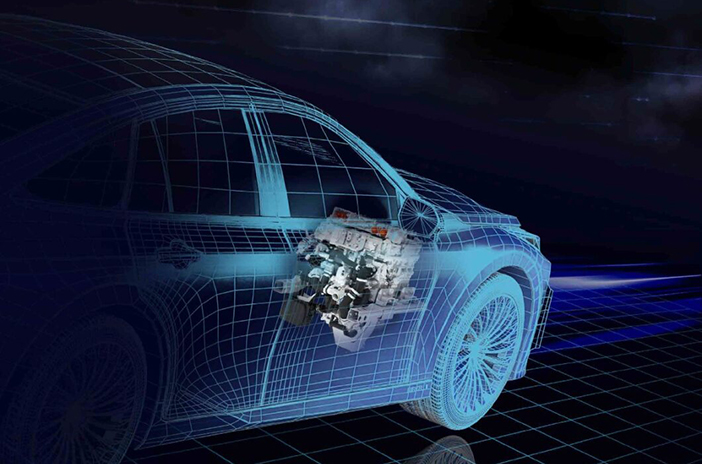
+++ Hydrogen cars are still very much a niche offering, but TOYOTA is demonstrating its continuing commitment to the fuel by revealing a new third-generation fuel cell system. Toyota says the new system has been designed to meet the needs of both passenger and commercial vehicles, and that it features improvements in performance and fuel efficiency while also providing a ‘significant reduction’ in production costs over its predecessor. The company has sold only a handfull of its Mirai hydrogen car in the Netherlands since 2015. The BMW 5 Series-sized hydrogen car isn’t cheap, but the bigger stumbling block has always been the shortage of hydrogen filling stations. Globally, Toyota has sold more than 28.000 units of the Mirai and, partly based on customer feedback, the hydrogen fuel cell system has been improved. Durability is 2 times better than before with Toyota claiming a comparable performance to diesel engines along with a ‘maintenance-free’ design. A 20 percent improvement in fuel efficiency will allow for 20 percent more cruising range; for reference: the Mirai currently does 640 km on a tank. Toyota also says a more compact design will also allow for a greater selection of possible uses. Toyota hasn’t said the new system will be implemented in a new Mirai, just ‘passenger vehicles’ as yet. However, more success for the technology may be found in the commercial vehicle sector or even ‘stationary generators, rail, and ships’ according to Toyota. The third-generation will be introduced to European markets, alongside North America and China. +++
+++ If you’ve even glanced at automotive news in the past year, odds are you already know VOLKSWAGEN narrowly avoided plant closures late last year. At the final hour, the union and works council reached a compromise with Volkswagen to avoid plant closures and mass layoffs. Now, part of that compromise is about to come into effect, and VW’s manufacturing facilities are preparing for production cuts. Volkswagen’s production is set to be slashed as a part of the compromise that also prevented layoffs and facility closures until 2030. VW plans to halve its production capacity following a statement by Arno Antlitz, CFO of VW Group, that the company would only invest in competitive plants and that German facilities are fair game. With production capacity getting cut in half, plants like Zwickau, Volkswagen’s first all-electric facility, will soon have to compete with other factories. Some facilities, including Zwickau and Dresden, will need to cut costs by 20 percent to keep production lines open. Overall, Volkswagen will cut its production from 1.5 million units to just 750,000. Last year, VW’s German plants produced around 900.000 vehicles. Such a dramatic cut is a clear sign that VW doesn’t expect its European sales to grow, especially with Chinese competitors breaking into the market. “We have a market that is no longer growing and probably, in the future, will stagnate”, David Powels, the Chief Financial Officer of Volkswagen, told. Volkswagen plans to keep its facilities open and workers employed until 2030, but the German automaker still plans to cut 35.000 jobs via early retirement and voluntary redundancy. Even so, VW’s production will certainly experience a dramatic change over the next 5 years. Wolfsburg will take over the ID-line’s production from Zwickau in 2027. As a result, Zwickau will only produce the Audi Q4 e-Tron, but there’s still a future for the all-electric facility. Volkswagen has promised to repurpose the Zwickau plant for a future in car recycling, which will save roughly 1.000 jobs. The future for VW’s Dresden facility is uncertain but not as bleak as it could be. Car production will come to a halt after 2025. Likewise, the Osnabrück factory will cease production after 2027. Notably, Volkswagen has stated they plan to find an alternative use for both facilities, but what that use could be is up in the air. With production capacity getting slashed in half, Volkswagen is looking for ways to make up for declining sales in Europe. As a result, Volkswagen’s executives haven’t ruled out partnering with emerging Chinese EV manufacturers to fill their production lines. Powels has stated that they’re keeping all of their options open. With Chinese automakers like BYD racing ahead of legacy automakers when it comes to EVs, a partnership to keep production lines open could benefit both sides. Last year, Volkswagen saw its European sales drop by 2 million vehicles compared to 5 years ago. Up until last year, China had been Volkswagen’s most profitable market, but rapid growth by Chinese manufacturers has put the German manufacturer between a rock and a hard place. +++