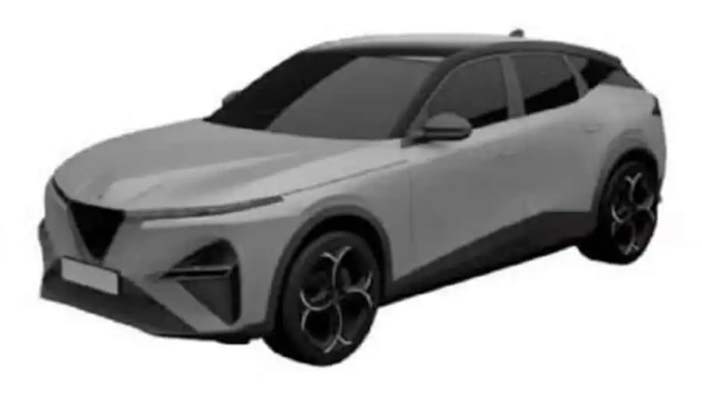
+++ ALFA ROMEO ’s future plans may not be as smooth as the curves of their cars. While the Giulia and Stelvio as we know them are on their way out, their successors are already in the works. Originally, Alfa Romeo planned to go all-in on electric for the new models, but earlier this year, they back pedaled, announcing that hybrids would also be part of the package. Sounds like good news, right? Well, not so fast, as this shift in strategy might have led to delays for both models. The original plan was to debut the next-generation Stelvio this year, start production by the end of 2025, and then roll it out in 2026, with the Giulia following closely behind. However, according to reports from Italy, the decision to offer combustion engine variants has thrown a bit of a wrench into those plans. Alfa Romeo CEO Santo Ficili confirmed that work on the new Stelvio and Giulia is still moving forward. “As you know, we had gone in the direction of having only electric cars, but now we have to develop some thermal motors too. So, we are defining the timeline”, he said. When asked whether the 2 models would be ready for a 2026 launch, Ficili gave the most reliable answer a CEO could provide: “We will let you know”. And Ficili isn’t the only one hinting at a potential delay. Mirko Marsella, the head of the metalworkers’ union at the Cassino plant (where these cars are being built), says the lines are all set for the new models, but the cars themselves are still a work in progress. In other words, they’re ready to assemble them, but the actual product is missing in action. The big stumbling block seems to be the plug-in hybrid powertrains, which have reportedly given Stellantis engineers some trouble finding a workable solution within the STLA Large platform. While this platform is primed for the 3.0-liter Hurricane turbo engine, to be used in the Dodge Charger, Alfa Romeo plans to use a 4-cylinder engine for its models, a configuration no other Stellantis brand has yet adopted for the STLA Large. This, of course, means a lot of development work that can’t be rushed. Additionally, union representatives at the Cassino plant have confirmed they’ve been briefed on the situation, stating that, as of now, there is no pre-series model fitted with internal combustion engines. Stellantis has acknowledged the delays, confirming that its Italian plans are being revised due to a combination of market conditions, EU regulations and, of course, tariffs. The company is evidently recalibrating in response to the shifting landscape. I know that the 2 models will share the same STLA Large platform, also used by vehicles including the Dodge Charger and Jeep Wagoneer S. This platform is versatile enough to support both hybrid and electric models, though details on how much power the new Stelvio and Giulia will produce remain scarce. There have been whispers that high-performance Quadrifoglio models could generate nearly 1.000 horsepower in their electric form, but until we see the final specs, it’s anyone’s guess. +++
+++ Shortly after revealing its first crossover, the A390, ALPINE hinted at something a bit more spectacular. Just like it’s doing at Le Mans, Alpine wants to challenge the likes of Ferrari with a hybrid supercar. At the media reveal for the A390, Renault CEO Luca De Meo confirmed that Alpine is working on a supercar. The site also spoke with Alpine head Philipe Krief, who confirmed the supercar, due in 2028, would be a 1.000-horsepower hybrid, with a turbocharged V6 driving the rear wheels and an electric motor for each front wheel. “This car has 3 objectives”, Krief told. “One is to bring Alpine up. You need this kind of car as it holds up all the rest of the range. Second, it’s a laboratory of innovation, for the supercar, then for Alpine, and then for the whole Renault Group. Third, it will make a good business”. Conceptually, Alpine’s hypercar would be similar to what Lamborghini is doing with the Temerario and Revuelto, and what Ferrari has done with the SF90. Just, with a V6 in place of something with more cylinders. Alpine plans to launch 5 new electric models between now and 2030. Next year, it’ll reveal the all-electric replacement for the current A110. Eventually, Alpine will revive the A310 name for a 2+2 electric sports car riding on the same platform as the A110, and the company is also working on something larger than the A390, with which it’ll enter the US market. Currently, Alpine also sells the A290, a hotter version of the Renault 5. Alpine’s motorsports division, Alpine Hypertech, is developing the supercar’s powertrain. The firm, which was created after Renault ended its Formula 1 engine program, also runs Alpine’s World Endurance Championship effort, among other R&D programs. Krief also told that the car wouldn’t look like Alpine’s recent Alpenglow concept and the car doesn’t yet have a name. +++
+++ BENTLEY already offers a smattering of engine options for the Bentayga, ranging from the base V6 hybrid to the powerful V8 Speed. But now, the British luxury car maker has another Bentayga on the horizon and it promises to be even more potent than the previous W12 model. Bentley is keeping most of the juicy details a secret, but the company does promise a V8 engine with “more power” than the previous 12-cylinder Speed model, a standard sports exhaust, and even a new Sport calibration with a drift mode. That’s right, a Bentley that drifts. The company also says that this new Bentayga will be “faster and more agile” than any Bentley SUV before it, as well as the “most emotional and engaging Bentayga to date”. For reference, the Bentayga W12 made 600 horsepower and could race to 100 km/h in 4.2 seconds before it was discontinued last year. Of course, we’ve already seen Bentley’s new V8 hybrid powertrain in the metal, which makes nearly 740 horsepower and returns up to 80 km of electric range. Last May, the company said that this new hybrid powertrain would “define the future of Bentley”, so I assume this is what will be under the hood of the upcoming Bentayga. Bentley will show its powerful new SUV on Monday, June 2. +++
+++ The global auto industry has a habit of brushing off controversies with polished press statements and a confident shrug, but things are getting harder to ignore in Brazil . 5 months after local authorities said they discovered foreign workers building a new BYD factory living in conditions they likened to modern slavery, prosecutors have filed a lawsuit against the Chinese automaker. The suit accuses BYD of human trafficking, and it’s not a small claim, as the country’s top prosecutors are seeking roughly $45 million in damages. The case doesn’t stop with BYD. Brazilian labour prosecutors have also named JinJiang and Tecmonta, 2 contractors working on the site, as co-defendants. In addition to financial compensation, prosecutors want each of the affected workers to receive individual restitution. They’re also pushing for court-mandated labour law compliance from all 3 companies. If that doesn’t happen, they’ve built in financial penalties for every violation, with fines starting at around $8.800 per infraction. “In December last year, 220 Chinese workers were found to be in conditions analogous to slavery and victims of international human trafficking”, prosecutors said. They described the living conditions as “extremely degrading”. Prosecutors claim that the BYD workers were brought to Brazil to build the factory without the proper visas. Additionally, their employers withheld up to 70% of their wages and imposed high contract termination costs. Many workers also had their passports taken away, effectively preventing them from leaving. Initial reports also described the living conditions authorities said they found at the construction site. Workers were allegedly packed into dorms so tight there was hardly room to lie down. There were no mattresses, minimal cooking facilities, and sanitation was described as severely lacking. At one point, there was reportedly just one toilet shared among 31 people. Speaking with Al Jazeera, deputy labor prosecutor Fabio Leal emphasized the strength of the case. “Our lawsuit is very well-founded, with a substantial amount of evidence provided during the investigation process”. According to Leal, all of the workers found in December have been returned to China. +++
+++ Another week, another massive FORD recall. This time, the company is recalling more than 1 million vehicles due to an issue with the backup camera. The center infotainment screen may display a frozen image followed by a black screen when in reverse, increasing the risk of a collision. The recall affects a range of Ford models, some of which are also sold in Europe: Kuga 2023-2024, Mustang 2024, Mustang Mach-E 2021-2023, Ranger 2024 and Transit 2022-2025. According to the National Highway Traffic Safety Administration’s Part 573 Safety Recall Report, the cause of the problem is due to an “improper operational sequencing within the wireless communication system of the SYNC software”. Ford began investigating the issue earlier this year and was able to isolate it to specific versions of its Sync 4 software’s Accessory Protocol Interface Module (APIM). Ford vehicles with over-the-air capability can receive the OTA update. Owners without that feature will have to take their vehicle to a dealer, where a service technician will perform the software update. The fix will update the APIM software to 2.0 or above. Ford said it is aware of one allegation of a minor crash related to the issue. However, it’s unaware of any injuries related to the backup camera. Owners should receive notification of the recall in mid-June. Until then: cars still have mirrors. +++
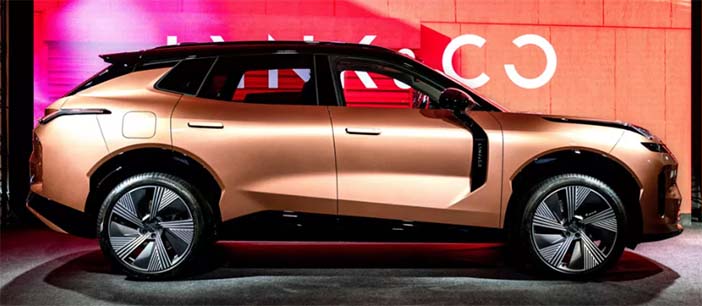
+++ Plug-in hybrids have really upped their game in the last few years, many delivering more than 110 km of electric range. But LYNK & CO really has gone the extra mile with its 08, which has just launched in Europe. It delivers an incredible 200 km of electric range. Those figures aren’t wildly optimistic Chinese numbers, by the way, they’re European WLTP ratings (which are only mildly optimistic). Geely-owned Lynk & Co hopes they’ll appeal to Euro car buyers who kind of like the idea of owning an EV, but would rather have the safety net of a combustion engine, and only feel truly at ease knowing there’s a big tank full of explosive liquid sloshing around under the trunk floor. Lynk & Co is also hoping that the 08 can help reverse its dire sales performance. Sales of the brand’s EVs were down 33 percent this year to April, according to Data Force figures. But sales of medium-sized SUVs are growing in Europe so Lynk wants to ride that wave. The 08, which is sits above the company’s 01 and 02, is new to Europe this year, but it was unveiled in China a couple of years ago showcasing a new design language for the brand. At its heart is the same CMA Evo platform used on other Geely vehicles like the Polestar 2 and Volvo XC40.A 136 hp 1.5-liter combustion engine and 211 hp electric motor provide the forward momentum, and a big 39.6 kWh battery pack makes that monster range figure possible. The battery can also handle DC chargers, enabling it to go from 10-80 percent in 33 minutes. Two 08 trims are available, the flashier €56,995 More coming with 21-inch rims, Harmon Kardon hifi and Matrix lights not found on the €53,995 entry-level Core model. Sales kick off in Europe this July, and being a PHEV, the China-built 08 is exempt from the big tariffs the EU has slapped on fully-electric vehicles coming from China. +++
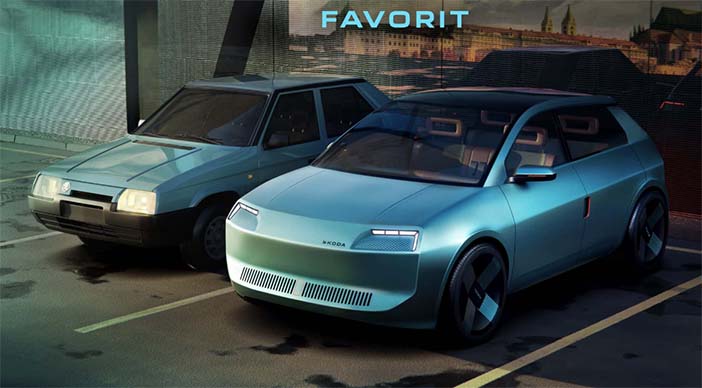
+++ The SKODA FAVORIT hatchback, designed by Bertone, launched in 1987, was a massive success for the brand. Now, in 2025, Skoda has reimagined the Favorit with the brand’s latest design language, but it features a few styling quirks that preserve the past with a modern twist. The new Favorit concept retains the original’s simple and clean design, rounding off some of the sharper edges, such as integrating the door handles into a single opening between the front and rear doors. The new interpretation is also bigger than its predecessor, adopting a crossover-like stance to appease modern sensibilities. It features “the spirit” of the brand’s Modern Solid design language but with a few noticeable changes. The front of the concept forgoes Skoda Tech-Deck Face, a new corporate look for the brand’s vehicles, and adopts something unique. One of the concept’s more striking features is the lights. The Favorit adopts thin led elements front and rear, with illuminated badging on the hatch. There are translucent covers over the lights that one of the designers, David Stingl, said could fold away when the headlights are needed. The designers even imagined a racing version with plastic cladding and other sporty touches. The new hatchback was imagined as an electric vehicle, which would greatly benefit its performance capability. The original Favorit had a 1.3-liter 4-cylinder engine producing between 54 and 67 horsepower, which would not cut it on today’s roads. However, since electric motors are small and powerful, they would likely turn a new Favorit into an incredible performance hatchback. +++