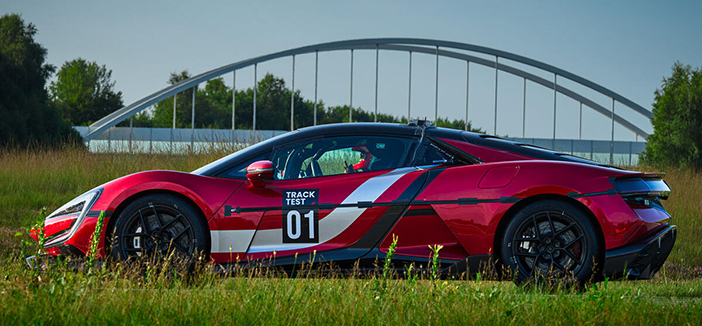
+++ MCLAREN AUTOMOTIVE is at a crossroads: under new ownership and leadership, and on the brink of a radical push into electric SUVs as its range is overhauled. Abu Dhabi investment fund CYVN Holdings acquired the supercar business and a non-controlling stake in McLaren’s Formula One race team in April. CYVN immediately merged McLaren with its other automotive assets: a 700-employee British engineering start-up then operating under the name Forseven, the technology division of Gordon Murray Automotive and a technology licence deal with Chinese electric car maker Nio. This new British luxury car group, McLaren Group Holdings, has vowed to transform McLaren Automotive under Nick Collins, Jaguar Land Rover’s former R&D boss. “We’ll do what McLaren has always done, but do more of it and do it even better”, the new CEO told in an exclusive interview. The McLaren W1 hybrid hypercar is on course for launch in 2026, followed by a push into electric SUVs potentially as soon as 2027. McLaren was known to be exploring the SUV market under Collins’ predecessor Michael Leiters, who left rapidly after the CYVN acquisition. Leiters, who rose to prominence engineering Porsche’s initial SUVs and led Ferrari’s hybrid drivetrain development, believed that a 4-door McLaren should be a rival for the Ferrari Purosangue and Aston Martin DBX. His vision was for a swooping, sporty bodystyle, probably powered by a detuned version of the W1’s 1.234 hp drivetrain, which blends a 4.0-litre twin-turbo V8 with a high-output electric motor. McLaren had held talks with global automotive players for a vehicle architecture, to underpin a coupe-SUV priced above the €288.013 Aston Martin DBX. That would limit volume to 4 figures, in keeping with McLaren’s low-volume, ultra-aspirational brand positioning. McLaren’s new plan could be even more radical. Forseven’s engineering team, many ex-JLR like Nick Collins and new McLaren design boss Alister Whelan, had already drawn up a luxurious SUV; very much in keeping with the stately, horizontal lines and proportions of the Range Rover. And with plans for Forseven to launch its own brand now shelved, this blueprint is being assessed for launch as a McLaren. Its look is very different from Leiters’ vision, as is the proposed pure-electric drivetrain; a transition that has troubled supercar makers. Lamborghini has pushed back the launch of its electric coupe-SUV, based on the Lanzador concept, to 2029 at the earliest and Ferrari is reported to have shelved a second EV. McLaren’s previous leadership did not believe a critical mass of its customers were hungry for an electric SUV either. This is the minefield that the astute Nick Collins and his team must navigate. As the architect of the latest-generation Range Rover, Collins rightly set up the luxurious and lucrative off-roader for combustion, plug-in hybrid and pure electric propulsion. He told us that McLaren would be equally flexible. “I believe every brand must have a multi-propulsion future”, stresses the CEO. “The pace of regulatory change and consumer adoption is different in different parts of the world. Are we going to make McLaren an all-electric brand? Absolutely not”. Collins refused to confirm whether Nio’s battery and motor technology would be used to power an electric McLaren. CYVN owns 20 percent of the Chinese car maker and is assisting as the company tries to broaden its European footprint. “We have access to certain Nio technologies with our licence. And that’s an amazing opportunity, because, frankly, some of the best automotive technology in the world is in China”, he claims. Leiters always believed it would take a leap in battery tech, with a stepchange improvement in energy density to boost long-running and agility, to unlock an electric supercar. A zero-emissions McLaren SUV (with less stringent performance requirements) could potentially have been enabled by a tech deal with BMW, for its iX or Neue Klasse architecture. Technology partnerships were discussed during ownership talks, but BMW didn’t follow through. CYVN did, with Nick Collins at the heart of the deal. “This transaction with McLaren was my initial suggestion”, he explained. He joined Forseven in January 2024 and “very shortly after, I was starting to suggest we look at the acquisition. So everything Forseven was doing from the middle of last year onwards, was with a target picture of where we got to in April”. At a stroke, McLaren Automotive (which veered from one funding crisis to the next in the later years of its Bahraini ownership, ultimately losing more than 1 billion euro in 2023) is on a stronger financial footing. Nonetheless costs must be cut to hasten breakeven, with 500 jobs going across the group. “We’ve cleared all the debt”, the new CEO confirms. “We’ve recapitalised the business and we’ve got an incredible board of directors”, Legendary ex-Ferrari CEO Luca di Montezemolo has joined as an advisor, supplementing former Rolls-Royce cars boss Torsten Müller-Ötvös and McLaren’s hugely experienced executive chairman Paul Walsh. Along with Collins, this experienced team will need to decide the new McLaren portfolio. Forseven was reported to be working on a second, more sporty SUV to rival the Range Rover Sport. The leaders must decide on the final form of the SUVs, their powertrains, how much of McLaren’s trademark carbon fibre is used in their construction, and the price point. Will it compete with the €170.000 Range Rover Electric or protect McLaren’s position as an F1-honed rival for Ferrari? Another key question is where (and how) they’ll be assembled. With its purchase of Gordon Murray Technologies, CYVN acquired the rights to the respected ex-McLaren engineer’s iStream manufacturing system, the 2 electric vehicles the division was developing, and initially advice from Gordon Murray himself. The iStream process is designed to engineer out complexity and therefore weight, be used across a variety of vehicle types and deliver cost-effective manufacturing, so big car companies can launch low-volume, specialist products. The system could be appropriate for 4-digit annual production but not if the new McLaren is shooting for a quarter of Range Rover volumes, about 20.000 SUVs a year. With China ruled out on tariff grounds, it’s possible CYVN may want its factory in the Middle East. That would help the region’s diversification from oil but the challenges would be huge, given the know-how and supplier base would require building from scratch. More likely is to use an existing manufacturer on contract. Other key portfolio decisions are pending. The huge 2023 loss stemmed from a long delay to the V6 hybrid McLaren Artura supercar’s launch. While media have lauded the driving experience, a rogue part caused some early vehicle fires and software issues scuppered its roll-out. The executives are surely mulling a complete reskin, a long-established Ferrari tradition: most recently it has transformed the V8 Roma coupe into the Amalfi. A relaunch would give Alister Whelan the chance to express his new design language on a supercar, and a new badge and naming strategy would begin the process of better differentiating the line-up. McLaren is also considering a more emotive marketing strategy, mirroring the Drive To Survive approach of humanising people such as founder Bruce McLaren, and surfing McLaren’s on-track renaissance. “The brand is amazing”, says Collins. “You see what’s happening in racing. I was lucky enough to be at Silverstone for the British Grand Prix. The love for the papaya orange racing livery is phenomenal”. The new CEO concludes: “This isn’t about surviving the next five years or to the next equity injection. This is about building a sustainably profitable company that continually reinvests in itself. A company that’s on the world stage, which the country should be proud of”. It’s a big vision that demands a big plan. Expect to hear more officially before the end of the year. +++
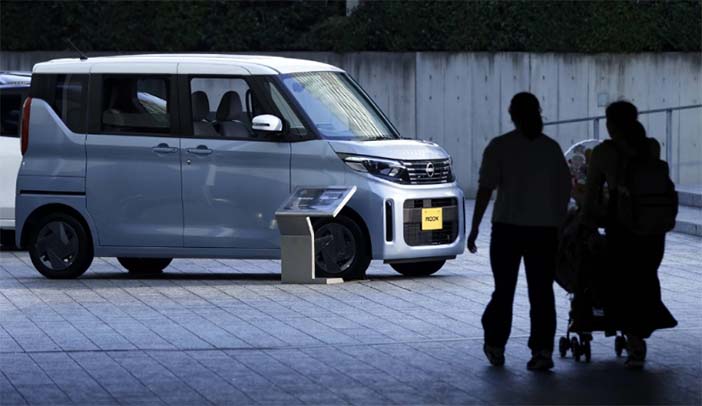
+++ NISSAN has revamped one of its more popular lightweight “kei cars” as part of a refresh of the Japanese carmaker’ aging lineup. The 4th-generation Roox will go on sale by the end of the year for ¥1.6 million ($10.800), the company said. The new model has better mileage, more safety features and built-in connectivity. Kei cars account for about a third of Japan’s automobile market and the Roox, a gasoline-powered automobile initially released in 2009, has sold an average of 80.000 units per year, making it one of the more popular kei models among the three that Nissan sells. The carmaker is releasing the vehicle as it looks to cut costs, eliminate jobs and shutter factories. “We don’t take the situation lightly”, chief production specialist Yuuki Tanaka told reporters at Nissan’s headquarters in Yokohama. “We’re constantly thinking about our line-up”. Japan’s best-selling kei car is Honda’s N-Box, which sold more than 200.000 units in 2024. Nissan’s Sakura, also a kei-sized electric car that sells more than 20.000 units annually, is the best-selling battery-powered vehicle in Japan. Nissan’s plan to roll out a spate of new models, including electric vehicles, gas-electric hybrids and gasoline cars, is part of CEO Ivan Espinosa’s plan announced in May to get Nissan back on its feet. Weak sales in the United States and China were compounded by an outdated model line-up and revolving door leadership, forcing Nissan into its worst financial crisis since French carmaker Renault rescued it from near bankruptcy some 26 years ago. The carmaker warned of big losses as it pushes forward with a costly turnaround plan. Last month, it forecast ¥180 billion in operating losses for the April-September period, and withheld guidance for the fiscal year ending March 2026. Espinosa also announced plans to cut 20.000 jobs and reduce manufacturing capacity to 10 sites from 17. In July, Espinosa said the company was going to cease production at its flagship domestic factory in Oppama, where it first produced the Leaf, the world’s first mass-market EV. +++
+++ “The battery cell is the combustion chamber of the future”, said PORSCHE back in 2021. Such was the brand’s confidence that it could parlay its formidable ICE prowess into the EV era that it bought a German battery company called Cellforce, which promised high-performance, energy-dense packs worthy of EVs wearing the Porsche badge. In the first quarter of this year, however, Porsche wrote off €700 million covering its investment in Cellforce and “other battery activities”. Porsche also holds a controlling stake in battery maker V4Smart, a division of Varta. +++
+++ SKODA has overtaken BMW to become Europe’s third biggest-selling car brand, and it’ll keep its new product pedal to the metal with two new electric cars, facelifts for its entry models and a new Octavia concept. The Czech brand’s European sales grew by 10 percent in the first half of the year. Four-fifths of the company’s 509.400 units went to European customers, while its diversification strategy is delivering growth in India too. How did Skoda clamber onto the European car sales podium for the first time? By offering a growing portfolio of models and powertrains that ticks every customer box, having competitive electric cars, delivering good quality at affordable prices and leveraging Skoda’s blooming brand power. That’s what company boss Klaus Zellmer told during a fascinating, 90-minute conversation. Zellmer, who recently had his CEO contract extended for another 3 years, believes that Skoda’s design is one factor in attracting customers. It achieves a delicate balance of looking sufficiently hi-tech with its Tech-Deck, illuminated grille while mixing reassuringly solid, crisp body surfaces that won’t scare anyone by looking too edgy. “The tipping point in our design language is the introduction of Elroq, then the electric cars to come: the Epiq and flagship SUV next year. It’s a 7-seater with the working title ‘SpaceBEV’. That car totally embraces the new design language and our aspiration for a flagship Skoda, one that’s still very functional but also totally timeless”. This alternative to the Kodiaq (continuing Skoda’s tradition of having standalone EVs rather than electrifying existing nameplates) comes in the second-half of 2026. It’ll be longer than the Kodiaq to deliver huge cabin space, all underpinned by the Volkswagen group’s MEB electric car platform. That means a big battery around 90 kWh in capacity, and single- and dual-motor punch. “I’m proud that the car very much resembles the Vision 7S concept: we have not lost a lot on the way to production, though of course we don’t have the suicide doors!” An SUV at the opposite end of the size and price spectrum, the Epiq, will beat the 7-seater to market by arriving in spring 2026. The 5-seater is the electric equivalent of Skoda’s 4.2 meter-long Kamiq. It’s set to get 38 kWh and 56 kWh batteries, with the latter promising up to 450 km of range. And it introduces a new type of battery chemistry, to bring down the price to around €29.000. “The Epiq will come with an LFP battery. It’s more cost efficient”, Zellmer confirmed. LFP, or lithium iron phosphate batteries, use cheaper raw materials than the Nickel Manganese Cobalt (NMC) batteries in existing Skoda EVs, which will also boost Skoda’s profits. The boss calculates 40 percent of an EV’s cost is currently in the battery. That’s a critical battleground, especially given Chinese rivals such as BYD (an early LFP adopter) have a cost advantage. “The more customers turn to battery electric vehicles, the more we have to tackle the cost of those cars in order to keep the profit levels we enjoy”, warns the CEO. “We’ve achieved price parity with the Elroq and the Karoq, but not cost parity”. Having shifted 72.000 EVs between January and June 2025, Skoda is Europe’s second-biggest electric car brand, behind only its parent company Volkswagen. With many customers buying their first EVs, brand loyalties are still being established which makes the market a great leveller for Skoda. Some 75 percent of Enyaq buyers, Skoda’s first EV, are new to the brand. And the introduction of the Elroq has given Skoda extra momentum, with the model topping the EV sales chart in Europe at times this year. Skoda has also plans for combustion cars. “It’s the widest portfolio we’ve ever had at Skoda, serving our mantra that we respect customers’ wish for choice: mild hybrid, plug-in hybrid, diesel car, SUV, sedan, hatch, combi, whatever you want. And we run on full steam in our factories, which is also good for profitability”. The boss reveals the Fabia, Kamiq and Scala (all resolutely combustion cars) have been inked into Skoda’s production plans beyond 2030. Skoda is Volkswagen group’s R&D centre for their MQB vehicle chassis and its combustion engines, which gives it responsibility for the engineering to get them through the upcoming Euro 7 emissions tests. “With EU7 in 2027 they were planned for phase out because we would bring in the Epiq. The theory was everybody who wants an ‘A0’ (small car) will buy that. But it doesn’t work like that!” As a result the Fabia, Scala and Kamiq will receive cosmetic and spec upgrades before the end of the year. “You can’t just extend the lifecycle and think nobody will realise the age”, quips the boss. “They’re making good money and they’re a vital part of our line-up”. But electrified combustion is also important at higher price points. Plug-in hybrid is restricted to the Kodiaq and Superb yet it still accounted for 21,.400 European registrations. Zellmer admits that’s too limited and promises to extend PHEV to the Octavia range too. The SpaceBEV and Epiq may be the last new nameplates for a while. “I think we are at the peak of our portfolio”, says Zellmer. After them the new Octavia will come as an electric car. It’ll be previewed by the aerodynamic Vision O concept in early September before arriving in 2027, which will begin the process of electrifying existing nameplates and ultimately a rationalisation of the range.“Let’s see what happens with the Octavia as a battery electric vehicle. There’s a certain efficiency cap; the most efficient one is probably Tesla having 3 cars in the market and selling the volumes it sells. This doesn’t work for traditional car manufacturers. You cannot afford to run redundant cars with a massive overlap”. Zellmer was asked to name his most important Skoda, and he listed the Octavia, the brand’s biggest selling model with 215.000 deliveries in 2024, alongside 2 others. “From an image viewpoint the one that has probably carried the brand furthest is the Superb; in India it’s seen on the same level as a Mercedes. And from a profitability viewpoint, it’s the Kodiaq”. The brand has certainly developed way beyond the ‘80s jokes that tittered Western Europe; its success now generates 5 percent of the Czech Republic’s GDP. An independent study by Interbrand calculated that the brand’s value had jumped 40 per cent over the past 5 years. “It is on the shopping lists of people that 5 or 10 years ago would have never thought about buying a Skoda. But you can’t stop: we need to develop the brand and the aspiration further”, urges Zellmer. Not that the boss wants to head too far up market: he’s happy with the Superb being perceived as a rival to Mercedes saloons in India, rather than an actual rival. “We still want to be the best value-for-money car. Something that pleases your eyes, something that is contemporary, that is not fashionable but long-lasting and very functional”. Zellmer, who worked for Porsche for 23 years before joining Skoda, has ticked one of his metrics for success by getting the European sales bronze medal, has more plans: “A return on sales exceeding 8 percent.” In the first half of 2025, Skoda delivered an 8.5 percent margin, equating to €1.2-billion of operating profit. Cost cuts of €2.1-billion in the last 2 years have helped, as Skoda lets people retire and hires fewer people in new posts that reflect the changing, AI-driven industry. By 2030 Zellmer is targeting a 10 percent operating margin. Another goal is to get Skoda to exceed the 1-million sales mark; it delivered 926.567 cars in 2024. The previous high of 1.3-million included 300.000 Chinese sales, produced in a joint-venture which reduced the profits. Western car makers have lost enormous share in China since then. “But it’s not volume just for the sake of volume. We don’t celebrate market share if we lose money. But a reasonable next step has to be exceeding 1-million, simply because with scale you utilize your capacity better, and you generate incremental profit. This is the game plan”, he concludes. +++
+++ STELLANTIS has reportedly axed its Level-3 driver assistance software, which would have enabled its cars to take full control from their drivers in certain conditions. The multinational manufacturer said the system, named Autodrive, was “available and ready to be deployed”, but was on hold due to “limited market demand”. However, Reuters has reported that the system is no longer set to make it to market due to the lack of demand, high costs and technical challenges. Autodrive would have offered drivers the ability to take their hands off the wheel and eyes off the road at speeds up to 60 kph, regardless of lighting or weather conditions. +++
+++ Will a 400 hp Golf ever come to fruition? VOLKSWAGEN has been teasing an ultra-high performance variant of the Golf R for almost a decade now. But with the clock ticking to get a petrol-powered flagship onto the market before the firm goes hell-for-leather with its all-electric hot hatchbacks, now could be the time. And it seems VW might think the same, because the brand has once again been spotted putting a Golf R prototype with a few key modifications through its paces at the Nürburgring in Germany. The reality of putting a 400 hp Golf on sale in Europe is a much tougher task now than it was 10 years ago, however. More stringent emissions regulations, plus smaller economies of scale given the model’s shrinking sales are the main threats, but there’s also a few new opportunities. Internal politics have long been a reason for VW’s hesitancy at putting such a high-performance model on sale. A 400 hp power figure would match that of Audi’s RS3 in a car that has traditionally occupied the top step of VW’s hot-hatchback hierarchy. But, with the 5-cylinder Audi soon going out of production, this could be an opening for VW. Looking at the spotted prototype, there are a few tell-tale modifications that could suggest big power gains are part of the plan. The bonnet features a new pair of vents at their outer edges, suggesting that VW have needed to make changes in order to regulate hot engine bay temperatures. This speculation is backed up by what could be a larger radiator mounted behind the modified lower grille. I can’t quite see if any additional front-mounted charge coolers are fitted (as you’ll see on other high-performance models, such as the Mercedes-AMG A45 S) the outer edges of the main intake have been opened up compared with the standard Golf R, which is where they would likely sit. Something we can see is that there are no fundamental changes to the Golf’s bodywork, which suggests that the track widths will largely be left alone. Audi typically widens the front wheelarches of its A3 in order to create a more focused set-up for the RS3, something that in theory could be fitted to a Golf, because the 2 models share many components under the skin. Even without bodywork changes, this many mechanical changes would likely lead to a big price tag, which poses the final question: would there even be a market for a Golf that could cost €100.000? There’s only one way to find out, VW. +++
+++ The 3.000 hp YANGWANG U9 has hit almost 480 kph, smashing the top speed record for an electric car. The speed was achieved at the ATP test track in Germany. It surpasses the record set by the Aspark Owl. The feat was completed by the hardcore Track Edition variant of the Chinese supercar. Each of its 4 motors puts out 750 hp, meaning power is boosted by 1.700 hp over the standard car. This top-rung U9 can hit 100 kph from rest in 2.36 seconds. Key to the record was the car’s independent torque-vectoring system, said Yangwang. Controlled by road-monitoring sensors, each motor is adjusted up to 100 times per second to maximise grip and performance. The record achieving U9 also wore special semi-slick tyres developed by Giti Tire, which were optimised to reduce torque loss and wear. Yangwang is owned by behemoth BYD and pitched as a maker of tech-heavy, high-performance models. It currently offers the U9 and the chunky U8 SUV in China. Plans are being tabled to bring the brand to Europe, BYD vice-president Stella Li told in July. She said its arrival will follow the launch of the Audi-rivalling Denza brand early next year. +++