
+++ For a long time, AUDI stood head and shoulders above the rest in terms of interior quality, and that quality could be felt in every operation in the cabin, from the smoothness of the A/C vent adjustment to the click of a button for the infotainment system. But that quality feel has since been replaced by a certain cheapness, and that physical feel by excessive screen integration. Fortunately, Audi is on a path of self-correction, and the man helming its design direction plans a return to simplicity and understated luxury. Chief creative officer Massimo Frascella said that the German automaker now views tactility as “very important”, indicating that the ethos of last year’s Concept C will find its way to future production cars. Frascella, whose CV includes the Velar, Defender and most recent Range Rover, knows a thing or two about understated style, which is exactly what Audi should be all about, and he says that Audi needs to find its “own way” to deliver the brand experience and not be “like everyone else”. He added, “It’s not about taking things out, it’s just offering the technology and the functionality in a way that’s beneficial for the customer”. In other words, automakers can’t remove screens from cars, but they can make them better to interact with. “Tactility is very important”, said Frascella. “Big screens are not the best experience. It’s technology for the sake of technology. For us, technology is there when you need it, not there when not needed”. This contrasts with automakers like Mercedes, whose Hyperscreen dominates the cabin, whether a user is operating the infotainment screen or just driving. Frascella adds that a “mix of digital and analog”, as well as tactility and a perception of quality, is very important for Audi. In other words, don’t expect to see the 14.5-inch touchscreen and 11.9-inch driver display of the latest Audi Q5 living much longer.
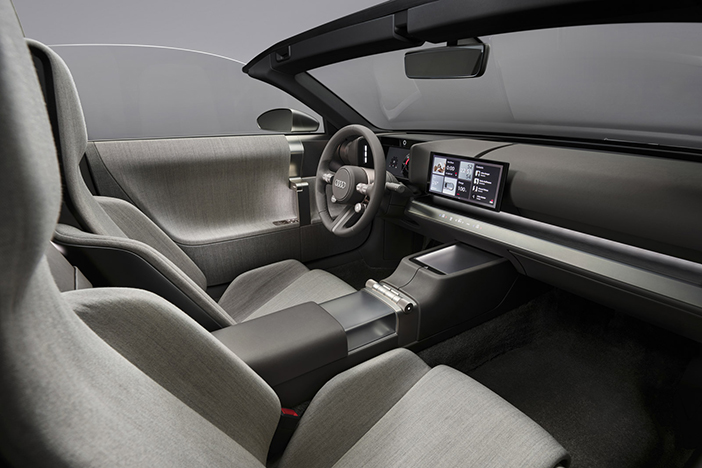
Audi’s Concept C provides clues as to how its future cabins may look. The car has a simple steering wheel with physical switches and buttons, behind which physical stalks reside. Plenty of anodized aluminum helps create that premium feel Audi has been missing, and further back, an ample but not oversized display provides necessary information to the driver in a recessed slot in the dash, making the screen itself seem smaller and less “in your face”. Alongside it on the dash is the infotainment display, which measures only 10.4 inches. In a world where most premium cars have inches measuring 12.3 inches or more, including many contemporary Audi products, this kind of restraint calls to mind the products Ingolstadt was producing 10 or 15 years ago. Better yet, the Concept C’s screen folds away when not in use. Hopefully, with Frascella in charge, these sorts of elements will find their way to production soon. +++
+++ China may be the BMW Group’s largest market, but the United States is in second place, and it’s Americans’ appetite for large engines that is helping keep the V8 alive. A BMW spokesperson said that demand for V8 models in the U.S. is still “above average”, adding that the configuration is likely to remain popular with Americans for the foreseeable future. As a result, production of certain engine components will continue beyond BMW’s previously announced cut-off date of 2027, with the automaker’s Munich plant to continue producing cylinder heads, crankshafts and crankcases for V8 and V12 engines even as Neue Klasse EVs enter production there. BMW’s Munich plant was set to produce only EVs from next year, but while the electric i3 sedan will enter production there in the second half of 2026, production of V8 and V12 engine components will continue (after that is anyone’s guess), and there are several products in which they will find homes. Among them are the facelifted X5, X6, and X7. The X5 is expected to get its LCI update before the end of the year, as is the 7 Series, with both to retain 8-cylinder engines. The refreshed X6 and X7 are expected to debut in 2027 and arrive the following year, also with V8s in their range-topping trims. Naturally, that means the X5 M and X6 M will retain their 4.4-liter S68 twin-turbo V8s, as will the eventual update of the M5. Elsewhere in the BMW Group, Rolls-Royce’s V12 will also benefit from America’s appetite for capacity, something illustrated by poor sales of the all-electric Spectre, while the newly formed BMW Alpina is likely to use V8s in its next B7 and XB7, based on the 7 Series and X7, respectively. Cars with smaller engines will also retain combustion, though they will adopt a form of electrification. As I’ve reported previously, the B58 3.0-liter turbocharged straight-6 will stick around, too, with the next M340i expected to make M3 owners nervous at the lights by adopting a mild-hybrid setup capable of 400 horsepower or more. The next G84-generation M3 will also be electrified, with its S58 to be bolstered by a 48 volt mild hybrid system. Total output will be somewhere beyond 500 hp, eclipsing the G80 M3‘s starting point with ease and helping mask any weight gain. But since this won’t be a PHEV like the M5, the weight gain won’t be extreme. Unlike Mercedes, which opted to downsize and electrify only to revert to 6- and 8-cylinder engines, BMW has recognized that Americans (and other global customers) want more than 4 cylinders, and it will give them what they ask for until it’s no longer feasible to do so. +++
+++ CITROEN could channel the spirit of the old Picasso, because it believes an MPV revival is on the cards. The brand showed the radical Elo concept late last year as a vision of what a supermini-sized 6-seater could look like. Although bosses have not yet given it the green light for production, it hints at a plan to bring back the traditional people carrier. Citroën was once a front-runner in the compact MPV market, with the Xsara Picasso ranking among its best-sellers during the early 2000s. The market for compact MPVs has all but dried up, with the closest equivalents on offer being based on small vans, such as the Ford Tourneo Courier and Citroën’s own Berlingo. But the company’s design boss, Pierre Leclercq, has suggested that a revival could be on the horizon. Asked if he would put the Elo concept in the same category as the Picasso, Leclercq told that “it’s okay to call it an MPV” because that designation has more favourable implications than it did several years ago. “Once they were replaced by SUVs, it seemed that MPVs were an old thing: not very sexy to drive. But I think there’s a way to make MPVs sexy and desirable”, said Leclercq, pointing to the Elo as an indication of what that could look like. As to whether that could mean Citroën plans to revive one of its most popular nameplates in recent memory, he said: “Rebirth of a cool Picasso – why not?” However, he said any decision must be founded on viability and Citroën is closely monitoring feedback to the Elo.
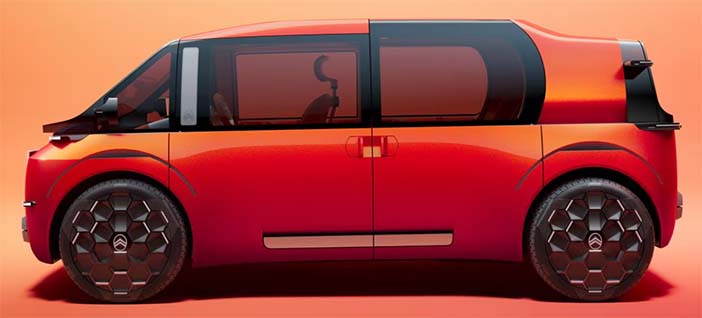
“Concept cars are important because it’s a test”, he said. “If there’s a lot of positive activity about this concept and it’s really appreciated, it gives us strength to push in the group to do something like that. So I’m very positive and hopeful about doing something like this”. +++
+++ JLR has extinguished reports that it will offer a range-extender or hybrid powertrain option for the incoming JAGUAR TYPE 00 and a senior source has branded the notion as “rubbish”. A report over the weekend, citing a source close to the project’s development, claimed that JLR had instructed engineers to develop a petrol-engined system for the new Jaguar GT, the first model in the brand’s reinvented line-up, which is due to be revealed this summer. The story claimed this option would be offered alongside the electric powertrain, as JLR bosses were getting nervous about relaunching the brand exclusively with electric power, given stalling sales of EVs, especially at the premium end of the market. JLR first announced its all-electric plan for Jaguar at the end of 2024, and sales of ICE models (such as the big selling F-Pace) ended in early 2025. However, a senior source has now told that the report is “rubbish” and Jaguar will be relaunched as an EV-only brand as planned. In addition, a spokesperson for JLR said officially: “Our plans to reinvent Jaguar as an electric-only luxury automotive brand are unchanged. Last month prototype passenger rides received overwhelmingly positive reactions from global media and we are looking forward to unveiling the first new electric Jaguar later this year”. By the end of 2027, the GT will be joined by a saloon and an SUV in Jaguar’s initial luxury EV line-up. +++
+++ Automotive patents don’t always focus on new products that are about to hit showrooms. More often, they give us a peek at the real issues carmakers face, especially for upcoming breakthroughs. SOLID STATE BATTERIES are a perfect example of that right now. In a nutshell, solid-state batteries replace the liquid electrolyte in today’s lithium-ion batteries with a solid material. On paper, that means more energy, quicker charging, better safety, and longer lifespan. That’s why they’re often hyped as the next big thing for EVs. We’ve already seen some bold claims, like Donut Lab’s supposed 5-minute recharge battery. Honda and Toyota were some of the first legacy automakers, among others, to say they were all-in on solid-state batteries. Fast forward a few years, and you still won’t find a production-ready pack in any of their cars. 2 new separate patents help explain what’s holding things up, and yes, both companies are working on these problems that will decide if solid-state batteries actually work in the real world. Honda is zeroing in on durability. Its latest patent, filed in the US Patent and Trademark Office in September 2025 and published in January 2026, delves into how solid-state batteries hold up as they age. The main headache with solid-state batteries is internal stress. Every time the battery charges or discharges, the materials inside expand and contract. Liquid electrolytes can handle that movement, but solid materials can’t. That leads to cracks, layers pulling apart, and increased resistance, all of which slowly erode performance. So, how does Honda plan to solve this? The Japanese automaker is looking at the battery’s structure, especially how the negative electrode connects with the solid electrolyte. Rather than inventing a new chemistry, Honda is tweaking the way the layers are built so they can handle stress and avoid long-term damage. The aim isn’t to break records for charging speed or energy capacity, but to ensure the battery can withstand daily use without coming apart inside. In short, Honda is tackling the longevity problem first. It’s prioritizing cycle life and reliability for now. On the other hand, Toyota’s patent addresses a different roadblock. Filed in July 2025 and published on the same day as Honda’s, it’s all about making sure solid-state batteries can be built consistently, not just in the lab but in the factory. Toyota’s concerns are moisture, contamination and variation in resistance during production. Apparently, solid-state batteries are extremely sensitive to even small amounts of surface moisture, which can ruin performance before they even reach customers. In a lab, that’s manageable. On a mass-production line, it’s a nightmare. Toyota’s patent outlines methods for controlling variables during lamination and pressing. It’s not a moonshot. It’s more like a set of instructions for the factory floor, all about improving yield and ensuring every battery comes out the same. That lines up with the automaker’s usual approach. Instead of rushing to be first, it’s making sure solid-state batteries can be built reliably, at scale, and at a price that works for everyday cars. Like any patent, these filings don’t guarantee the tech will ever make it to production. But together, they show why solid-state batteries are still a work in progress. Honda is working on making them last. Toyota is working on making them buildable. Until both sides crack their problems, solid-state batteries will stay more of a promise than a real product. +++
+++ Electric vehicles (EVs) address plenty of challenges, but maximizing interior space isn’t always one of them. Today’s EV batteries are large, heavy units mounted under the floor, and that extra thickness comes with trade-offs. Higher floors mean seating positions shift, and designers often have to make tough choices about rooflines, legroom, or the car’s overall shape. Some EVs end up looking taller than necessary, while others sacrifice cabin comfort just to keep the exterior profile in line. This problem stands out most in smaller EVs and family cars, where any bit of interior space counts. Even with smart packaging, there’s only so much room to work with when the battery sets the floor height. That’s the challenge TOYOTA seems to be tackling in a new patent, which focuses less on battery chemistry and more on how the components are arranged under the car. As always, it’s worth noting that patents and trademarks are not guarantees of production. Automakers file these documents to protect ideas, explore concepts, or future-proof engineering directions that may never reach the showroom. Filed to the US Patent and Trademark Office in June 2025 and published just last week, Toyota’s filing outlines an alternative way to package an EV’s battery and major electrical components. Rather than stacking everything in one thick layer, Toyota’s idea is to spread out key components in a more layered setup. The battery still sits under the floor, but electronics like power control units and junction boxes are moved so they aren’t all piled up in the same spot. The goal is to cut down on bulk by changing how things are arranged, not by making the battery itself thinner. The patent diagrams show the battery doing double duty, working as both an energy source and a structural part that shields sensitive electronics. By keeping cable runs short and grouping components closer together, Toyota could save space and boost efficiency, all without changing the battery’s chemistry. If this kind of layout reaches production, the benefits for buyers would be clear. A thinner floor could allow for lower seats, more headroom, or extra legroom without making the car any bigger. Designers would also have more flexibility to shape EVs that look sleeker, instead of relying on tall, upright bodies to hide thick underfloors. For family EVs, this could mean more usable space in the second row or more flexible cargo layouts. For smaller models, it could bring back proportions that look more like classic hatchbacks, instead of defaulting to tall crossovers. Moreover, a more flexible underfloor setup could be used through different body styles, drivetrains, and markets without having to start over each time. It’s not clear whether this exact idea will make it to production, but it shows Toyota is focused on practical ways to improve the use of space. +++
+++ Let’s face it: most in-car VOICE-COMMAND systems in cars these days don’t work. While not exactly new, they’re among the least convincing features of modern cars. Ironically, they’re meant to take away distractions and make driving simpler, but in reality, most systems end up complicating things. Awkwardly specific phrases and unhelpful responses are just some of the pains, leading most drivers to revert to the touchscreen or buttons, and leaving voice-command systems mostly unused. The problem isn’t a lack of technology. It’s that using these systems rarely feels natural. Most voice controls rely on keywords and strict commands, which don’t match how people really speak. Toyota’s latest patent hints that they want to fix this by focusing less on exact words and more on what the driver actually means. Toyota filed a patent with the US Patent and Trademark Office in July 2024, published on January 22, 2026. The patent describes a voice control system that listens for bigger-picture requests, not just single commands. Instead of matching a phrase to one function, the system first figures out if the driver is asking for a general outcome. From there, the car decides what steps to take to get the job done. Say “I’m cold,” and the system might turn up the heat, adjust the fan, warm the seats, or close the windows. You don’t have to spell out every step, and you’re not stuck with a list of set commands. The patent also highlights that the system checks what’s happening around the car before acting. It looks at speed, surroundings, and driving conditions before following certain requests. That extra step adds safety, especially for things like parking, visibility, or automated driving. As with any patent, there’s no promise this system will ever make it to production. Automakers often file patents just to protect ideas, not to show off finished features. Trademarks and software can change a lot before anything actually shows up in a showroom, if it ever does. Toyota isn’t the only one reworking how drivers talk to their cars. Other brands are also rolling out AI voice assistants that try to understand natural speech instead of just set phrases. BMW, for example, has announced new voice assistants for its next models that promise more natural, context-aware conversations. The goal is the same: make voice control feel useful, not just a gimmick. What sets Toyota’s idea apart is how it turns intent into a safe, step-by-step set of actions, instead of just making the conversation longer. Whether this actually helps in daily driving will come down to how well it works, but it shows that carmakers are starting to realize voice tech only matters if it’s easy and natural to use. +++