+++ ALFA ROMEO has unveiled the first car to come from its Bottegafuorisere bespoke division, a wild Giulia Quadrifoglio with a low-drag bodykit and split rear spoiler. Named Luna Rossa after an Italian sailing team, the new limited-run model (that will be unveiled at the Brussels motor show) is pitched as the most extreme Quadrifoglio model yet. Chief among the changes made for the Luna Rossa is the new aerodynamics package. Up front, it gains a pair of canards, while carbonfibre skirts are mounted along its flanks. At the rear is the aggressive wing, inspired by the hydrofoils on the Luna Rossa sailboat but inverted to generate downforce rather than lift. The package combines to produce 140 kg of downforce at 300 kph; 5 times more than the regular Giulia Quadrifoglio. Under the bonnet is the standard 520 hp twin-turbocharged 2.9-litre V6 engine, to which a louder Akrapovič exhaust has been fitted. Inside, the Giulia’s Sparco bucket seats are inspired by the lifejackets worn by the Luna Rossa crew, upholstered in grey with a central red stripe. That red-on-grey motif is mirrored in the Luna Rossa car’s optional livery. A total of 10 examples will be built. Prices, too, have yet to be confirmed, although it’s likely to represent a significant premium over the regular Quadrifoglio. Alfa Romeo’s launch of an in-house customisation arm (together with sibling brand Maserati) follows in the footsteps of several luxury car makers, including Aston Martin, Bentley and Porsche. Such enterprises have been remarkably lucrative for their manufacturers, which could prove instrumental in securing the future of Stellantis’s ailing Italian premium marques. +++
+++ Automakers from JAPAN are losing market share in Southeast Asia as Chinese rivals ramp up local production to drive electric vehicle sales in the region. In response, Japanese car companies have been scaling back production in Thailand one after another. This could deal a blow to supply chains in the Southeast Asia region, which is home to more than 2.700 Japanese parts manufacturers. Market share could fall below 70%
At the Thailand International Motor Expo, which was held in Bangkok in November and December, Toyota Motor Corp. unveiled the latest edition of its Hilux line of pickup trucks, which recently underwent a full overhaul for the first time in a decade. In addition to improving the fuel efficiency of the diesel engine models, the company has added an EV model to the lineup. It has already begun accepting orders. In Thailand, pickup trucks are regarded as the “national car” and the Hilux, which is mainly produced in the country, has enjoyed robust popularity there. However, during a press conference, Noriaki Yamashita, president of Toyota Motor Thailand, said with a stern expression, “We want to protect our supply chains by increasing sales”. Thailand accounts for nearly 20% of the Southeast Asian auto market. However, the combined share of the Thai market held by 9 Japanese automakers dropped to 69.8% for the first 10 months of 2025, 6.6 percentage points down from the same period in 2024. These companies maintained a market share in the high 80% range to 90% throughout the 2010s, but this plunged to 77.8% in 2023. It is even possible that it will be below 70% for the entirety of 2025. In Indonesia, which accounts for about 30% of the Southeast Asian auto market, Japanese automakers also saw their market share fall below 90% in 2024 and drop even further, to 82.9%, for the first 10 months of 2025. Competition between Japanese and local automakers is intensifying in Vietnam. The aggressive expansion of Chinese automakers, such as BYD, into Southeast Asian countries, including Thailand and Indonesia, since 2022 has been a major factor in Japanese automakers’ sudden loss of ground. By greatly bringing down the price of EVs, Chinese car companies have broken into what was once a Japanese stronghold, taking market share of over 20% in Thailand. Chinese automakers have also ramped up EV production at new plants in Thailand and are fiercely competing with Japanese firms even in Indonesia. Under the pressure of this Chinese assault, Japanese automakers are scaling back their output in Thailand. Honda will consolidate its 2 finished-vehicle plants in the country into a single location in 2026 at the earliest. Mitsubishi also plans to suspend production at 1 of its 3 plants in 2027. According to data analysis firm MarkLines, of 2.792 Japanese parts manufacturers operating in Southeast Asia, nearly half are based in Thailand. More Japanese firms operate in Southeast Asia than in China or North America, and they have leveraged strong sales networks to build robust regional supply chains. Thailand serves as a hub from which these Japanese firms can export goods to other Southeast Asian nations. However, some subcontractors have begun finding it more difficult to maintain their local production bases as orders have decreased due to finished-vehicle plants operating at lower rates, a source from a Japanese bank said. Japanese automakers are beginning to boost sales by expanding their line-ups of hybrid vehicles, a segment where they excel. However, if Chinese automakers continue their offensive, the impact on the parts suppliers could spread further. +++
+++ Although LUCID doubled EV production last year, deliveries were still far below the company’s original projections for 2025. For Lucid to significantly boost sales, it needs more affordable models, which is why the company is planning to release three midsize EVs. While a smaller SUV is a guarantee, it was widely believed that at least one of these new models would be a sedan. However, a new report says otherwise, with the company’s interim CEO expressing no interest in a smaller version of the Lucid Air, or any other sedan, for that matter. Besides a few stalwarts like the Toyota Camry and Honda Accord, sedan sales have been struggling in the United States. The situation is even more challenging for electric sedans, bar the popular Tesla Model 3. Perhaps for this reason, Lucid’s interim CEO, Marc Winterhoff, has made it clear that he doesn’t want to invest in another sedan. “I don’t want to be in the sedan segment”, said Winteroff at a CES 2026 roundtable. “That’s not our focus”. What we can expect is a Tesla Model Y rival, expected to be revealed later in 2026, with production ramping up in 2027. An off-road-focused SUV will be another one of the midsized models, while the last model’s body style is unknown. The rugged SUV is expected to come with a higher ride height and draw inspiration from the Gravity X concept. Now that we know a sedan is off the table, what could Lucid’s third midsize model be? Three midsize SUVs would be overkill, but perhaps Lucid could consider a coupe-SUV in the vein of the Audi Q6 Sportback e-Tron. Such a model could have an intensified focus on design and performance, at the expense of some practicality. If volumes and profits weren’t a priority, we’d love to see a Lucid coupe, but it’s highly unlikely. Coupe sales have also declined in recent years, and many have been discontinued. But the Lucid Air coupe built by West Coast Customs in 2024 gave us an enticing glimpse into how the brand’s design language could translate into a luxurious 2-door model. While it’s a bit disappointing that Lucid has no plans for a smaller and more affordable sedan, the young company must prioritize growth and profits, so focusing on segments that are popular in this market is the key. The Gravity SUV has already surpassed the Air sedan in sales and that gap is expected to widen through 2026. +++
+++ The EQS is probably one of the cars that MERCEDES would like to forget. The idea was to spin off the S-Class into 2 branches: one with petrol, diesel or hybrid power, and build a separate platform for pure-electric versions. To say that the experiment had failed is putting it lightly. Worldwide sales never went beyond 30.000 units per year and were easily outsold by the fuel-fed S-Class. If anything, the whole EQ line of cars hasn’t paid dividends for Mercedes-Benz. That includes the EQS SUV and its Maybach counterpart, as well as the EQE, EQE SUV, EQB, and EQA. With that, Mercedes-Benz is in the process of simplifying its line-up by combining 2 platforms into one, as first demonstrated by the redesigned CLA. The car’s styling also drew a fair amount of criticism, and a facelift in 2024 did little to boost deliveries. It’s not known when exactly it will get the axe, but it’s likely that it will be gone before the decade ends or once the next-generation S-Class is introduced. Mercedes isn’t abandoning the idea of a battery-powered flagship sedan, though. However, it appears that the company is insisting on building another separate platform for the electric S-Class. Ola Källenius, the current CEO, explained back in late 2024: “You don’t want to have a very big car that is then kind of small-ish on the inside, in relative terms. You want to have that fully uncompromised packaging, and you want the performance to be uncompromised. Hence, the only solution that we think is viable in that scenario is that you have 2 platforms”. That said, plans can change, and investing in a bespoke architecture for a niche market doesn’t sound like the best fiscal idea. Also, the full-size luxury sedan market isn’t exactly strong at the moment. Case in point, the Lexus LS has been discontinued in several markets, and the Audi A8 faces an uncertain future. What Mercedes can do is to take a page from its rivals across town, BMW, and adapt a single platform that accommodates ICE, PHEV, and EV powertrains like in the 7 Series. Besides, the company is already doing that with its entry-level models, and it seems wise to do the same for the rest of the range. Whether the EV version will have a different architecture from its ICE and hybrid counterparts or not is still up for debate. One thing is for sure, though, and that’s the EQS will be absorbed by the S-Class lineup, likely to feature more traditional styling. +++
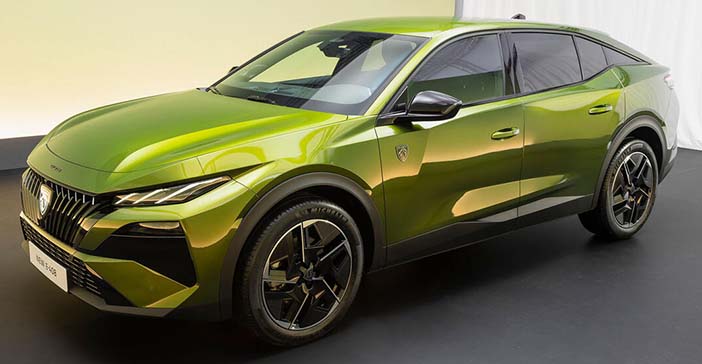
+++ The PEUGEOT 408 has been updated, bringing a slick new look and a swathe of technological tweaks. The revised styling brings it into line with the new 308. The main-beam headlights are set lower on the front end than previously, making a new ‘three-claw’ daytime running light signature the focal point of the design. At the rear end, the ‘Peugeot’ script is backlit, in a first for the brand. The powertrain offering remains the same as previously, with two hybrid options and one electric set-up. The entry-level hybrid and the electric e-408 are the same as previously, although the latter’s range is improved by two miles, to 450 km, thanks to the fitting of more aerodynamic underbody cladding. From this summer, the e-408 also gains Plug & Charge functionality. This means that when a charging cable is connected to the car at a public charger, the car will automatically authorise payment for the electricity from the driver’s Free2Move app account. This removes the requirement to manually tap or insert a card into the machine, making the process of charging more convenient. Peugeot said the feature is already available at 15.000 chargers across Europe (focused on arterial roads) and will “expand rapidly”. The 408’s plug-in hybrid powertrain, meanwhile, has had its electric-only range improved by three miles and its total output boosted by 15 hp to 240 hp. +++
+++ TOYOTA ’s already large corporate umbrella is expanding to make room for a fifth brand. Just months after Century was spun off as a standalone marque, Gazoo Racing is also becoming a distinct entity. The world’s largest carmaker has long hinted at a clearer separation between Toyota and GR models, and it’s now formalizing those plans. Going forward, Toyota Gazoo Racing will be known simply as Gazoo Racing, reverting to a name that traces its roots back to 2007. Based on a previously outlined hierarchy, GR sits above the core Toyota brand and the entry-level Daihatsu but below Lexus and the newly founded Century. The latter is now its own entity as well, aspiring to take on Rolls-Royce and Bentley. Even before the official announcement, we knew this day would come. When the GR GT debuted a month ago, there were no Toyota badges inside or out. Since then, we’ve learned the V8 supercar won’t even be sold at Toyota dealerships, instead being offered through select Lexus showrooms. As you can imagine, Gazoo Racing won’t be limited to the GR GT. If the MR2 is indeed making a comeback, it’s also likely to forgo the Toyota badge. A new Supra, this time likely without BMW ties, has already been confirmed, and it, too, would fit perfectly within the GR line-up. It would make sense for a next-generation 86 to serve as Gazoo Racing’s entry-level model. GR will continue to live up to the “Racing” part of its name by competing in top-tier motorsports, including WRC. Additionally, the newly formed brand will cater to “customer motorsports using production vehicles”. That statement gives us hope for homologation specials and performance cars in general. While the new twin-turbo 4.0-liter V8 will be exclusive to the GR GT, lesser models are expected to use Toyota’s new 4-cylinder engine. The turbocharged 2.0-liter unit, codenamed “G20E”, is rated at more than 400 horsepower. This four-pot could become the backbone of the GR division, as it won’t be limited to front-engine applications. The GR Yaris M concept features a mid-mounted layout, fuelling rumours of an MR2 revival. As if that weren’t exciting enough, U.S. dealers have allegedly received a sneak preview of a reborn Celica. Add the Yaris and Corolla hot hatches to the mix, and the GR portfolio could look mighty impressive before the decade’s end. That’s not all. Remember the FT-Se concept with dual motors and all-wheel drive? The fully electric sports car could arrive after 2026, and it wouldn’t be the only electric performance vehicle within the Toyota empire. The LFA concept won’t have a combustion engine when it eventually arrives. +++
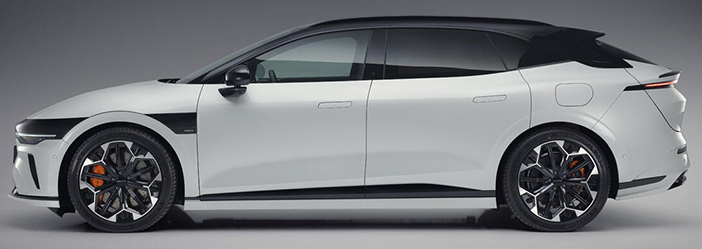
+++ ZEEKR has launched the sleek 7GT in Europe. First revealed last year in its home market of China (there it carries the 007 GT nameplate) but now launched in EU-spec at the Brussels motor show today, the electric estate is 4.817 mm long, 2.070 mm tall and 1.456 mm wide, making it a rival for the likes of the Volkswagen ID.7 and Hyundai Ioniq 6. However, like compatriot brands, it has been priced to significantly undercut those rivals, starting at €45.990. It tops out at €57.490. Where Zeekr also believes it can also win votes with continental buyers is with its design and dynamics. While it is built in Hangzhou, China, it has been designed in Europe and engineered for European roads, the brand says. The 7GT, which sits on parent Geely’s PMA2+ platform, is available in three guises: Core rear-wheel-drive, Long Range rear-wheel-drive, and Privilege all-wheel-drive. Electricity is drawn from either a 75 kWh (for the entry spec) or a 100 kWh battery pack. The 7GT offers a top end range of 660 km. The 7GT is based on an 800V architecture which allows charging speeds of up to 450kW. This means a 10-80% top-up can be achieved in just 13 minutes, via a relevant charger. With its most potent AWD set-up, the 7GT gets 645 hp and can hit 100 kph in just 3.3 seconds, with a top speed rated at 210 kph. Inside, the cabin is centred around a 16 inch infotainment screen. Ahead of the drive sits a 13 inch instrument cluster and a 35 inch head-up display. Luggage space is rated at 456 litres. While timings have yet to be officially confirmed, the 7GT is expected to hit European shores from late summer. +++