
+++ DACIA has put its plans for a third C-segment model on ice to focus on developing its new line of electric cars, including the next-generation Sandero. The firm began its push into Europe’s biggest market (often referred to as the C=segment) in 2024 with the launch of the Nissan Qashqai-sized Bigster and is soon to expand its presence in the category with the closely related, estate-shaped Striker. This move into larger cars has been a highly successful one: the Bigster ranked as Europe’s best-selling C-SUV in the second half of last year and Dacia anticipates that the segment will account for a third of its sales by 2030. However, with the firm now committed to launching 4 new EVs by 2030 (beginning imminently with the new Spring), it has scrapped plans to add a third petrol-powered C-segment model. The Striker was originally planned to be the second of these 4.5 meter-long models, with the closely related third entry due to follow next year. But now Dacia CEO Katrin Adt has poured cold water on the prospect of new mid-sized petrol cars in the immediate future, citing EVs and smaller cars as the priority. “We have a very successful entry with the Bigster, we see the potential for the Striker and currently we don’t have any other plans”, she told when asked for an update on the next car. “We are a brand with not so many products, we are concentrating on the next generation of Sandero etc, so currently there is nothing to declare”. Dacia hadn’t given any details of what the new car would have looked like. Possible candidates included a sleeker take on the Bigster to rival the Peugeot 3008 and a lower-slung version of the Striker that would have been a more direct rival to the Skoda Octavia. The next new car Dacia launches is instead expected to be the new Sandero, which will offer a ‘multi-energy’ powertrain line-up. The petrol version is expected to continue on the Renault Clio-derived CMF-B platform, while the EV will use the related RG-EV architecture from the Renault 5 E-Tech. +++
++ HYUNDAI ’s global sales fell below 300.000 vehicles in August for the first time in more than 4 years after its first full-scale strike in a decade disrupted production. The setback also sharply narrowed the sales gap between Hyundai and smaller affiliate Kia. Hyundai said that global sales dropped 14.2 percent year on year to 288.574 vehicles. Domestic sales plunged 41.1 percent to an 11-year low of 34.333 units. It was Hyundai’s first monthly domestic tally below 40.000 since February 2020, when the Covid-19 pandemic began disrupting production and demand. Kia, meanwhile, increased global sales by 5 percent to 266.675 vehicles, driven by a 7.4 percent rise in overseas sales to 225.413 units. Its domestic sales fell 7.6 percent to 40.213, but still exceeded Hyundai’s by nearly 6.000 vehicles. The 2 automakers also diverged in the key US market. Hyundai’s sales slipped 1.9 percent to 94.612 vehicles, while Kia edged up 0.9 percent to a record 83.793 for August. Their combined US sales fell 0.6 percent to 178.405 vehicles, marking the first monthly decline since April. Industry officials attributed much of Hyundai’s slump to an estimated production loss of 55.000 vehicles caused by the labour union’s first full-scale strike in 10 years. A dispute over wages, performance bonuses and an extension of the retirement age led to 60 hours of walkouts and 120 hours of production disruptions this year. Workers staged 30 hours of strikes in August alone, including a full-day walkout on August 21. “Hyundai suffered from sluggish demand across key markets, excluding the US, compounded by the impact of labor strikes”, Mun Yong-kwon, an analyst at Shinyoung Securities, wrote in a report. “Kia, on the other hand, is benefiting from a strengthened electric vehicle and hybrid lineup in Europe and North America”. Hyundai’s labor union voted Tuesday to accept a tentative wage agreement, ending the dispute. The deal won support from 61.55 percent of participating union members. With the strike over, Hyundai plans to ramp up production of key new models in an effort to regain sales momentum during the remainder of the year. Its refreshed lineup includes the Grandeur, the Avante (sold overseas as the Elantra) and the Tucson. The new Avante received more than 10.000 preorders in Korea on its first day, while the redesigned Tucson, the model’s first full change in 6 years, is scheduled for launch in the 4th quarter. Hyundai is particularly counting on the new Tucson to bolster its performance in the US. The Tucson remained Hyundai’s best-selling model there in August, with 21.197 units sold. It was followed by the Elantra with 17.747 and the Santa Fe with 13.512. Industry sources attributed the Tucson’s popularity to strong demand for its hybrid version and its broad appeal as a family vehicle. Since its US debut in 2021, the Tucson Hybrid had recorded cumulative sales of 233.793 units as of early 2026, making it Hyundai’s best-selling hybrid model in the country. “Hybrid demand remained strong, helping electrified vehicles reach 34 percent of total sales and hybrids achieve a record share,” Hyundai North America president and CEO Randy Parker said in the company’s monthly sales release. +++
+++ The Volkswagen Group recently announced plans to eliminate 50 percent of their model lineup by 2035. As part of this effort, the company will reduce overlap and only focus on its “most compelling vehicles”. Shortly before the drastic cuts were confirmed, a report emerged that Volkswagen was planning to drop SEAT . The brand was rumoured to be “phased out in an orderly and cost-efficient manner” by the end of 2029. While automakers typically don’t respond to leaks or rumors, Seat felt compelled to say something. Unfortunately, it’s not the definitive answer customers or fans are looking for. Without further ado, Volkswagen Group CEO Oliver Blume said “Seat has an important role to play in the future of the Volkswagen Group. The company has demonstrated its ability to transform, with a strong industrial base in Martorell and the remarkable development of Cupra”. However, he added that “we need to remain flexible and adapt our brand and product strategies to regulation, market conditions and what our customers demand”. The automaker said this means they’re “keeping all options open for the Seat brand”. They added the company has a clear product roadmap and this will result in the introduction of new and updated models that were previously planned. This includes mild-hybrid versions of the Arona and Ibiza in 2027. After that point, things get cloudy. As the automaker explained, “Beyond the current product cycle … the future direction of the Seat brand remains under assessment”. While this implies the brand isn’t guaranteed an untimely death, the grim reaper is on speed dial. The brand admitted as much by saying, “As things stand today, increasingly demanding regulation, the economics of electrification and the investment required to develop a new-generation of models make the business case for further investment in the Seat brand increasingly challenging”. That being said, “no final decision has been taken”. However, the company acknowledged several scenarios are possible beyond 2030, including a “gradual phase-out of the Seat brand”. The automaker went on to say that, regardless of what happens, dealers will continue to support customers. Seat added that even if the brand dies, it will continue to live as the company behind Cupra. The firm noted the latter brand continues to grow and will enter the Middle East next year. They went on to reiterate a “longer-term ambition to enter the United States” after hitting the brakes on a planned launch by 2030. The last all-new model built for the Seat brand is the current-generation Leon, which entered the market all the way back in 2020. Since then, minor updates have not been anywhere near enough to maintain interest in the brand, with Volkswagen Group instead hedging its bets on the sportier and more aspirational Cupra brand, which originated as a spin-off of Seat. In Martorell, the province in Spain where over 10.000 people are employed, production capacity could shift to focus more on Cupra. Volkswagen has already been in talks with Chinese brands about utilising its European production space before, so it’s not impossible that a deal could be signed, similar to the one struck by Ford and Geely earlier this year in Spain. +++
+++ A TOYOTA spokesperson told the company has not changed the timeline for the all-new Highlander EV it announced back in July, which targets a 2027 launch, likely within the first months of the year. That framing sits at odds with Nikkei Asia’s report of a fresh delay to “2027 or later”. The all-new Toyota Highlander EV was unveiled in February 2026 and was supposed to enter production this autumn. Then, in July, Toyota said the timeline had slipped by at least “8 weeks” for “final adjustments”. Nikkei Asia reported the start of assembly has moved back again by several months, possibly by as much as a year, pushing the electric SUV’s market launch “to 2027 or later”. The same publication says Toyota has already notified its supplier network about the revised schedule.
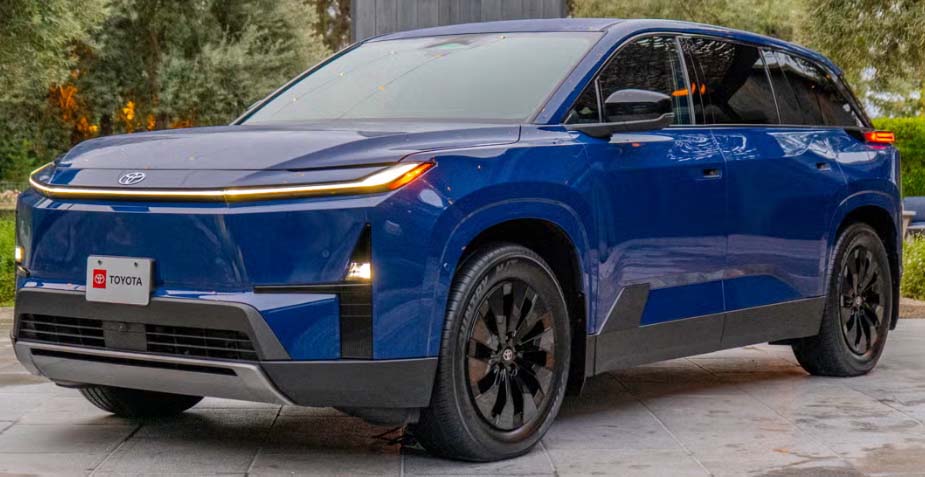
A January start would sit inside the early-2027 window Toyota says it has been working toward all along. A representative for Toyota’s North American division clarified that the extra time is allocated to final checks and quality validation before rolling out full-scale production. This aligns with the automaker’s previous stance in July, when a media preview was postponed. Toyota has insisted that the holdup has nothing to do with EV demand in the US, and points out that its EV sales are “still growing”. The numbers back that up, to a point, as EV sales in the United States fell 21% year-over-year in the second quarter, while Toyota’s own EV deliveries more than tripled over the same stretch. Growing from a small base is easier when the lineup keeps expanding, which is exactly what Toyota has been doing in the region. The Highlander EV shares its bones with the Subaru Getaway, and both 3-row EVs will be built on the same Georgetown line. Subaru confirmed its own delay in July, saying production would slip “to allow sufficient time for final adjustments before launch”. Toyota used almost identical wording, which suggests the 2 car makers are moving in step. Subaru still hasn’t named a new date or said whether deliveries will shift. +++
+++ Chinese automakers have not sold a single connected car in the UNITED STATES yet, and the country’s biggest manufacturers want to make sure that stays permanent. The Alliance for Automotive Innovation sent Congress a letter this week asking lawmakers to lock the door before it ever opens. The group, which represents most major automakers selling vehicles in the US, wants a permanent ban on Chinese connected vehicles, software, and hardware passed before this session of Congress ends. Reuters first reported the push on September 3. The Alliance for Automotive Innovation grumbled that current protections are not enough, pointing lawmakers toward two bills already moving through committee. One is H.R. 10158, the Automotive National and Economic Security Act of 2026, which targets connected vehicle technology tied to countries the government considers national security threats. The other is the Connected Vehicle Security Act of 2026, which would bar any automaker more than 15 percent owned by a Chinese company from selling vehicles in the US. A Senate panel has already approved stricter connected-vehicle rules aimed at Chinese automakers and companies with heavy Chinese ownership, according to the International Organization of Motor Vehicle Manufacturers. None of this starts from zero. Chinese-made vehicles already face a 100 percent tariff entering the US, and existing Commerce Department rules restrict Chinese software and hardware in connected vehicles, including automated-driving systems used by companies like Waymo. What the alliance wants is for those barriers to become permanent law instead of rules a future administration could unwind. Timing matters here. Software restrictions under current Commerce rules are set to begin in 2027, with hardware bans following in 2030, and automakers say it is already swapping out Chinese connected-car technology ahead of those deadlines. H.R. 10158 is still in committee, and no penalties or firm dates have been finalized. The Alliance for Automotive Innovation speaks for the bulk of the US auto industry, including Detroit’s legacy brands and major importers, though it has not published a company-by-company breakdown of who signed on. Its argument leans heavily on national security: Chinese-connected vehicles collect enormous amounts of data on drivers, routes, and infrastructure, and lawmakers worry that data could end up in Beijing’s hands. There is an economic angle too, whether Americans even want Chinese cars. Subsidized Chinese EVs and connected vehicles could undercut US-built competitors on price if the market ever opened, and companies like Geely have shown what that competition might look like. Not everyone in the industry is fighting the restrictions. Polestar, majority owned by Chinese-backed Volvo parent Geely, has said it will not contest the US ban on Chinese-linked connected vehicles, even as the company deals with unrelated legal troubles covered in a recent lawsuit that added a twist to its US operations. Consumer ownership rights are also part of the broader legislative picture moving through Congress this session, an angle covered in earlier reporting on proposed bills aimed at protecting car ownership rights. For now, the fight over Chinese connected vehicles comes down to what Congress does before the year runs out. +++
+++ VOLKSWAGEN boss Oliver Blume has dodged the fate that doomed his predecessors. He secured unanimous supervisory board approval for his Future Plan 2030 overhaul, which targets a 9 percent operating margin by 2030 on roughly 9 million vehicles sold and about €135 billion in capital and R&D spending from 2027 through 2031. The deal came together after marathon overnight talks softened language on 4 at-risk German plants and dropped a controversial plan to spin off the VW brand. The unanimous vote lets Blume avoid the kind of labour clash that has ended the tenures of his recent predecessors, turning an expected showdown into a brief evening meeting. There will be deep job cuts, however: about 50,000 additional cuts stack on 50,000 already planned, tied to margin goals rather than fixed layoffs. Volkswagen is in trouble because China’s overproduction and Europe’s overcapacity are “colliding”. And U.S. tariffs aren’t easing either. In order to reduce costs, Volkswagen plans to cut its model lineup by roughly half by 2035. Plants in limbo are: Emden, Zwickau, Hannover and Neckarsulm’s. Their future remains unresolved. Volkswagen may repurpose its Osnabrück plant for missile-defense components; one template for idle capacity. +++
+++ After a strong start in the United States in 2021 and 2022, along with steady sales in 2024 and 2025, VOLVO sales this year have been off to a bumpy start. First quarter sales in the U.S. fell off a cliff, as they were down by a staggering 32% compared to the same time last year. It picked up slightly in the second quarter, but by the halfway point of 2026, total sales were still down by 12%. Clearly, something needs to be done before it kicks off a downward trend that’s hard to recover from. With that, Volvo’s main action plan is to boost dealer satisfaction with the brand. In the National Automobile Dealers Association’s 2026 Winter Dealer Attitude Survey, dealers ranked Volvo 24th out of 32 brands. The survey was reviewed by Automotive News, and the company promises to do better. Scott Doering, who’s responsible for the automaker’s U.S. dealer network, spoke to the publication about how to regain satisfaction from the groups that sell its cars. “We’re not happy with where we’re performing as a brand. We need to be better at getting a pulse of the issues that are in the dealer network, and that survey specifically is a fantastic mechanism to get a temperature of the network”, said Doering. For that, Volvo will be fixing its sales programs that, according to the publication, have frustrated dealers. “Rather than sort of judging what the offer needs to be up front, we were repeatedly making adjustments, and that just doesn’t work well from a dealer operation standpoint”, added the executive. To make the dealers happy is one thing, but making customers even happier is the ultimate end game. While Volvo’s plan should boost morale among its dealers, it won’t be of much use if the products have issues. The company is aware of some teething issues from some of its models, and Doering vowed to target those. Lessening the number of over-the-air updates would be a start, as the goal now is to get it right the first time. Expect that process to be applied to future Volvo offerings, and if it succeeds, it should help the brand move up in the reliability rankings. In last year’s Consumer Reports reliability rankings, Volvo was in 15th place out of 26 brands. Sadly, the saying of ‘they don’t make ’em like they used to‘ applies to modern Volvos, but at least the company is doing something about it. Volvo also has a slew of new cars coming in that, hopefully, have better initial quality than previous models. That also means the launch of the heavily updated XC60 will be crucial, as it’s easily the brand’s best-seller. It’s not just the improvements on the spec sheet that matter, but rather the entire ownership experience. +++