
+++ HYUNDAI ’s electric vehicle sales in the United States jumped in March as surging oil prices fuelled demand, sharpening its challenge to Tesla’s dominance. According to industry sources, Hyundai’s EV sales in the US rose by approximately 40 percent in March from the previous month. The Ioniq 5 led the growth, with 4.425 units sold, up 37 percent from 3.234 in February. The Ioniq 9 also gained momentum, jumping 79 percent to 905 units from 505 in the same period. As a result, sales of the Ioniq 5 from January to March reached 9.765 units, up 13.4 percent from 8.610 units a year earlier. The Ioniq 9 recorded its highest monthly sales since September. Market watchers say the surge in Hyundai’s battery-powered vehicle sales is largely attributed to higher oil prices, prompting consumers to switch from internal combustion engine vehicles despite the removal of up to $7.500 in federal EV subsidies in September. Acknowledging this shifting trend, Hyundai CEO Jose Munoz said during the 2026 Milan Design Week on April 20, “As fuel costs rise, consumers tend to seek more economical alternatives”. Notably, US gasoline prices have continued to climb sharply after surpassing the $4-per-gallon mark in March for the first time in over 3 years, as supply disruptions rising from the Middle East conflict drive prices higher. According to the American Automobile Association, the national average for regular gasoline increased 30 percent year-on-year to $4.099 per gallon as of Friday. Experts indicate that even if the Iran conflict ends, the era of cheap oil is effectively over, with structurally higher prices likely to persist globally, particularly in the US, reinforcing Hyundai’s push to expand its EV line-up in the region. Kim Pil-su, an automotive engineering professor at Daelim University, said, “In the US, the rapid rise in fuel costs will accelerate the shift toward hybrids and EVs. Despite EVs costing about 1.5 times more than internal combustion models, strong demand for Hyundai’s Ioniq lineup (even without subsidies) highlights a clear change in consumer behaviour”. Hyundai’s share of the American EV market inched up from 5.6 percent to 6 percent year-on-year in the first quarter, excluding Kia. While still well below Tesla’s 54.2 percent, Kim noted the Korean automaker is expanding its presence with a broader EV line-up, in contrast to Tesla’s reliance on a narrower range of models (Model 3 and Model Y) and its longer product cycles. According to Cox Automotive estimates, despite its market-share stronghold, Tesla’s US sales fell in the January-March period, marking a third consecutive year of first-quarter declines. The EV maker, which sells only battery-powered vehicles, sold 117.300 vehicles, its lowest quarterly total since late 2021 and an 8.4 percent drop from a year earlier. By contrast, Hyundai and Kia also saw US EV sales drop 21.6 percent to 18.086 units. Strong hybrid demand helped to offset the decline, with hybrid sales jumping 53.2 percent to 97.627 units and lifting total eco-friendly vehicle sales 33.3 percent to 115.713 units. Eco-friendly models accounted for 26.8 percent of their combined sales. Meanwhile, Hyundai is ramping up local production to strengthen its position in the US eco-friendly vehicle market. The company aims to raise its US production share to over 80 percent by 2030, with its Georgia plant set to reach an annual capacity of 500.000 units by 2028 and assemble 10 models, including hybrids and EVs. +++
+++ INEOS AUTOMOTIVE has ruled out building another vehicle “from the ground up” after the Grenadier and instead will lean on technology partners to expand its model range with smaller 4x4s, CEO Lynn Calder has said. The British company will launch the delayed Fusilier range-extender “probably by 2028”, Calder told at a Siemens event looking at the future of the car industry. 2 other models are planned after the Fusilier, she added. The new models won’t be based on the Grenadier, which launched the Ineos brand in 2022 and plugged a gap in the market for rugged 4x4s left by the demise of the original Land Rover Defender. “We’re not building any other cars from the ground up, like we have with the Grenadier”, said Calder. “Now for us, it is about technology sharing, and once we have got that set, we will be able to bring more models to market in shorter order”. She added: “We don’t plan to change the wheelbase of the Grenadier or do a huge amount more work on the Grenadier platform. So you won’t see a short-wheelbase Grenadier, but you will see a smaller 4×4”. Calder didn’t expand on which partners Ineos would collaborate with, but the brand held talks with China’s Chery to use a range-extender platform from its electrified off-road brand iCar (known as iCaur internationally) for the Fusilier. Chinese brands are leading the development of REx technology while also expanding the market for chunky off-roaders inspired by the modern Defender and Mercedes G-Class. The new iCar V27, for example, packages a 1.5-litre turbo petrol engine with a 33 kWh battery for a claimed electric range of 200 km and an overall range of over 1.000 km. Compared with plug-in hybrids, REx platforms shift the bias towards the car’s electric capabilities while also giving buyers the certainty of range offered by pure-ICE models. “It’s technology that will get us the regulatory benefit but without the inconvenience to our customers, so we can still sell the cars that they actually want to buy”, said Calder. Electrification is one of multiple headwinds against which Ineos has struggled since chemicals billionaire Sir Jim Ratcliffe announced the brand in 2017. After initially targeting production in Wales, Ineos pivoted to France, buying the former Smart factory in Hambach, on the German border, from Mercedes. Hambach has an annual production capacity of 30.000 vehicles, but Ineos has yet to come close to that amid issues including pandemic-related disruption, the temporary loss of its seat supplier Recaro Automotive and increased tariffs on exports to the US imposed last year. “During our short life, it’s more about what hasn’t happened”, Calder told the audience at the event. “It’s been a million times harder than I expected. But what I’ve learned is that you can’t plan for anything; you just have to be extremely agile”. Calder said the company was on a better path after increasing orders by 20% in the first quarter. “That feels pretty good against the backdrop of a pretty challenging market”, she said. “It feels like we are on the road now in the right way with the right car in the right markets”. Ineos doesn’t release sales figures but said it has delivered 35.000 vehicles globally since production started in 2022. Ineos’s biggest market for the Grenadier and related products (primarily the Quartermaster double-cab pick-up truck) is the US, with the country now accounting for 65% of sales, despite the hike in import tax from 2.5% to 15% last year. It aims to avoid that additional tax by producing some models in the US, with a goal to start production there before the end of 2030, said Calder. +++
+++ KIA said its global sales rose slightly from a year earlier, supported by robust demand for its Sportage. The company sold a total of 277.188 units globally in April, up 1 percent from the same period a year earlier, according to the Korean automaker. The Sportage supported the growth, with 51.458 units sold during the 1-month period. This was followed by Seltos with 28.377 units and its Sorento with 22.843 units. Within Korea alone, the company outpaced its bigger rival Hyundai in sales for the first time in 28 years, according to company data. The company became a part of Hyundai Motor Group in 1998. A total of 55.045 units of Kia vehicles were sold domestically, up 7.9 percent from the previous year. Sales outside of Korea, however, backtracked 0.7 percent on-year, to 221.692 units, partly due to the conflict between the United States and Iran affecting sales in the Middle East and the African markets, the company said. “Sales, however continue to remain robust in other areas, excluding the Middle East region, as well as the local market”, a press release stated. “We plan to continue on the sales momentum led by eco-friendly cars, such as electric vehicles and hybrid SUVs”. +++
+++ OPEL will launch a new electric SUV that will be co-developed and produced by fast-growing Chinese start-up Leapmotor in less than 2 years. The move is part of a significant expansion of the partnership between the 2 firms that will include Leapmotor taking over part of a Stellantis (former Opel) factory in Spain. The new model is set to be launched in early 2028 and will adopt an as yet unknown name from the firm’s past. It will be around 4.5 meter long and slot between the Frontera and the Grandland in Opel’s line-up of SUVs, which also includes the Mokka.
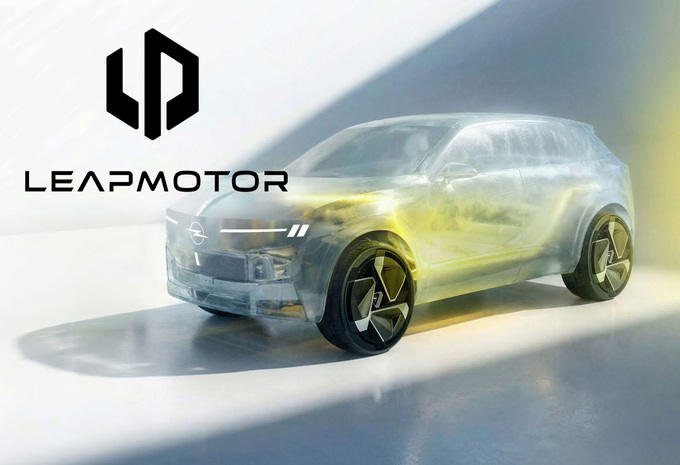
While the SUV will be based on the “core components” of Leapmotor’s electric architecture, Opel CEO Florian Huettl said engineers from the German brand’s Rüsselsheim headquarters will be in charge of the design, on-board experience and chassis engineering. He said “synergy gives us the best of both worlds” of Chinese development speed and European engineering. “We will use the fastest development processes and sequences that have been developed by Leapmotor that are Chinese, so we can be more digital and we have a very clear sharing of responsibilities”, said Huettl. “Opel engineers will lead on everything that relates to drivetrain, steering systems, noise, isolation, packaging, seating, lighting: everything that you know from our brand”. Huettl declined to say exactly which platform the car will be built on beyond “it will be an evolution of something that exists” but the base is set to be Leapmotor’s existing architecture. That will enable the new vehicle to make extensive use of the Chinese firm’s components. Leapmotor has its own digital architecture and produces around 65% of all of the parts used in its own vehicles, a key reason why it is able to develop cars at comparatively low cost. While Opel already offers 3 crossovers / SUVs, Huettl said the size of the market means there is room for another. He said vehicles of around 4.5 meter long form “a very popular spot in many markets, including Germany and the United Kingdom” that “Opel today has not covered yet”, citing models such as the Volkswagen Tiguan and Skoda Elroq. He added: “We see this as a vehicle that gives us additional coverage in the segment”. Huettl wouldn’t give details on where the new EV will sit in terms of price but hinted that “we have been exploring how to make electric mobility affordable, exciting and accessible for our customer base”. While the new SUV will be built on a production line with Leapmotor models, Huettl said it won’t merely be a badge-engineered version of one, insisting that “we are co-developing a car that will be our own machine using some of their components”. Huettl added that the firm is “still looking into the best way” of implementing the infotainment, given Opel uses a completely different operating system from Leapmotor. But he said the new model will “feature interface technology that you will see in other Opel products” and, crucially, “we will use buttons”. Huettl confirmed that the new SUV will take on a name from Opel’s past. He said: “We like the success of the Frontera, including the name. We have made a decision on the name we use, and we will use the recipe of finding something very suitable in our own history”. While he wouldn’t confirm what that name will be, sources have hinted that it won’t be Manta. Opel parent firm Stellantis bought a significant stake in Leapmotor in 2023. As part of that deal, the 2 firms formed Leapmotor International, a joint venture in which Stellantis has a controlling 51% stake, to sell the Chinese brand’s vehicles in international markets. As previously reported by Autointernationaal.nl, the 2 firms have been in talks to expand that partnership and this news marks a significant step. Leapmotor and Stellantis will look to add an extra production line at the Stellantis plant in Zaragoza, Spain, where the Opel Corsa, Peugeot 208 and Lancia Ypsilon are currently produced. The new line will be used for the new Opel SUV as well as the Leapmotor B10. Production of the B10 could begin there this year. Notably, Leapmotor’s energy division has plans to open a new battery factory in Zaragoza with a capacity of around 100.000 packs per year. This will ensure that much of the new vehicle will be produced in Europe, potentially helping the new model to avoid tariffs and to be eligible for electric car incentives. Huettl hinted that the new Opel SUV could be the first of several Stellantis vehicles that are developed in partnership with Leapmotor as the deal expands. He said: “We decided to go and explore this opportunity and make the contribution from a product side to the next step of the development of Stellantis and Leapmotor partnership”. He added: “What I hope to gain from this is improving our development speed, and challenging our own methods, while at the same time leveraging the skills that we have and the experience that our engineers have to make sure that all Opel products that will emerge from this project fulfil all the requirements that we have and that have made our brands what they are. So there will be no compromise whatsoever on the actual features that we need for our customers”. As part of the expansion of the Stellantis and Leapmotor partnership, ownership of the Stellantis plant in Madrid could also be transferred to Leapmotor in 2028. The Citroën C4 is currently built there, but when its planned production run ends in 2028, it could be replaced by a Leapmotor model. +++
+++ RENAULT KOREA reported a sharp sales decline last month, hit by falling domestic demand for the carmaker’s new strategic Filante crossover and sluggish exports of its other models. Renault sold a total of 6.199 vehicles in April, down 40.5 percent from a year earlier, as it posted a steep decline in both Korea and overseas markets amid prolonged economic uncertainty and rising fuel costs, the company said. Domestic sales fell 23.4 percent to 4.025 vehicles, while exports suffered a steeper decline of 58 percent to 2.174 units during the same period. For the local market, the Filante crossover drove its sales with 2.139 units, followed by the Grand Koleos SUV at 1.550 units. However, Filante’s April sales dropped by more than half from a month earlier, raising concerns that the strategic new model may lose its market traction earlier than expected.
Renault Korea started the delivery of the Filante crossover to local customers in mid-March, pinning high hopes on the vehicle as its new revenue driver following the robust success of the Grand Koleos SUV. Exports also remained sluggish last month largely due to the unstable state of international affairs sparked particularly by armed conflicts in the Middle East. Renault Korea’s weak sales performance stands in contrast to the solid performance of its rivals, such as General Motors Korea and KGM, which reported sales growth of 14.7 percent and 6.5 percent, respectively, during the same period, on the back of robust exports. Renault Korea said it will rev up its sales through aggressive promotional campaigns. “We will boost domestic demand in May by running multiple promotional programs, so our customers can experience our fuel-efficient hybrid line-ups”, a company official said. “For overseas markets, Renault Korea will optimize production and shipping schedules to better navigate ongoing global uncertainties”. +++
+++ Chinese electric vehicle makers are rapidly expanding into SOUTH KOREA , with premium EV brand Zeekr emerging as a new challenger to Hyundai’s Ioniq lineup in the premium mainstream segment, while BYD intensifies price competition against mass-market models from Kia. On Friday, Zeekr Korea celebrated its debut, with the opening of its brand showroom in Gangnam, Seoul, attended by key officials, including Zeekr Korea CEO Lim Hyun-ki, Zeekr International Chief Operating Officer Jeff Cao and Zeekr International CEO Chen Yu. The first model to spearhead Zeekr’s entry into the Korean market will be the midsize 7X, reflecting strong local preference for SUVs. Slated for launch in the later half of this year, the 7X will be a facelifted version first introduced outside China. The 7X is built on its parent company, Geely’s 800 volt Sustainable Experience Architecture platform, which supports Zeekr’s entire lineup from compact to large vehicles. The 7X highlights ultrafast charging (capable of going from 10 percent to 80 percent charge in approximately 10.5 minutes) along with a driving range of up to 615 kilometers under European WLTP standards and an advanced intelligent software architecture. Given the 7X’s segment and price range estimated between 50 million won to 60 million won, the closest competitor is likely to be Hyundai’s Ioniq 5. This battery-powered vehicle sold over 10.000 units in Korea last year as the brand’s bestselling EV. Meanwhile, BYD Korea, following its successful debut last year, is creating pressure from the opposite end of the market. Leveraging strong price competitiveness in the mass-market EV segment, BYD is emerging as a direct challenger to Kia’s EV lineup. The BYD Atto 3 competes with the Kia EV3, while the BYD Seal targets the Kia EV6. The BYD Dolphin hatchback is positioned against models such as the Kia Niro EV. In the entry-level EV segment priced around the 10 million won to 20 million won range, the BYD Seagull is also expected to face off against the Hyundai Casper Electric (sold as Inster in Europe). An industry source said, “Zeekr and BYD are showing strong commitment to penetrating Korea’s EV market, which has long been dominated by Hyundai and Kia”. “Executives at their Korean operations are negotiating more competitive pricing for Korea than in other Asia-Pacific markets to attract local consumers. Backed by advanced EV technologies, once they secure an initial customer base, the brands could benefit from strong customer lock-in and expand their market share in Korea”, the source added. According to the Korea Automobile & Mobility Association, 220.177 EVs were newly registered in Korea last year. By automaker, Kia ranked first with 60,609 units sold, accounting for 27.5 percent of the market, followed closely by Tesla with 59.893 units, or 27.2 percent. Hyundai came in third with 55.461 units, representing 25.2 percent. Notably, sales of Chinese-made EVs surged 112.4 percent from a year earlier to 74.728 units, accounting for a 33.9 percent market share. The sharp increase came amid rising imports of China-produced Tesla Model Y, along with the expanding presence of brands with China-based production operations, such as BYD and Polestar. +++
+++ TESLA set a record for the highest monthly sales in South Korea’s imported car market last month. With over 10.000 units sold of its Model Y alone, it became the first in the imported car industry to achieve the milestone of “10,000 monthly sales for a single model”. According to the ‘April Import Passenger Car Registration Data’ released by the Korea Automobile Importers & Distributors Association (KAIDA), Tesla sold 13,190 units last month, maintaining its first-place position for 3 consecutive months. This is the highest monthly sales figure ever recorded by an imported car brand. Tesla had previously sold 11.130 units in March, becoming the first imported car brand to surpass 10.000 monthly sales, and it broke its own record just one month later. Following Tesla were BMW (6.658 units), Mercedes-Benz (4.796 units) BYD (2.023 units) and Volvo (1.105 units). BYD secured the 4th position in brand sales for 2 consecutive months, following March. Tesla’s growth was also notable when looking at individual models. The Model Y sold 10.086 units in April alone. This marks the first time a single model from an imported car brand has surpassed 10,000 monthly sales. The Tesla Model 3 followed with 2.596 units, taking second place, while BMW’s 5 Series secured third with 1.887 units. The Mercedes-Benz E-Class (1.677 units) and BYD Dolphin (800 units) rounded out the top-5 in model-specific sales. The overall imported car market has also expanded due to Tesla’s impact. New sales of imported passenger cars in April reached 33.993 units, a 58.1% increase compared to the same month last year. Of these, new registrations of electric vehicles accounted for 53.9%, or 18,319 units. With ongoing high oil prices due to the recent Middle East war, the number of consumers showing interest in electric vehicles continues to grow. +++
+++ VOLKSWAGEN is working on an uprated ‘Clubsport’ variant of the new ID.Polo GTI, with more power and a system that will simulate the power delivery and gearchanges of its ICE hot hatches. Insiders suggest that it will take output from 226 hp to around 286 hp while gaining a fully mechanical limited-slip differential in place of the existing BorgWarner active unit. Now, dynamics chief Florian Umbach has confirmed further details. “We are working on something”, he said. “There is certainly more peak power that we can find from the motor and battery hardware that we have and more torque that the front axle could handle also. There is clear potential”. Umbach added that Volkswagen is also developing “a similar kind of paddleshift power delivery that the Ioniq 5 N from Hyundai has”. “This is simply a software thing”, he explained. “It’s all about motor control and an audio soundtrack to match”. The ID.Polo’s digital instrument panel can be customised on the fly to mimic that of the Mk1 Golf, and it’s possible that the simulated combustion engine and gearbox could likewise imitate the seminal GTI’s power delivery. However, Umbach said: “These are the kinds of things that the executive board will only let us explore if the GTI is a commercial success, of course. If people respond to this car as it is, we can really take it to the next level”. In keeping with its forebears, the new Clubsport model is also expected to have a more focused chassis set-up, sitting lower than the regular ID.Polo GTI, as well as more aggressive styling. +++
+++ China’s carmakers are hunting for their own YARIS MOMENT ; the kind of locally tailored breakthrough that helped Toyota conquer Europe, as they race to turn booming exports into lasting overseas growth. After early attempts that largely involved exporting China-designed cars with minor tweaks, automakers are now re-engineering vehicles from the ground up for foreign buyers, driven as much by fierce margin pressure at home as by opportunity abroad. China’s overcrowded domestic market has been locked in a bruising price war for years, leaving many manufacturers struggling to make money. Overseas markets, by contrast, offer room to grow (and to charge more) if Chinese brands can persuade consumers they understand local tastes. Major carmakers including BYD, Chery, Changan, SAIC’s MG brand and FAW’s premium Hongqi all have models in the pipeline designed specifically for export markets, from small hatchbacks for Europe to pickup trucks for Australia and Mexico. At home, Chinese automakers cram cars with technology and sell them cheaply to compete. In Western markets such as Europe, they can often sell at double the price and still undercut established brands. At the Beijing Auto Show in late April, Hongqi unveiled a small “global SUV” targeted for sale in 80 countries. But the vehicle was primarily designed for urban European buyers, design chief Giles Taylor said. “That’s the reason why that car exists”, Taylor said. BYD’s Dolphin G hatchback was designed specifically for Europe and will launch in June. Stella Li, the electric vehicle maker’s No. 2 executive, said the model was critical because hatchbacks account for more than 40% of new car sales in parts of southern Europe; a segment that barely exists in China. “If we don’t have the right car in this sector, we lose”, Li said. For many Chinese carmakers, exports are a matter of survival as analysts predict consolidation will thin an industry crowded with more than 100 manufacturers. Vehicle sales in China are expected to remain flat or decline. That excess capacity has already helped make China the world’s largest vehicle exporter, overtaking Japan in 2024. Gartner analyst Pedro Pacheco described the push to design cars for export as Chinese automakers’ “Yaris moment”, referring to Toyota’s Yaris, designed in Europe for European buyers and credited with helping the Japanese carmaker gain a foothold on the continent after its 1999 launch. Dan Hearsch, global co-leader for automotive at consultancy AlixPartners, said globally relevant models are “the Holy Grail for automakers”, because scale lifts margins. In Britain, Chinese brands doubled their market share in the first quarter to 14.2%. Across Europe, they nearly doubled their share last year to 6% from 3.5% in 2024, according to consultancy Inovev. Chinese automakers’ rapid export growth risks stalling if it remains heavily reliant on vehicles designed for Chinese tastes. “In China, they’re quite experimental with expressions of colour” and material, said Alfonso Albaisa, Nissan’s senior vice president for global design. Nissan’s N7 EV in China features options, including a “pinkish mauve” interior, unlikely to resonate elsewhere. The average Chinese car buyer is also far younger than consumers in Europe or the U.S., shaping design choices and optional features, said Francois Roudier, secretary general of the International Organization of Motor Vehicle Manufacturers. For younger Chinese consumers, “karaoke in the car is certainly important”, he said. “But for my dad, he’s 95, no”. Analysts say matching regional preferences will increasingly determine success as European rivals respond to Chinese competition. “Just competing on price works first time around”, said Phil Dunne, a managing director at consultancy Grant Thornton Stax. “But the Europeans are fighting back on cost”. He added: “The Chinese need to take it to the next level”, by designing cars in Europe for Europeans. For Europe, that also means going smaller. Chery, China’s biggest vehicle exporter, is heavily skewed towards SUVs, which accounted for 2.3 million of the 2.8 million vehicles it sold globally in 2025. But Ivan Dulanovic, head of design at Lepas (Chery’s new international brand) said a Europe-focused hatchback, the Lepas 2, is in development. “We have recognized a need in the market”, he said, “and we are tackling that”. SAIC’s MG also plans an ‘2’ hatchback for Europe where consumers “don’t like huge cars”, design chief Jozef Kaban said. BYD aims to roll out more Europe-specific models and has told investors it wants half of sales to come from overseas by 2030. Pressure to grow overseas sales is also reshaping launch strategies. Jetour, an SUV brand owned by Chery, designed its first fully electric car, the compact TX, with European buyers in mind, said Jetour International President Ke Chuandeng. Its upcoming F700 pickup will target markets such as Australia and Brazil and will launch in Mexico ahead of China, he said. Chery will also bring a plug-in diesel hybrid pickup to Australia this year, said local managing director Lucas Harris. “We’re not kind to our ‘utes’ “, Harris said, using the local name for pickups. “So if it can survive here, it could probably survive anywhere”. State-owned Changan is developing a range of hatchbacks, compact SUVs and pickups for Europe and other markets, with launches expected from late 2027, design chief Klaus Zyciora said. “The competition is so fierce and the investments are very high”, Zyciora said. “So you need to make sure you get enough scale” +++