
+++ CHINA has come out on top of a recent survey of 5 countries in terms of respondents who can imagine purchasing an electric car, signaling the nation’s openness to electric mobility. The Mobility Study 2020, conducted by German technology company Continental, measured attitudes toward mobility in Germany, France, the United States, China and Japan, and reported that 86 % of Chinese respondents can imagine buying an electric car. By comparison, only 35 % of respondents in Germany and 28 % in France said they could imagine buying an electric car. Andreas Wolf, CEO of Vitesco Technologies and a member of the executive board of Continental, said that China is an important market for electric vehicle development. The study cited that electric mobility is a key concept for making private transportation more sustainable in the future. However, sales volumes of electrically powered vehicles in nearly all parts of the world are below expectations. The survey showed that range anxiety and a lack of charging infrastructure are two of the main reasons that people do not buy electric cars. For Chinese respondents, the most frequently cited argument against electric cars(the lack of charging stations) accounted for 63 %, the survey showed. China has sought to address this issue by including the construction of charging piles for electric vehicles in the country’s initiative on new infrastructure development released in May 2020. Statistics from the China Electric Vehicle Charging Infrastructure Promotion Alliance show that by the end of 2020, there were 1.68 million charging piles in China. The Continental survey showed that 59 % of Chinese respondents are concerned about the limited range of electric cars and 44 % of them worry about the need for extensive pre-planning and breaks for long-distance trips. The higher price of electric vehicles was the 4th factor in buying an electric car in China, at 19 %. Misgivings are evenly distributed from an international perspective, with the 4 main issues the same in all 5 countries, the study showed. “In all the countries studied, policymakers are attempting to steer buyers toward alternative drive systems by means of monetary and non-monetary incentives”, the study said. All the countries in question offer preferential policies for customers to buy electric vehicles. In China, government subsidies that were set to expire by the end of 2020 have been extended to late 2022. In Germany, subsidies have been increased as part of a stimulus package to alleviate the negative effects of the coronavirus on its economy. The survey shows, however, that the issues are more structural in nature and are unlikely to be overcome with subsidies in the long term. As of the end of 2020, there were 4.92 million new energy vehicles in China. They account for more than 40 % of NEVs worldwide, according to the Ministry of Public Security of China. Last year, China sold 1.36 million NEVs, an increase of 10.9 % compared with 2019. The number is expected to exceed 5 million by 2025. +++
+++ CHIP SHORTAGES in the auto industry may remain in the first half of the year, with semiconductor makers having few immediate solutions other than raising prices, according to experts. Netherlands-based chipmaker NXP and Japan’s Renesas Electronics said they were seeking to increase prices in the wake of the shortage and as raw material costs climbed. Swiss rival STMicroelectronics is also considering a similar move. Taiwan Semiconductor Manufacturing, the world’s largest contract chipmaker, said it will prioritise the production of auto chips if it is able to further increase capacity, but added that its current production capacity is full. Yu Kai, founder and CEO of a Beijing-based AI chipmaker Horizon Robotics, said the production capacity of automotive chips usually needs to be planned about a year in advance. He added, the entire supply chain is expected to recover by mid-2021. Chip shortages started to emerge in China in late December as a result of the unexpected recovery in the auto market. The rising demand for electronic gadgets because of lockdowns across the globe, and pandemic-caused plant closures have exacerbated the issue. Stephan Wöllenstein, CEO of Volkswagen Group China, said the carmaker’s production in China was cut by around 15.000 vehicles in 2020, because suppliers could not offer enough chips. He said the issue will continue for a while through the first quarter, and the situation will become clearer in April. Chen Shihua, a deputy secretary general of the China Association of Automobile Manufacturers, said the shortage may continue to affect car manufacturers in the second quarter of this year, based on a poll of carmakers in the country. The problem is not limited to China. Volkswagen warned late last year that it must adapt production at North American and European locations as well. General Motors, Honda, Daimler, Ford and many others have idled production lines and furloughed employees. The production of more than 280.000 vehicles has been put on ice, according to data provider AutoForecast Solutions. IHS Markit forecasts that as many as 500.000 vehicles could ultimately be affected. The shortage could lead to more than $14 billion in lost revenue in the first quarter and some $61 billion for the year, advisory firm AlixPartners predicts. In an effort to avoid a repeat of the crisis, Volkswagen said it was considering bypassing its large suppliers, such as Continental, to develop closer relationships with chipmakers themselves. Some carmakers may decide to take more manufacturing in-house as the crisis raises concern that the car industry will be more reliant on chips as vehicles become electric, smart and autonomous. Although electric vehicles only make up around 3 % of global car sales, the value of the semiconductors in them is roughly 3 times more than that of a gasoline car, according to IHS Markit. This would be an even more disturbing problem for China, which is the largest market for both gasoline and new energy vehicles. “This episode of chip shortages has once again shown how urgent and necessary it is to have autonomous and controllable supply chains”, said Chen of the CAAM. The Chinese mainland’s integrated circuit industry has seen rapid growth, with sales revenue totaling 653.2 billion yuan ($100.8 billion) in 2018; up 20.7 % year-on-year, according to the China Semiconductor Industry Association. Yet the country is over-reliant on foreign companies, especially for high-end chips. China has a deficit of around $200 billion in the integrated circuit industry, said Yue Xiekang, deputy president of the CSIA. So far, Horizon Robotics is the first company on the Chinese mainland that can produce auto-grade AI chips. Its rivals include Nvidia and Mobieye. Statistics from IC Insights show that $143.4 billion was spent on integrated circuits on the Chinese mainland in 2020, of which 36.5 % were sales of locally made chips. Those made by Chinese mainland companies were worth $8.3 million; less than 6 % of the total. +++
+++ DAIMLER said a strong 4th quarter helped it post better-than-expected 2020 group operating profit and that it was optimistic for 2021. The Stuttgart-based maker of Mercedes-Benz cars and trucks warned, however, that current shortages in semiconductors and Covid-19 disruptions would probably affect the first quarter. Thanks to cost savings and a faster-than-expected recovery in the auto sector, group earnings before interest and taxes (EBIT) for 2020 came to €6.60 billion, above consensus for €5.25 billion, the carmaker said, citing preliminary figures. That is up 52 % from €4.329 billion for 2019. “Given the development of successful cost discipline continued in the 4th quarter and expected good underlying demand, Daimler also anticipates a positive business development in 2021”, the company said. Volkswagen, by contrast, said last week that 2020 profit almost halved due to the pandemic, while BMW said it exceeded expectations by some metrics. Daimler, like its competitors, has faced a bottleneck in the semiconductors after chip manufacturers earlier in the coronavirus crisis shifted production away from the hard-hit auto sector to serve other areas, like consumer electronics. The auto recovery has left companies like Daimler in short supply of the essential components, causing them to halt or slow production. Daimler will publish complete fourth-quarter figures and more detailed 2021 guidance on February 18. +++
+++ DODGE carved out a lucrative niche by democratizing high-horsepower V8s during the 2010s, but it predicts engines like the 392 and the Hellcat face a grim future. Although it will need to adopt electrification sooner rather than later, the firm stressed that its looming shift away from the V8 won’t come at the expense of performance. “The days of an iron block supercharged 6.2-liter V8 are numbered. They’re absolutely numbered because of all the compliance costs. But the performance that those vehicles generate is not numbered”, asserted division chief Tim Kuniskis in an interview. Regulations are currently looser in the United States than in Europe, where emissions-related penalties place the Jeep Wrangler deep into luxury car territory, but the Biden administration is widely expected to announce stricter emissions regulations in the near future. Kuniskis clarified that demand for horsepower remains healthy: Dodge has built over 50.000 Hellcat-powered cars since 2014 and it easily filled the 2.000 available Durango SRT Hellcat build slots. Sister division Ram made 702 units of the 1500 TRX Launch Edition and sold them all in 10 minutes in spite of a $90,265 base price. The 6.2-liter supercharged Hellcat V8 deserves the Nobel Prize in Performance for bringing jaw-dropping horsepower figures to non-exotic cars and ushering in what Kuniskis described as the new golden age of muscle cars. We’ve been here before, though. The muscle car’s first golden age ended abruptly in similar circumstances. “1972 was the beginning of the end of the golden age of muscle cars. They went away for fuel economy, for the oil crisis. They went away for safety. They went away for insurance, and they went away for increasing emission standards. It’s kind of crazy to think about we’re getting close to a similar list of things right now”, he explained. Electrification can help ensure enthusiasts don’t suddenly pivot from a golden age to a dark age. Kuniskis told that he views electric technology as performance 2.0, and that we’ll start seeing battery-powered drivetrains with Hellcat-rivaling horsepower figures as soon as the cost of the components comes down. Kuniskis confirmed Dodge will begin adding electric and plug-in hybrid models to its range in the coming years. He stopped short of revealing the type of technology it will roll out across its line-up, or which cars will get it, but the Durango, the Charger and the Challenger are all due to be replaced in the early 2020s. And, some of the hardware that sister company Jeep uses to build its 4xe powertrain, like an electric motor integrated into an eight-speed automatic transmission and a lithium-ion battery pack, could relatively easily end up in Dodge models. Put another way, the Dodge range will likely look a lot different in, say, 2025, than it does in 2021. Its cars will be quieter, but they’ll still be able to roast their tires, and they’ll continue to be exceptionally quick. “I’m super excited about the future of electric because I think it’s what’s going to allow us not to fall off the cliff. Without that technology, without electrification, this is 1972 right now, and this thing is going to end”, he said. +++
+++ China’s Zhejiang Geely Holding Group says that it and Foxconn are in talks to provide contract manufacturing services to electric vehicle maker FARADAY FUTURE . Geely said in a statement that it had signed a framework agreement to offer technology and engineering support to Faraday Future, and had become a minority investor in Faraday Future’s listing. Faraday Future plans to set up a new base in China and enlist Geely for contract manufacturing services, citing people familiar with the matter. Faraday Future will go public through a merger with Property Solutions Acquisition in a deal valuing the combined entity at $3.4 billion. With the global EV business, dominated by the likes of Tesla, growing at an explosive pace, a flurry of EV makers are rushing to tap the red-hot initial public offering (IPO) market. +++
+++ China’s FAW GROUP , parent of the Hongqi brand, saw its profit rise 6 % year-on-year to 46.7 billion yuan ($7.2 billion) in 2020, becoming the most profitable Chinese carmaker last year. Revenue of the carmaker, which is partner of brands including Audi and Volkswagen, totaled 696 billion yuan in the same year; up 12.7 % year-on-year. It sold 3.7 million vehicles last year; up 7.1 % from 2019. Of them, sales of Hongqi-branded vehicles totaled 200.000; up 100 % from 2019. SAIC Motor, which sold 5.6 million vehicles in 2020, was the country’s largest carmaker by sales. But its estimated profit stood at around 20 billion yuan, less than half of FAW’s profit. Analysts said one of the reasons is that FAW is producing more profitable vehicles including those bearing the Audi marque. In its joint venture with Audi, FAW holds a 60 % stake. The joint venture also produces Volkswagen vehicles, which are popular in China, the world’s largest car market. FAW said its sales goal in 2021 is 4 million vehicles, which are expected to generate revenue of 720 billion yuan; up 3.4 % year-on-year. Its profit in the year will reach 47.7 billion yuan; up 2 % year-on-year. +++
+++ FORD will invest $1.05 billion in its South African manufacturing operations, including upgrades to expand production of its Ranger pickup, the U.S. automaker said. The investments aim to increase Ford’s installed capacity in South Africa from 168.000 to 200.000 vehicles, said Andrea Cavallaro, operations director of Ford’s International Market Group. “It’s the biggest investment in Ford’s 97 year history in South Africa and one of the largest ever in the local automotive industry”, he told an announcement event. Ford joins global carmakers including Volkswagen, Toyota and Nissan in ramping up production in Africa, viewed by the industry as a large, untapped market for new car sales. Around a third of Ford’s local production is sold in South Africa and other sub-Saharan African countries, with the rest exported elsewhere. Ford’s South African investment includes $683 million for technology upgrades and new facilities at its plant in Silverton, a suburb of the administrative capital Pretoria, and $365 million to upgrade tooling at major supplier factories. The plant will also manufacture Volkswagen pickups as part of the Ford – VW alliance. The expanded production will create 1.200 jobs with Ford in South Africa, increasing the local workforce to 5.500 employees, while adding an estimated 10.000 new jobs across the carmaker’s supplier network. Ford also aims to make the Silverton plant entirely energy self-sufficient and carbon neutral by 2024, Cavallaro said. South Africa has big ambitions for its automotive sector, putting it at the heart of attempts to revive economic growth and reduce unemployment via industrialisation. Speaking at Ford’s announcement, South African President Cyril Ramaphosa said the company had already helped to bring 12 automotive component suppliers to the country. “Ford is like a beautiful flower and it has attracted all these wonderful bees that keep coming here”, he said. The government’s plan targets a more than doubling of the industry’s annual production to 1.4 million vehicles by 2035 and raising the proportion of auto components made locally to 60 % from 39 %, supported by investment and tax incentives. The goals have been dealt a blow by the Covid-19 pandemic, however, with both local sales and exports down by around 30 % last year. +++
+++ Ford is cutting 2 shifts at its Chicago Assembly facility due to ongoing automotive silicon shortages. The facility, which produces both the FORD EXPLORER and Lincoln Aviator, will be operating only a single shift next week. The shortage has already forced Ford to idle its Louisville Assembly site twice, halting production of the Ford Escape (Kuga) and Lincoln Corsair. Production was expected to be stalled for only a week earlier in January, but supply did not recover sufficiently to keep the line running. Poor chip availability has plagued automakers since late fall due to increased demand and reduced supply of silicon across multiple industries. In the automotive sector, Daimler, Ford, Honda, Nissan, Stellantis, Subaru and Volkswagen have all been impacted to varying degrees. The lack of supply is the result of both reduced output and soaring demand for consumer electronics during the coronavirus pandemic. Taiwan Semiconductor Manufacturing Co (TSMC), which is the world’s largest contract chipmaker, faced unprecedented shifts in demand last year as customer buying habits changed in response to the pandemic. TSMC said earlier in January that it was operating at capacity to fill orders, promising that it would do its best to re-allocate production to meet automotive demand. In 2020, automotive only accounted only for 3 % of TSMC’s sales; smartphones (48 %) and high-performance applications (33 %) were its largest markets. Automotive OEMs reduced their orders significantly, especially in the second and third quarters of 2020, prompting TSMC to pivot to other buyers. The massive upswing in automotive demand in the 4th quarter proved overwhelming for an already-constrained supply. +++
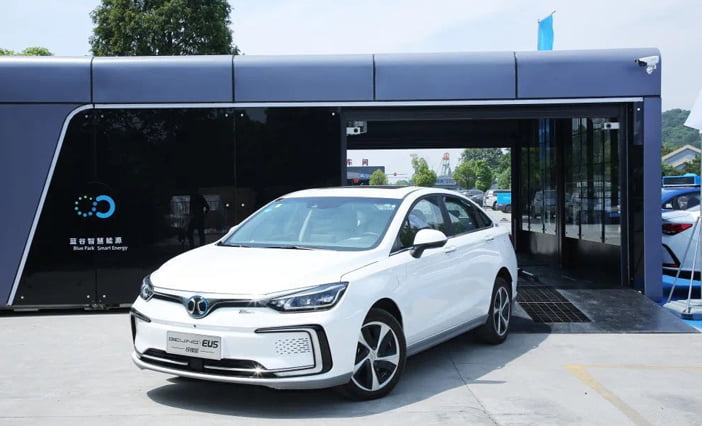
+++ As South Korea accelerates its transition to electric vehicles, the question arises: is there a future for the country’s more than 10.000 GAS STATIONS ? Unlike conventional petroleum- or gas-powered cars, electric vehicles run on electricity, which is relatively price stable and easily accessible. This means drivers can charge their car batteries at home, in public parking lots or elsewhere where charging systems are installed. In the face of a fundamental change to the retail fuel scene, the country’s 4 refineries (SK Energy, GS Caltex, Hyundai Oilbank and S-Oil) are rethinking the role of gas stations. South Korea aims to roll out 1.13 million electric vehicles on the road by 2025; a huge increase from the 120.000 cars in the country as of September last year. It aims to install 500.000 slow chargers and 15.000 rapid chargers during the same period. On the surface, the 4 companies are moving in step with the national new mobility drive, upgrading their pump stations to accommodate electric vehicles. However, the change poses a dilemma for them. The 4 major refineries operate about 10.154 gas stations nationwide. As of October, less than 100 of them are equipped with electric vehicle chargers. The plan is to expand the number to 550 gas stations by 2023. Refineries are slow to migrate to the new mobility era because it runs the risk of a significant erosion in profitability. According to a government survey, 34 % of electric vehicle drivers charge their vehicles at home, just like charging their smartphones overnight, while only 7 % drop by gas stations for a charge. Furthermore, there are thousands of public charging stations to compete against. December 2019 data shows nearly 90 % of all rapid chargers (5.999 out of the then total 6.792) were installed and operated by the Ministry of Environment and the state-run Korea Power Corporation. Their charging rate is set by the ministry. In July, the ministry raised the rate to 255.7 won ($0.23) per kilowatt-hour from 173.8 won per kilowatt-hour. Even if gas stations carve out a niche in this market, there is a limit to the number of vehicles they can service per day. Using a 100 kW rapid charger, it takes about 40 minutes to charge Hyundai Motor’s Kona Electric (the world’s fifth best-selling electric vehicle model last year) to 80 % capacity. Depending on the battery and weather conditions, the charging time could be even longer than 40 minutes. This means a single rapid charger can handle no more than 36 Kona EVs per day. To break free from such limitations, SK Innovation, the parent company of SK Energy is exploring a new business of battery swapping instead of battery charging. On Jan. 21, SK Innovation, the world’s sixth biggest EV battery player as of last year, acquired a 13.3 percent stake in Blue Park Smart Energy, a battery recycling service provider under Beijing Automotive Group. Together with BAIC Group, SK Innovation aims to introduce a battery swap service in China, replacing used batteries with new ones within three minutes instead of charging them for 45 minutes. “Battery swap services, which could overcome the limits of long charging times, is witnessing a growing demand among taxis and ride-sharing providers who have to drive longer distances. Also, the battery swap service divides the ownership of batteries and electric vehicles, so it’s easy to expand to battery rental and reuse services later on”, an SK Innovation official said. GS Caltex is exploring a completely different future for its gas stations: a logistics network for drone deliveries. Its “Energy Plus Hub” outlet, opened in November, has drawn attention for this very concept. Located right in the middle of Gangnam, one of the most expensive districts in Seoul packed with upscale restaurants and designer stores, the station was the first gas station in Korea equipped with a 350-kilowatt rapid charger. On land that costs $22,556 per square meter, the station carved out a huge chunk of space for the 350-kilowatt rapid charger, three 200-kilowatt rapid chargers and four parking spaces. But rapid charging services is not all the outlet is about. In a 90-second video unveiled at CES this month, GS Caltex offered a glimpse into how it will transform the Energy Plus Hub station into a logistics hub for drone deliveries. In the video, drones carrying cargo lift off from the roof top of the Energy Plus Hub station, fly above high-rise buildings and delivering packages to customers. Then, they return to the station and automatically go inside rectangular lockers for recharging. The company has in the past months conducted a public demonstration of drone delivery services in Yeosu, Jeju and Incheon. Company officials said the drone delivery service is part of the company’s efforts to unlock the untapped potential of its gas station network, with outlets occupying strategic locations that are highly accessible and scattered all across the country. +++
+++ Highly automated and flexible assembly lines alongside a consumer-centric strategy have enabled automaker GEELY ’s factory in Guiyang, Guizhou province, to build a unique product portfolio and make inroads in overseas markets, according to a senior manager. The production plant’s first batch of exports (a 7-seat SUV model catering to Filipinos’ demands for spaciousness) was exported to the Philippines in October, said Gu Jiangang, deputy general manager of Guizhou Geely Automobile Manufacturing. “About 1.300 such cars were exported there by the end of last month”, Gu said. “We are also aiming to make a foray into the Middle East in June. Compared to foreign competitors, Geely automobiles will stand out in terms of advanced designs and reasonable prices”, he said. The optimism regarding overseas sales is bolstered by the automaker’s robust and versatile production capability, according to the company. The company’s futuristic Guiyang plant is spread over across 68 hectares. It broke ground in late 2015 and went into operation in April 2018. It contains four major facilities responsible for stamping, welding, assembling, painting and final assembly. “The stamping plant, containing 257 automated machines, has an automation rate of about 75 percent”, Gu said. “Altogether, the entire production line can churn out 45 cars per hour”. A hallmark of the factory is its flexibility in producing different types of automobiles at more or less the same pace, he added. “We are able to manufacture conventional gasoline-powered vehicles as well as cars running on methanol and hybrids. Many Geely factories in the country are designed to produce one specific type of automobile, but we are aiming for a diversified product portfolio from the very beginning at this facility”. To survive and thrive in an industry where technological upgrades, big or small, are being invented and employed rapidly, Gu said the plant has also intensified efforts devoted to research and development, including decoding emerging trends in the market and improving hardware. When the Covid-19 pandemic halted production at the plant for a brief period last year, Gu said more attention was devoted to hammering out details in the design and production of new models, paving the way for the smooth rollout of a new model in June. “Thankfully, the factory began to resume production on Feb 20 and fully returned to normal by March”, he said. Nestled in the picturesque and pristine hills of Guiyang, Gu said the company is envisioning partnerships with colleges in the region to nurture more local talent in the automobile industry. At the moment, there are about 2.500 employees at the plant, with 90 % of them natives of Guizhou province. +++
+++ hen the Hyundai Motor Group revealed its E-GMP electric platform, the company made it clear that it would underpin vehicles from every brand. The Ioniq 5 will be the first, and we’ll see it fully unveiled soon. We’ve also seen spy shots of the Kia crossover that will come soon after. Now there are also spy photos of a GENESIS testing that we believe also uses the platform. I suspect it’s an E-GMP car based on its proportions. It’s a bit tall with a relatively short length. It mirrors that of both the Ioniq 5 and upcoming Kia EV that we’ve seen. It’s definitely a Genesis, though, and not one of the other brands. We can see the signature split headlights at the front, as well as the wide taillights at the rear. The detailed, flowing, spindly wheel spokes are very Genesis, too. We can just make out the tip of the pentagonal grille shared on all Genesis cars. That grille is positioned much lower in the front fascia than most of the brand’s cars, though. Perhaps unsurprisingly, the Genesis EV appears to have the crossover “coupe” shape that luxury automakers love. It’s highlighted by the dramatically upswept window sills on the rear doors. I have no doubt that the vehicle will also have a hatchback rear opening, too. Also interesting are the mirrors, which are extremely thin. They may actually be camera supports like those used on the Audi e-Tron. We doubt they’ll be offered as a standalone feature in the U.S., though, due to regulations here. With the Ioniq 5 being revealed very soon, and the first E-GMP Kia EV debut coming in a few months, I would expect the Genesis to be shown a little after the Kia. We could see its reveal coming in the fall as the 2021-2022 auto show season starts up. Because this Genesis will be using the E-GMP platform, it will likely have a pair of electric motors providing a rear-drive-biased experience. Hyundai has claimed that E-GMP cars could make enough power to provide 0-100 kph times of 3.7 seconds. The platform also supports 800 volt fast charging at a rate of 350 kW. +++
+++ HONGQI , a car brand under China’s leading automaker FAW Group, posted rising sales in January. The brand registered more than 32.500 units in vehicle sales last month; up 158 % year-on-year, according to FAW Group. Hongqi, meaning “red flag”, is China’s iconic sedan brand. Established in 1958, the brand has been used as the vehicle for parades for national celebrations. It registered a new sales record in 2020, with the number of vehicles manufactured and sold both exceeding 200.000 units. Founded in 1953 in the northeastern city of Changchun, capital of Jilin province, FAW Group is regarded as the cradle of China’s auto industry. +++
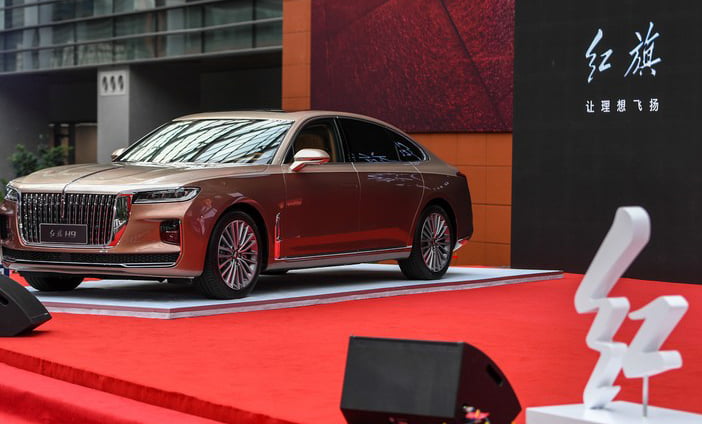
+++ Despite the Covid-19 pandemic, China has bucked the trend to become the only country among mainstream automotive markets to experience growth last year, and LUXURY BRANDS were the only segment in the nation that witnessed a sales surge. Statistics from the China Passenger Car Association showed that a total of 2.53 million luxury vehicles were sold in China last year; up 14.7 % from 2019 and grabbing a 13 % of market share among total passenger vehicles. This also marked the third consecutive year for luxury brands to register growth in the wake of downward pressure in China’s overall automotive market. Data showed that in 2018 and 2019 luxury vehicle sales experienced growth of 17.6 % and 11.7 % respectively. Among the brands, BMW, Mercedes-Benz and Audi all posted new record sales numbers since entering the Chinese market, becoming core drivers for growth in the luxury vehicle market. German carmaker BMW sold 777.400 vehicles (including BMW and Mini branded) last year, rising 7.4 % from 2019. Mercedes-Benz, delivered a total of 774.400 new cars; an increase of 11.7 % year-on-year. Audi set a sales record in China in 2020 with a total of 726.300 vehicles sold; up 5.4 % year-on-year. In terms of second-tier luxury brands, Lexus and Porsche continued the upward trend. At the same time, Ford’s premium arm Lincoln also made a foray into China and entered the second-tier luxury market. As the biggest dark horse of the luxury brands, China’s iconic sedan brand Hongqi, meaning “red flag,” registered a new sales record in 2020, with the number of vehicles manufactured and sold both exceeding 200.000 units. +++
+++ MERCEDES-BENZ Korea has requested a Seoul court to cancel a multibillion-won fine imposed on the company for manipulating diesel emissions in the country, judicial sources said. The German carmaker filed a lawsuit against the environment ministry in October with the Seoul Administrative Court, seeking the cancellation of a 77.6 billion-won ($69.3 million) fine over its emission manipulation, the sources said. Details on the upcoming hearing schedules have yet to be disclosed. As for the ongoing proceedings, Mercedes-Benz Korea said it has “cooperated fully with the ministry and will continue to do so”. In May, the ministry imposed the fine, the biggest of its kind, on the automaker for installing test-cheating software in its 12 diesel models, including the C 200d and the GLC 220d 4Matic. A total of 37.154 units of such models were sold between 2012 and 2018. The company used the illegal software designed to produce false results during vehicle emissions testing and turn off the emissions reduction system during actual driving, flouting the country’s environmental laws, the ministry said. +++
+++ NISSAN will cut around 160 office-based jobs in Britain as the Japanese company faces reduced sales amid plans to turn around its performance. Last week, it committed to its northeast England factory and will source more batteries locally to avoid tariffs on electric cars after the UK’s trade deal with the EU, calling the Brexit agreement an “opportunity” for the Sunderland site. Nissan opened what is now Britain’s biggest car plant in 1986 and made nearly 350.000 vehicles there in 2019. Globally it has faced a torrid time in recent years and is cutting production capacity, model numbers and operating expenses. “We continually adapt our business to maximize efficiency in line with market conditions and we are currently in consultation with some of our office based staff”, it said in a statement. +++
+++ Every once in a while, automakers are forced to issue what’s known as a stop sale on vehicles in their fleets or sitting on dealership sales floors and lots. It’s usually either a safety- or emissions-related issue that causes the sales pause, and it’s almost always for brand-new, never-before-sold cars and trucks. Then, PORSCHE ’s current stop sale on vehicles equipped with its high-end Sport Chrono Package is rather odd. Not only is the stop sale issued for older cars, it spreads across the automaker’s entire lineup. It includes certain 911, Boxster, Cayman, Cayenne and Panamera models equipped with Sport Chrono built between 2012 and 2016. That’s a huge range of highly disparate vehicles with wildly different powertrain setups. Apparently, in the most highly strung Sport Plus mode, some of these older Porsche models emit too much nitrogen oxide, which means they aren’t legal to sell in the United States. I don’t know how long this stop sale will remain in effect, but it’s already been awhile since it was first issued in November 2020. A spokesperson confirmed that Porsche is “testing every model derivative” to figure out which of these cars is actually affected and will therefore need reprogramming. “To be clear”, the spokesperson added, “our dealer partners are buying all used Porsche cars as they usually would, and the cars in customers’ possession remains safe to drive. What the dealers have paused is selling the specific cars in their inventory affected by this until the software on these cars can be updated”. The issue does not affect Porsche’s current model line, but it’s unclear when buyers looking for a used car equipped with the Sport Chrono Package will once again be able to buy direct from the automaker. +++
+++ Though it just got a significant redesign for the 2019 model year, the PORSCHE CAYENNE appears to be getting a refresh with a more chiseled nose and pert tail. The hood will feature a more pronounced power dome, and the creases that form it extend into the front bumper. The grille designs will be revised with double horizontal bars. The tops of the bumper grilles all line up, too. Around at the back, the big change will be to the hatch, which will no longer hold the license plate. Instead, it will be smooth and rounded right down to the bumper where the plate now resides. It’s actually about the same design as what’s used on the Cayenne Coupe. The taillights look like they will be tweaked as well. Considering the changes here are minimal, I expect they’ll be implemented on the 2022 modelyear Cayenne. It will probably be revealed in a few months ahead of it coming to dealers. I’m not expecting any major mechanical changes. +++
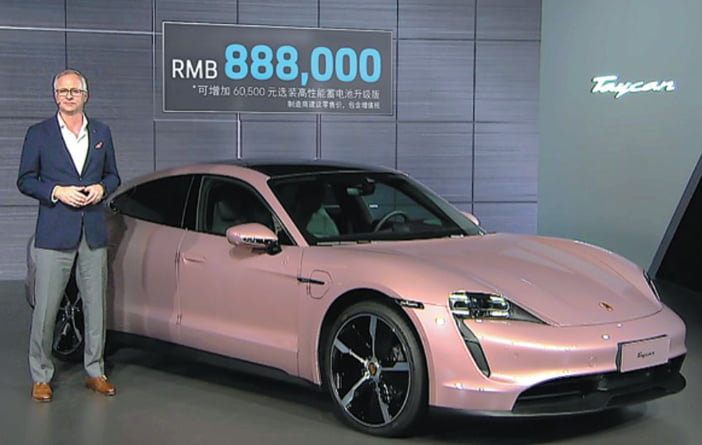
+++ Jens PUTTFARCKEN , president and CEO of Porsche China, is not the type of person who would usually pat himself on the back. Yet he said he would give the carmaker’s performance in China in 2020 a top score. “From a scale of one to 10, I am always hesitant to give it a 10. But this time, we are very much at a 10, taking into consideration how the year of 2020 started”, Puttfarcken told in an exclusive interview last week. Porsche had a good 2019 and everything was looking fine in January, during which Puttfarcken traveled on business trips back and forth between Shanghai and Stuttgart, Germany, the carmaker’s headquarters. All of a sudden there was the outbreak of coronavirus, followed by lockdowns, empty showrooms and a nosedive in deliveries in February 2020. But the resolute and effective efforts of China and the Chinese people soon paid off, and the auto market started to recover from March, Puttfarcken recalled. Going through all the hardship, including a 6-week production suspension in Germany, Porsche ended the turbulent year with a satisfactory result. A record 88.968 vehicles were delivered in China for the year; up 3 % from 2019. That is almost one-third of Porsche’s total sales globally. Puttfarcken said Porsche collected more orders in China than it could deliver in the year. A closer look reveals that the pandemic resulted in sales growth for many luxury brands ranging from Louis Vuitton to Porsche in an unexpected way. The situation turned for the better much earlier in China, but overseas travel and shopping were something to fear, so surpluses grew in people’s bank accounts. And having survived the hard time, consumers began to reward themselves with what life has to offer. The mentality was further evidenced by the sales rise in 2-door sports cars, which are the core of Porsche. Sales rose 70 % for the 911 and 50 % for the 718, with total deliveries reaching 10.000 last year in China. “The effect was very strong in the second half of 2020, and I believe it will continue into 2021”, Puttfarcken said. This year will mark the 20th anniversary of Porsche’s arrival on the Chinese mainland. In 2001, its first dealership opened on Changan Avenue in Beijing. Last year, the number of sales outlets in China reached 134. “So we will definitely have celebrations and campaigns. And we will definitely reflect on our development, which went hand-in-hand with the development of China in the last 20 years”, he said. A number of new models will arrive as well, including the new Panamera, the first generation of which was unveiled in Shanghai, and the Taycan Cross Turismo, a new body variant of Porsche’s first electric vehicle. Porsche has delivered around 20.000 Taycans across the world. Puttfarcken did not give the specific figure for China, but said 3 of 4 Taycan customers in the country were new to the brand. Puttfarcken expects the new models will help its sales. He added that he was a little cautious about the estimate because of what happened last year. “But I’m very confident if no new outbreak happens here in China, then at least for the first 6 months, we will see very positive results for Porsche”. +++
+++ China’s largest carmaker SAIC MOTOR Corporation is planning to scale up its overseas sales to 1.5 million by 2025, almost 4 times last year’s figure, according to senior executives. SAIC, partner of General Motors and Volkswagen, sold 390.000 vehicles in overseas markets in 2020; up 11.3 % from 2019, despite the Covid-19 pandemic. They accounted for over one third of Chinese carmakers’ total overseas deliveries in the year. “To be honest, the overseas markets are huge,” said Yu De, managing director of SAIC Motor International Business Department, in an interview. According to SAIC estimates, annual sales in China could reach 30 million in the coming years, while the global market could reach 100 million a year. SAIC, which has been primarily focused on the Chinese market, is starting to make overseas markets a top priority as well. By 2025, its overseas sales are expected to reach 1.5 million, accounting for 15 % of its total sales. Of them, one fifth, or 300.000 vehicles, would be sold in Europe, of which 70 % to 80 % would be electric vehicles or plug-in hybrids, according to SAIC. Yu said the company has made some breakthroughs in Europe, where around 25.000 electric and plug-in hybrids were sold in 2020 and carbon credits generated a revenue of €40 million for the carmaker. Europe, as the birthplace of modern vehicles, has been hard for international carmakers to gain a significant market share. Toyota has been in Europe for around 50 years and its market share is no more than 6 %. But he said the new energy vehicle market is offering opportunities for Chinese carmakers that have been active early on. One example is SAIC’s MG ZS EV, which was the first small-sized electric SUV to receive a 5-star Euro New Car Assessment Programme rating. SAIC is currently selling 3 models in Europe, with another 3 to 4 scheduled to hit the European market this year, and all are plug-in hybrids or electric vehicles. Zhao Aimin, executive vice-president of SAIC Motor International, said there would be 3 to 4 markets where its annual sales would reach 50.000, including Europe, the Association of Southeast Asian Nations countries and the Middle East, by around 2022. SAIC started its international business unit in 2011, and now has a presence in over 60 countries and regions. Its overseas sales network comprises over 750 dealerships. The company has 3 research and development centers overseas and 4 manufacturing plants, which are located in Thailand, Indonesia, India and Pakistan. Yu said the plants would produce around 50 % to 60 % of vehicles SAIC would sell overseas by 2025. Last year, SAIC launched its own shipping service to ensure quality and time-efficient deliveries. “Usually, Chinese carmakers do not have a complete presence along the industry chain in overseas markets. SAIC is an exception”, Yu said. “We have covered car production, spare parts, logistics and even financial service. We will bring into full play our advantage to better serve our customers”. +++
+++ In SOUTH KOREA , carmakers’ sales rose 4.8 % last month from a year earlier helped by strong demand for SUVs amid the Covid-19 pandemic, industry data showed. The 5 carmakers in South Korea (Hyundai, Kia, GM Korea, Renault Samsung and SsangYong) sold a combined 597.213 vehicles in January; up from 569.929 units a year ago, according to data from the companies. Their domestic sales jumped 17 % to 116.270 units in January. Overseas sales also climbed (2.3 %) to 480.943 from 470.327 during the same period, the data showed. Hyundai and its affiliate Kia saw their robust domestic sales prop up the monthly sales results. In January, Hyundai’s sales rose 1.6 % to 319.959 units from 314.825 a year ago, and Kia’s climbed 2.5 % to 226.298 from 220.734 during the same period. Robust local sales of Hyundai’s Palisade, Tucson and Santa Fe SUVs and Kia’s Sportage and Seltos SUVs allowed them to offset weak overseas sales last month. Strong local sales of the GV70 and GV80 SUVs under Hyundai’s independent Genesis brand also buoyed Hyundai’s sales results last month. This year, Hyundai and Kia said they will continue to focus on promoting their SUV models to ride out the virus crisis in global markets. The carmakers aim to sell a combined 7.08 million vehicles this year; 1.7 % lower than the 7.2 million units they sold last year. 3 other carmakers came up with improved sales results last month helped by increased exports. SsangYong reported a 13 % on-year jump in January sales to 8.648 units. GM Korea said its sales jumped 76 % on-year to 36.126 units last month. Renault Samsung posted a 36 % on-year gain in January sales. +++
+++ SSANGYONG ’s main creditor Korea Development Bank (KDB) said it currently has no plan to inject additional funds into the beleaguered automaker unless a detailed and viable rehabilitation plan is laid out by a potential investor and the automaker. The state-run bank also said that Mahindra, the Indian parent company of SsangYong that holds a 74.6 % stake, is responsible for the Korean automaker’s insolvency. “In order for SsangYong’s pre-packaged insolvency to proceed, negotiations made among stakeholders are essential, but SsangYong is still in the process of coming up with a business plan or rehabilitation plan related to that pre-packaged insolvency”, said Choi Dae-hyun, vice president of the state-run bank, at an online briefing. “Potential investors came to Korea in mid-January and left on January 31 without making a final decision on the pre-packaged insolvency as SsangYong delayed the submission of required documents”. Pre-packaged insolvency allows the debtor to come up with a rehabilitation plan before going into court receivership as long as there is consent from at least half of its creditors. The system has been designed to shorten the time and cost incurred from the bankruptcy process for a financially troubled company that has secured a way to resolve its financial troubles. SsangYong has been trying to iron out a pre-packaged insolvency plan with HAAH Automotive Holdings, a California-based car retailer, after an acquisition deal reportedly fell apart between HAAH and Mahindra. The pre-packaged insolvency plan is reported to include Mahindra’s plan to undergo capital reduction lowering its stake in SsangYong, followed by HAAH’s investment of $250 million to make the American company the biggest shareholder of the Korean automaker. HAAH asked KDB to offer a similar amount of financial support to SsangYong as a condition of the deal. “It is true that the potential investor requested an equivalent amount of investment from the creditor”, Choi said. “However, with the potential investor not submitting a detailed business plan, it is hard for the creditor to make a decision. When a rehabilitation plan that includes a detailed business plan is prepared, KDB will be able to decide whether to offer financial support”. KDB said no further negotiation with HAAH Automotive is currently scheduled. SsangYong has reported a net loss for 4 consecutive years since 2017. Last year, its net loss expanded by 40.2 % compared to the previous year to 478.5 billion won ($429 million). SsangYong’s accumulative net loss over the past 4 years amounts to 947.5 billion won. KDB held SsangYong’s parent company Mahindra responsible for the Korean automaker’s financial situation. “SsangYong’s insolvency derives from Mahindra’s bad management”, Choi said. “When a company’s accumulated loss amounts to more than 1 trillion won over the past 10 years, it needs a viable business plan, not just an injection of fresh funds”. KDB said that if SsangYong fails to secure fresh capital resulting in the failure of its pre-packaged insolvency plan, the Korean automaker will have to go through court receivership. SsangYong filed for court receivership on Januart 21 along with what’s known as an autonomous restructuring support program, which delays the process of court receivership to earn the troubled company time to negotiate with its creditors and find new investors. The court had delayed its decision on receivership until February 28. SsangYong said it will suspend operations of its Pyeongtaek factory for 3 days as its suppliers have refused to deliver parts. +++
+++ SUZUKI said it has halted production at its 2 auto plants in Myanmar to ensure the safety of its employees following a military coup, as other Japanese companies from retail giant Aeon to auto-parts maker Denso were scrambling to assess the situation. Suzuki said it stopped output at its factories in Yangon where 400 employees work. Suzuki has a 60 % share of new car sales in Myanmar, having sold 13.200 units in 2019. The company said it has yet to decide on when to resume production. The Myanmar military seized power from the democratically elected government of Aung San Suu Kyi, who was detained along with other leaders of her party in early morning raids. Major Japanese firms including Kirin Holdings have pushed into Myanmar since Suu Kyi’s party won a landslide election in 2015 and established the first civilian government in half a century. Although some investors have grown wary over the persecution of the Rohingya Muslim minority, hundreds of Japanese companies have remained in Myanmar, drawn by an emerging market of more than 50 million people. There are around 400 Japanese firms doing business in Myanmar, according to the government-backed Japan External Trade Organization. Toyota, which had planned to commence operations of its first production plant in the country this month, said it is currently “assessing” the situation. Veteran public relations consultant Bob Pickard said companies now faced a growing public relations risk. “Japanese companies invested in Myanmar and especially those with military connections now need to be agile in articulating what these events mean for them”, said Pickard, who worked in Japan for many years. “‘Business as usual’ poses an acute risk: a public relations disaster for any Japanese companies that are slow to condemn what has happened today”. +++
+++ TESLA has agreed to recall 134.951 Model S and Model X vehicles with touchscreen displays that could fail after U.S. auto safety regulators sought the recall last month. The National Highway Traffic Safety Administration made the unusual recall request in a formal January 13 letter to Tesla, saying it had tentatively concluded the 2012-2018 Model S and 2016-2018 Model X vehicles pose a safety issue. The agency said touchscreen failures pose significant safety issues, including the loss of rearview/backup camera images and windshield defogging and defrosting systems that “may decrease the driver’s visibility in inclement weather”. +++
+++ TOYOTA unveiled its Woven Planet research unit at a virtual media event on Friday, promising to deliver the world’s “safest mobility” as competition heats up to develop self-driving and connected cars. In the online presentation, dubbed “The Genesis”, Woven Planet executives provided few hints into specific features in the pipeline, but said a new assisted-driving system would be mounted on the company’s passenger cars by the end of this year. The company also said it would be ready to unveil a fully self-driving prototype “in the near future”, without elaborating. As traditional automakers face competition from the likes of Apple, Amazon and Sony, Toyota is looking to marry Woven Planet’s Silicon Valley approach with its storied Toyota Production System manufacturing process to develop the next generation of cars. Fully self-driven cars are still likely to be years away, but rival General Motors this month made a splash at the virtual Consumer Electronics Show (CES) with a fully-autonomous all-electric flying Cadillac concept, while Chinese search engine operator Baidu unveiled a partnership with local car brand Geely. Led by ex-Google roboticist James Kuffner, Woven Planet also says it has the advantage of scale in collecting data (key to developing artificial intelligence-aided software) through the tens of millions of Toyota cars on the road worldwide. Toyota retook the crown as world’s best-selling automaker in 2020, unseating Volkswagen. “This is really only the beginning”, Kuffner said in a pre-recorded presentation, where he introduced key executives from the Woven Planet Group, including founding family scion Daisuke Toyoda, son of Toyota CEO Akio Toyoda. “We’re just getting started with our technology and innovation to change the world”, Kuffner said. Toyota last year unveiled plans to build a prototype “city of the future” called Woven City at the base of Mount Fuji powered by hydrogen fuel cells that would be a laboratory for autonomous cars. +++
+++ VOLKSWAGEN and auto supplier Bosch asked the U.S. Supreme Court to reverse a lower-court ruling that said 2 counties could seek financial penalties over excess diesel emissions that could total billions of dollars. The German automaker’s U.S. unit and Robert Bosch asked the U.S. high court to reverse a unanimous ruling by the U.S. Court of Appeals for the Ninth Circuit that said Utah’s Salt Lake County and Florida’s Hillsborough County could seek “staggering” damages over updates made to polluting diesel vehicles after they were sold. Volkswagen Group of America told the high court the appeals court “decision threatens to throw one of America’s largest industries into regulatory chaos, to the detriment of manufacturers, dealers, consumers, and the environment”. On Tuesday, the Ohio Supreme Court heard oral arguments in the state’s lawsuit against Volkswagen over emissions damages from 14.000 Ohio-registered cars. Volkswagen said in court papers Ohio’s claims “could total $350 million per day, or more than $127 billion per year, over a multi-year period”. Ohio said Volkswagen engaged in “deceptive recalls” after vehicles were sold and it “seeks to hold Volkswagen responsible for modifying its customers’ cars, cars that the customers had already purchased and used, to evade emissions laws”. In September, the Environmental Protection Agency announced a $1.5 billion settlement with Daimler to resolve allegations it had engaged in similar emissions cheating. Volkswagen noted Hillsborough County has since sued Daimler and Bosch and cited a county document that it could also bring an emissions-cheating lawsuit against Fiat Chrysler, which is now known as Stellantis. Volkswagen settled U.S. criminal and civil actions prompted by the emissions scandal for more than $20 billion, but that did not shield it from local and state government liability, the appeals court found, noting they were “mindful that our conclusion may result in staggering liability for Volkswagen”. The court added it was “due to conduct that could not have been anticipated by Congress: Volkswagen’s intentional tampering with post-sale vehicles to increase air pollution”. U.S. District Judge Charles Breyer, who ruled in VW’s favor in 2018, noted the automaker’s “potential penalties could reach $30.6 million per day and $11.2 billion per year” in the case involving the 2 counties. +++