
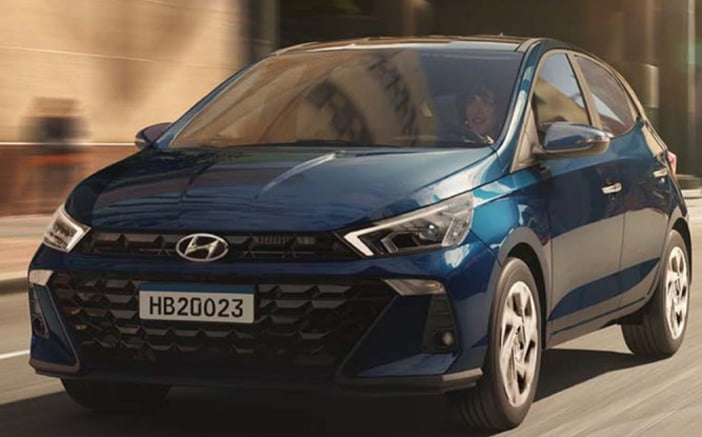
+++ Hyundai has launched a completely redesigned HB20 in BRAZIL , a compact hatchback made exclusively for the local market. The 2022 facelift comes 3 years after Hyundai launched the second generation in 2019. While most automakers update their vehicles once every 5 years or so, the quick update highlights Hyundai’s efforts to maintain HB20‘s position as the most popular passenger car in Brazil. From January to May this year, a total of 34.897 HB20 units were sold in Brazil, followed by the GM Onix with 29.901 units, and the Fiat Mobi with 26.729 units. Last year, Hyundai sold 86.455 units of the HB20, outselling the Fiat Argo, which sold 84.644 units, and the Jeep Renegade, which attracted 73.913 buyers. Hyundai entered the Brazilian auto market in 2012 and in order to effectively tackle the market which had long been dominated by other brands such as Volkswagen and Fiat, it came up with the strategic HB20. The model is manufactured in Hyundai’s manufacturing plant in Brazil, which is the company’s 7th overseas plant. Equipped with airbags and airconditioners as basic options, HB20 has been a popular model since its launch in September 2012. Within just 4 months of its launch, Hyundai sold over 10.000 units and the car was named the 2013 Car of the Year in Brazil. To maintain its position as the topselling passenger car in Brazil, Hyundai equipped the new HB20 standard with 6 airbags, traction control and hill start assist. On its high trim, a 4.2 inch LCD Supervision Cluster, lane-keeping assist, rear cross-traffic alert and blind-spot assist systems have also been implemented. Design-wise, the facelifted HB20 is more angular giving it a sportier look. Hyundai used a massive grille extension on the front bumper and full-width led taillights, a revised tailgate and a new bumper on the rear. +++
+++ Samsung Electro-Mechanics, the electronic components unit of Samsung Group, has won a multi-billion-dollar deal to supply CAMERA MODULES to Tesla for most of the US company’s electric vehicles. The South Korean company beat other bidders, including crosstown rival LG Innotek and Taiwan’s Primax Electronics, to clinch the deal estimated at between 4 trillion won and 5 trillion won ($3.2 billion-$4 billion), according to people familiar with the matter. The deal marks Samsung Electro-Mechanics’ single largest contract ever, comfortably placing it as the largest supplier of camera modules for Tesla. Over the next few years, Samsung will be supplying its latest camera modules to be installed on Tesla’s Model 3, Model S, Model X and Model Y, as well as electric trucks such as the Cybertruck pick-up and the Semi, the sources said. The components to be supplied this time will be Samsung’s version 4.0 camera modules with 5 million pixels, which show five times clearer images than the company’s previous 3.0 modules. Samsung plans to mass produce the latest camera modules from as early as July, according to the sources. Camera modules have become essential as automakers push for higher levels of autonomous driving. Tesla, the world’s largest EV maker, is leading the charge with its electric vehicles. An electric vehicle usually carries seven to eight camera modules, up from just 2 in 2020. An advanced electric car is often equipped with 12 camera modules. According to an industry estimate, vehicle camera module shipments are expected to rise to 230 million units globally this year, up 35% from last year, and are forecast to grow at an average annual rate of 30% until 2025. Samsung Electro-Mechanics is already a key supplier of camera modules to Tesla, but has lagged LG Innotek in terms of volume. Until last year, up to 70% of Tesla camera modules were supplied by LG Innotek, while the remaining 30% were supplied by Samsung. With the latest deal, Samsung will become Tesla’s largest supplier, accounting for nearly 80%, while LG will assume the remaining 20%, industry officials said. Samsung Electro-Mechanics, a latecomer, entered the vehicle camera module market in 2010. The company, which also makes camera modules for Samsung Electronics’ Galaxy line of smartphones, received orders worth a total of 490 billion won last year. Since 2020, the components maker has focused on more profitable vehicle camera modules as prices for smartphone camera modules have been falling amid a mobile phone market slowdown. Last year, the prices of smartphone camera modules fell 35.4% from the previous year. Analysts expect the latest mega-deal to increase the company’s profits as Tesla has vowed to significantly ramp up EV production. The latest deal is also expected to strengthen Samsung Group’s partnership with Tesla as the US company is aggressively expanding its autonomous EV lineup. In September of last year, Samsung Electronics’ foundry business beat Taiwan Semiconductor Manufacturing (TSMC), the world’s largest chip contract manufacturer, to win orders from Tesla for its next-generation autonomous vehicle chips. Samsung Electronics has also been supplying its system chips to Volkswagen AG since last November. Samsung SDI, a battery maker, is supplying its batteries to Rivian Automotive, another American EV maker, from early this year. +++
+++ Just like its global peers, Hyundai and Kia have suffered from the CHIP SHORTAGE that bogged down the entire auto industry for nearly 2 years from the onset of the pandemic. With the easing auto chip crunch, the 2 largest South Korean carmakers are now swiftly working down their order backlog, delivering new cars to their customers faster than before. The improving situation from the supply side, however, is being offset by weakening demand caused by higher interest rates on car installment plans amid rising inflation and an economic slowdown, which bodes ill for the Korean duo’s earnings in coming quarters. According to local auto industry officials, buyers of Kia’s large-size K8 sedan now must wait for 3 months to get their car, compared with 6 months in June, while the delivery time for the hybrid Sorento has come down to 17 months from 18 months. Those who want to buy Hyundai’s Santa Fe must wait for 8 months, cut short by 1 month. The waiting time had been on the rise for most of the first half of this year since the auto chip shortage slammed the supply chain. But the shorter car deliveries to customers in recent weeks signal a gradual return to pre-pandemic production volume at carmakers, industry officials said. According to the Korea Automobile Manufacturers Association (KAMA), Hyundai and Kia’s combined car production reached 277.501 units in June, rising steadily since February, when their output was 213.025 units. Their production volume is expected to increase at a faster rate in the second half. During a recent conference call with analysts, Kia executives said they expect car production to reach more than 700.000 vehicles in the third and fourth quarters, respectively, up from the higher end of the 600.000-unit level in the second quarter. “Clearly, we’re witnessing an improvement in the auto chip supply and demand situation”, said a Kia official. Both Hyundai and Kia said they are also seeking to forge long-term contracts with auto chipmakers such as Japan’s Renesas Electronics for stable chip procurement. While Hyundai and Kia are increasing their car production, retail sales are showing signs of easing, particularly in the domestic market. According to industry officials, Kia recently began to offer dealers higher incentives for auto sales as customers are increasingly reluctant to buy new cars given worsening economic conditions. Kia’s Korean sales have steadily increased since the start of the year to 50.000 units in April. But the company’s local sales fell for 2 straight months to 45.663 units in May and down further to 45.110 cars in June. Credit Finance Association data showed the annual interest rate at which a Kia Carnival buyer must pay for a car installment plan has risen to a high of 8% in the second quarter from 3.86% in the first quarter. S&P credit analyst Park Joon-hong said dwindling consumption is one of the biggest risks to the Korean economy this year and next. “Weak demand for durable goods such as electronics and automobiles will hurt companies’ earnings for the rest of the year”, he said. Industry watchers earlier said Hyundai and Kia will likely post their highest-ever profit for the second quarter and the entire year on the back of the popularity of their cars overseas despite the industry’s dim outlook amid higher costs. +++
+++ Despite Hyundai Motor Group’s aggressive push for green cars, there has been no clear sign of a breakthrough in its HYDROGEN drive in the past 4 years, with seemingly indefinite delays in new model launches. According to industry sources, the carmaker has suspended plans to produce the next-generation Nexo, a hydrogen fuel cell SUV, which had been planned to be launched in the second quarter next year. The Nexo, succeeding the world’s first hydrogen fuel cell model Tucson iX, made a highly-publicized debut in 2018, but the car has received lukewarm market reaction largely due to high pricing, delivery delays and a lack of infrastructure. Hyundai sold less than 10.000 Nexos in the 12 months leading up to April, a long way off the sales of its full-electric Ioniq 5. The South Korean carmaker sold more than 120.000 Ioniq vehicles worldwide, including some 33.000 units locally. Sources also say that the carmaker’s luxury brand Genesis has also indefinitely postponed the launch of its first hydrogen fuel cell model, which had been expected to debut in 2025. They say the delay suggests that Hyundai may have hit a snag in its drive to make a smaller and more powerful fuel-cell power source. According to the carmaker’s hydrogen vision 2040, it would complete developing a third generation fuel cell battery system by 2023, which was to reduce its size by 30 percent compared to the second generation model and double the power output. It also planned to slash the price tag by half, to increase its product competitiveness. But there has yet to be a breakthrough for this development; not only in Korea, but also around the world. “It would take at least 10 to 20 years to develop such technology. The previous Moon Jae-in administration publicly supported businesses’ efforts in advancing hydrogen fuel cell technology and even chose the Nexo as a presidential car. But it was a hasty decision because the infrastructure was not ready to make that happen”, said Kim Pil-soo, professor of automotive engineering at Daelim University. Hydrogen technology has been touted as having potential to ease the effects on auto parts makers of the switch to electric vehicles, which require fewer parts because they operate without engines. But in order to make hydrogen cars as profitable as conventional ones, the industry as a whole needs to go through a simultaneous transformation and start mass-producing auto parts that would lower carmaking costs. “Without mature technology and infrastructure, companies find it difficult to develop them as a profitable business model. No wonder carmakers in the US and Europe are not making hydrogen fuel cell cars”, he added. Currently, there are only 2 hydrogen fuel cell models sold in the market: Hyundai’s Nexo and Toyota’s Mirai. US’ Stellantis is working the fuel cell versions of the Peugeot e-Expert and Citroen e-Dispatch, but neither of them have made a market debut. Despite an apparent delay in technological advancement, Hyundai appears to be holding on to its hydrogen ambitions. In its latest staff reshuffle, the company turned its hydrogen fuel cell battery development team into an independent entity to focus on the project. In response ot questions on why the project was being delayed, Hyundai CEO Chang Jae-hoon said in January that the company has just set a higher target for hydrogen vehicle development. But experts are suggesting that the carmaker should shift its focus to commercial cars first because it’s more economical, even in the use of existing hydrogen technology. The biggest advantage of hydrogen fuel cell trucks is that they are lighter than those with battery packs. Their charging time is also faster, at around 10 minutes versus about an hour for electric trucks to fully recharge. Hydrogen trucks can also travel up to 1.000 kilometers per charge, while it is limited to some 300 kilometers for electric trucks. Hyundai mass-produced the industry’s first hydrogen truck Xcient last year, and began exporting to the European market. China’s state-owned SAIC Motor and Germany’s Daimler are currently working on making similar models. +++
+++ The HYUNDAI MOTOR GROUP has ramped up its workforce in North America by more than 50% last year where its presence is growing while slashing staff in China on its sluggish business. The number of Hyundai’s employees in North America grew 54.8% to 15.953 as of the end-2021 from a year earlier, according to Hyundai’s sustainability report. On the other hand, workers in its Chinese unit declined 18.4% to 10.741 during the period. Staff numbers in Europe and India also dipped 5.3% and 3.8%, respectively, to 9.480 and 9.725. Hyundai, together with its affiliate Kia, ranked the No. 5 automaker in the US, selling 702.785 vehicles in total during the first half. General Motor topped the list of bestselling automakers in the world’s second-largest car market, followed by Toyota, Ford and Stellantis. Hyundai and Kia were the No. 2 player together in the world’s third-largest US electric vehicle market after the industry giant Tesla in the first quarter. Hyundai is actively expanding its presence there, adding EV lines at its existing plant and planning a new factory dedicated to the eco-friendly vehicles. In May, the Hyundai Motor Group unveiled $10.5 billion investment plans in the US through 2025 to expand its future mobility business. By contrast, Hyundai has been struggling to lure customers in China, the world’s largest market for automobiles, including EVs. Its sales tumbled 40.7% to 18.229 cars in June from a year earlier, while sales of Kia also declined 15.5% to 9.330 units. Their market shares stayed around only 1-2%. The group’s sales in China have been falling since 2016. Chinese units of both Hyundai and Kia reported operating losses of more than 1 trillion won and 400 billion won, respectively, last year. +++
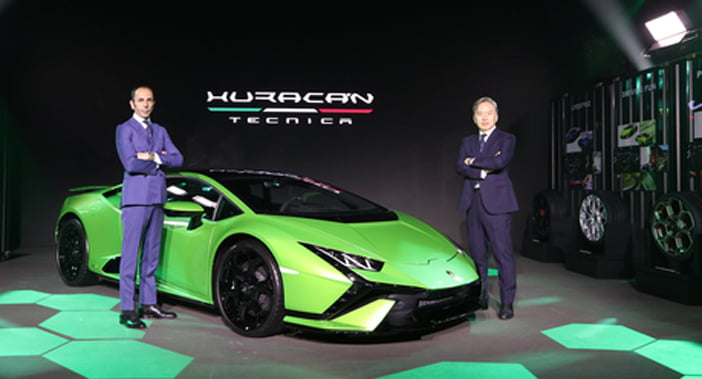
+++ LAMBORGHINI introduced the Huracan Tecnica on the Korean market Thursday, just 3 months after the design was released globally. Lightweight technologies were used in order to maximize performance, said Francesco Scardaoni, director of Automobili Lamborghini Asia Pacific, during a release event Thursday held in Gangnam, southern Seoul. Equipped with a 5.2-liter, 10-cylinder gasoline engine, the luxury sports car boasts up to 640 hp. It only takes 3.2 seconds to reach 100 kph. +++
+++ When LG ELECTRONICS surprised the market last year by announcing that it was exiting the mobile phone business, one of its mainstay businesses, investors wondered, what’s next? It didn’t take long for the South Korean electronics giant to come up with an answer. The company said on Tuesday it has secured 8 trillion won ($6.2 billion) in new orders for vehicle components, meaning telematics and in-vehicle infotainment (IVI) systems and e-power trains, in the first half of this year. The figure represents over 13% of LG’s total order backlog in that business of 60 trillion won in 2021. And the company says it expects to win an additional 7 trillion won new vehicle component orders in the second half, bringing its accumulated order backlog to 65 trillion won by year-end. Since its ungraceful exit from the loss-making mobile phone business, the company has been looking for new growth drivers, and now hopes to establish itself as a major force in the electric vehicle component solutions business. LG Electronics, which already counts global carmakers such as Mercedes-Benz, the Renault Group and General Motors as its major clients for vehicle components, said it aims to expand its customer base with advanced in-vehicle system technologies. In April of this year, LG Magna e-Powertrain, LG’s joint venture with Canada’s auto parts maker Magna International, broke ground on a factory to produce EV components in Mexico, its third plant globally, to meet growing demand for eco-friendly automobiles in North America. The JV operates manufacturing facilities in Korea and China. LG said last month it is spending 101.6 billion won to expand its facility in Nanjing to make more EV motors and inverters for GM and other automakers. LG Electronics expects LG Magna’s sales to rise more than 50% a year on average until 2025 as demand from global EV makers accelerates. In 2018, LG Electronics acquired Austria-based automotive lighting company ZKW Group, which counts German premium carmakers including Mercedes-Benz, BMW, Audi and Porsche as its clients. LG Electronics has been fostering its automotive electronics business to enhance its presence in the future mobility market since the company set up a vehicle component division in 2013. It later expanded the division into a vehicle components solutions (VS) unit covering infotainment technology. The company’s VS unit posted 6.7 trillion won in sales on a consolidated basis last year, up 24% from the previous year. The growth came amid falling demand from carmakers, which were reeling from a global shortage of automotive chips, putting some of their production facilities on hold. According to market research firm Strategy Analytics, LG Electronics was the world’s top telematics maker with a 22.7% market share as of the first quarter, and has enjoyed a double-digit market share in the automobile audio, video and navigation (AVN) market since last year. Earlier this year, LG said it is supplying its infotainment systems to Mercedes-Benz for the EQS. “Leveraging our strong partnerships with global carmakers, we will continue to provide differentiated value to our customers”, said Eun Seok-hyun, president of LG’s VS division. +++
+++ On July 4, a NIO car lost control and drove into pedestrians, leaving some persons injured and one casualty. The incident occurred at the south gate of the First People’s Hospital in Luhoe City. The car involved in the accident was a ES6, and it had lost control and accelerated suddenly when it barged into a Changan-Suzuki SX4 in front, sweeping off some pedestrians in its wake. A statement issued by the Luohe traffic police shows that 5 people suffered injuries and 1 died due to the accident. According to the police report, the injured victims are currently recuperating in the hospital, and their injuries were not life-threatening. Preliminary investigations by the police revealed that the driver, Du Mou, is a 41-year-old woman who hails from Yancheng District, Luohe City. The driver was in the area to visit a patient when the accident occurred and was driving a ES6. The police further stated that the accident occurred due to “improper operation”, which means the driver was at fault. As of press time, the driver was still being held by police for further investigations. The video from surveillance footage shows that both vehicles involved in the accident suffered severe damage. Owners of businesses in the vicinity claim that Lijiang Road, the scene of the accident, was always crowded with vehicles and pedestrians alike. In response to questions from the local press, NIO stated that it is currently monitoring the situation as it awaits further details from the police. This crash is coming on the heels of another accident that occurred on 22nd June when a NIO test vehicle fell from the third floor of the Shangai Innovation Port parking building, killing 2 digital cockpit testers. On July 1, the automaker announced that they delivered 12.961 new cars in June 2022, posting a 60.3% increase year-on-year, and reaching a new record for vehicles delivered in one month. NIO delivered 25.059 new cars across China in the second quarter of 2022, which translates into a 14.4% increase in year-on-year growth. This is the 9th consecutive quarter where the automaker has recorded positive year-on-year growth. NIO has made over 50.827 deliveries from January to June and overall there have been 217,897 cars from the manufacturer delivered. +++
+++ TESLA Shanghai got back on track with record sales in June. According to China Passenger Car Association (CPCA), Tesla China managed to sell 78.906 vehicles (MoM +145%; YoY +138%), surpassing the previous record of December 2021 (70.847). Traditionally, Giga Shanghai focuses on the domestic market at the end of the quarter, so it exported only 968 vehicles in June. The Gigafactory in Shanghai was struggling because of lockdowns in China. Starting from March 22, Tesla Shanghai was closed for 22 days. Since April 19, this giant plant has been working in a ‘closed-loop’. It means workers were delivered to a factory by special buses, and some even lived there. As a result, April’s sales of the Giga Shanghai were meager at 1.512 units. In May, Tesla Shanghai slowly began to restore its production volume, selling 32.165 vehicles. And now Tesla China is back on track, stronger than ever. As mentioned, in June 2022, Tesla Shanghai sold 78.906 MIC (Made-in-China) vehicles, setting a new record high. The export number of 968 vehicles is low because Giga Shanghai focuses on the domestic market every end of the quarter. So the domestic sales of the Tesla Shanghai are 77.938. It makes Tesla the biggest seller of EVs in China. As for the NEV (New Energy Vehicles, including PHEV and FCEV), BYD holds the first place here. The Tesla Model Y became the best-selling EV with 52.557 units sold (MoM +794,6%; YoY +352,1%). It has easily surpassed the Wuling Hongguang Mini EV with 46.249 units. As for the Tesla Model 3, its sales have reached 26.349 units (MoM +567; YoY +59,5%). It is a great result for Tesla. Moreover, the rise in the operating volumes enhanced Tesla’s delivery time. Now it is the same as in early March. We continue our little tradition of comparing the prices of new Tesla EVs from the factory and second-hand ones. Despite the increased records and production volume, Tesla’s used cars’ costs grew. For example, the Tesla Model 3 RWD from the factory costs 290,900 RMB (43.400 USD). But the second-hand car’s price tag reaches 315.000 RMB (47.000 USD). It seems like customers are ready to overpay for second-hand Tesla and not to wait for the one from the factory to be delivered. It may be caused by the uncertainty of Chinese people that the Giga Shanghai won’t get into some Covid-19-related problems again. +++