
+++ The next AUDI A3 is set to become an electric-only model with a maximum range of more than 650 km and the choice of either standard rear- or optional four-wheeldrive, sources at the car maker have revealed. The decision means the popular hatchback and saloon will abandon petrol, diesel, plug-in hybrid and natural gas power to go up against the Volkswagen ID 3 with a raft of battery and powertrain options and next-generation technology. Scheduled for a launch in 2027, the fifth generation A3 will be based on the Volkswagen Group’s new skateboard-style SSP (Scalable Systems Platform) electric architecture; the same structure that is set to make its debut on the upcoming Volkswagen Trinity. It will also underpin an Audi sibling model known as Apollon. The move comes after Audi rejected a proposal to develop a new entry-level electric model on the existing MEB platform, which is used by the Q4 e-Tron and closely related Volkswagen ID.4 and Skoda Enyaq iV. The switch to electric power means standard versions of the A3 will abandon front-wheel drive for the first time since the model’s introduction in 1996, though the most potent models are tipped to adopt a twin-motor, four-wheel-drive set-up reminiscent of the current Audi Sport fettled A3 variants: the S3 and RS3. An electric RS3 will be the entry point into the newly electrified performance line-up, being sold alongside rapid and outlandishly styled sporting variants of the upcoming electric A4 and A6 successors. Audi Sport’s transition to an electrified portfolio has kicked off with range-topping variants of the e-Tron and e-Tron GT, and it is expected to ultimately match the diversity and scope of its current performance range, which comprises highly strung variants of most Audi models. Instant-torque electric power will see the RS3 e-Tron outpace the current 5-cylinder petrol car in a straight line, so expect a sub-3.8 seconds 0-100 kph time and the innovative torque-vectoring functionality fitted to Audi’s existing fast EVs will no doubt trickle down to upcoming entrants to mimic the combustion car’s dynamic agility. It could also be the first of a breed, with rivals BMW, Mercedes-Benz and Volkswagen yet to unwrap electrification plans for their own hottest hatchbacks. The A3 line’s electrification aligns with recent comments by Audi CEO Markus Duesmann that all new models will be exclusively electric from 2026. Duesmann explained how this switch will be underpinned. “In our current ICE portfolio, we are using 3 different architectures and our BEV [battery-electric vehicle] offer is already based on 2 different architectures: MEB and PPE [Premium Platform Electric]. In the second half of this decade, we will introduce the SSP to form 1 strong mechatronic platform”, said Duesmann, who is also R&D boss of the Volkswagen Group. Among the advantages offered by the new SSP architecture over today’s MEB structure are a lower floor height and greater modularity for increased differentiation between models. The SSP platform is also designed to support a new 800V electric architecture. This will offer significantly faster charging times than the 400 Volt system of existing MEB based models and enable speeds of up to 270 kW, which is good for an 130 km top-up in 10 minutes. Duesmann said the SSP architecture will use what he calls a “unified cell format” and offer a range of up to 700 km. Although the SSP platform is being developed to accept solid-state batteries, they are not planned to be offered with the next A3. The next A3 has been conceived as a 5-door hatchback and 4-door saloon, both with incremental increases in dimensions. Those privy to early design proposals say Audi designers have taken full advantage of the packaging solutions offered by the dedicated SSP platform, providing the A3 with altered proportions, including shorter overhangs, a shorter bonnet line, a longer cabin and larger wheelhouses. +++
+++ CUPRA , formerly part of Seat, may come to North America, bringing at least a few uniquely styled vehicles with it. During a recent visit to open a showing in Sydney, Australia, Cupra president Wayne Griffiths said the automaker is looking at markets beyond the continent. He said there are currently no plans for China because it would face intense competition from other brands in the portfolio as part of the Volkswagen group. However, he did note that the brand is strong “in South America, particularly in Mexico, but also in Colombia and Chile”. He reasoned that Cupra’s move into Australia helped it in its goal to become a global brand. No concrete decisions have been made on bringing the brand to North America, but Griffiths conceded that the company is analyzing the market. Cupra, once part of Seat, split from the parent company to form its own standalone brand. Both live within the Volkswagen family, one of the world’s largest automakers. It’s unclear which Cupra vehicles might be available in North America. The brand currently offers several models, including a few SUVs and a wagon. Volkswagen may also position the brand with electric powertrain options to differentiate it. +++
+++ While gasoline prices have come down from their highs earlier this summer, drivers are still feeling plenty of pain at the pump. Unless, of course, you’re an ELECTRIC VEHICLE owner, and thus feeling very smug while gliding past fueling stations to charge at home. Using an EV more in times of high gasoline prices is to be expected, but one of the open questions in the industry has been whether EV drivers will consistently cover more miles on average than gas or diesel car owners. In many countries it’s difficult to get a clear read, mostly because EVs are still a very small share of the total number of cars on the road. But to get a hint of where things may head, we can turn to Norway. The latest data released from the nation’s statistical agency shows battery-electric vehicles now drive more kilometres annually on average than cars running purely on gasoline or diesel. Average distance traveled by the latter 2 carsegments has fallen steadily the last 15 years. This is remarkable. It highlights the growing capability of the latest EV models, and also has implications for what happens to oil demand from road transport. The amount of oil displaced by EVs depends on how fast we switch over the number of kilometers traveled to electric, not the number of cars. To understand this better, consider a 2-car family, where one of the vehicles is electric and the other is internal combustion. EVs have much lower operating costs, so the family will likely start to shift more kilometres to the EV once they get comfortable with the vehicle. The commute to work, for example, involves a highly predictable route and often accounts for the largest share of driving a person does. So while the family still has an internal combustion car and uses it for occasional longer trips, the electric share of total kilometers traveled by the household rises faster than one might expect, especially if one was only considering the number of cars. This effect shouldn’t be surprising; people like to use more of things that are cheaper. But it wasn’t always received wisdom in the market. A few years ago, some oil energy outlooks assumed not only that EV adoption would be muted, but that each EV would on average travel less than a comparable internal combustion vehicle. This now looks like a very shaky assumption. Not only will higher ranges make people use their EVs more, but even lower-range EVs can soak up some of the miles used for commuting along predictable routes. A few other things stand out in the data. One is that you can actually see the point when the Tesla Model S, the first real long-range EV, hits the market. Average distance traveled per EV jumped sharply in 2013 and 2014 — right after the Model S launched — then climbed several more years and is now at an all-time high. This again points to the improved capability of EVs, and also potentially the effect of them moving beyond being an urban phenomenon and spreading out more broadly across the country. With more long-range EVs hitting the market, it seems reasonable to expect 2022 data will show a continuation of the trend. Another interesting point is that hybrid vehicles also put up relatively high numbers. Data for hybrids is only available for from 2016 onwards, but they’re currently neck-and-neck with pure EVs and diesel vehicles, and it will be interesting to see how this plays out in the next few years. Fully making the changeover to electric mobility will take time. Electric vehicles still accounted for just 17% of all kilometers traveled by the passenger car fleet in Norway last year, and only about 1.5% of all kilometers traveled by the global passenger vehicle fleet. Until more of the fleet is fully electric, total distance covered by EVs will still have some catching up to do. Still, at BNEF, we’re expecting this same effect to start showing up in the data of more countries in the years ahead. Annual average EV mileage in China, for example, rose quickly from 2017 to 2020 before slowing slightly due to the pandemic, when ride-hailing usage plunged. Counting car sales and fleet sizes is still important, but for energy market impact, it’s best to keep an eye on distances traveled, too. +++
+++ HYUNDAI saw net profit rise over 55 percent in the second quarter thanks to strong sales of high-margin models such as SUVs and electric vehicles (EVs) in the U.S. and Europe and a weak local currency. Net profit for the April-June period was 3.08 trillion won ($2.35 billion), up 55.6 percent from last year’s 1.98 trillion won and far surpassing a market expectation of 2.03 trillion won. The carmaker reported record revenues of 36.0 trillion won, up 18.7 percent on year, exceeding the previous record of 31.3 trillion won in the fourth quarter of 2021. Operating profit came in at 2.98 trillion won, up 58.0 percent on year and also a record. The previous record was the second quarter of 2014’s 2.87 trillion won. Revenues surpassed market expectations of 33.15 trillion won, and operating profit exceeded an expectation of 2.28 trillion won. The number of cars sold decreased by 5.3 percent on year to 976.350 in the April-June period, but robust sales of high-end Genesis vehicles, SUVs and EVs in the U.S. and Europe drove profits. In overseas markets, the company sold 794.052 units, down 4.4 percent on year, while in South Korea it sold 182.298, down 9.2 percent on year. The weakness of Korea’s currency against the dollar also helped boost the bottom line. “Despite the year-on-year decline in unit sales caused by various external factors such as the Russia-Ukraine war, the chip shortage and interest rate hikes in major markets, both revenue and operating profit jumped significantly due to an improved sales mix, lower dealer incentives and a favorable currency situation”, said Seo Gang-hyun, executive vice president of finance and accounting, in an online conference call. Dealer incentives are the money paid to dealers to boost sales. With rising demand, they have been reduced. Sales of SUVs jumped 4.7 percent in the second quarter compared to last year, accounting for 52 percent of total unit sales. EV sales jumped 49.1 percent on year to account for 5.4 percent of the total. The company was cautious about the outlook for the latter half of the year. “The chip shortage is getting better, but we expect uncertainties in market conditions to continue due to geopolitical risks and a resurgence in Covid-19 cases”, said a Hyundai spokesperson in a release. For the U.S. market, the company said that it will focus on EVs and SUVs to further improve its profitability. “The U.S. car market contracted by 18 percent in the first half of this year compared to last year amid global supply risks and rising interest rates”, said Koo Ja-yong, senior vice president of Hyundai and head of the investor relations team. “But the preference for SUV models is steadily increasing despite concerns over demand contraction in the latter half, and the eco-friendly vehicle market is expected to grow with gasoline prices soaring”. Koo explained that the company will produce Santa Fe Hybrid EVs in its Alabama factory starting in October to meet rising demand for eco-friendly vehicles. Hyundai announced a $10.5 billion investment in the United States through 2025, including $5 billion in innovative mobility technologies, during U.S. President Joe Biden’s visit to South Korea in May. Hyundai introduced the Ioniq 6 on July 14, the second car for the all-electric Ioniq brand. The car will go on sale in some parts of Europe at the end of this year, and in the first half of next year in North America. Kia, Hyundai’s affiliate, will announce its quarterly results Friday. The expected revenue for the company is 20.32 trillion won, up 10.8 percent on year, and operating profit 1.83 trillion won, up 23.1 percent. +++
+++ KIA reported a strong quarterly performance in the April-June period, with its net profit rising 40.1 percent on year to 1.88 trillion won ($1.43 billion). The figure beat the market expectation of 1.60 trillion won. Revenue came in at a record 21.88 trillion won, up 19.3 percent on year, with also a record operating profit of 2.23 trillion won, up 39.1 percent on year. Both figures exceeded the market expectations of 20.32 trillion in revenue and 1.83 trillion won in operating profit. This marks the first time for the carmaker’s operating profit to surpass the 2-trillion-won mark. Kia cited enhanced profit margins, lower incentives and a weakening local currency for its strong performance. Despite supply disruptions in the first half of this year driven by chip shortages, sales of high-margin models, especially electric vehicles (EVs) in the U.S. and European markets, boosted the bottom line. “Supply shortages and raw material price increases have caused difficulties, but the favorable currency situation helped achieve higher profitability than expected in the first half this year”, said Joo Woo-jeong, chief finance officer of Kia, during a conference call. The strong performance came despite a decline in the number of cars sold. Kia sold 733.749 cars in the second quarter; a 2.7 percent decline on year. EV sales, however, saw an increase of 78.9 percent on year in the April-June period, to 133.000. +++
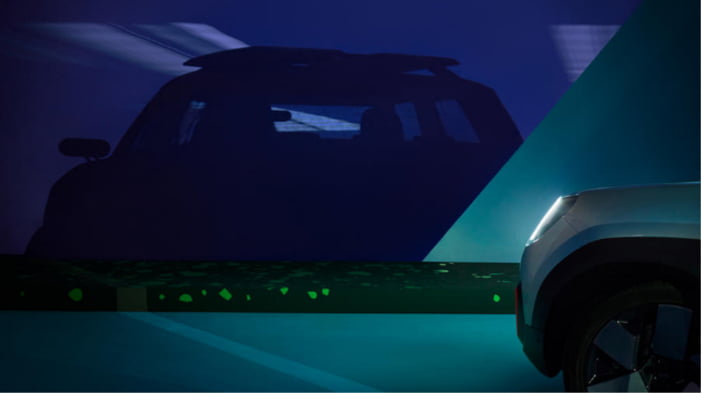
+++ MINI will unveil a radical-looking new concept car called the Aceman this week, that will spearhead a fresh design language as it heads towards becoming an EV-only brand from the early 2030s. The electric crossover concept will pave the way for Mini models of the future, the brand said, and will join soon-to-be-revealed electric versions of the 3-door hatchback and Countryman. This concept will sit beneath the Countryman as a smaller high-rider but with a premium price point. It will be built in China as part of the Spotlight joint venture between the BMW Group (Mini’s parent brand) and Great Wall Motor. Mini said the concept’s radical look will “combine the brand’s traditional values with state-of-the-art technology” and “provide the first full preview of the new design language for the next-generation all-electric model family”. Mini design boss Oliver Heilmer said: “Purely electrically powered models from Mini give us a unique opportunity to rethink our design. At the same time, we retain the attention to detail, sense of tradition and passion for innovation that Mini is renowned for”. He added that the British brand wants to make every model even more unique to each other, with the “creation of independent vehicle personalities being one of the central features of the new design language”. One example of this is new led technology, which gives the typical Union Jack design of Mini’s rear lights a variety of forms, creating “an individual light signature for each model”. Mini will also dramatically push its sustainability credentials as part of this new design language, so for example will no longer use leather for interiors and will reduce its use of chrome. The brand’s current models are also set to go. The Mini 5-door hatchback won’t get an electric version, the firm said, and the Clubman is unlikely to be replaced. Also on the chopping block is the plug-in hybrid version of the Countryman. +++
+++ It says a lot about the state of the auto industry and where it’s going that software problems have cost the CEO of a carmaker his job. Volkswagen ousted Herbert Diess as chief executive officer after severe software-development delays set back the scheduled launch of new models from PORSCHE , Audi and Bentley. This was untenable considering buggy software postponed the debut of VW’s initial rollout of ID models, and customers are still having to drop off their cars at the dealer for updates the company has struggled to make over the air. Sure, Diess also didn’t do enough to make allies and became increasingly isolated due to his hard-nosed leadership style. In his push to transform the company into an electric-vehicle leader, he repeatedly clashed with labor leaders by warning VW was losing out to Tesla and needed to cut thousands of jobs. But failures at the carmaker’s software unit Cariad ultimately eroded Diess’s support from the powerful Porsche and Piëch family that calls the shots. Back in December, VW overhauled its management board, stripping Diess of some responsibilities while tasking him to turn around Cariad. While there’s been a lot of re-arranging since then, Diess didn’t manage to make the issues go away. Discord at Cariad has pushed back the rollout of important new models including the electric Porsche Macan, a high-volume SUV for the division that’s planning an initial public offering in the 4th quarter. Audi’s new line of Artemis EVs has been delayed by around 2 years to 2027. And VW’s ultra-luxury brand Bentley may not be able to go all-electric by the end of this decade as planned because of the software issues. “Taking over the ship at Cariad seems to have been Diess’s downfall”, said Matthias Schmidt, an independent auto analyst based in Berlin. VW’s solutions to challenges tend to reflect its status as an industrial behemoth: it’s able to throw lots of money and people at its problems. But modernizing the company for the digital age is going to take bringing in talent and building skillsets outside its traditional zones of expertise. Drivers increasingly demand intuitive user interfaces and services that could create new revenue streams, if done correctly. “Software is the key to the future”, Tesla’s Elon Musk tweeted when one of his followers asked about VW switching CEOs. Diess certainly didn’t lack ambition. His last spending plan called for investing 89 billion euros in software and EVs over the next half decade. VW said last year it would eventually employ 10.000 people just within its software operation, which would make it one of Europe’s biggest companies in the space. Just 3 weeks ago, he teased major investments in China to employ several thousand software engineers in the biggest auto market. The stakes also have been clear. Diess regularly referred to Nokia’s failure to respond to the emergence of Apple’s iPhone as a cautionary tale and his belief that self-driving functionality would bring about an even more fundamental transformation of the industry than the shift to battery power. Volkswagen is now turning to Porsche boss Oliver Blume, banking on him being more of a team player and shrewd navigator of the group’s various factions. Unlike Diess, Blume isn’t a big presence on LinkedIn or Twitter, but he’s proven he can recognize automotive trends. The former Audi trainee who has headed Porsche since 2015 championed the Taycan, the sports-car brand’s first all-electric model, which now outsells the 911. Leading VW out of its software morass won’t be an easy one. Schmidt said Blume needs to bring about a deeper cultural change at Cariad to make things work, and doubts that German automotive managers will be able to fix the business on their own. “They should have head-hunted the best people from Silicon Valley”, Schmidt said. “You can’t lead on software with automotive people”. +++
+++ TESLA makes some of the most advanced and tech-rich vehicles today, but that functionality comes at a cost. The automaker’s vehicles are expensive, and to maintain the technology over time, some buyers pay a monthly subscription to access certain services. Tesla offered a basic connectivity service for free, but that’s changing going forward. The automaker will offer free Standard Connectivity for the first eight years of ownership and will begin charging a subscription fee after that. July 19 was the cutoff date for free lifetime connectivity. Buyers now have 8 years of service from the date of purchase and then must pay a monthly or annual subscription fee. Standard service is the lower of two connectivity tiers that Tesla offers. It includes navigation but lacks live traffic, video streaming, and other features from the Premium tier, which already costs $99 per year. Most people upgrade to the Premium features, so this won’t be a massive change for many buyers. While many like switching between new cars every few years, people tend to hold on to cars for longer than eight years. iSeeCars found that people keep cars for 8.4 years on average, so there’s a chance that owners will start running into the service cutoff in their long-owned Tesla. At the same time, technology is evolving rapidly, so it will be interesting to see if the average ownership time changes. People may be tempted to switch cars for new tech and features, but automakers are working to make their vehicles as long-lasting as possible. Over-the-air updates (OTA) allow car companies to add new features, improve existing systems, and extend the life of a tech-forward car. Whether they can add enough to keep a vehicle interesting for 8 years or more is yet to be seen, though Tesla works to add functionality like new driving modes, pet parking modes, and even games through OTAs. +++
+++ VOLKSWAGEN investors believe incoming CEO Oliver Blume will struggle to lead both the Volkswagen Group and Porsche, and to pull off a planned listing of the sports car maker while wearing both hats. Friday’s announcement that group CEO Herbert Diess would be replaced by Porsche boss Blume has rekindled investor concerns about corporate governance problems at Europe’s top carmaker, which some shareholders have said weigh on the stock’s performance. “Blume can’t take care of everything. This underscores the bad corporate management at Wolfsburg”, said Ingo Speich, head of sustainability and corporate governance at top-20 Volkswagen investor Deka Investment, referring to the German carmaking group’s headquarters. “It is poison for the Porsche IPO”, Speich added. Volkswagen plans to list the luxury cars division in the 4th quarter. Porsche may already have to go public at a steep discount if it decides to go ahead with the listing as economic obstacles mount, Reuters reported last week. Those concerns have been exacerbated by questions over how Blume can manage his dual role. “Mr Blume will maintain his role as CEO of Porsche including after a possible IPO”, Volkswagen said on Monday in response to questions. Diess, meantime, will fulfil his contract that runs until October 2025 but in an advisory capacity, a person familiar with the matter said. Just days before his appointment was announced, Blume and other Porsche executives speaking at its capital markets day sold a possible listing of the sports car brand as a means to give it more independence and entrepreneurial freedom while raising funds for the group. His dual role calls that independence into question, analysts at Stifel and UBS said. “Such a double mandate can only exist temporarily in an emergency situation. It won’t work in the long term”, said Ulrich Hocker of the German Association for the Protection of Securities (DSW), which represents retail investors. Still, most do not at this stage expect a delay to the listing. Some, including car industry veteran Ferdinand Dudenhöffer speculated Porsche finance chief Lutz Meschke may eventually take over from Blume at the sports car brand. A person familiar with the matter said it would take a couple more weeks to see what the management changes really meant for the IPO, adding Blume would fill both roles for the foreseeable future. “We trust Blume with the management of the Group, but it is hard to imagine that he will be able to fulfil the dual role of managing the interests as CEO of Porsche and the Volkswagen Group in the long term”, said Hendrik Schmidt, corporate governance expert at asset manager DWS. Schmidt said that one reason for what he described as problematic decisions was the lack of independent members on Volkswagen’s supervisory board. According to Eikon, DWS owns around 2% of Volkswagen’s preference stock. In its statement on Friday, Volkswagen did not outline any succession planning for Blume at Porsche. Volkswagen’s share price has nearly halved since March 2021, underperforming a 17% drop in the STOXX Europe 600 Automobiles & Parts Index over the same period. The carmaker answers to a complex web of investors: its supervisory board controlled by workers’ representatives and regional government, and a holding company owned by the Porsche and Piech families, staffed in part with Volkswagen executives. Porsche’s Meschke is on the board of Porsche Automobil Holding SE, Volkswagen’s top shareholder and owner of more than half its voting rights, while Volkswagen’s chairman Hans Dieter Pötsch is its CEO. Tensions over who pulls the strings in Wolfsburg have spelled the end of the road for several Volkswagen executives before Diess, with former CEO Bernd Pischetsrieder and former VW brand chief Wolfgang Bernhard forced out of their jobs in the late 2000s after repeated clashes with the works council. While Diess is largely given credit for Volkswagen’s pivot to electrification, lifting the carmaker from the reputational ruin of the Dieselgate scandal to leading Europe’s electric car market, the governance issues caused by his confrontational approach to leadership ultimately weighed on the investment case, analysts at Stifel Europe Equity Research said. “Poor corporate governance makes many investors shy away”, Janne Werning, who heads ESG Capital Markets & Stewardship at Union Investment, a top-10 shareholder in Volkswagen, said at the carmaker’s annual general meeting (AGM) last year. +++