
+++ With hybrids becoming more popular, especially in the U.S. amid a slowdown in EV sales growth following the expiration of the $7,500 federal EV tax credit last year, automakers appear to be exploring ways to get more out of their powertrain setups. Last month, a Porsche patent application was published describing a system combining EV, extended-range electric vehicle (EREV), and hybrid capabilities in one package. Now, fellow Volkswagen Group brand AUDI has an entry. The German marque’s newly published patent application (look for patent no. 20260217104) describes a range-extender powertrain designed to reduce costs by eliminating a dedicated generator and instead using a secondary electric motor to charge the battery. It may sound complex, but the secondary motor is the only unusual element, and understanding its dual role makes the system easier to grasp. In this system, the primary motor drives one axle, plain and simple. The secondary motor can power the other axle when the driver needs more performance or all-wheel drive. When the battery needs charging, the system disconnects the secondary motor from the axle and connects it to the gasoline engine, allowing the engine to spin the motor so it acts as a generator. In a nutshell, the secondary motor can either drive an axle or act as a generator, but not both at the same time. This setup could reduce costs because it would not require a separate generator and its associated hardware. The proposed system is closer to an EREV than a plug-in or conventional hybrid because the combustion engine does not mechanically drive the wheels. For drivers, that could provide an experience closer to an all-electric car while retaining the ability to refuel at a traditional gas station, reducing range anxiety. Although Audi’s concept could reduce costs, it may compromise performance at times. Because the secondary motor cannot propel its axle while generating electricity, all-wheel drive and full dual-motor output would be unavailable during range-extender charging. The system would also require careful calibration to ensure smooth transitions between charging and AWD modes without significant delays or abrupt changes. As with most patent filings, the application does not mean the automaker plans to put this powertrain into production. It may have been filed to preserve options for future products or prevent competitors from copying the design. +++
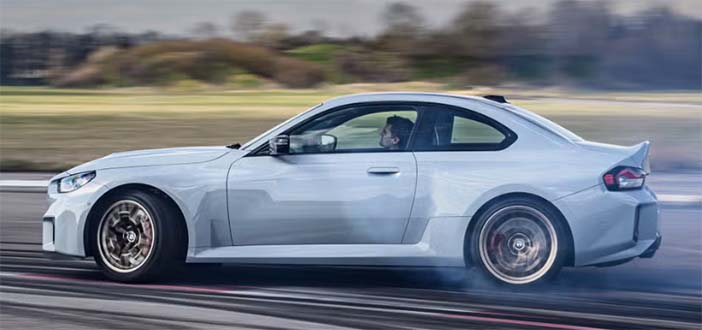
+++ In many ways, the BMW M2 carries the spirit of the original E30 M3. It’s small, 2-door only, and it can get rowdy when pushed. Practical performance isn’t its main priority, and it’s actively participating in production car-based motorsport. As the M3 is now the size of a ’90s M5, the M2 is as compact as it gets. If that wasn’t enough, the M2 CS was introduced for the 2026 model. Lighter, stronger and made more aggressive, it’s the ultimate road-going iteration of the compact sports coupe to date. BMW has built more than 2.000 of these cars, all of which have been spoken for in practically no time. The U.S. market got the biggest allocation with around 300 units, which still isn’t a lot all things considered. Canada only gets 81 cars, while South Africa gets 47. As a nod to its codename, Japan gets 87 units. That leaves the rest of the world fighting for the remaining 1.400 cars, give or take. It’s effectively sold out at this point, but there is a glimmer of hope. That said, you have to be living in Japan to actually have a chance at it, and you’ll need even more cash to be able to get your foot in the door. As if the M2 CS wasn’t destined to be a rare car, BMW Japan is introducing the M2 CS Edition Edge. It has actual upgrades over the ‘standard’ version that are well worth checking out, and of course, it’ll be even more expensive than a regular M2. So, what are the upgrades? For starters, there are more carbon fiber exterior parts in an effort to shave off a few more ounces from the car. Do remember that the CS is already around 50 kilo lighter than a regular M2, so every bit of weight savings helps. Even the engine cover is made from carbon fiber, so expect it to be less muffled. Speaking of muffled, the exhaust pipes get some attention, too. Instead of the usual quad-exit arrangement, this one gets four center exits instead. With that, you can think of this model as a CS with just about every part from the M Performance catalogue. The M2 CS carries a base price of ¥14,880,000 in Japan. However, the CS Edition Edge starts at ¥16,630,000. It’s not what anyone would call affordable, but that’s the price of exclusivity. Japan is the land of the limited edition, and BMW knows its target demographic there very well. And whereas 87 M2 CSs have been earmarked for Japan, the Edition Edge will be even rarer (just 40 to be made) with 20 in M Brooklyn Grey and the rest in Sapphire Black, all in right-hand drive. +++
+++ After years of relying on Ford and BMW engines, JAGUAR LAND ROVER regained control of its powertrain department with the Ingenium engine family. Introduced in 2015, it was available in 1.5-liter or 2.0-liter four-cylinder guises in both gas and diesel forms. The 3.0-liter inline-6 was added later on, and has been fairly reliable for what it’s worth. However, it’s the 4-cylinder models that still have been giving JLR grief, even after recalls and whatnot. A major recall was issued about a decade ago, but the problem continued to rear its ugly head to this day. The problems of early Ingenium engines mainly revolve around the diesels, but the petrol-fed versions aren’t spared, either. Four-cylinder Ingenium diesels have well-documented issues with balance shaft bearings. One of the bearing points is located near the exhaust system, and we all know that exposing parts to higher-than-normal temperatures can’t be good for longevity. So, what happens when those bearings wear out? Metal shavings may eventually enter the oil circuit, and putting those two together will have catastrophic results. Aside from scarring and scratching up the lubrication system, it can clog up lines, damage pumps, and eventually cause irreversible damage to the engine. This problem is further compounded by short-distance driving that doesn’t allow for frequent regeneration from the diesel particulate filter. That then leads to oil dilution and accelerated wear. The North American market is mostly spared from that issue, but the diesels were a popular option worldwide. Still, the petrol-powered Ingenium engines suffer from stretched timing chains, variable-valve timing solenoid issues, and higher-than-acceptable oil consumption. If there’s any consolation, though, the failure rates are much lower. For my European readers, it has been recommended to avoid the diesel engine outright, and for my American readers, be extremely cautious with the petrol motor. According to Auto Motor und Sport, the warning signs are not consistently reliable, and once you hear rattling noises from the engine, it may already be too late. Oil change intervals for the four-cylinder Ingenium engine are every 35.000 km, but I’ve seen recommendations to get that done before it hits another 15.000 km since last service. The publication also mentioned preventive fixes should help quell any fears, but changing balance shafts is an engine-out job that will easily cost thousands. A replacement engine won’t be of much help, either, as it’ll carry the same inherent faults. Even if you plop down money for it, the risks are merely reduced and not eliminated. +++
+++ There’s a new LEXUS LFA coming, that much is clear. It’s gorgeous and has plenty of the visual drama you would expect from a modern halo car, at least in concept form, although it came with one polarizing detail: it was announced to be a fully electric supercar. But now, a report out of Japan claims Lexus might be changing course. Best Car says the next LFA could show up as a plug-in hybrid instead of going full EV. There’s a pretty important disclaimer here, though. The Japanese publication has a knack for mixing dealer-level information, wild predictions and unsubstantiated speculation, so I advise taking this with a dash of table salt. The prediction gets a little murky. Best Car reportedly identifies a plug-in hybrid setup as the likely direction, while also acknowledging that the LFA has been tested in battery-electric form. This leaves us with 2 options: either Lexus is rethinking its EV game plan, or the final powertrain is still up in the air because the production car is nowhere near ready. Another possibility involves solid-state batteries, which could eventually make the all-electric idea work. Bottom line: the LFA’s powertrain saga is anything but settled. A plug-in hybrid supercar isn’t exactly a tragedy. Lamborghini’s already shown with the Temerario that hybrids can pack a serious punch (even quicker than the Revuelto flagship) and still keep an engine behind the seats. The real question is: is that what LFA fans are actually looking for? The original LFA is a tough act to follow, and not just because of its spec sheet. That screaming, Yamaha-tuned V10 was the heart and soul of the car. Throw in a featherweight carbon-fiber body and a wild, high-revving personality, and you had something that stood out from the usual supercar crowd. That’s why the idea of a heavier, more complicated plug-in hybrid LFA might not sit well with purists. Sure, more power and quicker sprints are great, but extra batteries and technology could take the car further from the sheer magic that made the first LFA so special. Still, the new LFA isn’t just vapourware. A camouflaged prototype already tore up the 2026 Goodwood Festival of Speed, and its shape looks a lot like the concept we’ve seen. As for the plug-in hybrid talk, remember: it’s all still rumour territory. In the end, the new LFA’s fate probably hinges less on what keyboard warriors think and more on what the deep-pocketed buyers actually want in their next supercar. +++
+++ MERCEDES-AMG owners generally expect their cars to deliver blistering performance and luxurious interiors. They probably don’t expect the AMG badge on the seat to become a source of injury. But that’s exactly what 2 drivers allege in a new federal lawsuit against Mercedes. The class-action lawsuit claims that raised metallic AMG emblems embedded in certain Mercedes seats can become dangerously hot when exposed to direct sunlight. According to the plaintiffs, the badges can retain enough heat to cause burns when they come into contact with a driver’s or passenger’s skin. It’s an oddly specific problem for a brand that spends enormous amounts of money engineering virtually every detail of its cars. The alleged issue stems from the badges themselves. Unlike a printed or stitched logo, the affected AMG emblems use metal, which can absorb and retain heat when the car sits in direct sunlight. That makes the badge a potential localized hot spot even when the surrounding seat isn’t nearly as hot. One plaintiff alleges that the badge became hot enough to leave an AMG-shaped burn mark on her skin. It’s a particularly ridiculous issue because it turns one of Mercedes’ most recognizable performance symbols into the source of the problem. The lawsuit claims Mercedes knew or should have known about the potential risk but continued using the design. If the allegations are ultimately substantiated, the case could raise questions about how seemingly cosmetic components are evaluated for occupant safety. The case also highlights an awkward reality of modern luxury cars: even tiny decorative details can create unexpected engineering problems. Mercedes spends years developing AMG powertrains capable of producing hundreds of horsepower, yet the lawsuit alleges that a piece of branding inside the cabin can become a hazard under the right conditions. The plaintiffs are seeking class-action status and damages, although the allegations have yet to be proven in court. Mercedes will have an opportunity to respond as the case progresses, and the lawsuit itself does not establish that every vehicle equipped with the badges presents a safety hazard. For Mercedes-AMG owners, however, the lawsuit raises a remarkably simple question: how did a badge end up being the hottest thing about the car? +++
+++ If you sat in a new MERCEDES-BENZ vehicle recently, you’ve noticed that there are more screens than ever before, and their size has expanded massively too from only a few years ago. The tri-screen MBUX Hyperscreen setup, for example, which can measure up to 56 inches wide in some high-end models, is the largest display in a Mercedes-Benz production car, spanning from one side to the other of the dashboard. Screen-heavy interiors have been criticized in recent years by customers because they have led to a massive reduction in the number of physical buttons. With an increasing number of controls moved from real switches to screens, it’s not surprising that many owners have complained about this. Speaking recently with media, Mercedes-Benz CEO Ola Källenius has acknowledged such concerns, noting that “the industry as a while might have gone a little bit too far” toward digital controls, noting that the Stuttgart-based automaker is trying to fix things in this respect. The executive told that Mercedes-Benz is bringing back actual buttons such as physical controls on the steering wheels of its cars. “Sometimes you get a bit ahead of yourself and do technology for the sake of technology and maybe forget a little bit about the customer. So from now on, you will see us reintroduce the most sensible buttons”, Källenius said. Sadly, that’s where the good news ends for drivers who prefer physical buttons to screens. Mercedes’ head honcho suggests we’ve seen nothing yet when it comes to screens. “I don’t think we’re at maximum screen, but we are at low buttons”, Källenius told when asked how Mercedes interiors would continue to evolve from the current models. Does that mean Mercedes-Benz may put even more screens inside its cars? On a vehicle fitted with the full-size MBUX Hyperscreen (and even the smaller Superscreen setup found in cars like the new CLA), it’s hard to imagine where more screens could fit besides the center console. On the door cards? On the headliner? It remains to be seen, but until then, you should know that Källenius is very proud of the latest displays found in current Mercedes-Benz models, even though their arrival has coincided with a drastic reduction in the number of physical buttons. The latest CLA, for example, features just 4 buttons, a volume scroller, and the hazard switch; for everything else, the driver needs to access the display. “We spend countless hours on UI (User Interface). I spend hours every year discussing this with our engineers and we joke it needs to be so easy that either a 5-year-old kid or a Mercedes board member can use it”, Källenius told. “That is the hurdle, and once you familiarize yourself with it, it becomes second nature”. +++
+++ RENAULT is currently considering next-generation versions of both the ultra-successful 5 and Clio, but boss Fabrice Cambolive said the French manufacturer’s “first objective” is to add some “purely new models” to its existing line-up. The brand has enjoyed considerable success in recent years by adding retro-themed EVs, such as the 4, 5 and Twingo, alongside a growing line-up of hybrid models, such as the Clio, and including a range of new SUVs that have adopted classic nameplates. While he didn’t rule out more retro-inspired models, Cambolive insisted Renault won’t fill its line-up with them, instead saying any such model “has to fit into the modern era”. He added: “You can go retro if you have a purpose, but if you don’t have one, you will fail”. Renault is aiming for a balanced line-up, Cambolive said: “You should be on one-third iconic cars, like R5, R4 and Twingo; one-third saga cars that are not icons but in the mind of people, like Clio and Scenic; after that you have to let your designers propose something purely new. You are dead if you just live in the past. Our first objective now is to bring into the market some purely new models, because we don’t have to count on the past with R5 and Clio”. Cambolive gave no firm details about what those new models might be, although he said he doesn’t see room for additional cars in the current line-up. But he noted a trend towards offering global cars that are then heavily localised for each region. While the new Clio has only just been launched, Cambolive said that, ahead of the next-generation 5, Renault is prioritising “seeing what will come after today’s Clio”. Given the likely product cycle, the next-generation Clio is unlikely to arrive until the mid-2030s. Cambolive added: “We feel that in Europe, we have a kind of uncovered sub-segment, which is the B-hatch-segment ‘low drive’ (non-SUV), where we need to invent the successor of Clio, and this is what we are working on now. “We are trying to understand the potential of the B-hatch, and at which size: a B-hatch now should be 4.1-4.2 metres. How do you cover this, when you need to have not an SUV but a hatch? And which type of car should you go for: sportivity, practicality, versatility and so on? This is what we are trying to anticipate with Clio for the next generation”. Pressed for details, he said the next-gen Clio “shouldn’t be retro”, explaining: “Clio is a kind of saga car, and we have to think about the new Clio in this way, not to try to put the new Clio in the totally electrified world. It’s a little too soon to answer you. I don’t know if we will have a combustion engine at this stage”. Notably, the next-generation platform that Renault is developing can accommodate both pure-electric and range-extender powertrains. Cambolive said: “What we’re saying is that in 2030 we want to be 100% electrified, out of which 50% is BEV, and now the trend is going even higher towards BEV than what we said. It means it’s a little too soon to answer to you but, frankly speaking, we will be in a pure-electrified world when the next Clio arrives”. Cambolive said Renault will renew the 5 for a second generation but added: “I don’t know if we will reinvent the R5 in 5 years, but we will try to come with something which is a game-changer in terms of the appeal of the car”. For that process, he said: “We are in a phase where we try to understand the recipe of R5, because it’s not obvious to say ‘it’s a success because of this, this and this’. The firm will shortly introduce a major update featuring more powerful motors and a bigger battery. As part of that engineering programme, Cambolive said the team “detected some weak points on the car” but noted:
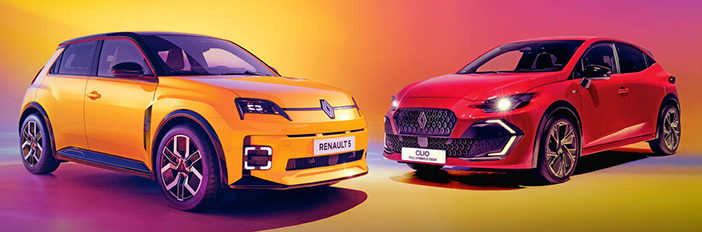
“The good thing is we detected those weak points before people were giving us feedback on them, which shows they were able to think about the car without compromise. What is important is not to try to compensate for all the weak points of the car but to come with something with additional value, it can be another body type; it can be something based on another pleasure; it can be co-branding with somebody, like Mini is doing with Paul Smith. I don’t know yet. It’s difficult to really say what are the key factors of the success of R5, but I would say that the key factor is that we didn’t make any compromise. That’s because we didn’t listen to people internally and externally who told me: ‘You should put hybrid on the car. If you want to be successful, you have to have a combustion engine on the car’. But we didn’t do it because we don’t try to correct the weak points. We emphasise the pleasure and the added value in the life cycle.” +++
+++ For years, motorists have tried every trick to wriggle out of a speeding ticket. From claiming a broken speedometer to pretending they were rushing to an emergency, traffic officers have heard it all. Today, a modern twist on the classic roadside excuse is rapidly gaining traction. Drivers are increasingly pointing their fingers at their dashboards and blindly blaming the sophisticated algorithms running their cars. This technological scapegoating comes at a pivotal moment for the automotive industry. As lawmakers finally scramble to write autonomous vehicle laws, a dangerous culture of confusion has firmly taken root among everyday consumers. People erroneously believe that turning on a premium driver-assistance feature instantly absolves them of basic driving responsibilities. The harsh truth is that hands-free driving software never grants immunity from traffic enforcement. The reality of this widespread confusion played out recently when one of Parker’s police officers stopped a motorist for a blatant traffic violation. The TESLA driver was caught flying down the asphalt, traveling at a dangerous 105 kph in a clearly marked 70 kph zone. Instead of handing over their license with an apology, the individual boldly decided to argue their case right on the side of the road. The motorist was absolutely adamant that they were not personally responsible for the excessive speed. According to the officer, the driver flatly stated, “I wasn’t driving. I had auto assist on”. The roadside confrontation did not end there. The confident driver even demanded to speak to a police supervisor, convinced that the vehicle’s active driver-assistance features legally cleared them of any wrongdoing. Local police quickly shut down that defense, issuing a stern public reminder to the community. They emphasized that whether a vehicle has adaptive cruise control, lane centering, or full self-driving capabilities, the human behind the wheel is always legally responsible. That means obeying posted speed limits, staying completely engaged, and retaining full control to help keep Parker’s roads safe. Here is the uncompromising lowdown. Driver assistance technology is fundamentally designed to assist you, not drive for you. The false sense of security these programs provide is actively making roads more dangerous. Automakers aggressively market these systems with futuristic names, but the underlying software still strictly requires a fully attentive human ready to take over in a split second. This glaring marketing disconnect is precisely why prominent automakers are currently under immense scrutiny. With regulators aggressively investigating questionable safety data and companies facing massive ongoing legal troubles, the legal framework surrounding autonomous tech is tightening. You cannot blame the computer when you are sitting in the driver’s seat. Slow down, always pay attention, and remember you are accountable for the vehicle’s actions. +++