+++ Car shopping is still crazy. New inventory is recovering but still not meeting demand, and used car prices are all over the map. Some models seem less popular than others, and their prices reflect that, but some used cars have actually increased in value over the years, which is a nearly unheard-of turn of events. iSeeCars, an analytics and car shopping firm, runs several research studies throughout the year in the United States to judge car prices and trends, and its latest DEPRECIATION study holds a few surprises. The vehicles with the lowest depreciation (or best resale value) over 5 years are: Jeep Wrangler: -7.3%, Jeep Wrangler Unlimited: -8.7%, Porsche 911: -14.6%, Toyota Tacoma: -14.9%, Honda Civic: -16.3%, Subaru BRZ: -18.2%, Ford Mustang: -19.4%, Toyota Corolla: -19.8%, Nissan Versa: -19.9% and Chevrolet Camaro: -20.2%. Most models on the slowest depreciation list will come as no surprise to anyone with even a passing interest in cars and shopping. Popular vehicles like the Jeep Wrangler, Porsche 911, Toyota Tacoma and Honda Civic comprise the list of slowest depreciating vehicles over 5 years, while a who’s-who of luxury brands brings up the rear. The Jeep Wrangler depreciated slowest, losing just 7.3 percent of its value over five years, when the overall market shows a 33 percent average depreciation over the same period. Amazingly, when you look at just the first 3 years after new cars leave dealer lots, you discover that some vehicles actually appreciated: Porsche 911: +5.7% increase, Toyota RAV4 Hybrid: +2.5% increase, Jeep Wrangler Unlimited: +2.0% increase, Porsche 718 Cayman: +1.8% increase and Jeep Wrangler: +0.3% increase. The Porsche 911, Toyota RAV4 Hybrid, Jeep Wrangler Unlimited, Porsche 718 Cayman and Jeep Wrangler grew in value over their new MSRPs by as much as 5.7 percent, which represents $11,373 over the original price in the case of the 911. iSeeCars found that midsize pick-ups, sports cars and fuel-efficient vehicles held their values best. “The market is pricing late-model used cars as though they were new. If shoppers can’t buy a new car, the next closest thing is a used car with low miles, thus the appreciation in value for these cars”, according to Karl Brauer, executive analyst for iSeeCars. Overall depreciation is slowing across different time periods. iSeeCars analyzed three-year depreciation and found that it declines an average of 16.9 percent, which is much slower than the same average last year, which measured 23.8 percent. Demand for new vehicles is strong and supplies are still tight, leading to a rise in prices and a slowing of depreciation. The firm wisely advises buyers to think about depreciation when buying a new car, as it impacts resale value, and can cost thousands in just a few years. +++
+++ HONDA posted on Wednesday a 16% rise in second-quarter profit and lifted its full-year outlook, as better pricing, strong sales of motorcycles and a weak yen helped it ride out semiconductor shortages. While Japanese automakers, like many of their overseas rivals, have been hit by shortages of chips and supply chain snarls, Honda has been helped by robust performance in its motorcycle business, particularly in Asia. The company also said it was helped by pricing that reflected its “increased product value” and by reducing consumer incentives. The automaker raised its forecasts “to reflect our efforts to further improve profitability, higher automobile sales volume and the impact of the yen’s depreciation”, Honda executive vice president Kohei Takeuchi told a results briefing. Still, he noted there were plenty of pressures, including inflation. Operating profit totaled 231.2 billion yen ($1.59 billion) in the 3 months to end-September, short of the average estimate of 243.3 billion yen in a poll of 10 analysts by Refinitiv. The same period a year earlier, the company earned 198.9 billion yen. Honda raised its full-year operating profit forecast to 870 billion yen from 830 billion yen for the year ending March 31 mainly helped by weak yen. That compares with a 922.05 billion yen average forecast by 24 analysts. The automaker was forced to consistently cut vehicle production at 2 domestic factories as Covid-19 outbreaks and semiconductor shortages caused delays in parts shipments. Production of its Vezel (HR-V in Europe), Stepwgn minivan and Civic were all hit. Its global vehicle production for the first 6 months of the financial year was down 6.1% year on year while domestic production was up 5.5%. +++
+++ The LAMBORGHINI Huracán Sterrato will be the firm’s final model to be powered purely by a combustion engine when it is unveiled in December. The Italian firm confirmed the news today, as it revealed that the off-road-oriented version of the Huracán will be uncovered at Art Basel in Miami (between 1-3 December). This will bring to an end almost 7 decades of pure Lambo sports cars, which have been joined by the Lamborghini Huracán Tecnica and Lamborghini Urus Performante this year. The Lamborghini Aventador’s replacement will get a hybrid power boost. Due in 2023, the electrified powertrain will continue to draw the bulk of its power from a highly strung, large-capacity V12 engine, but with a new hybrid element that, suggest bosses, will make it significantly more powerful than today’s model. Yet before its arrival, the firm’s final ICE-only car (a road-going version of 2019’s Sterrato concept) has been seen testing in snowy conditions. It will essentially launch in a segment of its own as a high-riding, off-road-ready supercar. Speaking previously about the car, boss Stephan Winkelmann told: “We have to play out of the normal field and I think we have a great opportunity to do something special in the super-sports car business which hasn’t been seen so far”. Asked if ‘unexpected’ cars such as this are more interesting for him than retro-inspired creations like the Countach LPI 800-4, Winkelmann said: “For sure. Retro cars are good from time to time. I think the Countach was a great thing. But our brand has to look forward. We have to have a big windscreen and small rear-view mirrors. “It’s important to understand the history, to look into what happened in the past, but the projection has to be that we have to be innovative; we have to be disruptive and always unexpected”. +++
+++ LANCIA is a shadow of its former glory, having been reduced to one model and a single market, but it deserves a better future. Parent company Stellantis has pledged to revitalise the troubled marque by making large investments to expand the portfolio and sell cars outside Italy once again. Back in May, 3 new models were announced, with a next-generation Ypsilon supermini in 2024, a larger crossover in 2026, and a new Delta in 2028. We will be getting a first taste of what the future has in tow for the fabled automaker on November 28 during the Lancia Design Day. It’s touted as being the first event of the “Lancia Renaissance” to preview a fresh design language that will shape next-generation cars arriving in 2 years’ time. Icons of the past such as the Aurelia, Flaminia, Fulvia, Beta HPE, Gamma, Delta, Stratos and the Rally 037 will serve as the foundation for the new styling direction. Details about the new models are limited, although we do know the new Ypsilon will be about 4 metres long and is going to have an electric powertrain. Lancia’s flagship coming 2 years later will stretch at 4.6 metres, while the 2028 Delta is set to be a “sculpted and muscular car, with geometric lines” measuring 4.4 metres. The Italian brand plans to launch only EVs from 2026 and will exclusively sell electric cars from 2028. Interestingly, Lancia will utilise the highest percentage of recycled material among all Stellantis brands, with half of the touchable surfaces being made from eco-sustainable materials. With the 3 new cars in the pipeline, the company estimates it will be able to cover about 50 percent of the market. The expansion outside Italy will start with France, Germany, Spain, Belgium, Luxembourg, and The Netherlands. A network of 100 dealerships will be active in 60 major cities, but Lancia estimates half of its customers will prefer to buy cars online. +++
+++ NISSAN ’s profit fell 68% in the last quarter as a shortage of computer chips hindered the Japanese automaker’s ability to deliver vehicles to its customers. Nissan reported Wednesday that its profit was 17.4 billion yen ($119 million) in the July-September, down from 54 billion yen the same period a year earlier. Quarterly sales jumped to 2.5 trillion yen ($17 billion) from 1.9 trillion yen a year ago. The company’s chief executive, Makoto Uchida, acknowledged the company faces various headwinds, including a chips supply crunch that has slammed the global auto industry amid lockdowns and other restrictions related to the pandemic. “But I can say our operations are definitely improving”, he told reporters. Officials apologized to all those who had to wait for their Nissan cars to be delivered because of the semiconductor shortage. On the plus side, a weak yen has helped Japanese exporters, including Nissan, by boosting the value of overseas earnings when translated into yen. But Uchida said a volatile exchange rate was more of a risk because of Nissan’s widespread global operations. The U.S. dollar, at about 110 yen a year ago, is now trading at nearly 150 yen. “We find a stable currency as most desirable”, said Uchida. The rising cost of raw materials, as inflation pressures spread around the world, is another challenge, according to Nissan, based in the port city of Yokohama. Uchida and other company officials declined comment on Nissan’s talks with alliance partner Renault. He said any decision on reshaping the alliance will be announced. Nissan’s brand power has been tarnished by a scandal centered around its former chairman, Carlos Ghosn, who was sent in by Renault to lead Nissan for more than 2 decades. Ghosn was arrested on various financial misconduct charges in 2018, including under-reporting his compensation. He jumped bail and fled in late 2019 to Lebanon, which has no extradition treaty with Japan. He says he is innocent. Nissan lowered its vehicle sales outlook for the fiscal year through March to 3.7 million vehicles from an earlier projected 4 million vehicles. Nissan sold 3.8 million vehicles in the fiscal year that ended in March. Nissan raised its annual profit forecast to 155 billion yen ($1.1 billion) from an earlier 150 billion yen ($1 billion). Nissan earned 215 billion yen in the last fiscal year. The company said it remains bullish about electrification. It believes that’s gaining momentum as environmental concerns spread among consumers. +++
+++ Elon Musk’s TESLA has tumbled below Warren Buffett’s Berkshire Hathaway in market value, as investors continue to swap out riskier stocks for safer options, and worry Musk’s Twitter takeover could be a costly distraction. Tesla’s market capitalization fell to just over $600 billion as of Tuesday’s close, well short of Berkshire’s $645 billion market value. Buffett’s company has officially reclaimed its spot as the fifth-largest company in the S&P 500 index. That’s a striking reversal, given shares of Musk’s electric-vehicle maker soared from a split-adjusted $30 at the start of 2020 to north of $400 last November, lifting the company’s market cap from under $100 billion to over $1.2 trillion at its peak. According to latest figures, Tesla stock has plunged by 52% this year, wiping roughly $600 billion from the automaker’s market cap. Meanwhile, Berkshire shares have slid just 3%, leaving the conglomerate’s market cap virtually intact. The contrast in their fortunes reflects how differently investors perceive the risk of holding each of their stocks. Musk’s company has been hammered by a wider exodus from technology stocks in the face of stubborn inflation, rising interest rates, and a looming recession.Fast-growing businesses promise to earn the bulk of their profits in the future, but those dollars become less appealing when prices are rising, and savings accounts and bonds are offering larger, guaranteed returns. Moreover, tech companies’ lofty valuations, lack of steady cash flows, and more speculative investments often make them more vulnerable to economic downturns. Also, Musk recently closed his $44 billion buyout of Twitter, and is now in the process of revamping the social-media platform, laying off roughly half its workforce, and trying to stop it from hemorrhaging cash. He just sold about $4 billion of Tesla stock, likely to service the loans he took out to finance his takeover. Close followers of Tesla fear Musk has become less focused on the automaker, and might sell more shares, which could temper the company’s prospects and drag down its stock price. Berkshire stock has fared better this year as investors consider it a safe place to keep their money. Buffett’s company actually benefited from higher interest rates and a stronger dollar last quarter, reflecting its mountain of cash and bonds, and its largely domestic focus. Buffett is also known for prizing stocks and businesses with strong brands that dominate their markets, such as Kraft Heinz and Coca-Cola, as they’re able to raise prices to offset inflation. Moreover, Berkshire is hugely diversified, so a housing-market crash or a plunge in retail sales is unlikely to eviscerate its earnings. Notably, Berkshire has poured upwards of $25 billion into Chevron and Occidental Petroleum this year, and now counts the two oil-and-gas companies among the top holdings in its stock portfolio. Those bets have soared in value this year, as Russia’s war with Ukraine continues to roil energy markets and drive up prices, which has helped to offset weakness in other parts of Berkshire’s business. Tesla could find another gear and zoom past Berkshire in market value, but for now at least, Buffett has the bragging rights over Musk once again. +++
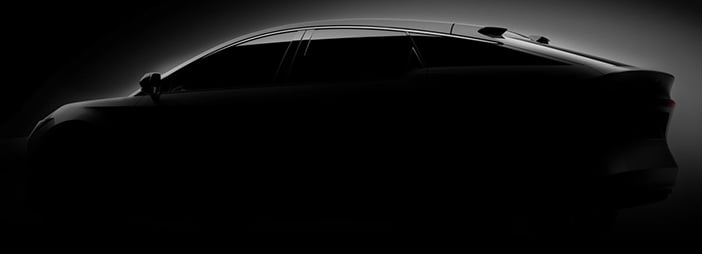
+++ TOYOTA will reveal a new hybrid model, understood to be a successor to the Prius, on Wednesday 16 November. The car was previewed by an image posted to the firm’s Japanese social media accounts today, featuring the strapline “Hybrid Reborn” underneath a headlight. This indicates that the new model will use a different hybrid powertrain to today’s car, such as a plug-in hybrid system, or a motor-generator set-up (where a petrol engine generates electricity, while an electric motor drives the wheels) as used in the Nissan Qashqai e-Power. The new car is likely to be based on Toyota’s existing TNGA platform, which underpins models as varied as the Toyota Yaris, the Toyota Corolla and the new Lexus RX. +++