
+++ BMW has confirmed plans to introduce a 9th generation version of its iDrive operating system in 2023, saying it will boast updated touchscreen and voice-based functionality as well as a new “content-driven” interface that replaces the existing tile-based home screen with a 3D map-based layout. Set to launch in the second-generation X2 before being rolled out in other BMW models, the new iDrive 9.0 operating system forgoes the Linux-based software used by today’s iDrive 8.0 for an all-new Android-based package that the German car maker says provides it with faster and more seamless operational capabilities. Further advances include a new app store function developed by BMW at its software centres in Germany, Portugal, USA, Brazil, Japan and China. The new iDrive 9.0 operating system will also get 5G over-the-air (OTA) capability for faster internet search capability and downloading of software updates, according to Christoph Grote, senior vice president of electronics and software of the BMW Group. Other refinements centre around the digital air conditioning controls, which have been extensively reworked and simplified. As well as the new X2, iDrive 9.0 will also be introduced to the new X1 and 2-series Active Tourer. Each model does away without the iDrive controller that has been part of every new BMW since 2001. However, Grote says it will continue to be a feature of other new upcoming BMW models in the future. Mini models set to launch in 2023, including the new Hatch and a production version of the Aceman, will also receive the new iDrive 9.0 system, albeit with a specific Mini interface, according to Grote. Current BMW models are planned to receive an update to the existing Linux-based iDrive 8.0 operating system. Dubbed iDrive 8.5, it is planned to launch in the upcoming i5 in 2023 before being introduced in the recently launched 7-series and i7 via a planned OTA. Grote says iDrive 8.5 will mimic the functionality and interface of the newer Android-based iDrive 9.0 operating system. However, it does without the new app store function. +++
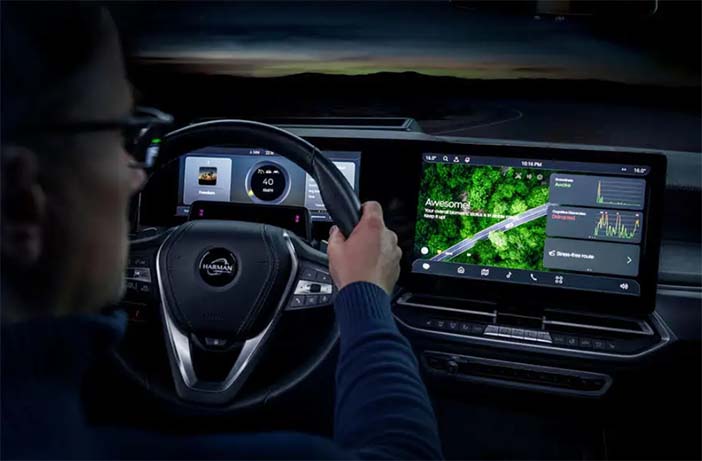
+++ How people interact with cars is changing at a rapid pace, but in some respects, it hasn’t kept up with the expectations of modern consumers. That’s especially true of the screens in cars, which have lacked the clarity, colour and definition of not just TV screens but also smartphones. At the Consumer Electronics Show (CES) in Las Vegas, Armin Prommersberger, senior vice president of product management at automotive technology supplier HARMAN , showed how that could all be about to change. Considering that Harman is owned by Samsung, it’s odd that it has taken so long, but finally the technology of its new Ready Display interface promises to deliver true black instead of grey, more vivid colours and much better clarity. “Auto makers can bring HDR quality displays from the living room into their vehicles”, he says. “Our relationship with Samsung allows us to integrate consumer electronics expertise into our innovation process, ensuring the experiences we create are built at automotive grade, with actual users in mind and in partnership with some of the world’s top consumer electronics experts”. The screen tech, called Neo QLED Auto, uses Quantum Dot film and mini-LED backlighting to provide a high-definition display that’s almost the same quality as an OLED television at home, but without the cost. It will also be good news for those who want to watch movies or play games while their electrified vehicle is charging. There is also a new core piece of hardware called Ready Upgrade. It looks simple enough, like an old car stereo component without a screen, but it’s likely to become the key to how people interact with their cars, including adding software and apps through Harman’s Ready on Demand. It all uses the Android Automotive Operating System and is linked to a toolkit that means the entire interface can be set up by a car company’s design team using a series of drop-down menus. It’s true plug-and-play, with a hardware upgrade likely to be every 18-24 months, says Prommersberger. The question is how that hardware upgrade will be delivered for a customer, with speculation that it could be carried out at the end of a vehicle lease, during a major service or as part of a subscription package. Here, too, Harman is working on a number of solutions for the pricing of software upgrades or the unlocking of hardware. BMW came in for criticism over the idea that drivers will have to pay to unlock heated seats, but Prommersberger says it’s something consumers will have to get used to. He compares it to a smartphone, which comes as standard with certain features but customers are used to paying extra to download apps or features to tailor the phone to the way they want it. Many will argue that it’s not quite the same when paying tens of thousands of pounds for a car, but it does seem to be the direction things are moving in. Then there’s the matter of how distracting all this technology is, and while safety is often about the physical structure of a car or its driver assistance features, it’s also increasingly about what Eric Theisinger of Harman refers to as “mind on road”. To try to keep a driver focused, he and his team have developed Ready Care, a suite of hardware and software that observes visual, cognitive and vital signs to tailor its intervention as needed. A simple infrared camera in the system monitors the driver’s heartbeat while another makes sure their face is alert and their eyes are focused on the road ahead. It’s a simple system to fit, with the potential to be installed not just by the car companies in new models but also perhaps at the request of insurance companies for new drivers. Another new system is Harman’s Ready Vision, which incorporates elements such as augmented reality, smart navigation, vehicle-to-infrastructure communication and a head-up display that uses an in-car camera to automatically adjust to the driver’s eye level. It’s all designed to be informative without being distracting and to provide intelligent safety awareness for when a driver might have other things on their mind. Harman supplies many of the major car makers, including BMW and the Volkswagen Group, and Prommersberger says these new products are ready to go, so could be rolled out to new cars as soon as this year. +++
+++ KIA is making strides into the EV market with its latest models, and the Korean firm will continue this momentum by launching nine new pure-electric cars in Europe by 2027. The announcement forms part of Kia’s business roadmap leading up to the year 2030, which will see it launch 14 new electric cars globally. This electrification push is a key component in Kia’s bid to sell 4 million vehicles annually by the end of the decade, with over a quarter of these units predicted to be battery-electric vehicles (BEVs). Several of these new electric cars will be based on the brand’s E-GMP electric architecture that underpins the firm’s EV6. Kia has trademarks for badges ranging from EV1 to EV9, and the latter will join the EV6 in the line-up when it’s revealed this year. Drawing from the Concept EV9 which made its debut in 2021, the large SUV will offer 7 seats and a boxy, upright design inspired by the show car. A small EV4 crossover is also expected to arrive in the near future based on a shortened version of the E-GMP platform. This BMW iX1 rival could offer more than 480 km of range thanks to powertrain tech borrowed from the EV6, and the firm’s future models are set to offer over-the-air updates and ‘Feature-on-Demand’ services for the first time. Another one of Kia’s goals for 2030 is to become a leading global Purpose Built Vehicle (PBV) brand. The Korean maker will build these PBVs for corporate customers in an effort to meet a forecasted 5-fold increase in demand for bespoke products by 2030. For now, these PBVs will be built upon existing platforms, such as the e-Niro Plus, and will be aimed at taxi fleets and ride-hailing services. From 2025, however, dedicated skateboard platforms for models of this type (PBVs) will be introduced. These skateboard architectures (so called because the rolling chassis houses the battery, drive motors and suspension) are flexible in size and feature modular bodies, which can be easily swapped out to meet the needs of each business. Across its manufacturing facilities, Kia will also be switching to more sustainable production methods, recycled materials, and renewable energy where possible. +++
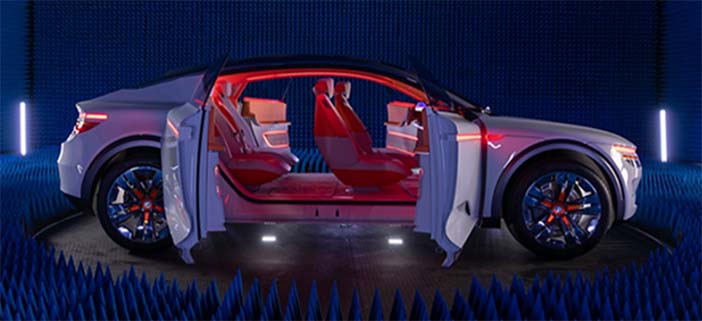
+++ American electronics giant QUALCOMM has built a concept to show car makers the potential of its next-generation technology, including a digital ecosystem, state-of-the-art voice control and high-end artificial intelligence (AI). Revealed at CES in Las Vegas, the unnamed concept has been designed to present the firm’s new Snapdragon Digital Chassis technology, which powers a “highly personalised and intuitive” in-car experience for the driver. According to Qualcomm, it “demonstrates the possibilities for auto makers looking to innovate next-generation user experiences”. The firm claimed that vehicles will become highly personalised in the future, making use of cloud data, device configuration and AI. Designed with 4 doors (the rear of which are rear-hinged), the concept takes the form of a coupé-style fastback, with a front lightbar, a panoramic sunroof and premium digital displays for the driver and passengers. Technologies showcased include in-car AI and face recognition, which can detect each individual in the car and adjust settings according to their preferences, such as climate, seat position and recently used infotainment applications and content. Each ‘zone’ can also make use of individual audio settings, with personalised noise-cancelling and echo-cancelling, zonal phone calls and engine-noise suppression, the latter implying the technology isn’t specific to EVs. Qualcomm says other software, including voice control, has simplified the traditional touchscreen with a powerful new voice-control system powered by Soundhound. Other brands that Qualcomm has partnered with for its new system include Amazon Music, Bose, Zoom and games designer Vector Unit. The concept’s front display, designed in partnership with Taiwanese tech firm AUO, measures 55in pillar to pillar and is curved with a built-in camera for video calls. The size of the displays in the rear of the car aren’t detailed, but Qualcomm said they can be used for online video games and media streaming. “There’s little doubt that technology has driven significant changes in the automotive industry, but the biggest are yet to come”, Qualcomm said in a statement. “The Snapdragon Digital Chassis concept vehicle brings the software-defined vehicle to life, showcasing an array of applications and services that allow consumers to extend their digital life into their vehicle”. +++
+++ In the UNITED KINGDOM, 5 months of consecutive growth at the end of the year could not prevent new car sales falling to their lowest ebb in 30 years, according to figures for 2022 just released by the Society of Motor Manufacturers and Traders (SMMT). The decline, blamed primarily on supply chain shortages, especially of semiconductors, left total sales at 1.61 million units, 2.0% lower than 2021’s Covid-affected levels and around 700.000 lower than the figure for 2019, the most recent “normal” year. Despite the full year’s weakness, SMMT’s CEO Mike Hawes revealed an 18% improvement in December sales (which totalled 181.000 cars). This was the latest gain in a trend the SMMT believes will lead to a 15% improvement in 2023 sales to about 1.8 million vehicles. The extra 190,000 vehicles will be worth around £8.4 billion, it estimates. Despite the difficulties of 2022, the UK still reclaimed its traditional position as Europe’s second-biggest car market behind Germany, a position it had conceded to France. SMMT chief executive Mike Hawes believes that despite recent warnings of weakening demand arriving in other consumer sectors, the car market’s slow improvement in component availability, and thus supplies of vehicles, combined with a continuing pent-up demand from impatient buyers, should allow the car market to buck a downward trend already being established for other consumer goods. During 2022, component shortages led car makers to prioritize deliveries of (more expensive) zero-emission vehicles. Battery-electric vehicles (BEVs) accounted for 16.6% of full-year sales which sent them above UK diesel volume for the first time. Plug-in hybrids (PHEVs) accounted for only 6.3% of sales, a decline on the previous year, but more conventional hybrids (HEVs) also rose in popularity to capture an 11.6% market share. As a result, the UK’s average CO2 level for new cars fell 6.9% to 111.4 g/km, the lowest figure ever. The market’s growing preference for BEVs was most strongly demonstrated in December, when the proportion of total sales rose to 32.9%, augmented by the arrival of a large delivery from Tesla. The Model Y and Model 3 took first and second positions in BEV sales rankings, the Model Y nailing down third position outright behind the Nissan Qashqai and Vauxhall Corsa. Mike Hawes again drew attention to the slow growth of the UK’s EV charging infrastructure, pointing out that for the government’s lower target of 300.000 public charging points to be reached by 2030 (initially it talked of a need for 300.000 to 700.000 charging points) at least 100 new points would need to be brought on stream daily until 2030. At present, the figure is 29 points. He also pointed to a continuing need to convince private car buyers of the need to adopt electrification. While private buyers were responsible for around half of 2022’s new car purchases, business buyers and fleets were responsible for nearly 75% of the volume gain. “Delivering the scale and speed of market transition required to meet climate change targets will require action to encourage more private buyers to go electric”, he said. The SMMT used today’s announcement to call on the government to expedite its long-promised Zero Emissions Vehicle Mandate, which aims to flesh out many of the details, exceptions, penalties and compliance details that will apply to the sale and use of BEVs beyond 2024. No details of this key document have yet been revealed, and informed experts say they may not be available until mid-year. “Manufacturers’ innovation and commitment have helped EVs become the UK’s second most popular car type”, says CEO Mike Hawes. “However, for a nation aiming for electric mobility leadership, this must be matched with policies and investment that remove consumer uncertainty over switching, not least over where drivers can charge their vehicles. The Nissan Qashqai has finished 2022 as the UK’s best-selling car. As 1 of 4 SUVs in the final top 10, the Qashqai (42.704 units sold), which is built in the UK at Nissan’s Sunderland factory, secured top spot after a strong finsh to the year, pulling far ahead of the the reigning Vauxhall Corsa. (35.910 The Corsa, meanwhile, dropped down to second place. The Tesla Model Y (35.551) finished in third, becoming the UK’s best-selling electric vehicle in the process. The Ford Puma (35.088) and Mini (32.387) round out the top 5. Next came the Kia Sportage (29.655), the Hyundai Tucson (27.839), the Volkswagen Golf (26.558), the Ford Kuga (26.549) and the Ford Fiesta (25.070). This is the last time we’ll ever see the Ford Fiesta in the UK’s top 10 bestsellers list. That’s because the hallowed supermini will be axed next year, bringing an end to 47 years of production. +++
+++ In the UNITED STATES, shortages of computer chips and other parts continued to hobble the auto industry last year, contributing to vehicle sales dropping 8% from 2021 to their lowest level in more than a decade. But there’s good news for consumers in the gloomy numbers: Vehicle supplies on dealer lots are growing, albeit slowly, and automakers expect at least a small easing in prices this year as inventories grow. Automakers reported Wednesday that they sold 13.9 million cars, trucks, SUVs and vans last year as the parts shortage limited factory output amid high demand for new vehicles. It was the lowest sales number since 2011 when the economy was recovering from the Great Recession. But sales were up slightly in the 4th quarter and inventories grew as parts supplies improved enough to increase production a little. Analysts are now expecting sales to grow by roughly 1 million to around 14.8 million this year as demand remains strong. But they’ll still be far short of the normal 17 million per year before the pandemic. With many models still in short supply, though, the average new vehicle price rose 2.5% in December to a record of just over $46,000, according to J.D Power. There are signs, however, that prices may be starting to ebb a little as inventories expand. Toyota, for instance, finished the year with just under 24.000 vehicles on Toyota and Lexus brand dealer lots nationwide. That’s up from about 19.000 at the end of 2021, but still far short of the 300.000 during normal years before the pandemic. The improvement, although small, is allowing consumers to haggle a little on some slower-selling vehicles such as sedans, and even some luxury vehicles. But they’re still getting top dollar for gas-electric hybrids and other more popular vehicles that are sold before they arrive on lots, said David Christ, general manager of the Toyota Division. For most of last year, people who wanted new vehicles had to pay sticker price or above and take whatever models and colors dealers could get. But dealers have told Christ that changed a bit in the past 2 or 3 months for models that aren’t as popular. Plus, he said more people are interested in lower-cost vehicles because inflation and higher interest rates are taking a bite out of their budgets. “They’re coming in and saying, ‘Hey, can I get a deal here?’ “, Christ said. “I do think that on some vehicles, not just in our brand, and across the industry, there has become a little more of a buyer’s market where the customer can negotiate”. Whether that holds up all year remains to be seen. If demand stays strong and people are willing to pay sticker price, then dealers will get that, Christ said. But if demand wanes or supplies increase dramatically, discounts could rise and prices could drop a bit. Jessica Caldwell, executive director of insights at Edmunds.com, said Toyota’s experience is likely to repeat itself through the industry with small price decreases on some models. “There isn’t as much disposable income to be put into a vehicle”, she said. “We’ve seen prices high before, but we’ve never really seen higher prices with the (higher) interest rates”. But electric vehicles and other hot sellers will remain expensive because people want to buy them now, she added. Caldwell doesn’t see vehicle supplies or prices returning to pre-pandemic levels this year, and she’s not sure if we’ll ever get back to 2019 levels. The computer chip shortage dates to the spring of 2020, when automakers were forced to shut down factories due to rapidly increasing Covid-19 cases. Chip makers shifted production to consumer electronics to feed a computer and gaming sales boom when people were stuck at home. When the auto plants restarted earlier than expected, chip makers weren’t making as many semiconductors for automobiles, which must be made to withstand vibration and huge temperature extremes. Auto chip production has improved, but still isn’t back to pre-pandemic levels, so auto plants still aren’t back to their full output. As a result, the 13.9 million vehicles that automakers sold last year was about 1.2 million below 2021 numbers. General Motors, with full-year sales up 2.5%, retook its traditional spot as the nation’s top selling automaker. Toyota, which won the crown in 2021, saw its sales fall 9.6% last year. Ford reports sales later. Sales at Stellantis, formerly Fiat Chrysler, dropped 13%, while Honda sales plummeted 32.9%. Hyundai posted just under a 1% increase to outsell Nissan, whose sales tumbled 25.4%. Kia sales fell 1.1% for the year, while Subaru was down 4.7%. Electric vehicle sales hit more than 807.000 last year, up almost 65% from 2021. Pickups and SUVs were 77.3% of sales while cars dropped to 22.7%. +++