+++ AUDI is rapidly losing ground in South Korea against other imported automakers here amid plummeting vehicle sales triggered by an absence of new vehicle lineups due to its electric vehicle strategy. The German automaker reported an 88 percent decline in vehicle sales in February compared to a year ago, the largest among foreign carmakers here, according to data from the Korea Automobile & Mobility Association (KAMA). The automaker also ranked 12th in cumulative vehicle sales for the first 2 months of this year after selling only 447 vehicles during that period. For the first time in nearly 3 years, Audi Korea has dropped out of the top-10 ranking among foreign automakers in its category. A spokesman at Audi Korea said the delayed launches of new cash-cow models (such as the A6 e-Tron) dragged down overall sales figures. “The A6 successor’s release date is still unconfirmed, and the absence of the new model has contributed to the overall decline in sales here”, the Audi Korea spokesman said. In contrast to Audi’s situation, the local subsidiaries of premium German automakers like BMW and Mercedes-Benz recently launched their upgraded mid-sized best-selling models, namely the 5-Series and E-Class, respectively, in the Korean market. However, Audi Korea said it does not have any immediate plans to change its group-wide strategy for electrification, simply because of declining auto sales. “Our headquarters remain steadfast in our commitment to timely electrification efforts”, the Audi Korea official said. “We do not have any plans to shift our strategy for the time being”. Industry officials also attributed Audi Korea’s weak performance to the absence of new vehicle launches. They said the firm’s current strategy does not align with the trend-sensitive appetite of Korean customers. “Vehicles from BMW and Mercedes-Benz remain beloved by Korean customers, as the automakers respond promptly to demand from sensitive customers here by launching more diverse lineups and releasing new models here faster than any other markets”, an official at a foreign automaker said. However, Audi Korea remains committed to its electrification-focused strategy, despite the current market slowdown for electric vehicles (EV) both domestically and internationally, according to the official. “In response to the sluggish growth of the electric vehicle industry, Hyundai and Japanese automakers like Toyota are ramping up efforts to boost sales of their hybrid vehicles”, he said. Hit by the stagnant demand, Audi Korea is on track to shut down its sales offices in Seoul and surrounding cities. +++
+++ AUDI is fundamentally changing its key compact executive range in 2024, replacing the longstanding A4 nameplate with a pair of new A5 models. This is in-line with Audi’s new naming convention that separates its combustion and electric ranges. As the next generation A4 goes electric, the A5 moniker will be reimagined into a fresh Sportback and a new Avant. The new pair of Audi A5s will act as direct rivals to the Mercedes C-Class and BMW 3 Series, but will not extend into any further body styles, killing off the 2-door Coupe and Convertible. Yet the Sportback and Avant models will still feature low-slung and sleek styling. They’ll also each get high performance S models with an all-new flagship Audi RS5 Avant on course to join the range next year. That new all-electric A4 e-Tron, as it’ll be called, is still a few years off but we know it will be based on Audi’s all-electric PPE platform when it does arrive in late 2026 or 2027. This will leave the A5 to do the duties in the compact executive class with a range of combustion powertrains, most including mild hybrid or plug-in hybrid technology. As the Sportback name would suggest, the A5 will adopt both a sleeker silhouette and a rear hatchback in place of a more upright three-box design like the old A4. The new A5 will diverge greatly from the existing models, adopting Audi’s new design language. This is seen in new elements like a slimmer low-mounted grille, plus thin LED headlights which help portray a wider and more aggressive stance. Flush-fitting door handles, fresh alloy wheel designs and a rear light bar round out the exterior changes. The Audi A5 interior will be totally new, debuting a more contemporary interior layout dominated by a new generation of digital interfaces. We don’t expect the triple-screen layout from the new Q6 e-tron here, as Audi will likely retain this for its upper-level EVs and more premium offerings. Physical controls will be kept to a minimum, but the functionality of key controls surrounding the air-conditioning and driver assistance systems are understood to be much easier to access than in current VW Group products. The next A5 will sit on a highly upgraded version of the previous car’s MLB platform, although it’ll be badged PPC. This will support a line-up of heavily updated combustion engines, which Audi’s chief technical officer, Oliver Hoffman, describes as “the best the company has ever launched”. Most of the line-up will be based around an updated version of the Volkswagen Group’s omnipresent EA888 turbocharged 2.0-litre 4-cylinder petrol engine. Improvements will include new variable-section turbochargers that claim to improve throttle response and a higher-pressure fuel injection system. Hybridisation will play a key role in the A5 range. The petrol engine will be offered with 48 volt mild-hybrid technology at the lower end of the line-up and full-blown plug-in hybrid technology at the upper end of the range. The latter option will probably introduce a new and more energy dense battery pack in order to rival systems found in comparative Mercedes C-Class and BMW 3 Series models, so it’ll need to offer an electric-only range of around 1o0 km in order to compete. Prototypes of the new S5 Sportback and Avant reveal a design that will be almost identical to S-Line versions of the A5, but feature the few S-specific styling elements including the typical quad exhaust finishers. Later in 2025, Audi will also reveal an all-new RS 5 Avant, this time utilizing a new high performance plug-in hybrid V6 powertrain. It’ll also feature an even more distinctive body with widened arches and aggressive design details, with a high emphasis on making it feel more distinct from the base cars. This will rival the Mercedes-AMG C63 S E Performance and pure combustion BMW M3 Touring when it arrives, potentially splitting the 2 cars on power. I have seen the A5 and S5 testing for several months now, so a 2024 unveiling for both cars seems likely. I expect a bump in price for the new A5, not only over the current A4’s starting price, but also over the current A5’s entry-level price. +++
+++ BMW apologized to Chinese drivers after the country’s annual consumer-day TV show singled out the 530Li model’s transmission shaft for producing “disturbing” noises. BMW caught heat at last year’s Shanghai auto show over claims that its booth favored foreign visitors at an ice-cream giveaway. +++
+++ In CHINA , electric vehicles with built-in fridges and even in-car karaoke systems are considered passe. Instead, carmakers are turning to increasingly novel add-ons from beds to cooktops to boost sluggish sales. Top EV makers are facing a slowdown in demand at home as consumers curb spending, just as geopolitical tensions with major Western economies cloud the outlook for exports. Meanwhile for smaller players, the ability to think creatively is core to their survival, with the cutthroat industry bracing for a likely wave of consolidation as China looks to rein in the excesses left behind by years of generous subsidies. The high-tech offerings also highlight the risk for Western manufacturers should they fall even further behind in carving out market share in the world’s biggest auto market. China-made vehicles are viewed by local customers as better suited to their extensive technology demands and preference for high levels of connectivity. +++
+++ KG MOBILITY (KGM), a stalwart in the South Korean SUV scene previously known as Ssangyong, has set an ambitious total sales goal of 147.000 units for this year, a 26.6 percent increase from last year, as it aims to penetrate overseas markets in Europe and Southeast Asia, away from its home turf dominated by Hyundai-Kia. By doubling down on its legacy of tough-looking, rugged SUVs, the company is incorporating cost-effective production strategies, including electrification, and targeting the niche market for pickup trucks. Last year, the company celebrated its first annual operating profit in 16 years, selling 110.699 units, with sales split similarly between domestic and international markets. The company credited its growth to vigorous marketing strategies across Europe and Latin America. The international success of its flagship SUV, the Torres, played a significant role in this achievement, marking the company’s highest overseas sales volume since 2014. The Torres has been well-received for its blend of classic ruggedness and modern aesthetics, offering spaciousness and the latest tech at competitive prices. Despite the hurdle of lower brand recognition and achieving cost-effectiveness abroad, KG Mobility’s renewed market position and ambitious strategies now present a clearer path toward capturing overseas demand. The European market has emerged as a crucial focus for KG Mobility, accounting for nearly half of its international sales last year, a notable increase of over 50 percent on-year. Eastern Europe, in particular, saw sales of 12.095 units last year, with Belgium and Hungary leading the way in May achieving sales of 1.432 units. “We’re taking KG Mobility global by playing to our strengths and ensuring we fit into the local scenes. Europe’s big on the EV scene, and we’re diving in headfirst with our Torres and the upcoming electric version, the EVX. We are syncing up with local dealers to go all-in”, said KG Mobility chairman Kwak Jae-sun during the launch of the Torrest EVX last year. In anticipation of the Torres’ global arrival in the first half of the year, KG Mobility has ramped up its worldwide service capabilities. In 2023, the company hosted 4 training workshops for quality and service managers from 23 key export markets, including Europe, at its Pyeongtaek Technology Center in Gyeonggi Province. KG Mobility is also set to boldly enter the Vietnamese market by starting local knock-down production in Da Nang’s Thua Thien Hue Industrial Park in the third quarter of this year. In collaboration with the FUTA Group’s Kim Long Motors, this move navigates around the high shipping costs and steep auto tariffs in Southeast Asia. The company plans to start with 15.000 vehicles and aims to boost production to 60.000 units by 2029, leveraging Vietnam’s rapidly growing automotive market, which is projected to hit 500.000 annual car sales by 2025. The plant will first roll out its leading models, including the Torres, Tivoli and Korando, and plans to add the Rexton and Musso pickup trucks to the lineup next year. Expanding pickup truck production signals tapping into a niche, yet promising and profitable market for KGM. Despite accounting for a smaller segment in Korea, its Musso series, also known as Rexton Sports and Rexton Sports Khan in South Korea, dominates the local pickup truck market with an 87 percent share. “There’s a growing appetite for affordable pickup trucks in Southeast Asia and KG Mobility is uniquely positioned to meet this demand”, said Lee Hang-koo, director of the Jeonbuk Institute of Automotive Convergence Technology. But KG Mobility faces the task of keeping its prices competitive internationally, for example with its Torres EVX, which stands out in Korea for its affordability. Despite its domestic success, where it undercuts competitors like Hyundai’s Ioniq 5 by around $3.000, the company now confronts rising shipping costs and stringent regulations overseas. A sharp uptick in the Shanghai Container Freight Index, a barometer for ocean freight rates, primarily illustrates this challenge. The index, which reflects the cost of shipping containers, surged from 1.010 in December of the previous year to over 2.200 by September, signaling a significant uptick in logistics expenses critical for KG Mobility, particularly given the pivotal role of the Port of Shanghai in global shipping dynamics. Despite a robust financial performance in 2023, with an operating surplus of 12.5 billion won ($9.4 million), up from a 2022 loss, KG Mobility’s cost structure and profitability remain especially vulnerable to logistics costs. “KG Mobility’s strategic adjustments will still pay off, at least in the short term. The Pyeongtaek plant is back on track after last year’s fire, and with the positive reception of the Torres EVX, along with the anticipated launch of a new Torres model, the company should be on track to hit its sales targets”, said Song Sun-jae, a researcher at Hana Securities. +++
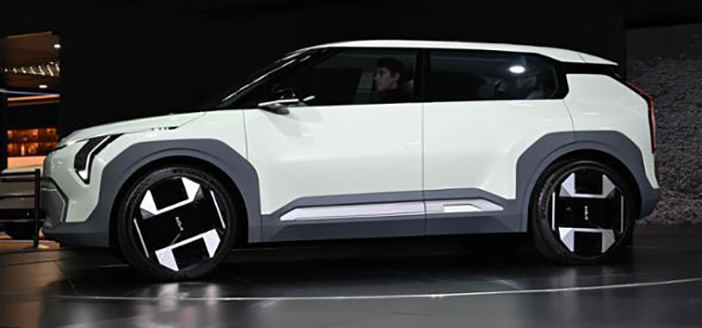
+++ KIA boss Song Ho-sung on Friday said the automaker is set to lead the mass adoption of electric vehicles with the upcoming launch of the EV3, its most affordable model to date. “Despite recent fluctuations in demand, the future of electric vehicles is undeniable. Leveraging the success of our EV6 and EV9 models, we are poised to introduce the EV3 this year, finally delivering a viable option for the average consumer”, Song said in the company’s annual shareholders’ meeting. The EV6, released in 2023, and the EV9, launched in 2024, received much praise. The EV9 was named the North American Car of the Year. He further detailed Kia’s proactive steps towards supporting the EV3’s launch, including enhancements in production, sales ecosystems and software solutions. This includes the development of the EVO Plant, a dedicated EV manufacturing facility at Kia Autoland Hwaseong, in Gyeonggi Province. Kia revealed the EV3’s price point of around $30.000 (€40.000 in the Netherlands) at the 2023 Los Angeles Auto Show. According to data from Cox Automotive, the average transaction price for electric cars was $53,469 in July 2023, compared to $48,334 for petrol-powered vehicles. Song also identified its purpose-built vehicles, revealed at the Consumer Electronics Show this year, as Kia’s future growth pillar and core business. Set to commence services next year, Kia’s PBVs are versatile, customizable electric vehicles tailored for commercial use, catering to diverse applications like robotaxis and delivery services. Kia sold over 3 million vehicles globally in 2023, including 536,660 in Korea and 2.563 million internationally, marking its most successful year since its inception in 1962. Despite this achievement, sales of EVs saw minimal growth, with a modest 3.8 percent increase from the previous year. “Last year marked a historic achievement for us, but we’re mindful of the challenges ahead. With the EV3, our strategy centers on the affordable mass adoption of EVs and expanding into new markets, preparing us to face economic and geopolitical uncertainties with agility and a focused approach”, said Song. +++
+++ Sales of imported cars from luxury brands such as Mercedes-Benz, Porsche and Bentley have plummeted in SOUTH KOREA during the first 2 months of 2024, coinciding with the government’s implementation of lime green license plates for corporate-owned luxury vehicles worth over 80 million won ($61,500). The Korea Automobile Importers & Distributors Association reported a 19.4 percent year-on-year drop in total imported vehicle sales in January this year to 13.083 units, marking the lowest sales figure since 2013. About 1 in 3 imported cars sold in Korea last year was priced above 100 million won. Effective January of this year, the Korean government mandates lime green license plates for corporate-owned vehicles priced above 80 million won to make them easily distinguishable from privately owned vehicles with white plates to discourage the misuse of tax cuts. Local companies have been able to take advantage of tax cuts, worth up to 8 million won ($6,000) per year, for vehicles purchased or leased for business purposes. This benefit, however, was frequently exploited, as the law did not cap the total deductible amount over time, allowing for the entire purchase price of luxury vehicles to be written off under corporate expenses. This loophole was also cited as a key factor driving up luxury car sales and the imported car market overall for years. Following the new scheme taking effect, corporate purchases of imported cars plummeted to 4.876 units in January alone; a sharp decrease of over 60 percent from 12.670 in December and about 52 percent lower than in November. Ultra-luxury brands with cars costing over 100 million won have been especially hard hit. Bentley, for instance, sold just 11 units in Korea last month, representing an 82 percent decrease compared to the same month last year, with sales in January also dipping to 13 units. This downturn stands out as the company set 3 consecutive annual sales records in Korea with monthly sales typically ranging between 60 to 90 vehicles. Mercedes-Benz also saw a dramatic fall in the sales of its most premium Maybach model, which is priced above 290 million won, with its sales plummeting to 55 units in January from an average monthly sales volume of 216 units last year. Representatives from luxury car brands remain cautious about attributing the decline solely to the new regulation, pinpointing logistical challenges. “The lime-green plate’s impact on our sales is undeniable, but it’s not the whole story. The shipping crisis caused by Houthi rebel attacks in the Red Sea, disrupting Suez Canal routes, is a major headache for our deliveries from Europe to Asia”, said a Mercedes-Benz Korea official. “Pointing fingers solely at the new plate for our sales dip oversimplifies things. The gap between ordering and receiving our new Continental GT models released last summer, which can stretch from 6 months to over 1 year, also plays a big role”, explained a spokesperson for Bentley Motors Korea. +++
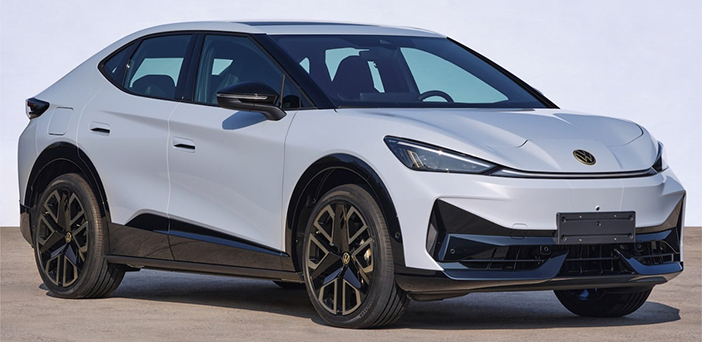
+++ The all-electric VOLKSWAGEN ID.Unyx has been revealed in China by the Ministry of Industry and Information Technology (MIIT) for the first time. It is a sister car of Cupra Tavascan, and the all-wheel drive model packs 2 e-motors with 340 hp output and a ternary NMC battery from CATL. The ID.Unyx will be manufactured by Volkswagen Anhui, a joint venture (JV) between Volkswagen and former Nio’s contract manufacturer Anhui Jianghuai Automobile Group, better known as JAC. The JV was established in 2017, with both parties holding even shares, but in 2020, Volkswagen raised its stake in the company to 75%. The Cupra Tavascan is manufactured in the same Volkswagen Anhui plant as the ID.Unyx, however, it is for export only, while ID.Unyx will be dedicated to the domestic Chinese market. The Volkswagen ID.Unyx will come in 2 variants: 1) AWD with 170 kW rear motor and 80 kW front motor with combined power 250 kW 2) RWD with a single 170 kW motor. The ID.Unyx is a 5-door, 5-seater on the MEB platform. Its dimensions are 4.663 x 1.860 x 1.610 mm and its wheelbase is 2.766 mm. The curb weight is 2.266 kg for the AWD version and 2.166 kg for the RWD version. The EV drives on 21-inch wheels and the maximum speed is limited to 160 km/h for both versions. The new EV will officially launch later this year, and the submitted application for a sales license hints the car will be unveiled formally soon, possibly at the Beijing Auto Show in April. +++