+++ The new ASTON MARTIN Valiant is a limited-run track-focused reworking of the exclusive Valour built to a brief from Formula 1 ace Fernando Alonso. The new road-legal special edition draws its power from a 745 hp 5.2-litre twin-turbo V12 and is set to make its public debut at the Goodwood Festival of Speed next month.
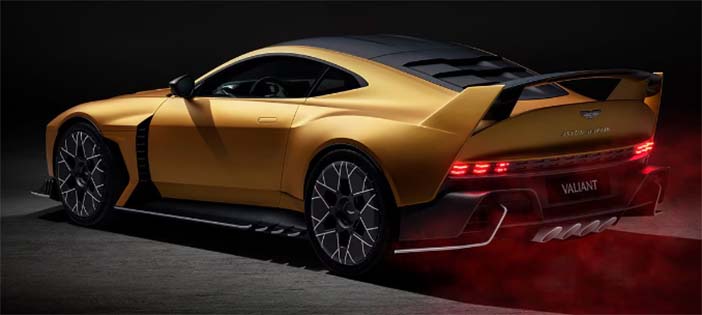
Just 38 examples will be produced by the Q by Aston Martin division. The Valiant is a development of the limited-run Valour from 2023, which was in turn based on a bespoke body structure derived from the V12 Vantage. Aston Martin says the new car has been created as a result of a “personal commission” from 2-time world champion Alonso, who drives for Aston’s F1 squad. Alonso said he wanted a “more extreme, race car-inspired version” of the Valour, prompting Aston Martin engineers to focus on adding power and downforce while reducing weight. The V12 engine offers the same 753 Nm as in the Valour, but the power (delivered through a 6-speed manual gearbox) has been boosted by 30 hp. Aston global brand chief Marco Mattiacci said the car has been treated to an “obsessive weight-reduction” programme. This includes the adoption of a 3D-printed rear subframe claimed to save 3kg with no reduction in stiffness, and a magnesium torque tube that removes 8.6 kg of mass from the centre of the car. The use of a lithium ion battery saves 11.5 kg, while the 21 inch lightweight magnesium wheels (featuring 275/35 front and 325/30 rear tyres) reduce unsprung mass by 14 kg. Although Aston hasn’t disclosed the car’s overall weight figure, the total saving compared with the Valour is around 100 kg.
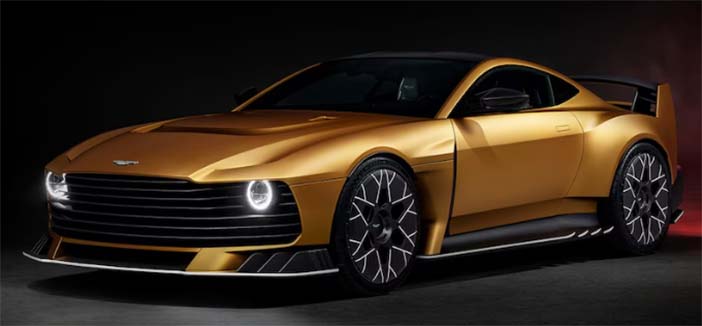
The Valiant’s bodywork has been largely sculpted in carbonfibre and a host of styling changes from the Valour add downforce while reducing drag. There is a large front splitter, which features F1-esque multi-layer end plates to smooth airflow past the front wheels. The carbonfibre grille is claimed to increase the flow of air to the engine and the wings are heavily sculpted. Aero discs are mounted on the wheels to reduce turbulence, with six inlets positioned to draw cooling air onto the carbon-ceramic brakes. There are also apertures around the wheel to allow the heat generated by the brakes to dissipate. The rear features a Kamm tail design with a raised deck lid, topped by a large fixed wing. Underneath sits a large rear diffuser honed using computational fluid dynamics, with 4 titanium exhaust pipes mounted within.
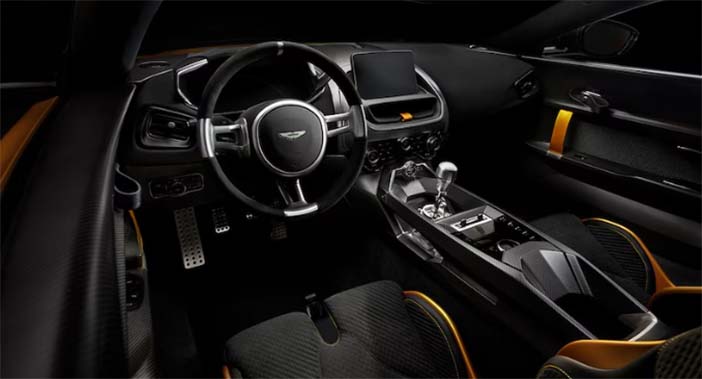
The interior of the two-seater has a focus on motorsport-esque functionality, with large swathes of exposed carbonfibre. A new, circular steering wheel features a slimmer frame and has been stripped of all switches for a more intuitive feel. The gear selector is also a new design and a large cutaway in the transmission tunnel shows off the gear linkage. To fit its track-focused brief, the Valiant gains a built-in steel half-cage and Recaro Podium race seats that can be fitted with four-point race harnesses. There is a choice of Alcantara or semi-aniline leather trim and the door panels feature mesh inserts and fabric door release pulls. Aston has not disclosed pricing for the 38 Valiants that will be sold, but it is understood that each will cost close to £2 million and feature high levels of customisation. +++
+++ With the BUGATTI Tourbillon now being presented to the public, the company is looking at other models that could use its V16 hybrid drivetrain, and a revival of the stunning Type 57 SC Atlantic is one likely option. Asked if the engine can be moved around in the monocoque to allow for different silhouettes, Bugatti design chief Frank Heyl told: “Certainly. I mean, look at the Type 57 SC Atlantic: it’s front-engined. So maybe later, but for now we are super-happy that we went this way”. He suggested that the expanding scope of Bugatti’s Sur Mesure bespoke division could go as far as creating entirely separate model lines for limited-run, or one-off creations: “We started, with Bollide, bringing coachbuilding back by using a drivetrain or rolling chassis and dressing it up in a different design. “We continued to change with the Centodieci and La Voiture Noire was crazy as a one-off car. Who knows what will come. That’s an interesting aspect and it’s a growing market, and it’s especially relative to the kind of breed of customer that Bugatti serves. This aspect of ultimate individuality is very, very important. “We’d like to develop the brand into a Couture (few-off, one-off, unique) kind of thing”. The ‘S’ in SC stands for ‘surbaissé’; ‘lowered’ in French, which references the ground-hugging silhouette of Bugatti’s 1930s grand tourer, a characteristic facilitated by the engine being mounted behind and underneath the front axle; indeed it was the world’s first front-mid-engined car to reduce the bonnet height. Asked if that could be technically possible with this new V16, Bugatti’s chief technical officer, Emilio Scervo, would only go so far as to tell Autocar, cryptically: “We can shuffle bits around”. CEO Mate Rimac has said he sees combustion engines playing a role in Bugatti’s long-term future, because the low volumes and mileages of its cars make the need to electrify less urgent, which means the Tourbillon’s mammoth hybrid powertrain is highly likely to find its way into other models. He has not suggested what these will look like, but emphasised that “Bugatti has not always just been sports cars”, hinting at the potential for diversification. Launching the Tourbillon first, though, was the priority because “Bugatti has to have a hypercar”. Other models can come later, he said. The Tourbillon already takes heavy influence from the Type 57 (in its C-shaped side section, 2-tone paintwork and prominent body centre line) but a more direct successor to the 1930s car would ape its proportions more closely, with a long, probing nose and a swooping, cab-rear silhouette. Rimac stopped short of suggesting any potential launch timings when pressed. “One step at a time…”, he said, referring to the Tourbillon as the “very first step” of Bugatti’s new era. Bugatti toyed with the idea of a front-engined 16-cylinder GT before, revealing the Galibier concept in 2009 as a 4-door sibling to the Veyron with the engine at the other end. +++
+++ After more than 3 years of testing in some of the world’s toughest conditions, the new LAND ROVER DEFENDER OCTA is ready to be unveiled on 3 July 2024. And one week later, the “high-performance all-terrain hero” will be roaring up the famous 1.16-mile hillclimb at the Goodwood Festival of Speed. The forthcoming halo variant of Britain’s iconic 4×4 is powered by a new V8 engine and has been through an extreme, globe-trotting development programme that included testing on countless types of terrain, from the famous Nürburgring Nordschleife race circuit in Germany to the rock crawls of Moab, Utah, along with a French rally stage and the deserts outside Dubai for good measure. In all, the engineers put the Land Rover Defender Octa through nearly 14.000 additional tests, on top of the standard car’s testing regime. Before the Octa’s public debut, prospective buyers attended 1 of 7 exclusive ‘Defender Elements’ events held at private locations around the world. They’ll have needed to place their orders quickly, as only a limited amount of Defender Octas will be available to customers for the first year of production. Described as the “toughest, most capable and luxurious Defender ever”, the Defender Octa will be powered by a twin-turbocharged mild-hybrid V8. It’ll be the same 4.4-litre BMW-sourced motor that’s used at the top of the Range Rover line-up, in cars such as the 635 hp Range Rover Sport SV. Whether the Defender Octa will have the same amount of firepower has yet to be confirmed. Teaser images from Land Rover don’t reveal too much about the car, although we can see the new Octa diamond badge on the steering wheel, a revised section of bodywork below the headlights and a set of chunky Brembo brakes, reinforcing the car’s performance credentials. The most recent spy shots show the Defender Octa will sport a new front bumper, wider wheel arches, a new set of wheels and to the rear a new exhaust system. The interior will also feature its own updates, with elements like the unique Octa drive mode selectable from the lower section of the steering wheel. This power will be sent to all 4 wheels via an 8-speed transmission and Land Rover’s latest generation 4-wheel drive system. The other big piece of technical news is the adoption of the same 6D Dynamics suspension system that’s also found in the new Range Rover Sport SV. This system essentially pairs an air-spring setup with hydraulically cross linked dampers that also allow for the wholesale removal of the car’s anti-roll bars. This technology gives engineers the chance to totally change the behaviour of the suspension actively, depending on the surface. On tarmac, the system will be able to stabilise the Defender Octa under roll and pitch, while off-road the dampers can be slackened right off. Thanks to the lack of anti-roll bars, this ultimate Defender will also have increased wheel articulation, making it even more capable than the already impressive standard Defender model. Considering prices for the existing V8-powered Defender start from over €250.000 in the Netherlands, I expect the Land Rover Defender Octa will attract a price tag much closer to €350.000, of €50.000 more than Mercedes charges for its high-performance G 63 version of the G-Class. +++
+++ “There will be no battery-electric supercar before MCLAREN does it”, but much more research and development is needed before such a model is technically and commercially viable, the firm’s CEO, Michael Leiters, has said. “We are in a sourcing programme for a battery for a new plug-in car”, he added. Leiters said McLaren has “started an engineering programme to define” its first EV, but current battery technology would not allow it to achieve its lofty performance and dynamic objectives, hence the need for further R&D. “We have to stay with our core brand, with our DNA”, he said. “This is supercars and lightweight, and today this is something which is not available with an electric powertrain and it will need some time to develop this technology”. He said “it’s not a supercar if it weighs 2 tonnes and has 2.000 hp”, reaffirming his commitment to achieve a similar kerb weight to today’s V6 and V8 powered McLaren models, to ensure that it is “nimble on the street” and “has that perfect McLaren feeling”. McLaren’s core customer base is “sceptical” about the prospect of an EV supercar, he acknowledged, which is why it’s especially important that the Woking firm’s take on the formula is “convincing, and that means lightweight, and credible to the brand”. Leiters also suggested that beyond the technical complexities of producing an electric follow-up to the likes of the 750S and Artura, there is the “commercial” concern around residual values. “Our customers are quite wealthy”, he said, “but they don’t want to lose money. Residual values are crucial in this business and we have seen that residual values for BEVs are very critical and developing”. Bolstering the supply chain and fostering electric vehicle R&D projects in the United Kingdom is particularly crucial for McLaren, because the company remains fiercely committed to building its supercars in Woking. The prospect of foreign production is “not on the table”, Leiters said, citing the company’s “very specific skill requirements”, which are well catered to by its Surrey workforce. Meanwhile, McLaren is investing in a new V8 hybrid powertrain, developed in partnership with engineering firm Ricardo and due to be rolled out across the McLaren line-up, as Leiters envisions 90% of the firm’s sales will be hybrid in the next 3 to 5 years. On the subject of McLaren’s long-mooted SUV, conversely, he said current-generation battery technology could fit such a car’s more ‘lifestyle’ oriented use case, but the firm still has not decided whether it would be electric or plug-in hybrid. A “shared-performance” vehicle (as he refers to it) would help to “de-risk” McLaren’s business by providing it with a more volume-friendly proposition, but the company is still working to answer the question: “what does a customer want” in this segment? In order to achieve economies of scale and minimise its capital expenditure, McLaren could look to base any SUV model on a platform supplied by another manufacturer, but Leiters did not name any potential candidates. +++
+++ PORSCHE has issued a recall for all Taycan models worldwide after identifying a braking issue that has affected a small number of cars, but the firm has insisted that the car remains safe to drive. The German manufacturer has noted an issue concerning the front brake hoses, with a small number of cars developing cracks that causes brake fluid to leak out, which reduces the brake pressure and the effectiveness of the system. Porsche has not disclosed the precise number of cars affected by the recall, but it has sold more than 150.000 examples worldwide since the Taycan was launched in 2020. Cars that develop the fault will display a warning light on the dashboard. If an owner sees a warning light, they should drive their car to a dealership, while if a red light appears, they should contact Porsche and not use the car. Cars that are not showing a warning light remain safe to drive. “We conducted some internal quality analysis and determined that some failure can occur in some special cases”, said Taycan project manager Kevin Giek. “Safety is our top priority, so we decided we needed to optimise the brake hoses on the front axle and decided on a new construction. We have redesigned the hoses with new length, braking points and a new kinematic, and that makes us very sure that we won’t see this failure any more”. Porsche will write to owners inviting them to bring their cars to dealerships to have the replacement hose fitted. The work will take around 2 hours, will be done free of charge and won’t affect the warranty. Taycans that haven’t developed the fault remain safe to drive, said Giek: “If a customer gets the warning, they should really heed it and ask for a date and maintenance. But the rest work fine”. Giek said the issue has been identified on less than 1% of all Taycan models sold globally since it launched in 2020, but he added: “For us, this is enough to react. Most of the cases happen when the car is standing, and then you get the yellow warning message mostly when you are not driving the car”. Cases have been spread across a number of different countries. Porsche conducted extensive testing of the Taycan before its launch in 2020, and again with the recently launched facelifted model, but Giek said in more than 8 million kilometres of testing, it hadn’t seen a single example of the braking issue during that period. He added: “The first complaints we got made us ask: ‘What could have happened?’ So we did a really deep dive quality analysis on a few of the cases. We are not at the point where we can only say there’s one market affected, or only a small number, so we decided to make a new robust design even if it’s not needed”. +++
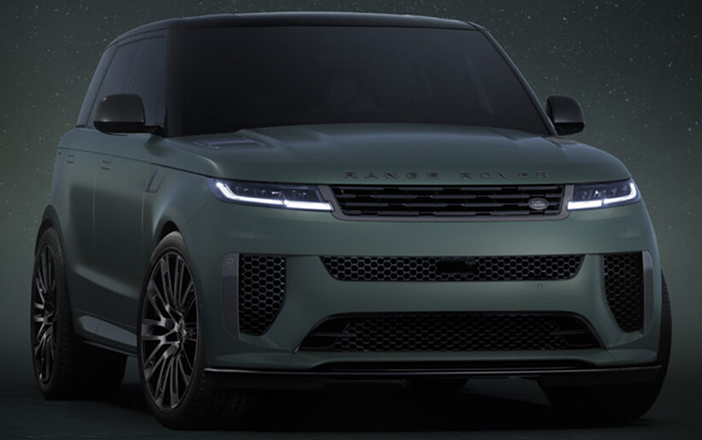
+++ A set of new special edition trims has been announced for the RANGE ROVER SPORT SV that are themed around “ancient mythology and the cosmos”. 5 new models will be available for buyers of the Range Rover Sport SV: Gaea, Theia, Io, Vega and Sol. The Gaea model is based on an Earth theme, as Gaea (or Gaia) is the Greek personification of the planet Earth. It features a matte green paint, carbon-fibre exhaust tips, bronze ceramic brake callipers, a black roof and special badging (photo). There are 2 interior options: Windsor leather with silver birch wood trim, or a black and grey fabric with black silver birch wood trim. Theia is the Greek goddess of sight and vision and a mythical planet. This version of the Range Rover Sport SV comes with satin grey metallic paint, 23-inch gold wheels and black brake callipers. The inside gets gloss black trim, beige Windsor leather and a carbon fibre section on the centre console. A ‘pimento’ red leather option is available, too. Io was one of Zeus’ lovers in Greek mythology and it’s also a moon of Jupiter in real life with over 400 active volcanoes. In the Range Rover Sport SV range, it gets glossy orange exterior paint, carbon-fibre tailpipes, a gloss carbon bonnet finish and 23-inch alloys with silver brake callipers. Inside, there’s a choice of Windsor leather colours, Rosewood finishes and carbon trim pieces. Vega is a bright blue star and that’s reflected in the trim it shares a name with, which uses blue gloss exterior paint. There’s a carbon finish for the bonnet, yellow brake callipers and 23-inch alloy wheels. Inside, there’s a choice of light or dark leather upholstery, or you can have blue trim, cloth and stitching to match the exterior. Sol is named after the sun, and gets a gloss yellow paint shade, 23-inch black alloy wheels, carbon-fibre tailpipes, a black roof and blue brake callipers. Inside there’s either a blue leather finish or black cloth with contrasting yellow stitching. There are no details on pricing yet, but don’t expect these special Range Rover Sports to be cheaper than the Edition One SV model’s €287.022 figure in the Netherlands. The Range Rover Sport SV comes with a 4.4-litre V8 with 635 hp, 4-wheel drive and a special suspension set-up. The special edition models will use the same mechanical parts. +++
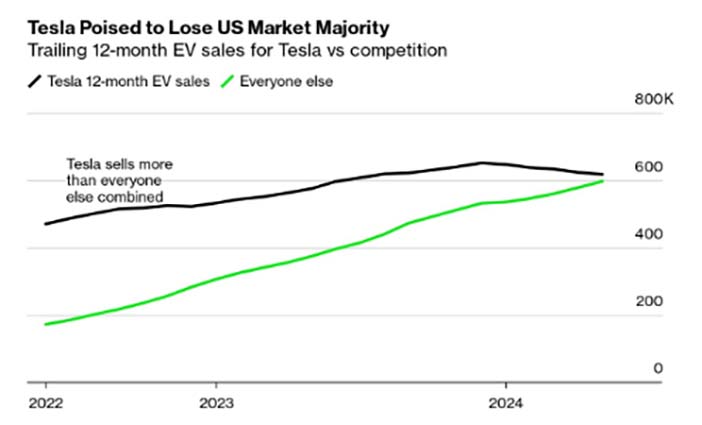
+++ TESLA is on the verge of losing a key bragging right: outselling all EV competitors in the United States combined. In the 12 months through May, Tesla sold approximately 618.000 electric cars on its homemarket compared with about 597.000 fully electric vehicles sold by other manufacturers. Next week, carmakers are slated to report second-quarter sales, which will include popular new models from General Motors, Hyundai and its affiliate Kia. +++