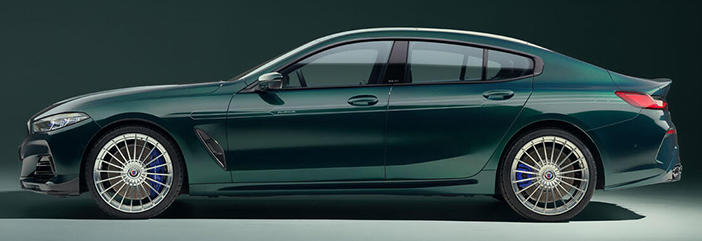
+++ ALPINA has revealed the B8 GT, understood to be its final model as an independent entity. The company formally known as Alpina Burkard Bovensiepen GmbH + Co KG will cease to exist after 31 December 2025, with ownership of the Alpina brand transferring to BMW. The B8 GT is therefore the final ‘proper’ Alpina, following the similarly conceived B3 GT and B4 GT. Based on the BMW 8 Series, the B8 GT represents the culmination of the brand’s engineering capabilities, packing the most powerful engine it has ever fitted in a production car. Its 4.4-litre twin-turbocharged V8 (shared with the B5 GT) is fettled to put out 625 hp and 850 Nm, yielding a 0-100 kph sprint time of just 3.3 seconds. It will go on to a top speed of 330 kph. Alpina said it has also modified the 8 Series’ 4-wheeldrive system and electronic differential for greater agility, sending a greater share of the engine’s power to the rear wheels. A new bulkhead strut is said to boost front-end feel and responsiveness and the suspension is tauter for improved body control at higher speeds. As well as the modifications under the skin, the B8 GT brings a number of aesthetic changes, with carbonfibre trim elements around the car and a new set of canards flanking the front splitter. The B8 GT rides on Alpina’s signature 21 inch wheels shod in Alpine-specific Pirelli P Zero tyres, measuring 245 mm wide up front and 285 mm wide at the rear. Inside, there are a number of references to Alpine founder Burkard Bovensiepen: his signature is embroidered into the front bucket seats and features along the door sills with backlighting. The interior is upholstered primarily in Merino leather, while Alcantara features along the seat centres and headlining. Just 99 examples of the B8 GT will ever be built, each priced from €295.000 in the Netherlands. That makes it the rarest and most expensive of the firm’s final 3 cars. Deliveries are earmarked to begin in July 2025 and production is expected to end before winter. Thereafter, Alpina will become a sub-brand of BMW in the same sense as its M motorsport division. Former Polestar designer Maximilian Missoni was named the new design boss of Alpina in September 2024. BMW has yet to clarify what form future Alpinas will take, whether they be highly modified BMWs (as they are today), bespoke models or simply variants of mainstream models. +++
+++ AUDI has confirmed the third-generation Q3 will arrive this year, with the premium small SUV set to renew its fight against the BMW X1 and Mercedes GLA. The announcement came as part of Audi’s 2024 financial results, when the firm also revealed the Q3 was its third bestselling car for the past year, behind the A6 and its biggest seller, the Q5. No specific date has been given yet for the launch of the new Q3, but I expect it early this year. The new Q3 will get design elements of the latest Q5 and all-electric Audi Q6 e-Tron, both of which were launched last year. This means a more aggressive look than the current model, which was launched back in 2018. At the front, there will be a wider, sleeker grille with a similar honeycomb pattern to the new Q5, and it’s flanked by a large set of air intakes. The led headlights will be slimmer on the new Q3 too, and we can also make out the individual pixel-like segments. The Q6 e-Tron gets the same technology, with drivers able to customise the daytime running signature of the units, while another lower down takes care of the dipped and high beams. The new Q3 will be longer than the outgoing model, which should translate into extra cabin space. To the rear, we can see a fairly subtle roof spoiler and light clusters that are influenced by those of the new Q8 e-Tron, and are presumably connected by a full-width led light bar. A more rakish, coupe-SUV called the Sportback should be part of the line-up as well. The new Q3 will be one of the last cars from Audi to come with an internal-combustion engine, offering petrol, diesel and plug-in-powered set-ups. Those looking for an upmarket all-electric SUV from the brand will be taken care of by the similarly sized Q4 e-Tron. The current Q3 is offered with 1.5 and 2.0-litre TFSI petrol engines, and a 2.0-litre TDI diesel motor. This new Q3 will probably feature a similar line-up, but select engines should benefit from 48 volt mild hybrid technology to boost efficiency. It’s very likely the new Q3 will also be offered with the Volkswagen Group’s latest plug-in hybrid powertrain, found in other SUVs such as the VW Tiguan and new Cupra Terramar. The set-up includes a 1.5-litre turbocharged petrol engine and 6-speed automatic gearbox, working together with a 115 hp electric motor and 19.7 kWh battery. Equipped with the same running gear, the plug-in hybrid Q3 should offer more than 110 km of pure-electric range. I’ll also keep my eyes peeled for a hot RS variant that will sit at the top of the range, and feature the 400hp 5-cylinder petrol engine from the latest Audi RS3. Alongside its previously mentioned German rivals, the Q3 will also have to contend with the Alfa Romeo Tonale and the Mini Countryman. +++
+++ Fully AUTONOMOUS CARS are “not close” and unlikely to go into full use on public roads until well into the next decade, according to the automotive boss of tech giant Nvidia. The Californian firm produces the advanced computing systems and software that are being used by a large number of leading car firms, including JLR, Mercedes-Benz and Volvo, to underpin self-driving technology in next-generation vehicles. Nvidia has invested heavily in expanding its presence in the car industry in order to capitalise on the growth in demand for its chips, driven by autonomous technology. But Ali Kani, head of Nvidia’s automotive division, said truly autonomous cars will “not appear in this decade”. He added: “It’s a next-decade marvel. We’re not close. It’s super-hard”. While several cars offer limited autonomous capability in certain controlled situations, Kani said the ability for cars to truly drive themselves requires another step forward in computing power and technology. “The software we’re developing right now is so different than the software we were developing last year”, he said. “We’re working on large-language models now, like ChatGPT with video, and nobody was doing that in automotive 3 years ago. That kind of model needs a lot more computing power, a lot more memory bandwidth. You need more sensors like lidar and radar, and you need redundant algorithms to ensure it’s safe, and those need to run in parallel, which means more computing”, Kani said that while the current generation of driver assistance systems works through planning software that pre-defines actions in certain situations, truly autonomous cars will be required to behave more naturally. “When the car is following planned rules, you get this herky-jerky behaviour and ghost braking. And you’re like: ‘I don’t like this car. I don’t feel safe.’ But the next generation of cars will learn behaviour, so it’s a natural understanding. That’s when you start to say: ‘Whoa, this car is driving so calmly and smoothly’ ”. Kani also stressed the need for caution in pushing development of self-driving technology. He said: “The industry needs to go slowly with this. If one firm makes one mistake, the whole industry gets pushed back a few years. So we have to act in the most responsible way and not take any shortcuts. You can only do it when you have proven that it is really safe”. +++
+++ The DACIA Sandero was Europe’s best-selling car last year, the brand has claimed, with 309.392 examples leaving showrooms. Citing provisional figures, Dacia said this was a 14.5% improvement on the 2023 total and meant the Sandero accounted for almost half of its 676.340 total sales tally. It was also the first time the Renault-owned brand sold more than 300.000 examples of its affordability-focused hatchback in a single year. The Sandero was followed by the Duster, which was Dacia’s second best-seller in Europe with 215.024 sales across the second- and third-generation models. +++
+++ DS aspires to rival Rolls-Royce and Bentley as it targets a move beyond the premium segment and into the luxury sphere. That’s according to design director Thierry Métroz, who said the Stellantis-owned French brand’s “dream is to be the Louis Vuitton of the automotive industry”. Métroz said: “We are premium now, but our mission is to be more than premium. We would like to try to touch the luxury feeling”. Métroz cautioned that this “takes time”, and despite it being a long-term goal for DS, the brand may never get there. He continued: “It’s a lot of work, as the brand is very young. We only launched the brand in 2014. It probably takes more than 10 years, maybe 20 years more to have the positioning of a luxury automotive brand”. On how DS could achieve “our dream”, he said: “We need to be very focused on the quality of the details”. Métroz explained that the Numéro 8 already took inspiration from Bentley in its interior, including the material use and its application. “It’s a very luxurious interior”, he said. “Compared to our German competitors, it’s about the quality of the materials and the details of the interior. It’s a luxury taste. It’s not German for the interior; it’s more like Bentley. It’s not Bentley, of course, but the kind of inspiration is more Bentley or Rolls-Royce than Audi or Volkswagen”. When asked how DS could provide cars with a true luxury feel when they use shared Stellantis architectures, Métroz said it was “hard” but the brand had the ability to change key parts of the underpinnings, such as lowering rooflines and pushing back the windscreen for different proportions. No sales volume target has been set for the Numéro 8, said Métroz, with the goal instead being “to make a very good quality car with a really nice design focused on the quality of the interior”. He added: “We need to sell cars, like any brand, but our target is not to sell a lot of cars at volume; we prefer to reinforce the positioning of the brand with the luxury feeling”. Métroz also confirmed that new versions of the DS 7 and DS 4 (set to be renamed the Numéro 7 and Numéro 4) will have “the same spirit” as the Numéro 8. Indeed, he believes that bold designs are becoming more important, as there is so much homogeny in car design currently, particularly among the many new Chinese entrants. “All the Chinese copy Porsche or Tesla, and at the end they always look like a Tesla or a Porsche. At DS, we don’t want to follow with the same vision; we will keep something stronger”. Customers clinics have also shown that more people “are ready to buy an EV but would like to keep a very attractive design with a lot of character”, said Métroz. “People don’t want to buy a washing machine”. +++
+++ The new POLESTAR 7 will be a Range Rover Evoque-sized premium SUV and the firm’s first model produced in Europe. The Swedish firm has confirmed early details of the new EV as part of a revised strategy, which includes a target to grow sales by 30-35% in the coming 3 years. The forthcoming 7, previously announced as due in 2027, will essentially serve as a successor to the Polestar 2, although it won’t be a direct replacement, with this announcement hinting it will take more of an overtly SUV-like form. Polestar boss Michael Lohscheller said that the model would sit in the “biggest and fastest growing” market segment for electric cars, making it a key model in the firm’s new growth strategy. Its new head of design, Philipp Römers, said: “Polestar is known for its progressive design, with each car standing out and creating its own buzz. So too will the Polestar 7”. He added that the new model will be “everything our customers expect from us, both in terms of design and performance”. Römers said that “every Polestar has a USP” and said that the 7 would have its own strong unique element but declined to give any details. Polestar has yet to give details on where in Europe the 7 will be produced, but it’s known to have been looking at an under-construction Geely plant in Slovakia. Former Opel boss Lohscheller was recently named as Polestar’s new CEO after Thomas Ingenlath resigned last August after 7 years in charge of the Geely-owned brand. He has now revealed an updated business strategy that involves “significant changes” to improve the firm’s operations and financial performance. Lohscheller said that 2024 had been a transition year for the brand, but he argued that it had strong foundations with “the right cars” in its model line-up, and the focus now was on trying to improve on sales and distribution and also cost-reduction. The new 3 and 4 accounted for more than half of Polestar’s orders in the final quarter of last year, and the firm’s line-up will continue to expand with the launch of the Porsche Taycan-rivalling 5 GT due this year. Lohscheller described the 5 as an “amazing sports car”. It will be followed at some stage by the 6, a limited-run 2+2 roadster. Polestar said that plus the arrival of the 7 will help achieve its ambitious plans to boost sales volume by around a third. Former boss Ingenlath said the 7 was due to arrive in 2027, but Lohscheller gave no details on its intended launch date during his presentation. Polestar is also aiming to have a positive free cash flow by 2027. Notably, Polestar will eventually move all of its models onto a single vehicle architecture, which it says will reduce “complexity, costs and investments”. It’s unclear whether Polestar will develop a bespoke new platform or use existing platforms. The 2 uses Geely and Volvo’s CMA platform (also used by the Volvo EX40), the 3 shares the SPA2 platform with the Volvo EX90 and the 4 uses a version of Geely’s SEA architecture. The 5 and 6 are also tipped to use variants of the highly flexible SEA, suggesting it’s the most likely candidate to be the focus of Polestar’s future line-up. Lohscheller said: “We are building on the strong Polestar brand with design and performance at its core, but significant changes are needed to make this well-respected progressive brand a successful and viable business”. The firm is also speeding up its retail expansion, with the goal to increase its number of ‘Spaces’ (showrooms) by 75 percent by the end of next year, expanding to 130 locations in Europe and 57 in North America. Lochscheller said that Polestar’s emphasis will also shift from a ‘storytelling’ to help customers learn about the brand to active selling. Polestar is also set to start selling cars in France, where its launch was delayed by a dispute with Citroën over its logo. Adding a European manufacturing presence will also help Polestar to expand the base of its ‘asset-light’ business model. Originally it made cars exclusively in China, but the 3 is now built alongside the Volvo EX90 in the United States and the firm has a production presence in South Korea. Polestar is also aiming to capitalise on its EV-only line-up by selling CO2 credits to other manufacturers that are struggling to hit their European Union emissions targets; a tactic that has proven highly profitable for EV-only firms such as Tesla. Lohscheller said that he anticipated that to be worth “triple digit millions” in revenue. +++
+++ PORSCHE may reverse its decision to make the second-generation Macan exclusively electric, amid one of the most difficult periods in the brand’s 93-year history. The new Macan Electric was launched in July last year as Porsche’s second EV, after the Taycan GT. While the larger Cayenne was updated so that it could remain on sale in petrol form after the launch of an all-new electric version (due later this year), the petrol Macan was removed from sale in the European Union in April, as it didn’t comply with new cybersecurity laws. It’s still offered in other markets, including the United Kingdom, but that’s expected to end this year. Now Porsche insiders have told that bosses are revisiting their decision to move the company’s bestseller away from petrol power, following a 7% decline in Porsche sales globally. The drop has been driven mostly by a downturn in sales of the Taycan, amid a wider stalling of interest in EVs. With sales falling by 50%, it was Porsche’s worst-performing model in 2024. As such, Porsche has significantly scaled back Taycan production. Reports even suggest that it could be withdrawn from the main plant in Stuttgart, putting thousands of jobs at risk. Deputy chairman and chief financial officer Lutz Meschke has now confirmed that petrol models will remain a critical part of Porsche’s line-up for longer than previously anticipated. Initially, Porsche aimed for EVs to account for 80% of its global sales by 2030, but this target has since been reframed to “depend on customer demand”. “We are exploring the possibility of equipping some of the originally planned electric models with hybrid drives or internal combustion engines in the future”, said Meschke. “Conceptual decisions are being made, but what is clear is that we are committed to the combustion engine for much longer”. While the primary focus for extending petrol car production has been the Cayenne, sources within Porsche suggest that a new petrol Macan is being reconsidered as part of a “range of product scenarios”. “The reception to the new Macan Electric has been positive, but we are yet to see its long-term performance, given uncertain market conditions”, said a senior Porsche insider. “The downturn in Taycan sales highlights new market dynamics. We cannot rely solely on traditional assumptions about consumer behaviour”. The first generation Macan has been a hugely important product for Porsche, accounting for some 500.000 sales over its 10-year lifetime. It was also a big seller in China, a market in which Porsche’s sales dropped by almost 30 percent in 2024. If Porsche does decide to reintroduce a new petrol Macan, it would mirror the approach taken by fellow Volkswagen Group brand Audi and be twinned with the Premium Platform Combustion-based third-generation Q5, which was launched alongside the new Q6 E-tron late last year Despite the uncertain market conditions globally, Porsche’s profit margin remains at a high level, hitting 14.1 percent during the first 3 quarters of 2024. The decision to re-evaluate its future line-up aligns with market trends in China, the world’s largest car market and EV market, where many car makers are introducing plug in hybrid or range-extender alternatives alongside EVs to cater to a broader customer base. Porsche’s electrification plans continue to face significant challenges. Along with Taycan production being heavily cut, the electric 718 Boxster and Cayman sports cars, initially scheduled for 2025, face delays due to supply-chain issues with battery supplier Varta, which filed for bankruptcy last year. +++
+++ STELLANTIS will set out a plan to boost its hybrid offering over the coming months, with European boss Jean-Philippe Imparato refusing to bet heavily on EVs as customer appetite continues to stagnate. Imparato said the one thing he won’t do this year is “cut petrol cars availability” to artificially inflate electric-vehicle market share. Instead, he’ll look to expand his company’s hybrid offering, especially in small-car segments, where EV options are considered prohibitively expensive. “If you want to reach 20 percent EV mix, I have 2 solutions”, Imparato told. “Product or cutting internal-combustion engines. And cutting petrol cars is something I cannot stand. I don’t support that. I don’t want to do that. That is the last decision I will make. It will be a drama for the industry. So the decision is to ease compliance of our people”, he said. The Chief Operating Officer of Stellantis Enlarged Europe told he will, in the coming weeks, present his executive board with an “updated product and powertrain plan for the coming 3 years”. It’s understood Imparato will make the outcome of this plan public in the spring, with an expected focus on mild, full and plug-in hybrid technology. He told: “2035 is not a problem for me. The question for us is not 2035. The question for us is the coming 3 years. The end of the game is not in question, but the rhythm, the pace, the speed, the conditions, the methods we used to go there must be aligned. The question we have to speed up (due to the changes we see on the market) is more the powertrain set-up; an enlarged offer of MHEV, and the new offer on HEV on some segments. But we react based on the market evolution. In terms of offer, Stellantis will be there. And Stellantis will be there with the right entry price”. As such, Stellantis and its associated companies will continue to spread its bets with an architecture that supports both combustion and electric powertrains: “With multi-energy platforms you are protected”, Imparato said. “If you use the multi-energy at full potential, you solve the problem”. The strategy means Imparato and his executive team can dial up EV production if they see a surge in customer demand, or throttle it back if appetite dries up. The European boss told me he has to look “2 months in advance”; locking in supply for March at the end of January, for example. +++
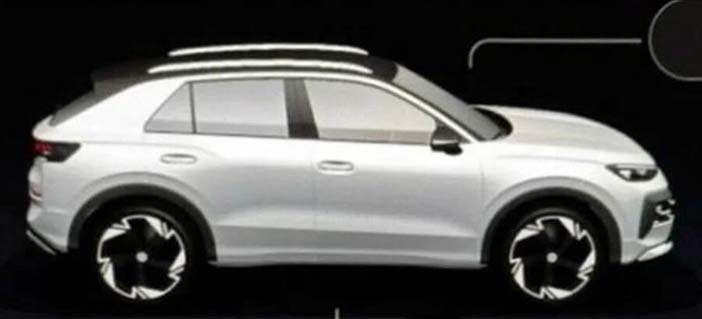
+++ Te first photos of the next-generation VOLKSWAGEN T-ROC have been leaked online ahead of its official reveal, which is expected to take place later this year. The pictures, which appear to have been taken from a prototype’s infotainment or instrument screens, reveal it to be a more aggressive-looking proposition than the current T-Roc.
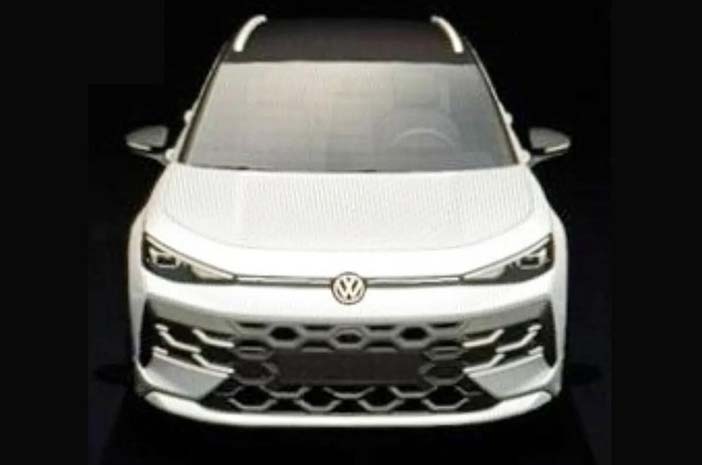
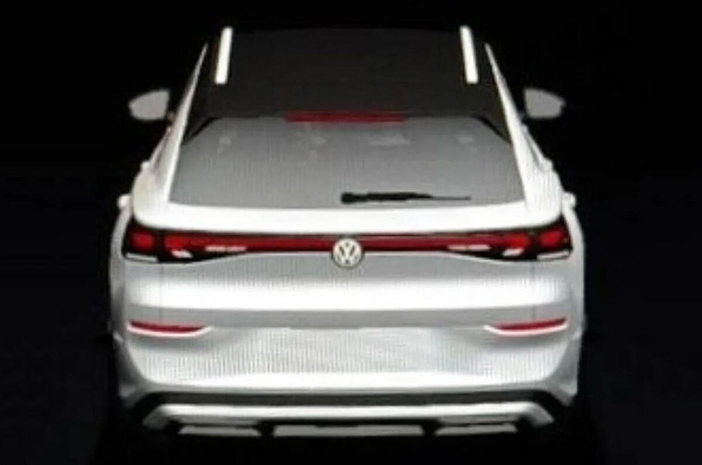
It gets a more prominent front grille, slimmer headlights and large aero disc-style wheels, plus LED light bars at the front and rear ends. The look brings the T-Roc into line with the new Passat, Tiguan and Golf launched last year.
It is also expected to share much of its technical make-up with those cars, most likely using the same MQB Evo platform and their petrol, diesel and hybrid powertrains. The Golf, for example, is offered with powerplants that range from a turbocharged 1.5-litre petrol to a 2.0-litre diesel with 115 hp. This could also pave the way for the T-Roc to receive its first plug-in hybrid powertrain. The Golf’s set-up pairs the 1.5-litre petrol unit with a 19.7 kWh (usable capacity) battery and a 109 hp e-motor for a combined 204 hp and 140 km of electric range. Hybridising a popular model (the T-Roc was VW’s second best-selling SUV last year, and SUVs accounted for 47% of its total 4.8 million sales) would surely help the firm to comply with stricter fleet emissions targets that come into effect in Europe from this year. These require a manufacturer’s total car sales for the year to average emissions of 93.6 g/km of CO2, down from the 95 g/km requirement of the past 5 years. The existing T-Roc’s powertrains all emit well more than 100 g/km, whereas the Golf eHybrid is rated at just 6 g/km. An electric version is not expected to be offered, despite Volkswagen having previously trademarked the ID.Roc name. This gap in the brand’s line-up is instead expected to be filled by an upcoming model that is based on a development of the ID.3’s MEB platform and is due in 2026. The new T-Roc will be revealed in the coming months and deliveries are expected to start before the end of the year. +++