+++ The BMW iX5 will arrive in 2026 as the first of 6 new launches in 3 years that will fully electrify the German firm’s SUV line-up. This engineering programme is being described as one of the most comprehensive ever undertaken by BMW and its M performance car division. Notably, a hydrogen-powered iX5 will join the line-up in 2028, using a powertrain co-developed with Toyota. This version will be followed by multiple other fuel cell variants of existing models by the end of the decade. Alongside the pure-electric iX5 due next year, there will be a new, fifth-generation X5; BMW’s original SUV, with 2.2 million sales since 1999 and counting. The new X5 will be fitted with upgraded petrol, diesel and plug-in hybrid drivetrains. Unlike the upcoming iX3, which will be underpinned by BMW’s Neue Klasse platform, both the iX5 and the X5 will be based on an upgraded version of BMW’s Cluster Architecture (CLAR) platform. This decision is understood to be a result of the need to continue offering the big-selling X5 with its full cohort of combustion-engine options. Switching to the Neue Klasse architecture would have required the X5’s ICE powertrains to be heavily modified to fit into a platform built primarily for EVs, resulting in excessive extra costs. The fact that the X5 and iX5 will both be produced at BMW’s Spartanburg manufacturing facility in the US, which is currently undergoing a 1.5 billion euro upgrade, is another reason for the CLAR decision. Regardless, BMW will fit the new pair with key features that will be introduced with Neue Klasse. The iX5 is set to adopt 6th-generation electric drive components, new-generation batteries with round cells featuring greater energy density than those in use today, and a fully networked 800V electric architecture. Explaining the process by which the upgraded CLAR platform adopts elements from Neue Klasse, BMW head of R&D Frank Weber said: “We are in a phase where flexibility is required. We have to detach ourselves from how we have perceived platforms up to now. “There is an increasing realisation that the art of mastering diversity in your portfolio lies in how you use and network major components: engines, motors, battery cells, on-board computers, control units, app functions, and software upgrades. It’s not so much the platform structure itself but the individual components and how you use them”. The reworked CLAR platform will also provide the basis for the new X6 and X7 models. The second-generation X7 will be launched in 2027 and the fourth-generation X6 in 2028, according to details provided to US dealers. The pair are planned to spawn the iX6 and iX7, meaning that all of BMW’s SUV line-up will offer an electric option. Disguised prototypes testing in Europe reveal that the new X5 will retain the familiar silhouette of its predecessor. However, its length is expected to exceed 5 metres for the first time due to a longer wheelbase, required to accommodate the iX5’s battery pack. This increase in size will put the iX5 on a par with the luxury-focused iX, which will be facelifted in the first quarter of this year and remain in production until 2028. The X5 and iX5 will feature design cues from the Neue Klasse concepts, including a new front fascia with triangular-shaped headlights. Insiders have told Autocar a new X-shaped headlight graphic is planned. As with the new X3, the exterior surfacing treatment for the X5 and iX5 is expected to be less heavily sculpted and to take on a smoother appearance overall. BMW describes the look as being more monolithic, with the characteristic swage lines along the flanks consigned to the past. However, the 10-window glasshouse used for previous X5 models appears to be carried over. At the rear, an angled tailgate receives a heavily shrouded window for added aerodynamic efficiency. The appearance of quad tailpipes on early prototypes reveals that BMW is already well advanced in the development of the X5 M60. Wheels are set once again to range from 19 inch to 22 inch in diameter. The X5 M60 is expected to be the highlight of the new X5 range at launch. Early indications suggest it will be produced with 2 distinct powertrains; a result of the European Union’s stringent CO2 regulations. In Europe, it will feature a plug-in hybrid set-up focused around a turbocharged 3.0-litre straight-6 and is likely to be badged the X5 M60e. For the US and Middle East markets, it will instead feature a turbocharged 4.4-litre V8. An indication of the potential output of the new hybrid-powered M Performance model can be traced to the M760e performance saloon. Its similarly configured petrol-electric powertrain delivers a combined 570 hp and it is fitted with an 18.7 kWh battery for a claimed electric range of up to 85 km on the WLTP test cycle. Despite BMW’s decision to take the plug-in hybrid route for the successor to the X5 M50i in Europe, the more powerful but lower-volume X5 M will continue with an updated version of the existing model’s twin-turbocharged 4.4-litre V8 petrol engine. BMW is also planning an electric iX5 M Performance model. Set to be launched in 2027, it will run a dual-motor drivetrain that develops more than 600 hp. Less potent X5 models will receive the latest 48 Volt mild-hybrid versions of BMW’s turbocharged 3.0-litre straight-6 petrol (X5 xDrive40i) and diesel (X5 xDrive40d) engines. BMW also plans a successor to today’s X5 xDrive45e with its turbocharged 3.0-litre petrol 6 and a new-generation electric motor and battery. Underneath, the suspension of the new X5 is set to retain double wishbones up front and a multi-link arrangement at the rear, together with standard steel springs and constantly variable damping in both standard and adaptive M set-ups. An air suspension and off-road package will continue to be offered as options, together with BMW’s Integral Active Steering. +++
+++ We’re about one week into Donald Trump’s second presidency and the lucrative and powerful alliance with the president’s newfound friend, the richest man in the world Elon MUSK , is already showing signs of strain. Trump dismissed criticism from Musk about a $500 billion artificial intelligence project that Trump announced with great fanfare at the White House this week. “He hates one of the people in the deal”, Trump said of Musk. “People in the deal are very, very smart people. But, Elon, one of the people he happens to hate. I have certain hatreds of people, too”. For those familiar with Musk’s well-documented track record of parting ways with key executives at Tesla, coupled with Trump’s longtime reputation for firing people, it’s easy to speculate how long this bromance is going to last. Maybe weeks? Months? Years? The answer: as long as they both think they can benefit from it. Trump clearly holds more leverage: his administration can regulate Musk, Tesla and other Musk entities with several powerful agencies such as the IRS, the Department of Justice, NHTSA, the Department of Labour, the EPA and the Securities and Exchange Commission, to name a few. To be sure, some good things could happen if the Trump-Musk alliance can survive a few years. Notably, the Musk-led Department of Government Efficiency, or DOGE, could help obliterate at least some of the red tape and inefficiency that has permeated Washington for decades. So grab some popcorn and stay tuned for the next episode. While Musk is busy trying to fix the federal government, his company is still producing formidable new products. +++
+++ PORSCHE has been spotted testing its next-generation 718 Cayman, a new sports car that, like its Boxster sibling, will ditch its petrol powertrain in favour of an all-electric replacement. With the open-top car to be revealed later this year or early in 2026, a hard-top Cayman probably won’t be far behind, with this prototype revealing plenty of production-relevant details. The body appears to adopt the same mid-engined silhouette as the existing Cayman, defined by a gently sloping roofline and a short bonnet. Although the disguise makes it hard to see, we suspect the windowline will kick up more aggressively, as with the current car, while elements such as traditional door handles will remain in place of the smooth pop-out units seen on the 992-generation 911. We can also see a small side intake placed just behind the door, which could bring cooling air to the electric motor or battery pack that are packaged behind. This will likely sit within a futuristic panel ahead of the rear wheels, dictating aero and helping clean the airflow around the rear bumper. Porsche will continue its trademark lightbar on the new car, paired with a small rear aero device which could be movable, as on all previous Boxsters and Caymans. This will sit below a new and much more streamlined fully glass tailgate that runs down the entire length of the rear towards the wing. Up front, the Cayman will probably share the bulk of its design with its Boxster sibling, where the traditional set of 4-point headlights will sit either side of a low bonnet. The prototype in these pictures, and almost all of the Boxster prototypes that have yet been spied on the road so far, continue to use headlights that look almost identical to those on the pre-facelift Taycan; it remains to be seen if these will be fitted to the production car. Beneath these Porsche has fitted vertical intake vanes that are likely movable. This sort of ‘active’ intake has already been seen on other high-spec models like new 911 GTS, pointing towards the fact that the new Cayman and Boxster could be revealed in a mid-to-high performance variant first, before more affordable models join the line-up in due course. I expect to see a wholesale revision of the interior, too, using lots of design and functional elements from the 992-generation 911. There should also be a totally new digital interface that will replace the aging, but still functional interior of the previous 981 generation. Yet the big mystery remains about what we’ll see when Porsche finally reveals technical details about its forthcoming electric sports car. There have been rumours that a dip in EV sales (and resale values) has caused Porsche to reconsider the future of its electric sports car, but on this evidence there’s nothing to suggest the company is turning back. +++
+++ RENAULT will preserve the new 5’s retro design for as long as possible but keep the car competitive throughout its life cycle with upgrades to its drivetrain and technology. Company CEO Fabrice Cambolive outlined his plans for the Renault 5 on the sidelines of the 2025 What Car? Awards, where the supermini was named Car of the Year, just days after also being named the European Car of the Year. He attributed the 5’s early acclaim to its striking, 1970s-inspired design, technological capability and distinctive handling characteristics (“when you win like that, it’s because you are different”) and said Renault will bolster these attributes to ensure it stays fresh but will not drastically change its design at any point. “The good point of 5 E-Tech is that we would like to stay with this design as long as we can”, Cambolive said. Renault will not look to change the “details” of the 5, but rather update “very, very precise elements” throughout the car’s life cycle, Cambolive suggested. “It’s opening a lot of creativity for [head designer]Gilles Vidal and his team to keep the same car, but different. That’s the idea for 5 E-Tech”. From a technical standpoint, the Renault 5 lines up neatly (in terms of range, power and charge speed) with its current Opel Corsa Electric, Peugeot e-208 and Mini Cooper E rivals, and Cambolive suggested the firm is committed to ensuring it remains so as those cars are upgraded and renewed, and as the electric supermini market expands. “We have to invest in the way we do our battery management, for sure. We’ll invest in terms of connectivity, and we could invest also in the versatility and modularity of the car”, he said. According to traditional timelines, the 5 should be up for a facelift in around 2028, at about the same time as Renault introduces a new generation of electric cars with vastly improved efficiency, rapid charging and much cheaper batteries, as previewed by the Embleme concept. While these cars will be based on a new platform, separate from the 5’s CMF-BEV structure, it’s likely that the hatchback will be able to take advantage of the promised technological developments; chiefly a new battery chemistry that’s claimed to cut costs by up to 50% and support sub-15 minutes charge times in its most advanced form. Before that, in 2026, Renault will swap its mainstream EV batteries (including that in the 5) from NMC to LFP, which it says will reduce costs by 20% while having no impact on range. It’s not yet clear whether that will translate directly to an identical reduction in list price, but if it does, the 5 could drop below €24.000 in the Netherlands. The 5 has already become the best-selling electric car in Renault’s home market of France, where it was launched in October, aping the success of the original Renault 5, which was France’s best-selling car from 1972-1986. Cambolive hailed the R5’s early critical and commercial success as a sign of its potential to claim a large share of Europe’s EV market but said he doesn’t expect it to immediately be as popular as its petrol-powered siblings, the Clio and Dacia Sandero. He said: “Even though we are in the fifth year of the Clio, last year it was number-2 in Europe, just after Sandero, with both cars increasing a lot. But I don’t know if we have to fix or to pursue objectives like that – to be number one and so on. For me, what is important is the capacity of 5 E-Tech to break the glass ceiling of EV adoption”. The role of the Renault 5 is primarily a conquest one, Cambolive said, with the aim that customers buy the supermini “not because they want to go to an EV, but because they want the 5 E-Tech”. “The main objective is to extend our coverage to the other price brackets up to €25.000”, he said (referencing the upcoming Renault 4 E-Tech and Twingo E-Tech) that will round out Renault’s line-up of small, affordable EVs) “and then we will count the sales”. But, Cambolive said, while outright sales dominance is not the ultimate target for the 5, “I don’t see any reason not to be among the leaders on the market next year”. Europe’s best-selling electric cars are mostly SUVs, with the likes of the Skoda Enyaq, Volkswagen ID.4, Volvo EX30 and BMW iX1 featuring in the top 10, but the 5’s early success in France (where it was the most popular electric car in November and December) suggests it has potential to capture a large share of the European market. The Tesla Model Y has long been the region’s best-selling electric car (and recently the most popular car in general) but Cambolive said matching the American car’s mammoth sales figures (nearly 18.000 in November alone) with the 5 E-Tech “is not such an objective for us”. He acknowledged that concerns around EV utility remain an inhibitive factor for growth (“it’s normal for new adopters shifting from ICE to EV to be very cautious”) but said 40% of Renault 5 orders in France are for the smaller-battery, 300 km entry version, suggesting that is becoming less of a concern. +++
+++ The success of the SKODA Kodiaq proves the Czech brand knows how to make a great seven-seat SUV. So it’s no surprise that it’s working on an all-electric alternative that will deliver on the promise of the bold Vision 7S concept, revealed a few years ago. As well as previewing the new model, the Vision 7S introduced us to the ‘Modern Solid’ styling that will be shared by all of Skoda’s electric cars. We’ve already seen how this translates to production with the head-turning Skoda Elroq that was unveiled late last year, and the changes made to best-selling Skoda Enyaq during its rather extensive recent facelift. In 2023, Skoda also presented a sculpture called ‘Space’, previewing what will become its 7-seat electric SUV, and now prototypes have been spotted undergoing testing in the bitter cold of northern Sweden. Both vehicles confirm the design is staying very true to the Vision 7S, so we had plenty of clues to what this car will look like. Up front will be the ‘Tech Deck’ face, which is a much slimmer interpretation of the traditional Skoda grille. As with the Elroq and facelifted Enyaq, the panel will be used to house the various sensors, radars and cameras for the car’s driver-assistance systems. The sleek nose also incorporates a segmented, pixel-like daytime running-light design, which we can see on the prototypes, and should extend to the front wings. Other details that appear to have been carried over from the Vision 7S are a twin-fin roof spoiler and a razor-thin tail-light design that extends onto the bootlid. The overall shape will be close to the concept’s, too, with a very square front end and traditional SUV proportions, but short overhangs at the rear that will help maximise interior space for passengers and their luggage. Skoda has confirmed its 7-seat electric SUV will measure around 4.9 metres long. That will make it the biggest model in the brand’s line-up by some margin (the latest Kodiaq is 4,758mm from nose to tail), and longer than the Peugeot E-5008 it will be going up against. However, the new Skoda won’t be quite as colossal as the Hyundai Ioniq 9 (5.060 mm) or Kia EV9 (5.015 mm); 2 other contenders in the steadily expanding seven-seat electric car segment. Unsurprisingly, the Vision 7S’s rear-hinged rear doors won’t make it to production, given that the pop-out rear door handles on the prototypes are where they’d normally be. The concept’s unconventional ‘six-plus-one’ seating arrangement has almost certainly been replaced by a more traditional choice of five or seven-seat options, too, although we have yet to look inside the production car. The cabin layout is likely to be very similar to those of the Enyaq and Elroq, both of which feature a huge central touchscreen paired with a much smaller driver’s display. The interior of the Vision 7S focused heavily on the use of recycled and sustainable materials, and we expect it will be the same for the new model. There will also be plenty of the ‘Simply Clever’ touches that set Skoda’s models apart. One of those could be the ‘Smart Dials’ that made their debut in the latest-generation Kodiaq and Superb, with an earlier version featuring in the Vision 7S. Each dial houses a small display, and pressing them toggles between the various functions they’re responsible for, such as cabin temperature, fan speed and drive modes. We’ve found they help create a clean, modern interior design without sacrificing functionality or forcing drivers to rely solely on touchscreens. Underneath is almost certainly the same MEB bespoke electric-car platform that’s used by the Elroq and Enyaq, as well as around a dozen other EVs including the Cupra Born, Ford Capri and the nearly 5 metre-long Volkswagen ID.Buzz LWB. So we know the architecture can accommodate a vehicle this large. The 7-seat Skoda will probably get the same 86 kWh battery and 200 kW maximum charging speed as the ID.Buzz LWB, which we’d expect to provide a range of more than 580 km and allow for a 10 to 80 percent top-up in less than 30 minutes. Both figures are roughly on par with the Hyundai Ioniq 9, although the Peugeot E-5008 can provide up to 415 miles of official range in the right guise. A choice of single-motor rear-drive and dual-motor all-wheel-drive powertrains are likely to be offered, and we wouldn’t be surprised if there was a hot vRS version, too, considering that both generations of the Skoda Kodiaq have been given the sporty treatment. One key detail that remains firmly under wraps for the moment is this hugely important car’s name. Skoda has registered Eviatiq, which is at least one possibility because it follows the firm’s electric SUV naming convention by starting with an E and ending in Q. But there’s plenty of time to decide because, Skoda’s range-topping seven-seat EV won’t be arriving until 2027 and not 2026 as originally planned. Before that, the company will be focusing on the launch of the Elroq, the first examples of which will be delivered this spring, and the facelifted Enyaq that’s due to arrive around the same time. Then, in 2026, attention will turn to the arrival of the all-new, hugely important Epiq. We’ve already seen a concept model of the zero-emissions Kamiq alternative, which also employs the ‘Modern Solid’ design language and should be a very close representation of the final production version that’s most likely going to be revealed early next year. The Epiq is set to cost around 27.000 euro in the Netherlands. Unlike its aforementioned siblings, the Epiq will be based on a different platform, called MEB Entry, which will also be used by the Volkswagen ID.2 and Cupra Raval hatchbacks. After the Epiq and the as-yet-unnamed seven-seater, Skoda will launch a pure-electric estate car that, at 4.6 metres long, will serve as the alternative to the trusty Octavia Estate. This particular model was also due in 2026, but it now seems more likely to be launched in 2027, or possibly even 2028. +++
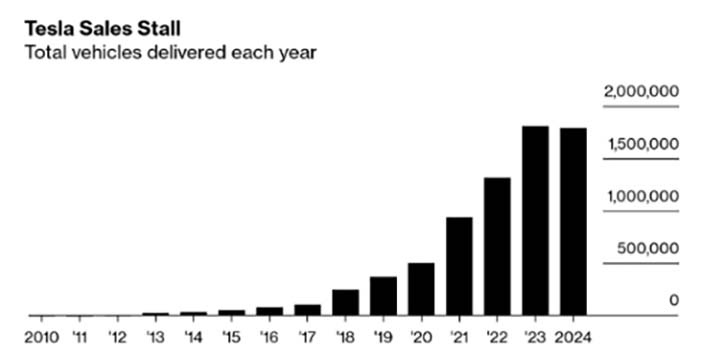
+++ When TESLA reports earnings on Wednesday, it will be Elon Musk’s first call with Wall Street analysts since President Trump was re-elected. If you’ve never listened to an earnings call, you might want to tune into this one. Musk has been the CEO of Tesla since 2008, and he’s helmed every single earnings call except for one since the electric car maker went public in 2010. Now, he’s deeply embedded in the Trump administration and leading the cost-cutting effort known as the Department of Government Efficiency, or “DOGE”. For Tesla investors, the January call is typically a look at the year ahead. In October, Musk said that he thought Tesla could achieve “20% to 30% vehicle growth next year”. He also predicted that Tesla “will become the most valuable company in the world, and probably by a long shot”. Musk made a strategic decision last year to reposition Tesla as a robotics and AI company, so there will be scores of questions about the latest iterations of software known as Autopilot and FSD, as well as Optimus, Tesla’s humanoid robot. Given Musk’s role within the Trump administration, he’s also likely to get peppered with questions about trade, tariffs, tax credits and the Inflation Reduction Act. Which reminds me: Whatever happened with Tesla’s plans to build a factory in Mexico? Is that completely dead, or just permanently on ice? It is unprecedented for an American CEO to have the kind of influence and access to the President that Musk currently does. How long it will last is anyone’s guess. Among the many questions for Wednesday: How many vehicles does Tesla plan to sell in 2025, and is a cheaper model (even if that is a lower-cost Model 3 or Y) still in the works for the first half the year? What does the “S-Curve” look like for the Cybertruck? +++
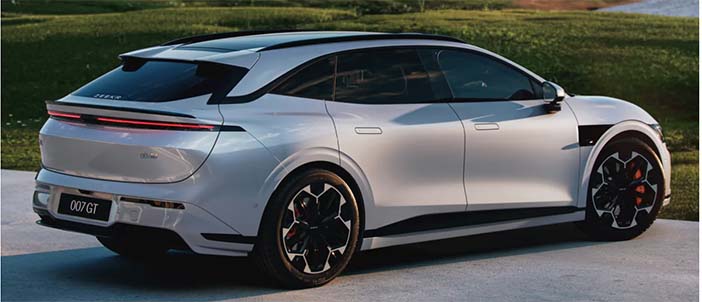
+++ Premium electric car brand ZEEKR (which was founded by Geely, the same people who now own Volvo and Lotus) might bring this new 007 GT shooting brake to European showrooms. The 007 GT name will resonate with James Bond fans, but would almost certainly have to be changed if the car is to be sold here, because it’s unlikely Zeekr would want to get into a copyright dispute with a secret agent who has a licence to kill. It doesn’t seem to be an issue in China, though, where the Zeekr 007 saloon was introduced in 2024. The shooting brake gets an equally razor-sharp front-end design complete with a 90-inch wide light strip across the nose, while the swooping silhouette, with its floating roof motif effect, makes the car look like it might have broken out of the same design studio that created the Lucid Air. Other styling elements include sculpted rear haunches that give the 007 GT a powerful stance, a twin-fin roof spoiler accompanied by a small lip spoiler on the bootlid, ultra-slim led tail-lights and a set of roof rails for added practicality. There’s also a Lidar sensor at the top of the windscreen, like you’ll find on the Volvo EX90, to allow for advanced driver assistance technology. The interior presumably matches that of the 007 saloon, which features a huge 15-inch central Oled touchscreen paired with a 13-inch digital driver’s display and a 35.5-inch augmented reality head-up display. Zeekr claims it provides class-leading rear cabin space too, although the 007 GT will, of course, offer more luggage capacity than the 462 litres available in the saloon. The 007 GT measures 4.864 mm long, 1.900 mm wide and 1.445 mm tall, so it’s neither as long nor as wide as the Audi A6 e-Tron Avant, but slightly lower to the ground. Under the metal is the PMA2+ platform, also used by the Smart #5 family SUV. Single-motor, rear-wheel-drive versions of the 007 GT produce 422 hp, while dual-motor, all-wheel-drive models up the ante to 645 hp. The 007 saloon is offered with the same set-ups, and can sprint from 0-100 kph in under 3 seconds. It also features an 800 Volt electrical architecture that allows it to be recharged from 10 to 80 percent in close to 10 minutes, according to Zeekr. The 007 saloon delivers up to 650 km of range. The choice of 75 kWh and 100 kWh batteries should be carried over from the saloon to the shooting brake. +++