
+++ ASTON MARTIN has taken the roof off its newest supercar. Meet the Valhalla Spider, an open-top version of the mid-engined hybrid that debuted earlier this year. The Valhalla Spider packs the same powerful hybrid setup as the coupe, with more than 1.000 horsepower and a claimed top speed of 350 kilometres per hour. Yes, even with the roof down. The new model makes its debut on October 31st at the Concours at Wynn in Las Vegas. Deliveries are scheduled to begin in the third quarter of 2027. Like the coupe, the Valhalla Spider combines a twin-turbocharged 4.0-liter V8 with 3 electric motors. Together, they produce a combined 1.064 horsepower and 1.050 Nm of torque, sending power to all 4 wheels. Aston Martin says the Spider can hit 350 kph, matching the coupe’s top speed. The car also gets active aerodynamics designed to keep it planted at high speeds, along with the handling hardware needed to make it feel at home on a race track. Of course, the biggest change is the roof (or, lack thereof). Buyers can choose between a removable fabric top and an optional carbon-fiber hardtop. With the fabric roof installed, the Spider is limited to 200 kph. The hardtop lets it reach its full top speed. Take the roof off, and a removable wind deflector helps keep the worst of the wind out of the cabin.
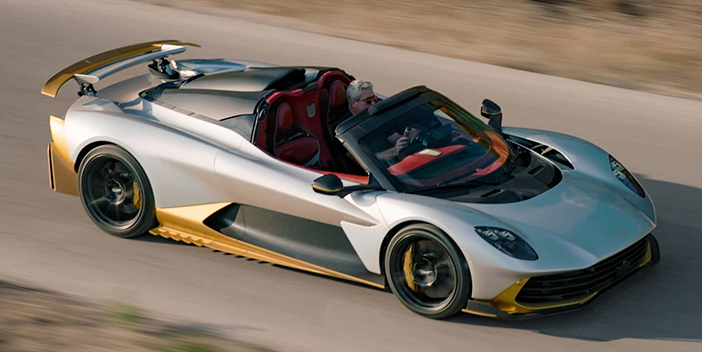
When it’s time to put the roof back on, the deflector folds up and fits into storage compartments built into the car. The Spider also gets a few tweaks to its aerodynamics and stability systems to account for the differences between driving with the roof on and off. The Valhalla Spider marks a first for Aston Martin: It’s the brand’s first production mid-engined supercar with an open cockpit. It shares the coupe’s carbon-fiber structure, which helps keep weight down while providing the stiffness needed for serious performance. It also retains the Valhalla’s distinctive carbon-fiber doors, which swing upward, along with some small changes to make getting in and out easier. Inside, a new carbon-fiber Touring Seat comes standard. Buyers can also choose the coupe’s more aggressive carbon-fiber seat at no extra cost. Aston Martin CEO Adrian Hallmark says the Spider builds on the coupe’s mix of everyday usability and track performance, adding the appeal of open-air driving. He notes: “High speed or low speed. Rain or shine. Roof on or roof off. Road or track. Valhalla Spider ticks every box”. The Valhalla Spider will arrive in the third quarter of 2027. Aston Martin hasn’t announced pricing yet, but expect it to sit alongside the coupe as another high-performance option in the brand’s growing line-up. +++
+++ JLR (Jaguar Land Rover) is recalling more that 100.000 vehicles because water pooling near the tailgate can knock out the rear view camera. The company’s own data shows 2.295 related American claims and field reports piling up since August 2022, roughly 2.4 percent of the affected fleet. The campaign covers certain 2022–2026 Land Rover Range Rovers built between July 8, 2021 and June 4, 2024. The rearview camera image can simply fail to appear on the touchscreen. The company’s field data points to a drainage flaw near the tailgate that has been building up complaints since mid-2022. This isn’t the brand’s only recent recall headache. Land Rover has separately dealt with a rear subframe cracking issue on the Range Rover Sport and a much larger action over 250.000 SUVs with faulty airbags, so quality control has been a recurring theme for the automaker this year. The rearview camera sits mounted in the tailgate trim, an area that wasn’t drilled with enough drain holes to let moisture escape. Water collects there over time, seeping into the camera housing and distorting or killing the backup image entirely. It’s not an isolated complaint. Rivian issued its own backup camera recall this year and Volkswagen dealt with a similar camera defect, suggesting rearview hardware is proving to be a persistent weak point industrywide. Dealers will drill new drainage holes into the underside of the tailgate trim to let water drain properly instead of pooling. Technicians will also inspect each camera, replacing it at no charge if the water intrusion has already caused damage. Jaguar Land Rover hasn’t said how long the repair takes at a service center, and the interim fix means some owners may wait months before the permanent remedy parts ship. In the meantime, drivers should rely on mirrors and manual checks when backing up, especially in wet conditions where the defect is most likely to show itself. +++
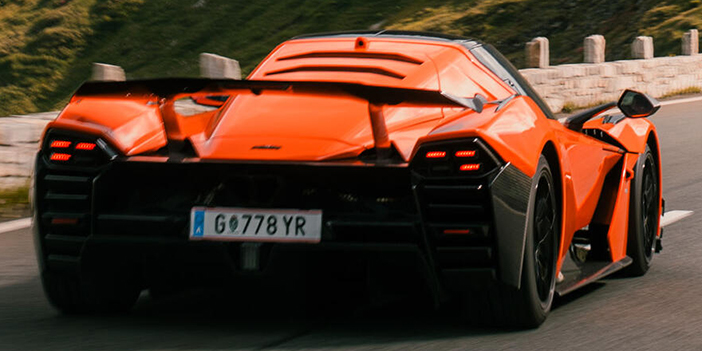
+++ The KTM X-BOW GT-XR has been updated for the first time since the sports car division of the Austrian motorcycle manufacturer entered new ownership last year. Officially named KTM X-Bow Onroad GmbH, the division was sold after financial headwinds pushed KTM into a period of ‘self-administration’ and eventually an acquisition by Indian partner Bajaj.
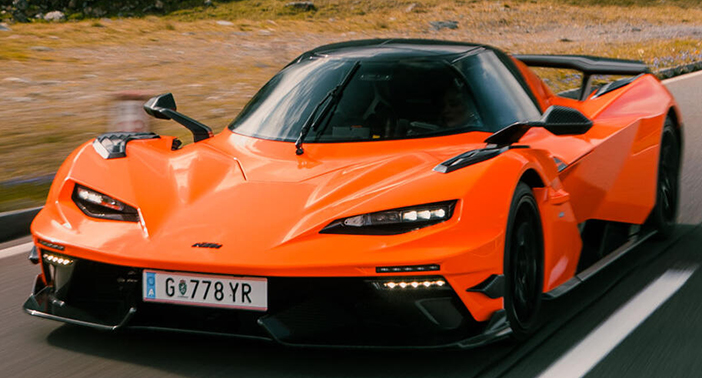
The buyer was a Belgian investment group led by rally driver Guillaume de Mévius, whose family holds a significant stake in Anheuser-Busch InBev, parent firm of brewers including Budweiser, Corona and Stella Artois. Chief among the updates to the X-Bow is the addition of new Factory 600 and Evo specifications, which extract yet more performance from the lightweight supercar. The Factory 600 package brings an uprated intake manifold, turbocharger and intercooler, boosting the Audi-sourced 2.5-litre 5-cylinder engine by 100 hp to 600 hp. Meanwhile, the Evo aero kit is derived from that worn by the GT2-class X-Bow racer, with a more aggressive front splitter, canards and new louvres in its wings.
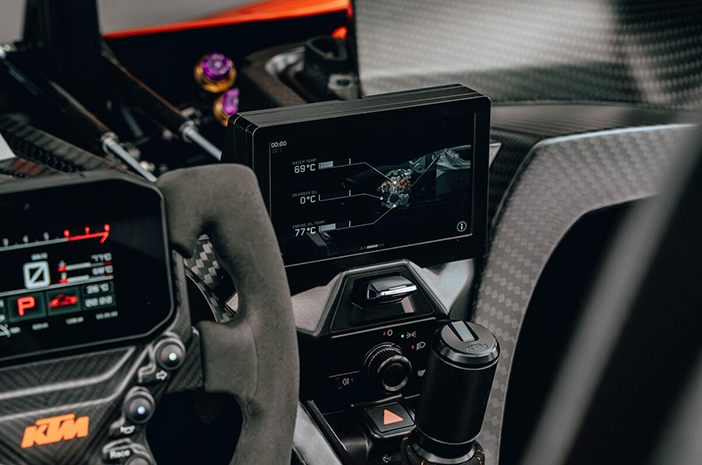
All X-Bows have gained a 7 inch infotainment screen with Apple CarPlay and Android Auto, intended to enhance the appeal of the track-focused supercar when out on the open road, giving easier access to sat-nav and media. The rear-view camera is no longer fitted as standard: the X-Bow instead gets traditional folding side mirrors, although the camera-based solution can still be had as an optional extra. It has also gained the option of an exhaust system made by German firm Capristo. +++
+++ MASERATI is on the brink of revealing a new generation concept car that’ll inform how its future models look and feel. The iconic Italian manufacturer had a run of slow sales after leaping onto the electrification train, only to find that many of its traditional buyers weren’t quite ready to join it. Now, as part of a reinvigoration of the brand, we’ll see the new concept car in full this December. In a show of solidarity for Maserati, Stellantis CEO Antonio Filosa has reiterated the group’s commitment to the brand after it was a conspicuous absentee from this year’s Paris Motor Show. Speaking with media, he said: “Maserati will be presented in December, in Modena. It won’t just be about slides, but a real plan that will secure the future for our beloved luxury brand”. Sales of its current models have been decimated in the last few years, as its initial dedication to electric powertrains, at the same time as killing off its V8 models, hasn’t proved popular with customers. In response, FIlosa continued: “Maserati needs product. Maserati needs technology. These will be extensively presented in Modena in December”. Front and centre of this new product offensive will be our first look at a concept previewing the brand’s future design language. While it will be more of a design manifesto than a vision relating directly to a specific future model, we do know that it will point us in the direction of 2 new cars that the brand is working on. A new Levante will bring back Maserati’s now-discontinued SUV to rival cars such as the Porsche Cayenne, BMW X5 and Mercedes GLE. However, while the Levante might prove to be a big driver of sales, the brand’s soul remains in its more traditional segments, one of which will be filled by a new interpretation of the iconic Quattroporte. Maserati’s CEO, Santo Ficili told: “The story of the Quattroporte, in my mind, for the future is not a sedan. It can be something between a shooting brake and a crossover: a very low, big car to come back to this part of the segment”. There is less certainty at this stage around the tools Maserati has to create this new line-up of models. The company might be part of the giant Stellantis group, but its access to cutting-edge technology at the very highest levels is limited in comparison to companies like BMW, Mercedes or the Volkswagen Group. There’s a more pressing question to ask, however, and it’s whether this new product drive will be enough to keep Maserati profitable and relevant in the long term. Ficili laid out the structural change to the brand by telling us: “We can imagine having the brand built on 2 different pillars. One is the world of the GranTurismo, where today we are okay because we have the MC20, the GT2 Stradale, the GranCabrio, the GranTurismo. Then Levante, which is a Quattroporte SUV. We need to come back to this pillar, and in the middle we have the Grecale that is supporting the volume of the brand”. With these new models on the way, Maserati’s future could be considered more secure than it has been in a long while. But we’ll have to wait until December to see what the future of Maserati looks like, and whether real confidence in the brand might return after years of disappointment. +++
+++ MAZDA is preparing to take a bigger role in hybrid development, with its upcoming CX-5 HEV serving as the first application of a new powertrain developed in-house. The company’s latest Integrated Report 2026 also points to the possibility of extending elements of this system to its larger SUVs, potentially giving the CX-60 and CX-80 another electrification option. The move would mark a change in Mazda’s approach to hybrids. The Mazda 2 Hybrid uses Toyota’s hybrid system, while the upcoming CX-5 HEV is expected to combine Mazda’s own technology with its latest gasoline engine. Mazda has not confirmed which large SUV will receive the system first or when it might arrive. Still, the prospect is notable as the company works to improve the competitiveness of its larger models. Mazda plans to introduce its proprietary hybrid system in the CX-5 in 2027, pairing it with the new 2.5-liter Skyactiv-Z 4-cylinder gasoline engine. The engine is designed to improve combustion efficiency while maintaining driving performance and meeting increasingly strict emissions requirements. Mazda says the combination should deliver more than lower fuel consumption. Its stated goal is to provide quiet, smooth operation in urban driving, strong performance at highway speeds, and responsive handling on winding roads. The company is also exploring whether elements of the hybrid system can be adapted for its large-product lineup. That does not confirm that all 2 SUVs will receive the same setup, but it suggests Mazda wants to build on its own technology rather than rely exclusively on outside suppliers. The timing here matters a lot. Mazda has acknowledged the need to make changes to its recent large-model strategy, although the report does not specify when any hybrid versions might appear. Hybrids are just one piece of Mazda’s electrification puzzle. The real EV push is set for 2028 to 2030, after a warm-up period that runs through 2027. Mazda has confirmed that it’s developing a dedicated EV platform for this next stage, while continuing to work with partners on other electric models. Its joint venture with Changan has already produced vehicles including the EZ-6, EZ-60 (also known as the Mazda6e and CX-6e(. Mazda is also considering third and fourth models under the partnership, although neither has been confirmed for production. For now, Mazda’s strategy is to offer different powertrains according to regional demand rather than move entirely toward battery-electric vehicles at once. If its in-house hybrid system eventually reaches the larger SUVs, it would give the automaker another way to improve efficiency while retaining the driving characteristics it wants its vehicles to deliver. +++
+++ TESLA is known for ambitious timelines it doesn’t meet, including the next-gen Roadster, whose original concept debuted in 2017 but whose redesigned version only debuted this month. The Cybercab, however, appears to be on track after Lars Moravy, Tesla’s vice president of vehicle engineering, said during a Q3-2026 earnings call that the company is trying to deliver the 2-seater EV to customers later this year. That would meet the original timeline announced when the Cybercab was unveiled at the “We, Robot” event in California in 2024. The key word there is “trying,” so it’s not a guarantee yet. Still, the outlook appears promising for the company, especially as it shifts its focus from selling personal EVs toward autonomous ride-hailing and AI-driven products, with production of the Model S and Model X even ending earlier this year.
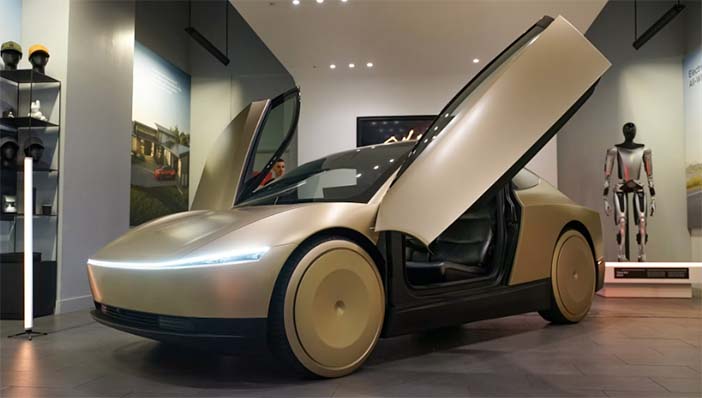
However, challenges remain. One of these is regulatory compliance, particularly because the Cybercab operates without a steering wheel, pedals, or side mirrors. Tesla removed these components because the Cybercab is primarily intended for robotaxi operations. Doing so could also help the company lower production costs and streamline manufacturing. Zoox showed that a regulatory pathway is possible after receiving an exemption from NHTSA for its carriage-style robotaxi, allowing the Amazon-owned company to commercially deploy up to 2.500 robotaxis annually over the next 2 years. Meanwhile, the safety agency is investigating Tesla’s certification of the Cybercab’s compliance with federal safety standards. A negative regulatory outcome could jeopardize Tesla’s planned expansion and complicate customer deliveries. Tesla also said that unsupervised Full Self-Driving isn’t expected to become available to some existing customer-owned vehicles until the second quarter of 2027. This raises questions about where privately owned Cybercabs could operate if deliveries begin before the end of the year. Another detail Tesla needs to confirm is the price. During the 2024 launch event, Tesla said the Cybercab would cost less than $30.000. Meeting that target would be welcome news after the company faced scrutiny over the Cybertruck’s pricing, which was originally advertised at under $40.000 in 2019 but launched with a starting price of around $61.000 in 2023. As Tesla expands its Cybercab operations, it will play catch-up with established competitors like Waymo, which primarily uses the Jaguar I-Pace equipped with Level 4 autonomous driving technology. Tesla plans to retain ownership of most Cybercabs and operate them as a transportation service, while selling a smaller number to customers. Production is already underway at Gigafactory Texas. +++
+++ The VOLKSWAGEN GROUP could turn to software developed in China for many of its future European cars, potentially saving billions of euros in development costs. Thomas Schäfer, head of the core brand, wants to expand the use of the group’s China-developed electrical and electronic architecture across much of its European line-up, potentially replacing technology planned with American partner Rivian. The proposal would mark a major shift in the company’s software strategy. Until now, the group has largely planned to use different architectures by market, with technology developed in China intended primarily for local vehicles and software from its global R&D centers earmarked for other regions. Schäfer now wants to change that approach for many of the group’s volume models. If the proposal gets the green light, future electric cars from VW, Skoda and Cupra could use the China-developed architecture, with potential applications including high-volume products. As for Seat, the Spanish brand’s future looks increasingly uncertain, with shutting down as a worst-case scenario under consideration. The financial argument is difficult to ignore. People familiar with the proposal estimate that VW Group could save between €4 billion and €5 billion by switching to the Chinese architecture for its most important vehicle segment. There is also a cost difference between the 2 development operations. An hour of development work at the Rivian and Volkswagen Group Technologies (RVT) joint venture in Palo Alto reportedly costs roughly 4 times as much as at the Volkswagen Group China Technology Company (VCTC) in Hefei. The report also says a vehicle like the next-gen electric Tiguan could cost around €8.000 less if the development-were is done in China. Lower development costs could help VW make its future EVs more competitive without sacrificing as much of its already tight margins. That’s becoming increasingly important as Chinese automakers expand in Europe with competitively priced electric cars and increasingly sophisticated technology. This isn’t simply VW buying a ready-made system from a Chinese supplier. VW’s Chinese operations developed the architecture, known as China Electrical Architecture (CEA), building on the company’s collaboration with Xpeng, which began in 2023. VW later developed the architecture at VCTC, working alongside Cariad, the group’s software division, and its Chinese subsidiary. Volkswagen also holds the intellectual property rights. CEA uses a zonal electrical and electronic architecture designed to simplify vehicle electronics and reduce complexity. The technology supports over-the-air updates, allowing remote software improvements rather than requiring owners to visit a dealership for every update. Schäfer’s proposal covers future electric vehicles larger than the ID.Polo, including the ID.Golf, the successor to the ID.Tiguan and a potential electric replacement for the Passat. It would make sense for the latter to merge with the ID.7, but nothing is official yet. On a related cost-cutting note, the Volkswagen Group is done developing new platforms for combustion-engine cars. That doesn’t mean existing models will be neglected, as updates are still planned, but they will continue to use the same underpinnings. With the EV take rate in Europe at 30.5 percent in September, according to the European Automobile Manufacturers’ Association (ACEA), that’s hardly surprising. The proposal creates an obvious complication for VW’s partnership with Rivian. Announced in mid-2024, the joint venture was established to help the German group overcome longstanding software-development problems and accelerate the rollout of its next-generation electrical architecture. The partnership has not yet created a production vehicle. VW’s entry-level electric car due in 2027, based on the ID.Every1 concept, is expected to be the first to use the technology. By contrast, the Chinese-developed CEA is already being used in production vehicles. That doesn’t necessarily mean VW will abandon Rivian. There could be a reshuffling of responsibilities, with the Chinese architecture serving more volume models while Rivian’s software remains relevant to other vehicles and markets. Meanwhile, Audi and Porsche have their own reasons to keep relying on the American partnership. For now, the proposal remains a strategic plan, not a finalized decision. Schäfer has reportedly presented the idea to the board, and the reaction has been positive. However, the company still needs to resolve questions about costs, development timelines, and regulatory requirements. If the plan goes ahead, future EVs from the group’s mainstream brands could rely on technology developed in China to compete more effectively in Europe. It would be an ironic twist for a group that once struggled to keep pace with Chinese software development: the technology it needs to remain competitive at home may ultimately come from its own operations on the other side of the world. +++