
+++ AUDI will retire the A1 and Q2 next year and launch a new entry-level electric car as an indirect replacement for its 2 cheapest models. Described as a model that sits underneath the Audi Q4 e-Tron, the German firm’s upcoming cheapest electric car is set to effectively serve as an EV alternative to the A3 Sportback and Q3. It will be the smallest electric car in Audi’s product plan. CEO Gernot Döllner told that the firm “will end production of the A1 and Q2” in 2026, as had previously been announced, “and there definitely will be no successor for the A1”. However, “we will have models in the lower C-segment”, he added, referring to the designation Audi uses for cars of the A3’s size and positioning, “and we will also see the car that will enter production next year in Ingolstadt, which will be our entry electric car in the C-segment”. Döllner said it was too early to give any details of the new car’s technical make-up, but given the Volkswagen Group’s new SSP platform for electric cars is not due to make production until 2028, it is likely to share the MEB architecture with the Q4 and all EVs from Volkswagen, Skoda and Cupra. “A really positive part of our strategy is that in the C-segment, we rely on Volkswagen Group synergies. We use platforms shared with other brands and integrate Audi differentiation in terms of Quattro and power and technology. “That strategy is very healthy and we will move on with that. That will also be our strategy in the battery-electric age”. Based on the details that have emerged, a Dutch starting price of €40.000 is expected for the new Audi and the model is likely to straddle the boundary between hatchback and crossover, not unlike the new Skoda Elroq to which it is set to be closely matched in size and shape. Döllner has previously referred to the new car as a “wondeful, unique, independent concept”. Because the new model will not serve as a direct replacement for the outgoing cars, it could wear a new badge. A resurrection of the long-dormant A2 moniker is one possibility. Döllner would not be drawn on naming plans for future additions to the line-up but said it was “thinkable” that the brand could redeploy historic names. Like the Q4 e-Tron, Audi’s new compact electric car will be a more overtly premium proposition than its platform-mates from the VW Group’s ‘Core’ portfolio, with interior technology, materials and design cues that link it to the larger, more expensive Audi models. Döllner said: “I believe that Audi is the right brand to show premium from the C- to the F-segment. There are not many brands in the world, but I think Audi can have a true premium offer in the A-segment. We will come up with highly emotional and attractive models also in the lower segments”. +++
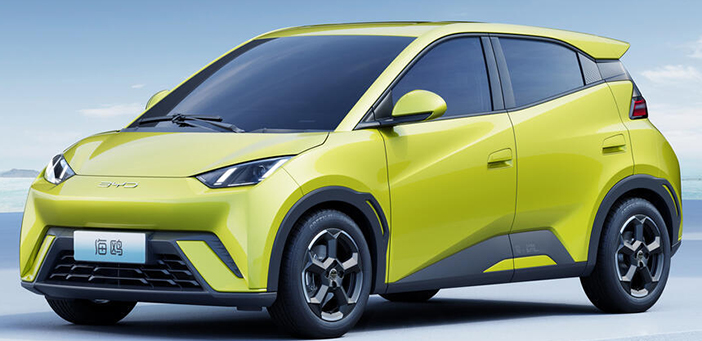
+++ The BYD DOLPHIN SURF will be one of the cheapest electric cars on the Dutch market when it goes on sale later this year. Known simply as the Seagull in China, the model will be made more sophisticated for its launch in Europe, including added safety technology. BYD’s executive vice-president Stella Li said that while the Dolphin Surf might “not be the cheapest” on sale, it would “be the best value”. It’s not expected to cost less than the Dacia Spring, the current cheapest electric car on sale, but is likely to undercut the likes of the Fiat Grande Panda and Citroën ë-C3 and cost less than €23,000 with a range in excess of 320 km, too. In China, it’s offered with a choice of 30 kWh or 38 kWh battery packs, giving ranges of 225 km and 300 km. There is also a choice of 75 hp and 100 hp motors. The model is also known as the Dolphin Mini in some markets, but Dolphin Surf has been chosen as the name for launch in Europe. +++
+++ GENERAL MOTORS and the HYUNDAI MOTOR GROUP are expanding talks about sharing certain vehicles in various markets. Hyundai would share two electric commercial van models with the U.S. auto giant, the report said. In return, GM might provide Hyundai with pickups to sell under its own brand in North America. The story cites a source familiar with the talks and Hyundai documents. +++
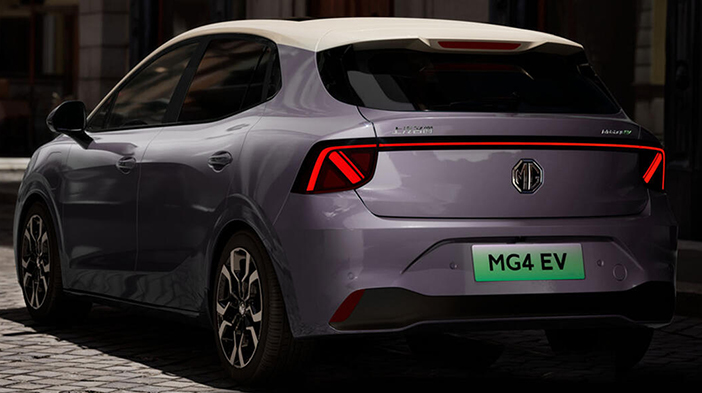
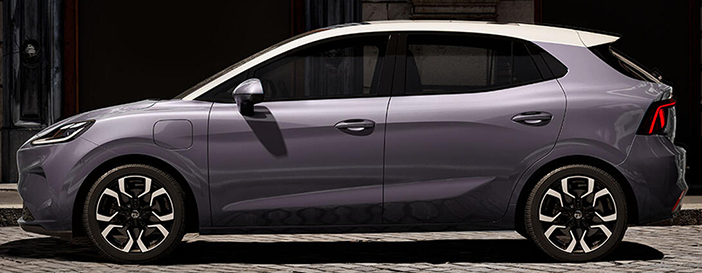
+++ The second-generation MG 4 electric hatchback has been revealed in China, bringing a new look and a significant reduction in weight. The 4 has grown to bridge the gap between the existing model and the larger MG 5 electric estate. It’s now 4.4 meter long, compared with 4.3 meter long previously, and the wheelbase has grown by 45 mm to 2.75 meter. That brings it into competition with the Citroën ë-C4, Kia Niro EV and BYD Atto 3, where it was previously a closer match for EVs such as the Volkswagen ID.3. It’s possible that the larger size of the new 4 is also supposed to position it as a replacement for the 4.6 meter-long 5, which is nearing the end of its lifespan.
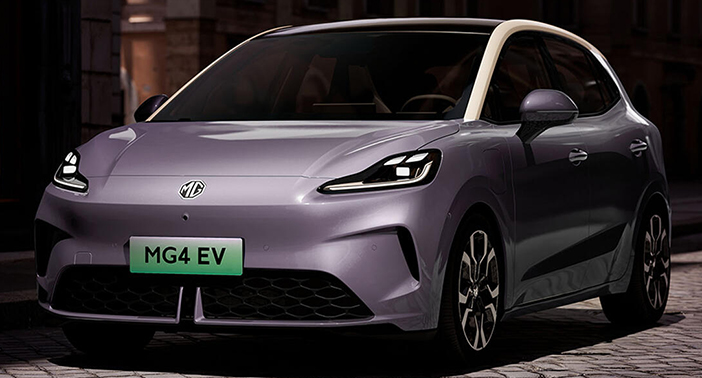
The new 4’s styling draws heavily on that of the Cyberster sports car and the MG 3 supermini, with thin headlights up front and arrow-shaped brake lights at the rear. MG has yet to reveal the car’s interior, nor technical details. However, filings with Chinese authorities state it has a single electric motor with 163 hp (down from 170 hp) and weighs in at 1.485kg, a marked reduction from the current 49 kWh car’s 1.620 kg. Power is drawn from a lithium-iron-phosphate battery of undisclosed capacity, likely giving a range comparable with the 350 km offered by the existing entry-level 4.
The new 4 is expected to gain a broader range of powertrains shortly after launch, mirroring that offered in the current car. For reference, this comprises 3 other models: a Long Range car with 204 hp and a 64 kWh battery, giving 460 km of range; an Extended Range version boosted to 245 hp and 77 kWh for 530 km of range; and the range-topping Xpower with dual motors combining for 435 hp but a 64 kWh pack yielding a reduced 400 km range. The new 4 is expected to arrive in Dutch showrooms this summer, with prices likely to rise slightly compared with the current entry point. +++
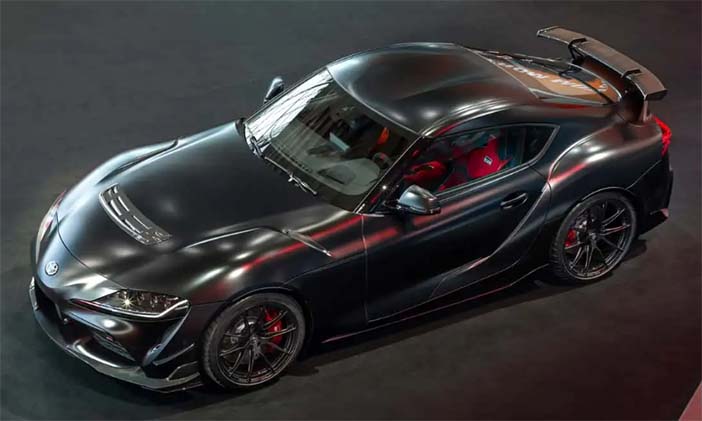
+++ TOYOTA has several reasons for charging a lot more for the Supra A90 Final Edition. Not only is it the end of the line for the current sports car, but it also brings a significant boost in power, among other hardware tweaks. With production capped at 300 units for Europe and Japan, the exclusivity factor shouldn’t be ignored either. Given increasingly stricter emissions regulations in Europe, there may never be a car like this. Nevertheless, is it worth a nearly 100 percent premium over a standard six-cylinder model? Pricing for the Supra’s swan song is out in Germany, where customers must fork out €142.800. For reference, the regular 3.0-liter model begins at €73.250, while the entry-level 2.0-liter version costs €63.250. The Final Edition’s pricing is definitely not a typo. This means the car will be even more expensive in the Netherlands, at approx. €175.000. There are a lot of nice cars you could buy with that kind of money. A fully loaded BMW M4 Competition xDrive is still cheaper than the Supra A90 Final Edition. We can say the same for a Toyota V6-powered Lotus Emira with all the bells and whistles. Nevertheless, the last hurrah for the fifth-generation Supra is still a bargain (well, not really) compared to the Alpine A110 R Ultime. Renault’s performance branch wants a ludicrous €330.000, making it the most expensive 4-cylinder new car ever. As a refresher, the Supra A90 Final Edition doesn’t get BMW’s superior S58 engine. It utilizes an upgraded B58, now making 435 hp instead of 390 hp. Torque rises from 500 Nm to 570 Nm. The turbocharged 3.0-liter inline-6 is more potent than in any BMW application to date, which seems a bit odd. Toyota throws in bigger Brembo front brakes, an Akrapovič titanium exhaust, and an adjustable KW suspension. Those 300 buyers also receive staggered wheels with Gazoo Racing branding, measuring 19 inches at the front and 20 inches at the back. GR mounts 265/35 ZR 19 front and 285/30 ZR 20 rear Michelin Pilot Sport Cup 2 tires, which are 10 percent wider. The Supra’s epilogue also has a new aero pack with a carbon fiber front spoiler and rear swan-neck wing. The hood duct is made from the same lightweight material and can be removed during a track day when extra cooling is needed. Sold only with a 6-speed manual, the car gets the Supra GT4’s aluminium mount for the rear subframe. Other goodies include carbon fiber Recaro bucket seats with red seatbelts and plenty of Alcantara. Toyota has yet to announce an equivalent of the Supra A90 Final Edition for the United States, but logic tells us that an immensely expensive finale is coming. +++
+++ VOLKSWAGEN has confirmed plans to unveil a celebratory Golf GTI model at the Nürburgring 24 Hours race in June, marking 50 years of the genre-defining hot hatchback. While full details remain under wraps, the 50th-anniversary edition of Volkswagen’s most iconic performance model is expected to be based on the recently updated Golf GTI Clubsport, featuring unique badging and styling touches that pay tribute to its heritage. It isn’t yet known whether Volkswagen will introduce any power upgrades for the commemorative model. The current Golf GTI Clubsport is powered by a turbocharged 2.0-litre four-cylinder petrol engine, producing 330 hp; 35 hp more than the standard Golf GTI, along with 400 Nm of torque. This provides it with 0-100 kph time of 5.6 seconds and a top speed of 270 kph when equipped with the optional Race package, all delivered to the its front wheels through a 7-speed dual-clutch automatic gearbox and a mechanical locking differential. By contrast, the first Golf GTI, launched in 1975, got its verve from its low 810 kg kerb weight. Its 1.6-litre 4-cylinder petrol engine produced 110 hp and 135 Nm of torque, modest by today’s standards but enough to propel it from 0-100 kph in 10.0 seconds and on to a 180 kph top speed. As with the original, the 50th-anniversary model is expected to feature classic GTI design elements, including tartan upholstery and red interior accents. Beyond the special Golf GTI unveiling, Volkswagen will also showcase the latest Golf R, Golf R Estate and Golf R Black Edition at a fan event during the N24 weekend (19-22 June). And the company’s presence at the 2025 N24 won’t just be about road cars: two Golf GTI Clubsport race cars are set to compete in the enduro. +++
+++ Touchscreen infotainment systems will continue to dominate user interfaces on VOLKSWAGEN GROUP cars, despite usability criticism. But improvements are in the pipeline, according to Seat and Cupra research and development boss Werner Tietz. “I have 3 children of car-driving age and they love the touchscreen and have no problem with it”, Dr Tietz told. “I think you have to find the right mixture; for some positions in the car, I would prefer mechanical switches and adjustments, but to go away from the touchscreen is maybe, for our younger audience, the wrong approach. For example, the volume adjustment for me is a button where you probably need a physical thing because it’s much easier to handle”, he continued. “But for the rest I don’t see a step back, if it’s done well on a HMI screen or on a steering wheel then you have no problem with that”. Tietz said the Volkswagen Group is “listening to what customers are saying” and will be changing the steering wheel switchgear on electric models, for example, where the slider controls look good, but fall down in terms of usability. “It was very modern, but when you look at the customer feedback, social media and the press, there are a couple of complaints”, he said. “You have to look at the best compromise for the customer, and I think especially on the steering wheel something more physical would be a better solution for a broader audience”. The firm’s combustion engine cars still have the style of steering wheel controls VW is expected to revert back to, potentially starting with the facelifted ID.3, expected in the next 12 months. +++