+++ FERRARI has led just about everyone to believe it would reveal its inaugural EV this year on October 9 during Capital Markets Day. That’s what CEO Benedetto Vigna said in early February when the Prancing Horse presented full-year results for 2024. However, the head honcho has now nuanced that promise, saying the “elettrica” will be unveiled in a three-phase process. Speaking while presenting the company’s Q1 2025 results, Vigna told analysts that we’ll initially only see the EV’s “technological heart”. He didn’t go into details, though I’m hoping he was referring to the powertrain. The second stage of the reveal will take place early next year, when Ferrari will showcase the “look and feel of the interior design concept”. The actual world premiere is scheduled for a few months later, sometime in the spring of 2026. Honestly, this sounds like the full reveal has been delayed, but you obviously won’t hear Maranello framing it that way because it wouldn’t look good. Several months after the official debut, Ferrari will begin deliveries of the elettrica. According to the CEO, early adopters will receive their cars in October. The company’s first model without a combustion engine will be assembled at a new facility called the “e-building”. Despite its name, the site will also produce ICE and hybrid models. Covering a total surface area of 42.500 square meters, the plant was inaugurated last year and currently employs over 300 workers. Ferrari has been awfully quiet about its first foray into the EV segment. However, according to Head of Product Marketing Emanuele Carando, it will emit an “authentic” sound, whatever that means. Additionally, the CEO has said that “electric cars are not silent”, adding that Ferrari’s EV will feature “sound signatures”. A test mule using a modified Maserati Levante body and fake quad exhausts was heard producing aggressive noises despite the absence of an ICE. According to a recent patent, the fakery might even extend to simulated gear shifts. However, it’s too early to say whether this feature will make its way into the elettrica or other future EV models. Many patents never materialize in production vehicles. Since we won’t actually see the elettrica this year, it’s not 1 of the 6 models Ferrari plans to launch in 2026. Following the 296 Speciale’s unveiling in late April, upcoming cars could include successors to the Roma and SF90. We also wouldn’t rule out a second version of the Purosangue and/or perhaps an SP4 from the Icona Series, sitting at the top of the hierarchy. +++
+++ INDIA will drastically reduce its tariff on “high-end cars” imported from the United Kingdom, as part of a landmark trade deal between the 2 nations. Subject to an unspecified sales quota, Indian authorities will reduce the existing tariff of more than 100% on UK-built luxury cars to 10%. The UK government will likewise reduce the limit on imports of Indian-built cars in the UK, such as the forthcoming Suzuki e-Vitara and Toyota Urban Cruiser siblings. +++
+++ More than 2.000 JAGUAR I-PACE electric cars are set to be converted into autonomous taxis at a new factory in the US. The EVs will be converted in Arizona by manufacturer Magna as part of a push by Alphabet-owned autonomous vehicle firm Waymo to expand its services. Already completing more than 250.000 autonomous taxi trips each week in Austin, Los Angeles, Phoenix and San Francisco, Waymo now wants to expand to Atlanta, Miami and Washington DC from next year. Conversion of a further 2.000 I-Paces (a final delivery to Waymo before Jaguar pulled the model from sale last year ahead of its 2026 rebranding) includes retrofitting an array of hardware, such as roof-mounted lidar, a host radar sensors and 29 cameras, and integrating its own computing software: the 6th-generation Waymo Driver. “The Waymo Driver integration plant in Mesa is the epicenter of our future growth plans”, said Ryan McNamara, Waymo’s vice-president of operations. “With our partners at Magna, we’ve opened a manufacturing site that enables the cost efficiency, flexibility and capacity to scale our fleet to new heights”. As the I-Pace no longer made by Jaguar, the site will also begin to convert new cars, such as the Zeekr Mix. At full capacity, the factory will be capable of converting tens of thousands of vehicles per year, claimed Waymo. +++
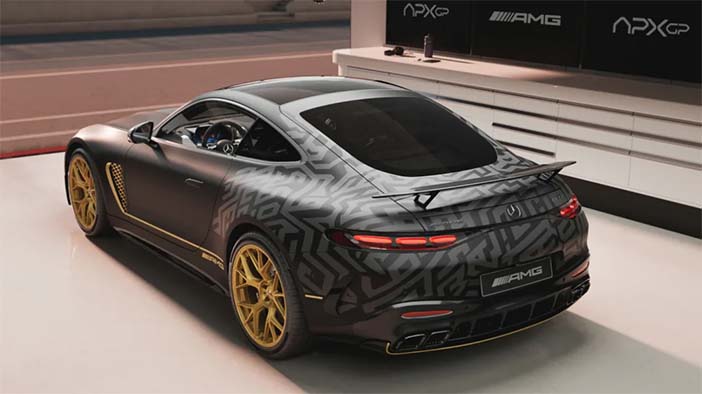
+++ The upcoming film F1 has been marked by a new limited-run version of the MERCEDES-AMG GT , called the APXGP Edition. The car comes with a suite of bespoke touches in a nod to the fictional APXGP race team in the film. Presented at the Miami Grand Prix, the new car has an exclusive look with gold accents around the grille, while its 21-inch wheels and side air vents are coloured gold. It also features a gold chequered flag motif and even more gold on the diffuser at the back. The rear of the APXGP Edition also wears a black and grey design designed to replicate the livery of the team’s car in the film. Inside, meanwhile, you’ll find gold stitching on the steering wheel, and AMG Performance bucket seats upholstered in Nappa leather. There are also gold AMG sill plates, further gold stitching on the dash and doors, plus an uprated 3D sound system with 15 Burmester speakers and a ‘Limited Edition 1 of 52’ plaque to denote the car’s rarity. Thanks to being fitted with the ‘AMG Exterior Carbon Fibre package’, the APXGP Edition also comes with its front splitter, side sills, diffusor and rear wing made from carbon fibre. A panoramic glass roof has been included too, along with an AMG Night Package II, which adds a black chrome radiator grille and blacked-out exterior badging. Rather than base the APXGP Edition on the 4-cylinder AMG GT 43 or even the 55, Mercedes-AMG has used my favourite, full-fat AMG GT 63 with its twin-turbocharged 4-litre V8. Power remains the same as the standard AMG GT 63 with 577 hp and 800 Nm of torque going through a 4Matic all-wheel drive system. 0 to 100 kph should be unchanged from 3.2 seconds and the top speed should be in the region of 315 kph. Helping to rein that all in, the APXGP Edition’s braking system consists of ceramic composite discs and six-piston fixed callipers at the front with one-piston floating callipers at the rear. The F1 film is scheduled to hit the big screen on June 25 with Brad Pitt in the leading role. However, current Formula One stars were also involved in production too, because ex-Mercedes man Lewis Hamilton is a co-producer on the project. While all 10 current F1 teams make an appearance in the film, Mercedes-AMG was an official collaborator, hence the making of this limited edition. The previous-generation AMG GT also provided Formula One’s safety car. Pricing for the APXGP Edition hasn’t been revealed, nor have the markets in which it’ll be available in, but I suspect it’ll cost even more than the current range-topping £186,290 GT 63 S E Performance plug-in hybrid. +++
+++ TESLA ’s sales slump in Europe isn’t letting up, and now it’s starting to look like more than just a temporary dip from the Model Y changeover. For the 4th month in a row, the EV company’s numbers are sliding in several key markets, and this time the declines are steep. In April, at least three major countries reported year-over-year drops of more than 59 percent. Tesla may be running out of time to figure out how to stop the bleeding. Tesla’s sales are diving headfirst into the red. In France, deliveries were down 59.4 percent compared to April last year, with just 863 vehicles sold. Denmark saw a 67.2 percent decrease, bringing the monthly total there to only 180 cars. But, Sweden takes the prize for most dramatic plunge: sales dropped 80.7 percent, from 1.052 units last April to just 208 this year. The broader trend doesn’t look much better. Tesla’s overall European sales dropped 28.2 percent in March, and April seems poised to show even worse results once full data is available. In Norway, figures from OFV show that Tesla’s market share has slipped from 18 percent to just 11 percent compared to the same period last year. Chinese automakers, meanwhile, have moved ahead, claiming 12 percent of Norway’s market. “Tesla is nowhere near the level we are used to; you can’t pretend otherwise”, OFV noted. Much of this feels like a perfect storm against Tesla alone. Tesla has chalked up its weak Q1 performance to a production switch from the outgoing Model Y to the updated version. But that’s only part of the story and it doesn’t apply to Europe which received the facelift model early on in the year. At the same time, it’s facing pressure from rival brands and even more from Chinese EVs that often sell for less. On top of all that, Elon Musk’s political views have distanced many of his customer base in the area. That said, it’ll be interesting to see what, if anything, comes of this sales dip from an official Tesla standpoint. The company openly said that production slowdowns from the first quarter are done, so what will it say if this downward projection continues? Will it reverse course on its public statements about searching for a new CEO? How will it explain a sales dip when its most popular model, the Y, is struggling to sell despite just launching a heavily updated version? Only time will tell. +++
+++ The VOLKSWAGEN GOLF is set to be radically reinvented as an advanced electric car when it enters its 9th generation, benefiting from bold new hardware and software technology. The new model, due in 2028 or 2029, will be a key part of a wide-reaching overhaul of Volkswagen’s EV line-up that will kick off with the ID.2X later this year. The new model will start the brand’s pivot back towards more conventional and familiar styling. There have been electric variants of previous generations of the Golf, but the new version will be the first engineered purely as an electric car. While that marks a significant step for the Golf, it will retain familiar design cues from the model’s history and be offered with GTI and R performance variants. The new Golf will mark the point where Volkswagen’s long-running model names will effectively merge with its ID sub-brand, possibly resulting in the car being called the ID.Golf. The model will also be the culmination of a major reworking of the marque’s electric range, spearheaded by boss Thomas Schäfer to make Volkswagen what he refers to as an emotional “love brand” once again. Before the ID.Golf arrives, three new small EVs will be launched to kick-start Volkswagen’s new age. This will begin with the unveiling of the ID.2X compact SUV, which will be closely followed by the production version of the ID.2all hatch. Both those models will sit on the Volkswagen Group’s new MEB Entry platform, with the ID.2all positioned as a Renault 5 rival and priced from around €28.000. The ID.2all will be a similar size to the current Polo (it could yet take that name into production) and retain styling very similar to that of the concept version, with deliberate nods to classic Volkswagen models. The ID 2all will also spawn a GTI version, which has already been previewed by its own concept. It will bring the classic ‘everyday performance’ badge to an electric VW for the first time, replacing the GTX brand used by hot ID models to date. While the firm has yet to outline performance targets for the ID.2all GTI, tech chief Kai Grünitz has said the focus will be on developing a model that is fun to drive, rather than simply adding maximum power. Those 2 models will then be joined in 2027 by the production version of the ID.Every1, a €20.000 city car that will in effect succeed the Up in Volkswagen’s line-up. Notably, that model will be the first VW to feature elements of an advanced new software architecture being developed in a joint venture with US EV start-up Rivian and which will be key to the development of all the brand’s European models in the future. The retro-infused designs of the ID.2all and ID.Every1 concepts hint at what design chief Andreas Mindt has planned for the ID .Golf, and for future VW models. While the next Golf won’t be an overtly retro design, it will build on traditional Golf design traits. That will be eased by a more regionalised product approach in future, allowing for the Golf to be focused more on European tastes where its heritage is valued. Mindt recently told he was already thinking what design elements would be key to the next ID.Golf, but he said it would be designed “without doing retro”. He added: “We have to look forward and not backwards, but our values are important and we should play with our heritage. So many new brands coming to Europe don’t have this, so we need to use it”. Asked what elements would be important for the new model, Mindt said: “You have to stay true to the Golf. Golf is a brand of its own within Volkswagen, and GTI is another brand within that. Within those brands there are various models you can play with. There’s a lot of nice content you can use for the future of Golf”. Notably, Mindt was part of the design team for the Golf VII, which is regarded as one of the finest in the nameplate’s long history. Mindt admitted that model was a “good starting point” for his work on the ID.Golf, adding: “The Golf VII is kind of a masterpiece, because it resembles all the best elements from history, but it’s still a fresh design”. Mindt will also play a key role in the interior overhaul of the next Golf’s design, and he has vowed that all future Volkswagen models will feature physical buttons for key controls such as the infotainment volume and heating systems. That will represent a marked contrast from the Golf VIII, which was launched with controversial ‘slider’ controls and haptic steering wheel buttons. The ID.Golf will, as before, be joined by several closely related sibling models from other Volkswagen Group brands, starting with the next-generation Skoda Octavia. The ID.Golf is set to arrive in 2028 or 2029. It will be one of the first models in the VW Group to use the new SSP electric platform, which in effect fuses elements of the existing MEB mainstream and PPE premium platforms. It is designed to be ultra-flexible through a modular set-up that allows it to be offered in a wide range of dimensions and with a wide variety of powertrain set-ups and battery sizes. The SSP platform will also be built around the new Rivian-developed software architecture, which will control the bulk of the systems on the vehicle through a greatly reduced number of processors. It’s that software set-up that will be key to unlocking the ID Golf’s potential: it is a zonal system that can be adapted based on how much technology each model needs, and it allows for much greater system integration. That means, for example, the ability to blend automatically the optimum mix of friction braking and regen when the driver presses the brake pedal. It also allows for much greater control over the car’s hardware, including through over-the-air (OTA) updates. For example, Rivian used OTA updates to rework the air suspension of its R1T pick-up (below) to materially alter the vehicle’s ride and handling dynamic. Speaking about the software platform recently, Grünitz said the real benefit was that it was “highly flexible and highly updateable”. He added: “With OTA updates I can introduce new functionality to our customers even after they bought the car, without them needing to bring it in for a service. That means it’s really the next step”. That ability of the software to control the key hardware elements will be crucial to both GTI and R variants of the Golf and ensure they offer performance that will be recognisable to fans of the combustion-engined versions of those models. The GTI is likely to be offered with 2-wheel drive to best replicate its established character, and it will doubtless use the software control of systems such as torque vectoring to put B-road handling to the fore. Meanwhile, the R is expected to get all-wheel drive (probably via a dual-motor set-up) but with more of a focus on handling than the previous dual-motor GTX models. The ID.Golf will be built at the firm’s main factory in Wolfsburg, Germany, where the Golf has been produced continuously since it was first launched in 1974. To accommodate that, production of the existing combustion-engined model will in 2027 be shifted to Volkswagen’s factory in Mexico, creating space for the production of the new ID.Golf to ramp up the following year. Notably, the current Golf will be heavily updated and remain on sale alongside the 9th generation EV. A similar move is being undertaken by Volkswagen Group sibling Porsche with the combustion-powered and electric Cayennes. In Europe, the petrol-Golf will only be offered in plug-in hybrid form while demand and regulations allow (currently until 2035, when all new non-EVs will be banned from sale). The shift to production in Mexico hints that, as with the Beetle before it, the model could remain on sale for longer in countries that are slower on EV uptake. The ID Golf will also mark the starting point of another revamp of Volkswagen’s EV line-up. It is likely to be followed by an SUV that will serve to succeed the ID 4, and it could potentially continue the best-selling Tiguan model line. The ID.Golf will arrive around the time that the ID.3 would be due for replacement, but it is not expected to replace that model. Instead, there are hints that the bespoke EV could gain its own successor, albeit with some differentiation to ensure there is little crossover between the 2 models. +++
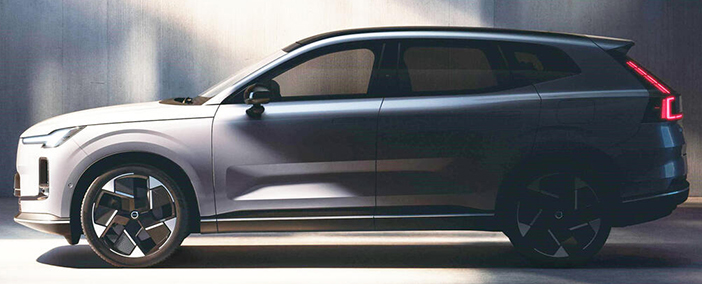
+++ VOLVO is reviving the XC70 name for a new range-extender SUV for the Chinese market. The company’s first ‘extended-range plug-in hybrid’ (EREV) has been previewed for the first time today ahead of a reveal in the coming months and a launch later this year. Volvo says the new XC70 is designed specifically “to meet the demand for longer-range plug-in hybrids in China”, but says it is “exploring potential additional markets at a later stage”. Technical details remain thin on the ground, but Volvo has promised a pure-electric range of up to 200 km, which is more than double what the similarly sized Volvo XC60 Recharge can achieve. The XC70 is described as slightly larger than the XC60, and looks essentially like a downscaled XC90 but rather than being a close technical relation of that car it is based on a new platform designed specifically for EREVs. The Scalable Modular Architecture, or SMA, is said to be “a premium extended-range plug-in hybrid architecture”, but no details of its relationship to Volvo’s other platforms, or indeed those from the wider Geely group, of which Volvo is a part, have been given. Geely-owned sibling company Lotus is also investing in EREVs over the coming years in response to lower-than-anticipated demand for pure-electric luxury cars, and Coventry-based LEVC has been using an EREV powertrain in its Volvo-engined TX taxi since 2017. EREVs are currently much more popular in China than in other global markets, and Volvo’s announcement of a new EREV SUV follows the recent unveiling of the new China-oriented Volkswagen ID Era SUV concept at the Shanghai motor show. That car (similar in size to the XC70) has been engineered in partnership with MG owner SAIC to cater to burgeoning demand for EREVs in China, with companies like Li Auto, Leapmotor and Avatr among the biggest players. However, like Volvo, Volkswagen’s sales and marketing boss told that a global launch was not off the cards: “Range-extenders today are already a very big thing in China. They will be of relevance in North America and we are convinced they will also have relevance in Europe”. Volvo’s CEO Håkan Samuelsson said the technology provides “a perfect bridge to full electrification” amid a slowing of demand for pure-EVs. “It enables us to maintain and develop a balanced product portfolio, while offering a highly attractive alternative to customers who are not yet ready for fully electric cars. This is also an example of regionalisation, where we adapt to the local market needs”, he said. The XC70 has an especially important role to play for Volvo as the company embarks on a significant global cost-cutting drive in response to industry “turbulence” and a “challenging external environment”. Even amid that turbulence, Volvo said it “remains firm on its ambition of becoming a fully electric car company”, but just a fifth of its sales in the first quarter of 2025 were electric, and it said “premium plug-in hybrids provide a pragmatic bridge for customers not yet ready to switch”. The XC70 name has been dormant since 2016, when the off-road version of the third-generation V70 estate was taken off sale. It was originally called the V70 XC, with ‘XC’ standing for ‘Cross Country’. +++