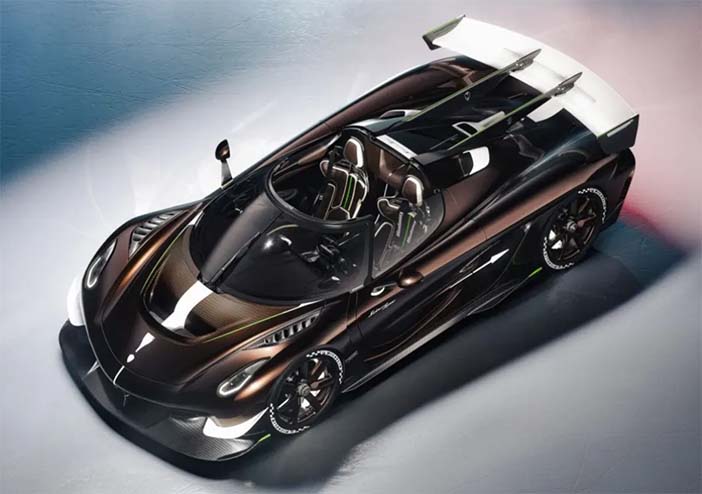
+++ KOENIGSEGG has unveiled the Sadair’s Spear: a new limited-edition hypercar that features the same underpinnings as the wild Jesko, but with new aerodynamics, less weight and even more power. While the other ‘Attack’ and ‘Absolut’ variants of the Jesko hypercar (named after Christian von Koenigsegg’s father) are fairly self-explanatory, the Sadair’s Spear name comes from Jesko von Koenigsegg’s horse, which he rode during his final race as a jockey in 1976. The Sadair’s Spear does get some mechanical tweaks over other Jesko variants, but it’s been altered cosmetically too. There’s a new active top-mounted, ‘double-blade’ rear wing, an enlarged front splitter with independent underbody flaps, larger diffusers behind the wheels, a new front bonnet air dam and new side winglets. All this (plus the Jesko’s existing aerodynamics) creates a total downforce of 850 kg. The new variant also weighs 35 kg less than the standard Jesko, thanks to lighter springs in the self-levelling suspension, less sound deadening and bespoke carbon-fibre seats. The result is a kerbweight of just 1.320 kg; less than a Ford Focus. There’s a 6-point harness inside to give you the full race car environment, although Koenigsegg still fits a radio and even a wireless smartphone charger to keep things civilised in there. Powering the Sadair’s Spear is the same twin-turbocharged 5.0-litre V8 with Koenigsegg providing its usual output figures for unleaded and more potent E85 fuel: 1.300 hp for the former and 1.625 for the latter, which is 25 hp up on the Jesko. There are no performance figures just yet; while the Absolut has a theoretical top speed of 4096 kph, it does this without the huge wing of the Sadair’s Spear. To ensure Koenigsegg’s latest hypercar stops as well as it goes, there are carbon-ceramic brakes front and rear with bespoke brake calipers in 6-pot and 4-pot forms. Pricing for the Sadair’s Spear stands at €5.8 million (Dutch market), which might sound like a lot, but there’s clearly enough interest because all 30 that will be built have been spoken for already. +++
+++ LAMBORGHINI is cooking up something special and a recent trademark application may have revealed the name of a new, limited-edition hypercar. The model is called Fenomeno (which is not only Italian, but also Spanish for ‘phenomenon’) and I expect it to be a series special potentially based on the brand’s Revuelto flagship, rather than the new Temerario, which is still yet to hit the market. The trademark application for the name was only made in April and also features a logo design that’s in keeping with the Revuelto and Temarario’s, showing little horns protruding out of the name; a nod to previous Lamborghinis named after Spanish fight bulls. The Revuelto’s predecessor, the Aventador, formed the basis of several special editions throughout its 11-year lifespan, including the Sian (Lamborghini’s first hybrid), the new Countach and the Centenario. I expect the Fenomeno could have a similar brief to those cars, using the same structure as the Revuelto underneath, but gaining a completely new exterior and possibly new powertrains too. With 1.001 hp, the Revuelto is already the most powerful Lamborghini ever, thanks to its combination of a naturally aspirated 6.5-litre V12 and 3 electric motors, so the Fenomeno will have to pull something special out of the bag to trump the standard car. On the other hand, removing the Revuelto’s plug-in hybrid system to create a lighter, albeit less powerful offering would also be a tempting proposition. Lamborghini hasn’t publicly spoken of the Fenomeno just yet, although we could get more information or even a full reveal as early as August. That’s when this year’s Pebble Beach Concours takes place at Monterey Car Week, which has hosted plenty of exclusive Lamborghini premieres recently, including the Lanzador concept and, last year, the Temarario. +++
+++ MERCEDES is preparing to phase out the controversial 4-cylinder plug-in hybrid drivetrain from the C 63 AMG and GLC 63 AMG, marking a strategic shift in the brand’s engine line-up. A senior insider confirmed that future petrol-powered Mercedes-AMG models are set to adopt either an updated version of today’s in-line 6-cylinder engine or an all-new V8 featuring a flat-plane crankshaft, similar in design to that used by the GT Black Series. “Technically, the 4-cylinder is one of the most advanced drivetrains available in a production car. It’s also right up there on performance. But despite this, it failed to resonate with our traditional customers. We’ve recognised that”, said the source. The 2.0-litre M139-based four-cylinder, paired with an electric motor for a combined system output of over 680 hp in the C63 S E Performance, was introduced in 2022 to much fanfare but drew criticism from enthusiasts for its lack of character and weight compared with its V8-powered predecessor. While a precise timeframe for the phase-out has not been confirmed, the engine will remain in production for the time being before “eventually” being replaced. Among the key reasons for the shift in strategy is the high cost of engineering the 4-cylinder to comply with upcoming Euro 7 emissions regulations. “There’s no doubt about its potential, this is one of the most sophisticated engines we’ve ever built, but the investment to make it EU7-compliant is very high”, said the source. The move comes as Mercedes-Benz prepares to discontinue a number of compact models that used the M139 engine, including the A-Class. It also signals a rethink for models such as the SL 43 4Matic, which is expected to adopt a new turbocharged 6-cylinder engine to replace its current 380 hp 2.0-litre unit. Speaking to journalists at the same event, Mercedes-Benz CTO Markus Schäfer reaffirmed AMG’s commitment to a dual-drivetrain strategy. “AMG will continue with a dual strategy: 2 pillars. The electric pillar will grow significantly. But the second pillar, hybridised internal-combustion engines, will also remain”, he said. “AMG and Mercedes are working together on a brand-new V8 engine. That engine will support upcoming emissions regulations. There will still be 6- and 8-cylinder units, all electrified with either 48V systems or full hybrid set-ups”. +++
+++ NISSAN has been in dire straits since last year and is in desperate need of a turnaround. Not only did its merger with Honda collapse in front of the whole world, but it continues to lose money, will cut 20.000 jobs and close 7 of its production facilities. The deepening turmoil at Nissan was on full display during the automaker’s annual general meeting earlier this week. During the meeting front by new chief executive Ivan Espinosa, Nissan reported a $4.5 billion net loss in the last financial year. It failed to provide an earnings forecast for the current year, but estimated a first-quarter loss of 200 billion yen or $1.38 billion at current exchange rates. In addition, Nissan has suspended its dividends. The meeting, held at Nissan’s headquarters in Yokohama, Japan, was attended by 1.071 shareholders. Espinosa confirmed during the event that former Nissan chief executive Makoto Uchida, as well as chairman of the board of Renault, Jean-Dominique Senard, have both been replaced on Nissan’s board of directors. One shareholder proposal asserted that “the capability of former CEO Makito Uchida as an executive is extremely low” and said the board of directors must take responsibility for “selecting such an individual as CEO”. It also said that the directors who appointed Uchida as CEO “should leave the company”. Despite the strongly worded proposal, Nissan’s board of directors rejected it. Another shareholder claimed that Nissan has tried to “shift its responsibilities to frontline workers” by cutting their jobs, while many executives retain their positions. Nissan also faced complaints about cutting the dividend. There was also a proposal for Nissan to take action on Nissan Shatai, its listed subsidiary. However, it was voted down by the shareholders and also opposed by Nissan. Some Japanese brands, including Toyota, are being encouraged to clear up “parent-child listings” or subsidiaries that can impact governance. For example, Toyota plans to take its listed Toyota Industries 6201.T subsidiary private in a $33 billion transaction. +++
+++ RENAULT is treating its Emblème concept as a “laboratory on wheels for low-carbon mobility”. Revealed at the Paris show in October last year, it is claimed to emit the CO2 equivalent of 90% less greenhouse gas than a petrol Captur, based on a whole life-cycle analysis. The 4.8 meter long cross-over is planned as a dual-energy EV with a battery and a range-extending hydrogen fuel cell system to keep it topped up if necessary. More than a concept, it’s become a rolling study of how best to get small percentage gains in carbon footprint reduction by scrutinising the basics such as aerodynamics, weight and materials used in every detail of the car. 7 materials and components account for 90% of its total carbon footprint and these are the battery, steel, aluminium, polymers, electronic components, tyres and hydrogen fuel cell system, which includes the fuel cell stack, the hydrogen storage tank and the systems that go with them. More than 20 partners worked with Renault and its EV division, Ampere, to achieve a 70% reduction in the carbon footprint of parts production by analysing components and materials on an individual basis. The OPmobility hydrogen fuel tank is made from carbon fibre, an industry-standard material for them, but uses low-carbon energy for the manufacturing process. Carbon emissions for the Verkor high-voltage battery are claimed to have been cut by 72% compared with a “traditional equivalent battery”. The precise details of what the battery composition will be when the Emblème goes into production isn’t yet clear, although Renault has told the battery will be capable of very high-speed charging. The more conventional aspects of the car’s construction include the use of advanced high-strength steels (AHSS) and press-hardenable steels (PHS) developed by ArcelorMittal, which reduce the weight of the body-in-white by 8%. Steels in the B-pillar consist of 75% recycled material produced with renewable electricity, giving an equivalent reduction in CO2 of 69%. The use of recycled aluminium for body panels is well established in the car industry and in this case requires only 5% of the energy compared with the primary material. It can also be recycled indefinitely without deteriorating. Less obvious areas under scrutiny include the interior, where Forvia’s natural materials such as linen and pineapple, used for coverings, act as carbon sinks by absorbing CO2 when growing. Whole-life CO2 equivalent emissions have been halved in the headlights designed by Forvia Hella and adaptive interior lighting reduces energy consumption by 60% around town. +++
+++ A new SKODA concept car that previews the next-generation Octavia estate will “create a lot of buzz and controversial discussion” for the brand as it moves into a new era of design. Skoda CEO Klaus Zellmer told that it will be a “further step” for the brand in its design but will still “clearly be recognisable as a Skoda”. The estate concept, which will be revealed at the Munich motor show in September, will likely be based on the Volkswagen Group’s upcoming SSP platform, which is designed for the next generation of electric cars that will follow those on its current MEB architecture. The current MEB is not well suited to lower saloon and estate models and is designed more for raised crossovers, while the SSP platform can be applied to lower cars as well as crossovers. The next-generation automated driving features offered on the SSP platform also appeal to Skoda. The new Octavia concept will help “develop the brand and the aspiration of the brand further” but it will also “stay true to our roots”, rather than being a sign of the brand trying to push out of the mainstream. A production version of the concept isn’t due until the end of the decade. However, Zellmer hinted that it is an option for the electric estate to be sold alongside an updated version of the current combustion-engined model to ensure that the brand continues to offer a full range of powertrains. “There’s enough volume in the market for us to have 2 cars in parallel. It all depends on customer sentiment, especially in the fleet market. We’ll keep all avenues open”, he said. A plug-in hybrid version of the Octavia will also be relaunched, said Zellmer, following a revival in that market. Zellmer confirmed that the refresh to the Fabia, Scala and Kamiq models, which will update them to Euro 7 emissions regulations, will keep them on sale “beyond 2030”. This reverses a previous decision to phase them out and replace them with the new Epiq entry-level electric car due next year. There is now “price parity but not cost parity” for electric cars and combustion-engined ones, said Zellmer, and a key focus of EV development is to bring costs down where possible. Another new electric Skoda due next year is a production version of the seven-seat Vision 7S concept car, which will be the new “flagship” for the brand. Zellmer said the brand is still working on a name for the car but internally it is called “Space BEV” due to its amount of interior space. After that, Zellmer said Skoda will be “at the peak of our portfolio” and the introduction of any other models is unlikely. This includes any models that “speak to the hearts, like a convertible”, because Zellmer said the “full focus is on our portfolio that covers the big footprint” of the market. Zellmer would also “love to see the Yeti again, because I think that car has such a great character, such a good name and a loyal base” but there are no plans to do such a model. There are also no plans for Skoda to launch any commercial vehicles, Zellmer confirmed. Another project for Skoda is leading not only the development of combustion engines for the VW Group but also the ongoing development of the MQB architecture, which underpins the likes of the Octavia, because it is so closely tied to combustion engines. No end date has been set on the development of that architecture and a decision on the level of future investment into it will depend on how CO2 legislation evolves. +++
+++ After 4 tumultuous years at the helm of STELLANTIS , Carlos Tavares unexpectedly stepped down last December, despite having another year left on his contract. The company took about 6 months to find a replacement, ultimately appointing Antonio Filosa late last month to lead the automotive conglomerate and its 14 car brands. Born in Naples, the Italian executive is taking on a dual role, retaining his position as head of North America and American Brands. Filosa is now reviewing Stellantis’ long-term “Dare Forward 2030” strategy to determine whether adjustments are needed. Before making any major decisions, he’s asking employees to stop identifying themselves as former Fiat Chrysler Automobiles or Peugeot Citroën staff. As a reminder, the FCA-PSA merger was finalized in early 2021. Instead, the new CEO wants the roughly 250.000 employees to embrace a unified identity: “We are Stellantis”. That approach makes sense. After all, it’s already been four years since the mega-merger. With a new CEO and leadership team in place, Stellantis aims to move forward rather than remain anchored in the past. According to Automotive News, Filosa told employees they are free to “speak up and be listened to”, emphasizing he doesn’t intend to be a CEO who lives in an ivory tower. The former Jeep boss also believes past mistakes can be corrected: “There is nothing wrong at Stellantis that cannot be fixed with what is right at Stellantis”. The company has already dismissed persistent rumours about offloading its struggling Maserati luxury brand, signalling continued commitment to its many subsidiaries. Meanwhile, on the other side of the pond, Chrysler appears to have a future as well. Speaking of Maserati, some of its employees may soon be working more closely with those from Alfa Romeo. Santo Ficili, CEO of both Italian marques, recently hinted at deeper collaboration between the 2 brands. Staying in Italy, Lancia’s relaunch has not gone as smoothly as hoped, while Abarth’s shift away from combustion engines in favour of EVs could proves risky. All things considered, Filosa has a full plate as he manages a sprawling portfolio of brands, some of which are in urgent need of revitalization. Whether Stellantis can mirror the success of the Volkswagen Group remains uncertain. The challenges today are far more complex than during the era that helped VAG become a global powerhouse. Rising competition from China, stricter regulations, and escalating production costs are just a few of the hurdles legacy automakers now face. +++
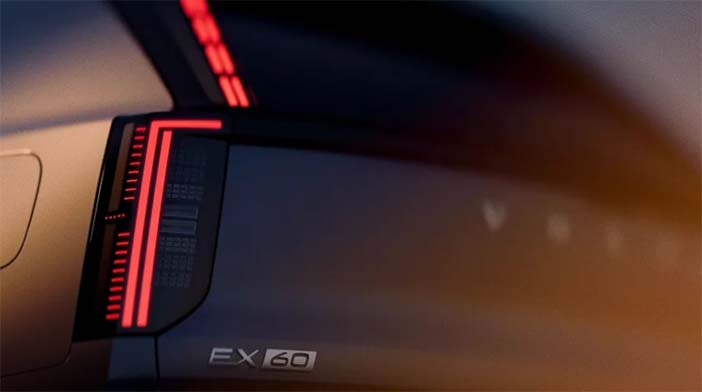
+++ The new VOLVO EX60 will make its world debut in January 2026. It has been confirmed that the Swedish brand is planning to kick off the new year by unveiling its answer to the Audi Q6 e-Tron, Porsche Macan Electric and the highly anticipated, next-generation BMW iX3. Volvo has also shared the first official teaser image of the all-electric alternative to its faithful XC60, which reveals the new rear light signature for the EX60. Unlike seemingly every other EV being launched at the moment, there’s no full-width light bar as far as we can see, but there are separate segmented tail-lights embedded in the rear windscreen as you’ll find on the Volvo EX90, EX30 and ES90. The main tail-light unit is located lower down, behind the car’s pronounced and surprisingly angular rear haunches, and features slim lights elements with tiny Volvo script at the side. We can also see much bigger Volvo lettering across the tailgate and smooth surfacing, similar to that on the brand’s other electric cars. The EX60’s overall proportions should be similar to the current XC60. I expect to see the front end use 8-bit-style Thor’s-hammer led headlights, plus flush door handles, a blanked-off grille and aerodynamic alloy wheels. Volvo hasn’t confirmed whether the advanced LiDAR driver-assistance tech on the flagship EX90 will filter down to ‘lesser’ models, such as the forthcoming EX60. Chief Product and Strategy Officer, Erik Severinson did, however, tell me that the brand is experimenting with “different kinds of safety sensors going forward”. As well as being the first model to feature Volvo’s new ‘multi-adaptive safety belt’ technology, the EX60 will also be the first built on the company’s next-generation SPA3 platform. It’s being described as “ground breaking” and “designed for longer range, efficiency and intelligent core computing”. Supposedly all these developments will make the EX60 “a car that evolves with you”. What exactly does that mean? All we know right now is that “SPA3 is designed to learn and adapt over time with new features and capabilities, helping redefine what it means to engineer, own, and experience a car”. The SPA3 platform will also allow Volvo to develop and build cars of all sizes using the same technology. Being a scalable architecture, it also means the Swedes can create increased synergies and share key components across all cars built on this platform, which reduces complexity and can help bring down the cost of production. Another advance that will set the EX60 apart from other electric Volvos will be its “structural” battery pack. This technology has already been adopted by the likes of Tesla and BYD, and in effect it bonds the battery pack with the floor of the car. The result, Severinson told, is “improved energy density” and, given the extra structural rigidity, “great driveability”. The EX90 uses a huge 107 kWh (usable) battery pack that offers a range of 580 km on a single charge. Given the EX60’s smaller size, we expect to see a slightly more compact, lighter battery fitted. The increased energy density of its structural battery pack could see range figures for the lighter car approaching the 640 km mark, however. The incorporation of this new kind of technology is thanks, in part, to the EX60’s megacasted rear underfloor. Unlike most cars, which have rear undercarriages constructed using a multitude of different parts, the EX60 will get a single unit that is cast out of aluminium. I visited the factory in Gothenburg, Sweden, which will assemble the EX60’s floor. Basically following the same manufacturing processes used to build 1:64-scale model cars but greatly enlarged, megacasting is a relatively new concept in the automotive sphere. Tesla is one other mainstream manufacturer currently adopting the method, along with several Chinese brands such as Nio, Zeekr and XPeng. Volvo says the new rear floor weighs “15-20 percent less” than a traditional stamped equivalent and that it offers “just as good, if not better, safety and durability”. There are other incidental benefits from the process, too, including an increased boot capacity and faster production times. A megacasted floor takes 120 seconds to build, compared with a full hour for a multi-piece stamped floor. Plus, while Volvo’s production process currently uses 20 per cent recycled aluminium, the goal is to increase this figure and fully recycle the megacasted floor at the end of the car’s life. +++