+++ Nearly 3 years have passed since AUDI ’s former design chief hinted at a possible Mercedes-Benz G-Class rival. While the rugged off-road icon continues to enjoy strong sales, Audi has yet to introduce a competing model. That might change soon. While little has transpired since 2023, Audi boss Gernot Döllner recently told not to “give up on that dream” of a rugged off-road SUV from the brand. Although Döllner has discussed simplifying the Audi line-up, this doesn’t mean it will eliminate niche models. He told: “It works perfectly to have a more focused line-up in the core, and in addition to that have some niche models to build the brand and to also transfer new ideas from a niche segment into the core products. That works perfectly and this is part of our strategy”. Such a model would serve as a flagship and allow Audi to showcase new technology, while competing in a popular and profitable segment. Back in 2023, when Marc Lichte said “there is space for such a model”, he added that the SUV, which was supposed to be electric, would not look like a G-Class or Land Rover Defender. It would be “something else”. That something else could be a Scout-based offering, and Audi might use it for more than its bones. The tariffs enacted by United States President Donald Trump pose a problem for Audi, which builds its vehicles outside the country. A Scout-based Audi could allow the automaker to build its G-Class competitor right here in America, avoiding the tariffs, but nothing has been decided yet. According to Döllner, the issue is whether Audi should have a dedicated factory in the US or not, which is a decision that is “dependent on how we are aligned with the US government”. Either way, Döllner says we should “stay tuned”. +++
+++ The cadence of new FERRARI products has accelerated in recent years, and Maranello is about to shift into an even higher gear. Between 2026 and 2030, an average of 4 new models will debut annually, so get ready for 20 cars in just five years. That’s a remarkable output for an exotic marque that sold only 13.752 units in 2024, its best year on record. It’s still early for Ferrari to reveal specifics about what’s coming, but one of the confirmed launches is the brand’s first EV, the “Elettrica”. Logic suggests an updated 296 is on the way, along with a plug-in hybrid Purosangue, given that the SUV’s platform supports electrification. Open-top versions of the Amalfi and F80 also seem inevitable; it’s a matter of when, not if. Reaching 20 new models by 2030 is an ambitious target, but Ferrari’s CEO has hinted that exclusivity will remain a priority. Benedetto Vigna told analysts it’s “better to have more models with limited volume than a few models with higher volume”. The Prancing Horse’s “product diversification strategy” aims to attract a broader range of buyers without diluting its prestige. One might assume such a surge in products could alienate those drawn to Ferrari’s exclusivity. Yet that hasn’t been the case. Vigna confirmed that orders already cover the entire 2026 production run, meaning new buyers won’t take delivery until 2027. Ferrari currently has around 90.000 active clients, defined as customers who’ve bought a car in the past five years. That’s a significant 20 percent increase over 2022. In that same period, more than 32.000 people became first-time Ferrari owners. Collectors also now hold about 20 percent more cars than before, proof that business is thriving. Like most automakers, Ferrari has noticed EV adoption isn’t advancing as quickly as once projected. Back in 2022, the company targeted a 40 percent electric share of its lineup by decade’s end. That figure has since been halved. By 2030, Ferrari expects its portfolio to consist of 40 percent hybrids, 40 percent pure combustion-engine models, and only 20 percent EVs. With the company reaffirming its commitment to the legendary V12, a future SP4 from the Icona Series could well feature the naturally aspirated 6.5-liter engine currently reserved for the Purosangue and 12Cilindri. Limited-run specials or one-offs using this powerplant would undoubtedly sell out instantly, especially as the V12’s days are numbered. Looking ahead, every Ferrari will have 2 pedals. Chief Marketing and Commercial Officer Enrico Galliera recently remarked that those wishing to row their own gears should buy a classic car instead. Last used in the 2012 California, the manual might not be entirely dead. Chief product development officer Gianmaria Fulgenzi has suggested a stick shift could return in an Icona model, as some ultra-wealthy clients are urging Ferrari to bring back the clutch pedal. If there’s one company capable of charging an absurd amount for a manual car and still selling out every unit immediately, it’s Ferrari. +++
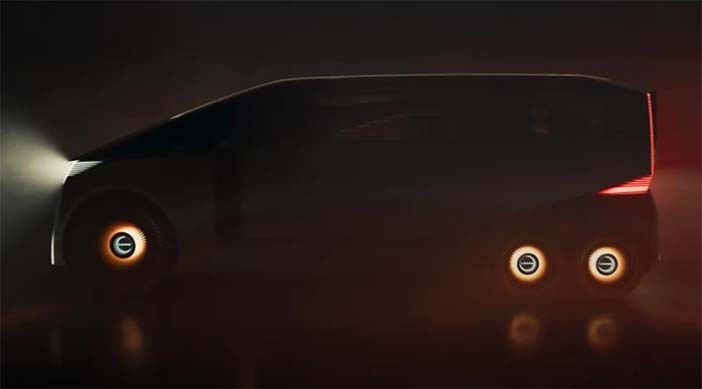
+++ LEXUS has clearly lost its mind. At least, that would be one explanation for the fact the Japanese brand, known for the reliability and luxuriousness of its cars, is about to unveil a 6-seat, 6-wheeled minibus at the Tokyo Motor Show. Admittedly, this outlandish creation is only a concept, but it could be telling that it’s called the Lexus LS Concept. That’s because the LS 400 was the car that put Lexus on the map back in the nineties. It was a luxury saloon that trumped the contemporary Mercedes S-Class on space and refinement, yet it cost half the price. The LS name just meant ‘Luxury Sedan’ until now, however Toyota chairman Akio Toyoda said during a livestream that the name has been redefined as ‘Luxury Space’ for this new concept. If you look at the teaser for the LS Concept closely enough you can see there’s a single set of wheels up front, and 2 smaller pairs at the rear. Toyota’s chief branding officer Simon Humphries explained the method in this apparent madness, saying that using 4 smaller wheels doesn’t intrude into the cabin space as much. We can’t ignore the fact that the wheels are glowing in this picture too. Either Lexus really wants to show off its handy work, the brakes are hellishly hot from trying to stop this thing, or it’s a hint that the show car could feature multiple electric motors to provide drive for this car. Making the car electric would help with packaging it for maximum space, and making it as quiet and refined as possible. I’m highly doubtful Lexus will be putting a 6-wheeled car of any sort into production, but would be happy to be proven wrong when the new Lexus LS Concept is revealed at the end of October at the Japan Mobility Show. +++
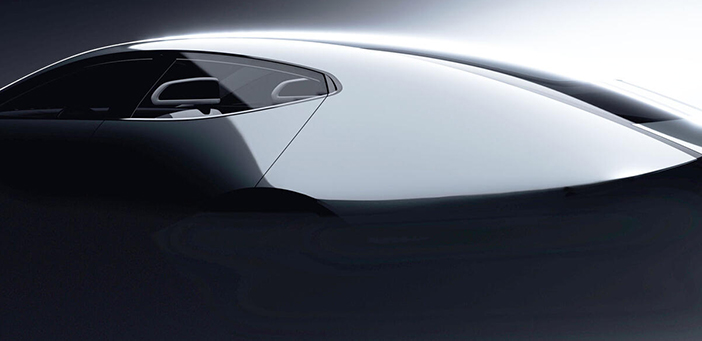
+++ MAZDA will reveal a new sports car concept that could be powered by renewable fuels at the upcoming Tokyo motor show. An official preview image leaves much to the imagination, but it shows the concept is a 4-door coupé with a steeply raked roofline. The cut-outs around the car’s rear deck suggest it may also have an active spoiler. Mazda said the concept will demonstrate how it aims to build sustainable driver’s cars into the distant future “toward the year 2035” with the tagline “the joy of driving duels a sustainable future”. Alongside the concept, the brand will show a new CO2 capture system claimed to cut emissions the more a car is driven, as well as a carbon-neutral fuel produced using algae. Mazda has become one of the industry’s largest proponents of renewable fuels as an alternative to battery-electrification, owing to its legacy of building lightweight sports cars such as the MX-5. Transitioning such models to battery-electric power without a significant increase in weight poses a real challenge, given existing battery technology. Last year, it partnered with Toyota and Subaru in an engine development project described by Toyota CEO Koji Sato as a “friendly competition”, aimed at further optimising combustion power. Mazda president and CEO Masahiro Moro said: “We will continue to offer customers exciting cars by honing internal combustion engines for the electrification era and expanding the multi-pathway possibilities for achieving carbon neutrality”. Mazda presented a new development of its signature rotary engine designed to fit into the same space as an electric motor, allowing it to be transplanted into existing battery-electric models. Mazda also races an MX-5 and a 3 powered by carbon-neutral fuels in Japan’s Super Taikyu series. +++
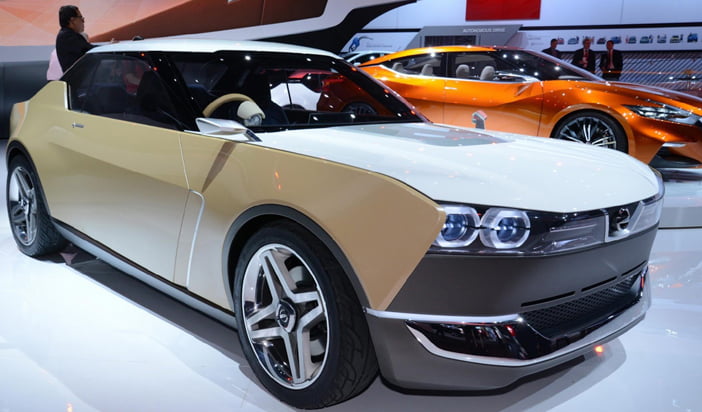
+++ It’s hard to believe 12 years have passed since NISSAN taunted enthusiasts with a pair of concepts. The IDx Freeflow and IDx Nismo previewed an exciting future for an affordable rear-wheel-drive coupe that ultimately never came to fruition. A few years later, the company explained why the car never reached production, citing concerns that it would have overlapped with the 370Z and failed to generate enough demand to justify the investment. Another issue was the lack of a suitable factory to build it. Fast-forward to 2025, and CEO Ivan Espinosa is still thinking about the IDx.
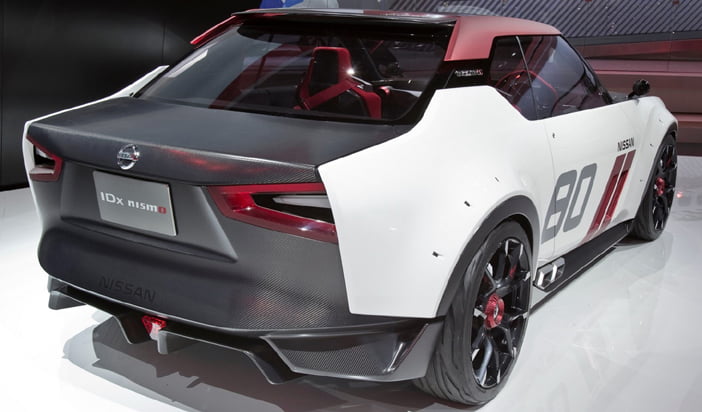
In an interview with Japanese magazine Kuruma News, Nissan’s boss said a car similar in spirit could do wonders for the brand: “I think a car like the IDx will serve many purposes. It would be a car that helps express the Nissan brand. Secondly, it has the potential to appeal to a younger demographic, as it is very important for an automaker to continue to attract younger customers to its brand. It’s not just about price, although price is certainly a factor, but there needs to be something compelling that makes young customers want to follow the brand”. When asked about the prospects of a new Silvia, Espinosa said he “would love to bring it back” but questioned its feasibility. He noted that the car would need to be lightweight while still meeting modern crash safety regulations. If Mazda managed it with the Miata, why couldn’t Nissan? Speaking of the Silvia, there was once a rumor that the IDx concepts were actually based on the last-generation S15 model, though Nissan never confirmed it. For now, a revival is “just an idea in my head”, according to Espinosa. Ideally, his wishful thinking will evolve into something tangible, but given the company’s financial struggles, it’s probably not a top priority. Espinosa is an enthusiast through and through, daily driving a Z to work. His predecessor, Makoto Uchida, once called him a “real car guy”, but that alone isn’t enough to keep the lights on. Having to cut 20.000 jobs, close 7 factories, and shut down 2 design studios shows that Nissan has far bigger challenges to address than committing to an entry-level sports car. Then again, a halo product capable of delivering the same boost the TT once gave Audi’s line-up would be a welcome addition, provided it’s supported by a solid range of mainstream models. +++
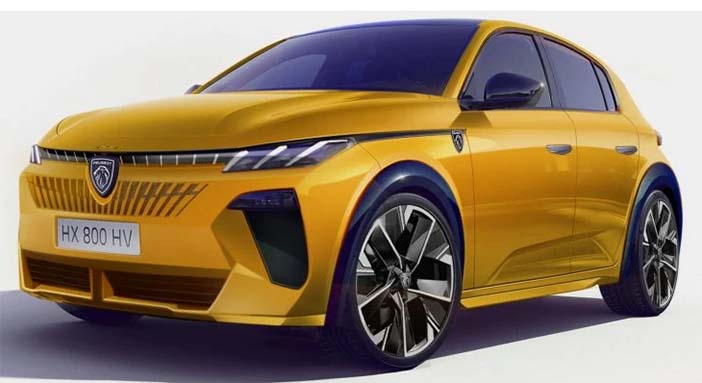
+++ The next PEUGEOT 208 will be one of Stellantis’s most important cars to date when it is launched in 2026. It will mark the debut of a game-changing platform, will feature a radical tech-heavy interior with a square steering wheel and is set to be sold exclusively as an EV. The new hatch will be the first model to use STLA Small, a platform destined to underpin Stellantis’s next era of compact cars and critical for Peugeot’s multi-brand parent to be competitive in Europe’s affordable car market. The STLA Small platform will be used by all of the group’s models from the A- to the C-segment and replace the CMP/e-CMP architecture employed by today’s 208/e-208, 2008 and Opel Corsa Mokka. The 208 has been chosen to receive the platform first because it is one of the most crucial cars in the Stellantis stable, especially in its core market of Europe. In the first half of 2025, the 208 achieved 109.146 sales, a figure bettered only by its Renault Clio (122.489) and Dacia Sandero (128.842) rivals, according to data from Jato Dynamics. While the new platform can accommodate hybrid and electric set-ups, it is understood that the third-generation 208 will be sold solely as an EV; a move that will be mirrored by the next Corsa, a 208 tech twin, which will drop ICE power, Opel CEO Florian Huettl confirmed recently. The current CMP-based combustion 208 is likely to stay in production alongside the new 208, given the unpredictability of the EV market. As a result, the new hatch is expected to continue using the e-208 badge as a distinguisher. Speaking more broadly about Peugeot’s future powertrain approach, CEO Alain Favey said the brand is “committed to BEVs” but also “committed to a multi-energy offer”. He said: “Our strategy is to leave the choice to the customer which energy they want”. Battery sizes for cars on the STLA Small will range from 37 kWh to 82 kWh. The new 208 is expected to use a pack at the larger end of that scale, given the Opel Corsa GSE Vision Gran Turismo (a concept that previews the next Corsa) houses an 82 kWh battery. This would bring a marked increase in range for the 208. The biggest battery in the current car is 52 kWh, which enables a range of 430 km. Details of potential power outputs have yet to be disclosed but, given the car’s positioning, motors with similar power to today’s 156bhp are likely. However, the platform can accommodate much more. For example, the Corsa GSE concept is fitted with two 400 hp motors, opening the door for another, more powerful GTi-badged model. Favey confirmed last week that Peugeot will preview the next 208 with the Polygon concept in November. The drivable concept will put a focus on dynamics and roadholding. It will also showcase a radical cabin that is understood to be a huge leap forward in terms of design, giving a greater feeling of space and light. The key change is the next evolution of Peugeot’s i-Cockpit design. Instead of a small round wheel, the new 208 will have the rectangular Hypersquare steering control previewed on the Inception concept in 2023. This will be connected to a steer-by-wire system, the first time the tech has featured in a Stellantis car. The new set-up (which is expected to be adopted across the range after its introduction in the 208) is “about agility” and will give future Peugeots a more distinctive driving signature, according to Favey.The 208 will also get the same panoramic curved infotainment screen as in the 3008: a 21 inch display atop the dashboard. Customisable shortcut buttons will feature, too. Former Peugeot boss Linda Jackson called the set-up “technically superior” and said the steer-by-wire “enhances something that is absolutely fundamental for Peugeot: the pleasure of driving”. The new steering wheel and technology also liberate more cabin space and those who have seen it “were shocked by how much space you free up”, according to Jackson. Favey said the Polygon concept will also reveal a “very creative” exterior. While the Polygon’s design is expected to be quite conceptual, the production 208 is likely to sport a similar look to the larger 308, 3008 and 5008, which all feature Peugeot’s new design language, especially at the front. The current 208 is one of the few models in the line-up not to feature it. The new 208 is expected to be slightly bigger than today’s CMP-based car, mirroring a wheelbase expansion previewed by the Corsa GSE Vision Gran Turismo. For reference, the concept is 130 mm longer and 105 mm wider than the standard Corsa. The third-generation 208 will, like today’s model, be built at Stellantis’s Zaragoza plant in Spain, alongside its Corsa twin and a production start date is earmarked for the end of 2026. The new Corsa will be the second car to use the STLA Small platform and is due in early 2027. It will be followed by the technically identical next-generation 2008. Pricing for the new 208 is likely to stay at around today’s entry point. +++
+++ SPYKER , the long-troubled Dutch sports car company, has been saved from bankruptcy. Again. The company’s founder, Victor Muller, has secured the brand’s intellectual property rights and will now “focus on producing hand-built super sports cars,” according to a social media post. Spyker was originally revived in 1999 by Muller, but a botched Saab acquisition over a decade later would force the company to financially restructure in late 2014. Operations would resume by the end of 2015, with the C8 Preliator revealed a year later at the Geneva Motor Show. But things wouldn’t last. By 2021, investment from investors failed to materialize, and Muller was forced to file for bankruptcy again. This resulted in a lengthy legal battle between Muller and the creditors that’s now been resolved. According to the social media post, all of Spyker’s intellectual property rights and trademarks have been fully released. Spyker will announce more detailed plans regarding its revival shortly. It’s unclear what role Muller will play in the company’s future. The company was originally founded in 1880, building an assortment of transportation products, but the company ceased operations in 1926. Spyker built everything from cars to airplanes, the latter of which heavily influenced the new Spyker that Muller created at the turn of the century. Spyker was never hugely successful and struggled quite a bit before the Saab deal. We also don’t know if the world is ready for another bespoke automaker. There’s no shortage of high-priced, high-performance low-volume cars available from automotive kings like Koenigsegg and Rimac. The C8 Preliator is a decade-old idea, and if Spyker wants to stand out and attract buyers, it’ll require a fresh product line-up. +++
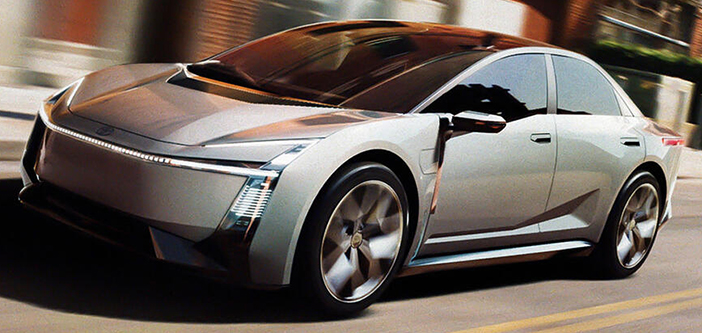
+++ TOYOTA has released the first images of a new concept car that hints at the future of the long-running Corolla ahead of its unveiling at the Tokyo motor show. The company has yet to release any firm details about the Corolla Concept, but the presence of a charging port flap on the car’s front wing suggests it is either a plug-in hybrid or battery-electric. The latter seems likely, given its distinctly futuristic appearance. It represents a dramatic jump in design compared with the current-generation Corolla, which was launched in 2018, and has little to link it to that car visually. It appears to have been sculpted to maximise its aerodynamic performance (and therefore its theoretical electrical efficiency) with a curved streamliner-style roofline, flush door handles and a small duck-tail rear spoiler. Notably, it is a saloon rather than a hatchback, as is sold in Europe, but the smoothly styled front end is likely to carry over to any production version offered here. The prospect of transitioning the Corolla (one of Toyota’s longest-running and best-selling nameplates) to electric power represents a critical moment for Toyota and carries substantial risk. It is most likely that the concept car previews an EV that will be sold alongside an updated version of today’s hybrid, allowing the company to hedge its bets. That would mirror the strategy being followed by rival Volkswagen, which is set to launch an all-new Golf EV later this decade and will simultaneously overhaul the current combustion-engined model so it matches the EV for design and technology. The Corolla Concept will be detailed in full at the Tokyo motor show, which kicks off on 29 October. +++