
+++ Major carmakers from GERMANY saw sharp quarterly sales declines in China as domestic demand weakened and competition heated up in the world’s biggest auto market. At Volkswagen, Mercedes-Benz, BMW and Porsche, China sales for the April-June quarter plummeted between 30% and 41% compared with the same period a year ago, according to company data released over the past week. For the first half of this year, they all reported a more than 20% year-on-year drop in China. The falling China sales have squeezed their overall profits and in some cases offset gains from other regions. This also comes at a time when these legacy German carmakers are faced with intensified competition from Chinese automakers outside of China, including in Europe, as leading Chinese brands like BYD make inroads overseas. The latest quarterly sales declines were some of the steepest seen for the German automakers in China, said Lei Xing, an independent auto analyst. The Volkswagen Group, for example, saw deliveries in China down 36.6% during the quarter to 424.300 vehicles, which dragged down its global sales to a 8.6% decline, even as deliveries increased in Europe and the Americas. The Wolfsburg, Germany-based auto group, which has been betting big on the Chinese market, said it would be slashing its model line-up by up to half after the latest sales declines. China’s prolonged property sector downturn and an economic slowdown have hurt consumer sentiment, with more people shunning big-ticket purchases. Strong competition in its domestic car market and a yearslong fierce price war have also hit many European carmakers, with drivers opting for affordable Chinese car brands. Porsche, part of the Volkswagen group, called China’s market environment “challenging” in a statement, while Mercedes-Benz said China is facing “a significantly weaker overall market and macroeconomic environment”. China’s passenger car sales at home fell 24% in the first half of this year to nearly 8.3 million, according to the China Association of Automobile Manufacturers, an industry group. Consultancy AlixPartners expects sales of light vehicles, including passenger cars, in China will likely fall about 10% for the whole of this year. As Chinese car brands become increasingly preferable in China, “foreign automakers are going to have to fight for every share of the market”, Stephen Dyer, Asia-Pacific leader of the automotive practice at AlixPartners, said at a news briefing last month. German auto groups remain much stronger in making internal combustion engine vehicles, such as gasoline cars, than electric vehicles, said Chris Liu, with the research and advisory group Omdia, at a time when EVs sales in China are doing better than conventional fuel vehicles. “The German automakers are bearing most of the brunt”, said Xing, the independent analyst. Chinese carmakers also have a competitive edge over foreign automakers as they typically update their model line-up a lot more frequently than their rivals, Dyer added. +++
+++ HONDA is ending sales of its electric vehicles (EVs) in the U.S., marking the latest pullback by a major automaker in response to tepid demand in the market. The Japanese carmaker informed American dealers on Thursday that production will cease later this year of the Prologue, a Mexican-made model that was co-developed with General Motors. Sales will be discontinued as of the 2026 model year, reflecting weak demand, and the company will instead focus on offering hybrid gas-electric and traditional internal combustion engine (ICE)-powered models in the U.S. “We’ve certainly seen success with the Prologue”, Lance Woelfer, the head of Honda’s U.S. sales operations, said in an interview. “But right now, the key for the marketplace is a balance of ICE and hybrid”. Honda’s overall sales rose 2.4% in the first half of the year, powered by strong demand for hybrid versions of its best-selling CR-V , Accord and Civi. Hybrids made up about one-third of its total volume in June, even as deliveries of the Prologue slumped 40%.
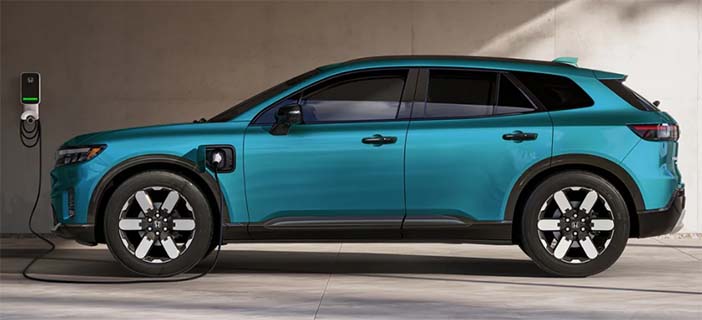
The soon-to-be-retired EV, which is made in a GM plant in Ramos Arizpe, Mexico, was launched in 2024 ahead of 3 planned EVs to be built at a Honda factory in Ohio starting this year. However, the carmaker backtracked on those plans earlier this year, canceling that trio of battery-electric models as part of a broader strategic pivot. The company expects to launch 15 new hybrids by March 2030, primarily in North America, but hasn’t specified in which specific models. The first of those will debut next year. Honda will continue to sell EVs in other global markets, and Woelfer said that it may once again offer them in the U.S. at some point. “There will be opportunity that we think we’ll want to be a part of in the future, but when that is I can’t say”. For now, he said Honda will continue to sell used Prologue models as part of the company’s certified preowned vehicle program. +++
+++ The new JENSEN INTERCEPTOR GTX will be a track-only supercar, it’s been revealed, with the promise that the British-built apex predator will deliver “the ultimate analogue driving experience”. Significantly, the Interceptor GTX will not be a restomod or a continuation of the iconic Jensen Interceptor coupé launched in the sixties. It’s an all-new creation, with a clean-sheet design, sitting on an aluminium chassis and powered by a bespoke supercharged V8 engine. Jensen International Automotive (JIA), the Oxfordshire-based company behind the rebirth of the brand and the Interceptor, says the GTX will blend “traditional craftsmanship and modern technology”, with the model designed, engineered and hand-built in the UK. We don’t know exactly when the new Jensen Interceptor GTX will be unveiled, but it will be sometime in 2026 to mark 60 years since the iconic original was first launched. The Interceptor GTX is also just the beginning for the revitalised brand, as we’re told it will establish the foundations for several future Interceptor models, including road cars and more track-focused ones. While it won’t be a restomod, the Interceptor GTX will follow the original’s template as a large two-door coupé with a sloping roofline, yet have plenty of room inside for four occupants. Based on teaser images, the Interceptor GTX won’t feature retro-inspired cues and instead will be a more contemporary take on its ancestor’s silhouette. This is signalled by the floating C-pillar that sits above an aggressive flared wheel arch, and its rear lightbar. The car’s form suggests it could rival the likes of the Bentley Continental GT and Aston Martin Vanquish. However, it remains to be seen whether it will be priced in-line with cars like these or pushed into even more exclusive territory. Ahead of the driver will sit a V8 engine, but I don’t know whether the new model will use the more innovative Jensen FF’s all-wheel-drive set-up, or a more traditional rear-drive layout. JIA has described the first in this new line of Interceptor models as an “ultra-luxurious” GT, indicating that it will also have a sumptuous cabin that’s full of high-quality materials and the finest British craftsmanship. We don’t yet know whether that will mean wood and leather, or a more contemporary interpretation featuring modern materials. Either way, it will be highly customisable.
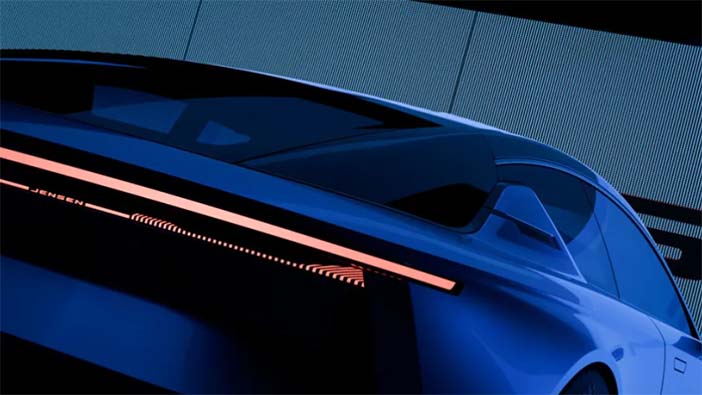
David Duerden, JIA managing director, said: “Taking the theme of the luxury British GT to fresh, thoroughly modern heights, JIA’s first car is designed and engineered from the ground up to deliver an unmatched, deeply immersive, V8-powered driving experience. While it takes inspiration from the Jensen Interceptor launched 60 years ago, this is certainly no ‘restomod’ or ‘continuation’ and will stand proudly as a completely all-new car in its own right”. +++
+++ The auto industry is emerging as the MEMORY CHIP sector’s next major growth market. The 3 companies that dominate global supply (Samsung Electronics, SK hynix and Micron Technology) are now moving to claim leadership in a segment whose economics have shifted sharply under AI-driven demand. The scale of memory put into a modern car has started to resemble that of a laptop or desktop computer more than a traditional vehicle. Industry analysts estimate that the infotainment system in Mercedes-Benz’s MB.OS platform uses 4 to 12 gigabytes of DRAM, while the cockpit computing system in BMW’s new iX3 electric SUV runs on 16 to 24 gigabytes. Both figures cover only the dashboard side of the vehicle; premium configurations that integrate self-driving computers can push total vehicle DRAM close to 70 gigabytes. The trajectory is steeper still. Micron CEO Sanjay Mehrotra said on the company’s earnings call that vehicles with Level 2+ autonomy or higher carry more than 5 times the combined memory and storage content of an average car. Micron expects L2+ vehicles to exceed 20 percent of sales in 2026 and 40 percent by 2030, based on its own estimates. Supply for some automotive-grade parts is already tight. Market researcher TrendForce said that contract prices for single-level cell NAND, a durable flash used in electronic control units and driver-assistance systems, are projected to rise 120 to 170 percent in the second half of 2026, with further increases possible. Chipmakers are steering older production lines toward more profitable products, and automakers cannot easily swap in a new memory part without months of retesting to meet safety standards. The competitive picture at the top of the market has changed as well. Samsung overtook Micron in automotive memory last year for the first time since entering the segment in 2015, according to a report from S&P Global Mobility in May. Samsung’s share rose to 40 percent from 35 percent in 2024, while Micron’s fell to 36 percent from 40 percent. The Korean company’s gains were led by low-power DRAM and universal flash storage sales into fast-growing Chinese electric-vehicle platforms. SK hynix is pushing on certification and next-generation products. It said in January that its automotive LPDDR5X received ASIL-D certification, the highest functional-safety grade under the ISO 26262 standard, from TUV SUD. At Mobile World Congress in March, it unveiled an automotive LPDDR6 built on its 1c-node process, alongside Auto UFS 3.1, eMMC 5.1 and vehicle SSDs. Micron has moved on the customer side. It signed long-term supply agreements with General Motors on July 1 and Ford on July 6, though neither disclosed contract length or volume. Reuters called the GM deal a pre-emptive supply-security measure and cited S&P Global Mobility data showing automotive DRAM prices have risen roughly 70 percent since December. Micron’s automotive and embedded segment posted record revenue of $4.6 billion, or about 6.86 trillion won, last quarter. “Delivering next-generation vehicles at scale requires a resilient and closely aligned supply chain”, General Motors Chair and CEO Mary Barra said in a statement. The macro backdrop tightens the stakes. SK hynix CEO Kwak Noh-jung told that 2027 would be the worst year for memory supply in the industry’s history, with customer demand likely to outstrip his company’s production capacity beyond 2030. AI server buildouts have absorbed much of the industry’s advanced DRAM capacity, and long validation cycles limit how quickly automakers can switch suppliers when conditions change. +++
+++ PEUGEOT is priming a new platform, design language and interior treatment for 7 new models that it will launch by 2030 as part of a push to dramatically increase its sales volumes. The French brand aims to increase global sales from 1.1 million last year to 1.5 million in 4 years’ time ; a huge 36% increase. An onslaught of new cars to support that ambition will kick off next year with the reveal of the new e-208. Due to be launched in the second half of 2027, the second-generation e-208 will be the firm’s first car to use parent company Stellantis’s new STLA One modular platform, and it will serve as the technological and stylistic flagbearer for the wave of new models that will follow. As previewed by last year’s radical Polygon concept, it will take influence from its popular 205 forefather. Peugeot CEO Alain Favey said this is in keeping with the French brand’s plan to draw from its past in shaping its future cars. Peugeot will reveal 2 “striking” new concept cars at the Paris show in October, and they will preview the design language and technology that will define its future production cars. Favey said the show cars will “show a lot about the future of the Peugeot brand”. He was tight-lipped on specifics but said they will “show the way” for the evolution of Peugeot’s design language and take influence from the brand’s history. “Our heritage is very important to us, but it’s important in the sense that it gives us ideas for the future, which we will express again at the Paris motor show”, he said. Peugeot has drawn from its past for several recent concepts including the E-Legend, which was in effect a modern recreation of the 1960s 504 coupé, and the retro-futuristic Inception concept of 2023. Favey also confirmed that Peugeot wouldn’t use its home motor show to unwrap the new e-208, as had been speculated. The second-gen electric supermini will launch in the second half of next year after making its debut at a dedicated event shortly beforehand. The new concept cars will set the tone for the next era of Peugeot production cars; the six cars behind the e-208 are thought to be the next 308 hatchback, a trio of C-segment models produced in France and a pair of D-segment flagships engineered with China’s Dongfeng. +++
+++ VOLKSWAGEN reported weak sales numbers on Friday, a day after the giant German automaker announced plans to slash the number of models by nearly half as sales plunged, particularly in China. The Wolfsburg, Germany-based company said group sales fell 8.6% in the second quarter to just under 2.1 million vehicles, with sales in China alone plummeted by more than one-third. After a board meeting, Volkswagen said its “fundamental realignment” over the last 3 years had reached its next phase, announcing plans to streamline the model lineup by up to half, without providing specifics. CEO Oliver Blume laid out plans to make VW faster and more competitive through less complexity, focused technologies, better alignment across regional markets and reduction of overcapacities, among other things, citing an “increasingly demanding environment”. Among its main brands, the core Volkswagen unit saw deliveries of slightly over 1 million vehicles in the second quarter, a drop of 14% from a year earlier. Deliveries at Audi declined 8% and those at Porsche fell 18%. Lamborghini, Skoda and the trucks unit reported upticks, and sales grew in the Americas and Europe. Volkswagen cited dramatic change over the last year, including geopolitical tensions, rising costs mainly through tariffs, and increasing regulatory requirements alongside growing competition. As recently as December, Volkswagen was betting big on China, where electric cars have been taking a greater market share and competition is stiff. Research firm BernsteinSG expressed skepticism. “VW stated that it is extending its technology leadership, a claim that will likely raise eyebrows given the pace of innovation among its Chinese competitors”, it said. Last Thursday, hundreds of employees led a protest outside the Volkswagen plant in Zwickau to demand protections for jobs and voice opposition to plans to close the site. The factory has fully switched to making electric cars. +++
+++ VOLVO has announced it will reveal 2 “very exciting” new models later this year, with bosses at the Swedish firm hinting the pair will deliver major advances for its range of hybrids. While Volvo didn’t reveal any specific details about these mysterious new cars, we suspect they will be the ‘new and improved’ versions of its existing SUVs Autointernationaal.nl revealed were in the works earlier this year. With the Volvo XC40 now a decade old and last refreshed in 2022, we assume that it will receive some substantial styling and interior upgrades just as the top-selling XC60 and XC90 have in recent years. Some improvements under the metal are likely, too. While the XC60 and XC90 have recently been updated, it seems at least one of them is getting further attention and some far more substantial upgrades than before. The big one will be the addition of Volvo’s new ‘Gen 2’ plug-in hybrid system that builds on its current tech and should feature a considerably bigger battery, so will rely less on the petrol engine and allow cars to be driven mostly on electric power. This should result in a significant increase in fuel efficiency. Anders Bell, Volvo’s chief engineering and technology officer, previously told Auto Express that with this new PHEV set-up: “It feels like you’re driving an EV in the vast majority of the use cases. But we will always have preserved a source of energy for you, for overtakes. So you always get really good performance. That’s really important for us, the drivability”. By the sounds of it, the ‘Gen 2’ plug-in hybrid will be more like the ‘extended-range’ system featured in the Volvo XC70 sold in China that can cover more than 130 miles without using a drop of petrol. Chief commercial officer Erik Severinson alluded to these new cars featuring significant powertrain upgrades during the company’s Q2 results call. “Without revealing any details about the future product upgrades, we have said that we will continue to invest in our PHEV technology”, he said. “We have been very, very successful in terms of market share for PHEVs, both on the XC60 and the XC90, I would argue, in all markets. So that is obviously a position which we will continue to protect. And there will be more news coming very soon”. These 2 models are apparently just the tip of the iceberg, as Volvo says it’s building up to the “most ambitious product plan in its history”, which will be outlined on 17 September. +++