
+++ ASTON MARTIN has transformed the Vanquish into a V12-engined hyper-GT called the Valen that has more power than any other front-engined road car on sale. The radical new Valen is the latest ultra-exclusive model from Aston Martin’s Special Vehicles Operations division, which created the Vulcan track car, DBR22 speedster and the one-off Victor hypercar. The new hyper-GT packs the 5.2-litre twin-turbo V12 from the Vanquish but ramps the power output to 850 hp, making it more powerful than any Aston apart from the mid-engined Valhalla and Valkyrie. Torque stands at 1.000 Nm and the Valen can dispatch 0-100 kph in 3.1 seconds; the same time as the Porsche 911 GT3 RS. The Valen’s Vanquish origins are clear from its silhouette but it has been extensively overhauled inside and out in line with its heightened performance and exclusivity. High levels of personalisation will mean no two of the 150 customer cars will look the same. Although the Valen’s striking appearance nods to the original DBS and its successor, the Vantage, creative chief Marek Reichman said it is a significant departure from past models. “Valen gave us the opportunity to explore and express more extreme emotions through a new form language and surface treatment”, he said.
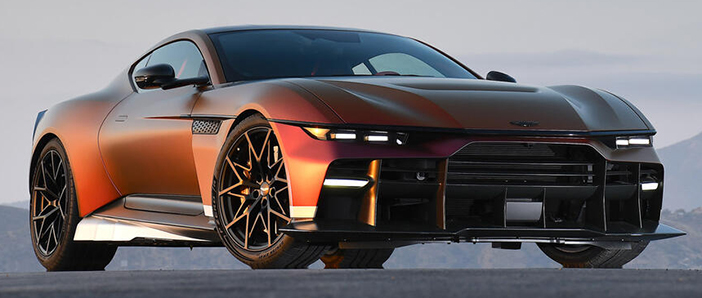
Defining features include the brutish new snout (which takes the signature Aston Martin grille motif and expands it across the entire front end) as well as the chunky ducktail spoiler, the aggressive slimline led lights and, most obviously, the GT3-style carbonfibre aerodynamic addenda, including a huge rear diffuser and downforce-boosting side skirts. There’s an eye-catching new exhaust set-up too, with 2 exits in the diffuser and 2 through its centre. The uppermost exits are always open, while the lower set is valved, opening in the raciest drive modes.
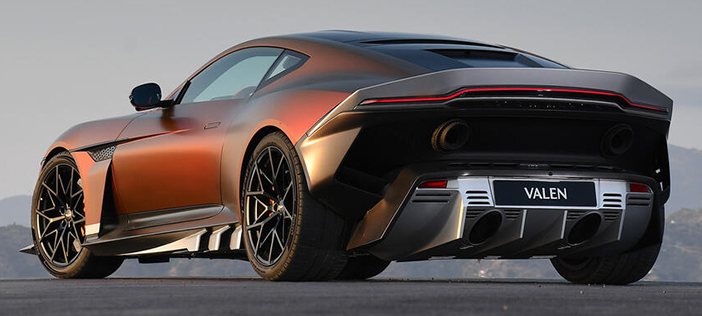
The use of carbonfibre, aluminium, titanium and magnesium has helped to make the Valen 110 kg lighter than the Vanquish. The optional lightweight pack alone saves 16.9 kg, bringing machined-aluminium suspension arms and knuckles, plus titanium chassis bolts. Meanwhile, the gearbox has been remapped with the software from Aston Martin’s Vantage GT4 race car, giving more aggressive shifts. The throttle pedal’s behaviour has also been modified so it is more sensitive in the road-focused Sport and Sport+ drive modes, while the throttle’s travel is extended in Track mode for “when on-limit precision is the priority”. The suspension has also been stiffened by way of new springs and the steering response has been quickened for improved responsiveness, completing the Vanquish transition from super-GT to no-holds-barred performance weapon. Simon Newton, Aston Martin’s director of vehicle performance, suggested the ambition was to unleash the latent sporting potential of the Vanquish. “The Valen channels the more overt dynamic purpose of a true sports car”, said Newton, who added that the revisions “intensify the character of Aston Martin’s signature GT”. Each of the 150 examples of the Valen will be priced at €2.7 million in The Netherlands before buyers delve into an extensive catalogue of optional extras.
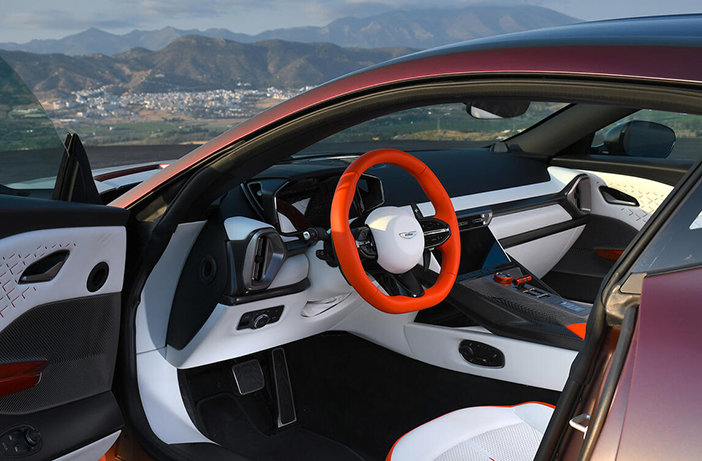
These include an exposed-carbonfibre exterior finish that can be tinted to whichever colour the customer wishes, through Aston Martin’s Q division. The Valen also makes extensive use of 3D printing, such as around the centre console. +++
+++ FERRARI has reinvented the SF90 as the supercar of the future and it could provide a hint at the brand’s next styling direction. The new CZ26 represents a total transformation of Maranello’s previous plug-in-hybrid flagship, which has since been replaced by the 849 Testarossa. The new look was penned by Ferrari’s design boss Flavio Manzoni, working with a special client based in the US. It’s said to have a “technological” design with a “forward-looking vision”, suggesting it may serve as a testbed for ideas being considered for the next generation of Ferrari supercars. Most notably, its front end is a near total departure from that of the SF90 on which it was based, replacing its C-shaped lighting signatures with thin LEDs set into a gloss-black panel that runs across the width of the front end. The treatment is also reminiscent of the Luce EV, although it remains to be seen whether that car (designed by Jony Ive and Marc Newson) will have a greater influence on mainstream Ferraris in the years to come.
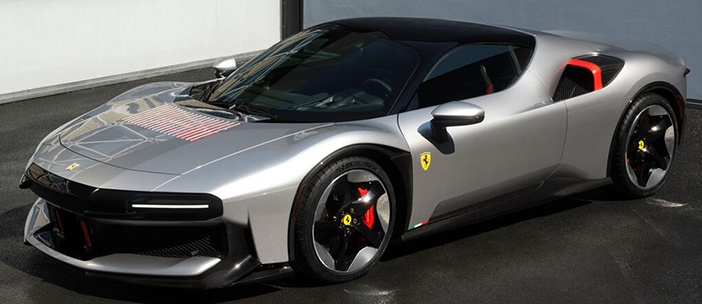
Ferrari said the new look draws on Italian industrial designers of the 1970s, producing a cleaner, more minimalist aesthetic. It also boosts downforce, thanks to new ducts in the front end, a redesigned rear diffuser and a more prominent rear spoiler. The CZ26 is the latest in a run of one-offs built for Ferrari’s most special clients, following the SC40 and HC25. The Italian firm doesn’t disclose prices for these models but, given their exclusivity, they’re likely to run into the millions. The CZ26 is making its debut as part of Monterey Car Week in the US, a hotbed for rare and high-value cars. +++
+++ Earlier this year we saw the wraps come off the ultra-powerful FORD MUSTANG DARK HORSE SC , and now the roof has come off that to create a convertible version. The Ford Mustang Dark Horse SC convertible is the first high-performance topless Mustang since the 2013 Shelby GT500 soft-top, and according to Mark Rushbrook, global director of Ford Racing: “If the coupé is the race-bred side of our DNA, this convertible is the pure street cred part of the formula”. Ford says that while the coupé is built for lap times, the convertible has been designed for ‘open-air street driving’, with an ‘unfiltered’ experience of the supercharged V8. Beyond lopping off the coupe’s roof to accommodate a folding fabric mechanism, Ford has also softened the Dark Horse SC convertible’s MagneRide suspension, although to compensate for the loss of torsional rigidity it has gained additional bracing. We can also see the rear wing has been modified to channel air in a different way to the coupé, as a result of the altered aerodynamics of the soft-top.
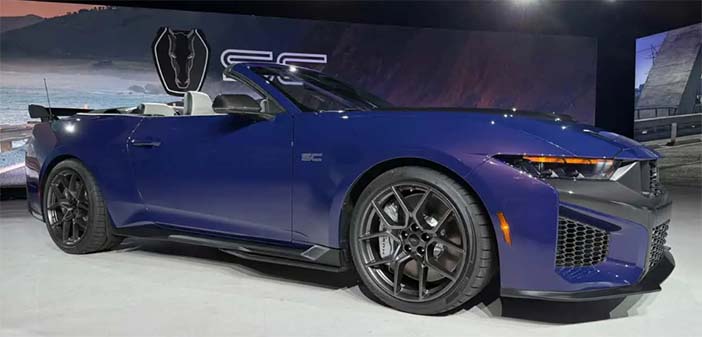
The convertible also brings new colour options to the Mustang line-up, including Precision Purple metallic body paint, silver brake calibers and Black Onyx and Space Grey themes inside. Underneath that long, loping bonnet, with its Dark Horse SC-specific vents, lies the same 5.2-litre supercharged V8 as in the coupé, with 808 hp and 894 Nm of torque, although you’ll be able to hear it a bit better in this model, obviously. Power goes to the rear wheels via a 7-speed dual-clutch automatic transmission; a different ’box to the awkward 10-speed available on the standard Mustang GT. Ford says it will open orders for the Mustang Dark Horse SC convertible in spring 2027, but given that the coupé isn’t destined for the UK, we don’t expect the drop-top to make its way over the Atlantic. +++
+++ GORDON MURRAY has revealed the S1 as a modern-day tribute to his seminal McLaren F1 supercar. The latest limited-run creation from Gordon Murray Automotive’s Special Vehicles division is a “more touring-focused” take on the S1 LM revealed last year. While that car took inspiration from the Le Mans-winning F1 GTR, this new arrival is pitched as a follow-up to the 250mph F1 road car. As such, it has been completely rebodied with less fearsome styling, “optimised for mechanical grip, rather than high downforce”.
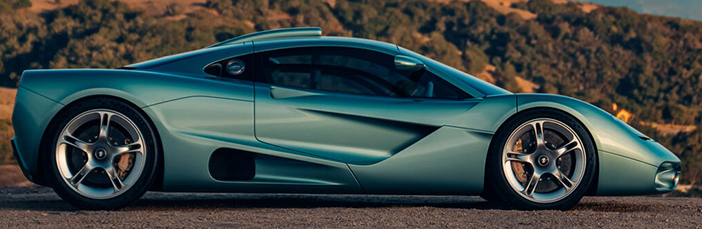
It loses the massive rear wing, race-style front splitter and deep side skirts, while a new active aero system at the rear helps to keep it stuck to the road at high speeds. The headlights are new, too, with integrated running lights to give a different signature to the S1 LM, while the new lightweight wheels are inspired by an early design for the F1 that Murray showed in 1992. The S1 also rides 10 mm higher than the S1 LM, on suspension that has been tuned for more compliance; at minimal penalty to steering precision and feedback, according to GMA. Like the S1 LM, it’s fundamentally based on the GMA T50, using the same 690 hp 4.2-litre Cosworth V12 and manual gearbox, reconfigured with a broader torque range for “effortless touring”.
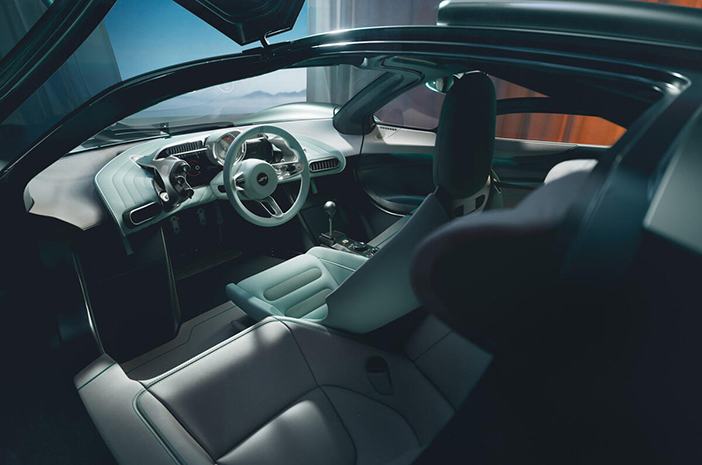
Despite the less hardcore remit and a higher-spec cockpit with three leather seats, a beefier sound system and more sound deadening, the carbonfibre-bodied S1 weighs less than the T50. The S1 will be a less exclusive proposition than the 5-off S1 LM, with 64 units planned to be built. GMA hasn’t given a price, but one of the S1 LMs achieved a €18.5 million hammer price at auction last year, so expect the S1 to cost several times the €5 million T50. +++
+++ The new Revuelto SV brings even more firepower to LAMBORGHINI ’s PHEV hypercar, and is the “essence of Lamborghini’s DNA”, according to CEO Stephan Winkelmann. Taking inspiration from its GT3 race cars, Lamborghini has transformed the Revuelto into its fifth Super Veloce model with a long list of upgrades that boost mechanical grip and downforce in addition to the extra power. At the car’s heart is the same 6.5-litre V12 that the regular Revuelto uses, but the SV gets a bigger, 7.3 kWh battery to power its 3 electric motors. This boosts the total output by 50 hp to 1.068 hp, outmuscling its 1.050 hp Ferrari 849 Testarossa rival, and cuts its 0-100 kph time to 2.4 seconds. The SV also brings 80% more downforce than the standard car and 10% more than even the strictly limited Aventador SVJ.
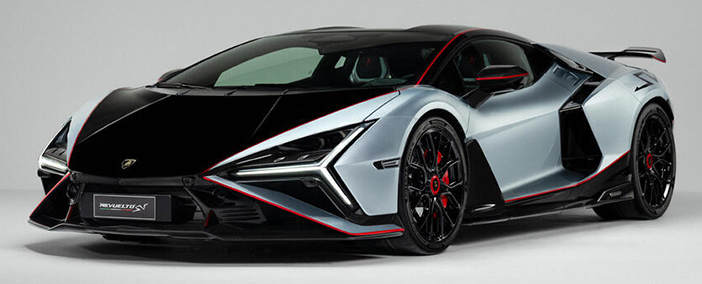
That’s thanks to a new front splitter, which has its air-splitting vanes highlighted in red, as well as a fixed rear spoiler that sits in place of the regular Revuelto’s active unit. The rear diffuser remains but its underside has been flattened to improve downforce. The SV’s suspension set-up is inspired by that of Lamborghini’s Squadra Corse race cars, with new dampers that can be manually adjusted for compression and rebound.
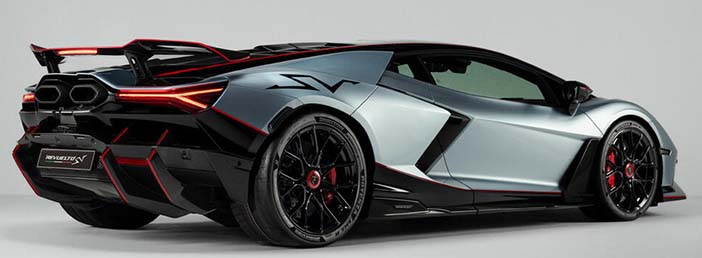
There are 14 ‘clicks’ of stiffness or slackness at each corner and Lamborghini engineers will provide owners with recommended settings for road, track, and wet-weather driving. Stopping power is improved by way of new carbon-ceramic brakes with diameters of 420 mm up front and 410 mm at the rear. The SV also gains the 6D sensor tech that was introduced in the Temerario, which calculates the car’s pitch, roll and yaw to allow finer control over its dynamic state. Lamborghini claims these measures improve the rate of deceleration by 11% under high loads and cut stopping distances by 10% across the board. The brakes are said to better resist fade too. Bridgestone Potenza Race R semi-slick tyres are fitted as standard, but owners can also choose the less aggressive Potenza Sport for use in variable conditions.
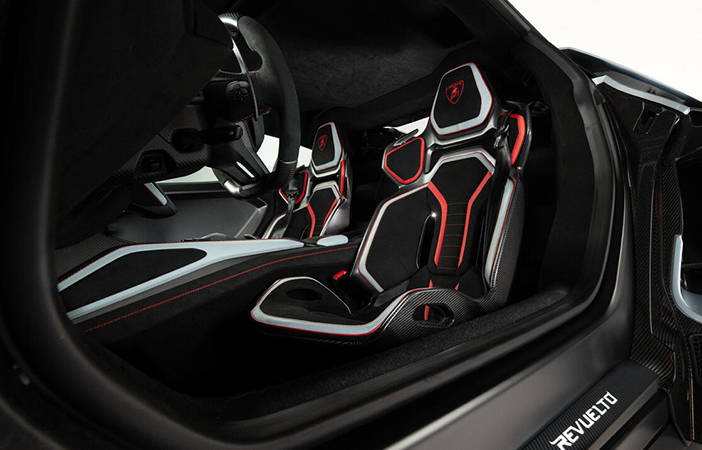
Inside, the cockpit has been tweaked to emphasise the motorsport influence behind the SV. Each bucket seat is made from a single piece of carbonfibre and has been inspired by design of the seats in the limited-run Fenomeno. The door panels are also carbon. However, the weight loss achieved by using exotic materials in the SV is offset by the mass added by the bigger hybrid battery. While pricing has yet to be revealed, it is likely that the Revuelto SV will be more than €750.000 in The Netherlands. Production will be limited to just 2 years, with the first cars arriving in early 2027. +++
+++ In 2026, the LAND ROVER won the stock class of the gruelling Dakar Rally at the first time of asking, and to celebrate this feat Land Rover has created this: the new Defender Dakar. Revealed at Monterey Car Week in California, the Land Rover Defender Dakar is a road-legal ‘evolution’ of the brand’s Dakar-winning Defender D7X-R. It features a suite of off-road performance upgrades, even over the standard Defender, which as we already know, is one of the best SUVs to take into the rough stuff.

With the D7X-R already taking the range-topping, ultra-powerful Defender Octa as a base, the Defender Dakar was always going to be seriously capable. Mark Cameron, managing director for the Defender, explained the idea behind the new model. “It’s the ultimate expression of adventure and is a true reflection of how we embrace the impossible”, he said. “It embodies not only the spirit of the Defender Rally team, but our continued and historic legacy of off-road innovation”. The Defender Dakar uses the same body structure as the D7X-R, itself a Defender 110 lifted straight from the standard car’s production line. Using the OCTA’s powertrain, you get a 4.4-litre twin-turbo V8 with the full-fat 635 hp and 750 Nm of torque, rather than the rally car’s 396 hp maximum. Power is sent through an 8-speed automatic transmission that features high and low-range gears for extra adjustability both on and off-road. The Defender Dakar takes lessons learned from 13 demanding stages and a combined total of almost 15.000 miles of the Dakar Rally to create “an authentic Defender, made from unstoppable DNA”, according to Cameron. From the bottom up the Defender Dakar gets huge 35-inch all-terrain tyres wrapped over 20-inch forged wheels. The coil suspension gets ‘motorsport-proven’ Bilstein dampers and besides the standard Defender’s drive modes, there are new Dunes and Gravel Drive settings. There’s also a ‘Flight Mode’ that actually ensures the Defender Dakar is readied for smooth landings should you encounter a rally stage (or particularly large speedbump). It does this by deliberately slipping the transfer-case clutch while the car is in flight to reduce any potential shock to the powertrain on landing. Other bespoke tweaks include extended wheel arches (with exposed rivets) to house those massive wheels, roof-mounted light pods and a fixed metal roof (no frivolous panoramic glass roof here), raised carbon-fibre air intakes, a carbon-fibre bonnet, mud flaps and a reinforced undershield to protect against boulders. Defender fans might also spot the spare wheel missing from the back. That’s on purpose because, as with the race car, there’s a blanking plate for the tailgate. Although unlike the Dakar race-winner, the road car doesn’t have three spare tyres mounted to a roll cage inside. There is space for a spare wheel and air compressor, however. There might be no full roll cage inside like the rally car or perspex windows, intercoms or carbon-fibre door inserts, but there are plenty of rally-inspired details inside, which Land Rover says gives the Defender Dakar a ‘tough luxury’ feel. There’s a 2+2 seating layout with the first row gaining racing bucket seats specifically designed for the Defender Dakar. Buyers can opt for four-point racing harnesses, plus there’s rear storage built specifically to house racing helmets if you want the full Dakar experience. The Defender Dakar will be available with a range of colour options, according to Land Rover. The closest to the rally-winning D7X-R will be the signature ‘Dakar Sand’ two-tone body paint and the rather distinctive ‘Yanbu Turquoise’ roof combination. There’s also optional matt protective film with Narvik Black and Alaska White colours. Land Rover says it’s currently taking ‘registrations of interest’ for the Defender Dakar, with the new car being available to reserve in early 2027. Further technical specifications will be revealed at the Dakar Rally in Saudi Arabia in January 2027. We’re also awaiting details of pricing, although considering the limited-run nature and the fact the ‘standard’ Defender OCTA costs €288.761 in The Netherlands, the Dakar is likely to command a healthy premium. +++
+++ The forthcoming MERCEDES-AMG GT BLACK SERIES will offer “insane” performance, according to Mercedes-Benz CEO Ola Källenius, who has given his personal guarantee that peopl will love it. Due to be revealed next year before going on sale in 2028, the new supercar is a road-legal twin of the next-generation Mercedes-AMG GT3 racer, likely to be powered by a highly tuned version of the firm’s new flat-plane-crank V8. In its conception and positioning, the GT Black Series closest rival will be Toyota’s new track-honed GR GT supercar. Mercedes reserves the Black Series badge, first used in 2006 for an extreme iteration of the SLK 55 AMG, for its most hardcore performance road cars. While it hasn’t confirmed the engine or performance details, AMG has said the latest Black Series car will produce significantly more power and torque than the 612 hp and 850 Nm of the current GT 63 Pro. Källenius said: “Sometimes you must allow the engineers to go crazy, and the next car like that is in the making”. Pressed for details, he added: “The next AMG Black Series will be insane, and it will be something completely different that nobody expects. I have full confidence we won’t disappoint”. While Källenius wouldn’t give any further details of the project, he noted that the new flat-plane-crank V8 engine was a key part of its investment strategy in combustion technology, saying: “We’re going to need that for years to come, especially for sports cars”. He revealed that he personally owns a V8 SL and so appreciates the appeal of such engines for enthusiasts. The push to fit the mildly hybridised V8 into AMG models in place of plug-in hybrid powertrains is a notable change in strategy. Källenius insisted the firm will continue to develop PHEV systems, which can be used to boost efficiency in some cars and power in others. But he said there would still be demand for non-hybrids from people who “prefer the lower weight”. He linked the spirit of the forthcoming GT Black Series to the AMG One hypercar, which essentially put the V6 turbo hybrid powertrain from Mercedes 2015 title-winning Formula 1 racer onto the road. Källenius joked that “we should have been put in an asylum” for approving production of that car but added: “I’m very happy we did, because it will be one of those moments in time that a bunch of engineers received an impossible task and found a way to do it. For enthusiasts, that will be one of those milestones for decades to come”. +++
+++ PORSCHE ’s Sonderwunsch division is typically reserved for sports cars like the 911: the 993 Speedster, the new Slantnose, etc. But that doesn’t mean it’s only for the 911. In fact, Sonderwunsch will build whatever you want, however you want it, regardless of body style. At Monterey Car Week, Alexander Fabig, Porsche’s vice president of individualization and classic, confirmed that Sonderwunsch is currently working on bespoke 4-door projects. While he stopped short of saying that any one-off Cayennes or Macans were currently in the works, sadly, Fabig did say that customers are interested in other products beyond the 911. “Yes, we have inquiries for 4-door sports cars that we are currently working on. Of course, that’s the minority. The majority of customers are looking for 2-door sports cars, but we have it, and on different levels”. Last year, the division completed its first “Factory Re-Commission” of a 2009 Cayenne GTS that was completely refurbished with a Blackolive exterior and a reworked cabin with English Green leather. Sonderwunsch even upgraded the mechanics, fitting the SUV with a 6-speed manual transmission, as God intended. There is, however, one major catch: You’ll need to be patient. Fabig says the typical timeline for a one-of-one build is just about 3 years. The new Slantnose (with trickier homologation requirements) required closer to 1,5 year to complete. And not every delay necessarily comes from engineering challenges. Fabig says the customer is effectively part of the development team, which means their availability can potentially influence the timeline. “Our standard development time is 1 year in the concept phase. That’s where we do the technical feasibility and description, and also the financial feasibility of the car. And then it’s 2 years in the realization phase. That’s where we then really build the tooling, we do the final testing, and we build the car. So the 3 years, that’s the blueprint. For Flachbau, it was 3.5 years in the end. And not every delay necessarily comes from engineering challenges, interestingly. Fabig says the customer is effectively part of the development team, meaning their availability can influence the timeline. “You always have to take into consideration thatt we are talking about the customer here. These are all people with busy schedules. So sometimes delays are not really due to some technical issues; it’s just the availability of our project manager. Because they’re the boss. Without the customer, there can be no decisions”. Fabig notes that many of the customers who commission one-off Porsche models tend to be extremely knowledgeable about the brand and tend to stay within the guidelines of the brand’s DNA. So rather than asking Porsche to completely reinvent one of its cars, they’re often looking for something that feels like it could have come straight from the factory. “For Sonderwunsch one-off customers, it’s important to stay very close in line with the brand DNA, with the design philosophy Zuffenhausen and Weissach”. He says Porsche has yet to turn down a customer request because the owners commissioning these cars generally understand what works for the brand. “Honestly, we’ve never (so far, at least) turned down a customer’s wishes, because they stay so much within our own brand identity that sometimes it’s even us pushing the customer a little bit, and asking him if he wants to be a bit more creative. They are not customers; they are Porsche scientists. They know everything about the brand and the car; the customer of Flachbau knows every nut and bolt about the Flachbau history. So, for him, it would be impossible to ask for something that doesn’t feel right for the Porsche brand”. So, for anyone lucky enough to commission a one-off Sonderwunsch project, the question isn’t necessarily whether Porsche will build the car you want. It’s whether your idea fits the Porsche universe and whether you’re willing to wait 3 years to see it become reality. And yes, that also includes 4-door models. +++
+++ WIESMANN is back in the V10 business, at least in spirit. The boutique German brand has rolled out the MF5 Tributo as a surprise at Pebble Beach during Monterey Car Week, resurrecting one of its wildest retro sports cars just as it was supposed to be all-in on electric power. That twist matters because the original MF5, built in tiny numbers from 2008 until Wiesmann’s 2013 collapse, was basically a coachbuilt BMW M5 in a shrunken, curvy suit. Now the badge returns as the company’s EV program stalls, but without a confirmed engine, leaving big questions about what kind of BMW heart sits under that long hood. Wiesmann Sports Cars is showing the MF5 Tributo at Pebble Beach as a nod to its past and a signal that gasoline is back on the menu alongside its delayed Project Thunderball electric roadster. Fewer than 200 original MF5 coupes and roadsters were built before the firm went under, which is why reviving this exact nameplate punches above its weight. The car sticks to Wiesmann’s usual formula: compact, front-mid-engine proportions, a cartoonishly long hood, and a low cabin that channels 1960s roadsters more than modern supercars.
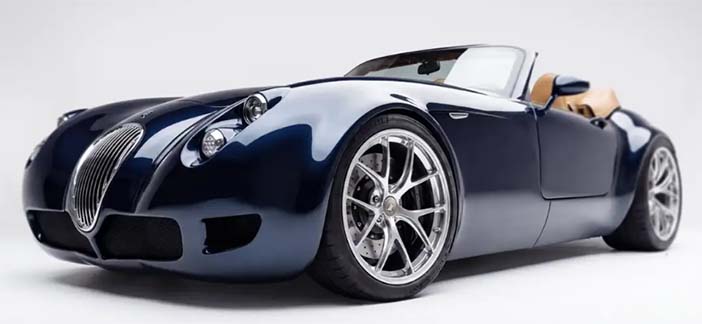
For anyone tracking niche performance brands, it also marks a pivot away from the promise of being first with an all-electric 2-seat convertible and back toward selling noisy, familiar hardware. If you want a refresher on the original Wiesmann MF5 specs and history, the basic idea was a lightweight shell wrapped around serious BMW M power, sold in numbers small enough to make Ferrari production look mass-market. The reason ‘MF5’ gets enthusiasts talking, is the engine story. The first MF5 used BMW M’s 5.0-liter S85 V10 from the contemporary M5, rated at 500 horsepower and good for an official 0-to-100 kilometres per hour sprint in under 4 seconds with a top speed over 300 kilometres per hour. That combo of a tiny body and a big naturally aspirated V10 is what gave the original MF5 its cult following, not just the styling. BMW stopped building the S85 V10 in 2010, so Wiesmann has already confirmed the Tributo needs a different engine. The company previously offered an MF5 GT with a BMW S63 twin-turbo V8 making 547 horsepower, while BMW’s newer S68 V8 can reach 626 horsepower in other applications. None of those options have been officially tied to the Tributo yet, and there’s no word on transmission or pricing. Wiesmann is openly leaning back into combustion after Project Thunderball delays and softer demand for its EV, and interested buyers can now place a €3,000 reservation for the Tributo through the company’s online portal. If you are curious how BMW M is evolving its own powertrains, our look at the upcoming 2027 BMW M5 design and tech and a deeper dive into the E60 BMW M5 V10 redemption arc show why that era’s engines still loom so large and why a small brand tapping that nostalgia at Monterey is a savvy move. +++