
++ BMW ’s next dashboard doesn’t just tell you where to turn; it shows you why the car is about to change lanes, rendered in the same 3D space as your route on cars running BMW Operating System X. The feature, called BMW Maps with Driver Assistance, combines navigation and active-safety visuals into one display instead of splitting them across separate screens. BMW built it with mapping partner Mapbox as an evolution of its existing integrated maps and assistance graphics on current models. Traditional cockpits keep route guidance on one screen and assistance-system status on another, often the instrument cluster or a head-up display. BMW Maps with Driver Assistance drops that separation, rendering the car’s exact lane position and placement inside the same 3D map used for turn-by-turn directions. Stephan Durach, senior vice president of digital services, infotainment and connected company at the BMW Groep, described the update as more than a cosmetic refresh. He says the new visuals tie directly to BMW’s long-term automated driving plans: “An important step toward highly automated driving is the intelligent interaction between navigation and driver assistance”. The most concrete payoff shows up on the highway. Highway Assistant uses the shared 3D view to support hands-free driving at speeds up to 130 km/h and it can execute automated lane changes once the driver confirms with a glance rather than a steering input. BMW already offers this hands-free highway function with gaze-confirmation lane changes on select models, pairing driver monitoring with automated steering and speed control on suitable highways. Showing assistance prompts directly on the 3D map, instead of in a separate alert area, is BMW’s latest way of chasing rich visuals while trying to limit distraction.
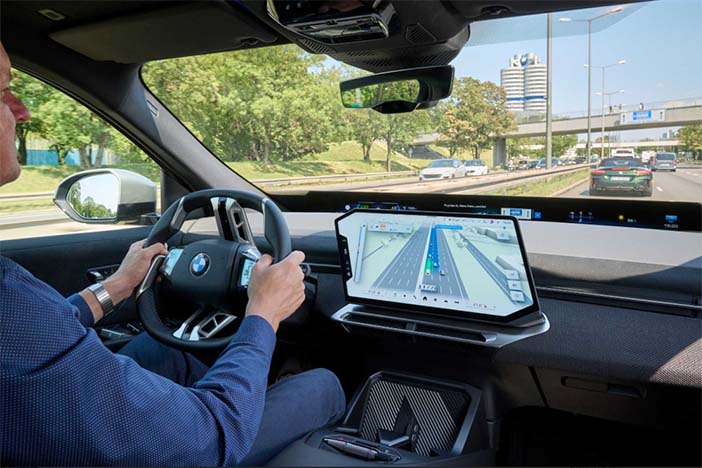
Availability follows BMW’s Operating System X rollout, which means Neue Klasse models sit at the front of the line. The Neue Klasse iX3’s software architecture already centers on the kind of unified panoramic display this feature needs to work. BMW has highlighted its long-running work with Mapbox on functions like curve-ahead views and rich 3D navigation, positioning this latest integration as the next step in that partnership. The company has not published a full list of qualifying models beyond the OS X requirement. Recent BMW announcements indicate it is still developing higher-level automated features both at its test sites and with data from customer cars. The brand has discussed extending navigation-guided assistance into more complex environments, including urban traffic, but without committing to a specific model year or country-by-country launch schedule. BMW also notes that any expansion of these assisted-driving features depends on local regulations, mapped road coverage and type-approval decisions in each market. +++
+++ DACIA boss Katrin Adt has called on European law makers to relax regulation on small cars to reduce prices and restore the region’s automotive industry to growth. Speaking at the unveiling of the new Spring recently, Adt said rising car prices were driving a significant contraction of Europe’s automotive industry and cited increasingly stringent emissions and safety regulation as among the main causes. “The world needs Dacia more than ever, and it’s more difficult than ever to be Dacia”, Adt remarked. “The European market has lost 3 million cars since 2019. It has never come back to pre-Covid levels”, she said, equating the decline to losing the entire German market, Europe’s biggest. “And if you say it’s 3 million cars, then do the math: it’s 10 factories, 12 million tyres, maybe 15 million seats, 9 million wipers”.
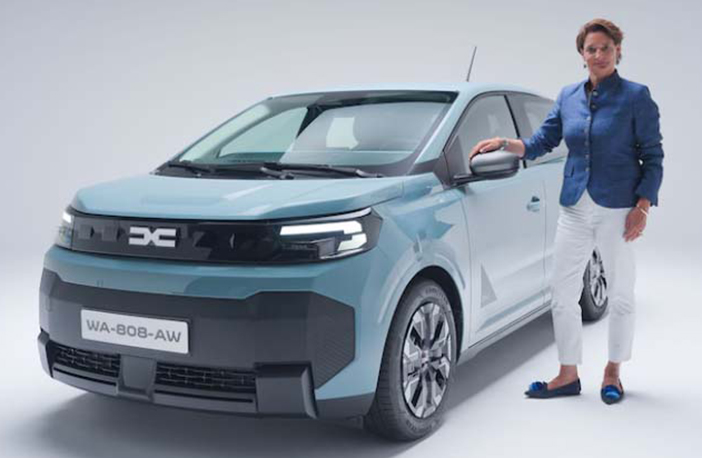
“This is a little bit scary when you think about economics in Europe, and if you analyse why this happened, because it didn’t happen in any other region of the world, it is because cars are getting too expensive. And if you’re digging down on why our cars are getting so expensive, the main reason is the regulation. This still remains an issue”. Manufacturers must adhere to an increasing amount of emissions and safety regulations in Europe, and 25% of Dacia’s R&D budget and engineering workforce is currently dedicated to meeting the various rules. “We have fulfilled around 100 regulations so far, and we still have another 107 regulations to fulfil by the end of the decade”, Adt said. “The question is: ‘Is that exactly what the customer needs and wants?’ The most used button in our cars is the so-called magic button, where you can turn off all the ADAS beeps. So we have asked the European Commission, together with other manufacturers, to have at least a regulation freeze on small cars to get a chance to offer affordable mobility”. Fabrice Cambolive, CEO of Dacia parent brand Renault, recently said its engineers were “dealing with a tsunami of regulations from Europe” and called for a regulation freeze for 10 years. “Then we can focus on affordability, we can focus on electrification”, he said. “This for sure will help the European market to reboot”. Adt previously suggested that looser regulation on small cars could be key to Dacia putting the Hipster microcar into production, but when asked for an update on that programme, she would only say to “stay tuned”. +++
+++ Back in May, Stellantis and Jaguar Land Rover dropped a surprise: a memorandum of understanding to team up on building something for the US market. Details were practically non-existent, with both sides playing coy. Rumors quickly started swirling that the secret project would wear a DEFENDER badge. Now, it seems we finally know what kind of Defender is on the way. The first fruit of this partnership will be a Land Rover Defender pickup. The real kicker? It could be built right here in the US at a Stellantis factory and sold stateside. That lines up perfectly with the original plan: build something tailor-made for Americans, not just ship over another import. Right now, the Defender pickup is still just a rumour, so don’t hold your breath just yet. Both Stellantis and Jaguar Land Rover are keeping their lips sealed; there are no hints of production dates, factory locations, engines, or even that a pickup is in the works. So, plenty of questions are still hanging in the air – mainly, what kind of truck are we actually talking about? Jaguar Land Rover has never offered a pickup version of the current Defender. The closest we’ve seen are wild one-off conversions and aftermarket jobs from outfits like Heritage Customs and Urban Automotive, who turn Defenders into pickups with a heavy dose of custom flair. Of note, building the truck in the US dodges the infamous 25% ‘Chicken Tax’ that has forced foreign automakers to offer a US version of their trucks. If Jaguar Land Rover builds the Defender pickup stateside, they can skip that hefty tariff. Of course, that doesn’t mean the whole thing gets a free pass. If major parts like engines or drivetrains come from overseas, those could still face their own tariffs. From a business angle, a Defender pickup actually makes sense. Americans love their trucks, and plenty of buyers are happy to drop luxury-SUV cash on a pickup. That’s why you see things like the GMC Sierra Denali, Ford F-150 Platinum, and Ram 1500 Tungsten rolling around. The interesting part is where a Defender pickup could fit in the market. If it stays true to the current Defender’s architecture, it would likely be a premium unibody truck rather than a traditional body-on-frame pickup. That makes it a rare proposition in the US, where most luxury trucks still use ladder-frame platforms. Outside the electric GMC Hummer EV pickup, there aren’t many high-end unibody trucks in that space. A Defender pickup could offer something different: off-road capability, luxury, and refined driving wrapped into a cargo-hauling package. Of course, there will be challenges. American truck buyers tend to be loyal to established brands. Land Rover must also prove that a Defender pickup belongs in a segment where towing, payload, durability, and long-term reliability matter as much as badge appeal. The latter is quite important, given JLR’s reputation. +++
+++ It’s hard enough to prove how tough a car is nowadays with all the technological features automakers put in them. Many believe older, more mechanical models are far superior in toughness and rugged dependability. Even harder is the idea of reviving a nameplate known for these qualities as an electrified model built by a Chinese manufacturer. FREELANDER ’s return is one of the automotive world’s highlights this year, despite being a China-only model for now. The partnership between JLR and Chery is behind the comeback, eager to show that the Freelander 8 has Land Rover DNA; it even claimed a world record in astonishing fashion. The Freelander 8 has already made a couple of appearances at select motor shows across China, but the official launch took place just a few days ago, on September 3. Before the launch, the brand put the Freelander 8 through one hell of a trial, climbing meters up a loose-surface mountainside in Tibet. That sets a new record for a hybrid vehicle and beats the previous one held by the BYD Fang Cheng Bao Bao 5 in July 2024. The trail traversed by the record-beating Freelander 8 was far from easy; it featured a 1.48 meter real off-road trail mixed with 200 meter vertical climbs on loose rock and shale. At that height, the air is much thinner, which affects vehicle performance.
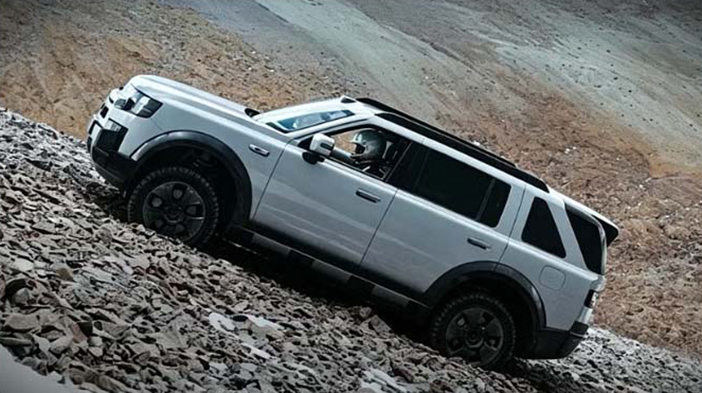
Despite the challenge, Chery-JLR says that the Freelander 8 retained 80% of the 1.5-liter turbocharged 4-cylinder range extender’s rated generating capacity during the climb. The Freelander 8 is powered by a dual-motor AWD Extended Range Electric Vehicle (EREV) system that makes a massive 818 hp, paired with a 2-speed gearbox. Its powertrain is a clever unit designed to help the Freelander tackle any off-road condition and is a major factor in its world-record claim. In first gear, the system adds a 1.5-to-1 torque multiplication step that generates 9.000 Nm of torque. Essentially, this acts like a low-range gear that helps the SUV climb steep inclines. Another key factor in the Freelander 8’s climb is its unibody SUV chassis, which, according to Chery-JLR, did not sustain any damage during the world record climb. No specific details have been released about what tires the Freelander 8 used during the climb or the car’s condition afterward. Nonetheless, a Guinness World Records entry is a feat in itself, giving the Freelander 8 more credibility as a modern trail vehicle. +++
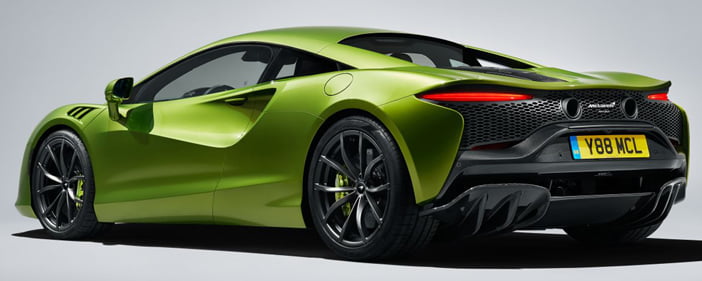
+++ It looks as though the Artura could be living on borrowed time. MCLAREN plans to discontinue its hybrid supercar in 2028, just 6 years after it finally reached customers. The model’s demise wouldn’t be a huge surprise. The Artura had a particularly rough start, with its market launch delayed multiple times before production finally got underway in 2022. Once deliveries began, the new hybrid supercar continued to suffer from quality issues. Things got so bad that McLaren eventually stopped deliveries to address the problems. Then-CEO Michael Leiters acknowledged that the Artura wasn’t mature enough when it was originally supposed to reach customers. At the end of 2022, the former head honcho admitted that “we already had a significant delay in our production line at the time and we reduced production to zero cars a day to fix our quality problems”. McLaren will therefore retire a model that was supposed to play an important role in bringing a younger, more tech-focused audience to the brand. The Artura combined a twin-turbocharged 3.0-liter V6 with an electric motor and represented a major technological step for McLaren when it arrived. Its replacement strategy appears to be quite different. McLaren is reportedly preparing a new hybrid coupe, codenamed “P34,” for 2027. Expect an electrified powertrain built around a twin-turbo V6 with over 800 hp combined output, far more than the Artura’s total 671 hp hybrid punch. It would arrive shortly after the 720S/750S/765LT line ends with the 788HS and before the Artura bows out. That could make the latter’s eventual departure less of a traditional cancellation and more of a reshuffling of McLaren’s lineup. If recent reports are to be believed, the company is preparing a new generation of products under CEO Nick Collins, including an SUV and a GT-styled model. The former will fill a void in the lineup, while the latter is allegedly a “front-engine sedan-like gran tourer”, supposedly a replacement for the GTS. +++
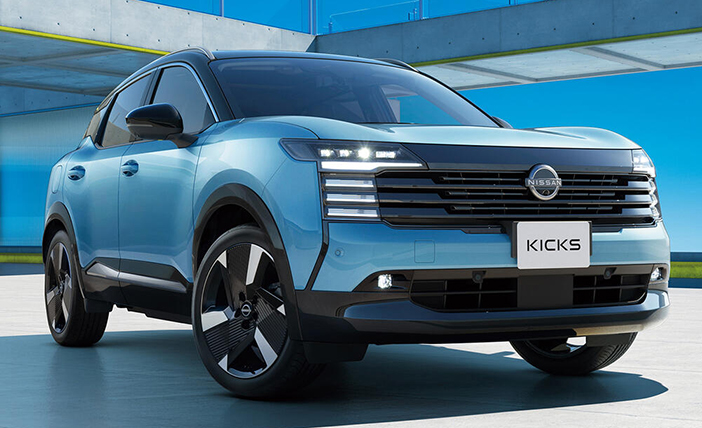
+++ NISSAN will bring its popular Kick crossover to Europe with hybrid power and build it at its Sunderland plant following an investment worth 200 million euro. The B-segment machine was launched in 2016 with a focus on Brazil, and the second generation model, launched in 2024, is currently manufactured in that country, Japan and Mexico. While the Kicks has never previously been offered in Europe it is sold in most of Nissan’s other global markets. The Kicks will be offered in Europe with Nissan’s e-Power hybrid powertrain, which is already offered on the Sunderland-built Qashqai, although full technical details of the model have yet to be revealed. +++
+++ For the last couple of years, TOYOTA has made some pretty epic performance cars. But as cool as these are, these aren’t the money-makers. And while passion projects are great, Toyota needs fatter profits to keep funding its operations, and yes, to finance the development of even more specialty models. Kenta Kon, Toyota’s freshly appointed CEO, has a lot on his plate right now and lowering costs is one of his primary goals. That’s a huge challenge given that we’ve been pretty spoiled with some properly good Toyotas lately. Sure, volume is there, but operating profits have dipped over the last 2 years. With rising competition from China in key markets, maximizing revenue is the way forward. Millions and millions of sales will amount to nothing if the company is barely making money. That’s not to say Toyota’s broke, and it’s further away from the truth. But Kon wants to nip the profit slide in the bud as early as possible. As the saying goes, prevention is better than cure, and the CEO’s planned cost-discipline measures will be key. Kon said: “We’re not thinking the lower the breakeven volume, the better. There will be a certain level that allows us to keep operating suppliers even in very difficult situations”. In other words, the cost-cutting exercises won’t just be putting in cheaper materials. Instead, it’s enhancing the value chain by streamlining costs where possible. After all, many jobs are on the line if Toyota decides to cut off one or several of its suppliers. Toyota’s breakeven threshold has been rising over the past 2 years. Rest assured, your next Toyota will not come with a hard plastic interior or deleted features. Toyota wants to avoid that, because decontenting a car is very noticeable. Instead, it cuts costs in areas the customer doesn’t see but still gets the same benefits. For instance, some seats use new materials, some components have fewer and simpler parts, and more. There’s also value-chain development, as well as faster development without sacrificing reliability. Obviously, it won’t be easy, but it will all depend on Kon’s direction and execution. Kon cites the 2009 Financial Crisis as his turning point toward greater financial discipline. After all, he was executive secretary to Akio Toyoda around that time, when they both witnessed the brand’s first-ever loss. Since then, Kon’s influence on cost management has shaped Toyota’s practices, and many of us probably haven’t realized it. Having seen the effects of not being prepared for an earth-moving crisis, Kon doesn’t want that on his watch. Right now, the world is going through huge historical moments and shifts, both economically and geopolitically. It can’t be stressed enough: China is rocking the establishment, and Toyota knows it cannot afford to rest on its laurels. +++