
+++ BMW issued its second profit warning for the financial year, citing costs related to job cuts as well as a production ramp-up. The core profit margin at the cars business was now seen at between minus 0.5 percent to plus 0.5 percent in 2026, BMW said, meaning it could make an operating loss in its key activity. That compares to a core profit margin of between 1 and 3 percent which the Munich-based manufacturer expected back in June, itself a cut on expectations at the start of the year. Like its peers, BMW has struggled with cutthroat competition and falling demand in China, the world’s largest car market. Competitors Mercedes-Benz and Volkswagen Group (including Audi and Porsche) have both also issued profit warnings this year and, like BMW, plan job cuts to bring costs down. In its latest warning, BMW said its redundancy program was moving faster than expected, resulting in bigger-than-anticipated severance payments for the final quarter of the year. “The company intends to leverage the momentum generated by its workforce restructuring program to expand its organizational and process realignment more quickly”, it said. “The reduction in management functions will be implemented faster than announced”, it added. Strong demand for new models based on the firm’s Neue Klasse platform meanwhile meant the company would incur charges to bring in extra shifts, it said. Car and motorbike deliveries for the year are nevertheless expected to fall more steeply than expected, BMW said. Across its brands (which apart from the namesake include Mini and Rolls-Royce) BMW last year delivered a total 2.46 million vehicles. +++
+++ Indian car-making giant MAHINDRA is planning to launch in the European next year with a range of striking electric SUVs designed in Oxfordshire. Plans for Mahindra entering the European market date back to 2016, when the company launched the battery-powered e2o city car in the United Kingdom and outlined a strategy to build a line-up of pure-electric models in Europe. The slow-selling e2o was dropped after a matter of months, but Mahindra rekindled plans for a full-scale European entry in 2022, when it revealed 5 electric SUVs styled at its newly opened Banbury design studio and confirmed that it was targeting a European rollout a year later when it showed the chunky, Jeep-style Thar.E off-roader concept. Now concrete plans are finally taking shape. Mahindra is only around a year away from putting cars in showrooms, with 3 of its UK-designed electric SUVs lined up to lead its push in the market. Customer clinics have taken place as part of Mahindra’s efforts to define its positioning and gauge its commercial potential in Europe. Early pricing information suggests it will pitch its cars at the upper end of the mainstream market, in a similar space to the likes of Cupra and DS. A source familiar with Mahindra’s plans told that one of the brand’s first European cars will be the dramatically styled BE 6 (photo below), priced from around €47.000 to face off with the Tesla Model Y, Ford Explorer and Renault Scenic. Based on Mahindra’s self-developed Inglo platform for EVs, the BE 6 is offered in India with a choice of 59 kWh, 70 kWh and 79 kWh batteries (the biggest sourced from China’s BYD) for a claimed range of between 550 km and 680 km, and a choice of 228 hp and 282 hp rear-mounted motors.
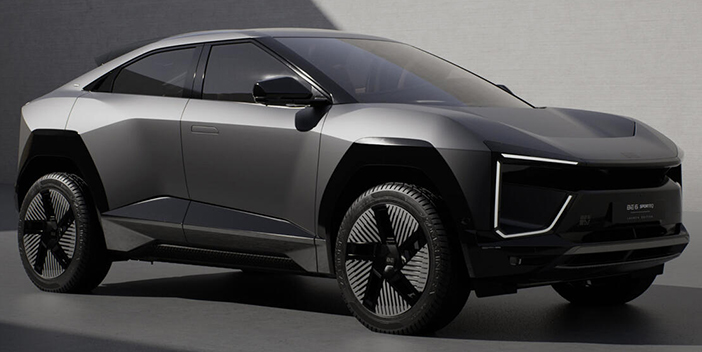
Mahindra is understood to be targeting a simple line-up in Europe, with each of its models offered in just one mechanical specification (like Chinese brands Omoda, Jaecoo and Leapmotor) but it remains to be seen which combination of motors and batteries it will export. An undisguised BE 6 prototype has been spotted testing on public roads near Mahindra’s Banbury base, suggesting that homologation is under way on European-spec cars. The larger XEV 9e (a similar size to the BMW iX3 and Audi Q6; photo below) shares the BE 6’s platform and drivetrains and is tipped to sit above it at €55.000.
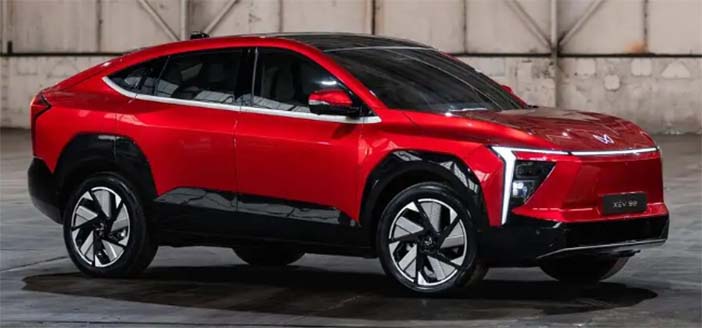
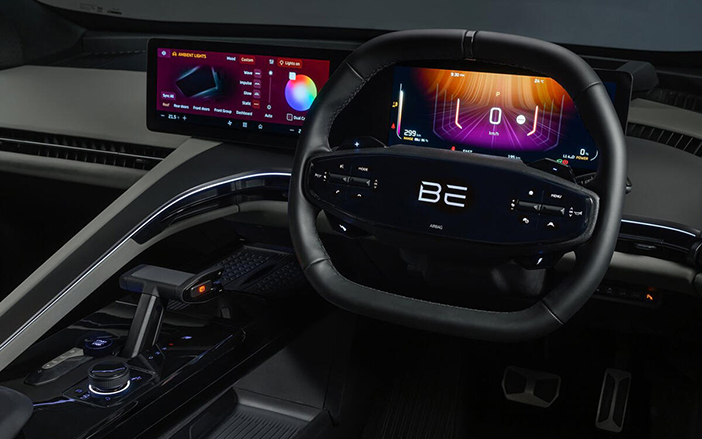
Both cars feature a striking, tech-heavy cockpit with a panoramic digital display hosting the driver cluster and a central touchscreen, optionally accompanied by a separate touchscreen for the front passenger. In addition, the smaller SUV can be had with an unusual ‘halo’ structure around the driver, inspired by Mahindra’s Formula E single-seaters.
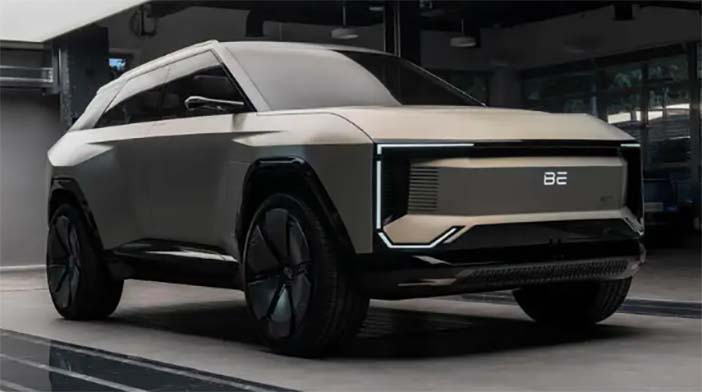
Mahindra has shown an additional, range-topping SUV to its focus groups, mooting a starting price of €60.000 (photo below). This is understood to be a model not yet on sale in India; most likely the BE 07, a chunky mid-sized SUV based on the Inglo platform with a similar footprint to the new Mercedes-Benz GLA. +++
+++ Even as MERCEDES-BENZ celebrates its 140th anniversary in 2026, the company has no plans to slow down next year. Quite the opposite. The German automaker plans to introduce at least 7 new models by the end of 2027, with even more potentially on the way. Electric vehicles will play a major role in that rollout, but traditional combustion engines aren’t going anywhere just yet. 6- and 8-cylinder engines are destined to stick around, although they’ll likely become increasingly electrified. With that in mind, here’s a look at all the new Mercedes models expected to arrive in 2027. The Mercedes A-Class once seemed destined for the chopping block for Europe. Instead, the entry-level model has received a longer stay and will remain in production through 2028, with its successor expected to debut toward the end of 2027. The next A-Class could look quite different from the current model, with Mercedes reportedly considering a return to its roots. According to rumors, the new model could take inspiration from the first 2 generations, adopting a more MPV-like shape with some crossover influences. Think a taller ride height and a more upright profile. The 2027 A-Class will remain Mercedes’ entry-level model, with both electric and hybrid powertrains expected. It will ride on the MMA platform already used by the CLA and GLA. Since 1979, the Mercedes G-Class has been the ultimate expression of the brand’s off-road heritage. Its body-on-frame construction, low-range gearing and legendary durability have made it an icon. Now, nearly half a century later, it’s finally getting a smaller sibling. Known for now as the Baby G, the compact off-roader will likely ditch the traditional ladder frame in favor of a modified version of Mercedes’ MMA platform. The architecture would be adapted to deliver the kind of off-road capability you’d expect from a G-Class. The Baby G is expected to offer both electric and hybrid powertrains, along with standard all-wheel drive. Its boxy styling should take clear inspiration from the larger G-Class, but the dimensions will be considerably smaller. It will be about 30 centimeter shorter than its big brother. The Mercedes Baby G is expected to make its debut toward the end of 2027. After the controversial switch to a 4-cylinder plug-in hybrid in the previous C 63, Mercedes-AMG looks ready to bring back some cylinders. First up will reportedly be the new C 53 AMG, powered by a turbocharged 3.0-liter inline-6 producing 449 hp and 600 Nm of torque. It’s the same engine found in the CLE 53 AMG. But Mercedes might not stop there. The more powerful C 63 AMG could also arrive sometime in 2027, potentially marking the return of the V8. Or maybe not. Reports suggest Mercedes is considering 2 versions of its flagship performance sedan: one with a traditional combustion engine and another that’s fully electric. Whether the V8 actually makes a comeback remains to be seen. Like the C-Class, the next-generation Mercedes E-Class is expected to get a major overhaul, both inside and out. Following the same strategy as its smaller sibling, the E-Class will gain an all-electric variant that effectively takes the place of the EQE. Traditional combustion-engine models, however, aren’t going anywhere. They’ll continue on a separate platform. The electric sedan and wagon will ride on Mercedes’ MB.EA-M architecture. As for styling, expect the new E-Class to adopt the same design language as Mercedes’ latest models. That means a large grille featuring the iconic 3-pointed star, cleaner body lines, and a massive display taking center stage on the dashboard. The Mercedes G-Class is already a niche offering, even with sales on the rise. A convertible version probably won’t become a volume seller, either. But that isn’t stopping Mercedes from bringing back one of the more unusual variants of its legendary off-roader. After years away, the G-Class Cabriolet is expected to return in 2027, reportedly exclusively in AMG 63 trim. Under the hood, it should feature the familiar twin-turbocharged 4.0-liter V8, producing 612 horsepower and sending power to all four wheels. The biggest difference will be a retractable fabric roof that opens up the rear portion of the cabin. In other words, you’ll get the same serious off-road hardware, plenty of V8 rumble, and the chance to enjoy the wind in your hair. What’s not to like? The electric version came first. Now, at the start of 2027, it’s the hybrid’s turn. Like the CLA, the new Mercedes GLA Hybrid will pair a 1.5-liter 4-cylinder engine with a 22 kW electric motor. The setup should allow the GLA to cover short distances on electric power alone. Output figures are expected to match the CLA, with 3 configurations producing 136, 163 or 190 hp. The base model will send power to the front wheels, while all-wheel drive should be available on the two more powerful versions. Visually, the hybrid GLA shouldn’t look much different from its electric counterpart. The biggest changes will likely be additional front air intakes to help cool the 1.5-liter engine. Inside, the cabin is expected to carry over largely unchanged. Mercedes is increasingly splitting its lineup between electric and combustion-powered models, with both versions sharing similar styling but using different platforms. We’ve already seen this approach with the CLA, GLA and C-Class. The GLC is next, with new SUV and Coupe versions expected to arrive in 2027. Visually, the combustion-powered GLC shouldn’t look dramatically different from its electric counterpart. Underneath, though, it will offer a familiar range of powertrains, following a strategy similar to the updated C-Class. The line-up is expected to include a 2.0-liter 4-cylinder gasoline mild-hybrid engine producing 177, 218 or 258 hp, along with a 2.0-liter turbodiesel rated at either 163 or 200 hp. A plug-in hybrid will also be available in 2 output configurations, producing 326 or 394 hp. Both are expected to use a 19.5 kWh battery pack, providing an estimated electric range of around 100 km. +++
+++ The RANGE ROVER EVOQUE and RANGE ROVER VELAR will not be replaced when production of the pair ends later this decade. That will leave the upcoming Range Rover GT and the Range Rover Sport as 2 very different but similarly priced entry points to JLR’s now stand-alone luxury brand, sitting underneath the full-sized Range Rover in a 3-strong line-up. Range Rover boss Martin Limpert confirmed that while the Evoque and Velar will continue in production throughout 2027, each is now close to the end of its life after around a decade in production and no replacement is being developed for either. The demise of these model lines is partly down to JLR’s House of Brands strategy, which has spun off Range Rover, Defender and Discovery as stand-alone marques from the Land Rover parent brand. Given the luxury positioning of Range Rover and the newly expanded roles for Defender and Discovery (the former with a new entry-level model called Defender Sport soon to join the ranks) it is now no longer necessary for Range Rover to cover such a large part of the market. Instead, Range Rover will focus on the upper end of the market and smaller, more affordable models will be left to Defender and Discovery.
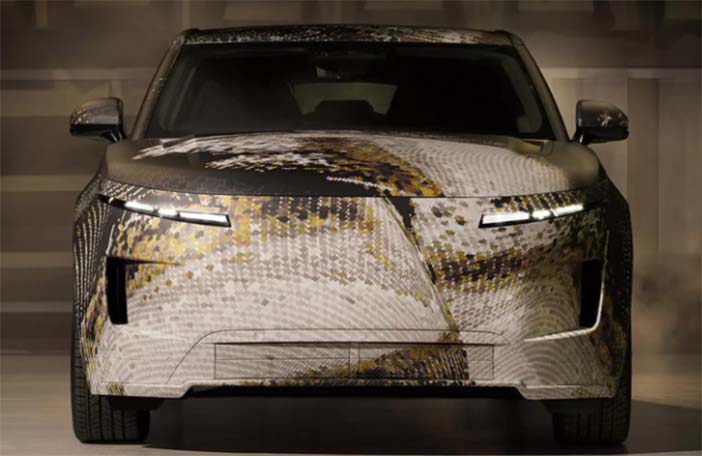
The Range Rover GT will be launched at the start of 2027 as a more road-biased and saloon-style model, based on the new electric-first EMA architecture and built at Halewood, where the Evoque and Discovery Sport are currently produced. It will be priced from around €115.000 as an all-electric model from launch, but hybrid versions will follow. The Defender Sport will share both the GT’s platform and its Merseyside production line, which is undergoing a €575 million overhaul to prepare it for EVs. The Discovery Sport will end production in December to make way for the GT. It’s likely that production of the Evoque will then end ahead of the Defender Sport being launched around a year later. The Evoque was the catalyst for significant growth and profitability at JLR in the early 2010s and prompted executives at the time to mull whether the group’s sales could top 1 million. The Evoque exceeded 100.000 sales per year multiple times in the mid-2010s. Last year, JLR sales were just over 400.000, but the strategy has shifted from volume models to more premium offerings with greater profit potential, particularly from Range Rover and Jaguar. The Evoque starts from below €70.000 and the Velar at below €90.000 (Dutch market); price points that will be covered by Defender and Discovery models in the future. The Range Rover GT has been all but revealed as a lightly camouflaged prototype and Limpert said it has attracted a positive reaction from investors and retailers, with more than 80% of interest in it coming from customers of brands outside JLR. Investors have noted the lack of a “bullseye” competitor for the model, added Limpert, giving Range Rover confidence that it has found a true clear space in the market as it did with the Evoque in the 2010s. Limpert also corrected a common misconception that the GT was conceived as a replacement for the Velar. He said that was not the case and it is an original offering with a road focus alongside trademark Land Rover off-road capability; a wide brief that, he said, is “testing us” in the GT’s development programme. The Velar is built at Solihull on the older D7a platform shared with Jaguar’s now axed ‘volume’ models, including the XE, XF and F-Pace. It never achieved the same level of success as the Evoque, sales topping at around half of the Evoque’s at its peak. The Range Rover and Range Rover Sport ranges have recently been expanded with the addition of new electric versions, based on the same MLA platform as the petrol, diesel and hybrid models and with no real notable visual differences. Despite the pair having been on sale for almost 5 years, there was no need to facelift them yet, said Limpert, because Range Rover designs are meant to be longer-lasting and customers had asked for any electric variant to be visually identical. The designs will continue to evolve subtly with model-year changes (as hinted at by recently spotted test mules) but Limpert did say there is a desire to offer greater design separation between the Range Rover and Range Rover Sport in the future, to give each a bespoke visual character. They are currently similarly styled but drive differently and they have been pushed even further apart for the electric versions. Future updates will build on that. Limpert confirmed that diesel will remain a powertrain option for Range Rover. The MLA architecture was also created with the capability of accommodating hydrogen power and this remains possible, but a significant market shift will be needed for this to become a serious prospect for production. The new 2027-spec Range Rover and Range Rover Sport feature just one Land Rover badge, but there are no plans to phase out the parent brand’s emblem on future models. It sits within the front grille, where it acts as a ’trust mark’ for Range Rover models to highlight their off-road capability and Range Rover boss Martin Limpert said the Land Rover badge will remain visible on the brand’s upcoming models. The Land Rover badge will play a bigger role for Defender and particularly Discovery models, as they are in a much earlier part of their development as stand-alone brands. The Range Rover electric models arrive at a similar time to the Jaguar Type 01, but despite being large EVs from a relatively small company, they are based on completely different architectures and share only brake discs, vehicle engineering director Matt Becker confirmed. Becker said the requirements for Range Rover and Jaguar are so different that platform and component sharing was never a serious option. The drive units for the Range Rover, for example, are bespoke, in-house creations that are different from anything on the market due to their ability to cater for hardcore off-road driving. The use of bespoke parts like this has caused a lengthy development for the electric Range Rovers but Becker said the cadence of launches will now increase and there will be no long gaps between launches, especially now that JLR’s 3 platforms (EMA, MLA and JEA for Jaguar) have been developed and it is a case of spinning models off them. +++
+++ The TOYOTA CELICA is making a long awaited return. We’ve known for some time that Toyota has been working on a mid-engined sports car (some journalists have even driven it in an early prototype form) but the name hasn’t been clear until now. Given the mid-engined layout, a new Toyota MR2 might have made some sense, but it looks as though the Japanese brand will be leaning on the incredible World Rally Championship heritage of the Celica name. On an Instagram post, Toyota confirmed it’ll run 2 cars in the WRC’s Rally1 category next year: a GR Yaris under the Gazoo Racing banner and a GR Celica in Toyota Racing guise. The 2027-on Rally1 regulations allow cars with a tubular steel structure onto which manufacturers can stick whatever bodyshell they like, production-inspired or otherwise. While that means there doesn’t have to be a showroom version of the GR Celica Rally1 car, it seems logical that the name will be used in competition to give a link to Toyota’s new sports car. Toyota chairman Akio Toyoda is playing a key role in the comeback. President of Toyota between 2009 and 2023, Toyoda oversaw the launch of the LFA for Lexus, then the relatively affordable Toyota GT86 and GR86 sports cars, plus he helped bring back the Supra name. Under his ‘Morizo’ racing driver pseudonym, Toyoda even flipped a GR Yaris rally car onto its roof during testing, and was recently seen racing a prototype that gives us our best look yet at the incoming sports car. This hands-on approach to development has guided the mid-engined Toyota project to motorsport, something Toyoda is extremely passionate about. The last mid-engined car from Toyota was the third-generation MR2, which bowed out in 2006. As a result, the development of the new model had to start almost from scratch. The new Celica is, however, benefiting from the GR Yaris hot hatch to a certain extent. Gazoo Racing, Toyota’s motorsport arm, has been running the Concept M (a mid-engined prototype closely related to the GR Yaris) in the Japanese-only Super Taikyu endurance series. At the most recent Super Taikyu meeting at Fuji Speedway with the Concept M on the grid, Akio Toyoda told our parent brand Carwow about the importance of motorsport in Toyota’s performance-focused road cars. “If we don’t challenge ourselves in motorsport, maybe we don’t fail, but if we challenge then maybe we fail”, said Toyoda, highlighting the benefits of gaining comprehensive data from the uncontrolled environments that racing creates. “If we decided to make such a car in a meeting, it would never exist”, Toyoda added. “We are showing to our employees that you can challenge, you can say anything you want, because we’re doing it, we’re showing in front of everybody”. In October 2026, Toyoda was once again behind the wheel of a prototype at a Super Taikyu race under his Morizo pseudonym. The mule used at Okayama International Circuit in the experimental class was a radical departure from the GR Yaris-shaped machines we’ve seen before, featuring more of a traditional sports car silhouette with a lower roof and longer front and rear overhangs. The finished article might yet look quite different, however, with the car at Okayama still having a clear Yaris influence. Toyota’s aim is to produce a performance car with a more playful attitude than that of the GR Yaris hot hatch and this was clear from the start. The mid-engined configuration and the chassis tweaks have produced a car with far less propensity to understeer, rotating into corners and making more demands on the driver to correct slides and oversteer. My experience behind the wheel of an earlier prototype on loose gravel surfaces underlined that Toyota’s creation is more fun than the already thrilling GR Yaris. The tail actively wants to step wide but the longer wheelbase makes this feel far more playful and controllable. The new power unit in the Concept M competition car is codenamed G20E and has an output of up to 500 hp in motorsport trim. Toyota says it has a less ambitious aim for the production G20E to be more powerful and more efficient than the current 2.4-litre turbo unit found in the 240 hp Toyota GR86. It will also be 10 percent smaller than the existing unit, which will no doubt help with packaging inside the tight confines of a mid-engined sports car. The prototype car we rode in was unofficially confirmed to have 400 hp and it was suggested we should expect that kind of output from the eventual production car. The combustion engine is mounted in the chassis transversely, as it is in the GR Yaris M Concept. The motor will probably be paired with the 8-speed automatic transmission that was developed specifically by Gazoo Racing for the GR Yaris, and is also found in overseas models such as the GR Corolla and Lexus LBX Morizo RR. We don’t know much more about the forthcoming car’s chassis other than that the wheelbase is extended, but a mixed-metal construction is likely, combining high-strength steel and aluminium to help keep the weight and costs down. While the Concept M is rear-wheel drive, Toyota has also suggested that the production car it will spawn will probably feature all-wheel drive, with Saito adding: “This layout is new for us, but we have found in our initial testing that the combination of an all-wheel-drive mid-ship layout offers the best layout for high-performance driving”. Toyoda first stated his desire to bring back the group of cars often referred to as the ‘3 brothers’: the Supra, the Celica and the MR2, back in 2019 when production of the fifth-generation Supra began. Toyota itself has been teasing the return of a mid-engined sports car for a few years now. In January this year Toyoda even gave fans a red herring by stating he’ll have a mid-engined 2-seater ready in time for the Tokyo Auto Salon. It turned out to be a modified Daihatsu pick-up truck! Toyota trademarked the name ‘GR MR2’ in 2025, fueling excitement over a new MR2. The name pointed to the influence from its Gazoo Racing sub-brand and follows on from the GR86 and GR Yaris performance models. There’s also a trademark for ‘GR MR-S’ (the MR2 was known as ‘MR-S’ in the Japanese market). A possible return of a Toyota Celica was also rumoured before its apparent confirmation, and insiders had previously suggested to us that Celica would indeed be the chosen name for the new car. MR2 meanwhile has traditionally been a smaller rear-drive sports coupe or roadster, whereas this will be an all-wheel-drive coupe with around 400 hp, potentially costing more than €75.000 in The Netherlands. Toyota has lots of experience with mid-engined models, selling the MR2 over the course of 3 decades between the mid-eighties and the late 2000s. But despite a close connection to these past icons, I expect the new sports car to feature a significantly more contemporary design, taking its lead from the FT-Se concept. The body itself should retain similar exaggerated forms to the concept, highlighted with strong rear haunches, angular surfacing and bodywork that looks almost shrink-wrapped over the engine and chassis. The switch to an internal-combustion powertrain will have an effect on how the car manages the airflow around the body, but we don’t expect big side intakes will be necessary; instead, the engine will draw in air from the front of the car and underneath. This notion is supported by the GR Yaris M Concept, because it does without any obvious side-mounted air intakes. Around the rear, I also expect similar led lighting to the concept’s to be carried across, as well as the aggressive rear diffuser and a small ducktail spoiler. As with most GR models, the base car will probably be able to be customised with more aggressive aero components, such as a high-mounted rear wing and aero flicks mounted on the front bumper. The compact cabin will be strictly for 2 persons and offer good visibility because of the low scuttle height; just as in a Lotus or Porsche. The dashboard will also be pared back and very driver-focused, with compact digital interfaces and little in the way of flashy design elements. The prototype seen racing in October was a step away from its GR Yaris origins and towards the finished design, but it looks like there’s still some way to go. +++
+++ VOLVO will follow the EX60 next year with a more affordable electric model on its radical new SPA3 platform, which is set to take on the Skoda Elroq and Ford Explorer as a successor to the ageing EX40. Primed to begin deliveries after the summer, the new model will target “a large lower-priced market segment” than the EX60. The EX40 successor is one of 13 new cars Volvo will launch globally by 2030. It will be designed and engineered primarily for Europe, in line with the company’s new regionalised product development strategy. Volvo is also working on a new flagship SUV for the US market, based on the XC90’s SPA2 platform and 6 models specifically for China based on modular architecture from parent company Geely. Volvo hasn’t given any firm details of the next SPA3 car, but that early hint at its positioning would suggest a smaller SUV aimed at Europe’s most popular C-segment, where Volvo currently fields the XC40. That model was recently facelifted after nearly a decade on sale. Available with petrol and electric power, the XC40 remains Volvo’s second-best-selling model line after the XC60, for which the new EX60 serves as an electric equivalent. It looks likely that the new volume-focused model will replace the EX40, while the petrol-powered XC40 will remain on sale using the CMA platform. Volvo has previously said that its new European line-up will eventually include “new low and high body types”, hinting at a return to the saloon and estate segments from which it has pulled back in recent years. But the second SPA3 car’s volume focus means an SUV is more likely, given the much greater popularity of taller cars in the region. The platform can be used for cars ranging in size from the EX30 (4.2 meter long) to the EX90 (5.0 meter) and it has been engineered to offer packaging flexibility: the battery cells can be rearranged within the floorpan to accommodate different vehicle shapes. The SPA3 platform introduces a number of significant developments from its SPA2 predecessor, including a new cell-to-body battery design, ‘megacasting’ production that reduces the number of individual parts and new-generation drivetrain hardware that boosts efficiency and dynamics. If the new model is the same size as the EX40, it would be around 300 cm shorter than the EX60. As such it is unlikely to share the larger car’s 112 kWh flagship battery option, which offers more than 800 km of range. The mid-range 91 kWh pack could potentially be accommodated, however, which would give the new model a range of more than 650 km (beating most rivals at this price point) and still be capable of 370 kW fast charging. Volvo said introducing a second, higher-volume model using the SPA3 will accelerate its efforts to recoup the substantial development and production costs associated with the new, bespoke platform. This is especially important as it battles to recover from heavy losses in recent months and make good on its ambition to achieve an 8% profit margin. Volvo will also be hoping that it can accelerate production of the new car far quicker than it has with the EX60, which 6 months on from launch has yet to achieve full-scale output. Volvo says its crucial new BMW iX3 rival is “taking longer than planned to ramp up” because of the challenges associated with its cutting-edge new technology and construction. The company says it has taken more than 50.000 orders for the electric equivalent to the best-selling XC60, but so far it has built just 5.000 units since the model entered production in April. CEO Håkan Samuelsson has warned that the crucial new model’s “financial contribution will be delayed as we are not ramping up to the plan we had before”. +++