
+++ The AUDI Q3 and BMW X1 have both been tested by American IIHS safety organisation. The first portion involves crash safety across 3 tests. These tests are the small overlap front, a 64 kph test involving 25% of the vehicle’s width; the moderate overlap front, involving a 64-kph test with 40% of the vehicle’s width; and the side-impact test. Every test receives a rating of Good, Acceptable, Marginal, or Poor. Both vehicles performed brilliantly in the small overlap front and side tests, but the Q3 stumbled in the moderate overlap front test. For a fairly new design, the Audi’s Poor rating is disappointing. In this test, the Audi was marked down for a heightened risk of rear-passenger chest injuries. The rear passenger restraints and dummy kinetics were also marked down. Interestingly, the X1 also wasn’t perfect in chest-injury measures and rear passenger restraints, but its restraint system performed better than the Audi’s. Due to the Audi’s moderate front overlap rating, it did not qualify for an IIHS safety award. The BMW had no such problems and earned the authority’s best Top Safety Pick+ award. The IIHS also tests for a vehicle’s ability to avoid an accident in the first place, be it preventing a crash with a pedestrian or another car. The effectiveness of each model’s headlights is also tested. The Q3 clawed back some points in this category, as its vehicle-to-vehicle crash-prevention system was judged to be better than the BMW’s. In this test, the X1 failed to avoid hitting a motorcycle target at 50 kph; it could only reduce its speed to 25 kph. The Q3 avoided the collision entirely in the same test. Both cars avoided a collision with a passenger car in all 6 tests. Despite the BMW not being perfect for crash prevention, it still performed well enough to secure a safety award. Conclusion: the Audi Q3’s performance in the moderate overlap front test is the only factor preventing it from securing a safety award. Since the IIHS updated this specific test in 2022 to include rear passenger safety, many models have struggled to achieve a top rating. Still, Audi would have expected to do so, given the fact that the Q3 is a new design. Many smaller, cheaper SUVs excelled in the same test, including the Mazda CX-30. For buyers who will often be transporting passengers in the back seat, the BMW X1 stands out as the more secure SUV for now. +++
+++ GEELY will reveal its first car developed specifically for the European market next year. The Chinese brand (part of the conglomerate that also owns Volvo, Polestar and Lotus) launched in Europe last year with the E5 electric SUV and related Starray plug-in hybrid. It will soon add to that with a halo model codenamed Project KO11; a localised version of the Land Rover Defender-rivalling Galaxy Cruiser 4×4 recently launched in China (photo).
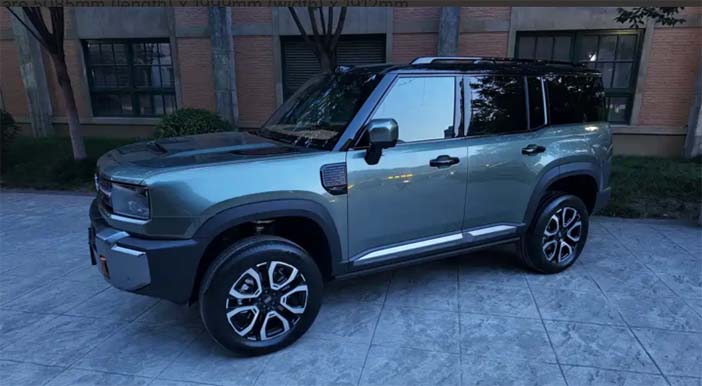
This shares its underpinnings with the forthcoming Lotus Eletre PHEV but has been devised for hardcore off-roading, with an 800mm wading depth and chunky styling. Geely’s product definition director, Dennis Weinel, told that such models had been selected according to the brand’s priorities for its European launch and then modified to suit the European market. “The book was already written to a certain extent and we did the last mile on it”, he said. Weinel referred to such models as the “legacy portfolio”, adding that more substantial alterations to these cars are currently in development to better suit the European market. He pointed to the ‘Flyme’ infotainment system as one example: “This has more or less the same look and feel shared with China, which we don’t want to have in Europe. The second generation of Flyme will clearly address the needs of a European customer with multitasking, split screens, more information that matters and widgets that you can extend. This is now in development and will be rolled out next year”. Weinel added that Geely is also working to address the “bings and bongs” triggered by the cars’ driver assistance systems, which have drawn criticism fom both the press and owners. “This is usually down to 3 key areas: the volume, the signature of a chime or the trigger logic”, he said. “We are now addressing all 3 points to make this what our customers prefer while still being under the regulation. These are lessons that we’ve learned”. Geely will take this approach further with its first model built specifically for Europe. Weinel said it has been designed at the firm’s base in Milan and that it will be revealed next year. “This is really a product for Europe, and then from Europe it will go to other markets”, he added. This approach mirrors that of compatriot rival BYD, which arrived in Europe with Chinese-market models before launching the Dolphin G, a PHEV supermini developed according to European-market demands and due to be produced in Hungary. Geely plans to launch 10 cars in Europe by 2030. It will soon grow its line-up from 3 (the E5, Starray and E2 electric supermini) to 5 with the Monjaro PHEV SUV and KO11. +++
+++ The Nissan GT-R became so popular that even casual car enthusiasts could recognize it. The same couldn’t be said about the KIA STINGER , despite also appealing to performance-oriented buyers. But according to Kia R&D boss Manfred Harrer, the Korean marque is open to developing a new halo car like the GT-R, which is more relevant than ever as the brand continues to grow its GT line-up. Autocar reported that Harrer liked the idea, saying, “You see a lot of car makers going that way, so why not?” But he took a more cautious approach, arguing that the automaker should first build a dedicated model that would establish the GT identity before pursuing a more extreme performance flagship. For the uninitiated, Kia offers performance-oriented cars through GT, similar in concept to Hyundai N. But unlike Toyota’s Gazoo Racing, which has dedicated models like the GR Supra, Kia primarily uses GT as a high-performance trim rather than a standalone model. That’s exactly what Harrer, who previously worked at BMW and Porsche, wants to establish first, which, if it happens, could help set the foundation for a spiritual successor to the Stinger. The Stinger checked almost all the boxes for performance, including a 3.3-liter twin-turbocharged V6 making 365 horsepower. But perhaps what held it back was the Kia badge, which was largely associated with mainstream cars. As such, some performance-oriented buyers at the time may have preferred the likes of the BMW 440i Gran Coupe or Audi S5 Sportback. Following the discontinuation of the Stinger in 2023, Kia continues to offer performance-oriented cars through GT-branded models like the EV6, which, in its GT form, is capable of delivering up to 641 horsepower. It is worth noting that Kia has been posting strong sales numbers in the U.S., where its hybrid models, including the Sportage, have benefited from growing demand for hybrids amid slowing EV sales. If this momentum continues, it could strengthen the case for developing a halo car, which typically isn’t a major profit driver but can help strengthen a brand’s performance image, as seen with the Nissan GT-R. Nissan is reportedly hoping to introduce the GT-R’s successor before the decade ends. It’s possible Kia could launch a GT-R-inspired performance flagship around the same period as it explores expanding its GT lineup. For now, the automaker hasn’t confirmed development, production approval, specifications, or a launch timeline, but it’s an exciting prospect nonetheless. +++
++ The new LAND ROVER DISCOVERY increasingly looks like the missing piece in the jigsaw that is Jaguar Land Rover’s House of Brands masterplan. No need to check under the sofa, though, as it will not be missing for long. Work on the company’s most ‘family focused’ vehicle is well under way. JLR is going all-in on the House of Brands vision and Range Rover managing director, Martin Limpert, set the stall out on how it will all work. Limpert explained: “We have a clear definition of what the brands stand for. If you take Range Rover, it’s true modern luxury. ‘Elevate leaders’ lives’, is what we say. Defender is about rugged luxury, a real go-anywhere, do-anything car. Jaguar is about exuberance and modernism – ‘copy nothing’. And Discovery has its place in the area of leisure and versatility, where the journey itself is the objective”. The arrival of the Jaguar Type 01, not to mention the first electric versions of the Range Rover and Range Rover Sport (with the Range Rover GT to follow) has left us with a much clearer picture of how the Jaguar Land Rover portfolio will look in the coming years. If the fog still lingers anywhere, it’s around Discovery. Land Rover’s reimagining of the Defender as a vehicle of a more rounded ability set, that’s adept on the road as well as off it, has been a colossal success. But it has also come at the expense of the existing Land Rover Discovery, whose customers have made a beeline for the iconic 4×4 in its new, more versatile form. First launched way back in 2017, the current fifth-generation Discovery was always the big off-roader that served up family-friendly space and comfort when it wasn’t ploughing through swamps. Now the Defender does this, too, on a more modern platform. The top brass at JLR are well aware of this and it sounds like they’re cooking up a major transformation for the Discovery brand. The firm’s Vehicle Engineering Director, Matt Becker, explained: “Discovery is getting a lot of attention at the moment. It’s very important as one of the four brands. What we’ll do with it in the future is still TBC, but it will evolve from where it is. There are some very interesting concepts I’ve seen, but we haven’t landed exactly on what it will be in the future yet”. Tellingly, when asked if JLR would need to carefully position the new Discovery somewhere between the Defender and new Range Rover GT, Becker hinted at a much more radical approach, suggesting engineers could “create something completely different in a white space of its own”. This seems to sum up the current thinking on Discovery. Major reinvention of the car and brand is needed to carve out a new niche and fully realise the House of Brands vision. “Discovery will be much more in the place of versatility, family and where the journey is”, said Limpert. “We have a clear proposition that will allow us to talk to different audiences across 4 brands with individual personalities. The strategic proposition for the Discovery is versatility, family joy and flexibility and long-distance journeys for the family”. As we’ve seen with Jaguar, JLR isn’t afraid of a spot of bold reinvention, and Discovery feels like much less of a risk. Precisely what this outline evolves into will become clear soon enough, but we have potential clues. The electric Range Rover GT that will launch in 2027 takes a much lower and more car-like shape than the tall SUVs we expect from that brand, but it does so while retaining core Range Rover abilities. “I think when people drive the Range Rover GT, they’ll be quite surprised how good it is off road”, continued Becker. “Can it do everything a Range Rover or Range Rover Sport does? No. But the physics difference means the GT will be able to do different things that those cars can’t”. A new Land Rover Discovery that takes a more family-focused approach with an emphasis on road-going comfort could be a larger car, perhaps with three rows of seats, that adopts a similar low-riding SUV form to the GT. The return to popularity of the MPV format with an emphasis on spacious, flexible, practical interiors may not have gone unnoticed at JLR. The Range Rover GT will introduce JLR’s new Electric Modular Architecture (EMA) for ‘medium-sized cars’. But Range Rover’s definition of a ‘medium size car’ may not quite tally with your own. The GT is clearly a sizable hunk of automotive real estate when viewed in the metal, and is expected to be close to the Range Rover Sport’s length of 4.946 mm when full specifications are released. It uses software, electric motors and battery tech shared with the electric Range Rover Sport and the Range Rover (cars that run on the older MLA platform) and similar to that in the Jaguar Type 01. It’s likely, then, that the same electric car technology would find its way into any future electric Discovery. JLR, however, is very proud of the flexibility in its platforms. This gives it the ability to serve customers across the globe with different powertrains, adapting production to changing market conditions all the while. Hybrid will come to the Range Rover GT in 2028 and we can certainly expect a range of power options in the future Discovery, just as we currently have in the full-size Range Rover. +++
+++ Meet the LEXUS LBX , the tiniest SUV in the luxury brand’s stable. Launched in December 2023, this pint-sized hybrid crossover aims to pack all the Lexus plushness into a much smaller package. 3 years later, Lexus is giving the LBX a partial redesign, taking inspiration from the brand’s broader focus on driving refinement.
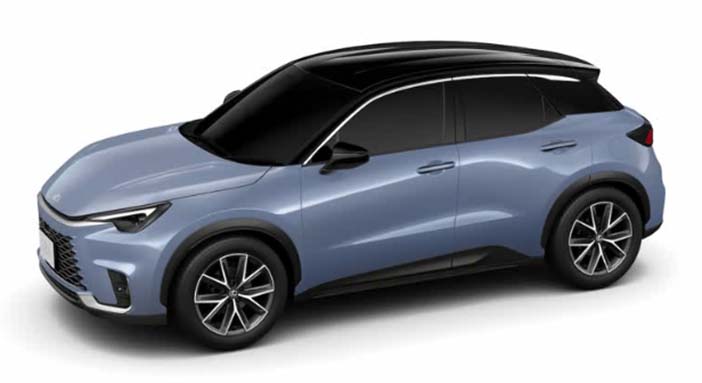
Rather than introduce a major redesign, Lexus is focusing on chassis tuning, equipment and additional exterior color choices. The biggest change in the exterior is a new paint shade called Sou, with blue highlights that add a bit of depth and intrigue. Lexus is also mixing up the color palette: Relax and Elegant trims stick to single-tone looks, while Cool and Active grades get to play with two-tone combos and Black Mica. Other than that, the LBX keeps its usual look and compact size, with only a few small changes. Inside, the updates are about convenience. All versions now come with a color head-up display, steering-wheel controls and a drive recorder as standard. These features make daily use easier without forcing buyers to pick a pricier model. The more significant changes are underneath. Lexus has revised the thickness of the center crossmember to increase body rigidity and adjusted the shock absorbers’ valve characteristics to improve body control over rough roads. The electric power steering gets a retune too, now offering lighter, more predictable feedback. Lexus even took the LBX to the Nürburgring for some serious testing, chasing that sweet spot between sharp road feel and cushy comfort. The approach is similar to the refinement-focused work Lexus has applied to larger SUVs such as the RX, although the LBX’s mechanical revisions are specific to its own chassis. Its hybrid powertrain remains unchanged, pairing a 1.5-liter 3-cylinder engine with electric motors and an electronically controlled continuously variable transmission. Front-wheel drive is standard, with E-Four all-wheel drive available on selected grades. +++
+++ The MAZDA 2 may have left the American market more than a decade ago, but the small hatchback has continued to serve buyers elsewhere, particularly in Japan. Its current generation has been around for years, though, and Mazda now appears ready to move on from the nameplate in favor of something more in line with its SUV-focused lineup. In its Integrated Report 2026, Mazda says it plans to introduce the next-gen CX-3 in Japan and ASEAN markets. The company describes it as a new entry-level model that will replace the ‘2’, with production expected in Thailand. That timeline aligns with earlier reports of a new small Mazda model that could consolidate the role of the brand’s aging compact cars. Rather than develop another traditional small hatchback, Mazda appears to be focusing on a compact SUV that could appeal to buyers looking for a higher-riding vehicle. For now, Mazda has offered only limited details about the next CX-3. Its report confirms the 2027 target and Thai production plans, but it does not provide a full specification sheet, pricing or a detailed description of the production model. The company’s wording also makes the CX-3’s role in the lineup clear: it will become Mazda’s new entry-level model, replacing the ‘2’. That could give the nameplate a wider role in markets where compact SUVs are popular, including Southeast Asia. It is also too early to say whether the next CX-3 will use a particular engine or electrified powertrain. Those details have not been outlined in the report and the production model’s final design remains to be seen. One possible clue to Mazda’s future small-car direction is the Vision X-Compact concept. The concept, shown at the 2025 Japan Mobility Show, previews ideas around a compact vehicle designed to feel more connected to its driver, blending Mazda’s focus on driving enjoyment with technology intended to better understand the person behind the wheel. It would be tempting to treat the concept as a preview of the next CX-3, but Mazda has not confirmed that connection (though the visuals in the presentation hint so). For now, it is better viewed as a possible indication of the brand’s thinking about future compact vehicles rather than a direct look at the production SUV. +++
+++ TESLA aims to double vehicle production to 5 million units by 2030, relying heavily on software demand despite shrinking profits and growing market competition. CEO Elon Musk is predicting significant corporate growth, setting an aggressive target. He stated during a recent earnings call that this surge will be driven almost entirely by the company’s Full Self-Driving software, confidently claiming there is currently no true competitor. Tesla sales peaked at 1.8 million in 2023 before dropping to roughly 1.6 million last year, leaving a massive volume gap to cover. Legacy automakers are actively developing competing technology to challenge that software dominance. Companies like BMW and Mercedes are aggressively advancing their own autonomous systems for mainstream consumers. Tesla currently boasts a global production capacity of just over 2.5 million units across its facilities in California, Texas, China, and Germany, making a 5-million-unit output target a major logistical hurdle without announcing new vehicle assembly plants. Tesla executives claim to have more than 1.7 million paying FSD customers worldwide. In North America, the company reports that roughly 75% of buyers opt for the $99 monthly software subscription upon delivery, though executives notably declined to share actual retention rates. While this is happening, a frustrated class of early adopters is actively demanding substantial refunds for unfulfilled autonomous features they purchased years ago. The automaker expects the recently launched Cybercab to become its volume leader. Tesla began testing robotaxis in Austin and currently operates the autonomous service in six cities across Texas and Florida. With imminent plans to launch in Las Vegas and Phoenix, Musk insists these robotaxis and the Optimus humanoid robot will eventually drive the vast majority of Tesla’s future corporate value. This pivot toward automation occurs alongside shifting consumer habits in the broader automotive landscape. As used EV bargains become increasingly scarce, mainstream shoppers are prioritizing affordable and practical electric models over expensive driving software packages, forcing EV manufacturers to adapt their sales strategies. While Tesla reported a massive vehicle order backlog in the third quarter, corporate net income plummeted by 43% to $787 million. Flat revenue and dropping profits highlight the immense financial strain of funding experimental robotics programs. Rivals are actively stealing market share, and Hyundai sales jumped significantly as traditional brands rolled out compelling new electric lineups to meet shifting consumer demands. Tesla is effectively transitioning from a traditional car manufacturer into an artificial intelligence robotics firm, but it still relies on selling consumer vehicles to survive. Betting a massive growth strategy on software subscriptions and geofenced robotaxis is a significant financial risk. The company must prove these autonomous fleets can generate sustainable profit to validate its ambitious long-term production forecasts. +++