
+++ A US official let a number slip this week that AUDI has not confirmed and Scout Motors will not touch: 25.000 vehicles a year, built at Scout’s plant in Blythewood, South Carolina. That is the first reported link tying the Audi brand to Scout’s factory floor. The claim surfaced alongside president Trump’s announcement of a separate $4 billion Audi assembly plant in Georgia. But the South Carolina detail points somewhere else entirely, toward a body-on-frame Audi off-roader built on Scout bones. The figure comes from an unnamed US official speaking around Trump’s factory announcement. Some of that production could be earmarked for export. The Scout Motors plant is real and well underway. The Volkswagen Group, Audi’s parent company, is pouring $2 billion into the Blythewood facility to revive Scout as a body-on-frame off-road brand. Audi has publicly discussed a rugged SUV before with an off-road concept. But it has never tied that idea to a specific American factory or a production number until this leak surfaced. The Scout connection would hand Audi a body-on-frame platform it does not currently build anywhere, instead of reworking another existing unibody SUV like the Q9. Scout’s own Traveler SUV and Terra pickup, previewed as concepts with distinct luxury and beadlock-wheeled trims, are built that way from the ground up. Both Scout models were shown with fully electric drive systems. The company now describes plans for them to be available either as all-electric models or with a petrol-powered Harvester range-extender setup; a 2-path energy strategy aimed at easing range anxiety for buyers who plan to drive off pavement. Audi CEO Gernot Döllner has already floated the idea publicly. “After the Q9, we could also think about next steps and extend our portfolio”, he said, pointing toward both rugged terrain SUVs. Döllner has named the competition directly too, pointing to the Mercedes-Benz G-Class and the Land Rover Defender as benchmarks. “The models do not sell in huge numbers, but they do generate very large amounts of revenue”, he said, a line that reads like a business case for exactly the kind of low-volume, high-margin off-roader Scout’s platform could support. +++
+++ The BMW GROUP has moved 1 million vehicles inside its factories without a single driver behind the wheel. The automated driving technology now runs at 4 plants on 2 continents. The system, called Automated Driving In-Plant (AFW), started as a 2022 pilot at Plant Dingolfing. It now handles roughly 3.500 automated vehicle movements every day across Dingolfing, Leipzig, Regensburg and Mini Plant Oxford. BMW built the technology with Swiss firm Embotech. The BMW Spartanburg plant in South Carolina is next in line, with AFW entering series operation there from 2027. The milestone covers every automated move since that 2022 pilot, shifting finished and in-progress vehicles between production zones without anyone in the driver’s seat.
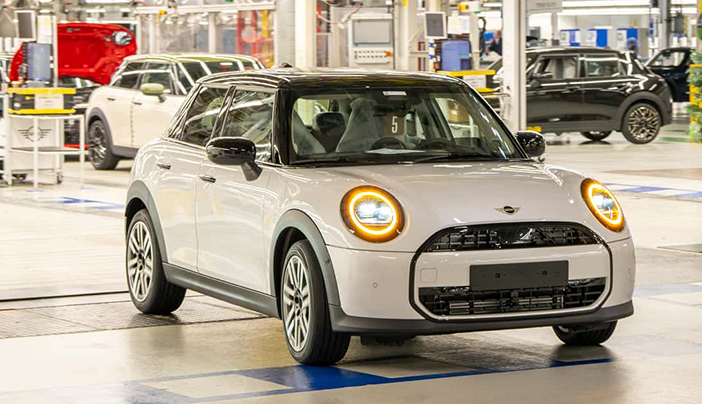
Raymond Wittmann, the BMW board member responsible for production, tied the number to the company’s broader manufacturing push. Wittmann said: “1 million vehicles moved using automated driving technology and the deployment of this technology at 4 sites to date demonstrates the innovative strength and scaling capabilities of our production network”. The Mini plant in Oxford alone logged more than 53.000 automated moves over the past year, making it the newest and 4th site to run the system in daily production. That plant’s experience is shaping how BMW plans the technology’s next expansion into the US. AFW vehicles operate inside defined production and logistics areas, not on public roads. They’re built to react to people, forklifts and other cars moving nearby.
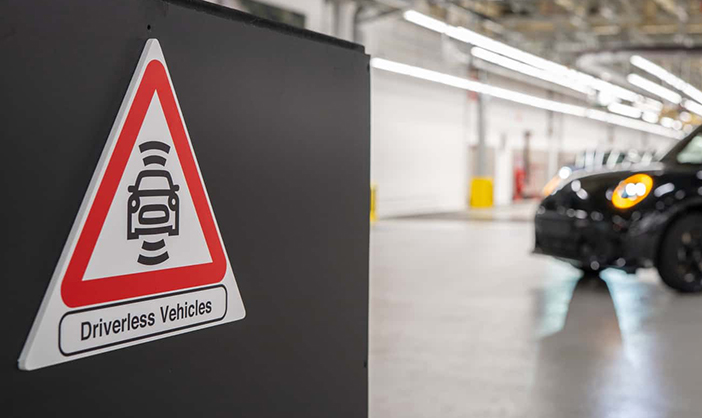
BMW describes the system as the largest LiDAR infrastructure in Europe, feeding the sensors that keep each vehicle aware of its surroundings. At the Mini plant, the automated guided vehicles plug directly into the plant’s existing control systems. That integration doesn’t slow the assembly lines it works alongside. BMW says the system runs around the clock with availability above 99.5 percent. BMW is extending AFW to its factories beyond Germany and the United Kingdom on the strength of that reliability record. The BMW Spartanburg plant becomes the fifth AFW site and the first in the US when the system enters series operation there from 2027. BMW is starting small and expanding once the technology proves itself under real production volume, the same pattern it followed in Europe. BMW has not said how many vehicles Spartanburg will move once AFW is running, but the plant already ranks among the company’s largest manufacturing operations worldwide. +++
+++ MAZDA ’s Skyactiv-X engine is one of the most unusual to be fitted to a mainstream car, with a diesel-like high compression in a petrol-powered setting. There’s now one less car to buy it in, though, with the powertrain notably absent from the rejigged line-up of the Mazda 3. The 3 was 1 of only 2 cars the engine was available in (the other being the CX-30), but the ‘simplified’ range features only the lower-powered, much more conventional 2.5-litre Skyactiv-G, although a choice of manual and automatic transmissions remains on most trim grades. This produces a modest 140 hp, some way behind the Skyactiv-X’s 186 hp. While more straightforward in terms of engines, there’s another trim level to choose from called Homura Plus. From bottom to top, it’s now Prime-Line, Centre-Line, Homura, Exclusive-Line, Homura Plus and Takumi. Along with gloss black interior trim, Prime-Line Mazda 3s now feature emergency lane keeping assistance, an enhanced blind-spot monitoring system, ‘smart brake support’ and emergency lane keeping assistance. A driver attention monitor is now on all models. There are gunmetal grey interior trim pieces in the Exclusive-Line cars, plus a new seat tilt adjustment for the driver, while all models have a new chrome decoration inside the LED headlights. The new Homura Plus upgrades the standard Homura’s spec with a 12-speaker Bose sound system, black leather upholstery, electrically adjustable seats and a 360-degree parking camera. The updated range will go on sale later in 2026, and with no price increase. While the 3 is dropping the Skyactiv-X engine, it will remain in the recently updated CX-30 for the foreseeable future. Eventually, both the -X and -G will be replaced by the incoming Skyactiv-Z. +++
+++ MCLAREN has hinted that the successor to its 750S V8 supercar, due next year, will be called the McL 820, and pack almost as much power as Ferrari’s V12-engined 12Cilindri. McLaren’s first new series-production car since being acquired by its new owner, Abu Dhabi investment fund L’imad, could also be the first to follow a new naming convention established by the limited-run McL 6GT, as suggested by the firm in a publicity stunt. The brand hid the moniker on a giant sculpture of its trademark kiwi mascot, which it placed in Covent Garden as part of a new marketing campaign. New Zealand-born company founder Bruce McLaren used the flightless bird as the logo for his racing team, which later spawned the road car division. McLaren has recently pledged to emphasise its heritage in future communications and products, and has adopted a new logo and typeface inspired by the signage on McLaren’s original workshop. That ties in to the use of McL for the new manual-equipped 6GT supercar, and the ‘McL 820’ teaser suggests it could be carried over to the core line-up too. The new look and naming strategy come as McLaren prepares for significant expansion. It is building a second factory in the United Kingdom, will start assembling its own engines in-house and will grow its line-up with a range of new models.

The ‘McL 820′ will replace the brand’s core supercar, the 750S, which will be retired next year after a decade on sale; in various forms, including the original 720S and the run-out-special 788HS. The company recently announced it was taking final orders for the model. The new supercar will be powered by one of two new hybrid powertrains that McLaren is developing and producing in-house for the first time, likely V8 based and with its power output (in PS) signalled by its name, in standard McLaren practice. That figure translates to 820 hp and would make the new supercar McLaren’s most potent series-production car yet, with comparable reserves to the V12-engined Ferrari 12Cilindri and Aston Martin Vanquish, as well as mid-engined supercars like the Ferrari 296 and Lamborghini Temerario. McLaren chief operating officer Michael Straughan recently said the new engines are “obviously going to start with the current V8 products or the future generation of that”. The new model will arrive at around the same time as McLaren winds down production of its other 2 core models, the Artura V6 and more luxury-focused GT. Plans to replace those 2 models remain under wraps but, McLaren is not planning a ‘firebreak’ pause in production like fellow British brand Jaguar implemented. “A small company like McLaren can’t afford that”, said Straughan. “But we will start to phase in new products as quickly as we possibly can, and it’s not too far away, either”. Traditional supercars will be one of the three pillars forming the new McLaren range. It is also working on a SUV to rival the Porsche Cayenne and will continue to build limited-run Ultimate Series models such as the W1. +++
+++ MERCEDES-BENZ is democratizing electric turbocharging. The technology first appeared in the wild AMG One hypercar, which borrowed heavily from Formula 1, before trickling down to more affordable AMG models from the 43 and 63 series. Now it’s taking another step down the ladder, with the new M 252 LS bringing an electrically assisted turbocharger to regular Mercs. That’s right. You no longer need to buy a performance car to get an electric turbo under the hood. It’s coming to regular Benz models, kicking off with the sensible GLB. The new engine builds on the M 252 launched in 2025. Mercedes hasn’t reinvented its small-displacement powertrain, but it has made a series of changes designed to improve performance, efficiency and refinement. The company developed the electric turbocharger using know-how gained from its F1 program, working closely with Mercedes-AMG High Performance Powertrains (HPP), the British division responsible for developing and manufacturing power units for the Mercedes-AMG Petronas F1 team and its customer teams. The electric turbocharger aims to deliver more immediate throttle response across the rev range, helping the engine build power without the delay traditionally associated with turbocharging. Mercedes says the system also helps reduce fuel consumption, combining better performance with lower emissions. It’s basically a win-win situation. Well, once you exclude the added layer of complexity. Another clever feature: the electric turbocharger can recover up to 2 kW of energy from the exhaust and convert it into electricity. That gives the system a role beyond simply boosting the engine’s output. The 4-pot produces 228 hp, plus an additional 31 hp from its electric turbocharging system. If those figures don’t impress you, keep in mind that Mercedes has already engineered the most powerful 4-cylinder engine ever installed in a production car. The M139 produces up to 469 hp in models such as the C 63 and GLC 63, although poor demand has prompted the company to switch to inline-6-powered 53 models. The new engine debuts in the GLB 250, where it shaves a tenth of a second off the time to reach 100 km/h. At the same time, it cuts CO₂ emissions by about 17 percent compared with the previous model and its M 260 engine, which had a larger 2.0-liter displacement. The electric turbo technology does more than virtually eliminate lag. An electric motor can spin up the turbo independently of exhaust-gas flow, delivering boost sooner, while also acting as a generator to recover energy that would otherwise go to waste. The downside? Electric turbos add cost, weight, and complexity, so Mercedes’ move to bring the technology to a mainstream 1.5-liter engine is surprising. Interestingly, electric turbocharging can sometimes be energy neutral. As an engineer from Mercedes-AMG told me, the electricity the turbo generates while recovering energy can, under certain conditions, be enough to power its electric motor. In other words, the system can use recovered exhaust energy to keep the turbo spinning without necessarily drawing additional power from the car’s electrical system. That’s a neat trick that makes the technology even more appealing as automakers look for ways to improve combustion-engine efficiency without sacrificing performance. Whether the added hardware pays off in everyday driving remains to be seen, but recovering energy that would otherwise go to waste is certainly a clever way to squeeze more out of a combustion engine. Mercedes isn’t the only automaker bringing electric turbocharging to production cars. Porsche also uses the technology in the 911 GTS and 911 Turbo S. This shows there’s still room to improve combustion engines, even in 2026, as EVs continue to gain traction worldwide. +++
+++ A few years ago, MINI went all in on big screens. It launched a new operating system that puts most vehicle information on one large round display in the center of the dashboard, and it’s not going anywhere anytime soon. Round gauges are integral to the brand’s identity and they have been there from the beginning. Over the years, they have moved from the center of the dash to behind the steering wheel and back to the center, but they have always been round. In the digital age, Mini brought that heritage into the modern era with a big round display in the center of the dash, and the automaker is proud of it. In an interview, Alexander Brockhoff, Mini Australia’s general manager, said: “The round display is unique to Mini and we want to keep that as part of the history”. Modern Minis include a head-up display for vital vehicle information, but the screen controls everything else. The interior lacks physical HVAC controls, but it has a volume knob. While Mini has no plans to ditch its round center display, the automaker is open to updating it. Brockhoff told: “At the moment, I think from a design point of view, it’s important that we keep kind of this character alive. And technology will always evolve further to make the integrations even better in the future”. How it could evolve remains to be seen. Consumers aren’t as upset by the screens as they are by the lack of physical switches. If Mini makes any significant cabin changes, we would wager they will add more buttons, as other brands have promised. Mini’s round display also makes standard functions like Apple CarPlay and Android Auto look awkward. The screen-mirroring systems appear as a box-like window: they just weren’t designed for circular screens. The best way to avoid the UI ugliness is to use the native OS. Brockhoff said: “But if you then use the local navigation system, obviously, it uses the whole screen of it. When customers actually go and experience it. I think it works quite well”. The automaker introduced the Mini Interaction Unit and its 9.4-inch OLED display in mid-2023. Mini launched the system in the Cooper Electric and it has spread across the entire line-up. Mini went to great lengths to ensure the display captured the brand’s spunky personality. At its launch, Stefanie Wurst, Mini’s former global boss, said: “We are taking a massive leap into the digital world with the new Mini family and, in so doing, underscoring the charismatic heritage of the brand”. +++
+++ In a wide-reaching shake-up of Stellantis’s European design teams, Citroën’s Pierre Leclerq is moving to OPEL , and will be replaced at the French firm by Renault’s Sandeep Bhambra (the man behind a succession of headline-baiting concept cars). While the changes are yet to be officially announced, sources have revealed that Stellantis Europe design vice-president Gilles Vidal is preparing to unveil a new management structure for the Citroën, DS and Opel studios. The moves come as Opel designer Mark Adams leaves after 24 years with the German-British marque. His successor, Leclerq, has led Citroën styling for 8 years, most recently creating the 2CV concept.
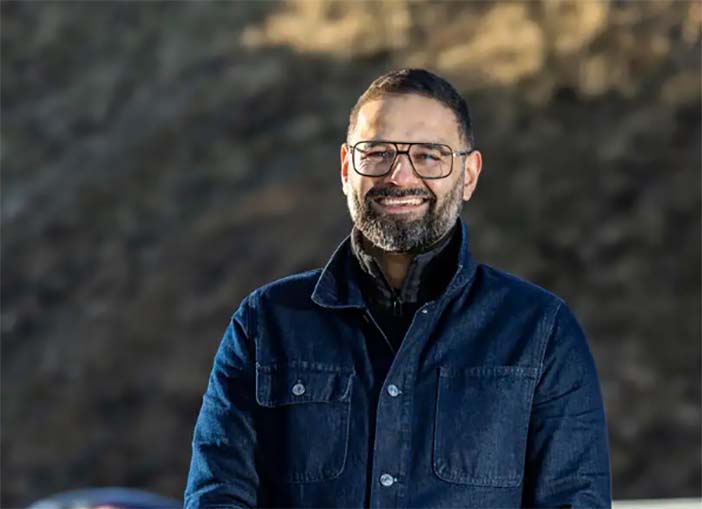
The Belgian’s departure from Paris makes room for Sandeep Bhambra, formerly of Renault, to take over at both Citroën and DS, with design operations for the 2 brands now united and DS designer Thierry Metroz leaving the brand. Bhambra previously worked under Stellantis Europe design chief Gilles Vidal when the 2 men were at Renault, where as boss of advanced design he played a leading role in the designs of several brand-shaping show cars. Since joining Stellantis in October 2025, Vidal has focused primarily on defining the design strategy for its European brands as part of the FaSTLAne plan unveiled in May 2026. A year after his move from Renault, attention is now turning to bringing the design studios into line with the group’s new European brand structure. In September, Stellantis announced a joint management structure for Citroën and DS, headed by Xavier Chardon: marketing, communications, product planning, pricing and customer satisfaction would be shared across the 2 brands. Now design is following. With preparations for the Paris motor show in full swing, Vidal chose to focus communications on the 9 concept cars being unveiled and postpone the official announcement of the new arrangement until after the event. A trusted colleague of Vidal’s from their time together at Renault, Bhambra is credited with the new Renault Twingo and was a potential candidate to succeed him as Renault’s design chief. However, Renault chose former Mercedes-Benz and PSA designer Alexandre Malval. Bhambra subsequently joined Stellantis in April 2026 as vice-president of design strategy. During his 5 years at Renault’s design studio, Bhambra played a leading role in designing the wild R5 Turbo 3E hyperhatch, the 4Ever Trophy concept that previewed the R4, the future-looking Emblème and Scenic Vision show cars, and the aero-focused, single-seat Filante which last year went 1.000 km on a charge at motorway speeds. Alongside merging the Citroën and DS studios, Stellantis must arrange the succession of Mark Adams, who was appointed vice-president of design for then Opel owner General Motors Europe in 2007, and turns 65 in December. The accomplished designer will have spent more than 24 years at Opel. He also led design at Buick and Cadillac in 2012–2013. Adams joined Opel in 2002 as exterior design director, tasked with developing a new exterior design philosophy for the brand. Before that, he held several senior design positions at Ford in both Europe and the US. Speaking on the sidelines of the Paris motor show, Opel CEO Florian Huettl said Adams’s successor “must speak German and understand the culture to fit in”.
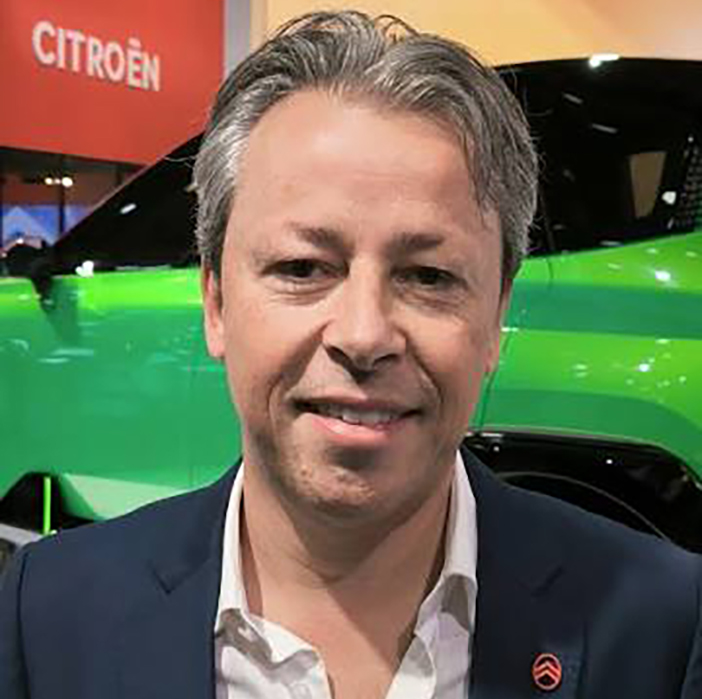
Belgian-born Leclercq fits that brief, having worked for BMW in Munich from 2005 to 2013. The designer behind the Citroën 2CV revival will therefore head to Opel’s home in Rüsselsheim, where a brand-new design centre is currently under construction. While Leclercq will not see the 2CV’s revival through to completion, his next challenge will be to lead the renewal of Opel’s design language, which was previewed in a not very well received, dramatic fashion earlier this month with the unveiling of the STX Concept. By way of a farewell to his employer of 8 years, Leclercq brought together his 2CV and ELO concept cars last weekend at an event in Bastogne, in his native Belgium, where he quietly announced he would be heading to Rüsselsheim. Métroz, 63 years, who has led DS design since 2013, is currently negotiating the next stage of his career within Stellantis. +++
+++ PORSCHE has a hit on its hands, at least if the initial reaction to the Mission S is anything to go by. The recently unveiled concept has received “really overwhelming feedback” from the customers the automaker hopes to attract, according to Chief Financial Officer Jochen Breckner. Speaking during Porsche’s Q3 2026 earnings call this week, the company’s CFO said the Mission S has generated such strong interest that some prospective customers are already asking for paperwork to sign purchase contracts. There’s just one problem: it’s only a “vision model” for now, so it’ll be a while before it becomes a production car. “The Mission S study received really overwhelming feedback from all the stakeholders and groups that we were targeting with that car. From our perspective, that vision model is in terms of design, in terms of positioning of the brand, a great proof point for our strategy. It’s still a vision and a design model, but it received really fantastic feedback, and we are really happy with the feedback we received since then”. Unveiled in New York earlier this month, the Mission S previews a new mid-engined super sports car positioned above the iconic 911. Unlike previous flagship models such as the 959, Carrera GT and 918 Spyder, the new car is intended to become a permanent fixture in Porsche’s line-up rather than a limited-production special. But Porsche has yet to announce technical specifications, pricing, or a production timetable. That suggests it won’t arrive anytime soon, though the company has made it clear the Mission S is more than a single supercar. Instead, it previews a new platform expected to spawn multiple vehicles. Although some might think it’s merely a styling exercise, the Mission S is a sign of great things to come. While Porsche is keeping the specs under wraps, it has already made it clear that the car will have a petrol engine. The reason is simple: the company’s research shows its wealthiest buyers aren’t interested in an electric supercar.
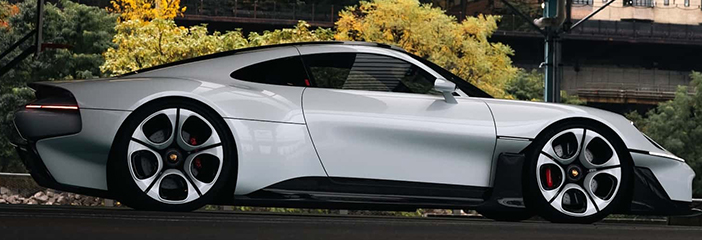
The platform is being engineered to accommodate a manual transmission, but a stick shift will only happen if demand is high enough, which hopefully it will be. As for the engine, Porsche is keeping its options open, considering both a pure ICE setup and a hybrid powertrain. Rumors persist about a flat-8 engine, but nothing is official until Zuffenhausen says so. For what it’s worth, some people who attended the debut in New York said the car sounded suspiciously like it had a boxer engine. Either way, it definitely had a combustion engine, which is somewhat unusual because concepts often use tiny electric motors to move around onstage. But yes, we’ll have to wait a while before the Mission S becomes a production car. How long? Breckner said, “It will all take some time”, suggesting customer deliveries won’t begin until closer to the end of the decade, or perhaps even later. The Mission S fits into Porsche’s much bigger plan to move further upmarket and make more money from fewer cars. The German automaker wants to lower its break-even point to fewer than 200.000 annual deliveries, and it’s increasingly looking toward ultra-expensive, highly exclusive models rather than chasing volume. To that end, Porsche’s Sonderwunsch division is already working on 15 one-off cars priced from just under $2 million to around $15 million, while future range-toppers could cost more than three times as much as an entry-level 911. The strategy extends beyond bespoke commissions. Porsche is also exploring limited-production “few-off” models and charging up to $800.000 to restore a Carrera GT, excluding the car’s cost. The goal is clear: sell fewer cars, but make each one more profitable, and give wealthy customers more reasons to spend a not-so-small fortune in Stuttgart. +++
+++ TOYOTA has long said combustion engines won’t disappear anytime soon, even as much of the automotive industry shifts toward electric vehicles. In 2026, developing an entirely new family of internal combustion engines is practically unheard of, making the Japanese automaker’s commitment to gasoline power all the more unusual. Most automakers are updating existing engines to comply with increasingly strict emissions regulations, including the upcoming Euro 7 rules. All-new engine families have become rare as manufacturers pour money into electrification and try to cut development costs. Toyota, however, is taking a different approach: developing a new generation of combustion engines and trying to sell them to other automakers. Toyota expects to generate around €1.5 billion annually from external powertrain sales by 2032. The company is targeting €500 million in orders this year, with deliveries of its next-generation engines and hybrid powertrains expected to begin as early as 2027. Toyota hasn’t named potential customers, but it already has close ties with several domestic brands. Daihatsu is a wholly owned subsidiary, while Toyota holds 21.5 percent of Subaru’s voting rights and a 5.1 percent stake in Mazda. This could give the company access to a combined production ecosystem of roughly 16 million vehicles annually, more than half of which wear Toyota, Lexus or Daihatsu badges. The company already supplies components and powertrain technology to some of its partners. The Mazda 2 is identical to Toyota’s Yaris. Subaru, meanwhile, uses electrical components from Toyota in its latest hybrid tech, and Suzuki has adopted various Toyota engines. However, that doesn’t mean every partner will rush to adopt the new engines. Mazda is developing its own hybrid system for the CX-5, paired with a next-generation 4-pot called Skyactiv-Z, aka the “ideal internal combustion engine”. Subaru also plans to keep developing its signature horizontally opposed boxer engines, with engineers targeting 50% thermal efficiency. In 2024, the 3 companies teamed up to develop engines together. Mazda and Subaru have their own engineering priorities and brand identities to protect, so Toyota will need to make a compelling financial and technical case for its new powertrains. Still, sharing development costs and increasing production volumes could make the deal attractive to manufacturers that don’t want to shoulder the expense of developing an entirely new engine family themselves. Toyota, meanwhile, could spread its investment across a much larger customer base. For now, Toyota’s priority is clear. While the industry races to electrify, the world’s largest automaker is betting that cleaner combustion engines will remain relevant for years to come. Rather than keeping its latest technology to itself, Toyota wants to turn it into a lucrative business by getting other automakers to buy in, too. Toyota previewed its next-generation combustion engines in 2024. The new family includes a naturally aspirated 1.5-liter 4-cylinder, a turbocharged version of the same engine and a 2.0-liter turbocharged 4-cylinder. Toyota says the new units will be more compact and efficient than their predecessors, with the turbocharged 1.5-liter targeting the same power output as a conventional 2.5-liter naturally aspirated engine. The larger 2.0-liter turbo, meanwhile, aims to deliver more power than today’s 2.4-liter turbo while improving fuel economy. Toyota is developing these engines with electrification in mind, rather than treating combustion and electric power as mutually exclusive technologies. The smaller engines will work with hybrid systems, while the 2.0-liter turbo can also operate independently or as part of an electrified setup. Their compact dimensions should make them easier to package across different vehicle platforms, including those designed to accommodate multiple powertrain options. As for the twin-turbocharged 4.0-liter V8 developed for the GR GT, Toyota isn’t currently including it in its external powertrain sales plans. The engine could power something other than a supercar, so we won’t rule out seeing it in a Lexus or, especially, a Century. The latter is now a standalone brand at the top of Toyota’s hierarchy, so it clearly deserves the best. +++