
+++ Toyota surprised enthusiasts by making the Supra available with a manual transmission for the 2023 model year. BMW ’s sister car, the Z4, remains automatic-only, but a recent report claims that the roadster will enter the 2023 model year with an available stick-shift. Anonymous sources say that the M40i variant of the Z4 could offer a 6-speed manual in the not-too-distant future. It sounds like a final decision hasn’t been made yet, but the stick-shifted Z4 is “under active consideration” in Munich. And, while nothing is official, the report is certainly credible: If it fits in the Supra, it stands to reason that it fits in the Z4. The 2 cars are closely related beneath the sheetmetal, the Toyota notably uses BMW-sourced engines, and they’re built on the same assembly line in Austria. The 6-speed will be part of a mid-cycle update that will also include subtle design tweaks. We don’t know if 2023 will bring mechanical updates. As of writing, the Z4 M40i is powered by a turbocharged, 3.0-liter straight-six engine rated at 340 horsepower. While it appears that the entry-level Z4 sDrive20i and sDrive30i will carry on exclusively with an automatic transmission, we should be thankful that we’re getting at least one variant with a stick. The 3-pedal Z4 will make its debut in late 2022 and reach showrooms shortly after. +++
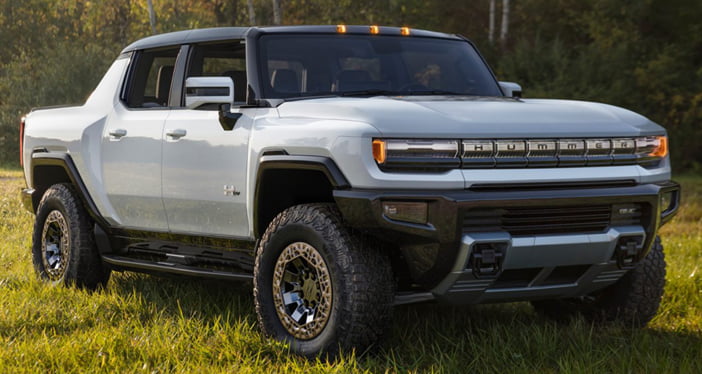
+++ When it comes to exciting EVs, it’s hard to beat the new GMC HUMMER . The brand-new GMC Hummer is General Motors’ showcase of just how far it can push EV technology. This technological marvel may produce impressive results and capability, but the GMC Hummer falls short of the electric vehicle’s promise of reduced emissions. A new massive Hummer seems to pop up every time the economy reaches a peak and goes on sale just in time for the impending recession. It’s no secret that the Hummer name is associated with off-road decadence rather than efficiency, however, this time, with its EV powertrain the new GMC Hummer was set to be the first environmentally friendly Hummer even built. According to a study by ACEEE, a non-profit research organisation focused on reducing energy waste and negating the impacts of climate change, the new GMC Hummer EV isn’t as green as it seems. Their research shows that the small Chevrolet Bolt (Opel Ampera-E) emits 92 grams of carbon dioxide per mile while the new Hummer EV is responsible for 341 grams of carbon dioxide per mile. Although the Hummer EV’s number is much higher than that of a smaller EV, it’s important to note that the Hummer EV is a purpose-built performance machine meant to get people excited about electric trucks. This 1.000-bhp off-road powerhouse may emit 21 grams of carbon dioxide per mile more than a petrol Chevrolet Malibu, but this sedan can’t do a 0 to 100 kph time of 3.0 seconds. The new Hummer EV is also far more efficient than the original H1 Hummer the emitted 889 grams of carbon dioxide per mile. In my review of the Hummer EV, we were blown away by this massive machine’s capability. Sure, the Hummer EV isn’t an environmentally friendly vehicle, but that just makes it a true Hummer product. The Hummer EV simply uses EV technology to deliver a more capable machine while also reducing emissions compared to past Hummers like the gas-guzzling H1. +++
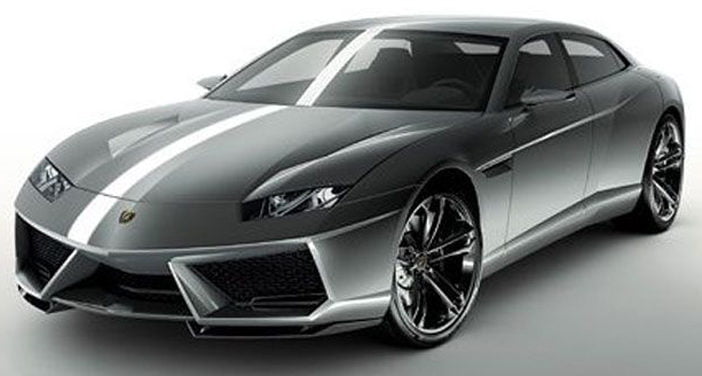
+++ The first fully electric LAMBORGHINI will be an all-new, radically styled 2+2 crossover arriving in 2028, adding a fourth model line to the Italian brand’s range, and it will be swiftly followed by an electric-only second-generation Urus, CEO Stephan Winkelmann has revealed. Intriguingly, the launch of the electric duo also raises the possibility of the firm’s sports cars (currently comprising the Lamborghini Huracán and Aventador) keeping petrol power as part of a plug-in hybrid system for at least 2 more generations, the first launching next year and the second at the turn of the decade. This means they could be on sale until at least 2035, when most regions are expected to legislate full electrification for new cars. The continuation of the sports cars as combustion-engine models is a potential consequence of the new EVs dramatically reducing Lamborghini’s fleet-average CO2 emissions. Moreover, the fact it remains a relatively low-volume manufacturer, despite setting a new production record of 8.405 last year, means it could be subject to different emissions regulations to mainstream makers. Winkelmann also pointed to ongoing talks about the use of synthetic fuels as another avenue that could potentially help Sant’Agata meet emissions targets while still building small volumes of hybridised ICE cars, although legislators are currently debating the viability of this. Winkelmann said: “The first step is to launch two fully electric cars by 2030. As a result of that, we have some time to decide whether we can stay with the internal combustion engines or if we have to go fully electric. The pressure to decide the final details isn’t here yet. If the European Parliament decides on a ban, that will influence us, of course. But there are also markets other than Europe that we must consider, as well as regulations that we are still waiting for clarity on, for where we go next. Let’s say that we will welcome harmonisation of global plans. There are so many markets with so many different plans that we must take all the time we have to consider the best route forward. It’s not simple. Of course, we must make decisions well ahead of any deadlines, and it might be that we can’t wait for the regulations to commit, but this strategy with the two fully electric cars is a decision that gives us more time to consider”. While Winkelmann didn’t offer specifics, the new 2+2 crossover is expected to draw light inspiration from the Lamborghini Estoque saloon concept (photo), which was revealed in 2008 but never made production. Lamborghini insiders suggested at the time that there was significant customer support for the car but that the cost of its development versus projected sales meant it didn’t make it from the Volkswagen Group’s prioritisation list to production. Funds were instead focused on a rapid development of its SUV offerings, including the ultra-successful Urus, of which 5.021 examples were sold last year. However, instead of being designed around a four-door saloon silhouette, the EV is expected to sit higher, as a result of its floor-mounted battery pack, and to have significantly more dramatic styling to highlight that its powertrain differentiates it from other Lamborghinis. While it is loosely being described as a crossover, Winkelmann highlighted that the different packaging requirements of an EV “open up interesting avenues” in terms of its eventual design. Lamborghini design boss Mitja Borkert recently asserted that all future vehicles from the firm will still “look like spaceships”. The 2+2 might also be a 2-door, given that it is likely to use the same Bentley/ Audi-developed Artemis platform that will underpin Bentley’s new family of EVs. These include its mooted new range-topper, which is loosely described as a successor to the Bentley Mulsanne limousine. The popularity of superluxury 4-door saloons has waned in recent years. Market analyst Jato Dynamics’ data suggests that they have fallen from 21.6% of the sector’s sales mix in 2010 to just 9.1% today. There is a possibility of the 2+2’s starting price being in excess of €400.000 in the Netherlands and topping Lamborghini’s line-up in terms of price. However, the impact of hybridisation on the cost of its most expensive model today, the Aventador, has yet to be revealed. Bentley is set to introduce its first electric car in 2025, having committed to launching five EVs by 2030. In light of Winkelmann’s acknowledgement that the Urus will go electric by 2030, it is inevitable that the twinned Bentley Bentayga will as well. Winkelmann confirmed that the strategy to launch the 2+2 and then the new Lamborghini Urus was a result of family-oriented customers being more open to going electric. “For now, electrification suits these kinds of vehicles”, he said. “That will develop, but we must plan for what we know will work best today. There are definitions that I think no electric car in our sector has yet resolved sufficiently: not just acceleration and handling behaviour but also responsiveness, braking feel and multiple acceleration protocols. These are unproven in high-performance EVs and things we must spend the next years working out”. The revelations from an interview provide the first details to support Lamborghini’s stated electrification plan, which was announced 1 year ago and which will come to fruition over the next decade. Called Direzione Cor Tauri, referring prosaically to the Latin name for a bull’s heart and the brightest star of the constellation of Taurus, the plan lays out a 3-step strategy towards electrification. The initial stage, a celebration of pure-ICE specials, is set to conclude this year, ahead of the launch of Lamborghini’s first plug-in hybrid, the successor to the Aventador. This will be revealed later this year before sales start in 2023. By the end of 2024, all 3 of Lamborghini’s models (the Aventador, Huracán and Urus) will be sold as plug-in hybrids. That will allow the company to record official CO2 outputs at half today’s levels by 2025, the pair of EVs then providing a further significant reduction. “What’s clear is that customer perceptions have shifted”, said Winkelmann. “They are aware of the legislation and interested in the technology so long as it marries sustainability with enhanced performance from what has gone before. That’s why Lamborghini’s hybridisation phase is coming first: that has been digested and accepted by the customer base. Even the majority of petrolheads say that they have accepted our vision on that. And in turn, that opens the door for a new breed of customer to look at full electrification”. Question for Winkelmann: does electrification open up the possibility of even more Lamborghini model lines? His answer: “Going from a 2-model company to a 3-model company with the Urus in 2018 was a huge step. The investment, in terms of money and people, is huge. We must make each step work before we look to take further ones. The new car is our next hurdle”. Q: It looks like we’re heading for recession, so is this the right time to expand? A: “So far, we still have good news, in that we’re taking more orders than we have production capacity, meaning waiting times are more than a year. But I do see dark clouds: interest rates rising, inflation, raw material prices, energy prices. It’s a global issue that will have an impact of some kind. But our mission is to meet the challenges”. Q: Given its success, how much does the Urus protect you? A: “It definitely gives us more stability. At the time, launching it felt like a real bet, but it has been a huge success and given us the space to invest in a fourth model line. If we hadn’t done it, it wouldn’t have just been our future that would be harder but also our present”. Q: Is there more room in the market for other SUVs? A: “There are limits to what we can do, both in terms of production numbers, which we don’t want to extend too far, and in terms of pricing, which we don’t want to take too low”. Q: What about more special editions? A: “We will continue to make them once in a while but always with an eye not to overload the market. The market is still very buoyant for super-special cars, but we have to explore what’s feasible. The key here is we pre-explore the opportunities, pre-selling to customers who buy into the ideas. If the interest isn’t there, then we don’t have to take a risk”. +++
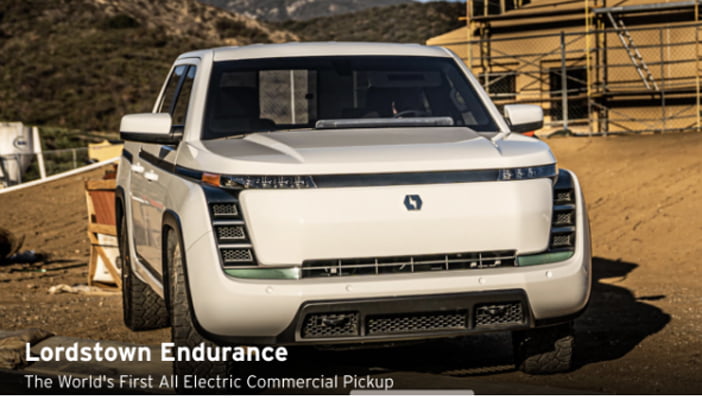
+++ Electric vehicle firm LORDSTOWN MOTORS replaced its chief executive with insider and automotive industry veteran Edward Hightower on Tuesday in a management shake-up aimed at ramping up efforts to start production of its pickup. Hightower, president of the company since November, takes the reins from Daniel Ninivaggi, who will become executive chairman and focus on partnerships and capital raising. The former Ford and General Motors executive takes the helm at a crucial time for the four-year-old company, which plans to start production of its Endurance pickup with Foxconn in the third quarter. Hightower has a track record in making cars and having an engineer at the helm might create an edge for Lordstown, brokerage AJ Bell analyst Danni Hewson said. “The fact the old boss isn’t leaving the company does ratchet down the tension for investors”, Hewson added. While demand for electric vehicles has surged globally, supply chain disruptions and rising material costs have made it tough for companies to raise output and meet red-hot demand. Lordstown Motors has also struggled with funding and had to sell certain assets to Taiwan-based Foxconn in May to secure capital essential for production. The company was also targeted by short-seller Hindenburg Research last year, which prompted it to launch an internal investigation and later led to the departure of its then CEO and CFO. In its statement on Tuesday, Lordstown Motors also named Donna Bell, a former Ford executive with nearly 3 decades of experience in automotive product development, as its executive vice president of product creation, engineering and supply chain. Jane Ritson-Parsons, who took over the role of chief commercial officer in November, will become an advisor, it said. +++
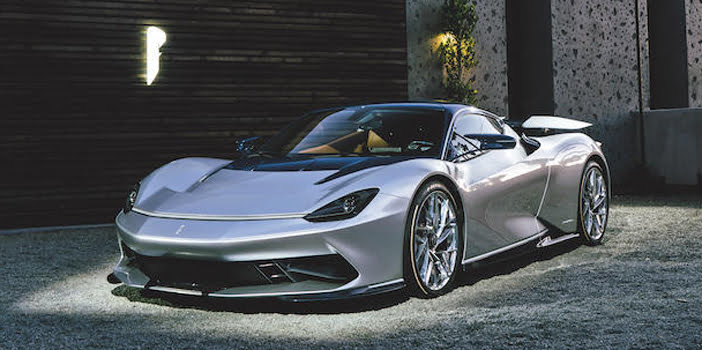
+++ Announced in 2018 as the PF0, the PININFARINA Battista hypercar has finally entered series production. The 1.900+ horsepower EV is made largely by hand in Cambiano, Italy, and the first of 150 planned examples will be displayed in California during Monterey Car Week next month. Building a Battista is a Herculean task. The factory is split into 14 zones, and production of a car takes a minimum of 10 weeks. Pininfarina notes that each car is assembled by a team of 10 specialists who invest more than 1.250 hours of work. That’s just the standard model; the limited-edition Anniversario model unveiled in 2020 requires an 18-week-long production process and takes about 100 additional hours to build. First, the rolling chassis (which includes the powertrain, the carbon fiber monocoque, and an array of electrical components) goes through a comprehensive quality check. The body is added when everything checks out, and the car is then measured to ensure that every dimension, parameter, and gap is accurate. Next, the body is removed and sent to the paint shop while a separate team assembles the interior. Other parts (like the underbody panels) are then installed before more quality-related measurements are taken. When the car is complete, it gets blasted with water to trace any and all leaks, evaluated in a light tunnel, wrapped in protective film, and road-tested on different surfaces. Clients are invited to participate in their Battista’s design process. They can work directly with Pininfarina’s designers to configure their car by mixing and matching different paint colors and selecting from a long list of upholstery and trim materials. The company notes that there are up to “13.9 quintillion” exterior combinations and 128 million possible interior configurations. Needless to say, the odds of seeing two units of the Battista that are exactly identical will be relatively low. Customers can also stop by the factory to see their car as it’s being built. Like other hypercar manufacturers, Pininfarina has trained a team of so-called flying doctors whose job is to diagnose and repair cars regardless of where they’re located. Interestingly, buyers have 3 service plans to choose from, including one called Eterna that includes a full replacement body that’s painted at the time of production. This should make it easier to replace, say, the hood in 15 years. Pininfarina will begin delivering the Battista in the summer of 2022. Pricing starts at $2.5 million. +++
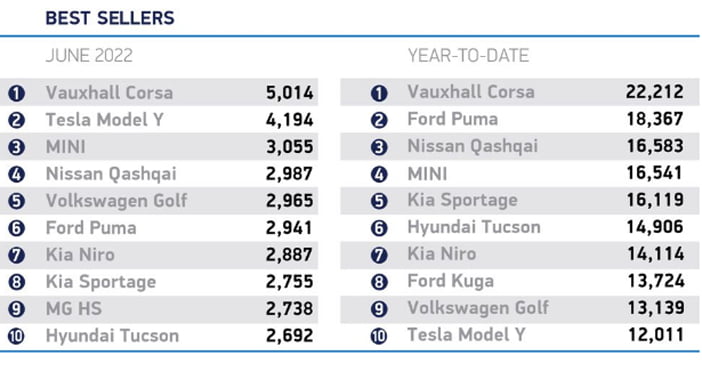
+++ In the UNITED KINGDOM , new passenger car registrations decreased in June by 24.3% year-over-year to 140.948, which is described as the weakest performance for the month since 1996. Also the first half of the year was pretty challenging with 802.079 units (down 11.9% year-over-year). The Society of Motor Manufacturers and Traders (SMMT) notes that the main problem in the UK right now is the ongoing challenges in component supply, which limits the availability of new cars. Also, the plug-in electric car segment (PHEV and all-electric) has been affected by the supply issues and decreased by 4.8% year-over-year in June, to 30.451. The only positive thing is that the plug-in share expanded to 21.6% (from 17.2% a year ago). In the case of the plug-in category, the all-electric car sales keep growing, but the rate of growth slowed down to almost 15% year-over-year last month. The plug-in hybrids are already in the red for 4 consecutive months with a quite significant -36% in June. All-electric cars had a marketshare of 16.1% and PHEVs 5.5%. So far this year, more than 166,000 new passenger plug-in cars were registered in the UK, reaching an average market share of over 20.8% (all-electric cars 14.4% and PHEVs 6.4%). “The semiconductor shortage is stifling the new car market even more than last year’s lockdown. Electric vehicle demand continues to be the one bright spot, as more electric cars than ever take to the road, but while this growth is welcome it is not yet enough to offset weak overall volumes, which has huge implications for fleet renewal and our ability to meet overall carbon reduction targets. With motorists facing rising fuel costs, however, the switch to an electric car makes ever more sense and the industry is working hard to improve supply and prioritise deliveries of these new technologies given the savings they can afford drivers”, a spokesman of the SMMT said. In June, the Tesla Model Y was the second most registered model in the UK with 4.194 units, which enabled it to enter the top 10 for the first half of the year with 12.011 units. The Tesla Model Y is the top-selling all-electric model in the country this year. It’s noteworthy that the Vauxhall Corsa-e (the top model overall) also includes an all-electric version, which noted 2.677 units Year-To-Date (about 12% out of the total 22.212 YTD). +++
+++ New details have emerged about VOLVO ’s future electric vehicle plant in Slovakia, which will start building next-generation EVs in 2026 after a €1.2 billion investment. The automaker’s first new factory in Europe since 1965 will build cars based on a successor to the EV-only SPA2 platform, which will soon underpin Volvo’s upcoming flagship SUV and the Polestar 3 sister model; both expected to enter production at the carmaker’s plant in Charleston, South Carolina later this year. Volvo Cars’ head of global manufacturing, Geert Bruyneel, confirmed that EVs made in Slovakia will use a successor to SPA2 and said the architecture will be the company’s most advanced at the start of production. The evolution of the SPA2 architecture planned for Kosice will be done by Volvo and shared with sibling brands owned by Zhejiang Geely Holding, such as Polestar, Geely, Lynk & Co and Lotus. Bruyneel and Volvo’s head of industrial strategy, Erik Severinson, declined to say which car would be made at the new factory in Kosice, Slovakia. The carmaker uses the current generation of SPA (Scalable Product Architecture) on models such as the Volvo XC90 and XC60 midsize and compact luxury SUVs, so it would be logical to build an all-electric successor to the XC60 at the new plant. Another model that would fit the bill is a future electric crossover codenamed V546 that will slot between the XC60 and XC90 in size when it debuts sometime in 2025. Volvo’s new plant in Slovakia will utilise megacasting for large aluminium body parts, Severinson revealed, adding that the switch to the new technique for car construction will mark “the next generation in our technology journey”. The new plant in Slovakia gives us a once-in-a-lifetime opportunity to put the most efficient state-of-the-art factory in place”, Volvo Cars’ head of global manufacturing, Geert Bruyneel, said. Asked whether Volvo plants to add battery or electric motor production at the Kosice factory, Bruyneel said that while those decisions still need to be made, Volvo has room to expand if needed. The Swedish carmaker’s next flagship SUV, which will replace the XC90 as the brand’s flagship and will inaugurate the SPA2 platform, will be fully electric. Volvo hasn’t yet disclosed the model’s name, but has said it will break the tradition of using alphanumeric names on future vehicles. The name Embla appears to be among those considered after it was discovered that Volvo filed for trademark protection last October for it, which in Norse mythology is the name of the first woman. +++