
+++ Two Japanese automakers on Wednesday unveiled measures to boost their capacity to procure BATTERIES , with Nissan saying it will acquire one of its key suppliers, as the producers look to accelerate the development of electric vehicles. The announcements come as automakers worldwide expand their efforts to roll out the less-polluting, electrified cars amid stricter environmental regulations. Nissan said it will acquire lithium-ion battery maker Vehicle Energy Japan for an undisclosed sum to secure a stable supply of batteries and facilitate the development of next-generation batteries. The automaker said it will buy the 47% stake in Vehicle Energy Japan held by the state-backed fund INCJ, and purchase more shares to be issued by the battery maker. Vehicle Energy is currently providing lithium-ion batteries to Nissan vehicles such as its compact car Note. With the deal, Vehicle Energy will become a consolidated subsidiary of Nissan, and its existing shareholders Maxell, another battery manufacturer, and Hitachi Astemo, an auto parts maker, will continue to hold their stakes, according to Nissan. Also on Wednesday, Honda said its Chinese unit will set up a joint venture later this month with local automakers Dongfeng Motor and Guangzhou Automobile Group to jointly procure EV batteries. The Japanese automaker said it will strengthen its partnership with Chinese automobile battery giant Contemporary Amperex Technology, commonly known as CATL, to beef up its battery supply chain. Honda said last month that together with LG Energy Solution, it will spend $4.4 billion to build an EV battery plant in the United States. Toyota said in the same month it will invest up to ¥730 billion in the U.S. and Japan to increase its battery production capacity. +++
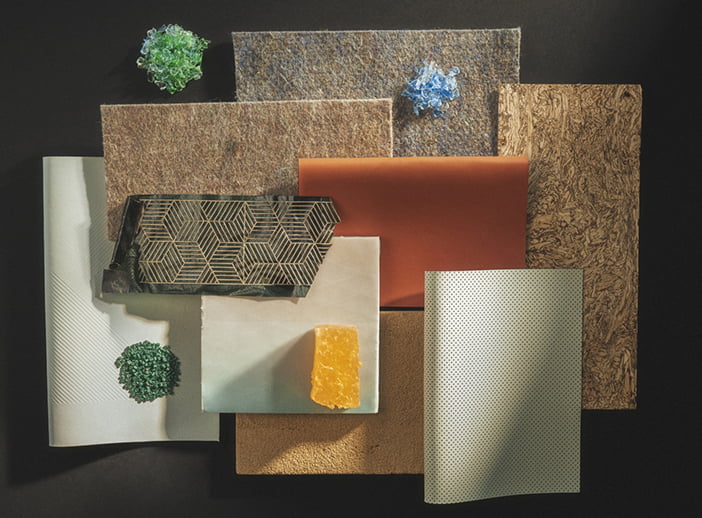
+++ With a range of newly developed materials, BMW hopes to reduce the emissions created in the production of its traditionally leather surfaces by 85 percent. Cow hide, for all its luxurious and hard-wearing nature, is far from green as cows produce lots of methane gas. Making matters even worse, is that rainforests are sometimes cut down to give cows land to live on. BMW says 80 percent of emissions produced in the preparation of leather for its vehicles comes from methane emitted by cows. That compares to the 20 percent created during tanning and processing, so BMW is looking to cut cows out of the picture. Part of its commitment to achieve climate neutrality by 2050, BMW has developed leather replacements it believes will wear just as well and feel just as good as leather. The only tip off will be a new grain in the faux material. BMW has worked hard to ensure the materials are ready for the difficulties of being in a car. It says that ensuring they could withstand use on a steering wheel was one of the most challenging aspects. “With a steering wheel made from a high-quality vegan surface material, we are fulfilling the wishes of our customers who do not want to make any compromises in terms of look, feel and functionality”, said Uwe Köhler, the head of development for body, exterior trim and interiors at BMW. “The innovative material withstands wear and tear caused by abrasion, perspiration and moisture and has all the desirable properties of leather”. The automaker plans to offer interiors with fully vegan touchpoints, but there will still be some components that use animal products. These include gelatin used for protective coatings, lanolin in paints, tallow as an additive in some elastomers, and beeswax as a flux for paint – among others. However, BMW says these will amount to less than one percent of the interior. In addition, the automaker is working to make other materials that were already vegan, such as carpets, easier to recycle. By making these out of a single material (rather than a mix), they are easier to break down and reuse later, saving as much as 23.000 tonnes of CO2 and 1.600 tonnes of waste per year. The automaker will offer the vegan option in certain BMW and MINI vehicles, starting in 2023. +++
+++ HYUNDAI has confirmed that the forthcoming Ioniq 5 N will be much faster than the i30 N and serve as the new flagship of the performance division. Ahead of the EV’s expected debut towards the end of this year, former head of the N division and Hyundai’s current executive technical advisor, Albert Biermann, gave an interview and provided some hints about how much performance the car will offer. “It will be much faster (than the Hyundai i30 N)”, he confirmed. “How could it be slower? It has almost 600 horsepower”. Biermann went on to reveal that the final horsepower figure has yet to be finalized, noting that it “could be 580, 600 or 620 hp”. These figures are roughly in line with the 577 hp of the Kia EV6 GT that is tipped to share its powertrain with the Ioniq 5 N. While the car will be quick, Biermann said that will not be the key focus of it. “Faster doesn’t matter”, he said, “it’s about grin, heartbeat. The question is how much fun is it? How big is your grin?” One of the key reasons why Hyundai’s current N models are so fun to drive is the sound of their exhaust systems. Biermann acknowledged that the automaker will add some kind of soundtrack to the high-performance EV. “That is the biggest challenge”, he told. “The speed is already there, we have tonnes of speed. When I joined the company we talked a lot about cutting noise, now we talk about adding sound to electric cars to give the driver a nice feeling, some excitement. As for the ‘popcorn’ sounds, it is hard to mimic a dynamic explosion in a combustion system using only audio speakers inside the cabin. Sound is important, of course, but it’s not the whole game”. Unlike all other existing Hyundai N models, the Ioniq 5 N will be all-wheel drive, although Biermann noted that it will include a ‘drift’ mode. +++
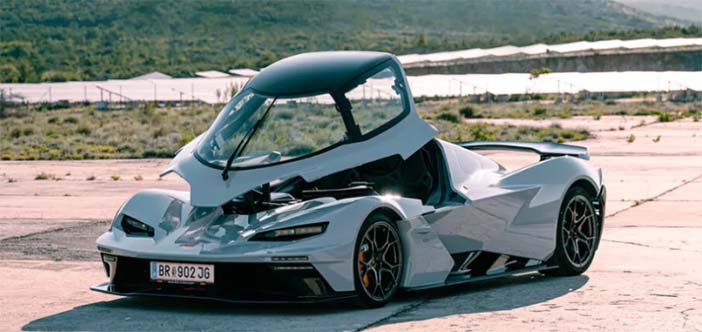
+++ KTM kept its promise of launching a street-legal version of the track-only X-Bow GT2 unveiled in 2020. Called X-Bow GT-XR, the sportscar shares numerous competition-proven parts with its race-going sibling but gains a number of features added to improve comfort. Power for the GT-XR comes from a turbocharged, 2.5-liter 5-cylinder engine sourced from Audi and tuned to develop 517 hp and 576 Nm. If those figures don’t sound supercar-worthy, keep in mind that the latest addition to the KTM range weighs merely 1.260 kilos. Put another way, it has more power than the last-generation Mercedes-AMG C 63 S yet it weighs less than a Subaru BRZ. Mid-mounted, the 5-cylinder spins the rear wheels via a 7-speed dual-clutch automatic transmission and a mechanical limited-slip differential. KTM quotes a 3.4-second sprint from 0 to 100 kph and a top speed of 280 kph. It’s not all about straight-line speed, though. On the track, the GT-XR benefits from an adjustable suspension system, massive brakes (carbon ceramic units are optional), and a data logging system. On a road trip, the driver can count on a driving range of over 1.000 miles thanks in part to a 80 liter fuel tank. KTM retained the GT2’s power-operated, fighter-jet-like canopy, which tilts forward to provide access to the cabin, and the GT-XR looks a lot like the GT2. It’s low, wide, and a lot less generic-looking than many other low-volume supercars. The monocoque and body panels are made with carbon fiber to help keep weight in check, and there’s a lot more going on in the aerodynamic department than initially meets the eye. KTM notes that the suspension system’s components are aerodynamically optimized and that it fitted the GT-XR with an innovative system called AirCurtain that routes the vortices generated by the front spoiler around the floor to create an air seal around the car. While the GT-XR is essentially a GT2 made just tame enough to qualify for street-legal status, it’s not as stripped-out as you might expect. It features airconditioning, a digital rear-view mirror, USB-C charging ports and Bluetooth connectivity. Trunk space checks in at about 200 liters, which is fine for the segment, and buyers can order a set of custom-fitted luggage developed with Meindl. It can’t hide its race car genes, however: it features a pair of carbon fiber bucket seats with harnesses and a quick-release steering with with an integrated display. Built in Graz, Austria, the KTM X-Bow GT-XR is on sale now with a base price of about €425.000 in the Netherlands. +++
+++ The updated version of the MERCEDES GLA is being put through its paces at a German race track ahead of its launch next year. As with the CLA Saloon and Shooting Brake, the changes appear to be concentrated around the front and rear fascias. Up front, the headlights have been revised to feature straighter daytime running lights emulating those of the C-Class, while the grille inlay’s shape has been subtly tweaked. The rear lights have been reworked in line with the new GLC. Whereas the CLA test cars took on a stealthier appearance (having ditched most of the chrome present on the current cars) the facelifted GLA features it in abundance: around the side windows, on the door handles and on the lower rear bumper. Similarly subtle tweaks are expected inside the new GLA, including a software update for the infotainment screens’ MBUX operating system, and a new design for the centre console. Given that it was spotted testing at a race track, the GLA’s suspension is expected to be revised to further refine its already adept handling. However, few other changes are likely to be introduced under the skin. The current engine line-up ranges from the 163 hp GLA 200 petrol engine to 2 diesels and the 250e PHEV with a 60 km electric-only range. The PHEV may get a slightly larger battery to push it above 80 km of range and thus into a more friendly company car tax bracket. The hardcore 421 hp Mercedes-AMG GLA 45 S, which crowns the GLA range, could be tuned to wring marginally more power and torque from its turbocharged 2.0-litre 4-pot. The appearance of a facelifted GLA test car follows the recent emergence of the updated CLA and A-Class, hinting that Mercedes is continuing to push its more affordable models. This is despite CEO Ola Källenius’s statement in May that Mercedes is “not going to compete with volume makers” any longer, which also implied the firm is going to ditch discounts. Given Mercedes’ push back towards the luxury segment (and higher profit margins to mitigate production figures dwindled by industry-wide parts shortages) the updated GLA is expected to be more costly than the current car. As such, the entry-level trim is expected to be ditched, with AMG Line becoming the new entry-level version. Adjusting figures to reflect inflation and increased production costs, the new starting price is likely to be a lot higher. This would not drastically change the GLA’s positioning (pitting it against the Audi Q3, BMW X1, Range Rover Evoque and the Volvo XC40) but it would make it one of the more expensive premium crossovers available. +++
+++ The secret behind Elon Musk’s goal of selling 20 million TESLA cars a year by 2030 lies in its pioneering battery technology. The good news is that by using bigger cells and a new process to dry-coat electrodes, Tesla could halve the cost of a Model Y battery, saving more than 8% of the car’s starting price, battery experts with ties to the company said. The bad news is that it’s only halfway there, according to 12 experts close to Tesla or familiar with its new technology. That’s because the dry-coating technique used to produce the bigger cells in Tesla’s 4680 battery is so new and unproven the company is having trouble scaling up manufacturing to the point where the big cost savings kick in, the experts told. “They just aren’t ready for mass production”, said one of the experts close to Tesla. Still, the gains Tesla has already made in cutting battery production costs in the past 2 years could help boost profits and extend its lead over most electric vehicle (EV) rivals. Musk’s promised improvements in battery cost and performance are seen by investors as critical to Tesla’s quest to usher in an era where it can sell a $25,000 EV for a profit, and stand a better chance of hitting its 2030 targets. Battery systems are the most expensive single element in most EVs, so making lower-cost, high-performance packs is key to producing affordable electric cars that can go toe to toe with combustion-engine rivals on sticker prices. Tesla is one of only a handful of major automakers that produce their own EV batteries and by manufacturing Model Y cells at U.S. plants, the SUV will remain eligible for U.S. tax credits when many rival EVs may no longer qualify. Among the 12 battery experts Reuters spoke with, nine have close ties to Tesla and three of the nine have examined Tesla’s new and old battery technology inside and out through teardowns. The sources predict that Tesla will find it difficult to fully implement the new dry-coating manufacturing process before the end of this year, and perhaps not until 2023. Stan Whittingham, a co-inventor of lithium-ion batteries and a 2019 Nobel laureate, believes Tesla chief executive Elon Musk has been overly optimistic on the time frame for commercializing the new technique. “I think he will solve it, but it won’t be as quick as he likes. It’s going to take some time to really test it”, he said. In August, Musk told shareholders Tesla would be producing high volumes of 4680 batteries by the end of 2022. According to the experts, Tesla has only been able to cut the Model Y’s battery cost by between $2,000 and $3,000 so far, about half the savings Tesla had planned for the 4680 battery, which it unveiled 2years ago. But those savings have come mainly from the design of the new 4680 cells, which are bigger than those in Tesla’s current 2170 battery, they said. But the heart of the drive to push down costs is the dry-coating technology, which Musk has described as revolutionary but difficult to execute. According to the sources, it should deliver as much as half of the $5,500 cost savings Tesla hopes to achieve, by slashing manufacturing costs and one-time capital spending. Tesla acquired the knowhow in 2019 when it paid over $200 million for Maxwell Technologies, a company in San Diego making ultracapacitors, which store energy for devices that need quick bursts of electricity, such as camera flashes. Building on Maxwell’s technology, Tesla began making 4680 dry cells this year, first in a pilot near its Fremont, California plant and more recently at its new global headquarters in Austin, Texas. The technology allows Tesla to ditch the older, more complex and costly wet-coating process. It’s expensive because it needs a substantial amount of electricity, machinery, factory space, time, and a large labour force. To coat electrodes in the wet process, battery producers mix the materials with toxic binder solvents. Once coated, the electrodes are dried in massive ovens, with the toxic solvents that evaporate in the process being recovered, treated and recycled; all adding to the cost. With the new technology, electrodes are coated using different binders with little use of liquids, so they don’t need to be dried. That means it’s cheaper, faster and also less environmentally damaging. Because of its simplicity, the process allows Tesla to cut capital spending by a third and slash both the footprint of a factory and its energy consumption to a 10th of what would be needed for the wet process, Tesla has said. But the company has had trouble commercializing the process, the sources said. Maxwell developed its dry-coat process for ultracapacitors, but the challenge with coating electrodes for EV batteries is that they are much larger and thicker, which makes it hard to coat them with consistent quality at mass-production speeds. “They can produce in small volume, but when they started big volume production, Tesla ended up with many rejects, too many”, one of the sources with ties to Tesla told. Production yields were so low that all the anticipated cost savings from the new process were lost, the source said. If all the potential efficiencies from dry-coating and the bigger cells are realized, the manufacturing cost for the Model Y’s 4680 battery pack should fall to $5,000 to $5,500; roughly half the cost of the 2170 pack, according to the sources. The rising cost of battery materials and energy pose a risk to those forecasts, however, and Tesla has not yet been able to significantly improve the new battery’s energy density or the amount of power it packs, as Musk has promised. Still, despite those factors, the savings Tesla is expected to achieve will end up making the 4680 battery the industry’s “best in class” for the foreseeable future, one source said. Much of the $2,000 to $3,000 cost savings achieved with the 4680 battery so far has come from other improvements, and using bigger cells has proven particularly potent, the experts said. The 4680 cells are 5.5 times the size of the 2170 cells by volume. The older cylindrical cells measure 21mm in diameter and 70mm in height, hence the name. The 4680 cells have a 46 mm diameter and are 80mm high. With the older technology, Tesla needs about 4.400 cells to power the Model Y and there are 17.600 points that need to be welded (4 per cell) to create a pack that can be integrated into the car, the sources said. The 4680 battery pack only needs 830 cells and Tesla has changed the design so that there are only 2 weld points per cell, slashing the welding to 1.660 points and leading to significant cost savings. The simpler design also means there are fewer connectors and other components, which has allowed Tesla to save further on labour costs and machine time. Another source of efficiency has been the larger cell’s far sturdier outer case. Tesla can now bond the cells together with adhesive into a rigid honeycomb-like pack which is then connected directly to the inner body structure of the Model Y. This eliminates the intermediate step of bundling cells into larger modules which are then installed in a traditional battery pack, the sources said. By shifting to this “cell to vehicle” design, Tesla can reduce the weight of a traditional 550 kilo battery pack by 30 kilos or more, saving about $500 to $600 per pack, one of the sources said. But mastering the dry-coating technique remains the holy grail. “Bulking up the battery cell helped a lot in boosting efficiency, but pushing for 50% cost savings for the cell as a whole is another matter”, one source said. “That will depend on whether Tesla can deploy the dry-coating process successfully in a factory”. +++
+++ Japan’s 3 biggest carmakers rank the lowest among global auto companies when it comes to decarbonization efforts, according to a study by Greenpeace, as the climate crisis intensifies the need to shift to zero-emission vehicles. While the European Union has taken steps to ban the sale of new combustion-engine vehicles by 2035, and China has boosted its share of battery-powered electric cars, the largest automakers in Japan ( TOYOTA , Nissan and Honda) have been slower to respond, the environmental advocacy group said in a statement Thursday. Toyota scored the lowest among top 10 producers for a second year running. Zero-emission vehicles made up just 0.18% of its total sales last year versus General Motors at 8.18%. Toyota, the world’s biggest carmaker, has hastened its push to electrify more of its line-up even though it sees hybrid and hydrogen fuel cell cars as part of a greener future. The automaker last month pledged to invest up to ¥730 billion, or around $5.6 billion, to boost electric car battery production in Japan and the U.S. as consumer demand for cleaner transport rises. “Traditional automakers have been relatively slow to embrace zero-emission vehicles across major markets”, Greenpeace said. Particularly, the 3 Japanese carmakers “have made little progress toward increasing the portion of zero-emission vehicles on the road”. Toyota also lags in supply chain decarbonization, Greenpeace said. The ranking of Toyota’s domestic peers Nissan and Honda fell 3 notches to 8th and 9th respectively, according to Greenpeace’s analysis. Representatives for Toyota didn’t immediately respond to a request for comment. A spokesman for Honda declined to comment. Nissan didn’t comment on the report but said more broadly it “aims to become a truly sustainable company, driving toward a cleaner, safer and more inclusive world”. Nissan also noted that it had contributed to the democratization of EVs, with the launch of the Nissan Leaf in December 2010. Scores were based on automakers’ performance in 3 categories: combustion engine phase-out (77%), supply chain decarbonization (18%) and resource reduction and efficiency (5%). While targets that specify plans for battery EVs and fuel-cell EVs were assessed, targets including plug-in-hybrid electric vehicle and hybrid electric vehicle plans were excluded. Beyond Japan, the study concluded that none of the world’s 10 biggest car manufacturers exceeded 9% zero-emission vehicle sales in 2021, meaning they’re not moving away from fossil fuels at a rate sufficient to ensure that the Earth remains within a 1.5 degree Celsius global annual average temperature rise. It also found that sales of carbon-intensive SUVs are on the rise with those larger cars accounting for 46% of the global market share of private cars last year, up from 42% in 2020. SUVs consume on average about one quarter more energy than medium-size cars and contribute substantially to the auto industry’s demand for steel, Greenpeace said. Greenpeace also said in a separate study last month that the top 3 Japanese carmakers were facing the greatest risk from climate change because much of their manufacturing remains concentrated in the nation. Toyota, Honda and Nissan will face major challenges ranging from hurricanes and flooding to high temperatures and water shortages in the coming years based on where their factories are located, that report found. +++