
+++ China’s rise as an electric vehicle powerhouse is forcing global automakers to rewrite their playbooks. With its speed, tightly integrated supply chains and advanced battery ecosystem, the country is no longer simply the world’s largest EV market: it is where the industry’s next competitive rules are being set. For ASIA ’s 2 leading automakers, THE Hyundai Motor Group and Toyota, staying competitive in next-generation mobility increasingly depends on how they use China. Yet the 2 companies are placing markedly different bets. Hyundai is seeking a comeback through its joint venture with BAIC, developing localized EVs for Chinese consumers while turning its factories there into export hubs. Toyota is going further: It will build a next-generation Lexus electric SUV at a new wholly owned plant in Shanghai, breaking with its long-standing Japan-first approach. Toyota plans to begin producing a next-generation Lexus electric SUV at its new Shanghai plant in late 2027, according to Nikkei. The move would mark the first time the automaker launches a flagship EV outside Japan, breaking with its long-standing Japan-first development model. Located in Shanghai’s Jinshan district, the facility will be China’s second wholly foreign-owned EV plant after Tesla’s Gigafactory. Built with an investment of 14.6 billion yuan ($2.17 billion), it will have an initial annual capacity of 100.000 vehicles. Production is expected to begin at about 1.000 units a month before expanding to tens of thousands a year after 2028. The Shanghai-built Lexus will also introduce Toyota’s first use of gigacasting, which replaces multiple body components with large, single-piece aluminum castings. The process can reduce body-part weight by up to 20 percent, extending driving range while simplifying production. Taking a cue from Chinese EV leaders such as BYD, Toyota reportedly aims to shorten vehicle development from the industry norm of 4 to 5 years to just 2 years. More than 95 percent of components (including batteries, motors and software) are expected to be sourced in China. The push to match “China speed” signals a major shift for the traditionally conservative Japanese automaker: Instead of validating new technologies at home first, Toyota is turning China into a testing ground for advanced manufacturing and vehicle development. The pivot comes as Toyota faces mounting sales pressure. Its China sales fell 24.3 percent year on year in July to 114.700 units as local EV makers tightened their grip on the market. “Toyota dominates hybrids, but declining sales in China’s EV-heavy market forced this bold move”, said Lee Ho-geun, a professor of automotive engineering at Daeduk University. “Full localization is essential. China’s tightly integrated EV ecosystem can lower costs and help prevent the delays and cancellations seen in previous EV projects, giving Toyota ample reason to move away from Japan-centered manufacturing”. Toyota has faced delays and cancellations involving flagship EV projects including the BZ4X and Lexus LF-ZC, exposing the risks of relying heavily on Japanese production. Lee said that capturing even 5 to 10 percent of China’s vast EV market could generate greater profits than Japan’s domestic market, where annual EV sales remain limited. Toyota’s China strategy focuses on recovering domestic market share, with exports potentially following. However, the US would likely remain off-limits because of restrictions targeting China-linked supply chains. Hyundai is pursuing a different model. While Toyota sold about 1.78 million vehicles in China last year, Hyundai’s sales stood at just 128.008 units. China was once a pillar of Hyundai Motor Group’s global business, generating annual sales of nearly 1.8 million vehicles and putting it among the market’s top three automakers alongside Toyota. Its sales plunged, however, after the 2017 diplomatic dispute over South Korea’s deployment of an American THAAD anti-missile system. Rather than betting solely on a recovery in Chinese demand, Hyundai is adopting a dual-track strategy: rebuilding its local brand while using Chinese production as a base for exports, Lee said. At its CEO Investor Day last month, Hyundai Motor president and CEO Jose Munoz reaffirmed the company’s “In China, for China” strategy and its goal of raising annual sales to 500.000 vehicles by 2030. The target includes both domestic sales and exports from China to emerging markets in Latin America, the Middle East and Southeast Asia. “Hyundai cannot simply wait to see whether its strategic models win over consumers in such a fiercely competitive market”, said Kim Pil-su, a professor of automotive engineering at Daelim University. “It should fully utilize its Chinese production facilities to cut costs and compete directly with Chinese EV makers in emerging markets, where they already have a strong presence”. To reduce development costs and respond more quickly to local demand, Hyundai is building China-specific vehicles with local supply chains and technology partners including CATL and Momenta, rather than adapting its global models. The rollout will begin with the China-exclusive Ioniq V electric sedan, followed in 2027 by B- and C-segment SUVs available with battery-electric and extended-range electric powertrains. Experts remain divided over which strategy will give Hyundai or Toyota the stronger position in China’s fast-growing EV market. Lee said Toyota holds an operational advantage because its wholly owned plant can make decisions and adjust production more quickly than a traditional joint venture. “Past disagreements between Hyundai and BAIC over supply-chain procurement show how difficult decision-making can be within a joint venture”, Lee said. “That makes it harder for Hyundai to maintain full control over the pace of new-model development”. Kim, however, pointed to Hyundai’s stronger credentials as an EV brand. Toyota, despite its dominance in hybrids, is still in the early stages of building a broader battery-electric line-up. “Hyundai’s global EV presence and manufacturing track record could allow it to steadily rebuild its position in China”, Kim said. +++
+++ BOVENSIEPEN , the new marque set up by the founders of Alpina, has turned the BMW Z4 into a 435 hp collector special called the Spider. The brand’s third car (after the Zagato coupé and 05 GT estate) is its first convertible, but it can trace its roots back 20 years to the Z4-based Alpina Roadster S that its creators produced in their previous guise. Just 99 examples will be produced, with deliveries beginning in early 2027, but the Spider is priced well below its range-mates, at €175.000 (Dutch pricing including taxes); roughly the same as a new BMW M4 convertible. The firm says that cars are constantly becoming “bigger, heavier and increasingly influenced by SUV designs” and as a result “a vehicle class that for decades epitomised the most immediate form of driving is disappearing: the lightweight, two-seater roadster”. Pledging to preserve this endangered species, Bovensiepen has overhauled the most recent Z4 (which bowed out of production earlier this year) “entirely in the spirit of ‘fine driving'”. It is based on the top-spec Z4 M40i, with output from its 3.0-litre straight-6 ramped up substantially to 435 hp and 550 Nm. That’s enough to give a 0-100 kph time of 4.2 seconds and a maximum speed of 290 kph, making it quicker than any previous Z4.
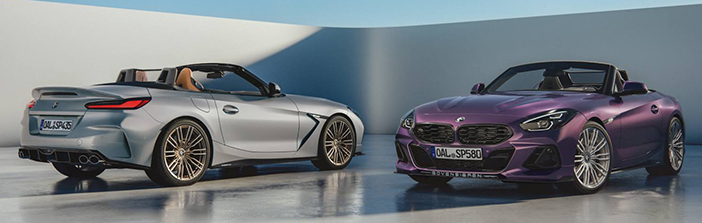
Modifications to the intake system, meanwhile, mean the engine can “breathe freely” and the re-engineered exhaust system has been optimised for flow while “at the same time delivering an exhilarating, sporty sound”. Cooling has been improved, too, to ensure the Spider can always offer peak performance, while an optional Performance Pack brings enhanced heat management for the differential, to boost its performance in high-load situations. The Spider rides on retuned dampers for improved responsiveness, supported by sticky Michelin Pilot Sport 4S tyres wrapped around the lightweight forged wheels. The brakes can be optionally upgraded to high-performance items too. The Z4 was latterly available with a 6-speed manual gearbox, but the Spider comes with the standard ZF 8-speed auto. In characteristic Alpina/Bovensiepen fashion, the Z4’s interior has been retained but retrimmed in a selection of upmarket materials, including Vernasca leather for the seats, Lavalina for the steering wheel and Alcantara for the windscreen surround. The Bovensiepen Saddlery (a customisation suite similar to Bentley’s Mulliner or Aston Martin’s Q division) can work with customers to ensure a highly personalised specification, with options including Alcantara boot lining, personalised headrests and custom embroidery. +++
+++ CHINA ’s passenger car exports in the first 8 months of this year already surpassed last year’s total, an industry association said Thursday, though domestic sales continued to decline. Passenger car exports in August jumped 67.1% from the year before to around 890,000 units, driven by plug-in hybrids and pure electric vehicles, according to the China Association of Automobile Manufacturers (CAAM). China exported more than 6.2 million passenger vehicles in January-August. Exports of all types of vehicles totalled 7.1 million last year, CAAM data show, including about 6 million passenger vehicles. The world’s largest car exporter is on track to achieve 50% to 70% growth in full-year passenger vehicle exports, according to S&P Global Ratings. At home, passenger car sales fell 25.6% year-on-year in August to just below 1.5 million vehicles. China’s domestic car market is under pressure from intense competition and price wars, while the slowing economy has undermined consumer confidence. China’s car exports have been stronger than expected so far this year, helped by competitive pricing and quality, said Stephen Chan, an associate director at S&P Global Ratings. “It’s likely that strong export growth will largely mitigate the domestic weakness”, he said. Over the past few months the energy shock from the Iran war and rising fuel prices have led more drivers of gasoline and diesel-powered vehicles to shift to EVs. Hefty tariffs have in effect kept most Chinese-made passenger cars out of the U.S. market. But China has been exporting and selling more of its vehicles to Europe, Latin America, Africa and Southeast Asia. Chinese automakers are also setting up more factories overseas. Weak domestic demand is increasing carmakers’ incentives to redirect capacity overseas, analysts at Morgan Stanley said in a recent research note, and Chinese carmakers are increasingly moving beyond vehicle exports toward local assembly and manufacturing to ease impacts from trade barriers and reduce logistics costs. +++
+++ Toyota other carmakers from JAPAN risk taking a hit to their bottom lines after the yen strengthened to its highest level in more than 6 months. The currency traded just above ¥153 against the dollar on Tuesday, its strongest level since February. That’s squeezing many of Japan’s export-focused automakers, which have partly based their earnings forecasts on weaker yen assumptions. At ¥160 yen to the dollar, Toyota has the most bearish projection. The world’s biggest automaker said in August its annual operating income falls by about ¥50 billion ($326 million) each time the yen appreciates by ¥1. The swings are a source of uncertainty for Japanese automakers, highlighting the economic cost of a volatile currency. A stronger yen erodes the value of overseas earnings when they’re brought back to Japan, hurting companies that generate much of their sales in the U.S. and Europe. The yen is currently outperforming the assumptions of all Japanese carmakers except Nissan Motor, which projects it at ¥150 against the dollar for the fiscal year through March 2027. Toyota and Suzuki Motor revised their projections upward in August from May. Japan’s automakers have long embraced conservative currency assumptions, helping them to meet or exceed forecasts when posting results. Many of them produce cars and even parts closer to final sales markets, creating a natural hedge because production expenses can be paid in the same currency. Toyota is better equipped to tolerate the risks that come with adopting a weaker-yen assumption. Its earnings are among the most global in the industry and are spread across financial services and other businesses, giving it additional operational flexibility to offset adverse swings. While the weak yen has threatened to drive up inflation and import prices in Japan, it had offered the island nation’s largest exporters a much-needed respite from U.S. tariffs, soaring oil prices and supply chain snags. In late June, the yen was trading at its lowest since 1986, prompting the U.S. and Japan to make their first joint intervention in 15 years. +++
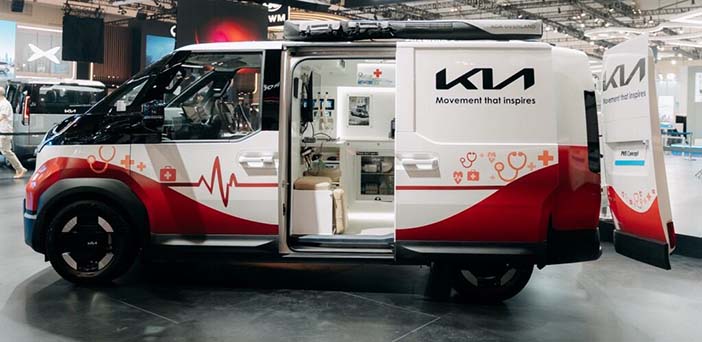
+++ KIA said Sunday that cumulative global sales of the PV5, its first dedicated purpose-built vehicle (PBV), have surpassed 50.000 units just 13 months after its launch. A total of 53.530 units of the PV5 has been sold worldwide as of the end of July, with overseas markets accounting for about 60 percent of the total, according to the South Korean automaker. Launched in June 2025, the PV5 is a midsize electric PBV and the first model in Kia’s broader push into the commercial and customized mobility market. Kia sold 15.853 PV5 units in the second half of 2025 and another 37.677 units in the first 7 months of this year, making it the company’s third-best-selling EV during the January-July period, following the EV3 and EV5. Building on the PV5’s sales momentum, Kia plans to unveil its second dedicated PBV, the PV7, at IAA Transportation 2026 in Germany, one of the world’s largest commercial vehicle exhibitions, on Monday. The automaker plans to launch the PV7 next month, expanding its PBV lineup as it seeks to strengthen its presence in the global commercial vehicle market. +++
+++ If you were born in 1998, you might think that MINI has just created your ultimate flex with the 1998 GT special edition. However, despite the fact that ’90s nostalgia is trending, the name has nothing to do with the year as it pays homage to the 1.998 cc engine that lies under the hood. The new Mini 1998 GT is the latest chapter in a series that started back in 1969 with the classic Mini 1275 GT featuring a boxier nose, and continued with the 1499 GT in 2021. If you haven’t guessed already, all GT models are named after the displacement of their powertrains. Furthermore, the new model is the 6th out of 8 Icon Drops special editions for 2026 keeping the color and trim department busy. While the initials are usually found in high-performance variants, the 1998 GT is actually based on the Mini Cooper C 2-Door. The Cooper C is the base variant of the ICE-powered Mini in the US, positioned under the Cooper S and the Cooper JCW hot hatches within the lineup. Still, Mini gave the GT a sportier chassis, but we’ll get to that in a minute. Visually, the bodywork is painted in a Midnight Black Metallic shade combined with orange stripes on the profile, ‘1998’ decals and matching GT emblems adorning the C-pillars and the tailgate. The 17-inch JCW Sprint Spoke alloy wheels are also finished in black with orange center caps, as with the JCW bodykit that includes aerodynamic bumper extensions, side skirts, and a roof spoiler. Inside, owners are treated with JCW Sport Seats upholstered in a synthetic leather called Black Vescin, featuring a vintage knit pattern. Equipment includes a JCW steering wheel with a heating function, paddle shifters, and 1998 GT badging. The same emblem can be found on the scuff plates and on the Miko Box storage compartment between the front seats. Finally, GT branding adorns the floor mats and the key fob cover. Under the hood lies the familiar turbo 2.0-liter 4-cylinder engine producing 163 hp as in the regular American version of the Cooper C. Note that the Cooper S makes 204 hp and the Cooper JCW generates 231 hp. Power is transmitted to the front wheels via a 7-speed dual-clutch automatic. Despite the lack of performance upgrades, the GT benefits from a sportier suspension setup and uprated brakes curated by the John Cooper Works division. These should give it sharper handling, justifying the looks The 2027 Mini 1998 GT Edition is available in the US market with a starting price of $36.875, excluding a $1,350 destination and handling fee. This makes it more expensive than a Cooper S which is priced from $32.800 and slightly cheaper than the JCW performance flagship at $38.900. For Americans who prioritize exclusivity over outright performance, reservations are now open, with the first deliveries scheduled for this fall. +++

+++ NISSAN said Thursday it will shift production of two minivan models from plants operated by its subsidiaries in southwestern Japan to its Tochigi plant north of Tokyo, where capacity utilization has declined partly due to slowing growth in the electric vehicle market. The automaker plans to complete within several years the transfer of production of its Serena, currently made by Nissan Kyushu, and the high-end Elgrand, made by Nissan Shatai Kyushu. The 2 plants are in Kanda, Fukuoka Prefecture. Nissan said it aims to improve efficiency by consolidating production of similar models at each plant. The Tochigi plant is currently the company’s production base for EVs, including the Leaf. It also manufactures higher-priced gasoline-powered vehicles such as the Fairlady Z sports car. Nissan aims to domestically produce around 1 million units annually in the future, an increase of roughly 40 percent from fiscal 2025, supported by the growth of both its domestic business and exports. The automaker, in the midst of turnaround efforts, did not specify when it plans to achieve the target. In the business year ended last March, production at the Tochigi plant totaled around 30.000 vehicles. The 2 models to be transferred are expected to significantly boost the plant’s output. Nissan is pushing restructuring steps that include closing seven plants in Japan and overseas, including the Oppama plant in Yokosuka, Kanagawa Prefecture. Operations there are expected to be transferred to a factory of Nissan Motor Kyushu. The Yokohama-based company also plans to shutter the Shonan plant of its unit, Nissan Shatai Co, located in Hiratsuka, also in Kanagawa. +++