
+++ AUDI killed off the RSQ3 more than 2 years ago, though if you’re reading this from the US, there’s a good chance you didn’t notice. That’s because Audi never offered the growly, 5-cylinder compact SUV stateside. But it looks like a different hot Q3 is in development, and this one looks like a prime contender for a green card. Spy photographers snapped what appears to be an SQ3 prototype on maneuvers. How do I know? The big giveaway is the 2 pairs of round rear tailpipes, just like the ones on the S3. The old RSQ3, in common with the RS3, RS5 and RS6, has 2 oval pipes. What makes this a big deal is that Audi has never offered an SQ3 before. It meant Audi had no direct rival for BMW’s 316 hp X1 M35i. Though Audi hasn’t confirmed it’s working on an SQ3, let alone what’s under the hood, it’s not hard to guess what’s likely to be lurking between the shock towers. Sister brand Cupra’s conceptually- and mechanically similar (both are based on the MQB Evo platform) Formentor is offered with a 2.0-liter 4-cylinder EA888 engine that cranks out 333 hp. And Volkswagen’s due-soon Tiguan R is expected to get the same motor. It’s essentially the same engine fitted to the current Golf R and Audi S3, and like those cars, would send its ponies to all 4 wheels via a Haldex all-wheel-drive system to earn the SQ3 a Quattro badge. Expect a 7-speed dual-clutch and torque vectoring, probably with a drift mode. And, as these shots show, a bold grille pattern and plenty of gloss black trim and fake mesh to telegraph these performance credentials even when you’re parked up. If it does land with a 333 hp rating, the SQ3 should be capable of a 0-100 kph in around 4.8 seconds. That’s based on the Cupra Formentor figures and would make the SQ3 three ticks slower than the old RSQ3. The old flagship of the Q3 line-up had the benefit of a turbo 2.5-liter 5-cylinder serving up 400 hp, but then the SQ3 will be much more affordable.. The bigger question is whether Audi has only now created an SQ3 because it has no plans to replace the RSQ3. The 5-banger RS3 it’s no longer on sale in Europe due to emissions compliance issues. But Audi execs who understand what an asset a characterful engine is in an era dominated by me-too inline-4s and electric motors have made noises about maybe reinventing the 5-cylinder as a hybrid. Here’s hoping. +++
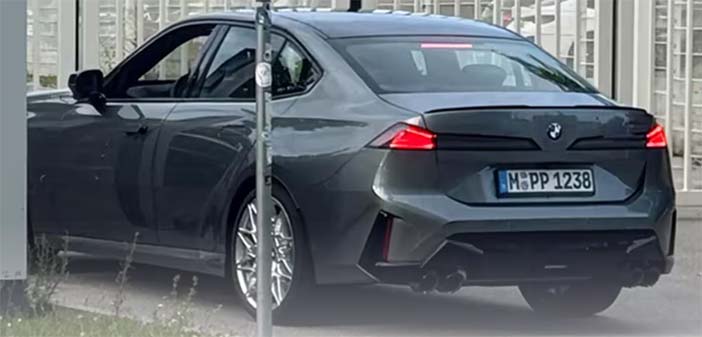
+++ We’re used to seeing press images of a new model leak days, if not weeks, before its official debut. However, it’s rare for a model to appear early in spy photos as a near-production prototype without any disguise. That appears to be the case with BMW ’s next-generation 3 Series. Codenamed G50, the sports sedan was spotted by a Reddit user at a BMW facility in Munich, completely devoid of camouflage. It’s not any run-of-the-mill 3 Series but the M Performance model, rebranded as the M350 xDrive. The dead giveaway is the quad exhaust system that no other version will get. Well, except for the M3, but the G84 isn’t coming until 2028 at the earliest. I’m certain this isn’t the full-fat M since it’s missing the flared wheel arches. The “PP” in the license plate suggests the car may have had some M Performance Parts, but the bigger news here is the design. Yes, the new 3 Series looks pretty much like the fully electric i3, even though the 2 cars sit on different platforms. The ICE model sticks to the tried-and-true CLAR architecture, whereas its combustion-free cousin is built on the Neue Klasse platform engineered exclusively for EVs. While we can’t see the front of the car, the design is unlikely to stray too far from the i3. It’ll likely have more air intakes to cool the 4-cylinder engines in the regular 3 Series models and the inline-6 in the M350 xDrive. Accommodating an ICE will require a longer front section and therefore slightly altered body proportions, but the overall design will be strikingly similar. Indeed, remove the prototype’s exhaust tips, and you could easily mistake it for the i3. You can tell it has M trinkets by the trunk spoiler and glossy black accents typically reserved for vehicles that have at least the M Sport Package, which will be standard on the M350 xDrive. BMW won’t offer any other 6-cylinder 3 Series models (again, excluding the M3), as the M340d isn’t getting a replacement while a rear-wheel-drive M350 is highly unlikely. While BMW has been favouring two-tone and black wheels, it’s refreshing to see a traditional silver look. I can’t tell how big the alloys are, but a 20-inch set with 245/35 R20 front and 275/30 R20 rear tires has already been confirmed. As the M350 xDrive, it has adaptive suspension and an M Sport differential as standard equipment. We’ll have to wait until the world premiere in late September to see the whole thing, but just like on the outside, the cabin won’t differ too much from the i3. That means it’ll have a radically different interior compared to the outgoing G20. You can kiss the iDrive rotary knob goodbye, and we can say the same thing for most of the traditional switchgear. Although the work-in-progress car was spotted in Munich, the G50 will be the first 3 Series generation that BMW won’t build at its historic plant. Production is moving to Dingolfing, where the bigger 5 Series and 7 Series sedans roll off the assembly line. On second thought, BMW sees the Munich-built i3 as a 3 Series model, so that previous statement may not be entirely accurate. After its world premiere in a couple of weeks, the eighth-generation 3 Series will go on sale in Europe before arriving in the U.S. sometime in 2027. +++
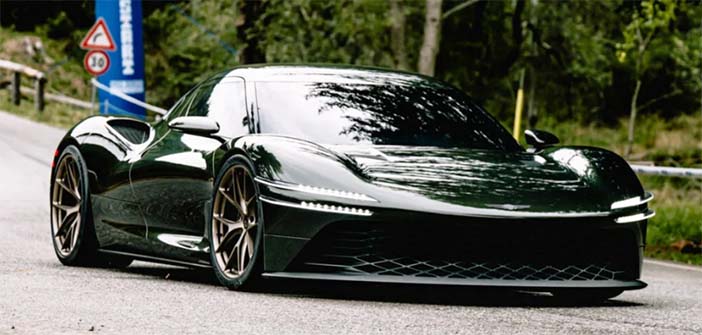
+++ GENESIS has spent the last few years as a purveyor of premium SUVs and sedans with models like the GV60, GV70 and G80, but thanks to a newly found interest in performance cars, it’s also preparing to release models that’ll get even the keenest car enthusiasts excited. One of these is the Magma GT Concept. Unveiled late last year and since updated to bring it even closer to production, this sexy mid-engined coupe looks every bit as exotic as an Aston Martin and may even spawn more variants including a roadster, a track-focused special and a legitimate GT3 race car. Last week, attendees at the Tutto Bene Hillclimb near Lake Maggiore, Italy, got to see the Magma GT up close. While it’s still officially a concept, it proved to be fully functional. Presented alongside it was the even more bonkers X Skorpio, a rally-raid V8-powered off-road design study which is far less likely to hit the production line. For whatever reason, Genesis remains mum about key technical details of the Magma GT. However, previous reports, as well as this video, make it clear the stunning Coupe is equipped with a V8 engine. As much as I love the 3.5-liter twin-turbo V6 found in several of the brand’s current models, there’s something properly exotic about a mid-mounted V8. The company’s new V8 is a twin-turbocharged, 3.2-liter unit that shares many of its parts with the 1.6-liter turbocharged 4-cylinder of Hyundai’s i20 N WRC rally car. A hybridized version of the powertrain is currently being used in the GMR-001 LMDh prototype competing in the World Endurance Championship. Testing and developing this engine in the toughest endurance racing championship on the planet is the perfect way to ensure it’s up for the rigors of use on the road. As for how long we’ll have to wait for the first Genesis supercar to go on sale, well, that remains unconfirmed. Recent reports suggest it’ll hit the market either in 2027 or in 2028. With up to 800 hp on tap and free from hybridization, it’s shaping up as a legitimate rival to vehicles including the Chevrolet Corvette, McLaren Artura, and Ferrari 296 GTB. +++
+++ Modern cars are loaded with technology, often making them feel more like a lounge room or theatre than ever before. As reliance on technology increases, more car manufacturers are facing rising reliability concerns, but HONDA is confident it can maintain the quality it’s best known for without following in the footsteps of companies like Ford. Brands like Honda are under increased pressure to make more advanced cars and also to bring them to market faster than ever, partly to compete with rivals emerging from China. The company says it’s updating its quality control systems to keep pace and maintain its reputation for reliability and customer loyalty. “Technological changes, especially in terms of software, are happening very quickly today”, American Honda president and chief executive Eiji Fujimura told during a recent interview. “Of course, we need to compete with our rivals and China and India in terms of software, ADAS, etc. But in order to compete with them, we first need to think, ‘Who is Honda?’ ”. According to Fujimura, Honda isn’t interested in sacrificing customer trust for development speed, and so it makes “sure each process ensures that the cars or components are okay from a quality point of view” and doesn’t move through “to the next step without confirming the previous step’s quality”. Executive vice president of Honda, Noriya Kaihara, added that Honda’s “quality department is completely separate from other departments. That means quality is always Honda’s number one concern. This means every single new technology always goes by this separate department”. If things do go wrong, Honda notes it’s crucial to react quickly and provide prompt resolutions to customers. While this may sound basic, not all car manufacturers do it as well as they should. Slow fixes, especially for serious software or hardware issues, can quickly erode customer faith in a brand. In the US, Honda doesn’t have many new competitors that could steal customers away, but in other markets, including Europe and Asia, the picture is very different. Address complaints too slowly, and a car buyer could easily switch allegiances to a rival. “If you leave a customer with a bad-quality vehicle and, on top of that, also a delay with the counter measure, that will cause really bad damage”, Kaihara noted. “Sometimes you just have to take quick action. Even when you make sure nothing is wrong and everything is okay, something can still happen, and a problem arises once it hits the market”. +++
+++ A new OPEL ASTRA is on the way, but the planned 7th generation model could look a little different than expected when it arrives. Opel CEO Florian Huettl confirmed that it might be estate only. It almost certain means a big rethink for a car that over its 45-year life has always been built in hatchback form. “It doesn’t mean necessarily that the new Astra is a traditional hatchback”, Huettl said in response to my question asking whether the 5-door hatchback form should evolve to boost sales. “I can tell you that there will be a station wagon, because that’s what our home market (Germany), and this is what we will serve”. The hatchback market is flooded with options such as Volkswagen Golf and BMW 1 Series, but it’s suffering from an exodus of buyers who are favouring SUVs or more luxurious B-segment hatchbacks. Should the next Astra be Estate only, it will mirror a decision taken by Volkswagen with the latest Passat. But it might also mean a more crossover-style variant could be spun off the platform, with Opel capable of adding a second bodystyle at a faster pace having worked hard on its efficiency to battle Chinese brands. The all-new car will come to market around 2029-30 and be underpinned by Stellantis’ STLA One architecture, which is also bound for the next Corsa in 2027. Huettl confirmed to Auto Express that the Astra will come as an battery electric vehicle (BEV) but could offer a broader powertrain line-up. “It will certainly be BEV”, said Huettl. “But then STLA One isn’t limited to BEV only in its capabilities, so we’re currently looking at the right calibration of the powertrain offer”. He namechecked interior space and long-distance cruising capability as key attributes for the next Astra. The facelifted version of the current car has a 58.3 kWh battery good for 420 km as a hatch. The next generation will push this well past 480 km, with STLA One delivering software-defined vehicles with cutting-edge drivetrain management to maximise efficiency, plus a ‘cell-to-body’ battery design. This saves weight by integrating the battery as a structural part. The next-gen Astra is almost sure to get a plug-in hybrid of some sort, but Opel needs to make a decision on the system. Today’s Astra PHEV has a modest battery to support the petrol engine, but range-extender (REEV) tech, where the engine is used as a generator to power the battery supplying an electric motor to drive the wheels, is also in the running. “Today our Astra and Grandland have plug-in hybrids, and the technology has a certain part of the sales, but it is by no means at the same level of importance as the full electric or the hybrid variants”. He added: “Range extender is quite interesting because it combines an ICE engine with battery-electric technology. What is important for us here is long-distance driving and what we see on the first-generation Reev technologies is that sometimes a car may struggle to digest the 2 hours of driving on the German motorway at 130-140 km/h”. Huettl confirmed that the new Astra will be built at Opel’s Rüsselsheim plant in Germany. Stellantis is investing 1 billion Euros into the factory, a new HQ in the area and a parts facility in Kaiserslautern. The next new Opel will be the next-generation Corsa, followed by an SUV developed with Chinese partner Leapmotor. The final car due before 2030 is the new Mokka; Huettl confirmed that it’s not a priority for Opel to be part of the ‘e-car’ project, which will see Stellantis introduce a new Citroen 2CV and new Fiat Panda. +++
+++ RANGE ROVER ’s new GT seems promising. It has a massive battery pack, lots of range, and, once the camouflage comes off, hopefully a stylish design. One thing it won’t have? A ton of screens. Range Rover is taking a slightly different approach to its future interiors. The company promises fewer displays and a greater emphasis on the vehicle itself rather than the technology surrounding it. The automaker told that future models, including those beyond the GT, will follow a similar interior philosophy. Range Rover refers to the screen overload found in many modern luxury cars as “visual and acoustic noise”. The brand’s global managing director, Martin Limpert, said: ‘We free our cabin from all of that. That’s what makes us unique. We will keep evolving”. Range Rover says that more technology doesn’t automatically make a cabin better. So rather than covering the dashboard of the new GT massive displays, Range Rover uses a slim digital instrument cluster and a centrally mounted touchscreen that sits relatively low in the cabin. That doesn’t mean the company is abandoning screens entirely. The GT is still a modern luxury SUV, after all, which means that the center touchscreen still handles nearly all of the infotainment. The driver also gets a digital instrument display. The difference is that the screens are no longer meant to be the centerpiece of the cabin. While Range Rover promises that screens won’t dominate its future interiors, the company isn’t planning to bring back a sea of physical buttons, either. Instead, it wants to use technology more selectively, integrating it into the cabin without letting it take over the experience. Range Rover also isn’t interested in adding screens simply because competitors have them. Passenger displays, for example, aren’t a priority because the company’s data suggests they’re not used enough to justify taking up valuable space in the cabin. We’ve already seen what the electric Jaguar GT’s interior will look like, and, yes, it still has a large display in the center of the dashboard. But compared with some of the latest high-end vehicles, Range Rover’s approach is more restrained. For now, the Range Rover GT is the first real indication of where the brand’s interiors are headed. But Range Rover says this philosophy will eventually spread across its line-up. +++
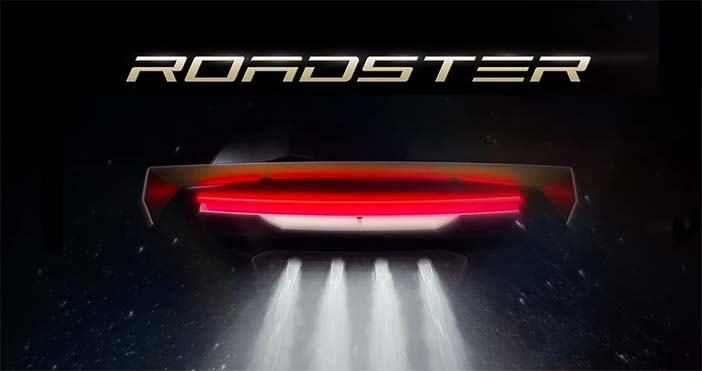
+++ TESLA has announced that it will reveal the final version of its long-promised Roadster supercar on 1 October, almost 9 years since the prototype was unveiled and 6 years after it was originally planned to go on sale. The second-generation Roadster, the follow-up to Tesla’s first car, was originally planned to be a drop-top 2+2 with a 0-100 kph time of 1.9 seconds, a top speed of more than 400 km/h and a a 1.000 km range; figures that outpunched all production EVs at its 2017 debut and which would still outclass most today. Since the concept’s surprise debut at the launch event for the Tesla Semi lorry, it has been repeatedly delayed. The original 2020 launch plans were pushed back to 2022, then 2022, 2023 and 2024, before a long period of silence as the company shifted focus to other projects, including the self-driving Cybercab, which is now in commercial service. But now it seems that Tesla is finally ready to show the Roadster in its final form, with a post on Elon Musk’s X app announcing an event on 1 October, with the strapline ‘Go for launch’. A countdown on the firm’s website suggests the wraps will come off at 19:30 local time, so 01:30 am European time the following day. That slogan is possibly a reference to the optional rocket thrusters that Musk previously said would allow the Roadster to hit 100 kph from rest in just 1.1 second; almost twice as quick as a Formula 1 car. The teaser image published by Tesla gives little away beyond the exhaust plumes of the promised thrusters, claimed to have been developed by Musk-owned SpaceX. But visible details including a full-width rear light bar and a huge wing look to depart dramatically from the concept, which was a subtle and minimalist coupé derived from the Model S saloon. The reveal event will take place in Waco, Texas, where Lake Waco could serve as the venue for the Roadster’s promised ability to hover or float across bodies of water.
Musk originally planned for the Cybertruck pick-up to be able to “serve briefly as a boat”, but this functionality was never fully realised. Tesla has invited Roadster deposit holders to the event on a non-transferable basis, but it’s unclear how many orders it has taken for the delayed supercar over the past 9 years. Pricing was earlier put at around €170.000 for the standard car and €210.000 for the top-spec Founders Series variant. Notably, if the 1 October event is indeed a full production-spec unveiling, the Roadster will break cover in the same week as the long-awaited Jaguar Type 01, making it a landmark few days for EV announcements. Musk has been a vocal critic of Jaguar’s relaunch, asking the British brand on X “Do you sell cars?” in response to its 2024 ‘Copy Nothing’ brand campaign. It isn’t clear whether the Roadster’s debut date was intentionally planned to snatch the limelight from Jaguar, which confirmed its own timings earlier this summer. +++
+++ Chinese automakers building cars on American soil, with American workers, is now something Donald TRUMP says he would accept. He made the point on Fox News days before Xi Jinping’s Washington visit puts US-China auto policy under a much brighter light. Trump’s line drew a hard boundary at the same time. Plants built here are fine, he said, but Chinese-made vehicles imported through Mexico are not, and that distinction is already shaping how automakers, dealers and workers read his administration’s next move. Speaking on “The Ingraham Angle”, Trump told host Laura Ingraham, “If China wanted to come in and open a plant to build their cars here, I’d be okay with that”. He tied the offer to one condition: American workers on the line. He reached for a familiar comparison, noting that Japanese automakers built US plants decades ago and “hire our people”. Trump framed jobs as the whole point, saying flatly that “the most important thing is that Americans get jobs”, not where a badge on the hood originated. The comments land as the Trump administration turns up pressure on Ford’s Chinese manufacturing partnerships, a fight that has forced Ford to defend deals the White House calls a security risk. Transportation Secretary Sean Duffy’s letter to CEO Jim Farley called Ford’s ties to Chinese firms a matter of “profound concern”. Duffy’s letter named specifics and cited Ford’s licensed battery technology from CATL at its Marshall, Michigan plant, a Geely joint venture in Spain, reported hybrid-component talks with BYD, and Lincoln Nautilus production staying in China until 2030. Ford has said the CATL deal is licensing, not foreign ownership, but the criticism has not let up. Nothing about Trump’s remarks changes the restrictions that keep Chinese-built vehicles out of American driveways. He was explicit that finished cars shipped from China, or assembled in Mexico and routed north, stay blocked regardless of any US factory deal. Trump warned the market would be “overrun” without that wall, arguing the US “has never allowed” Chinese-built imports and does not intend to start now. It is the reason Geely’s path into the US market has run through partnerships and licensing rather than direct vehicle sales. For American automakers already competing against cheaper EVs, the distinction counts. A Chinese-branded plant hiring US workers looks a lot like the Japanese playbook Trump cited, but it would still mean a new domestic competitor for Ford, GM, and Stellantis on their own turf. The timing keeps this from being an abstract policy question, since Xi Jinping’s Washington visit sits roughly 10 days out, and Ford’s ongoing pressure over its China exposure gives trade negotiators an obvious flashpoint. Duffy’s letter and Trump’s Fox News comments now sit on the same table Xi’s delegation will find waiting. +++