+++ FORD chief executive Jim Farley will go to Las Vegas next week to roll the dice on a strategy to convince dealers to cut as much as $2,000 from the cost of delivering an electric vehicle to a customer. Ford has told dealers that one key topic for the meetings will be a discussion of new agreements that would govern how dealers sell Ford’s expanding line-up of electric vehicles. Farley told analysts in July that Ford needs to cut $2,000 a vehicle out of selling and distribution costs to be competitive with Tesla and other electric vehicle startups that sell directly to consumers without franchised dealers. About a third of those savings could come from what Farley called a “low inventory model”, where customers order a vehicle and Ford ships it to the customer, rather than stocking vehicles on dealer lots for weeks or months. “We think that’s worth about $600 – $700 in our system”, Farley told analysts. Tesla can also adjust prices rapidly on its website, and keep most of the gain from a price increase. Ford declined to comment other than to say “we are excited to meet next week with our North America dealers to grow and win together”. Dealers said they expect Ford to outline minimum investments for charging stations and other equipment to support electric vehicle customers. A key question will be how quickly dealers will be required to install chargers, which dealers said can cost as much as $500,000. “The manufacturers so far have let us scale into it and I think Ford will hopefully do the same thing. You just can’t say, ‘Listen, we’re going to sell 2 million electric cars 5 years from now and we expect you to put in 5 superchargers’ “, said Rhett Ricart, owner of Ricart Ford, a large dealership in Columbus, Ohio. Tesla’s success at selling electric vehicles without franchised dealers is putting pressure on all established automakers to overhaul their retail networks. A shift by Ford to a Tesla-style build to order system could come with caps on the profit margins dealers can earn on a new vehicle sale, some dealers said. “I see dealer margins still being very competitive, but they are going to shift”, Farley said in July. Ford intends to put more emphasis on selling products and services after the initial vehicle sale, he said. Dealers said state franchise laws could give dealers leverage to resist efforts by Ford to set fixed prices or fixed fees for delivering electric vehicles. Rival General Motors last week said it would offer buyouts to Buick dealers who did not want to make required investments as the brand shifted to an all-electric lineup. GM has already spent $274 million to reduce the ranks of Cadillac dealers. Josh Sloan, the general manager who oversees 2 Ford stores and 1 Lincoln store for Michigan’s LaFontaine Automotive Group, said his company is prepared to spend what it takes to shift to electric vehicles. “I was surprised there weren’t higher standards from Ford sooner”, Sloan said. “We’re moving into this really fast. If you’re not all-in, you’re going to lose”. +++
+++ Car companies have bulging order books right now and it could well take some of them until next spring to clear the backlog. But that’s not stopping some of the oldest and cleverest manufacturers from taking a good, hard look at themselves in preparation for a very different second half of this decade. The result could be a shake-up of how well-known brands are positioned. Only last week, Skoda proposed a new look that ditches its traditional roundel from the fronts of its cars and replaces it with a new, more assertive typeface that plays on the Czech character used in the manufacturer’s name. The goal is to give this 127-year-old company a bit more breathing space compared with Seat and Volkswagen, and as the CEO told me, that will bring a resharpened focus on delivering the ‘affordable entry point’ to the wider VW Group. Meanwhile, Alfa Romeo’s design boss recently told me that he leads a relatively small team tasked with totally transforming the Italian marque’s model line-up over the next 5 years. There’s an emphasis on modern looks, on emotion and yet, as we discovered at the firm’s utterly glorious museum, Alfa Romeo isn’t afraid to play the HERITAGE CARD when needed. It could be elements like this that give ‘traditional’ car manufacturers a USP over fast-emerging EV-based start-ups, particularly those from China. It’s not just the older European brands that are playing with their history, either. Hyundai is tapping into its design studio’s back catalogue; the Pony-inspired N Vision 74 was an Internet sensation when it was revealed. It shows how delicate the balancing act is between referencing the past (reminding customers that there is history and lineage wrapped up in the badge) while looking to the future. +++
+++ PORSCHE and Red Bull have ended talks over Porsche joining Formula One, but the German sports car brand remains interested in entering the racing series, it said on Friday. “The 2 companies have now jointly come to the conclusion that these talks will no longer be continued”, Porsche said in a statement. Red Bull team boss Christian Horner told at the Italian Grand Prix that it had become clear during talks with Porsche that “there was a strategic non-alignment”. Volkswagen’s former chief Herbert Diess said in May its Porsche and Audi brands would join Formula One, long dominated by the automaker’s German rival Mercedes-Benz. Media reports had suggested long-standing talks between Porsche and Red Bull were stalling due to a gap between how much control the Porsche wanted and what Red Bull was prepared to give. Horner ruled out a Porsche takeover last Friday and said any partnership would have to be on the Formula One team’s terms. Championship-leading Red Bull have set up their own powertrain company, with more than 300 people working on an engine for 2026. “The premise (of discussions) was always a partnership on eye-level, which would include the team alongside a motoring partnership. This could not be realized”, Porsche’s statement said. “With the changes to regulation, the racing series remains an attractive prospect for Porsche which we will continue to monitor”, the statement added. Formula One’s governing body in August approved engine regulations for 2026, significantly increasing electrical power, using 100% sustainable fuels and removing the current Motor Generator Unit Heat (MGU-H) element, reportedly a pre-requisite for the Volkswagen Group brands to come in. Audi announced in August it would build an engine in Germany and enter in 2026 with an existing team, likely to be Sauber, and the sport has been waiting for Porsche’s move. Porsche alternatives in Formula One are limited, with McLaren ruling out a takeover of their team in May after conversations with Audi while Williams have said they must remain independent. Porsche are also active in the electric Formula E series with their own team and from next season as powertrain provider for Avalanche Andretti. Michael Andretti, whose father Mario was world champion in 1978, is seeking an entry to Formula One but meeting resistance from within the paddock to expanding the series beyond the current 10 teams. A possible partnership with Porsche might make a more compelling case. +++
+++ Buying a brand-new car is becoming more difficult than ever. In addition to the availability problems generated by the supply chain constraints and the lack of semiconductors, people looking for a new car are experiencing a considerable PRICE INCREASE . It is not only about which car and how long you have to wait for it; it is also about paying more money for the same car you could afford some years ago. The situation is quite complex, especially in Europe and the United States. A research conducted by Jato Dynamics indicates that the average retail price (excluding any kind of rebate, discount or public incentive) for petrol passenger vehicles available in United States soared by 14% between 2015 and 2022. According to the consultancy firm, the price jumped from €39,143 in 2015 to €44,641 this year. That’s more than €5,000 in just 7 years. In Europe, the growth was more significant. Buying a brand-new petrol car cost €35,500 in 2015. This year through June, the average retail price of cars available there was €44,101. This is a massive increase that reflects the focus of car makers on upper segments. In countries like Norway for instance, the variation was enormous, with prices jumping from €42,199 to €68,677. The regulations that clearly intend to eliminate the sales of ICE cars explains this 63% increase. In other markets like the United Kingdom, the devaluation of the British Pound accelerated the hike on prices, from €32,247 in 2015 to €46,230 by the end of June 2022. In contrast, the Chinese market has seen a tiny 5% increase over these years mainly because the offer has expanded downwards in the segments. The micro cars and smaller SUVs contributed to the contained increase between 2015 and 2022. If petrol cars are now less affordable for a big part of the population, their electric counterparts aren’t in a better position. Except for Norway and in some cases China, the rest of the world still can’t afford most of the electric models available today. If it wasn’t because of incentives offered by some governments, the situation would be quite different for the demand growth of these cars. In general, a consumer needs to pay up to €55,821 to get a brand new electric car in Europe, €63,864 in the United States and €31,829 in China. Excluding the big gap between the latter and the West, the reality for consumers is that electric cars are not yet a serious affordable alternative to the rise of prices of petrol cars. The brands selling cars in Europe and USA have positioned the EVs as premium cars, focusing on high-end segments. Most of the offers you find in these markets is composed of luxury saloons and SUVs, although this has started to change with the introduction of more less expensive cars, such as small SUVs, city-cars and subcompact hatchbacks. Consequently, the industry and its consumers face the big challenge of banning polluting cars and promoting clean ones, and at the same time provide a real/affordable solution for the masses. China is doing so, the West should pay attention. +++
+++ TESLA is considering setting up a lithium refinery on the gulf coast of Texas, as it looks to secure supply of the key component used in batteries amid surging demand for electric vehicles. The potential battery-grade lithium hydroxide refining facility, which Tesla touted as the first of its kind in North America, will process “raw ore material into a usable state for battery production”, the company said in an application filed with the Texas Comptroller’s Office. A decision to invest in Texas will also be based on the ability to obtain relief on local property taxes, Tesla said. Chief Executive Officer Elon Musk has previously said that Tesla may have to enter the mining and refining industry directly at scale as lithium prices surge. Musk has also been vocal about the need for more players in the lithium refining industry. “You can’t lose. It’s licensed to print money”, he had said at the company’s second-quarter earnings call. Securing a steady supply of battery components is seen critical for Tesla as it faces fierce competition in the fast-growing market for electric cars. If approved, construction could begin in the 4th quarter of 2022 and would reach commercial production by the end of 2024, Tesla said in the application dated August 22. Under the plan, Tesla will ship the final product from the refinery by trucks and rail to various Tesla battery manufacturing sites supporting the supply chain for large-scale and electric vehicle batteries. Tesla, whose shares rose 1.4% in premarket trading, also said it would use less hazardous reagents and create usable byproducts, compared with the conventional process. Lithium prices have skyrocketed this year due to surging demand from the auto sector. China remains the world’s largest lithium processor, though proposed rival projects in the United States and European Union have faced a range of setbacks. If Tesla’s plan goes ahead, the carmaker could become the first in the sector to invest directly in lithium refining as automakers scramble to stitch up deals with miners and refiners. “Carmakers are trying to ensure they have control over the supply of lithium, hedging for any geopolitical situation that might arise in future where the supply is disrupted”, said Arpit Agarwal, director at venture capital firm Blume Ventures, which has backed EV startups such as Euler Motors and Yulu. Tesla also stands to gain from lower logistics costs as well as incentives it may get from the U.S. government, he added. Battery makers are also looking to increase production in the United States, where a shift toward EVs could increase as the country implements stricter regulation and tightens tax credit eligibility. Tesla itself signed a 5-year supply deal with Australia’s Liontown Resources earlier this year, while rival EV makers Stellantis and BYD have invested in miners around the world. CATL, the world’s biggest battery maker, has also taken stakes in lithium miners. +++
+++ TOYOTA has finally built the long-rumored turbocharged GR86 enthusiasts have spent years begging for. Don’t jump for joy quite yet: the hot-rodded coupe is still at the prototype stage and it was developed primarily to help the Japanese company’s engineers test synthetic fuels. Toyota’s Gazoo Racing division has built “a small batch” of GR86-based prototypes powered by a turbocharged 3-cylinder engine. While that might sound odd considering the series-produced coupe uses a flat-4, the engine in question is related to the 1.6-liter unit that powers the recently-unveiled GR Corolla and the rally-bred GR Yaris sold in overseas markets. Horsepower, torque and acceleration haven’t been published; there’s also no word on precisely what Toyota hopes to gain by turbocharging the GR86 and feeding it synthetic fuel. We’re also curious to find out how the nimble coupe handles with a straight-3 instead of a flat-4 between its fenders; the former likely weighs less, it’s down a cylinder, but the latter has a lower center of gravity. Toyota stressed it built the prototypes solely to develop synthetic fuels, and it plans to race the turbocharged GR86 in Japan’s Super Taikyu race series. The cars entered in the series won’t be completely identical to the prototypes that the firm is testing: they’ll line up on the starting grid with a 1.4-liter variant of the 3-cylinder rated at over 300 horsepower. Wouldn’t it have been easier to turbocharge the 2.4-liter flat-4 that powers the regular-production car? Probably, but Toyota said it wanted to use one of its engines as a test bed, not one of Subaru’s. Seeing a GR86 powered by a turbocharged triple in showrooms isn’t fully out of the question. “Yes, we are thinking for the future about the possibility of using it, but there are no concrete plans at the moment”, Gazoo Racing chief engineer Naoyuki Sakamoto told CarSales. +++
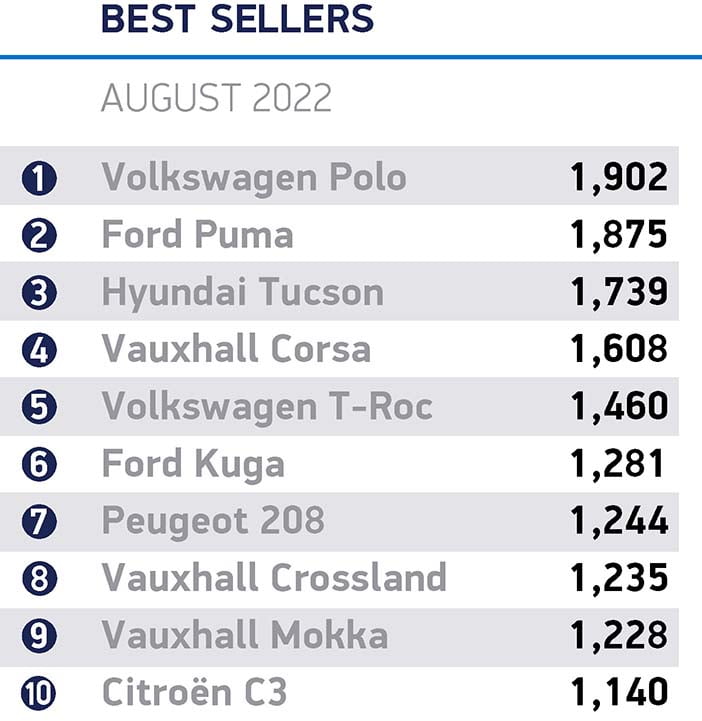
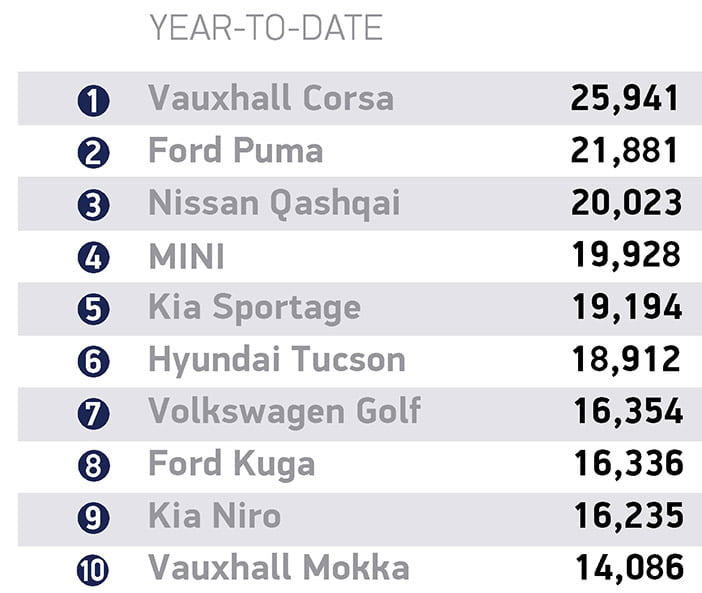
+++ In August, new passenger car registrations in the UNITED KINGDOM increased by 1.2% year-over-year to 68.858, which is a good sign after 5 months of consecutive decline. However, during the first 8 months of the year, car registrations were 11% lower than a year ago at 983.089. The Society of Motor Manufacturers and Traders (SMMT) explains that in August car sales increased mostly because of battery-electric cars, which noted the highest year-over-year growth. Last month, some 13.890 plug-in electric cars were registered, which is 12% more than a year ago and 20,2% of the total market. It’s not a bad result, considering 3 months of decline. Important is the growth of BEVs by over 35% year-over-year to 10.006 registrations (market share of 14.5%), while plug-in hybrids continue its decline by 23% year-over-year to 3.884 (market share of 5.6%). Conventional hybrids were also down but by only 0.7%. So far this year, 199.178 new passenger plug-in cars were registered in the UK, reaching an average market share of 20,3 %. Battery Electric Vehicles sold 137.498 (up 49% year-over-year) with a market share of 14.0%. PHEVs did 61.680 (down 16% year-over-year) at a market share of 6.3%. For reference, in the 12 months of 2021, some 305.281 plug-in electric cars were registered (up 74% year-over-year) at 18.5% market share. In August, none of the standalone electric models were able to break into the top 10 for the month or year-to-date. In June, the Tesla Model Y was second best (and 10th YTD). +++
 0
0
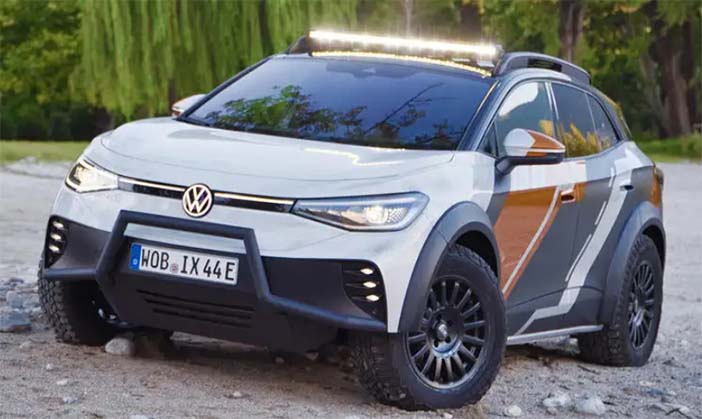
+++ VOLKSWAGEN has revealed a punchy off-road concept car called the ID.Xtreme, based on the ID.4 GTX, to test public opinion for a more adventurous line of ID cars. Visually, the bull bars up front, chunky off-road tyres and a roof-mounted led light bar mark the ID.Xtreme out as an off-roader compared with the road-biased ID.4 GTX on which it’s based. Under the skin, the ID.Xtreme’s power has been boosted by 87 hp over the GTX to 388 hp, courtesy of an uprated rear motor and software revisions. Combined with the visual changes, this is likely to reduce the ID.Xtreme’s range by a noticeable margin, although how significant is not known, given the concept uses a second-hand battery pack. This is because the ID.Xtreme repurposes an old ID.4 test car (rather than converting a brand-new example) to minimise the carbon footprint. An aluminium undertray completely seals the body to protect those batteries, which are situated below the cabin in the MEB platform. A specially developed noise maker has also been fitted into the wheel housings to give the ID.Xtreme some acoustic presence. How this works is unclear, but a similar device was tested on Kiwi rally driver Hayden Paddon’s Hyundai Kona EV, producing a sound signature somewhat reminiscent of V10-era Formula 1 cars. This technology could be used in future VW cars (or industry-wide) to maintain pedestrian safety by preserving ‘engine’ sounds, albeit at more sociable noise levels than on Paddon’s rally car. Silke Bagschik, head of the MEB product line, said: “For many of our customers, vehicles are much more than just a means of transport. With the ID Xtreme, we are raising electric mobility from VW to a new performance level”. Bagschik also hinted that the model is a litmus test for more off-road-focused VW EVs. She said: “We are really eager to find out how the fans of electromobility react to the vehicle. Based on the feedback from our community, we will decide how to proceed with the project”. The ID.Xtreme has been displayed at the ID.Treffen show in Locarno, Switzerland; a gathering of fans of the ID line-up, supported by VW. Should the Xtreme pass its first test (some of VW’s most fanatical supporters at the fledgling event) development of a production version could commence. +++