
+++ AUDI ’s sports car future is looking electric. We’ve already seen sleek, low-slung EVs from the brand in the shape of the e-Tron GT and the ‘sphere’ concepts but new plans are being laid out for a replacement for the TT sports car and even its halo car: the R8. I’ve previously heard from Linda Kurz, Audi’s former head of product, now its head of marketing, that the R8’s successor will ditch petrol power in favor of a battery electric powertrain. Recently, Audi revealed its special send-off to the R8 with the V10 GT RWD edition which “says goodbye to the V10 engine” according to the German car maker. While the lack of an R8 might not leave a big hole in terms of sales for Audi, it will leave the void of a halo car for the brand. There has been intense discussion within Audi’s board on whether to commission even an indirect successor, not least because the company is committed to launching only electric models from 2026, and the R8’s sister vehicle, Lamborghini’s Huracán, looks set to continue with some form of combustion engine. However, I understand that the positive reception to the e-Tron GT has convinced Audi’s management, including senior figures within the Audi Sport division that is responsible for the R8, that customers are ready to accept a fully electric ‘halo’ performance model. I spoke to Audi’s board member for technical development, Oliver Hoffman, to find out if and how the firm is looking to replace the R8. He revealed that when an R8 successor comes, it will be powered by electricity alone. “We are pretty clear that when we present an R8 successor, it will be a fully electric car”, Hoffman said. “We are working hard on sports car platforms and concepts for the future. We’ve talked of wanting to surprise our customers and we will do this. We’re pushing for some 2-seater concepts and successor concepts of our R8”. Hoffman didn’t suggest the R8 successor would use the PPE platform that’s going to underpin Audi EVs from next year with the first A6 e-Tron. That’s because the time frame of any vehicle is likely to be beyond that architecture’s life, towards at least 2025, when PPE and MEB get amalgamated into SSP. There’s already little doubt that SSP’s component line-up will provide enough performance to support a supercar, with intra-group sibling Porsche leading development on a new SSP Sport platform. Volkswagen Group officials have confirmed that SSP will support multi-motor outputs of as much as 1.140 hp. Audi may be tempted to aim towards the top end of this envelope, its halo sports car acting as a calling card for the most potent deployment of its new generation of EV tech, with a price to match. Even then, Hoffman’s assertion that Audi is working on “sports car platforms” would appear to suggest that the company is exploring additional solutions, perhaps taking elements from SSP, such as battery technologies and electric motors, and then framing them in a two-seat layout. This may also be a reference to the potential to share a chassis and technologies with Porsche’s forthcoming electric Boxster and Cayman; cars that are being engineered to mimic mid-engined handling characteristics. Called AI:RACE e-Tron, it was shown at the Pebble Beach Concours back in 2018, and featured a triple-motor 670 hp electric powertrain. A similar motor configuration offering even more power could feature in a production model, although the concept’s solid-state battery likely won’t be used if the car is to appear in the second half of the decade. Audi has previously dipped its toe in the water with an electric R8. In 2015 the company used the Geneva Motor Show to preview the R8 e-Tron, a battery-powered version of the second-gen R8 which put out 462 hp and 920 Nm of torque. It was axed after just a year on sale and 100 examples sold, primarily due to an astronomical starting price but also because Audi didn’t promote the car. +++
+++ BATTERY ELECTRIC VEHICLES (BEVs) are now the second most registered car type in the United Kingdom this year, with more than 175.000 sold, taking the total registered past 1 million. This figure (175.614) is 40.3% up on the same point last year, when just 125.141 BEVs had been registered, but still trails petrol cars by 350.185 so far in 2022, according to figures released today by the Society of Motor Manufacturers and Traders (SMMT). It comes as 225.269 new cars were registered in September, the new-plate month traditionally seen as one of the most fruitful of the year. Registrations were up 9.957 on September 2021 (215.312) but down 117.986 on pre-pandemic September 2019 (343.255). This has been partly blamed on continued material supply problems (mainly caused by the Russian invasion of Ukraine) and the backlog of orders creating long wait times and thus putting buyers off, SMMT chief executive Mike Hawes said. This follows from last month, when SMMT figures revealed that the UK was producing 42.257 fewer cars than in 2019; a drop of 45.9%, sparking urgent calls for aid to keep the UK competitive with the rest of the globe. “The overall market remains weak as supply-chain issues continue to constrain model availability”, Hawes said today. “Whilst the industry is working hard to address these issues, the long-term recovery of the market also depends on robust consumer confidence and economic stability”. He added: “September has seen Britain’s millionth electric car reach the road: an important milestone in the shift to zero-emissions mobility. Battery electric vehicles make up but a small fraction of cars on the road, so we need to ensure every lever is pulled to encourage motorists to make the shift if our green goals are to be met”. Despite a rise in the registration of BEVs, which have a market share of 14.5% this year and 16.9% in September, plug-in electric vehicles registrations (12.281) were down 11.5% on last September (13.884). The biggest drop was experienced by mild-hybrid diesels (8.581), down 25% (11.448). Conventional diesels also slumped 3.1% from 10.658 to 10.330, but a year-to-date drop of 43% compared with the first nine months of 2021 illustrates buyers’ views on the formerly popular powertrain option. Petrol cars, which along with diesels will be outlawed from sale in the UK from 2030, were also hit, down 2.8% to 91.679 registrations, despite making up 40.7% of the overall September market. The figures also revealed that buying habits of UK drivers are firmly pushing towards larger vehicles, with the Nissan Qashqai (9.311) followed by the Tesla Model Y (8.315) as the most registered cars in September. Hatchbacks remain a firm favorite, however, with the Volkswagen Polo coming in third for the month (6.476) and the Vauxhall Corsa narrowly leading the 2022 race, with 29.342 sold this year so far; just 8 cars more than the Qashqai (29.334). +++
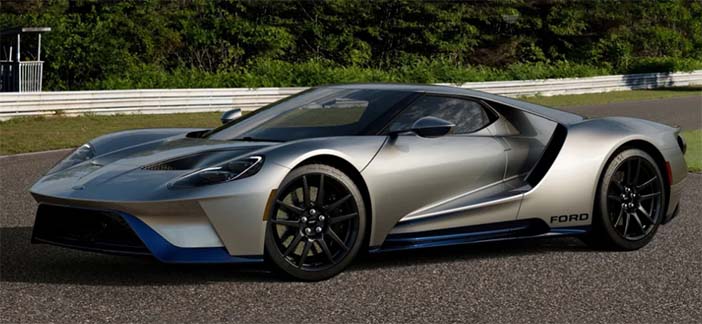
+++ This is the last special edition FORD is introducing for the GT supercar. It’s called the GT LM Edition, and it’s designed to honor the Ford GT’s 2016 Le Mans class victory. Ford plans on building 20 of these LM Editions, which will count toward the 1.350 total GTs it promised to build. They’ll all be painted in the same Liquid Silver exterior, but buyers will have the option to choose between red- or blue-tinted carbon fiber themes. If you recall the Le Mans-winning car’s livery from 2016, it was a mixture of red, white and blue, so Ford has chosen the red and blue to honor that car’s appearance. In total, Ford will tint the front splitter, side sills, engine bay louvers, mirror stalks and rear diffuser. Also of note on the exterior are 20-inch carbon fiber wheels, but they’re not the standard GT carbon wheels; instead, these will have matching red or blue inner-barrel accents. Ford will also toss in titanium lug nuts and black-painted brake calipers to complete the wheel and brake package. A new exhaust tip design was developed for the LM model. It’s a 3D printed titanium dual exhaust that features a “cyclonic design” in the tips to hint at the twin-turbo V6. Power is unchanged at 660 horsepower. Directly above the new exhaust tips, you’ll find a 3D printed GT LM badge. As for the interior, Ford continues its red/blue theme inside, but in asymmetrical fashion. Whichever color you choose, Ford will also wrap the driver’s seat in Alcantara of that particular color. So if you go with blue, you’ll get a blue driver’s seat. Choose for red carbon fiber on the exterior, and the seat will also be red. All passenger seats in the LM car will be Ebony (black) Alcantara, but will feature stitching in the same color as the driver’s seat as a nod to the color theme. The last big unique touch for the LM is an intriguing instrument panel badge. To manufacture the special GT LM dash badge, Ford ground down the crankshaft of the 2016 Le Mans third-place finishing car into a powder, and will use it as material to 3-D print the instrument panel badge of all 20 LM Edition cars. Apparently, the engine from the third place car was just sitting around fully disassembled on a shelf, so Ford decided to make use of it! Ford says customer deliveries of the LM Edition in the United States will begin this fall, and production of it will wrap by year-end. +++
+++ The long-awaited replacement for the LAMBORGHINI Aventador will continue to draw the bulk of its power from a highly strung, large-capacity V12 engine, but with a new hybrid element that, bosses suggest, will make it significantly more powerful than today’s model. Due in 2023, the 12-cylinder supercar will use a totally new combustion engine that will be supplemented with electric motors, in a similar set-up to that used by the limited-run Sián FKP 37 and Countach LPI 800-4 hyper-hybrids. This electrification plan allows the Italian company’s signature V12 engine to “live on”, chief technical officer Rouven Mohr told, rather than being killed off due to the increasingly strict emissions regulations being brought in around the world. To keep the V12 punch while reducing emissions, Lamborghini will install its state-of-the-art, lightweight supercapacitor energy-storage device, which it has continued to develop following its debut in the €3.3 million Sián (Dutch pricing). The supercapacitor, which in current form weighs 34kg, charges 3 times faster than a conventional lithium ion battery of similar size. Lamborghini is also thought to be looking to use carbonfibre bodywork to store electrical energy, although no details have been released. Thanks to the electrical boost, the new car’s power output is expected to be more than the 780 hp pushed out by the Aventador Ultimae (the last of the pure-V12 Lamborghinis). “In any car, we will not make a downsizing hybridization. We will always do something on top”, said Mohr. “So our philosophy is higher: even more combustion power plus hybridization, not reducing this and compensating with that”. He added: “We’re still working on the supercapacitor. We’re at the moment working on the next step, because the first generation is young”. The Aventador’s replacement, as with the follow-up to the Huracán due shortly afterwards, will also be completely new from the ground up, confirmed Mohr. He said: “There’s no carryover from any car. From the model point of view, all relevant modules, meaning engine, gearbox, drivetrain or whatever, everything is new”. He also suggested a slightly more conventional hybrid system could be on the cards for future models: “In the future, we could also think to make a combination between classic cell chemistry and a separate capacitor, but on this we still have to do some work. It’s not ready now”. To sceptics with doubts about Lamborghini’s ability to bridge the gap between the eras of internal combustion and electric motors, Mohr had a clear message: “You can be sure the car will not be a disappointment regarding the emotions. We will fulfil the regulations, but we will also improve the emotions. I can guarantee that”. Lamborghini has also laid out plans to give its entry-level Huracán replacement a hybrid powertrain, and technical boss Rouven Mohr’s commitment to “emotional”, large-capacity combustion engines could enable it to continue with V10 power. However, the current Huracán shares its powerplant with the Audi R8, the only other V10 car still on sale, which itself is going electric. So a next-generation V10 would need to be created (or at least modified) in-house at great expense. One alternative for the next-generation Huracán would be to use a variation of the Audi-Porsche twinturbocharged 4.0-litre V8, which is used as the basis of a hybrid powertrain in Porsche’s front-engined Cayenne and Panamera. As well as a change of engine, the next-generation Huracán and Aventador will arrive with all-new designs, Mohr has confirmed, because the company wants to further differentiate its 2 core model lines. “Our cars have always had a clear character, a clear mission”, he said, adding that, with the next generation, “there’s no risk that you mix up Huracán with Aventador”. Asked what these changes and new designs could be, Mohr refused to give specific details: “I say nothing. But for us, it’s important that every car has a clear character, and this will also be in the next generation”. +++
+++ The OPEC+ alliance of oil-exporting countries decided Wednesday to sharply cut production to support sagging OIL PRICES , a move that could deal the struggling global economy another blow and raise politically sensitive pump prices for drivers. Energy ministers cut production by a larger-than-expected 2 million barrels per day starting in November after gathering for their first face-to-face meeting at the Vienna headquarters of the OPEC oil cartel since the start of the Covid-19 pandemic. The group said the decision was based on the “uncertainty that surrounds the global economic and oil market outlooks”. Saudi Energy Minister Abdulaziz bin Salman stressed the cartel’s stated role as a guardian of stable energy markets. “We are here to stay as a moderating force, to bring about stability”, he told reporters. Besides a token trim last month, the major cut in the amount of crude that OPEC+ ships to the world is an abrupt turnaround from months of restoring deep cuts made during the depths of the pandemic. As demand rebounded, global energy prices have swung wildly since Russia invaded Ukraine, helping fuel inflation that is squeezing economies around the world. The impact of the production cut on oil prices (and thus the price of gasoline made from crude) will be limited somewhat because OPEC+ members already can’t meet their quotas. The decision could help alliance member Russia weather a looming European ban on most of Moscow’s oil and comes amid an energy crisis created by Russia reducing natural gas supplies to Europe, whose leaders call it retaliation for supporting Ukraine and imposing sanctions. Oil is trading well below its summer peaks because of fears that major global economies such as the U.S. or Europe will sink into recession due to high inflation, rising interest rates and uncertainty over the war in Ukraine. “We are going through a period of diverse uncertainties, which could come our way, it’s a brewing cloud”, bin Salman said, adding that OPEC+ sought to remain “ahead of the curve”. The fall in oil prices has been a boon to drivers, who saw lower gasoline prices at the pump before costs recently started ticking up, and for U.S. president Joe Biden as his Democratic Party gears up for congressional elections next month. “The president is disappointed by the shortsighted decision by OPEC+ to cut production quotas while the global economy is dealing with the continued negative impact of Putin’s invasion of Ukraine”, the White House said in a statement. “At a time when maintaining a global supply of energy is of paramount importance, this decision will have the most negative impact on lower- and middle-income countries that are already reeling from elevated energy prices”. The Biden administration will work with Congress on additional tools to reduce OPEC’s control over energy prices, the statement said. Oil supply could face further cutbacks in coming months when a European ban on most Russian imports takes effect in December. A separate move by the U.S. and other members of the Group of Seven wealthy democracies to impose a price cap on Russian oil could reduce supply if Russia retaliates by refusing to ship to countries and companies that observe the cap. The EU agreed Wednesday on new sanctions that are expected to include a price cap on Russian oil. Russia “will need to find new buyers for its oil when the EU embargo comes into force in early December and will presumably have to make further price concessions to do so”, analysts at Commerzbank said. “Higher prices beforehand, boosted by production cuts elsewhere, would therefore doubtless be very welcome”. Dwindling prospects for a diplomatic deal to limit Iran’s nuclear program also have lowered prospects for a return of as much as 1.5 million barrels a day in Iranian oil to the market if sanctions are removed. Oil prices surged this summer as markets worried about the loss of Russian supplies from sanctions over the war in Ukraine, but they slipped as fears about recessions in major economies and China’s Covid-19 restrictions weighed on demand for crude. International benchmark Brent has sagged as low as $84 in recent days after spending most of the summer months over $100 per barrel. U.S. crude rose to $87.64, and international benchmark Brent went up to $93.21 after the decision. At its last meeting in September, OPEC+ reduced the amount of oil it produces by 100.000 barrels a day in October. That token cut didn’t do much to boost lower oil prices, but it put markets on notice that the group was willing to act if prices kept falling. +++
+++ It wasn’t so long ago that TOYOTA didn’t have anything particularly exciting in its portfolio. Not that an automaker needs performance chops to be successful, but a cool halo car certainly grabs attention. The GT86 sports car came along in 2013, but the Supra’s return really helped Toyota reclaim some of its fun-to-drive mojo. GR versions of the Yaris and Corolla are icing on the cake, but it seems that’s all the GR icing we will get. That’s the word from Toyota’s chief engineer for the GR86. Yasunori Suezawa told that no additional GR models were planned beyond the ones currently available. On the Dutch market, that means the GR Supra, GR86 and the GR Yaris. In other markets, the new GR Corolla is also offered. So for those dreaming of a GR Aygo-X: my condolences. However, there is some ambiguity regarding the GR scene. Suezawa said there will be more GR Sport models, with the C-HR getting a specific mention along with Corolla and Yaris Cross. Furthermore, there’s some mystery as to whether the GR news applies to models currently offered, or all future offerings. Among other things, a GR version of the recently revealed Toyota Crown hybrid is rumored to be under consideration, along with the electric BZ4X. Even if more GR models don’t arrive, right now is a pretty good time to be a fan of Toyota performance. Yes, the GR86 is shared with Subaru, and the Supra is largely a BMW Z4 under the skin. But the GR Yaris and GR Corolla are Toyota to the core, and they are quite good at being supremely fun-to-drive performance vehicles. +++
+++ New-car registrations in the UNITED KINGDOM saw their second consecutive month of growth in September 2022, but remain down on pre-Covid levels, according to the latest figures from the Society of Motor Manufacturers and Traders (SMMT). A total of 225.269 new cars were registered in September 2022. Although this represented a 4.6 percent increase compared with September 2021 (which was the weakest September on record since 1998) it remains 34.4 percent below typical pre-Covid levels for what is typically the second-biggest month of the year. Fleet and business registrations grew healthily, while there was a slight decline in registrations for private buyers. September 2022 also saw the second-highest monthly volume of EV registrations in history, up 16.5 percent to 38.116 units. Plug-in hybrid registrations declined by 11.5 percent to 12.281 units, but more than one in 5 new cars that joined UK roads in September 2022 had a plug. Some 249.575 plug-in cars have so far been registered in 2022. Superminis were the most popular class of car, accounting for 30.9 percent of all registrations. Mike Hawes, chief executive of the SMMT, said: “September has seen Britain’s millionth electric car reach the road – an important milestone in the shift to zero-emission mobility. Battery-electric vehicles make up but a small fraction of cars on the road, so we need to ensure every lever is pulled to encourage motorists to make the shift if our green goals are to be met. The overall market remains weak, however, as supply chain issues continue to constrain model availability. Whilst the industry is working hard to address these issues, the long-term recovery of the market also depends on robust consumer confidence and economic stability”. +++
+++ A smaller share of electric-vehicle owners in the UNITED STATES are going back to gas-powered cars when buying another car, according to data from S&P Global Mobility analyzed by Axios. Between the second quarter of 2021 and 2022, the percentage of households who owned and EV and bought another EV increased from 48% to 65.3%, US vehicle registration data shows. Tom Libby, associate director of industry analysis at S&P Global Mobility told Axios the increase has been consistent throughout 2022, and that it’s “a very positive sign about the future of EVs”. Despite the growing number of US drivers turning to EVs, China and Europe lead as buyers in the EV market, Axios reports. But car manufacturers are producing more EV models, meaning US vehicle consumers will soon have more options to choose from. S&P Global Mobility found that the number of available EV models in the US went from 27 to 45 between July 2021 and 2022. By 2025, S&P Global Mobility expects the number of EV models to reach close to 150. Chevrolet is releasing an electric Silverado pickup next year to compete with Ford’s F-150 Lightning. The car manufacturer is also releasing an electric SUV, the Equinox EV, that will also go on sale next year for $30.000. The US government is making it cheaper for people to buy EVs too, with president Joe Biden’s Inflation Reduction Act giving buyers up to $4.000 to buy a used EV. The most famous of EV makers, Tesla, remains a leader in the space, with the S&P Global Mobility data finding just over half of EV registrations in July for the Tesla Model Y and Tesla Model 3. Over 90% of people who already owned a Tesla chose it again when buying another EV, per Axios. The data found California as the leading market for EVs in the US, but data from between 2012 and 2018 found that around 20% of EV owners in the state switched back to a gas-powered car. The biggest reason for the switch was due to the difficulty of finding EV chargers on the open road. +++