
+++ BMW just put a hard number on how much of a dead car can come back as a new one, and it is easier to misread than to cheer. The company’s Car2Car research project reports a 51 percent “recycling rate” from end-of-life vehicles, based on upgraded sorting and smelting applied to hundreds of scrapped BMWs. That 51 percent figure is already being shared as “half the car gets recycled”, which is not what BMW’s engineers actually measured. The project tracked which recovered materials are clean and consistent enough to go straight back into automotive production, and where today’s recycling system still leaves money and carbon savings on the table. BMW’s Car2Car work used material from 433 end-of-life vehicles covering 60 different models, then pushed beyond standard shredding and bulk metal recovery. Engineers followed each output stream to see which share could become new BMW-grade parts rather than generic scrap that disappears into other industries or lower-value uses. The 51 percent rate describes material that re-enters new automotive applications at comparable quality, not how much of the whole vehicle is recycled in any form.
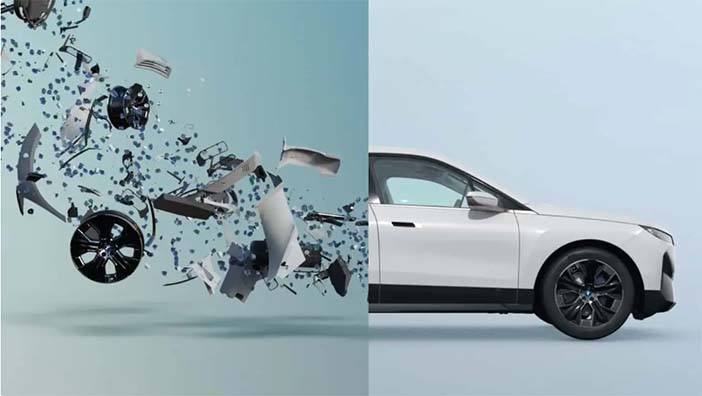
Under conventional recycling, BMW found that only 6 percent of a scrapped car’s material came back as high-quality automotive feedstock, highlighting how much headroom there is in how cars are currently torn down. BMW points to steel, aluminium, and copper as the main drivers of that jump. In the project, the usable share of steel rose from 1 percent to 81 percent, aluminium from 23 percent to 52 percent, and copper from 48 percent to 68 percent once recyclers applied more selective separation and tighter process control, without demanding far more manual dismantling than the disassembly already required before shredding. The big metals matter because they are already central to BMW’s product planning and climate targets. The company wants half its global sales to be electric vehicles later this decade, and those EVs still carry large amounts of steel and aluminium in their bodies and chassis. Looping those metals straight from end-of-life cars into new stampings or castings takes pressure off primary mines and smelters. Car2Car is not just a lab exercise. BMW reports making more than 100.000 series-production components using recovered steel from the trial vehicles, showing that scrap-based material can meet its existing specs. The company has also filed a patent linked to the project, signalling commercial value in the way it selects, melts, and qualifies these recycled streams for future models and platforms. If you are wondering why the rate is not higher, the answer lies in the rest of the vehicle. BMW’s own summary notes that plastics and glass still struggle to meet the consistency, strength, and durability requirements for reuse in new cars once they have been through normal shredding. The 51 percent result shows how far metals can go today while underlining how much work remains on the mixed plastics and glass that fill out a modern interior. +++
+++ If you thought the FORD FOCUS was dead, you could be in for a surprise! The iconic hatch went off sale in 2025, but now it looks like a new edition is on the way and it could look a little different. Ford isn’t giving up on Europe and recently confirmed it’s working on a new C-segment crossover, which is said to be inspired by the brand’s ‘motorsport’ heritage. It is this model that could well carry the iconic Focus nameplate. It would be a remarkable return, but perhaps not unsurprising given that the Ford Fiesta nameplate is also set to be revived in 2028 as an all-electric rival to the Renault 5 and Nissan Micra. The new crossover will feature a 4-point headlight design inspired by iconic racers and models from Ford’s past. These are offset with a combination of muscular surfaces and some rugged design elements to remind buyers that the car is still an SUV. It might be a stretch to call this new model a traditional hatchback like previous generations of the Focus. Rather than challenge the Volkswagen Golf rival, it will instead rival crossovers such as the T-Roc, a model that has an even bigger appeal to European buyers. Other mainstream rivals will include the Nissan Qashqai, Toyota C-HR and Cupra Formentor. A few technical details of the new Focus are already known, such as whether it will run hybrid, plug-in hybrid or range-extender hybrid engines. The decision will depend on whether these new models are built from their own joint-venture partnership; Ford refused to elaborate, but it did say it has entered into strategic partnerships to boost scale on these projects and speed up development times. “These aren’t just deals, they are strategic levers”, said Jim Baumbick, president of Ford in Europe. “We partner with the best to move with speed and scale, and we obsess over the product to deliver passionate, unmistakably Ford vehicles”. I asked whether this would result in the revival of the Focus nameplate? “I’m not in a position to share anything, but certainly the history and the heritage of some of those names are not lost on us”, he responded. The Focus isn’t the only hybrid-powered crossover coming, though, because 2029 will also bring the introduction of a larger D-segment model that’ll in effect replace the current Kuga. This more dynamic model will join Ford’s new European Bronco due in 2027, creating 2 options for buyers looking for family-focused SUVs at opposite ends of the style spectrum. These new models will complement the existing Explorer and Capri electric SUVs, which are based on Volkswagen underpinnings from an earlier Ford partnership. But these won’t continue unchanged either, as Ford Europe’s general manager of passenger vehicles Christian Weingartner explained. “The Volkswagen partnership is a really good one”, he said. “We can tap into all of their developments and the advancement of the platform, and that’s what we want to do”. +++
+++ The all-electric GENESIS GV90 is nearly here, and ahead of its launch, a batch of key technical details has surfaced online courtesy of South Korea’s Ministry of Environment. The filings show the GV90 gets a larger battery pack than the related Kia EV9 and Hyundai Ioniq 9, along with more power. Found under the skin of the GV90 will be a sizeable 123.52 kWh gross battery pack with a usable 115 kWh capacity. By comparison, the biggest pack offered for the Kia EV9 is 99.8 kWh gross or 96 kWh usable, while the largest pack available for the Hyundai Ioniq 9 is 110.3 kWh gross, which works out to be roughly 106 kWh usable.
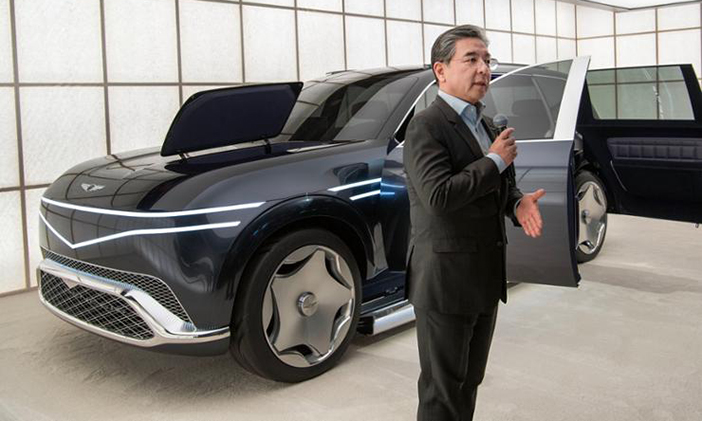
The emissions certification document published in Korea notes the GV90 will have a 322 hp front-mounted electric motor, while at the rear there will be a 335 hp unit. Combined, it works out to be 657 hp. Given the GV90 will tip the scales at 3.030 kg, it needs all the power it can get. The paperwork also lists the GV90 as having a combined driving range of 481 km. While this may not sound very impressive given the size of the battery, Korea’s testing procedure is stricter than the WLTP cycle in Europe, so the European range is expected to be around 580 km. It’s unclear if the GV90 will be offered with other battery pack and electric motor options, or if this powerful model will be the only version. Both 6- and 7-seat versions are mentioned in the data. Design-wise, the GV90 will follow in the footsteps of the Neolun Concept from 2024. No doubt the highlight will be the rear-facing suicide doors and black B-pillars, something largely unheard of for a vehicle expected to play in this price bracket. +++
+++ Ford is firming up its plan to take on the BMW M3 and Audi RS5 with a 4-door version of the MUSTANG and dealers in the US have reportedly been shown the final design. The saloon will take the already-trademarked Mach 4 name into production (both as a nod to the Mach 1 range-topper and to differentiate it from the Mach-E electric SUV) and that it’s similar in size and shape to the Porsche Panamera. Dealers were told that pricing would start around €100.000 when exported to The Netherlands and that it will be capable of completing the 0-100 kph dash in about 4.0 seconds. Those who saw the car reportedly said it uses a hybrid powertrain, potentially based around the 5.0-litre V8 engine used by the Mustang coupé. Ford CEO Jim Farley pledged 2 years ago to “never build a Mustang that isn’t a Mustang” and the latest information suggests the Mach 4 will be true to the muscle car brief. Farley added: “For instance, there will never be room for a small, two-row Ford SUV with a Mustang badge stuck on it. But could we do other Mustang body forms: a 4-door or whatever? I believe we could, as long as these models have all the performance and attitude of the original”. Farley also said that Ford will continue to build V8s “as long as God and the politicians let us”. Although the US has all but dispensed with emissions regulation under president Donald Trump, hybridisation could be key to Ford offering a derivative of its ‘Coyote’ 5.0-litre V8 in markets such as Europe and Asia, where emissions regulations are becoming increasingly tight. The Wall Street Journal suggested the Mach 4 could go on sale by the end of the decade. Ford’s European passenger vehicles chief, Christian Weingärtner, recently told that it would consider offering global models here if it foresees sufficient demand for them. He said the company was “willing to also go into other segments beyond” small and family-sized crossovers, citing “great opportunities” for larger cars. Global appeal is likely to be a key consideration in the development of the Mach 4: Farley said the move to go global with the Mustang a decade ago was “a big risk” but it had “paid off”. Yet he also shunned the prospect of an electric Mustang to follow the Mach-E: “I look at other users of pure-electric power such as Formula E, and even companies like Rimac, and I just don’t think that would be right for the Mustang. Great for other Fords, look at the worldwide success of Transit, but not for the Mustang”. +++
+++ Spain will not oppose the installation of an electric vehicle factory by the Chinese group SAIC GROUP in Ferrol. The minister, Margarita Robles, communicated this Tuesday to the president of the Xunta de Galicia, Alfonso Rueda, that her department will issue a new favorable report on the project. The decision clears one of the main uncertainties that arose in recent days regarding the investment, after it became known that sectors of the Army and the National Intelligence Center (CNI) had expressed concern about the proximity of the future factory to strategic military facilities. The project will be located in the outer port of Ferrol, about 5 kilometers in a straight line from the Navy arsenal and the military shipyard of Navantia. Defense will ultimately not raise objections to the operation. The position communicated by Robles comes after 2 days of uncertainty about an investment backed by both the central Government and the Xunta. The alerts known this week pointed out that the choice of location could generate security risks due to the proximity of facilities linked to the Navy. Among the concerns raised was the possibility that a Chinese business establishment in that environment could facilitate activities for obtaining information about military infrastructures. The central Executive already clarified on Monday that it maintained its support for the project and that the operation was moving forward pending the corresponding procedures. The communication from Robles to the Xunta now represents another step by anticipating that its report will not be contrary to the installation. The project will still have to complete the administrative procedure planned before its final approval by the Council of Ministers. SAIC Motor, one of the main Chinese automobile manufacturers, intends to use the Ferrol plant as a platform to expand its presence in the European market through MG, the historic British brand that currently belongs to the group. The project contemplates an approximate investment of 200 million euros and the creation of around 1.000 jobs. The business plans foresee assembling in Ferrol up to 120.000 vehicles per year from components transported from China. The factory would be complemented by the development of auxiliary industry and a logistics center in the region. The investment has particular relevance for Ferrol, an area marked for decades by the loss of industrial activity linked to the reconversion of the naval sector. The Xunta has already declared the initiative “strategic industrial project”. The project has so far received the support of both administrations, despite being governed by different parties. Pedro Sánchez showed interest in the investment during his trip to China last April, while Alfonso Rueda also made arrangements in the Asian country to advocate for Ferrol as the site for the future factory. Other Spanish locations were also vying to receive the investment. Last July, officials from SAIC Motor traveled to Galicia, were received by Rueda, and conducted a first landing trial of 700 vehicles at the port of Ferrol, as part of the preparations linked to the project. The controversy arising from the security reservations threatened to introduce an obstacle in an operation that until then had received support from both the central and regional governments. The most sensitive element of the project is its location. The outer port chosen by SAIC is located a few kilometers from one of the main arsenals of the Spanish Navy and the Navantia complex, dedicated among other activities to the construction and maintenance of military vessels. The information regarding the reservations from Defense and intelligence services provoked reactions from both the PP and Sumar. The mayor of Ferrol, José Manuel Rey Varela, from the PP and president of the Senate Defense Commission, suggested that behind the alerts there could be “business interests”. For his part, the deputy spokesperson for Sumar in Congress, Enrique Santiago, linked the reluctance to the economic and strategic struggle between the United States and China and to NATO’s position. However, the available information does not support that these are the reasons for the initial reservations of the security agencies. The support announced by Robles does not imply that the project will be exempt from specific security measures. The formula transferred to the Xunta leaves open the possibility of establishing operational conditions related to the activity of the plant and its proximity to sensitive military facilities. For now, it has not been detailed what those conditions could be. The new Defense report eliminates, in any case, the immediate possibility of a veto for military reasons and allows the project to continue advancing towards its final authorization. +++
+++ A dead 12-volt battery in some TOYOTA and LEXUS hybrids is doing more than killing the radio presents, it is leaving people fighting to get out of their cars. Consumer group Which? has flagged cases where an electric door-opening system stayed locked when the starter battery failed, forcing owners to smash a window or wrestle jammed doors with kids in the back. The core issue is a conventional 12-volt starter battery in certain Toyota and Lexus hybrids that appears prone to repeated discharge or early failure. Which? gathered more than 270 owner responses about battery problems, and more than three-quarters involved Toyota and Lexus models, far above the survey average for full hybrid cars from all brands. Within that sample, the Lexus LBX logged a 29.2 percent rate of battery problems and the Toyota Yaris Cross came in at 19.1 percent, while about 5.6 percent of full hybrid owners overall reported a battery issue. Owners of Lexus RX, NX, RZ, and LBX, plus Toyota C-HR, Corolla, Yaris, and Yaris Cross most often reported repeated failures, replacement costs, and having to buy external charging kits. Toyota has faced other recent electrical and safety problems, including charging system malfunction warnings on some models and a separate recall where an instrument-cluster display can go blank in certain 2025–2026 Camry vehicles. None of those campaigns directly cover this 12-volt complaint, but they underline why owners are sensitive to anything that affects basic safety functions such as door locks and warning lights. Which? highlighted the Lexus LBX and Toyota Yaris Cross as models with high reported rates and listed the Lexus RX, NX, RZ, plus Toyota C-HR, Corolla, and Yaris among the cars where owners most often described repeated 12-volt failures. Lexus has fitted a higher-capacity 12-volt battery to new LBX cars built from April 2025 and checks battery quality when those cars come in for routine maintenance, replacing batteries free of charge if they match the faulty production run. Toyota updated its battery checks in May 2026 so that owners whose cars are found to need a new 12-volt battery receive a free replacement. A flat 12-volt may prevent smart entry, keyless start, and some electric door functions from working, but most recent Lexus and Toyota models include a mechanical key blade hidden in the fob and at least one manual interior door release. If you cannot unlock your Toyota or Lexus because the smart entry system is dead, remove the metal key from the fob and use the key cylinder hidden behind a cap on the driver door handle. Once inside, locate the manual release described in the owner’s manual, on some Lexus models the interior handle needs the door opener switch pulled toward you twice to mechanically unlatch the door, and Toyota and Lexus stress that customers should learn those overrides in advance rather than trying to find them in a panic. For shoppers weighing hybrid reliability, this story lands alongside other open issues, from recent Toyota and Lexus recall lists for 2026-model vehicles to high-profile cases like a Camry fire investigation and battery corrosion problems on other brands. If you drive one of the affected Toyota or Lexus hybrids, the most useful step right now is to learn where your mechanical key and manual interior door releases are and practice using them before a dead battery turns that knowledge test into an emergency. +++
+++ It’s decision time. The UNITED KINGDOM needs to ask itself if it wants to be a major car producer or whether it’s content to sit on the sidelines. I’ve long warned that the UK has, in production terms, been tumbling down the international league tables. We now churn out as few cars as countries such as nothingy Malaysia and at-war Russia. Mexico, Indonesia and Turkey have no domestic car makers of international renown. But they build more cars. As for the Brazilians, South Koreans, Germans, Indians, Japanese and Chinese… they thrash the UK. They’re all thriving. The UK is barely surviving. Since 2000, Peugeot, MG Rover, Jaguar, Ford, Honda and Vauxhall have closed factories here. Put another way, during the past quarter of a century, the UK has lost one major car plant roughly every 5 years – with those remaining mothballed or working below capacity (and therefore under-performing). As I’ve said before, UK car production is on life support. Even the chief exec of the Society of Motor Manufacturers and Traders is asking: “Why would you build cars in Britain?” The UK Government and suspiciously quiet trade union movement would do well to at least try answering that scary question. As should the rest of us. Now that the UK is free (allegedly) from the EU and its complicated rules on state aid for car firms and, in turn, their workers, shouldn’t the British at least be discussing the possibility of subsidising them again, just as it heavily subsidised Nissan’s factory in the eighties? Also, we need to be far more honest about the rapid decline in UK car production numbers and the reasons for the freefall. It’s obvious, and then some, that as those aforementioned automotive giants closed their factories, UK PLC’s production volumes suffered, as did the largely blameless workers who were made redundant. Less obvious but almost as important is the following fact: the remaining UK factories have to be more efficient and productive with more, not fewer, production line workers. Nissan acknowledges this, and is doing something about it by freeing up one of its two Sunderland lines so Chery of China can lease or buy it. Simple, brilliant, entirely logical. Can we have something similar, please, in the Midlands where Land Rover volumes are far lower than they should be? Also, increased output and improved economies of scale might reduce the extraordinarily high prices being charged for its cars these days. More importantly, the ongoing stoppage of Jag production is a senseless waste of good factories and workers. I’m seriously wondering if Tata knows what to do with the brand. Is it time for Jaguar to be sold again, perhaps to a leading Chinese firm that knows nothing about closing production lines and everything about keeping them running, while ensuring the workers are kept busy and enjoy improved job security? +++