+++ Within BMW ’s most recent quarterly report the firm announced a new concept car will be revealed at CES Las Vegas in January. The concept will give us a preview of BMW’s future electric cars that will be based on the upcoming Neue Klasse platform. Details on the concept remain thin, but BMW says the car will be a ‘Vision Vehicle’, so we can expect it to emulate previous BMW Vision concepts, such as the Vision Next 100, i Vision Circular and the M Vision Next. The new Vision concept will most likely showcase BMW’s new battery technology that was announced in September this year. BMW calls it ‘round cell’ and the technology has been optimised for the Neue Klasse platform. The German firm claims a 20 percent improvement in energy density, a 30 percent increase in range and a 30 percent boost to charging speed. The improved performance doesn’t come at any extra expense either, with BMW saying the cost of the battery will actually be reduced by up to 50 percent. With new battery technology on board, the upcoming concept car could offer the greatest range of any BMW model; a title currently held by the BMW iX and its 620 km range. This could potentially mean a maximum range of over 800 km. As for the first production BMW to utilise the Neue Klasse platform, that honour will go to the all-electric successor to the 3 Series. BMW says it expects over half of its global sales to come from BEVs, with the Neue Klasse platform accounting for a large chunk of those. 6 factories will get investment to produce the new round cell battery and these will be spread across Europe, China and the Americas to keep production and delivery costs down. +++
+++ The image arrived in Susan Swenson’s inbox on a Wednesday evening. Her corporate headshot had been crudely crossed out in digital red ink, and the word “Kill” was written in the bottom left corner. In the hours that followed, some of her colleagues received similar threats, including messages that referenced the recent assassination of former Japanese prime minister Shinzo Abe. The menacing emails marked the apex of a months-long fight for control over FARADAY FUTURE , a Los Angeles, California-based publicly traded electric vehicle startup that once billed itself as the next Tesla. In September, after the death threats, persistent pressure from Faraday’s largest shareholders, and a surprising cameo from property giant China Evergrande Group, Swenson, the executive chair, and three others agreed to leave Faraday’s board of directors in a sweeping restructuring. While it’s not known who sent the death threats (the company has referred them to the FBI), some leaders inside Faraday believe they were inspired by the boardroom fight recently waged by its largest shareholders, including a group that is partially managed by the startup’s founder, exiled Chinese tycoon Jia Yueting (The group, FF Global Partners, denies any involvement in the threats). Bloomberg News spoke to 3 people familiar with the situation who were granted anonymity to discuss sensitive matters, and reviewed dozens of public regulatory and court filings for this story. Faraday Future did not respond to a list of questions. 7 months ago, Faraday’s board sidelined Jia, who goes by YT, following an internal probe that examined his influence over day-to-day operations, as well as a series of loans employees made to the startup over the years. Now, he stands to benefit greatly from the impending board shakeup, which will be completed when Faraday holds its delayed annual meeting. He has been named an adviser to the board, and FF Global will have input on all 6 new members. As Faraday put it in a recent SEC filing, “YT Jia and FF Global have strengthened their already significant influence over the Company”. But as YT reclaims power, it is over a company that’s under investigation by the US Securities and Exchange Commission in relation to the findings of the internal probe; information the Department of Justice has inquired about, too, according to Faraday. The startup also needs money, fast. After burning through more than $3 billion since it launched 8 years ago, Faraday reported just $27 million in cash on October 25th, and says it needs millions more if it hopes to finally ship its elusive SUV. YT ascended in China during the early 2010s, when a tsunami of cash flowed to founders with big visions. He started the “Netflix of China” and parlayed its success into a conglomerate called LeEco, which made everything from smartphones to Android-powered e-bikes. Its expansion was fueled by billions of dollars in debt, and YT personally guaranteed many of the loans. At one point, he pledged 97 percent of his shares in LeEco’s listed arm in exchange for nearly $2 billion, according to the New York Times. Meanwhile, Elon Musk was turning the auto industry on its head. Investors started placing big bets on finding the next Tesla and dozens of EV startups took root in China and the U.S.. It was in this competitive environment that YT founded Faraday in California in 2014, betting he could beat Musk at his own game. Eventually, LeEco crumbled under the weight of YT’s ambition. In 2017 it laid off hundreds of employees, abandoned a $2 billion acquisition of TV-maker Vizio, and halted a U.S. expansion. Chinese creditors started pursuing LeEco, and YT. The tycoon landed on a government debtor blacklist and had some assets frozen. So he moved to the US and hunkered down with Faraday. YT’s connection to Faraday was initially hard to discern. The company had no publicly named CEO, and early executives declined to say where the money came from. According to court filings, it was coming through YT: some $900 million or so over its first few years. He spent much of it hoovering up talent from the likes of Tesla and General Motors, including a large swath of the team that created the EV1, the Detroit automaker’s first attempt at a mass-market EV. Faraday struggled to meet YT’s ambitions. He wanted an ultra-luxe EV packed with fancy technology. But by late 2017, months after revealing its first prototype, the company was running out of cash. YT brought in a pair of former BMW executives, but when they proposed filing for Chapter 11 protection, the tycoon bucked. A restructuring would have jeopardized his control of the company, according to a person familiar with the matter, so he resisted. The executives resigned, and Faraday accused them of “dereliction of duty”. At the end of 2017, YT found an unlikely savior in China Evergrande Group, which pledged to inject up to $2 billion into Faraday in exchange for a 45% stake. YT also officially took over as CEO. Faraday spent the first $800 million ahead of schedule. Evergrande agreed to advance another $700 million in mid-2018, according to filings from a Hong Kong arbitration case between the two companies, but on the condition that YT step aside and sacrifice his ownership. YT obliged, at least on paper. He transferred his stake to the daughter of a Faraday vice president, which the Chinese property giant argued was not far enough. The new money never came, and in late 2018 YT and Faraday sued Evergrande in U.S. court, claiming the property giant was “deliberately starving” the EV startup. Evergrande accused YT of “acting as a shadow director controlling or directing the decisions of directors closely associated with him”. The property giant did not respond to a request for comment. Faraday had to furlough and lay off hundreds of employees, and suppliers hounded the startup with lawsuits. Nick Sampson, a former Tesla executive and Faraday co-founder, walked away. “The company is effectively insolvent”, he said in his resignation letter. On the final day of 2018, Faraday and Evergrande struck a truce. Evergrande agreed to reduce its stake to roughly 33%, and allowed Faraday to seek other investors. The property giant gave Faraday a $10 million bridge loan, and YT’s startup survived with him at the helm. These bitter disputes, each centered around YT’s control of the company, made it hard for Faraday to raise money. In 2019, the company made some moves that appeared to dilute the founder’s power: it set up a management group called FF Global Partners, that received a chunk of YT’s ownership (It now owns around 30% of Faraday). YT was also replaced as CEO by a different former BMW executive, Carsten Breitfeld. By October, YT filed for personal bankruptcy in the U.S. to settle billions of LeEco debt he’d guaranteed. Creditors exchanged their claims for slices of a trust that owned Faraday Future shares, allowing some repayment if the startup was acquired or went public; giving many of YT’s foes a tangible interest in his company’s success. What kept Faraday afloat during all of this was a series of more than a dozen loans made to the company by employees or parties related to YT, according to SEC filings. In April 2019, the company received a $9 million loan from an employee in Faraday’s Global Capital Markets department, funded by Ocean View Drive, a California corporation YT established in 2014 in order to buy 3 mansions on the Pacific coastline (YT no longer controls it, according to Faraday’s SEC filings, though the current owner is the spouse of his nephew, Ruokun Jia, who also worked at Faraday). In July, another employee from the same department loaned Faraday $16.5 million. That loan was funded by FF Global Partners LLC, whose members borrowed the money from a Delaware LLC called “Dream Sunrise”, which in turn borrowed its funding from an LLC owned by Ruokun Jia’s spouse. Asked about these loans, a spokesperson for FF Global said Faraday was “unable to obtain significant third-party financing” at the time, and so it instead had to rely on “numerous smaller-scale financings that YT Jia helped facilitate”, which the group said is a “typical financing approach for founder-led startups”. “Over the past several years, YT Jia and FF Global Partners have rescued FFIE many times”, the spokesperson said. Even after this series of multi-layered transactions, Faraday still needed a $9.2 million loan from the Paycheck Protection Program to ride out the pandemic downturn. With just $1.8 million in the bank at the end of the year, Faraday tapped into the sudden boom of special purpose acquisition company mergers, which helped turn peers like Nikola, Canoo and Fisker into public companies. The startup partnered with a SPAC run by two brothers from the New York City real estate industry, Jordan and Scott Vogel. Not only did they see promise in Faraday’s EV tech, according to 2 of the people familiar with the matter, but they were told, and believed, YT was no longer in control. That deal came together in early 2021. By July, Faraday netted $1 billion and started trading on the Nasdaq, with institutional backing from Citadel Advisors, China’s largest private automaker Geely, and data company Palantir Technologies. Breitfeld promised to start building the SUV within 12 months. The Vogels joined Faraday’s board following the merger, as did Swenson. Within 3 months the board opened a probe into YT, run by a special committee spearheaded by Swenson. The committee hired Kirkland & Ellis and forensic accounting firm Alvarez and Marsal to examine his interpersonal and financial influence on the company. The committee concluded that senior managers had misled investors about how much day-to-day control YT maintained over Faraday, according to an April filing with the SEC. They also found senior managers did not properly disclose “certain relationships, arrangements, and transactions” involving YT. YT was officially sidelined and stripped of his executive status. Ruokun Jia was “terminated for conduct during the Special Committee’s investigation” (Jia did not respond to a message seeking comment). Faraday has said that FF Global began pushing back on the disciplinary actions as far back as February. By June, FF Global started issuing public filings agitating to replace one of Faraday’s directors, Brian Krolicki. The public spillover disrupted a funding round with Citi, according to the people familiar, and in July, Faraday once again delayed the launch of its EV, saying it needed more money to start production. Meanwhile, the company started getting peppered with emails from “self-described ‘employee whistleblowers’ ” that painted these members of the board as villains. A group of employees who work closely with YT circulated a letter, seen by Bloomberg, that claimed Swenson had “conducted a series of unfair and improper investigations and remediation to the company and its core executives”. Swenson, Krolicki and the Vogels declined to comment for this story. FF Global agrees, saying to Bloomberg News that the group “does not believe that the Special Committee investigation was performed fairly” and that the probe “unfairly targeted for punishment people associated with FFGP”. This fight culminated with FF Global suing Faraday in Delaware Chancery Court on September 19, accusing the board of breaching its fiduciary duty. FF Global pushed for Swenson’s removal, and cited a key bit of leverage: that Evergrande, which still holds about 20.5% of Faraday following the 2021 merger, supported FF Global’s efforts to remake the board. That’s when the death threats surfaced. Krolicki received a similar image to the one that arrived in Swenson’s inbox, and other directors including the Vogels were flooded with hateful messages in the days that followed. On September 26, Faraday announced a truce. FF Global agreed to drop the lawsuit and arrange for roughly $100 million in near-term financing. In exchange, Swenson, Krolicki, and the Vogels agreed to leave the board at the next shareholder meeting. A week later, Swenson and the Vogels resigned early citing “threats and their fear that their continued association with the company might heighten the risk to themselves and their respective families”, according to Faraday. Krolicki resigned earlier this week. Whenever that next shareholder meeting happens (Faraday has yet to set a date), the startup has agreed to completely overhaul the board from 10 members to just 7. FF Global will choose 3. Three more will be chosen by a panel made up of Breitfeld, FF Global’s replacement for Swenson, and a current manager of FF Global. Breitfeld is also the 7th board member. Breitfeld’s name didn’t come up much in FF Global’s battle for the board, and the people familiar with the fight say his alliances can be hard to parse. He was a manager of FF Global until this past May. He lived in one of the California mansions that used to be owned by YT. He has also been a force in pitch meetings, the people say, which is maybe why his contract, set to expire in September, was recently extended to March 2023. Breitfeld did not respond to a request for comment. However instrumental Breitfeld has been to Faraday’s survival, or its failures, he has spent the last few years with YT looking over his shoulder; literally, at times. In some meetings, one of the people recalled, as Breitfeld took his place at the head of a conference table, YT would pull a chair up next to him. The implication was clear, this person said. In good times, and especially in bad ones, this is always going to be YT’s company. +++
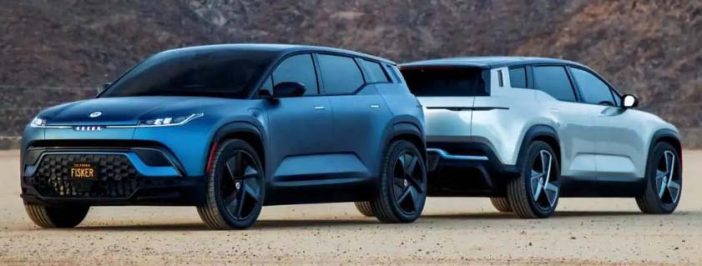
+++ Electric vehicle startup FISKER has announced financial results for the third quarter and updated reservation numbers for both the Ocean SUV and Pear entry-level model. Things are looking pretty good at the moment, with Fisker disclosing it had more than $824 million of cash and cash equivalents as of September 30, 2022. The company said this reflects its “prudent liquidity management and positions the Fisker Ocean for a successful launch”. The startup added that production of Fisker Ocean customer vehicles at Magna Steyr’s plant in Austria will begin as planned on November 17, which is exactly 2 weeks from now. From the start of production to the end of 2023, the company plans to build 42.400 Ocean units. The ambitious production plan is based on a detailed 4-stage supplier ramp up, developed to help ensure that parts suppliers would follow the company’s anticipated production ramp volumes. For 2023, Fisker plans to build 300 Ocean EVs in Q1, over 8.000 in Q2, over 15.000 in Q3 and over 19.000 in Q4. Fisker also noted that net reservations and orders for the Ocean totalled over 62.000 as of October 31, 2022, compared to the 58.000 reservations Fisker said it had in August. Fisker will begin taking firm orders for the Ocean in select global markets starting in mid-January 2023 with the Extreme trim. Retail customer deliveries are expected to begin in February 2023 following European and US homologation. Fisker says the Ocean saw double-digit increase in premium trim configurations in recent months. That’s not exactly a surprise seeing as the base Fisker Ocean Sport and mid-range Fisker Ocean Ultra trim levels are sold out in the US for 2023. At first, the company will focus production and delivery on orders for the limited edition Ocean One, which will be the only model built until Q2 2023. After that, production of the Ocean Extreme will also begin. But before all that, Fisker will deliver a small commercial fleet of 15 Oceans to Magna in December 2022. Fisker also had some updates to share about the Pear entry-level EV. Development is progressing well, with the first concept phase being signed off. Interestingly, the company expects to have a driveable prototype “ahead of time”, without providing a timeline. The company says it is now focused on execution and is in the process of transitioning its engineering and purchasing teams to Pear. As for reservations, Fisker claims it has over 5.000 of them as of October 31, compared to 4.000 in August. +++
+++ Maurizio Reggiani deserves his own chapter in LAMBORGHINI ’s history. He joined the Italian company in 1995 and rose to the position of chief technical officer in 2006; he notably led the development of some of Lamborghini’s greatest modern-day engines, including the 6.5-liter V12 that powers the Aventador. His time as the head of Lamborghini’s research and development department ended earlier in 2022 and he now serves as vice president of motorsport. His successor, Rouven Mohr, is tasked with implementing an ambitious and far-reaching electrification strategy called Direzione Cor Tauri and outlined in 2021. As Lamborghini prepares to enter a new era, I sat down with Reggiani for a behind-the-scenes look at nearly 30 years of V12 development. Question: Lamborghini has made other engines and other companies have made V12s. Why is the V12 so often associated with Lamborghini? Answer: In a time when everybody started talking about downsizing and reducing cylinder count, we continued to say that the V12 is the flagship of the super-sports car. We were born with this: Lamborghini has made a V12 during every year of its history. We also did V8s in the time of the Jalpa, for example, but the V12 was every time the main pillar of this company. If you want to be considered the pinnacle of super-sports cars, no other engine can really speak to purists like a naturally-aspirated V12 can. In terms of power, in terms of sound, in terms of emotion, and in terms of, let me say, the coolest engine that’s possible in terms of engineering definition. Q: What projects have stood out to you during your time at the head of Lamborghini’s R&D department? A: When I started my career, 40 years ago at Maserati, I worked in engine development. At Bugatti, I was responsible for powertrain, which of course includes the engine. For me, an engine is kind of like a first love, and you remain in love for all of your life. To look at an engine, to look inside, to discuss the components, to have an opinion, and to give a suggestion was my way of working every time. One of the projects that excited me the most was the Diablo GT. For the first time, we decided to put a single throttle per cylinder, and it was a level of sophistication that was more or less never used before by Lamborghini. You take experience from the past and try to apply it to [the present]. This improved a lot the performance, and it was really super exciting. The engine in the Aventador is another highlight: it was designed together with the Aventador. That was a completely new car, we started from scratch, and you can imagine how exciting that was. Q: You’ve taken the V10 racing; why not race a V12? A: We had a big discussion about this when we first started out in racing. We initially launched a one-make series in 2009, and after that we decided to also engage in the GT3 series, and the main point of discussion was that in every competition related to GT you have a balance of performance. There’s no sense to take on the weight and packaging of the V12 if after you need to put a restrictor that penalizes a lot of the performance. We decided the best compromise in order to match the balance of performance was the V10. At the end, you need to take an engine where even with the balance of performance you are close to maximum power. If you take an engine with a big output and you move its curb of efficiency to a lower part [of the graph], you cannot be competitive. Q: Was adding forced induction, whether it’s a turbocharger or a supercharger, ever considered? A: We never used forced induction because our vision was that the sound of the V12, the frequency of the V12, cannot be done with a turbo. Clearly, today you have so many filters in the exhaust system that the sound is reduced. That are new rules that came from California where you cannot exceed a given decibel during the test. Years ago it was only in the default driving mode; now in all of the modes you need to be below a certain level. It’s important to maintain the frequency of the sound. Also, the power was, let me say, enough. We reached 350 kilometers per hour with the Aventador SVJ. We put much more attention to the use of the power and the shape of the torque curve because we were sure this is what customers ask. We want to give the V12 a response that’s as similar as possible to a motorcycle’s. On a motorcycle, when you twist the accelerator you have the impression that the engine is able to catch 10.000 RPM *snaps* like this. In a V12, which is a big engine, the enemy is to be able to move up and down the rev range as quickly as possible. This depends a lot on the weight of the pistons, the connecting rods, the crankshaft, and of course electronics. You need to tune everything as much as possible and what gives this perception is the sound you hear. Q: I spoke to you about carbon fiber connecting rods in 2016. What happened to that project? A: The parts were done in Seattle, at the University of Washington. The complexity in terms of the materials used, the necessity to have metal inside, and the difficulty of bolting the connecting rods because you need to put an insert inside of them were issues. And, after that you have dilatation. We built a prototype and tested it but it remained at the research level. We have several examples of development work that run, but at the end every time you need to do a decision sheet where you decide economics, reliability, reproducibility, and cost, and what we work on in R&D can’t reach production every time. Q: What should we expect from the next V12? A: The V12 is part of Lamborghini’s DNA. We already announced the Aventador’s successor will keep the naturally-aspirated V12, though it’s a V12 that is radically new compared to what we have today. We use this new engine to correct some of the peculiarities that can be related to the weight and that can be related to the RPM in order to have the best level of thermal dynamics coupled with a hybrid system. +++
+++ LUCID just revealed a few details about its base Air Pure model and the mid-grade Air Touring models. It plans to fully unveil both of these new trims in Los Angeles a couple of weeks from now, but vital info like price and preliminary specs have been revealed now as we await the event. The Lucid Air Pure is going to be the entry-level gateway into the Air model line, and it’s going to sell for $88.900, including Lucid’s $1.500 destination charge. The Pure won’t have the all-glass roof that every other trims features, and it will also have a “Mojave PurLux” interior, which we presume is a cheaper material than is used in other trims. Lucid says that it will initially launch with a dual-motor, all-wheel-drive configuration, but will ultimately be available with a single-motor powertrain. Last I talked with Lucid, adding all-wheel drive to the Pure results in a $5,500 upcharge, so the base price for that model should be $94.400. Versus the cheapest Tesla Model S (without Enhanced Autopilot or the “Full-Self Driving” packages), the Lucid is $11.790 cheaper. We should hear full specs, including EPA-rated range on November 15, a couple days before the Los Angeles Auto Show. Meanwhile, the Touring (mid-grade) will start at $108.900, and it comes with the glass roof, Lucid’s “DreamDrive Pro” driver assistance system and all-wheel drive. Other specs and details will simply need to wait until November 15. If you’ve interest in checking out the Lucid Air lineup in person, Lucid says it will have every trim level (including the Pure and Touring) on display at its Lucid Studio in Beverly Hills on November 15, and it will be open to the public. That same day, Lucid promises it will be making some announcements about its Project Gravity SUV. What those announcements will be, we’re not sure yet. +++
+++ NISSAN ’s talks with Renault on revamping their alliance are focused on strengthening competitiveness as equal partners and getting the most from their investment in electric cars, the Japanese automaker’s CEO told. The negotiations with Renault, Nissan’s top shareholder, have less than 2 weeks remaining to meet a November 15 target the companies had set to reach a deal, according to people with knowledge of the talks. Nissan chief executive Makoto Uchida declined to comment on whether an agreement could be reached this month. But he said he was talking with Renault CEO Luca de Meo every weekend and the talks would be “ongoing for the future”. People familiar with the negotiations have said the sharing of technology had emerged as one sticking point. Uchida, who has spent much of his Nissan career in positions related to the Franco-Japanese alliance, emphasised that the talks were based on mutual trust. Each company had valuable technology and discussions of technology transfers were to be expected, he added. He said the goal was to improve the automakers’ ability to compete at a time of economic uncertainty and as the industry pushes toward what he described as its biggest transformation in a century with the shift to electric vehicles. “The discussion we are having is about how to make our competitiveness even stronger”, Uchida said in an interview. “That’s number one”. His comments were his first to media since the automakers last month said they were discussing the future of their alliance. The partnership, which began with a 1999 investment from Renault and was long overseen by former executive-turned-fugitive Carlos Ghosn, was critical to turning around the Japanese automaker. But Nissan executives have over the years bristled over the unequal ownership structure, with Renault owning 43% of Nissan and the Japanese automaker holding only a 15% non-voting stake in Renault. People with knowledge of the talks have said the 2 sides have been discussing a reduction in Renault’s stake, potentially to 15%, and the terms under which that could happen. “We want it to be an equal partnership”, Uchida said, adding that an “equal partnership would make sense and that would speed up the collaboration even more”. He did not comment on potential stake levels. The companies also said last month that Nissan is considering investing in Renault’s new electric vehicle unit, code-named “Ampere” and which will be split off from its internal combustion engine business, code-named “Horse”. Uchida declined to say whether Nissan is considering an increase to a previously announced plan to invest 2 trillion yen ($13.6 billion) in electric vehicles by 2026. On a separate track from its discussions with Nissan, Renault has also been talking to Geely Automobile Holdings about the Chinese automaker taking a stake in its internal combustion-engine unit, people familiar with those talks have said. That unit includes Renault production sites in Spain, Portugal, Turkey, Romania and Latin America. Uchida said Nissan understood the transformation Renault was undertaking with the carving out of its gasoline-car business and that “fair treatment” for Nissan as part of a new partnership was an area of discussion. He did not mention Geely by name. “If they have their new partner, A or B or C, what does that mean? We are openly discussing that”, he said. “Transparency is very important”, he added. Uchida also said Nissan was making contingency plans for the prospect of a global recession. “For us to be sustainable in the market, we need to anticipate many scenarios, and that’s what we’re doing”, he said. He cited the depreciation of the yen to its lowest level in decades as another concern for Nissan. +++
+++ TESLA ’s dominant market share of the electric vehicle market in California slipped again this year, according to Reuters’ calculations based on government data from January to September, as rivals up their game. Tesla controlled 73% of the battery electric market in California from January to September, the lowest level since 2018, according to new vehicle registration data from the California Energy Commission. Tesla had a 75% share in 2021 and 79% in 2020. Tesla’s sales in California, home to its first factory, accounted for 15% of the automaker’s global deliveries last year, according to Reuters’ calculation. California is the biggest U.S. state for zero emission vehicles, which also includes hydrogen fuel cell, and plug-in hybrid-electric vehicles, and accounts for 18% of new car sales in California this year. Tesla still sold more electric vehicles in this key market than during the same period a year ago, but rivals including Hyundai stepped up sales of newer models, giving buyers more choice. Tesla also topped brand consideration, with 53% of potential electric vehicle purchasers considering Tesla this year, according to a study by California auto consultancy AutoPacific, though that was down from 58% in the previous survey last year. “We are reaching a saturation point for Tesla market share in California”, said Ed Kim, president of AutoPacific. He expected rivals to continue to take away market share, while also expecting Tesla sales would still grow. Tesla CEO Elon Musk’s pursuit of Twitter and embrace of Republicans has sparked concerns about Tesla’s brand, especially in liberal states like California. Guidehouse Insights analyst Sam Abuelsamid said the Twitter saga could have deterred some potential Tesla buyers who had previously supported Musk and his clean energy mission. +++