
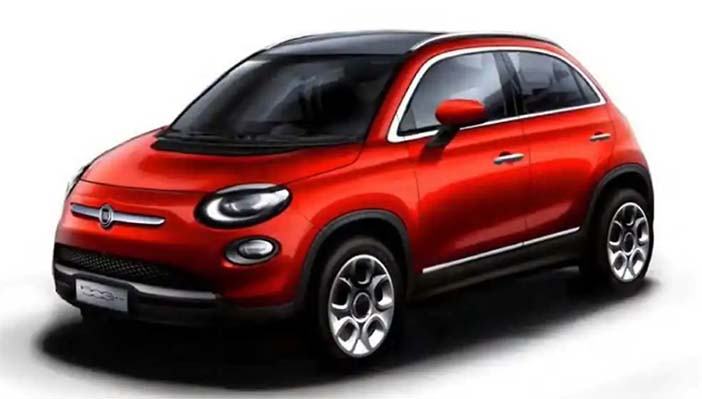
+++ FIAT was developing a successor to the Grande Punto 10 years ago, but it was scrapped over worries that the now-booming B-segment was then “too competitive and not profitable enough”. That car would have been given the 500+ badge, and would have been bigger than the Fiat 500X that arrived in 2014. But then boss of FCA (Fiat’s former parent company that merged with PSA to create Stellantis in 2021) Sergio Marchionne was sceptical about the viability of the project and the segment it would be entering. “We almost did it. The stopping point for the project was that Marchionne was sceptical about the B-segment: too competitive and not profitable enough”, said Fiat’s European chief, Gaetano Thorel. “We came up with a bigger 500 and they liked the idea: more aspirational than a Punto or a Ford Fiesta or a Renault Clio, so much better prices. So we planned it and we approved it. Then, a few months later, we had to stop it. Then it was a GO again, then it had to stop again”. The Punto crossover’s biggest issue was that “to make it properly”, it would have needed its “own platform” as the Grande Punto’s was “too out of date: both on safety and emissions”. This, ultimately, killed the project, said Thorel, due to the costs involved (“none of the other FCA brands would share the cost”) and that it wasn’t feasible to create a platform for just one car. Although scrapped, the idea morphed into the Fiat 600, the electric crossover revealed last week and which is bound for launch early next year. The Punto itself, meanwhile, is tipped to return within the next year as a compact electric supermini sharing its underpinnings with the Opel Corsa Electric and Peugeot e-208. +++
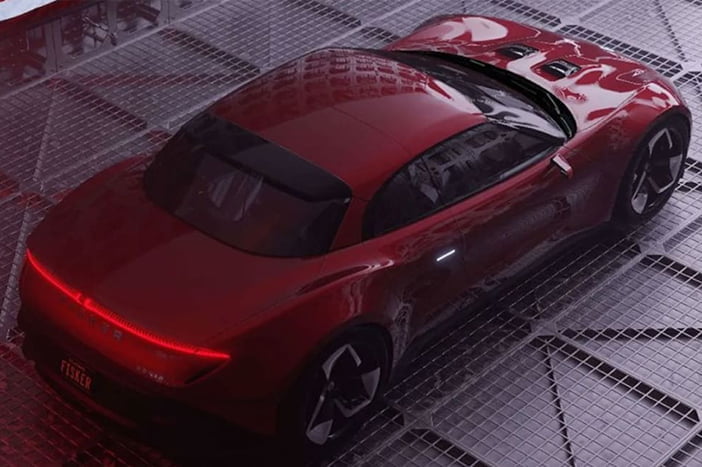
+++ FISKER missed its production target for the second quarter due to shortage of components, the electric vehicle startup disclosed on Friday, sending its shares down 2% in premarket trading. The California-based company produced 1.022 units of its Ocean SUV in the quarter ended June, lower than 1.400-1.700 vehicles it had projected. “A few suppliers had challenges ramping to the targeted second quarter levels, as they did not receive components from sub-suppliers in a timely manner”, Fisker said in an exchange filing, adding that it expected to produce over 1.400 vehicles in early July. Fisker, which will report its second-quarter earnings on August 4, produced 55 vehicles in the first quarter. It began deliveries in the United States last month. The production figures come as some EV firms face dwindling cash reserves, pressured by high costs related to production ramp-ups and inflation. Last month, Lordstown Motors filed for bankruptcy protection, while Electric Last Mile Solutions filed the same last year. In contrast, EV behemoth Tesla and Rivian Automotive beat market estimates for second-quarter deliveries. At the same time, Fisker feels it’s far enough along in the automaking process and has enough product in the near-term pipeline to hold an investor day. That will come on August 3. Whetting appetites, the CEO teased the Ronin GT that’s been in the works for years. I believe this is an evolution of the Fisker EMotion that Fisker talked about in 2018, then a coupe with novel butterfly rear doors, a 640 km estimated range, and a price around $129.000. What we’re seeing now has come out of the Magic Works outpost set up in England and run by Aston Martin’s former head of special projects David King. Henrik’s caption with the Instagram tease was, “Fisker Ronin, All Electric super GT! Reveal August 3rd! Super fast & space for 5! The ultimate long distance Grand Touring car with an anticipated range of 1.000 km!” Plenty of distance, although it’s a small climb down from the targeted 1.100 km of range we heard about in May 2022. Fisker only calls this an electric grand tourer in the Insta post. On the Fisker site, the car is called “the world’s first all-electric, 4-door convertible, GT Sports Car”. There’s a shut line across the roof, placed where the absent B-pillar would otherwise make itself known. Another shutline separates the center panel from the C-pillar, just where one would expect a three-piece hardtop to separate so that it can fold into the trunk. Assuming this comes to pass, the Ronin will be the first and last entry in the four-door convertible GT market in the U.S., and the only genuine hardtop convertible on sale here (as opposed to the targa setups on cars like the Chevrolet Corvette and McLaren 750S). In terms of specifications, all that’s been announced is that the Ronin will offer “extremely high levels of performance” and serve as “a showcase for Fisker’s internal engineering, powertrain and software capabilities”. The vehicle battery’s been integrated into the structure, and active aero is going to play a part. The company’s promised to keep the price below €275.000 (Dutch pricing). Investor Day will also show the production Fisker Pear city vehicle, and we hear the Alaska pickup, based on the Ocean, might make a cameo. Fiskerati reports Fisker having said of the pickup, “that’s really our take on a very unique super sporty pickup truck. I think that’s a real hot market”. He added: “It’s going to, I think, handle amazingly for a pickup truck, both on-road and off-road. So very excited to show that vehicle that will definitely be radically different than anything else we have seen in the market so far”. +++
+++ JLR has begun to cut through its substantial order book backlog, reducing it by 15.000 cars since the end of March as it posted its best production numbers since the 4th quarter of fiscal year 2021. This, the company formerly known as Jaguar Land Rover said, was down to the continuing improvement in chip and other supply constraints that had hammered production over the past couple of years, allowing a ramp-up in customer deliveries with around 100.000 cars rolling off production lines. These constraints pushed waiting orders to a high of 215.000 at the end of 2022, with the financial year finishing (31 March) at 200.000. Major progress was then made in the first quarter of the 2024 financial year (ending 30 June), with order books cut to 185.000 cars; significant as more than 100.000 new retail orders were placed during the same time. Of those cars on the wait list, around 140.600 (76%) are either Range Rover, Range Rover Sport or Land Rover Defender models. Those first 2 models entered a new generation recently, promoting a boom in sales. JLR has previously described those 3 as its “most profitable models”, which has been shown by the significant increases in retail sales compared with the same quarter a year ago: Range Rover up 199%, Range Rover Sport up 42% and Defender up 90%. Overall, retail sales rose in the first quarter of the current fiscal year with another 101.994 cars (up 29% against previous year) sold between April and June. Retail volumes were higher in North America (up 42%), China (up 40%) and the UK (up 6%) but not in the rest of Europe. In addition, JLR reported a further 93.253 cars sold wholesale (to dealers), up 30% year on year. They were, however, slightly lower (down 1%, the same quarter-on-quarter decrease as retail) compared with the previous quarter, reflecting shipping schedules. With JLR’s move to the agency model imminent, whereby it will sell directly to customers, these figures will soon merge into one. As previously reported, this will have JLR take control of the buying process, whether online or via the showroom, with dealers paid an agent fee for handling each sale, instead of cars sold directly to the dealer network. The move comes as JLR looks to reposition itself as a luxury manufacturer and as such wants to form better relationships with buyers. JLR will report full financial results for the first fiscal quarter later in July. Based on preliminary cash balances, it expects to report positive free cash flow of more than £400 million in the quarter. +++
+++ Car sales in RUSSIA rose 151.8% year-on-year in June, analytical agency Autostat said on Wednesday, continuing to rebound from a dramatic car industry slump in 2022. Russia’s auto industry had been heavily reliant on investment, equipment and parts from overseas and was hit hard by the fallout from Western sanctions over the conflict in Ukraine. Sales of new cars plunged 59% last year and many foreign automakers withdrew from the Russian market entirely. Autostat, citing data from its partner consulting company PPK, said 82.407 vehicles were sold in June, up from 72.171 in May, but compared with a paltry 32.731 in June 2022. Lada held onto the number-1 spot in the domestic market in June and grew its market share for the first half of the year to 33.5% from 20.8% in 2022. Lada maker Avtovaz said its June sales had jumped almost 4 times compared with a year ago. 6 of the top 10 brands by market share are Chinese automakers, such as Haval, Chery and Geely, which continue to fill the vacuum left by departing Western firms. +++
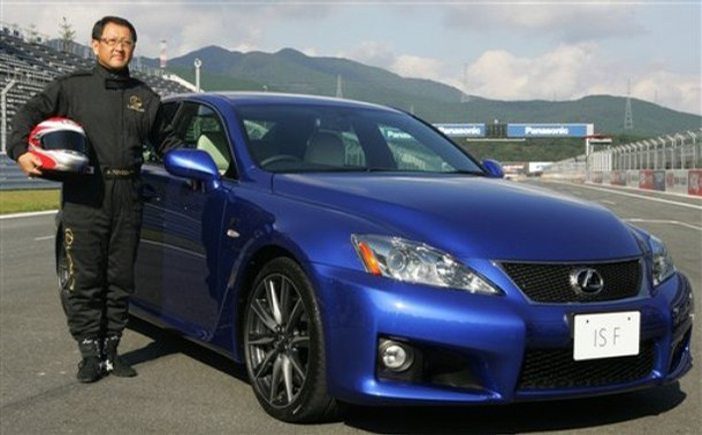
+++ February 17, 2010. The day Akio TOYODA , just months into his presidency of Toyota, bowed before US Congress in order to explain the unintended acceleration crisis that led to more than 10 million vehicles being recalled worldwide. And the day his working life finally made sense. “When I went to the public hearing, I thought: ‘I’m done as company president’ ”, he said. “Until then, I’d been called the president’s son. I’d become untouchable through my life at the company. If someone was nice to me, others would say: ‘Why are you kissing up to the boss’s son?’ A lot of Toyota people didn’t like that. On the other hand, they worried that if they picked on me, I’d tell my father. So most employees would do the smart thing, which was to stay away and not develop relationships. “Ever since I started at the company, I had no relationships. I wasn’t sure if Toyota needed me. It was a constant concern for me for a long time. At the public hearing, I felt like ‘I didn’t even last a year’. But that was the first time I felt like I might be able to do something for Toyota. That might be why I was here: to stake my life to protect the company. There is no better feeling. I didn’t run away, lie or distort the truth. That’s where my business model was completed. Since then, close to 14 years, I have fought to bring back the uniqueness to Toyota”. There, in a single story, are flashes of the character that has transformed Toyota’s fortunes on almost every level. A leader, tenacious, vulnerable, humble and more. A man who feels his role was initially taking the firm through “crisis after crisis”: the earthquakes and subsequent tsunamis that beset Japan in 2011 adding a further twist of the knife in his early tenure, and who even now describes his work only as laying the foundations for his successor, Koji Sato, who took over as president in April. “In retrospect, these 13 years have been a period of struggling to survive one day after the next”, said Toyoda. “When I look back, I think I have spent a lot of time taking care of the past. If I was to start again now with the same number of years ahead of me, I’d like to take the time to look into the future. What I hope I have created is an environment where Mr Sato can spend his time collaborating with the genba, our workers, while looking to the future”. His comments confront a truth: as with all car makers, the transformation required by a zero-emissions future presents innumerable hurdles, potentially exacerbated by Toyota’s (deliberately, scientifically considered) slow start to battery-electric vehicle production. But they also mask the scale of change that has occurred at the company on his watch, not just in terms of growth metrics but also in the capability and desirability of its vehicles, the distinctive design of both Toyota and Lexus models and more. Indeed, with the creation of Gazoo Racing, the multiple Le Mans and World Rally Championship wins and subsequent road cars like the GR Yaris and GR 86, there is so much more to Toyoda’s Toyota than what went before. We talked at Le Mans with the race raging outside, and there’s no subject that gets him more fired up. “Racing helps us make better cars: we work in strict parameters to tight deadlines and we push the boundaries”, said Toyoda, who was at Le Mans to announce plans to race a hypercar powered by combusted hydrogen from 2026, when the race’s rules change. Today, he proudly if modestly sums up, the company is best known not for its size or engineering prowess alone but for its products. For a man who famously hands out stickers to people he likes bearing a cartoon version of himself giving a thumbs up, with the inscription ‘I love cars’, there can be no greater achievement. “One of the phrases I used when I started was ‘Let’s make ever better cars’ ”, said Toyoda, to explain how the transformation was achieved. “I kept repeating that phrase, rather than talking about specific targets, deliberately”, he added, smiling. “Think about it. If I’d defined ‘ever better cars’ around what I wanted to see in more detail, we would have ended up as a completely different company. Instead, by not giving an answer to the phrase, I had 370.000 employees thinking ‘what does he mean?’ and therefore starting to think for themselves. As a result, I believe Toyota was able to reinvent itself as a global company that revived itself based on its products”. Another insightful slogan was ‘Best cars in town’. Simple, again, but this time pointed for what it didn’t say. Under Toyoda, the company’s centralized command structure was relaxed and regions were given autonomy to develop cars for their audiences. As such, it was no good striving to make the best cars in the world. That’s one reason why its product line-up stretched from 33 to 88 cars under his tenure. “Probably there are people in the company who feel that I have stripped away the authority, the power that they had”, he said. “Those people probably have a negative feeling, but sovereignty should always lie in the place where the people are working”. Those who have followed Toyoda’s daily fortunes point to that statement as underlining his determination to empower employees to be in charge of their future. Famously, at one meeting of the worker’s union, he chided the representatives for not being honest enough with him about the company’s shortcomings. “It’s a negotiation, and the outcome may not be perfect for each side every time, but in the end we must do what is the best solution for both sides”, he said, by way of summarising his hard-line but collaborative approach. Talking of seeking the best solutions, no appraisal of Toyoda’s tenure can end without tackling his approach to electrification. Starkly, last year Tesla sold 1.2 million battery-electric vehicles, Toyota 26.000. It’s probably fair to say that Toyoda knows the question is coming, and he immediately acknowledges that his answer is one that could land him in trouble. “Whenever I speak about this topic, some people immediately think we are three laps behind the opposition in the EV race”, he said, with a slight grimace on his face. “I don’t have a model for the future so can’t be certain that I will be correct, but I can say that the enemy is carbon”, he said. “Given that, we should all be doing what we can (now and in the future) to reduce carbon. My belief is that there is not one right approach, but many that we should take to achieve that. “The truth is that on Earth, our natural resources are finite. That is why I believe we should look at everything. BEVs are one of the most important technologies that can contribute to this, but not the only one. Today, there are about a billion people on Earth who do not have adequate connection to electricity. How can we say to them that BEVs are the only solution if we cannot be clear on how we supply the power to them?” Now he has passed the baton to Sato, although as chairman he still intends to be very much present, guiding his successor, developing his ideas and, of course, maintaining his role as Toyota’s so-called Master Driver, under the Morizo pseudonym. Inevitably, he has his critics, but try as I might, among his competitors no one has a bad word to say about Toyoda’s achievements. In barely two cycles of cars, Toyoda has reinvented Toyota, and although there’s more, much more, still to be done, thanks to him it will be doing it from a position of strength. It holds particular appeal for Toyoda in motorsport applications, as it retains the sounds that are an intrinsic part of its appeal. “My translator used the word ‘noise’, but to me it is like a lullaby”, he said, joking in reference to why silent motorsport is unlikely to appeal to today’s audiences. Already, Toyoda has driven a converted Yaris World Rally Car in a demonstration and raced and finished the Fuji 24 Hours in an adapted Toyota Corolla race car. One or both are expected to be in action at the Goodwood Festival of Speed too. “When the general public hears about hydrogen, they think about explosions”, said Toyoda. “In fact, on the Ypres Rally, where I drove the Yaris, they were very worried when we first suggested driving the car. But when they asked who would drive, and they were told it would be me, they immediately allowed it. When the company boss is willing to drive the car, it is a great way of demonstrating that the technology can be safe”. +++
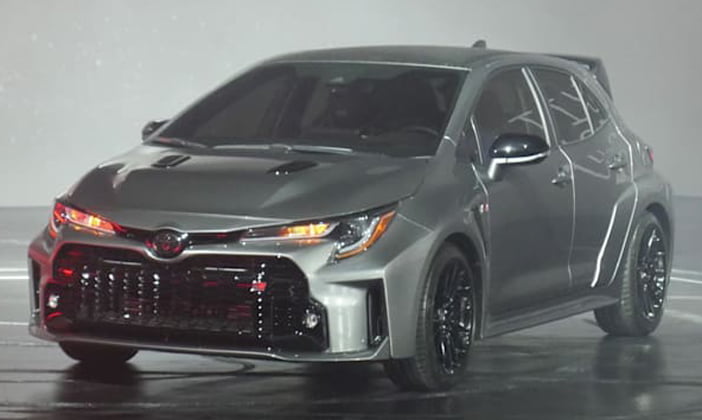
+++ TOYOTA GR will play a critical role in reinvigorating perceptions of long-standing models such as the Prius and Corolla, chairman Akio Toyoda has told. Talking about the power of motorsport for driving desirability and pushing profit margins, he highlighted the Prius 24h Le Mans Centennial GR Edition, a special edition, racing-inspired Prius that paid homage to the hybrid technology that helped it win five races between 2018 and 2022 that was displayed at the race. “Prius became a strong name chiefly because it premiered hybrid technology”, said Toyoda. “It broke the class segments that were there at the time and redefined them. In that sense it became an icon. But now we have decided to come at it from the opposite direction and present a Prius for motorsport. It is the same principle for Corolla. The image most people have is of a sedan; a mostly mass-produced vehicle that is loved by the public. But the hydrogen engine car I drove at Le Mans is also a Corolla. And actually the GR Corolla has a different kind of pricing to the standard car (it costs around 3.5 times the price of a base Corolla in markets where it is sold. GR has the power to push up the product price and add a new attractiveness for these nameplates. What we are doing is a rebranding of these long-selling vehicles”. The Prius 24h Le Mans Centennial GR Edition is 90 mm longer than the standard model, 50 mm wider and sits 30 mm lower. Its front and rear tracks have also been widened by 40 mm. It also features mini-inverters, which are mounted onto the electric motor directly; silicon carbide semiconductors and improved cooling. The GR Corolla is not on sale in Europe, officially because the company is selling enough GR Yaris and GR 86 models to satisfy demand. It has a turbocharged 1.6-litre engine making close to 300 hp in its most powerful form, all-wheel drive and a widened body. Toyoda also revealed his intention to race in Europe again next year now he is no longer CEO of Toyota. He has pledged to race at the Nurburgring at some point during the VLN season, potentially taking in the 24 hour race at the track if his calendar allows. “My starting point as a racing driver was at the Nurburgring”, he said. “Back then I didn’t have any driving skills and I was pretty afraid, but after racing in Japan and Asia I hope my skills have gone up, and I can race to improve again”. +++
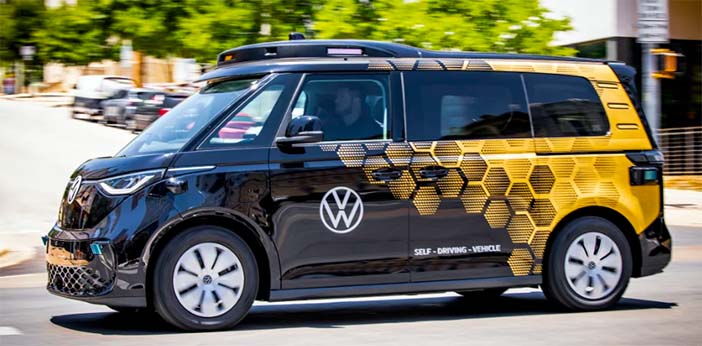
+++ VOLKSWAGEN has launched a new autonomous vehicle testing program in Austin, Texas, utilizing its new rock star electric offering, the ID.Buzz. The pilot program will help Volkswagen develop its self-driving technology for future deployment both here and abroad, with future expansion penciling in at least four more U.S. cities before Volkswagen’s expected launch of a full commercial service by 2026. The vans being used in Austin are imported European-spec ID.Buzzes outfitted with self-driving tech from VW’s autonomous partner, Mobileye. 10 of them will operate as part of the pilot program. These are a prelude to what VW hopes will become a factory ID.Buzz “AD” model that can be delivered straight to autonomous fleets from the company’s commercial division. If all goes to plan, these will be bundled with fleet management and remote guidance systems, however VW said plainly that it has no plans to launch its own dedicated ride-hailing service “at this time”. “We are thrilled to bring our exciting ID.Buzz vehicles to American roads”, said Pablo Di Si, president and CEO of Volkswagen Group of America. “Expanding Volkswagen Group’s global autonomous driving vehicle program to the United States marks an important milestone for us. In the future, we will tap into rising demand for new mobility services, and with our iconic ID. Buzz, we will also offer a truly captivating product to support transportation services American consumers can rely upon and trust”. “Expanding our autonomous vehicle program to the North American Region is the next step in our global strategic roadmap, and the result of a long-term collaborative investment”, said Christian Senger, Member of the board of management of Volkswagen Commercial Vehicles with responsibility for the development of autonomous driving. “Moving into this next phase will help us test, validate and refine technology, bring us closer to establishing commercially available transportation offerings and eventually grow the diverse mobility portfolio for the Volkswagen Group”. During the first phase of operation, all of VW’s prototypes will have human drivers onboard to monitor the operation of their camera, radar and lidar systems. +++
+++ The CEO of the VOLKSWAGEN GROUP ’s Chinese operations, Ralf Brandstätter, has warned of recent developments within the electric vehicle market, suggesting high capital investment and discounting “will ultimately harm the interests of consumers”. In an address at the China Automobile Forum hosted by the China Association of Automobile Manufacturers in Shanghai, Brandstätter said the electric vehicle market is “overheating”. “Currently, there are more than 120 car makers within the electric vehicle market, and about 150 new models will be launched in 2023. Intense market competition and high battery prices make them face severe economic pressure. Short-term sales success requires extremely high capital investment”, he said. Touching on the financial squeeze facing many electric vehicle start-ups, Brandstätter said many that have entered the electric vehicle market in recent years are exiting or are about to exit the market, or are in urgent need of new capital investment. “We are facing a situation where the market is overheating. Consolidation of the playing field is in full swing”, he added. The former head of the Volkswagen brand was particularly critical of the discounting of electric vehicles in China. “The fierce competition has led to deep price discounts in recent months. This will ultimately harm the interests of consumers. They will no longer be able to get services from retired brands, or they will see a significant price cut on the models they buy”. Brandstätter’s comments are seen as shrouded criticism of rival Tesla, which has led the trend towards discounting with continued price cuts for its models in China. The 54-year-old German said the Volkswagen Group will not pursue sales and growth within the Chinese electric vehicle market at all costs. “For us, the profitability of the business is the most important. We will not engage in unhealthy market competition in order to achieve short-term delivery growth. Worldwide electric vehicle sales increased by 55% in 2022 compared with a year earlier, at 10.1 million units. China accounted for the largest share, with 5.9 million units. Outlining the Volkswagen Group’s plans for the Chinese market, Brandstätter said the company would not abandon the internal-combustion-engine car market despite slowing sales. “We will continue to leverage our advantages in the internal combustion engine market. Although its overall size is shrinking, the group still maintains considerable profitability by virtue of its own scale and cost advantages. By 2030, we will launch a total of 17 new internal-combustion-engine models”, he said. “In addition, we are promoting the development of hybrid technology and gradually transforming petrol models to plug-in hybrids, becoming a strong player in this market segment”. As part of its efforts to become more competitive and improve profitability, Brandstätter said: “Volkswagen is accelerating at China speed”, reiterating recent comments made by Volkswagen Group CEO Oliver Blume that the development of the group’s new products and technologies will be shortened by up to 30%. +++