
+++ J.D. Power survey results have been slightly up but mostly down for automakers this year, literally. In February, the 2023 Vehicle Dependability Study showed an overall decline compared the 2022 a month before the Customer Service Index Study did the same. The trend reversed in June with a better overall score on the 2023 U.S. Electric Vehicle Consideration Study than in 2022, then declined again the same month on with a lower overall score on the 2023 Initial Quality Study. The declines continue with the 2023 J.D. Power U.S. Automotive Performance, Execution and Layout ( APEAL ) Study, overall satisfaction among the 84.555 respondents down 2 points overall compared to 2022, to 845 out of 1.000 points. Because last year’s score dropped compared to 2021, this year marks the first consecutive decline in the study’s 28-year history. The study tries to “measure owners’ emotional attachment and level of excitement with new vehicle” after 90 days of ownership by asking new owners to rate 37 attributes in 10 areas around the vehicle, such as the feeling they get when they hit the accelerator. Satisfaction with 9 of the attributes is down this year versus last, fuel economy the only segment to show better results with 15 points more satisfaction. Styling and infotainment are big drags on satisfaction. Responses to new car exterior looks tallied 888 points, down from 894 last year, the largest drop in this year’s study. On the digital side, less than half of those surveyed this year said they prefer using a manufacturer’s built-in infotainment. From 70% of respondents in 2020 preferring to use a manufacturer’s in-house software to play audio instead of Android Auto or Apple CarPlay, that’s 56% in 2023. Going all-in on Google appears to have the best effect. J.D. Power said that vehicles with both Google’s Android Automotive Operating System (AAOS) and Google Automotive Services (GAS) “score higher in the infotainment category than those with no AAOS whatsoever. AAOS without GAS receives the lowest scores for infotainment of the 3 categories”. Frank Hanley, senior director of auto benchmarking at J.D. Power, said, “Despite the technology and design innovations that manufacturers put into new vehicles, owners are lukewarm about them. While innovations like charging pads, vehicle apps and advanced audio features should enhance an owner’s experience, this is not the case when problems are experienced. This downward trajectory of satisfaction should be a warning sign to manufacturers that they need to better understand what owners really want in their new vehicles”. It would be interesting to find out if shoppers like a feature on the showroom floor but grow to dislike the feature during ownership, or if it’s more that buyers aren’t clear on the ins and outs of the tech and don’t think about it until they realize the tech isn’t doing what they want. Breaking out mass market and luxury segments yields the same result, small declines in overall APEAL scores for both: 4 points for mass market, 1 point for premium. The gap between the 2 scores grows to 34 points from 31 points last year. The winners in either category show the power of brand enthusiasm. On the luxury side, Jaguar is first among makers at 887, Land Rover and Porsche tied for second at 883, BMW in fourth at 878. Last year’s top-5 was Porsche, Genesis, Cadillac, Mercedes-Benz and BMW. For mass market, Dodge (887) took the crown for the fourth straight year, beating Ram (873) and GMC (858). That’s the same top-3 as last year. Had Tesla been ranked with either group, it would would have come first with 878 points, even though that’s down 9 points from a year ago. The Hyundai Motor Group once more cleaned up with 9 wins for individual models, the Kia arm showing up with a giant Korean broom to claim seven of those 9 cars. The Hyundai Santa Cruz and Genesis GV60 won their respective segments, as did the Kia Carnival, EV6, Forte, K5, Rio, Stinger and Telluride. The BMW Group was next with 5 wins for the 7 Series, iX, X4, Mini Cooper and Mini Countryman. The Porsche 911 won its category with the highest APEAL score of any model with 914 points. +++
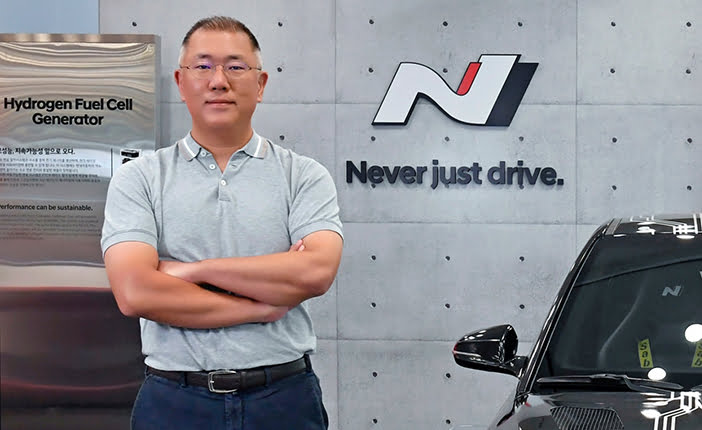
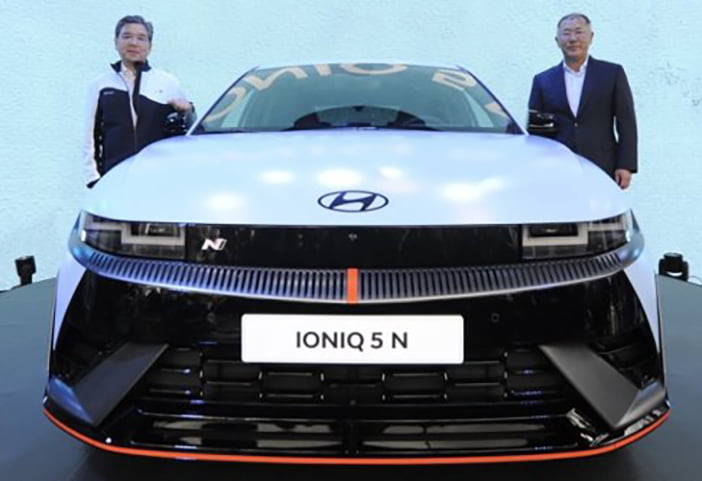
+++ HYUNDAI chairman Chung Euisun’s (photo) bold innovation efforts for its high-performance “N” brand is setting a new benchmark in the electric vehicle (EV) market with the launch of the brand’s first high-performance Ioniq 5 N, Korea’s largest automaker said. Hyundai made the global debut of the Ioniq 5 N at the Goodwood Festival of Speed, the United Kingdom’s largest motor event, marking the arrival of a new model for drivers who love the eco-friendliness and high performance of EVs. Backed by a high-performance all-wheel drive system, the Ioniq 5 N delivers a combined 650 hp from its front and rear motors. The new model, which crystalizes of the group’s technological capabilities, was not created overnight, according to Hyundai. Since launching Hyundai Motorsports in 2013, Hyundai has been competing with the world’s leading automakers and dominating the podiums of various motorsports competitions, and the industry attributes this success to chairman Chung’s vision to grow motorsports and deliver the joy of driving. At the 2018 Consumer Electronics Show, Chung emphasized the need of fostering high-performance car brand saying “we don’t just need a horse to pull a carriage, we also need a racehorse to fight in the war or run fast”. He also claimed that fostering the high-performance brand is “an essential area for Hyundai, as there is a great deal of synergy when applying technologies from high-performance vehicles to general car models”. In 2015, Hyundai launched the high-performance brand N, which the company said would allow all customers to experience the value of fun driving. In 2017, Hyundai launched the first model under this label, the i30, and has since sold more 103.947 N-branded vehicles in global markets. Apart from the Ioniq 5, the most recent N model is the Kona N. “Behind it all are countless experiences from the past and challenging moments in our history of progress, as well as the passion and full support of chairman Chung for high-performance cars. With his strong leadership, the carmaker is writing new history of the Korean automobile industry”, a spokesman said. Hyundai added the Ioniq 5 N has elements of being a “corner rascal”, an everyday sports car and a vehicle with race track capability, which are the three core elements the N brand strives for. “The Ioniq 5 N combines the highest level of technology that we have earned with a challenging time for innovation”, a company spokesperson said. “We will continue to provide customers with unchanged driving pleasure in the era of electrification and solidify its leadership in the global EV market”. +++
+++ The HYUNDAI MOTOR GROUP has unveiled its advanced nanotechnologies which enable vehicles to self-repair surface damage, self-recharge batteries via solar cells and lower indoor temperatures through cooling films, Korea’s largest carmaker said Thursday. These cutting-edge technologies based on nanoengineering involve synthesizing and arranging materials at the microscopic level to create new materials with unique properties, it said. Hyundai and Kia showcased these nanotech innovations at the Nano Tech Day 2023 event in Seoul. One of these technologies is a nano-coating which allows vehicles to heal surface damage. As autonomous driving and electric vehicle (EV) technologies advance, the risk of critical component damage increases. Even minor scratches on vital parts like cameras or Lidar sensors used in autonomous driving can hinder a vehicle’s perception and decision-making capabilities. EVs, in particular, require durable and wear-resistant powertrain components. The self-healing polymer coating, developed by Hyundai and Kia utilizing nanomaterials, is a pioneering technology that can restore the coating to its original state within about two hours at room temperature without requiring external heating or recovery accelerants. When a coated component sustains damage, the divided polymer within the coating exploits chemical reactions to restore its original state. While self-healing technologies have already been commercialized, they often require the use of recovery accelerants, making repetitive healing difficult, and are limited in application without additional heating devices. Hyundai and Kia are currently developing the capability to apply self-healing technologies to various areas, starting with camera lenses and Lidar sensors and crucial components for autonomous driving and eventually extending to the vehicle’s paint surface and other parts. In addition, the company developed the oil capsule polymer coating to drastically reduce parts wear. This innovative technology uses nano capsules within the polymer coating that burst upon friction, releasing lubricating oil to form a protective film. This self-healing lubricant can provide long-lasting lubrication until the end of the part’s lifespan, resulting in improved efficiency and reduced costs. This technology can be applied to various components, including EV motors and reduction gears, reducing rotational loss and enhancing efficiency. Nanoengineering also plays a role in improving EV performance by enhancing the range of travel on a single battery charge and reducing charging time. The transparent solar panel introduced by Hyundai and Kia utilizes high-efficiency perovskite materials, achieving more than 30 percent higher photoelectric efficiency than conventional silicon solar panels. This technology reduces the vehicle’s battery dependency and improves energy efficiency. “The nano-based technologies unveiled today are the result of continuous efforts by Hyundai Motor Group’s material experts. Nanotechnology will be a crucial key in leading the transformation of the mobility industry”, said Hong Seung-hyun, vice president of Hyundai Motor Group’s materials research and engineering center. +++
+++ Boasting 650 hp and 770 Nm, the brand-new HYUNDAI IONIQ 5 N is equipped with an 84 kWh high-power battery pack and the N Battery Preconditioning, a heat management system specifically designed for performance EVs. Several features that improve cornering in the car include the N Pedal mode, which uses regenerative braking to help harsh turning, and the N Drift Optimizer, which makes the car easier to drift by allocating an optimized amount of driving force to the front and rear wheels. The carmaker also touted its yearslong experience in motorsport racing as well as advanced electrification technology based on the signature EV platform E-GMP , both of which have helped birth the Ioniq 5 N. Under a vision to create a strong foothold in the global auto tech market, Hyundai Motorsport GmbH was established in 2013 under the leadership of Hyundai Motor Group executive chairman Chung Euisun. Its goal has been to participate in racing tournaments, a testbed to enhance its modified car models’ performance such as speed and durability that can be adopted to the company’s mass-produced cars. In 2019, Hyundai’s motorsport unit was the first Korean team to win the manufacturers’ championship at the World Rally Championship. It claimed its second championship title in 2020. Ushering in the electrification transition for performance cars, Hyundai participated in the Electric Touring Car Racing, a touring car series for EVs, in 2021 and 2022. It also offered charging services with its hydrogen fuel cell generator for all racing cars during the event. Starting from the WRC 2022, which mandates cars to run on hybrid powertrains of internal combustion engines and electric motors, it has rolled out the i20 N Rally1 equipped with a 1.6 liter, 4-cylinder engine and 136 hp electric motor. In addition to the Ioniq 5 N, the carmaker plans to roll out the N Vision 74 hydrogen hybrid EV, inspired by the carmaker’s first-ever car model, the Pony coupe. The concept car was unveiled at the Concorso d’ Eleganza Villa d’Este classic car show held in Lake Como, Italy from May 19 to 21. +++
+++ JAGUAR LAND ROVER , a unit of Indian automaker Tata Motors, said on Thursday it appointed interim boss Adrian Mardell as chief executive officer for a 3-year term. Mardell, who has been with JLR for 33 years and became chief financial officer in 2019, transitioned to the interim CEO role last November when Thierry Bollore resigned due to personal reasons. The automaker also made acting CFO and former McLaren Automative finance chief Richard Molyneux’s role permanent. Molyneux, who previously spent over 6 years as JLR’s finance director of operations, was appointed acting CFO last December. The appointment of Mardell comes a day after Tata Group announced plans to build an electric vehicle (EV) battery plant in Britain to supply its Jaguar Land Rover factories. Mardell, a 62-year-old British national, will also be tasked with overseeing JLR’s electrification plans after it announced in April it would invest 15 billion pounds (€17.2 billion) over the next 5 years in electric vehicles and promised to deliver a new electric Jaguar in 2025. The maker of high-end cars, including Range Rover and Defender, posted a 30% rise in first-quarter wholesale volumes earlier this month, and forecast free cash flow of over 2 billion pounds for current fiscal year. +++

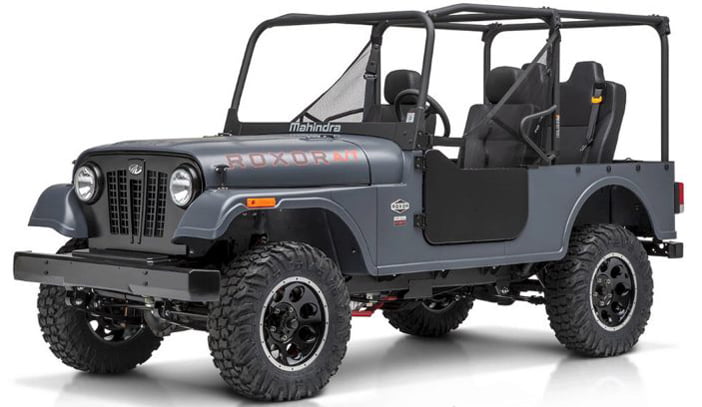
+++ JEEP ’s years-long fight to stop Indian firm Mahindra from selling the Roxor in the United States due to trademark infringement experienced a setback. The brand can continue selling the redesigned version of its open-top side-by-side, the Eastern District Court of Michigan decided. The bitter legal battle opposing the 2 carmakers began in the late 2010s, when Jeep (which was part of Fiat Chrysler Automobiles at the time) claimed the Roxor looked too much like the CJ. In 2019, the United States International Trade Commission found Mahindra guilty of trademark infringement and recommended the implementation of a cease-and-desist order. Mahindra redesigned the Roxor with a less CJ-like grille in 2020, but the United States International Trade Commission ruled in Jeep’s favor in June 2020. The ruling only applied to the pre-facelift model, however, and a U.S. regulator later decided that the updated off-roader didn’t infringe on Jeep’s intellectual property. Jeep appealed the decision in September 2022 and the verdict announced in July 2023 wasn’t in its favor. Mahindra made several changes to the Roxor to win the case. Most of the updates were found up front, where the off-roader received a shorter, wider grille and narrower fenders. The body remains Jeep-like, but the main styling cues linking the Roxor and the CJ models built for decades are relatively generic, such as flat side panels. Arguably, the second-generation Thar sold in India is far more Wrangler-like. Jeep hasn’t commented on the court’s decision, so we don’t know if Mahindra won the war or a battle. +++
+++ MAZDA will launch its first electric-vehicle-only model in 2027, CEO Masahiro Moro said in a recent interview in Tokyo, as part of efforts to speed up its electrification efforts and catch up with global rivals. Mazda started to sell in 2021 an electric version of the MX-30, initially launched as a hybrid car, but the Japanese automaker has not had a dedicated electric vehicle. Moro also said that the company will ramp up production of EV-only models from 2028 onwards and accelerate the development of high-quality electric control equipment in collaboration with Toyota, its capital alliance partner. He vowed to step up its electrification efforts in China, the largest auto market in the world, betting that a shift to EVs in the country will proceed at a rapid pace. “We will offer 1 electric model after another from 2025 through a Chinese joint venture”, Moro said in the interview with a group of reporters. In the United States, the automaker has recently started to make the gasoline-powered CX-50 at its factory in Alabama and will aim to launch a hybrid model of it. Last year, U.S. president Joe Biden signed into law the Inflation Reduction Act, in which the country offers a tax break for those who purchase EVs assembled in North America. To utilize the scheme, Mazda “will consider production (of EVs) and battery procurement in the region”, he said. Seeking to bolster its brand value, the CEO also said he will consider setting up a new company to organize motorsport events and promote safe driving. Moro was promoted to CEO in June from senior managing executive officer, succeeding Akira Marumoto who held the top position for the past 5 years. +++